Video summary
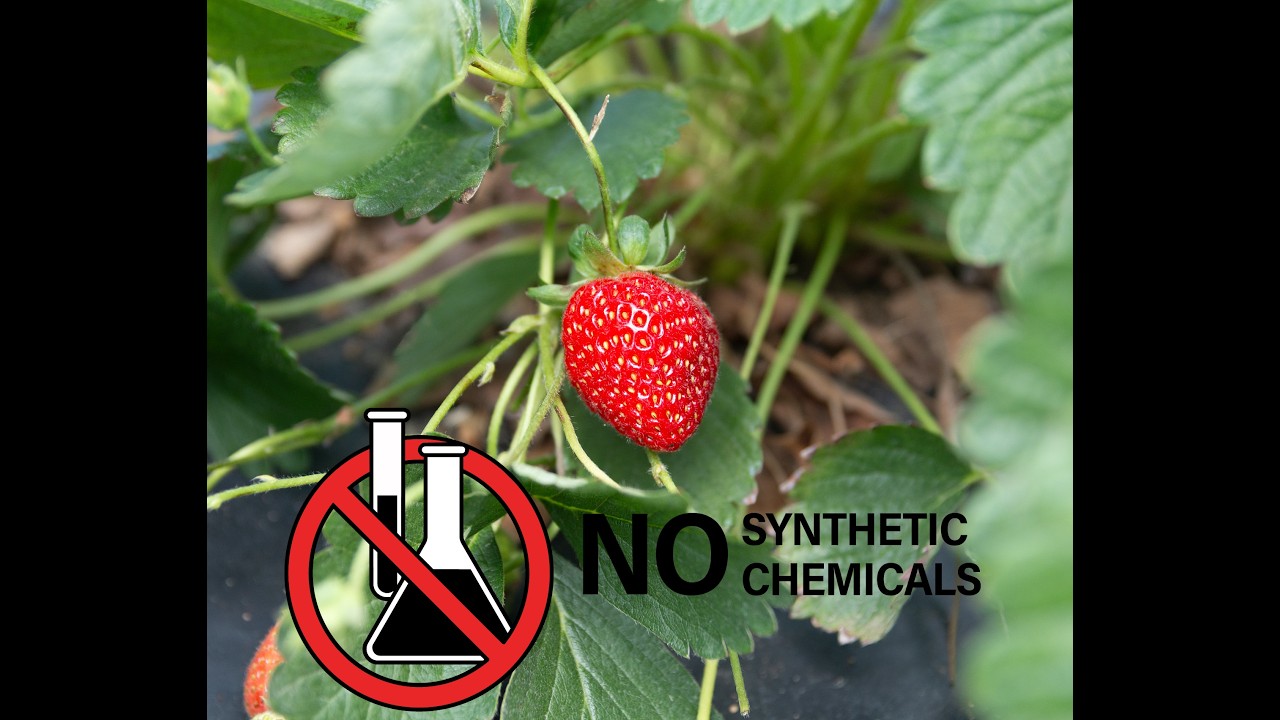
The video addresses common confusion surrounding labels found in grocery stores and farmers markets regarding fruits and vegetables such as "organic," "USDA certified," "natural," and "locally grown." Two commercial horticulture specialists explain that many consumers hold misconceptions about how organic food is actually produced, particularly the belief that it involves zero use of fertilizers or pesticides. In reality, organic farming adheres to strict regulations that prohibit synthetic products but allow specific natural alternatives like poultry manure or vegetation-based inputs. These approved materials are often more expensive than laboratory-produced synthetics and require labor-intensive application methods, which can result in smaller yields, misshapen fruits, or less uniform produce on the shelf compared to conventionally grown items.
A significant point of discussion is whether organic foods offer superior nutritional value or flavor over non-organic options; experts state there is no scientific evidence supporting differences in nutrition or taste between the two, suggesting that consumer preference plays a larger role than actual health benefits. The higher cost associated with organic produce stems from these production challenges and the fact that most organic farms are smaller-scale operations rather than large industrial entities capable of reducing prices through economies of scale. Additionally, purchasing certified organic items often supports local markets because obtaining USDA certification requires a multi-year transition period away from conventional farming followed by annual inspections, whereas many farmers selling at local markets may use organic methods without holding the official label or passing federal regulatory checks.
Consumers are also advised to distinguish between terms like "organically grown," which describes a method of cultivation but lacks legal verification, and "USDA Organic Certified," which is reserved for products that have passed rigorous inspections by USDA agents. The video clarifies that other marketing terms such as "natural" or "sustainable" do not equate to organic status; specifically, "natural" merely indicates the absence of additives rather than a specific farming practice. Regardless of how food is grown, experts emphasize that washing all fruits and vegetables with running tap water remains the most effective safety measure for removing chemical residues and microorganisms, noting that household remedies like vinegar or bleach are ineffective for this purpose. Ultimately, choosing organic supports environmental sustainability by reducing soil and water contamination while protecting natural pollinators from synthetic chemicals.
Read the full video transcript
Organic, USDA organic certified,
natural, locally grown. Whether you're
at the grocery store or your local
farmers market, the variety of labels
can make shopping for fruits and
vegetables confusing. Two commercial
horticulture specialists say many
consumers misunderstand what those terms
actually mean. And one of the biggest
misconceptions is how organic food is
grown.
>> I think that the main misunderstanding
about organic and non-organic is that a
lot of people thinks that growing
organic food, you don't apply any uh
fertilizer or you don't apply any
pesticide, which is not correct.
>> Instead, organic production follows
strict rules about which fertilizers and
pesticides can be used. Synthetic
products are prohibited, making
production and labor-intensive and often
more challenging for growers. That can
even affect what shoppers see on the
shelf.
>> So, that's why sometimes in the shelf
when you're buying organic, you see
smaller products or smaller fruits or
misshaping. And that's because they
cannot apply the same products as in
non-organic.
>> One question many shoppers ask is
whether organic foods are healthier or
more nutritious.
>> I would say there is no scientific proof
that organic and non-organic have
nutritional difference or organic and
non-organic has difference in flavor. I
would say it's more preferential.
>> So, why does organic food often cost
more?
>> Organic produce are regularly more
expensive because of cost of production.
Organic pesticides or fertilizers that
are approved by the USDA for organic use
are coming from natural sources. Poultry
manure or vegetation, they are
relatively more expensive than synthetic
fertilizers that can be produced in the
laboratory. And then normally organic
farmers are smaller scale. The larger
you get, the more you can reduce the
price of productions. It's very hard to
have very large-scale organic
production, so organic farmers tend to
be more local and and smaller farms.
>> Most of the time when you're buying that
organic, you are supporting local
markets. If you are buying non-organic,
usually you are buying away from your
region.
>> Another point of confusion is the
difference between food that's grown
organically and food that's labeled as
officially USDA organic certified.
>> A grower can grow vegetables or any
fruit or any specialty crop in a organic
way. They can say organically grown, but
it cannot have the word USDA organic
certified if that produce has not passed
through the inspection of a USDA
regulatory agent.
>> That certification requires growers to
transition their farms from conventional
to organic over a several-year period
and pass annual inspections before they
can use the USDA organic label.
>> Most of our growers that sell in fresh
markets, while they sell it as organic,
it's probably not USDA organic
certified. What the consumers need to do
in order to identify if it's USDA
organic certified produce is to look for
the USDA logo.
>> But there are even more terms for food
production that might be confusing.
>> People use healthier food, sustainable
food, or more natural, and those terms,
they don't mean the same. For example,
natural, it means food without any
additives. It doesn't mean that it's
organic itself.
>> When you go to those farmer markets, I
would really recommend have a
conversation with the grower.
>> No matter how your food is grown, one
food safety practice never changes.
>> Regardless if it's organic or not, it is
essential to wash fruits and vegetables
at home. And basically, washing with tap
running water, that's the best
practices. So, don't add any chemical or
any bleach or anything to it. Vinegar
and sodium bicarbonate, they don't do
anything for cleaning or removing any
chemical residues or microorganisms that
are in the produce.
>> Ultimately, organic is more than just a
label at the grocery store.
>> Without the use of synthetic fertilizers
or pesticides, you reduce soil and water
contamination. You also You don't have
impact on natural pollinators. So, the
benefits of producing organic for
farming itself is you promote farm
sustainability.