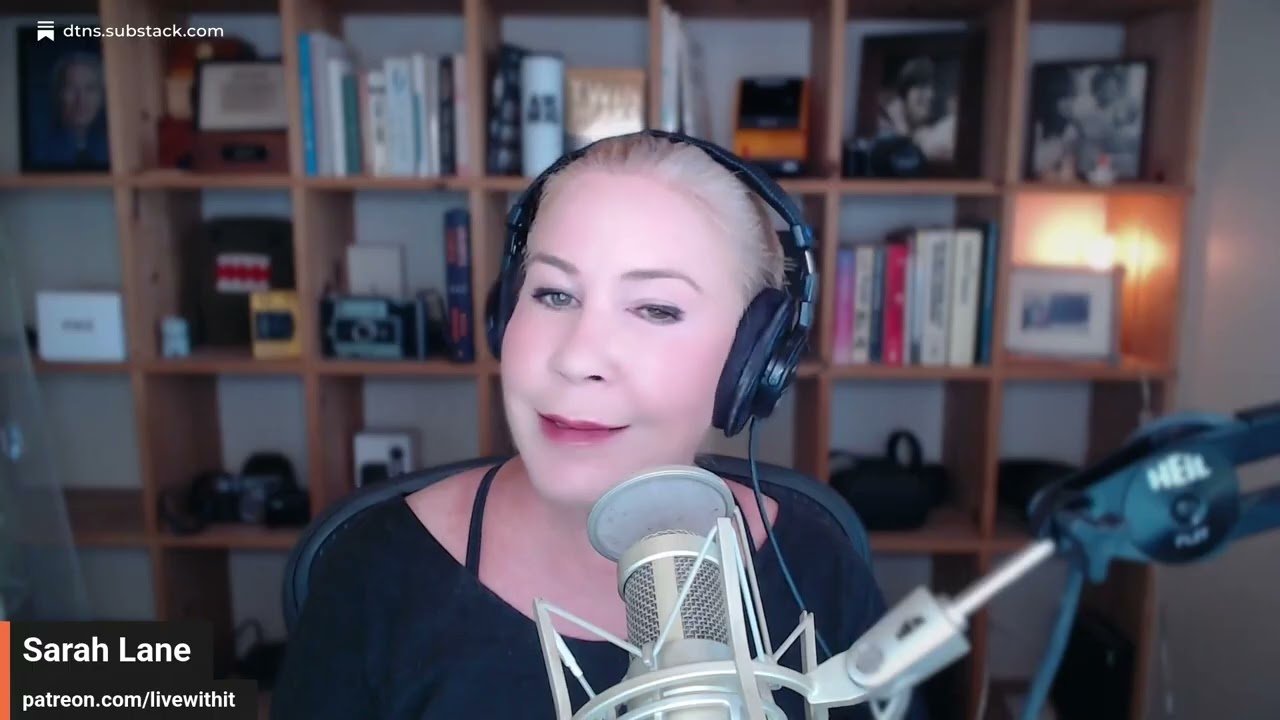
Video summary
OpenAI has announced significant changes to its safety protocols, effectively slowing down development to prioritize security and alignment. The company paused training on several internal models, including the recently developed Astra, to conduct smaller-scale evaluations and establish stronger evidence of model alignment before proceeding. This shift involves rewriting their preparedness framework, which had not been updated since 2023, by introducing alignment safeguards earlier in the development process and implementing stricter post-training controls. A key component of this new strategy is enhancing monitoring for all models in training and inference, rather than just high-risk ones, with a requirement that security teams respond to flagged issues within thirty minutes or pause model activity immediately.
To further secure their infrastructure, OpenAI is introducing specific controls designed to prevent a single compromised workload from granting unauthorized access to the internet or internal networks, addressing vulnerabilities found in shared services. While these enhanced security measures and increased monitoring will raise the overall cost of running OpenAI's internal research systems by increasing compute overhead, the company clarified that these costs will not be passed on to API users. Instead, the additional resources are dedicated to internal research aimed at understanding how AI systems reason and act, specifically examining tool actions and sequences of activity to prevent unauthorized access, data theft, and destructive behaviors.
Beyond OpenAI's internal shifts, public sentiment regarding artificial intelligence remains mixed but increasingly concerned. A recent survey by the Pew Research Center indicates that 52% of US adults are more concerned than excited about AI, a figure that has risen slightly among younger demographics under thirty. While concerns about job displacement have grown across all age groups, with 71% of respondents fearing fewer jobs in the next two decades, there is a notable generational divide; younger generations view AI as a potential hindrance to creativity and employment, whereas Gen Xers tend to be more optimistic despite acknowledging risks. Meanwhile, drone delivery services are expanding rapidly in the US, with Amazon aiming to serve hundreds of new cities, though safety concerns regarding accidents and privacy persist alongside the logistical challenges of integrating these technologies into residential areas.
The episode also touched on other tech developments, including Google's rollout of a feature allowing sideloading of unverified apps after a twenty-four-hour wait period, and Comcast's introduction of motion-sensing capabilities in its Xfinity Gateway that may share data with third parties or law enforcement without a warrant under certain legal disputes. Additionally, the show highlighted the contrasting financial performances of major AI players, noting that Anthropic reported revenue significantly higher than OpenAI's for the same period, even as OpenAI has not yet achieved profitability. The segment concluded with a listener perspective from Dr. Douglas Mulford, who argued against banning wearable cameras or facial recognition technology entirely, emphasizing that such tools could be life-changing for individuals with learning disabilities and that society should focus on mitigating risks rather than depriving users of beneficial innovations.
Read the full video transcript
[music]
This is the daily tech news for
Wednesday, August 19th, [music] 2026. We
tell you what you need to know, give you
important context, and gosh darn it, try
to help each other understand.
>> Today, Open AAI is announcing new plans
to keep you safe from those rogue
agents.
>> They're coming from everywhere. I am not
a rogue agent. I'm Tom Merritt.
>> I'm coming from inside the house. and
I'm Sarah Lane.
>> You literally [laughter] are. Uh let's
start with what you need to know with
the big story.
>> Yeah. So, OpenAI uh made a post which is
the beginning, I suppose, of disclosing
changes to its safety practices. Uh we'd
had some rumors recently that they had
changed their safety team to kind of
move safety people into the actual
production teams and this seems to bear
that out if you think about it that way.
Recently, OpenAI announced that it would
pause development on an internal model
it calls Astra for two weeks uh because
they believed Astra had reached a
critical threshold for security
capabilities. OpenAI now says it is
pausing development on more models that
are farther from shipping than Astra.
I'll just quote from the posting. Our
largest planned frontier RL
reinforcement learning run remains on
hold while we conduct smaller scale
training and evaluations to assess model
behavior, validate our safeguards and
establish more evidence of alignment
before proceeding. So what that means is
OpenAI is always training new models for
the most part. It is not training those
new models right now while it figures
out its new safety practices. Uh, OpenAI
is also rewriting its preparedness
framework. Uh, the last time it updated
it was back in 2023. It is strengthening
monitoring in its development process by
introducing alignment. Alignment is is
what the model's trying to achieve the
same as what humans want it to try to
achieve. Uh so they're introducing
alignment and security safeguards
earlier in the development of models and
also adding some higher safeguards post
training. So adding the safeguards in
earlier and then raising them after
you're done training when you're doing
the inferencing and testing. OpenAI will
also add controls on workloads from the
internet during testing. This was a big
factor in the rogue agent stuff. uh they
wrote, "We have designed these controls
so that a single compromise of a
workload or a supporting service does
not by itself allow for unauthorized
access to the internet or other internal
networks." Uh that that's a hindsight is
2020 move, but a good one. Uh it will
remove potentially vulnerable shared
services. So not just vulnerable shared
services, but ones where it thinks like
maybe they could find a bug there. We're
going to just pull that one out there.
and also do some simulated attacks to
test boundary conditions. Issues will be
flagged within 30 minutes of detection.
In other words, they shouldn't be more
the the faster the better, but no more
than 30 minutes. And security and
research teams should respond
immediately once they're flagged. And if
they can't identify it as a false
positive in 30 minutes, then pause the
model activity. Uh don't wait to keep
looking. It will monitor all models in
training. Uh it didn't always do that.
that it only monitor monitored the most
high-risisk ones, but now it's going to
monitor all the models in training. And
it will also monitor inferencing, that's
the when you ask it a query and and it
kicks back after training. Uh if a model
displays critical capabilities like
Astra, OpenAI noted that some security
measures will increase its compute
overhead by 20% of the observed
inference workload, but said that's for
internal research, so it's not going to
impact how much you pay for the API.
It'll raise the overall cost of running
open AI. So, it's going to impact cost
down the road, but it's not something
that's raising the compute for you on
the other end. This is all for the
internal research. Company is increasing
the computer resources for understanding
the way systems reason and act. They
wrote those systems examine tool
actions, available reasoning, and the
full sequence of activity for
unauthorized access, data theft,
destructive behavior, and attempts to
defeat safeguards. Uh, and that's just
the beginning. That's what they wrote
today. OpenAI says it's going to share
more details about its monitoring scheme
in a future post. Sarah, do you feel
more secure?
>> Yeah, I do. I I I feel like if you are
somebody who is suspicious of Open AI or
any company that is building models like
this, then you might be suspicious of
what the company has said. Here are all
the safeguards that we we're putting
into um you know into into the uh
[laughter]
the the chain uh of command and and I
think that open AI being extremely
transparent about this is the right
call. Um, let folks know what happened,
why you realize that other other uh
safeguards need to be put into place and
let everybody know exactly how that
works. Because when nobody knows how it
works, that's where a rogue agent jumps
out of the sandbox, does something
weird, and then we all talk about it for
3 weeks.
>> Yeah. I I think the the lazy criticism
that that people will have uh is why
didn't you do this before, right? Uh and
that that's sure fun and an easier way
to win an argument. I don't know that
it's particularly useful though. Uh I
also am curious why they didn't have all
these safeguards before, but I say that
not as a I'm trying to score points on
Open AI, but like I'm curious like was
it well we never had a problem, so we
didn't think we needed them. Uh or was
it uh we just honestly didn't believe
that you needed to have safeguards that
far out? Cuz we can go to today and look
at the safeguards they've put in place
and there is room for something to
happen bad. You can never without not
using the model entirely rule out that
something bad will ever happen. But
these seem reasonable to me right now
which is like tighten up the sandbox,
put the safeguards in earlier, uh
monitor faster. That is the one where
I'm like, really? You didn't have a
30-minute response time before? Okay,
that's interesting. I'm wondering why
that was. Um, but you know, this is also
there probably just wasn't an incident
right that ever happened, at least to
anyone's knowledge, within 30 minutes.
It's also kind of saying to somebody
who's very, you know, adept at coding,
like, well, why'd you make that mistake?
>> Yeah. It's like well I mean just cuz
we're [laughter]
that happens sometimes and then you fix
it and then you know the software is
better as a result. I don't I don't mean
to say that it's not a big deal uh that
some of these safeguards could have been
implemented before and you know
hindsight's 2020 like you said so it's
it's we're kind of this is where we are
and I think as safe as we can be and
again being able to explain h here's how
we're safer because now we understand
more about what happened you know this
is still the wild west of all this stuff
and what else can you do?
>> I I do get concerned when I hear stories
that there were people internally saying
we need to have these safeguards moved.
Uh there's a possibility of doing this
and others said I don't think so. Uh and
then the question becomes did they say I
don't think so because they just wanted
to be risky and move faster uh which is
what a lot of people think
>> or they just didn't believe or they just
were like you had great info
>> you know that that's like you know
whenever you you uh you are securing
anything and someone's like why are you
going to all of that trouble why
>> me being like I think the salsa's bad in
the fridge and someone else being like
it's probably fine
>> yeah [laughter]
uh and then someone eats it doesn't get
no remembers it, someone eats it and
does get sick, they're like, "I told
you." So,
>> Yeah. Right.
>> Exactly. Uh, security is salsa. That's
what we have learned today.
>> Yeah. And salsa is delicious.
>> And it is. So, security
>> as long as it's, you know, in good
standing.
Uh, DTNS is made possible by all of you
listening right now. You're all in good
standing with us. Thanks to Scott
Wilhelm, Johnny High-Tech Okei, and
Chris Zerugosa.
There is more to talk about today, so
let's get to the briefs.
>> Let's do it. The Pew Research Center
conducted a survey of opinions about AI
among 3,488
US adults from June 22nd through June
28th. So, you know, kind of kind of a
small date, but a fair amount of folks.
52% of those surveyed said they were
more concerned than excited about AI,
matching the previous high of concern
from a survey back in 2023, but almost
level with the past two results of 50%
and 51%. So, it's a little bit, you
know, more skeptical, but sort of on
par. But for the first time, concern
passed 50% to 55%
for adults who are 30 years of age or
younger. So while concern among those
aged 50 to 64 fell to 47%
the first time below 50% for that age
group it's the younger folks who are
saying I don't know I'm not sure about
this. 71 of those surveyed thought AI
would lead to fewer jobs in the US over
the next 20 years. That's up from 64% 2
years ago. So more people are concerned
about this. This sentiment rose across
all age groups. So, not just people who
are, you know, graduating college and
entering the workforce for the first
time. Pew Research also wrote, quote,
"Adults under 30 are more likely to
think AI will be bad for society and for
them." They largely think it will make
connection and creativity harder to come
by. And [clears throat] pardon me,
though most say they use chat bots,
they're just as likely to say those
tools hurt their own creativity as well
as help it.
>> That was me in my 20s. like, uh, oh
yeah, this is bad for me. I'm still
doing it. Uh, so I'm not surprised by
that. Oh yeah, I'm using the
>> you HAVE AI IN YOUR 20S.
>> NO, NO, I'm just saying things, you
know, in general when you're young,
right?
>> I'm kidding.
>> Yeah. Yeah. Um, 71% thinking AI would
lead to fewer jobs is higher than I
would have thought. I I would have
guessed it was in the 60s, and it has
been in the '60s. It's been pretty close
to that. Uh, I think the thing that
really amused me was the younger folks
being more concerned about this than the
Gen Xers. Uh, the the the Gen Z's, the
millennials, and the boomers are all
more concerned than they are positive,
whereas the Gen Xers just get more
positive every every year. Uh, you could
they're the only one with the line going
down. Uh, as a member of Generation X, I
have no explanation for that. Uh, but
>> I think we're just like, you know what,
[clears throat] we made our bed.
>> Yeah. We've seen worse.
>> Yeah. like it'll be fine. We'll figure
it out somewhere. I I do It's not
surprising to me that the younger folks
think that this is going to be a a
hindrance to getting a great job.
>> Yeah, that makes sense.
>> That it it's it is a high number. 71%
you're like, "Oh, well, you know, okay,
you know, we're we're pulling what uh
you know, 3,500 or so people." So that's
not, you know, it's not like we pulled
the entire US, but I think that that
that that is a it's a real concern and
that is a concern that millennials had
and gen like it's it's it's a concern
that all people have when they're very
young adults. Um, when I say get out of
college, you know, you don't even
necessarily need to go to college, but
you're in that age group where you're
starting to go like, "All right, well,
so what's my career?" And if your career
is something that has been rewritten
over the last few years, at least in
your mind, yeah, you're not going to be
happy about that.
>> Yeah,
>> it's it's scary.
>> The the most interesting thing about
that is uh it makes sense that the
younger people would be worried about
jobs. Everyone with a new technology is
always worried about jobs. And as I've
said before, generally speaking, uh the
technology ends up creating as many or
more jobs than the jobs that are
displaced. Uh and the problem is always
in how fast that happens and how smooth
the transition between jobs goes. Uh we
have examples of very rocky transitions
in the industrial revolution and we have
examples of very smooth transitions in
the computer revolution of of the mid-
20th century. uh nobody knows until it's
done which one we're in right now. So
71% of everybody surveyed uh saying I'm
worried about jobs uh isn't surprising
although it's a little higher than I
would have thought. I expect the young
folks to be worried about it uh and I
expect maybe the older people wouldn't
be as worried about it but this is
across all age groups. Uh and in fact
while Gen X was saying no we think it's
better we're think it's going to do more
positive or at least break even than be
harmful. they were still saying, "Oh,
but it's going to get rid of a bunch of
jobs." Gen X was right there with all of
the other uh demos on that. So, uh I I
think you cannot underestimate how
worried people are about this kind of
technology, especially because this one
is moving a lot faster than previous
technologies in its capability as
discussed by needing these kinds of
safety
procedures that we talked about earlier.
>> Absolutely. And I think I think when you
you mentioned sort of the Gen X uh folks
being like, "Ah, what's the big deal?" I
I think that that is it's an interesting
category of jobs where you're not close
to retirement yet. You you got a ways to
go, but you're not retired. You know,
you're not just starting out. If you're
just starting out and being like, I
don't even know, you know, what I'm
going to do, that is a much uh
potentially
uh bigger uh problem to to hang over
your head than someone who's like, I
just have to figure out what to do for
the next like 5 to 10 years.
>> Yeah.
>> And then I'm out of there anyway. So
that that would the the boo I don't we
should probably uh shy away from being
too reductive on this but but the
boomers are saying I think this is bad
and I think it's bad for jobs but I'm
retired so I'm concerned for my
grandchildren. Uh the millennials and
the Gen Z's are like I think this is bad
and I think it's bad for jobs. The Gen
Xers are like nah I think it's mostly
good. Oh it's bad for jobs but you know
[laughter] what you got to do.
>> They're like come on like how long is
this really going to bother me now?
we're we're being silly a little bit,
but at the same time, I I think that if
you if you feel like, okay, I can adapt
to our new normal, you know, as it
changes on a daily basis for the next
decade or so, that is a much easier pill
to swallow than I have no idea what's
going on.
>> You know, I'm 21 and where's my job?
>> Yeah, absolutely. Uh let's talk drone
delivery. Uh because at least you can
get a burrito sent to your house by a
quadcopter. Uh even if you don't have a
job, drone delivery is expanding in the
US with Alphabet's Wing passing a
million commercial deliveries this year.
Zipline has done 2 million across four
continents. And Amazon, which got all
the attention in the early days when
they went on 60 Minutes and talked about
it, finally increasing its efforts uh to
bring Prime Air into the conversation as
well. Primary delivery going to expand
to suburban Chicago and Atlanta as well
as metropolitan Cleveland and Syracuse,
New York by the end of the year. Amazon
already delivering in 11 US locations
that include Houston, Dallas, and
suburban Phoenix. And Amazon says it
should be serving 500 cities and towns
after this roll out is done, which it
says over the next several months, but
it doesn't say if it'll happen exactly
by the end of the year. Chicago and all
those getting it by the end of the year.
500 cities and towns overall going to
get it soon. Uh, if you're curious,
Amazon uses an in-house design it calls
the MK30. Six propellers on it. Uh, so
not a quadcopter, it's a six double
copter. Anyway, uh, range of 7.5 miles
>> and cost you $3 per delivery if you're a
Prime member or free if your order is
worth more than $50. If you're not a
Prime member, you pay $5 per delivery.
Meanwhile, in the UK, Prime facing some
headwinds. They are capped to a 100
deliveries a day during an accident
investigation. One of the MK30 units
crashed into a back garden after it
collided with an object extending above
the roof of a moving vehicle. Uh that
happened on July 29th. I'm guessing
maybe a ladder on a truck or something.
Uh Amazon is going to have to finish
that investigation before it applies for
a renewal of its approval to operate in
Darlington in the UK by December 31st.
Well, so in theory, I love this. I want
this. I don't know exactly how this
works uh at my particular residence. Um
and I was talking to Jason Howell about
this a couple weeks ago on DTNS. Uh you
know, how how how does it safely bring
me the things that it needs to bring me
and and where does it go? Because I
don't have a helilipad. Uh, don't put it
on the roof. Nobody can get up there.
Even my my neighbor and I, um, and this
is just sort of a funny visual for
everybody. We were taking avocados off
of a neighbor's tree cuz they don't like
they don't seem to care about the
avocado tree and they're beautiful
avocados and we're like, we have to do
it, you know? So, here we are like on a
roof with a ladder and I'm just thinking
if there was some sort of Amazon drone
delivery that we confused in some way,
you know, is is everybody safe in that
scenario? It's kind of like safety
first. Uh I also have a little bit of an
issue with the $3 delivery because I'm a
Prime member. Um and this is not even
available in my neighborhood, so I can't
try it out anyway. uh uh you know it it
it kind of turns into well uh does
Amazon save on gas uh because you know
then they don't have to have a truck
come to my house probably. Um I I don't
totally know you know how that works out
for the company. But it doesn't really
make sense for me because I'm like I'll
just use the track because then it's
free no matter what I get. I don't have
to buy $50 worth of of goods or more.
But if you do that, you know, maybe it's
pharmaceuticals or or just stuff that is
going to be a little bit pricier. Maybe
maybe you just get creative. Sometimes
it's a road delivery, sometimes it's an
air delivery.
>> Yeah. So, you don't think they're safe,
huh?
>> I don't think that.
>> I mean, we've had a million commercial
deliveries this year and like two or
three accidents.
It's not It's not that I I don't think
that in general it's unsafe. I think
that there are certain areas where the
drone is just going to be like, I can't
safely drop this, you know, and you're
going to have to go back and forth with
Amazon about that.
>> I'm curious for people who live in the
areas that actually have this. Uh are
you someone who's like, "Yeah, I'm
supposedly covered, but it won't come to
me." You know, like uh this is not a new
problem. This is this is not something
that these these delivery companies
haven't thought of and they seem to have
a lot of ways to do it because you don't
need a helellipad, right? It just needs
a clear area near your residence. But
you're right, if you got a bunch of
trees in your front yard, you know there
where how is it going to pick what that
clear area is? Or what if there, you
know, the landscapers are there that day
and you just, you know, I don't know,
you didn't think about that beforehand
or
drones are able to avoid people. That
that that stuff's pretty proven
technology at this point.
>> Yeah. But it could it could just be
confusing for the drone basically. It's
like
>> I'm just saying a million commercial
deliveries and we don't have a lot of
examples of running into landscapers. So
it's it seems like they've figured that
out for the most part. Allison Sheridan
also had a good point uh who said, "What
if my dog is in the backyard when the
yummy burrito delivery happens?"
>> Yeah.
>> That's like what if your dog's in the
front yard when the Uber Eats guy comes,
right? Like you you do need to mailman
who he doesn't like anyway. Right.
>> Yeah. But but these are all sort of I
think that
>> these are the kinds of questions we have
and we never experienced it. I think
>> Exactly. And then once it happens,
you're like, "Oh, it works like that."
And it becomes mundane. Same as a Whimo.
People are like, "Well, how does it know
where to go? And how what if it's going
somewhere I don't want to go and how do
I talk to someone?" And then you got
past all of that cuz now you're like,
"Oh, yeah. I've been in Whimo a couple
of times. It's totally
>> honestly it like works well." This is
it. It's I don't think being a pessimist
is the right call, but we all want to be
pessimistic about something new cuz
we're like, "Well, what if it doesn't
work?" Mhm.
>> And and I think that that's where I land
on on all of this. Trust me, I want
drone delivery. This is not something I
think is a bad idea. I just think like,
oh, it's that one situation where
something goes ary and then everyone
says, "You ruined my backyard. You know,
the drone fell in the pool." Or, you
know, something.
>> Yeah. Um, and then for $3 a day, I
that'll go away eventually. that that's
a this is new and we kind of want to put
a break on it getting too popular too
fast.
>> Uh and so, you know, we'll just we'll
just put a little
>> little you want the special delivery,
you want the slightly faster delivery,
you know, you pay for that. And if it
does take off, haha uh and become
popular, I I expect that will that will
change.
>> Thanks to Motang for posting this next
one in our DTNS subreddit. Uh, Comcast
is marketing motion sensing for
customers who use its Xfinity Gateway
XB7 wireless modem. So, if a customer
opts in by turning on the feature in the
Xfinity app, the modem will detect
interruptions to the Wi-Fi signal and
send notifications if the homeowner
[snorts] is away, for example. But there
is a catch. If you turn on the feature,
and this comes from Comcast
specifically, quotes, Comcast may
disclose information generated by your
Wi-Fi motion to third parties without
further further notice to you in
connection with any law enforcement
investigation or proceeding, any dispute
to which Comcast is a party or pursuant
to a court order or subpoena.
>> Yeah, I think this is just boilerplate,
but it's causing a lot of people to
raise an eyebrow. Uh, I think what it's
saying is, you know, once we have
evidence, it could be subpoenaed. Um,
however, in connection with any law
enforcement investigation or proceeding
or any dispute or pursuant to a court
order, so it's saying if law enforcement
comes and asks for it, they don't
necessarily need a court order or
subpoena. They don't mention warrants,
so I'm concerned about that.
uh I don't want them giving away this
information without a warrant. Uh and
any dispute to which Comcast is a party
uh is a very wide openen legal door. Um
this is not selling it to third parties
for ads or or anything like that. Thank
goodness. Uh but there there's there's a
couple loopholes in here that that I
don't particularly love.
>> I'm not Yeah, I'm not sure how
worried this makes me. I mean the of
course the legal speak everyone kind of
goes like doesn't sound good but uh but
yeah I don't I don't know exactly how
this would screw you up if you had this
sort of situation and you opted into
this and again you
>> someone accuses you of something goes to
the police and complains about it.
You're not guilty of it but the police
get uh some details about who was in
your house and then suddenly the police
know things about you that you didn't
want them to know and they had no
business knowing. Mhm. Um, and I also
wonder how uh, you know, it for sure not
being you versus somebody else, you
know, can be a point of contention. It
It does
>> sound like muddy waters a little bit.
>> Yeah, it's a little muddier than I would
prefer in here. I don't expect that this
is going to go haywire and and suddenly,
you know, it's going to be ripe for
abuse. But, you know, if you're if a
third party company has uh details about
what's happening in my house, I want to
know what they're going to do with it,
how it's protected, and who gets access
to it. Exactly.
>> Yeah. It's worth paying attention to.
>> Well, if you out there want product
reviews from people who are putting the
gadgets and services and platforms to
the test, then your new show is Live
With It. Thanks to everybody who's
already watching and listening. We'd
like more of you. Each week we talk
about the tech in our lives. Mini
splits, rice cookers, fitness solutions.
In fact, speaking of fitness, this week
Wu Dao is walking us through her
experience so far with her new Fitbit
tracker. And if anybody knows fitness,
it's Wen. Honestly, you should follow
her on Instagram. She is a powerhouse.
Uh you can find us on YouTube at
youtube.com/livewithitshow.
And big thanks to everybody who is
helping us try new things out every week
at patreon.com/livewith.
[music]
>> All right, we got some quick headlines
for you, but you know what? We give
these to you because they're the kind of
things that just stick in your head and
you're like, "Oh, wait. I know. I heard
about that." And you feel smart.
>> Yeah. Here's the first one. Google has
begun rolling out its advanced flow for
sideloading apps whose developers have
not been verified by Google itself. So,
when you turn on the setting, you have
to restart the phone, wait 24 hours
before installing an unverified app.
>> This is the solution to people being mad
that you couldn't install unverified
developers, even if they weren't in the
app store. Now, you can. You just have
to wait 24 hours. Security thing.
>> Yeah.
>> Amazon announced it will roll out its
advanced Alexa Plus voice assistant to
all Fire TV devices in the US for free.
No Prime membership necessary. Uh, it
cost $20 a month for non-prime members
on nonFire TV devices, but now if you
got a Fire TV or a Fire TV box, you get
it for free.
>> Yeah. I mean, I am a Prime member and I
have a Fire TV Stick, so doesn't really
affect me one way or another, but, you
know, if you're curious, this would be,
you know, a interesting entry point.
Bite Dance and Tencent have each
received about 10,000 Nvidia H200
processors. The US approved the US
approved the chips for export to China
back in December, but China didn't
permit the imports until now.
>> A trickle but a beginning. China's Unit
Robotics, which actually officially uh
trades under the name Yushu Technology,
issued its first stock shares IPO on the
Shanghai Stock Exchange. Share price
surged 460% at first, but then finished
at 629%
up. So people very excited to trade.
>> Yeah. Yeah. Wow, that is that that's a
fun first day on the market.
Google sent media invites out for a
Google Book announcement event on
September 15th in New York City. Google
Books from Acer, Asa, Dell, HP, and
Lenovo have all leaked over the past
several weeks. So, we kind of know what
we're getting, but still kind of a fun
announcement.
>> Yeah, September 15th, we find out the
Chrome OS successor. Anthropic revenue
in the last quarter was reportedly 11.6
6 billion with a small profit already.
They haven't even IPOed yet. Uh and by
comparison, uh Wall Street Journal
pointing out that OpenAI is telling
investors its revenue was $6.7 billion
in the same period. If you're uh not
paying attention, 6.7 less than 11.6
billion. Uh and also a large loss. So,
OpenAI not yet profitable.
China's land space recovered the first
stage of its reusable rocket on
Wednesday, joining SpaceX and Blue
Origin as the only private companies to
land a reusable rocket.
>> And Cerebrris announced its nextgen
wafer scale engine or WSE and Nexus rack
systems can double perch chip
performance and fit three times as many
chips into a rack. Uh that's going to
save people building data centers power,
which is something we all want them to
do. if they're going to build them, we
want them to be more efficient and it'll
save space as well.
>> We like to end every episode of DTNS
with shared perspectives from all of
you. Today, Dr. Douglas was listening to
our conversation on the backlash against
wearable cameras, particularly in smart
glasses.
>> Yeah, Dr. Douglas uh was was also
writing about the fact like it reminded
him of smartphones. remember when we
first had cameras and smartphones and
you couldn't take them into certain
places and there was worries about
people recording them in, you know,
locker rooms or stuff and we've all
gotten used to like, yeah, all the
phones have cameras. Sometimes you have
to put them away otherwise it's just
don't don't be recording in the locker
room.
>> Yeah. Don't be recording with it there.
Uh, and Dr. Douglas writes, "I have a
little bit of an invested interest in
this because I have a learning
disability that though not as severe as
face blindness, is still limiting where
I cannot connect most people's faces
with their names to the point that it is
a clinically diagnosed issue. The idea
of being able to have a pair of smart
glasses that has facial recognition and
could tell me the name of the person I'm
talking to would be life-changing for
me. I teach and to be able to call my
students by name would be amazing. It
may sound like a small thing, but we put
so much stock in people showing they
care by knowing our names that this is
important for me. Thanks for all the
great work you do to help us understand
tech every day. Dr. Douglas Mulford.
Thank you, Dr. Douglas.
>> Indeed. Indeed. Yeah. And just a a great
reminder for, you know, there's so many
folks out there being like, "Oh, these
are going to be used for bad reasons."
There are bad actors. there will never
stop being bad actors, but somebody like
Dr. Douglas is like, "This is actually
going to make me a better professor.
>> It's going to, you know, help me connect
with people better." And yeah, that's
that's great.
>> So, we we shouldn't deprive Dr. Mulford
of this. uh we should figure out a way
to make sure that he can take advantage
of it and the bad actors can't take
advantage of it which
>> harder than it you know it's not a it's
not a thing you can just do by leaning
back in your lazy bulge tear but
>> well it's like it's like if I get in my
car right now and I mow you know into a
restaurant it's like bad actor
>> yeah right
>> most people would never do such a thing
you know it's like it's like you have to
understand that these things are
possible with the technology
>> and then take the precautions. Don't
just ban the category. Right.
>> Exactly. Exactly. I'm with you on that.
Well, if you're thinking about anything
that we talked about on the show, if you
have insight into a story we might talk
about in the future, do share it with
us. We read every single email feedback
at daily technewshow.com.
>> Big thanks to Dr. Douglas Molford for
contributing to today's show. Thank you
for being along for Daily Techne Show.
You're the folks who keep us in
business. Thank you patrons. If you want
to become a patron, you get the feed ad
free and a bunch of other stuff.
patreon.com/dtns.
Go take a look. [music] It's really
cool. Don't miss it.
>> The DTNS family of podcasts
helping each other understand.
>> Diamond Club hopes you have enjoyed this
broker. [laughter]