One Core Project: Phase 1 (Short) | Core Foundation After C-Section or Hysterectomy
Watch on YouTubeVideo summary
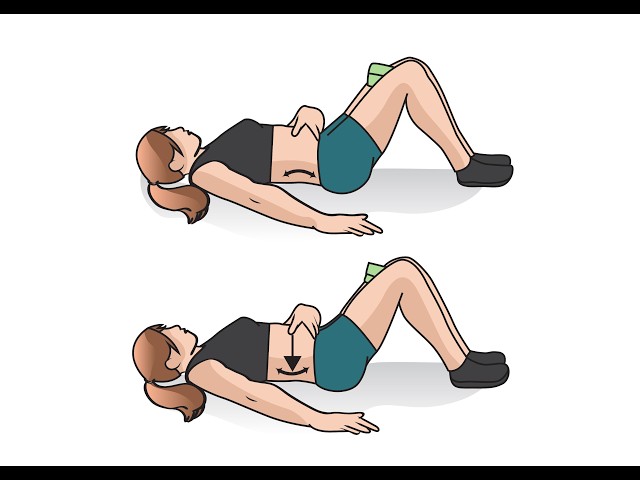
This video introduces the first phase of the One Core Project, specifically designed for individuals recovering from a C-section or hysterectomy. The primary focus of this session is establishing core awareness through the posterior pelvic tilt exercise, which serves as the foundational movement for rebuilding strength and connection in the abdominal area. Viewers are guided to perform this motion smoothly without rushing, aiming for ten repetitions initially to practice the feeling of tilting the pelvis backward. The instructor emphasizes maintaining a relaxed state throughout, particularly ensuring that the shoulders, back, and legs remain loose to prevent unnecessary tension, while gently engaging the lower core muscles just below the belly button.
As the routine progresses, the exercises evolve to include holding the posterior pelvic tilt for eight-second intervals to build endurance and control. A significant portion of the instruction is dedicated to using tactile feedback to enhance body awareness; participants are asked to place their fingers two inches below the incision site and toward the hips, or between their knees with a block, to mentally focus on specific areas of the core. The goal is to detect which side of the abdomen feels more engaged or "kicks in" better than the other, acknowledging that asymmetry is common after surgery. By repeatedly focusing on the less responsive side, the brain can begin to re-establish neural connections and improve muscle activation in weakened regions.
The final segment of the workout combines the posterior pelvic tilt with a gentle belly button draw-in, instructing viewers to pull the navel toward the spine while maintaining the tilted position for eight counts. This integrated movement further challenges the core by requiring simultaneous engagement of the lower abs and the ability to stabilize the torso against gravity. The video concludes with practical advice on frequency, suggesting that this sequence be performed two to three times a week for several weeks to foster gradual progress. The overarching message is patience and consistency; by allowing the nervous system time to adapt and avoiding over-squeezing, individuals can safely increase their core awareness without overwhelming their healing tissues.
Read the full video transcript
All right, so this is a short version of
the core exercises for phase one. So
we're going to start out with the
posterior pelvic tilt practice motion.
We're just going to practice tilting our
pelvis for 10 reps. So let us begin. All
right, ready to go ahead and practice
your rotation. One.
And release. Nice and motion.
And two.
And relax. And three. So we're just
going to practice that motion.
And relax.
And four.
I don't rush these, but go nice and
smooth.
And one more. Five. So we're halfway.
And again. Six.
And seven.
And eight.
Last two.
Nine.
And 10.
Awesome. And rest.
All right, here's the motion two for
core awareness. Go and grab your block.
Put it between your knees. Now remember
at any time if you feel like you need to
learn more go back to the introduction
phase of core of of core awareness phase
one.
So we're going to do our posterior
pelvic tilt. We're going to do six times
for the eight count. So go ahead and do
your posterior pelvic tilt.
You're going to hold for the full eight
count.
And five, four, three,
two, one. Go ahead and relax. Stay fully
relaxed. Remember don't over squeeze.
Relax those shoulders. Relax that back.
Relax those legs.
And go ahead and do your posterior
pelvic tilt.
All right, we're going to hold that for
that full eight count.
And four, three, two, one, go ahead and
relax.
Take the full time, the full eight
seconds, and four, three, two, one, go
ahead and do your posterior pelvic tilt.
Holding that back nice and firm.
We're going to hold it for the full
eight count.
And four,
three,
two, one, go ahead and relax. Halfway,
we got three more of these.
And go ahead and do your posterior
pelvic tilt.
Perfect, nice and firm, light squeeze,
relax those shoulders.
And three, two, one, go ahead and relax.
Awesome, we got two more.
Make sure you take the full eight count
to rest.
And go ahead and do your posterior
pelvic tilt, nice and firm, hold.
Gently press down, feel that lower core,
you're focusing to see if you can feel
that lower core activate.
And three,
two, one, go ahead and relax.
We got last one.
Make sure you take that full eight
count. Remember, the whole goal of this
is just to start to feel awareness that
lower core. Go ahead and do your
posterior pelvic tilt.
Light squeeze, relax the shoulders.
Focusing below that belly button.
And four, three, two, one, go ahead and
relax.
All right, now we're going to do the
posterior pelvic tilt with the two
fingers below the belly button out to
the side of the the the hips. So, let's
go ahead and grab your find your belly
button.
Go two two inches down.
Try to find that incision area, and then
go two inches towards your towards your
hips. And now we're going to do the
posterior pelvic tilt, and we're going
to hold for the eight count. So, go
ahead and do your posterior pelvic tilt.
Nice and firm. Holding for that full
eight count.
And four, three,
two, one. Go ahead and relax. Make sure
we take that full recovery. We're going
to lightly squeeze that block or that
pillow in between your knees. Mentally
focusing on those fingers and that lower
core starting to get more awareness. So,
go ahead and do your posterior pelvic
tilt.
Hold nice and firm.
Good. Mentally you're focusing on where
those fingers are. Feel those muscles
kick into your core. If not yet, that's
okay. Don't worry about it. They will.
And three, two, one. Go ahead and relax.
Good.
Now, remember the idea here is to create
more awareness below that belly button
to the lower core area that's been
weakened or traumatized or it had that
surgery.
All right. Go ahead and do your
posterior pelvic tilt.
Holding nice and firm.
Gently pressing that back to the floor.
We're going to hold it for the full
eight count.
And four, three, two, one. Go ahead and
relax. We're at halfway. We got three
more of these.
Good. And relax those shoulders. Relax
those head. No extra tension. Go ahead
and do your posterior pelvic tilt.
Holding that back nice and firm. Pulling
that back to the floor. Focusing on
those fingers. Feeling those abs kick
into your lower your lower abs kick into
those fingers. And hold for three, two,
one. Go ahead and relax. Last two.
Take that full eight count. Make sure we
fully rest. Full recovery. It's really
important for our nervous system to feel
this way.
Go ahead and do your posterior pelvic
tilt.
Hold nice and firm. Mentally focusing on
those fingers and those that core
muscles kicking into them. And four,
three, two, one. Go ahead and relax.
We got one more. Make sure everything's
relaxed, shoulders relaxed, light
squeeze of that block.
And then go ahead and do the posterior
pelvic tilt.
Holding firm, mentally focusing on those
fingers and those core muscles kicking
in.
And hold for four,
three,
two,
one. Go ahead and relax.
Very nice. We're going to go to the next
exercise.
All right, for the next exercise, we're
going to be focusing on the left and
right side to see which one is kicking
in more. So, go ahead and find your
belly button with your right hand. Go
down 2 in. Move it over to the left
side.
All right. You're going to do your
posterior pelvic tilt and pressing your
hand down at the same time nice and
gentle. So, go ahead and do your
posterior pelvic tilt. Gently press down
that left side, mentally focusing on
that left quadrant. See if you can feel
it kick in.
Holding that for that full eight count,
which is four, three, two, one. Go ahead
and relax.
Remember, we're evaluating our left to
the right side. Which one do you feel
more? Which How How is it engaging?
Go ahead and do your posterior pelvic
tilt.
Gently press that left side down, the
left hand down into the floor, really
gently.
We're going to hold it for that full
eight count, which is four, three, two,
one. Go ahead and relax. We're
evaluating left to right here, so I want
you really to pay attention.
We have one more. Go ahead and do your
posterior pelvic tilt.
Hold that. Press that left hand down,
gentle, very gentle.
We're going to hold that for that full
eight count.
And four, three, two, one. Go ahead and
relax. Now, go ahead and switch hands.
Go ahead and put that left hand up. Find
the belly button. Go down 2 in off to
the right side. And you're going to keep
your right hand down this time.
Now, once again, I want you to evaluate.
Relax the shoulders. Relax your your
block. Just light squeeze there. Don't
over press that right hand down. Let's
go ahead and do the posterior pelvic
tilt.
Hold. Gently press that right hand down.
You're going to hold that for that full
eight count.
4 3 2 1. Go ahead and relax. Now, start
to start to be aware which side did you
feel more, which side felt more engaged,
less engaged, where's the awareness at?
Let's go ahead and do your posterior
pelvic tilt.
Gently press that right hand down.
Hold in for that full eight count.
And 4 3 2 1. Go ahead and relax. Now,
you should start to feel one side feels
different than the other. I want you
just to be aware of that. We're going to
address it here in a second.
Go ahead and do your posterior pelvic
tilt.
Perfect. Hold. Gently press that right
hand down.
And let's get the full eight count.
Let's really focus. Can we feel that
side? How does it feel compared to the
other side? And 4 3 2 1. Go ahead and
relax. Now, I want you to evaluate which
side felt more engaged, which side which
side felt disengaged. We're going to do
six more on the side that felt less
engaged, that had less awareness. So,
whatever side had less awareness, I want
you to go ahead and choose that side.
So, go ahead and put your fingers 2 in
below the belly button and to the side
that you feel less engaged. And for
example, this is the left side here. So,
what I you're going to do is you're
going to do six more of these. Posterior
pelvic tilt.
Gently press down the side that feels
less engaged. Holding for the full eight
count.
And 4 3 2 1. Go ahead and relax. Now,
we're trying to bring more focus, more
awareness to that side. There's a
disconnection in the brain. There's a
many reasons why, but we're going to
just keep focusing on that side for six
six total. So, go ahead and do your
posterior pelvic tilt.
Gently press down that weakened side.
We're going to hold for the full eight
count.
4 3 2 1. Go ahead and relax.
As we do this, you're going to start
feel that side start to kick in, start
to kick in, start to kick in. Now, this
will be part of our whole program.
You're going to do this many times and
as we move forward here. So, go ahead
and do your posterior pelvic tilt.
Good. Gently press that left side down.
Holding that for that full eight count.
And four, three, two, one. Go ahead and
relax.
Now, when we're doing this, remember
we're trying to create balance to each
side. May never be perfect, we're just
going to try to create it more balanced
to the left to the right side.
So, go ahead and do your posterior
pelvic tilt.
Gently press down that side that has
less awareness.
Mentally, you're focusing thinking about
that side that had less awareness,
trying to bring more focus to it. It's
going to help the brain recognize it and
feel it. And three, two, one. Go ahead
and relax.
We've got two more of these.
Nice and relax. Make sure you get the
full recovery. Relax your shoulders.
Relax that the the squeezing that block.
Let's go ahead and do your posterior
pelvic tilt.
Gently press down that side that has
less awareness.
We're going to hold it for that full
eight count.
And four, three, two, one. Go ahead and
relax.
And then we got one more here. So, once
again, we're just focusing on balance.
This might take a couple weeks to get
more balance and that's okay. Do not
rush through this. Just allow it to
happen. Go ahead and do your posterior
pelvic tilt.
Gently press that back firmly to the
floor.
Good. Gently press that left hand down.
Or the weakened side or the less aware
awareness side. We're going to hold it
for that full eight count.
And four, three, two, one. And go ahead
and relax. All right. I want you just to
just to clock in which side for how they
feel. Now, each time you do this each
each day you do this, you're going to
feel it might be a little different on
each side and just keep going through
this process. We got one more exercise
in this sequence.
And what I'm going to have you do now is
I'm going to have you do your posterior
pelvic tilt with a little bit of a belly
button drawing. So, go ahead and do your
posterior pelvic tilt.
Hold that in. Nice. Go ahead and pull
that belly button to your draw it in
suck in that belly button in nice and
gentle to the the small of your back
into the table. And you're going to hold
that for 3 2 1. Go ahead and relax.
Now, when you're doing this, you're
doing more things. So, relax those
shoulders. Relax that that block. Try
not to over squeeze those legs.
So, go ahead and do your posterior
pelvic tilt.
Nice and firm. Pull that belly button to
the small of your back.
You're going to hold that for a full
eight count. And 4 3 2 1. Go ahead and
relax.
All right. Make sure we take the full
recovery. Relax everything. Shake it out
like your body just relax here. All
right. Good. Good. All right. Go ahead
and do your posterior pelvic tilt.
I want you to draw that belly button
down in. Mentally feel that core kicking
in. Mentally, you're focusing on that
lower core. You're focusing on those
muscles starting to engage. Bringing
awareness. Bringing awareness. And 3 2
1. Go ahead and relax.
All right. We've got halfway. We've got
three more of these. And the the idea is
just to bring more and more awareness to
this area that's been traumatized for so
long.
Go ahead and do your posterior pelvic
tilt.
Gently draw that belly button to the
small of your back.
You're going to hold that for the full
eight count.
4 3 2 1. Go ahead and relax.
We got two more of these.
Full relax. And go ahead and do your
posterior pelvic tilt.
Good. Gently draw that belly up belly
button to the small of your back. Kind
of pulling that belly button to the
table. Holding it for 4 3 2 1. Go ahead
and relax.
And we got one more.
Now, make sure you relax.
Relax your shoulders.
Good. Go ahead and do your pelvic tilt.
Pull that belly button down into the
table.
And you're going to hold it for that
full eight count.
Mentally you're focusing on that lower
core, feeling those abs kicking in. And
4, 3, 2, 1. Go ahead and relax. Now,
just a reminder, I want you doing this
at least 2 to 3 weeks, 3 to 5 times a
week per times. You can do this every
single day to increase that awareness.
And as long as you're doing it in this
cycle, in this format, you will not
overwhelm your core, your abs. And it's
just going to help bring more and more
awareness to your core.