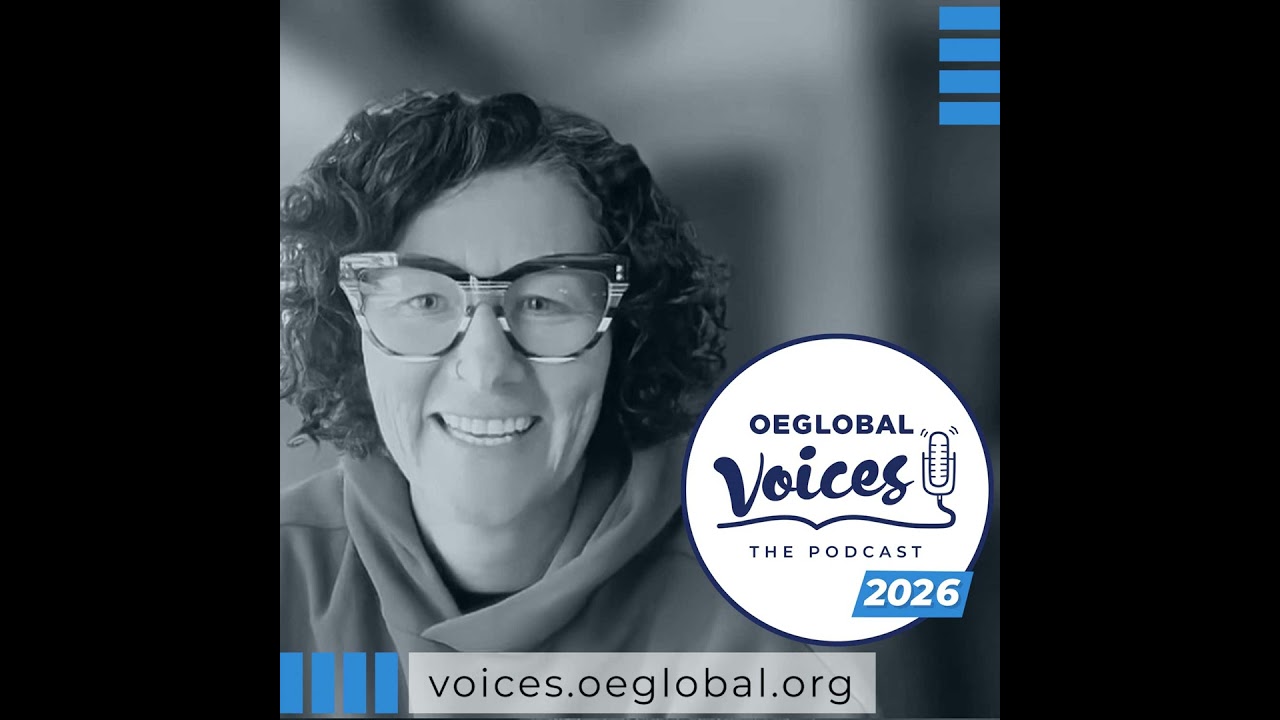
Video summary
Amanda Coolidge, the VP of Strategic Engagement and Growth at Pressbooks, is celebrated as a compassionate leader who prioritizes empathy, curiosity, and authenticity in her professional life. Currently living full-time in an RV near Victoria, British Columbia, she balances remote work with parenting while embracing a mobile lifestyle that allows her family to travel and explore the Pacific Northwest. Her approach to leadership centers on deep listening, understanding team members as whole individuals beyond their work roles, and actively intervening to mitigate tension. She believes in modeling healthy boundaries, such as taking mental health days openly and encouraging others to do the same, ensuring that rest is viewed as essential rather than optional.
Her journey into open education began in 2006 when she moved to Nairobi, Kenya, to help develop an open education repository for teachers in sub-Saharan Africa, a project that highlighted the global disparities in access to learning materials. Amanda recalls a poignant story of a student in a remote South African village who climbed a hill daily at 4:30 PM to catch just enough cell signal to read physics chapters from an open textbook, illustrating the profound impact of accessible resources on individual perseverance. Throughout her career, she has been influenced by pioneers like Eric Mazur and Mary Burgess, advocating for a shift from technology-centric views to human-centered approaches that focus on real-world access and community needs.
Despite concerns about budget cuts threatening open education initiatives in North America, Amanda remains optimistic about the ecosystem's evolution toward integration with open science, workforce development, and micro-credentials. She emphasizes the critical role of recognition and gratitude in sustaining this work, encouraging nominations for awards not just to honor individuals but to signal institutional support for their efforts. Beyond her professional achievements, she finds joy in basketball with her son, watercolor painting, reading diverse genres, and fostering a supportive fitness community, all while continuing to champion values-driven organizations like Pressbooks that prioritize employee well-being through policies such as four-day workweeks and "No Meeting Tuesdays."
Read the full video transcript
But I've always been one of those people
that as a leader incredibly curious
about team members and curious about
their lifestyle [music] and curious
about who they are when they're not at
work and and how they can bring
themselves to that role regardless of of
who they are. Um for me it's just sort
of being kind and empathetic and
listening. It's a lot of listening to
where people are coming from and trying
to mitigate any kind of issues where
you're feeling like there's a bit of
tension, but how can you help intervene
on both sides. Um and there are certain
times when you just kind of have to
make a decision and and stand by it.
>> [music]
[bell]
>> It's time again for another podcast
episode of OER Global Voices.
The podcast show that we produce here at
Open Education Global.
Each episode we try to bring you
conversation style people, practices,
and ideas from open educators all around
the world.
And this is a very special episode. I
like to think they're all special, but
this one is specially special because
it's episode number 100. And as we got
up to the high 90s, I was really trying
to plan who would be an ideal guest to
have to take us over into the three
digit mark. And it was perfect that we
lined up this conversation with Amanda
Coolidge, an amazing open educator who
you will see and hear from many aspects
of her life and career and way of
thinking in this conversation.
We recorded this way back in June 22nd,
2026.
I don't know where the time went. Amanda
was recognized last year with an Open
Education Award for Excellence as a
compassionate leader.
We'll hear about her ideas on
leadership,
her way of thinking, her background,
what motivates her, what it's like to
live in an RV and travel and work and
move across the world and be a parent
and a loving caring family member and
the work that she's doing now with
Pressbooks. Okay, I'm giving the whole
show away, but now let's get to the
conversation.
>> [music]
>> First of all, um hello Amanda. This is
just like us having a conversation and
uh but you know, I'm forgetting not
everybody knows you, so introduce
yourselves and and tell us where in the
world you are right now.
>> Yeah, hi. So, I'm Amanda Coolidge and I
am the uh VP of strategic engagement and
growth at Pressbooks. Um uh formally
with uh BCcampus in British Columbia,
Canada and I am located right now in
Victoria, British Columbia and
specifically on the Saanichton First
Nations uh land, which is very near the
airport and the ferry and in a beautiful
spot by the ocean.
>> Awesome. I think I know where that is.
We know where you are on a map, but do
you mind describing because um I can see
you, but our podcast audience can't. Can
you describe your surroundings right
now?
>> Sure. So, I live full-time in an RV and
what I'm seeing outside right now is
beautiful green and bright blue skies.
Um I'm also seeing somebody coming here
for a tree removal service,
[clears throat] so that's nice and loud
a little bit in the background. Um but
yeah, it's beautiful and lush and just
so sunny. We've had great
really wonderful warm weather and uh if
you go about
I don't know, a kilometer down the road,
it's just where the front of the beach
is. If you've ever been to a beach in
the Pacific Northwest, it's fairly like
rocky and and gray sand um and the water
is very very cold but it's
delightful.
>> I like how quickly you said that and and
like it's such a fascinating thing and I
don't know if you want to talk about it.
You live in an RV. How how does that
work?
>> I'll give you the history of it. So
during COVID 2020 we had a RV a fifth
wheel and we decided we wanted to live
in it full-time
and not because we were going anywhere
in particular but just because we liked
the small living and just sort of being
able to move around if we wanted to.
My son was in grade two at the time and
he's now almost in high school.
We
have
a
42 foot fifth wheel that basically looks
like on the inside it looks like an
apartment, you know.
And I work from the kitchen table and my
son goes to public school
nearby and in the summer months we hit
the road and travel and I still work
remotely. When he's off of school we
also try to travel and and hit the road.
>> I I know it's like that's ordinary for
you but it's just it's fascinating and I
commend you for balancing the life and
having to work from the road and
>> Starlink has made it a lot easier.
That's for sure.
Before that it was a lot of you know you
were you were sort of like doubling up
on your
cell phone coverage because you were
never sure if you were going to
get anything or miss anything.
I think we've done a good job of making
it work. I mean it's been really lovely
for my son in terms of
growing up
in this environment and knowing that you
can have everything you need within a
small space and
he gets to enjoy the best of both
worlds.
>> That it kind of parallels with what I
know about you. You traveled a lot as a
kid. So, where did you spend your your
early childhood years and what kind of
student were you in school, too? I'm
interested to know.
>> I spent my early years in England,
Poland,
Northern Virginia, and Pakistan. And the
reason I did that is because my dad was
in the foreign service. And so, we
traveled, you know, every 4 years to
different countries and it was a really
fabulous experience. As a student, I was
never really a strong student. I wasn't
one of those people that like got
straight A's automatically, but I worked
very hard. I'm
firstborn child. So,
and I'm a people-pleaser.
So, I worked hard. I always wanted to do
my best and I wanted to make sure that,
you know, I was
trying my best in everything.
Um
I think I was, you know, pretty
outgoing, sometimes a little too, you
know, loud or outspoken for some of the
teachers, but generally, you know,
played by the rules and always been a
rule follower. Yeah, there's nothing
really mischievous or interesting about
piece.
>> Oh, it is interesting. I ask everybody
that question and it's fascinating to
hear how people describe it. And and
just as a follow-up,
if young Amanda met current Amanda, what
might young Amanda say or ask you?
>> Um I think they would be surprised that
I live in an RV, but I think that they
would be like really impressed with
the
unique factor of it and and sort of
being like, "Oh, wow, that's cool." I
think they'd also be really impressed
that I have a son who's an athlete. Um
and he plays a lot a lot of basketball.
I was an athlete
um
up until high school and my dad played
college basketball. And so, I think that
would be really interesting to me. Um I
think little Amanda would be pretty
proud of where where I've come, like
where I'm at.
>> Fantastic. And uh I I know this story,
um and I found it recently, your 2019 um
Open Ed Conference keynote. But, like,
what was your calling, or what
introduced you to open education?
>> When I first started really becoming
involved in open education, it was
probably 2006.
Um before that, I had sort of dabbed
with it, and it was fairly new. I mean,
at that time, it was David Wiley talking
about learning objects, and and there
was always this, you know, how can you
modularize the content and be able to
share that content in a way. Um in 2006,
I wanted to change jobs. I was working
in Calgary, Alberta.
And so, I applied for a job um with the
African Virtual University and the Open
University UK, which is very timely
because they're having their OER UK
conference today at the Open University.
I moved to Nairobi, Kenya to work on a
project with the African Virtual
University, the BBC, and the Open
University to develop the first uh open
education repository for teachers in
sub-Saharan Africa. And the coolest part
of that project was that it was um
teacher educators in the sub-Saharan
region designing and writing the
curriculum um specific to their region.
And we developed the curriculum in six
different languages across the various
countries. That was a really cool
experience, just to see how the power of
open could be used and shared, and how
people were thinking about open at the
time. and it was also really interesting
to me as well, because I actually went
to it was before it became open
education global, and I went to what was
called an open courseware
consortium meeting.
And at that meeting, um, you know, it
was um, folks from Creative Commons and
folks from MIT Open Courseware, and
David Wiley was there. A lot of people
representing North American uh,
viewpoints when it came to open
education. They were really
um, focused more on the technology and
on the repositories.
And I remember
thinking that in my case, I was just
trying to figure out how could someone
access an offline version of the content
if they were somewhere in rural Rwanda,
or could they actually,
you know, access it on a Nokia phone?
Um,
it was just an interesting sort of
difference when you hear what's
happening in North America versus
elsewhere in the world.
>> I'm wondering when when you described
that, um,
to some degree there's still a little
bit of that, because for for most of of
the world it just means access to
material to help them learn or or course
content and experiences and all the
things,
um, and not as much the licenses and the
history and the ORs and all that. Um,
so, uh, rather interesting that's that's
how it was.
>> There's a great story. I don't know if
they're still around, but there was an
open textbook development group in South
Africa, and they are called Siyavula.
They worked in the K through 12, uh,
arena, mainly in STEM, so science and
math. And I remember talking to their
CEO, asking questions about like, how
are people accessing the content in some
of these remote areas of South Africa?
And and he said it was super
interesting. They had a physics book,
and when they looked at the analytics,
it was getting pinged
almost every day at the same time
um in this very remote region of South
Africa in a village, but it would be
consistent. It was just a consistent
ping. It was consistent, consistent,
consistent. And they actually had the
opportunity to go to this remote village
because they were like, "There's got to
be a story here." Well, sure enough, it
turned out that this kid found the
Siyavula
website or information, and he would
take his old cell phone, he would run up
to the top of a hill
at at like 4:30 every day. At the top of
the hill was where he would be able to
access a little bit of cell coverage.
Every day he would go through like a
chapter of that physics information
because he found that it was more
helpful than what he was getting at
school, and then he'd run back down, you
know, for bedtime and stuff. It was such
a great story about well, the
perseverance of a kid and the resiliency
to like want to learn something and
run up and grab that, but also that
power of you never know what's going to
happen with the open material if you
if you allow it to be open, right?
>> Oh, I love that story.
Um I mean, I'm curious, too. I mean, you
mentioned some names, but um I'd like to
know like, you know, who or what were
really key influences, especially um
early in your career in in openness.
>> Yeah, so Eric cuz it was very early on
when he was talking about open
licensing, and he really was the one to
sort of
spearhead the idea of moving from open
source to open education. Um so, him for
sure. Um another um really influential
person when I started at
Mary Burgess, who before I was executive
director was the executive director and
really sort of spearheaded the whole
open textbook project. Um got that going
with governments and and really wanting
to move forward with that. Um
in terms of other people also Kathy
Casserly from the Hewlett Foundation.
The Kathy was the first Hewlett
Foundation program officer for open
education back in 2006-2007
was actually the program officer for the
work that I was doing. So also very
influential and very
um knowledgeable about what was
happening and one thing I always really
appreciate about Kathy is
just a real curiosity about how how how
that work is. Um I mean Alan I would say
you too. Like I followed you forever
when you were at the digital media
consortium.
And I always loved reading your work and
and then sort of following the
interactions on the comments between you
and Clint or you and
you know Dave Cormier or all of these
folks. So there's a real strong
mentorship. You know I know I'm blanking
on a bunch of names of people who've
influenced me but those would be the
ones that come to mind for sure.
>> You're too kind and it sounds like I I
I I didn't influence Amanda Sneling
there. Uh but I have to say like
in my early career the connection to a
lot of Canadian educators was was really
key for for so many things. So I'm glad
to be here now in the country.
>> Yeah well it's probably like a
foreshadowing. It was like you're just
like working your way up here.
>> Okay so give us some some of the stops
cuz this quite a trail.
After the project in Africa
what are the timeline points in your
career?
>> After I was done in Africa I decided to
head to
Vancouver and the reason I moved to
Vancouver is because my sister was
living there. Um I then started working
at BCIT.
I was working in their learning and
teaching center and actually that's
where I met Tannis Morgan. So back in
>> Mhm.
>> 2009 or something. Um I worked there for
a little bit and then after that I
ended up going to Royal Roads
to be an instructional designer. Royal
Roads University was one of the first
hybrid style
universities where you could do online
distance education and also attend in
person for residency. So that was really
interesting. That had moved me to
Vancouver Island in 2010. I stayed at
Royal Roads for a few years and then I
moved to BC campus.
Um, and then since BC campus I
um, started my own business called
Coolage Collaborative and still doing
contract work through my group there and
then um, also joined Pressbooks
recently. So been working with them as
well. Um,
I mean
>> That's good. We got the highlights.
>> Well, you're doing the highlight reel.
>> Well, last year you got the Open
Education Award for Excellence as a
compassionate leader. This is part of
the way we allowed people to name their
reward.
So whoever nominated you came up with
that title. They knew something about
you. What what does that mean to you to
to be described as a leader who's
compassionate?
>> Well, that was definitely
an honor. I felt like that was such a
beautiful tribute and exactly how I'd
want to be called. For me it it means
um,
being authentic but also being and when
I say authentic it's sort of authentic
to who I am, like what my values are and
mine are, you know, community and family
and relationships are really important
to me.
Um, but I've always been one of those
people that as a leader incredibly
curious about team members and curious
about their lifestyle and curious about
who they are when they're not at work
and and how they can bring themselves to
that role regardless of of who they are.
Um, but then also just kind of the
values of caring and you know, when
people aren't feeling well, it's very
simple
for them, especially when they work
remote, they feel like it's easy for
them. No, no, I'll just do a few things.
I have always sort of felt like no, rest
is the only way that you'll ever get
better and we don't want you to have any
burnout or feel poorly.
For me, it's just sort of being kind and
empathetic and listening. It's a lot of
listening to where people are coming
from and trying to mitigate any kind of
issues where you're feeling like there's
a bit of tension, but how can you help
intervene on both sides?
Um, and there's certain times when you
just kind of have to
make a decision and and stand by it.
>> Going from, you know, doing that inside
of an organization, you know, I know BC
Campus isn't big, but it's it's got a
lot of moving parts in terms of people
and projects. I know you're not in that
role anymore, but what what would you
say
would, you know, enable you to continue
that now and feels like there's even
more pressure and people are more
stressed. Um, we can name all the things
that people are feeling the pressure
for. Um,
you know, how would you continue that um
sort of mode of leadership style?
>> Well, for me, I've had great leaders
before who model what compassion looks
like. So, and I tried to do that as
well, which is uh modeling mental health
days and being very open and honest in
Slack or in Teams and just saying, "Hey
everybody, I just need to take time for
myself today and I'm taking a mental
health day." And for that to be from the
leader going out to the team so that
they know, "Okay, that's something
that's possible and I can do that." Um,
the other thing too is, you know, making
sure that when you're not in the {quote}
{unquote} office hour time that you, you
know, either schedule those messages or
um sometimes I had put for a while on my
email signature, you know, if this email
comes to you at a
time that's not during your work hours,
please don't feel like you have to
respond right away.
I think that's important. Another thing
too is a lot of times people I find
they just want to be heard and
appreciated. Sometimes I think we forget
that in the rush of everything. It's
It's almost like forgetting just to say
thank you if someone hands you something
or delivers something. And for a while
there when I was at BC campus, I would
send handwritten thank you notes to
people and put them in the mail and be
very specific about like, "Oh, when you
did this, I really appreciated that." Or
thank you for for doing that. So that
was helpful.
And when I go on vacation, I tune out. I
remember especially as an executive
director, you feel very nervous about
tuning out, but I said, "You know,
here's my phone number and if
something is really bad, you can send me
a note, but
I think a lot of it is mirroring
um the boundaries that you
you personally want and how those
boundaries
get shown to the rest of the work.
>> It shows the people that you work with
that you
trust them enough to not rely on you to
be there when you when you want to take
that break, right? So um tell us what
you're doing now at Pressbooks. When I
heard the announcement, I was very
excited like, "A man is going to be at
Pressbooks." So what are you working on?
>> Well, well, first of all, I love it.
It's been a fun challenge. So I am
working on the customer success
team. I get to work with
the marketing lead, the sales lead, the
customer experience lead,
and the marketing team and sales team.
And that's great. They're amazing
individuals who just get stuff done and
do it in such
a values-driven way of thinking about
how to how to
do this work. Um so, I've been working
on that team. I'm also helping out and
building up a new product that we're
working on.
So, we are developing a new product, uh
a micro-credential authoring platform.
And that micro-credential authoring
platform, we're doing a pilot in the
fall with Maricopa Community College,
your old haunts. And uh Bank of America,
and we're really excited about that. Um
that's been really fun to work with the
design team and the development team and
really think of ways that we can
um incorporate pieces of the Pressbooks
platform, but then also create something
that's a little bit more unique and
skills-driven.
Um and hopefully an opportunity for
folks to see,
you know, what are the benefits there.
Um one of the things that I've loved
being able to do is use my instructional
design hat again in that work and
thinking about um you know, as I design
a course, what are the things that I
would want and wanting to really have
the entire design framework be based on
the competencies and skills at the
outset versus an afterthought. And so,
that's been an interesting way for us to
develop and build this work.
Um so, been doing that and then I get to
um
you know, attend conferences and see uh
people in the open community regularly
where I get to either talk about
Pressbooks or work with others to share
their Pressbooks stories. And then
people create the most incredible pieces
of work. Um and they use tools and
platforms in ways that sometimes you
don't even expect, you know?
>> That's often the most exciting part.
>> Um uh
well, obviously we're really intrigued
to hear about this new micro-credential
platform and hope we can work with you
to line up a demo or a preview or just
whatever information we can share, you
know. Um so, if you know, when we say
Pressbooks, they think of the the book
with the red cover, and they know what a
Pressbook is, like, but what might not
people know about, you know, the
organization itself or what it's like to
be inside Pressbooks?
>> So, the organization itself, it's the
CEO, uh her name is Book Shock, and um
it is an organization that has an
incredible
uh honestly, the best
uh work experience or um way it treats
its employees is
is absolutely remarkable in terms of
things like, you know, time off and
different allowances and being able to
uh work 4 days a week. It's a
4-day-a-week company, and
they're just very much
um
staff and people-focused first. Uh
obviously, that creates a lot of loyalty
at at the organization.
Um
it's really inspiring how Book Shock has
created this sort of foundation for an
organization that
um you know, speaking of boundaries, has
a boundary where it's called No Meeting
Tuesday. So, Tuesday is like your head's
down work, you know, get what you need
done because Monday, Wednesday, and
Thursday are usually full of meetings.
It's either with external clients or
internally if you're trying to build
things or trying to work on things. And
Tuesdays, it's such a great time
internally, like, you can Slack message
someone, and you're not worried about
interrupting them during a meeting. You
can just sort of say, "Hey, I'm working
on this. I need some troubleshooting
help or something." Um that's been
really cool to see how different
organizations like actually function and
how they
how they how they work. The other thing
I've loved is that Pressbooks is very
international organization. So, we're
based in Montreal,
um, Canada.
Uh, but everyone lives everywhere, you
know, Victoria, Edmonton, Winnipeg,
um,
Ontario, Mexico, Spain.
Yeah, it's great. It's, uh, it's a neat
way, I mean, you have that, too, the
sort of the remote, the international
remote work situation.
>> That's going to stay with me, the no
meetings Tuesdays. It's like simple, but
it, it's effective. And And you get to
hang with Steel Wag stuff?
>> I get to hang out a lot with Steel.
Yeah.
>> Oh, I love Steel. Tell him hello. He's a
great soul.
>> He He is on my team, and, um, he is a
good soul. He's actually right now at,
um, a World Cup game yesterday with his
son. So, he's on vacation this week.
It's been a nice group of humans to
interact with and be a part of their
their organization and and get to see
how things,
you know, work. And and just sort of the
different values that they've brought to
the work that they do.
>> Okay, uh, maybe a big question, I don't
know, impossible to answer. Like, you
know, we've covered your career, Art.
Like, how would you characterize or say
the state of the open education
ecosystem? Uh, what are you worried
about and what what are you optimistic
about?
>> I am worried that open education,
with all of the institutional higher
education
budget cuts,
I mean, there's a lot in Canada, there's
a lot in the United States, and then you
see it sort of trickling
outside of
of
North America and Mexico. I'm worried
that open education is going to be a
line on a budget that
people
who don't understand the impact of open
education will just erase from the
budget.
And the reason I say that is because
it's very easy for people who aren't the
end user being the student
to make decisions on someone else's
behalf
without understanding the real
impact of that. And I think we saw that
you know, most recently the campus
Manitoba
um shutting down and they lost funding
and will be closing at the end of this
week.
What's super interesting about that and
I'll get back to what else excites me,
but this is one thing that excites me
actually. I was just there at a
conference um last week and the
community that they have built in the
Manitoba institutions, it's very clear
to me that the work that they um started
their foundation with an open education
will not go away. There was this real
drive and like a fighting energy to keep
the work continuing, so that's exciting.
Um I think what excites me is that I'm
starting to hear a lot more
conversations about how does open um
integrate within other aspects of the
academy or even outside of the academy.
And Paul Stacey has talked about this
for years. Looking at where does the
open ecosystem fit and what's the
conversation look like without it just
being open education, but like where's
the intersection with open science and
open access and
open licensing and open uh GLAM and all
of these different intersections why are
we always just siloing ourselves in this
one small area? And so for me I think
that's something I'm excited about. I've
heard a lot more conversations
especially around I'm in this work right
now, but in workforce development and
micro-credentials and talking about what
could it look like as an open ecosystem,
what could it look like outside of an
open ecosystem um because we're sort of
at this pivotal point of being very
concerned about budgets and funding,
it's been a real interesting to see
people rise up to try to figure out
alternative ways of
of
open education
um that's a bit more broad than what
we've seen before as the specific open
textbook or open resource.
>> today is actually the the deadline for
the award nominations and
>> Oh.
>> they've actually been pouring in. Like I
I have to go check, but we'll have more
than last year. We're closing in on 200.
Of course, this will be edited
afterwards, but as an awardee, what what
might you tell someone to to like go to
the bother of um uh nominating actually
someone else for an award?
>> Okay, I would say it is absolutely true
that the majority of open education work
and happens off the side of people's
desk. I think that the only way that the
work can be on somebody's desk or can be
continued to be funded or to continue to
be that budget line on on someone's uh
budget is the act of recognition. When
you nominate someone at your institution
or in your organization or someone even
outside of your organization who you're
seeing does great work,
it adds to both their recognition and
for them realizing that the work that
they've been doing is important to the
world. Um but it also signals to their
organization or to their institution
that the work that they're doing is
important for the world. It really goes
a long way in terms of um being able to
continue to support and advocate for
open education. It's just a great way
to just honor people's work and honor
the projects that they've been doing. Um
yeah, for me, I mean, it's it's a lovely
tribute.
>> We discussed earlier about how you
approach to think about like gratitude
internally.
>> Yeah.
>> And um we were trying to shift this
because it's always been like I want to
give an award because I'll get some
recognition. Of course, everybody wants
to get an award, right? But um trying to
shift it to like just what it means to
give someone else the recognition. Um
and I like to think like if more people
give, then more people would get. And
so, you know what? We I was surprised
when I start working on the project is
that um we'd get, you know, 100 to 200
nominations, and we'd only see a subset.
So, you know, the first thing was make
sure we see everybody and everything
who's nominated because that's a value.
Um and it also says to me like that
people don't really give a lot of
recognition, you know, big or small. No
one gets too much recognition. So,
there's there's that out there. And
thinking, too, um cuz I've been reading
all the nominations as they come in, and
it goes back to, you know, talking about
your um earlier work on when you started
um in Kenya. And you'll see this because
you've agreed to be a reviewer. Um
trying to get reviewers to think about
like um you know, not comparing one
nomination to another or like how does
this compare to other work? Like just on
its own. Is there something uh that
jumps out at you that sparks some reason
to sort of like give this person some
recognition? And And that's hard because
we end up trying to weigh like is this
impressive or is it compelling or does
it sound like it's having an impact? And
I don't know if all that is really as
important as like is it interesting? Is
it like in its own context compelling?
>> I like that. I think that's like the
power also of when you're talking about
gratitude and sort of sharing that open
gratitude is your uh project on the hat
tip.
You know, you sort of had these
postcards that were a hat tip to other
people. Um I really do think that at
this time when we go back to that idea
of
um you know, people being extremely
stressed or just overwhelmed or
uh all of the above, that act of
gratitude is
so impactful for others and for
yourself. I mean, when you give somebody
a gift, it's like my favorite thing. You
know, sometimes I'll go buy like
somebody a gift for their birthday and
I'm just like, "I just want to tell you
what I got you right now." You know, cuz
I'm so excited for their response or or
you know, it just makes me happy to know
that I've done something for somebody
else.
>> Yeah, those small things that when you
talked about you know, your act of
giving handwritten notes and I know you
and Mary Dee Ball both do this and and
kind of join the same level. My sister
just she sends me postcards like every 2
weeks and it's so remarkable and it's
like, "Judy, I can't keep up." And she's
like, "I'm not trying to make you keep
up, but she enjoys doing that." That's
small and novel to send someone a
postcard. I've been mulling in the back
of my mind that you know, the awards are
one thing, but it takes a lot of effort.
You have to write a nomination and
submit all this stuff. And I have in my
mind for some kind of smaller scale
vehicle at the level of the hat tip
where you can just, you know,
fill out a form and it and it creates a
personalized message to someone to say
like,
"Thank you, Amanda. You know, just out
of that conversation, you gave me so
many ideas." Or you know, when you can
say to your your librarians at your
college to say like, "You know, your
work on doing the accessibility review
was was immense." And like,
you know, and there are systems for
doing that, but I don't think we have
too much.
>> I don't think so, either. But I do think
there is something about, you know, that
either that email or that handwritten
note or even a Post-it note, you know,
>> Yeah.
>> But yeah, we talked about that. That was
the small things in that
>> Yeah, that's right. Small things
podcast.
>> So, what are your interests and hobbies
when when you're not working and and and
driving across the country?
>> As I mentioned, my son is a basketball
player, and so what that means I'm at a
lot of basketball gyms, and it it has
turned into a hobby of mine as well. And
I think it's also because it's like
connection time is like if there's some
sport on that is of interest to him, I
will watch any sport in order to have
that time together.
Um but also outside of um work, I have a
really wonderful uh gym community,
fitness community, and
um that really inspires me and keeps me
going. I'm
excited about that. Um I do some
watercolor painting, which I really
enjoy, and I love reading. So, I'm a big
reader.
Um
>> What wait what what What kind of stuff
do you like to read for pleasure?
>> Well, kind of a range. I love just
general fiction.
Um I like historical fiction, and then I
also like like romantic fantasy.
>> Mhm.
>> You know, yeah. Like
Fourth Wing, all that jazz. Yeah, big
into that.
>> Great.
>> Yeah, I devour books, and I love
reading. I find I don't really have a
shortage of um what to do on my
downtime.
>> So, you're not bored is what you're
saying.
>> No. Not No, not at all.
>> Well, thank you so much. It's just a
it's just a joy to talk to you. I would
do this whether we're doing a podcast or
not, but it's a bonus. I get to share
our conversation with the world.
>> Yeah, thank you. Well, thanks for
inviting me, and I do hope people
get their nominations in on time, and I
look forward to reviewing what's ahead.
>> Wow, what an episode number 100. Thank
you for listening to OEG Global Voices,
the podcast from Open Education Global.
Each episode features a different
musical intro track selected from the
Free Music Archive. Thinking about
today's show and Amanda's travel, I
found one called Back on the Road by TRG
Banks under a CC0 Universal License,
purely public domain, one of the best
licenses out there. You can find this
episode at our site voices.oeglobal.org
and you can join follow-up discussion on
our OEJA Connect Community or wherever
you interact with us in social media.
If you're listening and like to share
your open education work or suggest a
future guest or give us any other kind
of feedback, we're really desperate to
hear from you. You can find us on our
website or email to voices@oeglobal.org.
Thanks and looking forward to getting to
episode 101 coming up soon.
>> [music]