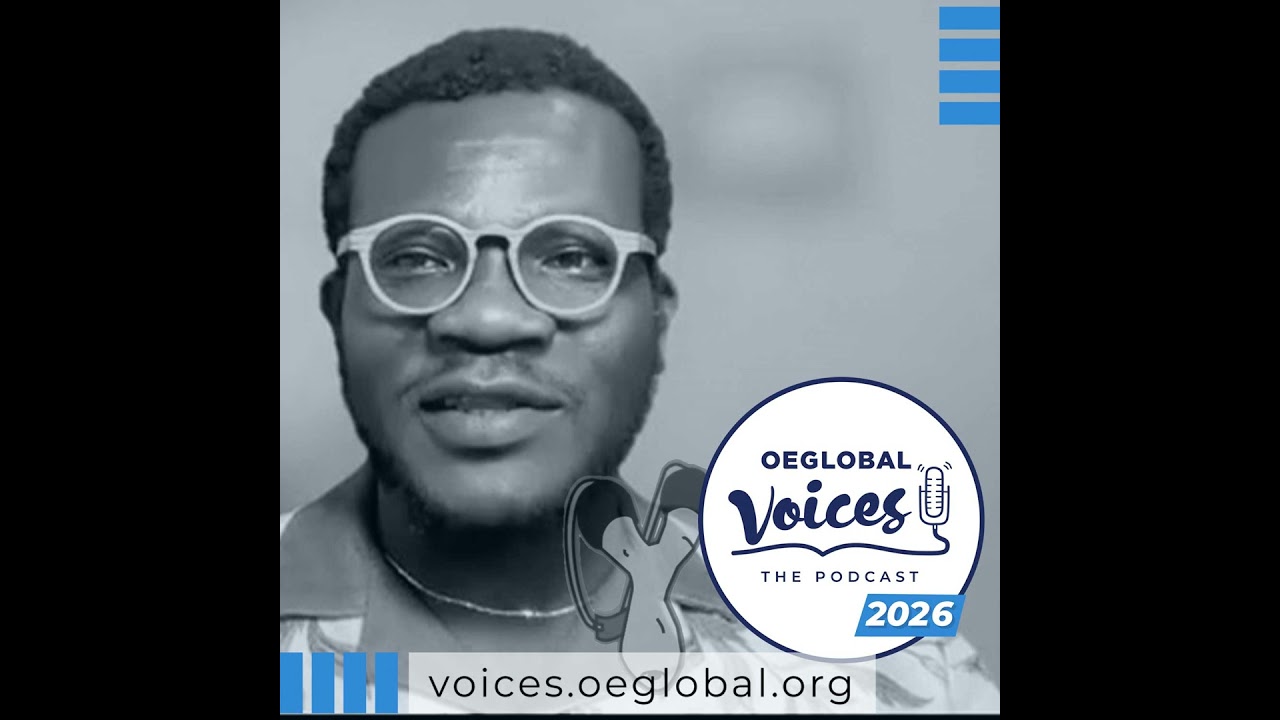
Video summary
Adéṣínà Ayẹni, a 2025 Open Education Award winner from Lagos, Nigeria, identifies as an "Euroba person" and operates out of a home studio dedicated to producing audio-visual content that preserves his culture. Born in Lagos, formerly known as Eko before colonial rule, Ayeni describes himself as a creative student who viewed school not merely as a place to acquire new knowledge but as a platform to develop inherent talents like drawing and storytelling. His passion for language and folklore was ignited during childhood holidays spent in the village with his grandparents, where he witnessed traditional practices firsthand. Although he initially pursued mass communication at a polytechnic, his academic journey in history, philosophy, and psychology opened his eyes to the power of his native language, leading him to become a pioneer in creating digital content solely in Euroba rather than English.
Ayeni provides a comprehensive overview of Nigeria's complex linguistic landscape, which hosts over 500 languages with three major indigenous tongues—Hausa, Yoruba, and Igbo—serving as cultural anchors alongside English, the colonial legacy language used for formal business and government. He highlights the prevalence of "Nigerian Pigeon English," a localized dialect that has recently gained recognition in mainstream dictionaries like Oxford's, yet he expresses concern over the decline of minority languages due to urbanization and educational policies that prioritize English. A significant portion of his work focuses on the critical role of translation and localization in open education, arguing that teaching in indigenous languages allows for faster comprehension and better retention of knowledge compared to second-language instruction. He emphasizes that thinking and processing information occur naturally in one's mother tongue, making translation essential for bridging gaps between diverse communities and ensuring equitable access to education.
Despite the rise of artificial intelligence and machine translation tools, Ayeni warns that current technology struggles with African languages due to a lack of sufficient training data and an inability to grasp the poetic, contextual, and semantic nuances of languages like Yoruba. He advocates for a human-centric approach where translators work alongside tech experts to build robust datasets that reflect the rich oral traditions and cultural contexts of indigenous speech. To combat the loss of knowledge as elders pass away, Ayeni actively archives oral literature, folktales, and historical narratives on his website and YouTube channel, ensuring that ancient wisdom remains accessible in the digital age. He also organizes conferences and mentors hundreds of linguists to encourage them to become advocates for cultural heritage, fostering a community that continues this vital work even after he is gone.
Ultimately, Ayeni defines open education as the unrestricted sharing of knowledge without barriers, a principle he has practiced since 2012 by freely distributing educational materials online. His mission extends beyond simple translation; it involves preserving the soul of his culture through storytelling, music, and puppetry, which he believes are more effective than rote memorization for embedding knowledge in young minds. By leveraging both traditional oral methods and modern digital platforms, he aims to create a sustainable ecosystem where indigenous languages thrive alongside global technologies. His work serves as a reminder that while the world has become digital, the foundation of human connection remains rooted in oral tradition, and it is the responsibility of folklorists and educators to ensure these voices are not silenced by the rapid pace of technological change.
Read the full video transcript
Before
now, before this current world that we
are now, you know, the digital
landscape, you know, the fast
information space that we are now, the
world has always been oral. You know,
before the printing press was, the world
has always been oral. No one was writing
anything. Um, those that wrote something
did it in form of pistos. you know the
likes of um NCBD in Eboland in Nigeria
the likes of you know conifform they are
all like pictorial formats. So before
printing press those are some of the
means that information was being shared
but a vast majority of the world share
information in oral form. The problem um
is that these people are dying. People
will keep this knowledge because once
you keep knowledge mind is stored in
your mind, you know it's stored there.
It's only when you share it when you
speak that you tend to pass on the
message.
Welcome to O Global Voices. I'm your
host and podcast editor Alan Lavine from
Open Education Global. I'm very pleased
to share with you this conversation with
Adisha Ayeni from Lagos, Nigeria, who
was a 2025 open education award for
excellence winner as a leader. This is a
fascinating conversation. We recorded
June 15th [music] and it's getting ready
to be published. Today is actually the
closing day for the 2026 nomination. So,
it's good time to get this conversation
out there so you can hear what happens
when someone emerges as a winner of this
process. Of course, everybody wins, but
I think you'll be fascinated to learn
more about Adisha. He's been doing work
as an open educator for a long time. He
just didn't actually call it that. But
you'll find out in his story, and you'll
learn so much more about his interest,
about the languages, culture, and
folklore of Nigeria.
Here we are finally after we've gotten
to know each other for a long time.
really happy to be talking to you today.
First, I I want you to introduce
yourself to our podcast audience. Let us
know who you are, where you are, but
because they're listening audio, if you
can describe the setting, the room that
you're in right now.
All right. Thanks, Albert. Uh my name is
Adishinoi,
but I'm also known by the sodony,
which literally means um the Euroba
person. I am a Nigerian presently
speaking from from home um inside my
mini studio, my house studio where I
spend most of the day producing audio
visual creations or doing something
else. So when I'm not out there, I'm
always in this room creating something.
Thank you. I'm very envious that you
have a studio. Uh I I have a See, I'm
already going off track. This will
happen. I have a room in my house that I
call the music room and I have my my u
my old LP music and I've got a guitar
and an old piano and I never use it. So,
I'm envious and respect that you get to
use um your your music rooms. I'm going
to ask you where were you born and um uh
where did you spend your childhood years
and what kind of um student were you in
school? Like what did you think of
school as a kid?
Yeah. So um first thing I was born in
Lagos state, Nigeria. Um before the
colonial masters came into Nigeria.
Lagos was known as Echo. So which is
what most of us the indigen still call
it today. But if we try to um call it
what the colonial masters call it, we
call it Lagos state which is from Lagos
de Kuramo is actually a Portuguese word.
when they came to Lagos which was a co
they saw that the landscape the the
lagoon was similar to what they have in
Portugal so they called it a similar
name Lagos de Kuramo and there's also in
Lagos in um Portugal according to
history so I'm from Lagos Nigeria and my
childhood was also spent in Lagos I'm a
bonafide Lagosian as we say it that's
someone who was born and b in Lagos Um I
was a creative student and it started
from elementary school. I usually
participate in school drama. Um I was
the artist of the school. I draw, I
paint. And in secondary school, I was
always on standby, you know, to draw
diagrams on on the board. Whenever
there's agricultural subjects, biology
or any other science subjects, I'm
always, you know, at the bacon of
teachers. They just call me all around
the place. Oh, go call addition to come
and draw this and that. So, I'm very
creative by say uh for me school is a
place to develop what is inbuilt.
A lot of people go to school to to learn
new ideas or new knowledge. But for
someone like me, I would say school is a
place for you to develop whatever you
have in you. You know, what is inherent
in you? School is just somewhere to to
make it um extraordinary, you know, to
develop that thing that you have in you.
It helps an individual understand how to
think in different ways. You know, in
philosophy class, there's a way you
think like a philosopher. In sociology
class, there's a way you think like a
sociologist, you know, and so on and so
forth. So, my best subjects are subjects
that allow me to apply my creativity.
Yes. So that is something I can tell you
about my childhood and about school
generally.
>> Great. And uh did you always have an an
interest in language? Where did the uh
curiosity interest to become a linguist
come from?
>> Yes. So I will take you back again to my
childhood cuz um the culture has always
been in me. I loved the culture from my
young age. So back then when we go on a
long vacation holiday as we call it in
Nigeria, it falls within I think July
and we resume in August. It's like
almost a month for him to stay back
home. So my mother do take us to to the
village where my grandmother and my
grandfather live. Whenever it's the long
vacation holiday, I'm always, you know,
excited to go because why? I'll see
things that I do not see in the city
that not seeing in the urban area. I'll
do things that I do not do in the city
like go to farm see how crops are being
cultivated how palm wine is a kind of
wine in Africa is being tapped on the
palm tree how ethano is being made you
know a lot of things how palm oil is
made I see everything firsthand so the
zeal and the the the passion to get more
involved started at that age however
because I wasn't privileged to go to to
a university a lot of people would be
surprised but I went to a poly technic
you know um had my certificate poly
technic education as a mass communicator
so when we were in school we did history
we did um philosophy we did psychology
and this subject actually opened my mind
to wow our culture our language is
powerful then I started doing research
you know I started going to more
festivals talking to elderly people, you
know, to collect knowledge. I started
reading novels written in Euroba
language and voila, before you know it,
I started creating content in Euroba
language. I was part of the people who
started putting out
content solely in Euroba language, the
digital space in Nigeria. A lot of
people put content and digital spaces in
English. But I was like, why can't we
just have everything written in our
language? So I started doing that and
that was how I got deep deep deep deep
into it and yes is history
history happening and um for those like
especially me who really aren't too
familiar with the range of language in
Nigeria can can you give us a large
picture view of you mentioned Aruba is
is that is that the most common language
and I imagine there are so many
languages that are spoken and what it's
like to live in a a culture where there
are so many languages spoken.
>> I asked like five questions. I'm sorry.
>> Yeah. Yeah. No, that's fine. So, yes, um
Nigeria is um a linguistically diverse
landscape. Um I think we have over 500
languages. Um Ausa, I are the most
widely spoken indigenous languages known
as languages in Nigeria. So, this three
languages also serve as major regional
and cultural anchors. the other
languages have their roots in the three
major Nigerian languages. there's a
portf of um what's it about the mixture
you know of the other minority languages
with this three major Nigerian languages
that I've mentioned earlier Abu and
Euroba
um aside this minority languages English
language inherited from colonial rule
you know function as um the official
national language although English is
the main language used in in Nigeria for
business for government education formal
communication But some state governments
for instance a states which is Lagos
state which I said was a before the
colonial um cion before the colonial
masters came to our place it was known
as a cole. So I think on Thursdays in
the sittings in the in the house of
representative they they speak Euroba
language because Euroba is dominant
language in Lagos. So, but English is
still dominant. All over the place, all
over Nigeria, people speak English.
However, rural inhabitants tend to use
ethnic languages more than English
because for you to be able to speak
English, you have to go to school. And
most of some of the people, don't let me
say most. I can say most because not
everyone in the rural community are
interested in going to school because
they see school as something that you go
there, you just spend money. And with
the situation in Nigeria now, people go
to school and there's no employment, you
know, so they don't see school in the
rural community that they should send
their children to any longer. But when
the Colin Masters were in Nigeria, they
were like, "Oh, you have to go to
school." So a lot of people went to
school those days. But now as a result
of the situation, unemployment rates,
poverty, people are like, "Even if you
go to school, will you get a job when
you are done? Why not just start a
business?" So um back to the languages.
So um in urban cities like I said urban
areas English is dominant and we have a
lot of code switching because Nigeria is
a multilingual um terrain. So code
switching um is common and there's
something which we call a bastardized
English in Nigeria called Nigerian
pigeon English. Um it is used alongside
English alongside the normal the
standard English. So if you don't
understand English, at least you should
be able to speak um the Nigerian pigeon
English, which is a form of localized
English in Nigeria. Um but that's also
gone into mainstream.
>> Oh, can you give me an example of what
Nigerian pigeon English sounds like?
>> Okay. For instance, if I want to say how
are you, I will say how you do.
>> How you?
>> If I want to say um I want to drink
water, I can say I want drink water. You
understand? If I want to say um
can you bring that table to me I will
say you fit bring that table come my
side. So it's a form of bastardized
English. You need to strain your ears to
be able to understand what we are saying
and sometimes you may not even
understand because some of the some of
the the words used in in pigeon are
invented
by Nigerians. However, some are um like
um a known word from English and the
good thing about Nigerian pigeon English
is that it is now being included in the
mainstream English dictionaries just
last month or last two months. Oxford
English included over 20 Nigerian pigeon
English into the English vocabulary. So
that that will tell you how fast the
world is catching along with Nigerian
pigeon English. And now they are
creating content in pigeon English.
People are learning how to speak
English. It's just as the Jamaican speak
um was it called Pua how they speak.
Exactly. Jamaican language is
>> kind of similar but different.
>> So these are some of the differences you
know uniqueness of languages in Nigeria.
However, there's still a challenge
to the sustainability of minority
languages in Nigeria because they face
declining usage due to urbanization, the
dominance of major languages um like
English
and even the educational policy in
Nigeria is not helping things. Last year
the minister of education scrapped a
longtime agitation by academia by um
cultural heritage promoters to haveation
in Nigeria in indigenous languages.
People have been fighting for that um
bill to be passed and finally it was
passed last year but unfortunately the
minister of education said um we can't
do anything with that now. We have to
push it aside. education should only be
solely in the English language.
>> Uh it strikes me out the language is
alive that it's evolving with the you
know the pigeon language but at the same
time you can be concerned about the loss
of of traditional language. Um and then
just the infusion of of what the world
brings you uh you know through
technology is good and bad. I want to
ask because it's always been something
I've been curious about especially for
someone who speaks so many languages. Do
you think in a language internally? Um
do we think in languages or is there
like some internal brain thinking that
it's not a language? Language is um like
I said earlier consist of the world view
of a people you know talking about
cosmology talking about medicine talking
about science it is holistic. So when
someone is um brought to this life, the
mother gives birth to a child, the child
automatically absorbs the language of
the mother, which is why we have the
mother tongue. So no matter how the
child um develop memory, it is going to
think like the question, he or she's
going to think in the language of the
mother, which is the mother tongue.
Which is why it has been said that
children or popios that have taught from
their inut language tend to excel better
than those that are taught in the second
language or other language. Research was
also conducted in Nigeria in 1964 if I'm
not wrong or yes thereabouts by
professor University of Ephair. Um they
did a controlled experiment. They
selected students um taught them
pedagogy in Euroba language. There was
also another set of people that were
taught um in English. At the end of the
experiment, those that were taught in
the Euroba language came up with flying
colors. So yes, um knowledge or thinking
is in the indigenous language. So if you
need to express or say something,
communication needs to come about after
you have processed what you need to say
in your own language before you
communicate or when you are speaking
with someone, you would break down what
the person is telling you in your own
language for you to be able to digest
and understand it. We're very
interesting entities that can that can
do this. You're doing it right now.
You're you're having this conversation
with me in English. Um but as a linguist
and a professional translator, how do
you see that translation and
localization of language is helpful in
open education especially in Nigeria?
>> H with the issue of translation,
people tend to see translation as um a
second pain, you know, like a second
hand or something of a second thought.
Let's go back to the world religions.
When I mean world religions, I mean
cryentian Islam, Abrahamic religions as
we call them. Um the first Bible
according to history was not written in
English. We had so many types of Bible
before ones that we have now. And
history has it that Greek and Hebrew
were the first set of Bible. So if those
documents like I call them the
historical documents but some people not
agree with me when I call them
historical documents. They tend to call
it religious document but I tend to say
it is historical documents but it's
talking about history. If those
historical documents were not translated
although sometimes there's something
called lost in translation which happens
when you try to translate from one
language into another. Some of the
meanings are lost in translation
although that happens but that shouldn't
be a reason for us to say that
translation is not needed. So some
people say oh translation is something
to be the second thought but as someone
who has been a translator who is a
professional interpreter translation is
needed in Nigeria where we have multiple
languages in the classroom
which is why the scrapped Nigerian
policy for education is something that
I'm still yet to wake up from the dream
it's still like a dream research has
shown that teaching in indigenous
language is the best you know people
would get the knowledge the information
fast and easy than in another language
but our government is saying no we don't
want to have anything to do with
continuous languages for education we
should continue with English so in a
landscape like Nigeria
education no matter the type should be
available in multiple languages not just
one language or few languages and like I
said earlier the world is diverse and
multilingual multilingualism is is
nature we are in a multilingual
um
why then should we um see one language
should dominate or it dominance on the
other in the education in particular. So
translation and localization have a
major role to play in reducing the
barriers of jargon and terminologies
from one language to another. It gives
soft learning. So when a pop in class is
being thought some part of the body you
know for instance and the pop might ask
what is that? Can you explain further?
It would be more interesting and you
know the student incuncate the knowledge
more if it has been broken down in his
in his or indigenous language. So
terminology breakdown, jags breakdown
that is what transition is for
especially for a country like Nigeria.
Transition in open education um supports
knowledge sharing. It um makes the
mother language or the mother tongue
perform um better made student perform
better than those taught in the second
language. Like I mentioned earlier, um
it is the work of translators to bridge
language barriers and open education is
multilingual
multilingual context like Nigeria is the
panacea to um quality education
um ensuring inclusive equitable
education and lifelong learning. So
translation is something that is really
necessary in Nigeria
>> and what we're talking about with the
importance of of the mother tongue. I'm
thinking about um the project from India
storyw weaver and African story book
where the the focus is having children
learn to read in their um mother tongue.
Is there
>> movement and interest of that approach
in Nigeria and the the work that you do
of um making sure that that when kids
are learning to read, they can learn to
read stories um in their mother
language.
>> Yeah, I have participated in some
projects in the past and there's a
website I forgot his name of the
website. So what we did I contributed to
the website by translating stories in
other culture to Euroba language.
>> The purpose of that project um is to
ensure that the knowledge of other
culture is available in other culture
that's in other language because
language is culture and I also
contributed some of our own stories that
was also translated by other people. Is
it pangia? I can't remember the name of
the project. So yes, I've worked on
project like that and one of the recent
project that I did last year uh which
was sponsored by the Art Council of
England was not about reading in
particular. It was about um oral
literature whereby I incorporated
puppetry into stage art, music, you
know, and um and um yeah, stage art and
music for children. So the children are
the one manipulating the puppets. They
are the ones singing. They joining me in
the story narration because breathing is
one way of um taking in information.
However, singing and music is a perfect
way that makes knowledge sticks in the
mind. M
>> I remember back then when I was in
primary school I can never forget till
now I still remember the song when the
teacher was trying to tell us teach us
what is called um sto matter the dots on
leaves on plants. Yes. So he was trying
to explain and he was like okay which
way is better for me to um transfer this
knowledge to my students. So what what
he did was to sing in Euroba language
and I still remember the song today. I
said he sang it this way.
So it became music you know anytime
anywhere you remember those are some of
the things that
I'm also trying further on although
funding is one critical issue if there's
no grant from somewhere I use my savings
to push most of these things so yes
reading is one one of the ways you for
people to understand the language but
also some other medium of passing on the
knowledge. Traditional means like oral
literature storytelling is something
that is also um needed for us to
preserve and um make the language
sustainable.
>> Yes. I want to ask too because you're a
folklorist. How do you think oral
literature is important in today's
knowledge world especially with the
impact of all the content and
information that people receive um
through you know the internet and and
whatnot but how important is is that
that oral language tradition?
>> Yeah. So um before now before this
current world that we are now you know
the digital landscape you know the fast
information space that we are now the
world has always been oral you know
before the printing press was the world
has always been oral no one was writing
anything um those that wrote something
did it in form of pistoraphs you know
the likes of um incda in eoland in
Nigeria the likes of hoglyphics you know
conifform they are all like pictorial
formats so before printed press those
are some of the means that information
was being shared but a vast majority of
the world share information in oral form
the problem um is that these people are
dying people who keep this knowledge
because once you keep knowledge mind is
stored in your mind you know it's stored
there it's only when you share it when
you speak that you tend to pass on the
message um just last month I lost one of
my library. I call her out my library
which is my grandmom. I was narrating
how I used to go to the village when I
was a boy you know and she used to tell
us so many stories show us so many
things now she's no mom that library is
closed forever so people like that you
know who have this knowledge in them
they don't know how to read and write
you know they illiterates they are dying
day by day and this knowledge is being
lost so the responsibility is on people
like us who are folklorist to keep and
archive with these
um historical narratives, this ancient
wisdom. So oral literature is enriched
um with wisdom that is applicable today.
When you tell some people about
historical event or practice that are
ancient, they tell you that's ancient is
not valuable for this common era which
is pure fallacy because there's nothing
new. Everything that has been created or
that is being created now is a portfol
of this existed before the computer was
developed after looking at how the brain
functions. The aircraft was developed
after seeing how birds how birds take
their flight when they fly, you know. So
there's nothing new. You're just looking
at something that has been in existence
and create you know something out of it.
So um this medium were once the medium
you know used to um inculcate knowledge
in young people um you sit around old
people there's something called tales by
moonlight I don't know if that still
exists in Nigeria but when I was growing
up in the evening young people go to an
elderly person in the community when
there's moon in the sky under a tree
they sit around the old man they narrate
stories of ancient time of past times is
um useful age, useful time, the children
ask questions, you know, they learn.
These are some of the ways information
are passed and is still relevant today.
So these are some of the things that
people like us tend to do or we are
doing, you know, to ensure that oral
literature continues, you know, it
continues and the knowledge is being
dispassed on the web because everything
happens on the web. So we need to also
put stuffs on the web as well. when
people search they'll be able to find um
some of these projects. I did a project
in 2017 2018. It was also a grant by the
fireboard foundation for anthropological
research in the US. So I archived some
oral literature of the Euroba people.
They all on my website and on my YouTube
channel. So it is needed you know oral
literature folklore
it's it's it's needed. they are not
pristine you know they are still useful
in today's um world and even in
education when you pass on information
in class using storytelling the pope or
the student tend to have a grasp of the
idea or knowledge faster
>> so we have to become the library right
>> exactly
>> yeah how do you see the advent of um
translation technologies
um are are they some somewhat of a a
concern to you for the work you do in
language. Are they an aid or probably
somewhere in the middle like potential
versus um problems introduced by
language translation automated?
>> Yes. So um we're talking about large
language models. We're talking about CAT
tools, machine translation, human
language processing and whatnot. Yes,
they are good in their own instances or
in their own um rights. However,
minority languages like African
languages lack sufficient data to train
these machines. They are not useful for
our languages. Now,
>> there was a time I was trying to do a
presentation to tell people that look
these systems are not good for our
languages now. If you use them, you just
get, you know, jagons. You get
mistransation.
And I actually did that presentation. I
did hands on went to chip, went to
Laura, um, which other word again deep
and I did all that. Yes, they were able
to give some clear translation based on
data that people like have created. That
was why I mentioned earlier when I
started putting content on the internet
a lot of people were just putting
English. I was part of the people
started putting Euroba language and I've
worked with um agencies and
organizations that have used my data you
know to train what we call machine
learning cartoons and LLMs now. So the
problem now is like I mentioned earlier
we do not have sufficient data you know
to use for this um machine which is why
I've always advocating you know
encouraging people to also put data out
there in the indigenous language rather
than putting English. there's enough
data on English which is why if you go
to this large machine um corpora or this
um tools whatever you put in there you
get abundance of responses from the
query but when you try that with
minority languages you get less you know
output so yes they are good in their own
right however translators I wouldn't or
even the translation industry is not
encouraging um people to use machine
translation holistically value or in
totality. When they do that, they now
shown those data back to translators to
do the tweaking, human translators to do
the tweaking and do the correction and
review, you know, quality assurance.
But that's a lot of work because it
gives a wrong context. There's something
called um syntax, semantics, you know,
grammar thing in language. This system
don't understand those things. You know,
they just translate anyhow and the
output is always is always bad. But I
was reading a book that someone
published. From reading the first
paragraph, I knew this was done by AI.
So those are part of the things that um
like a challenge, you know, or a
drawback for what we do as translators.
We are encouraging agencies, industries.
I've worked with most of these big tech
companies, you know, to create data sets
not just in Euroba language, which is my
language. I also coordinate other
language projects, you know, as um
lingua manager or coordinator, you know,
localization coordinator. We tend to
work more humans and we discourage the
use of machine translation for now. But
when we've had a lot of data, you know,
put into these tools, they would be able
to some extent because communication is
is human. M
>> so when you come and say you are now
creating something that is using human
language machines are not human so
there's no level of training you would
give them to be able to communicate like
human and said it is human language
processing so those are part of the
challenges that um AI is posing um for
the industry however we are always
encouraging the tech experts or tech
companies to go up with human
translators so that these tools would um
become better in the long run, not now
but for posterity so that in 20 years,
50 years time there will be abundance of
data at least to some extent for this um
tools to work perfectly. when you
mentioned reading something and having
that good intuition that it was probably
AI generated. I I wonder as language
gets so intermixed if that is going to
be harder to do um as it trains on
itself or it trains on the mix of human
and machine language. It's it's both an
interesting time and and a little bit
worrisome time for what what it means to
communicate.
Okay. So, um
yeah, it's still based on data like I
mentioned earlier. So, I'm a member of
Global Voices. I'm the lingua manager
for Euroba language. So, we at Global
Voices being an open space, you know, um
a community of human rights activists,
you know, people who are agitating for
um a common goal. We have um made our
data you know our news stories open you
know for people to use um to train um
their systems you know their algorithms
and and whatnot but the context of
Euroba language for instance and the use
of their critics you know we add
markings when we write um words um is
still a challenge for this system. So to
your question I think um what was your
question again? Oh, I don't know. Just I
I speculate what it means for language
when, you know, a machine generated
language gets remixed with our own human
language. Um, and whether it's really
possible in the future to be so certain.
Um, you know, it's based upon everything
that we've trained our own brains on. I
just I just wonder like people expect
there to be automatic detectors, which I
don't believe is possible.
>> There are tools for English now. You
know you write something like you say
proof read understand it proof reads and
you know correct some of those errors.
Why is it doing that? Because that's
been the tool has been trained abundance
of data in that language.
>> Yeah. So maybe in 100 years if possible
if that would happen because what I've
noticed now is the big tech companies
are not pumping a lot of money into
African languages. you know they want
data but they pay me you know stipens
you know something that is not
applicable in other places and which is
why the Nigerian institute of
translators and interpreters which I
belong to have been motivating you know
and are putting out information out
there to educate translators that see
you don't need to collect you know
stipens you know they give them
abundance of data and they pay little
you you know, so it may get there in 100
years, but even at that, I do not see um
most of the minority languages, you
know, being um used perfectly on these
tools because like I mentioned earlier,
they are peculiarities and their
distinctions between languages. English
is like a straightforward language
unlike a language like Euroba because
one meaning one word could have five
meanings you understand which has to
come down to context and one word could
be used in multiple ways. So if the
system does not understand how we think
as Euroba people does not understand
Euroba language is um poetic yeah let me
use that word you know most of
everything we say is like in form of
music in form of um poetry in form of
poem so it's going to be difficult you
know for for machines to understand this
this um oral form of literature so
hopefully we may get there and we may
But fingers crossed.
>> Well, I want to talk some about, you
know, in your world and where you live
like what open education means because,
you know, over here in North America,
it's it has a certain context and
meaning. But um to to like people in
education or just the the general like
human population does does openness
itself or open education like what does
it mean in in your context and do you
have to explain it to people if you say
open education? Let me just do a
trajectory of how I got to know about
open education. So I can't actually
remember how I came about open education
in the first instance but what I
remember is we started when I saw
open education for a better world
or mentoring program in 2020. So and I
applied you know and participated in
project and that was how we started. I
was like oh wow this is nice. Oh open
education sounded fresh to me. However,
but when I looked um in depth, it is
something I was I was doing before, you
know, it's similar to what I've been
doing since 2020 2012, which is putting
out educational information for free on
the web. So, I started more research,
attending seminars, more workshops to
and being the know of what open
education is. Uh I love the fact that
open education removes barriers you know
to pedagogy and allows anyone anywhere
you know to take advantage of
educational resources. Um we have open
university in Nigeria which is the
pioneer um open education um
establishment in Nigeria is owned by the
government and while I was participating
in that open edition a better word
project I did open education world
mapping there's a there's a site like
that I'm sure you know that site um open
education world mapping or something
like that so I was the one who um
entered um the data for all things open
education in Nigeria Yeah, even
governments that have resources and
document that are open, everything was
loaded on that site. So when people
search and they're looking for materials
that are open in Nigeria, they can
actually get on that website. So for me,
I would say open education is sharing
knowledge openly um without any
constraints on on dissemination.
>> Right. Right. [clears throat] And I can
appreciate so much that when you learned
about it, you felt like well actually
I've been doing that.
That's very common. Um, and so, you
know, um, very pleased to share last
year that you got the the awards that we
give out as a leader and I imagine a lot
in the work that you do, you're trying
to encourage, um, other people to have
that same kind of passionate interest in
preserving language and translation. Um,
you know, do you see yourself doing that
a lot and what how is that important to
the work that you do? Yeah. So, um I
have organized so many projects, you
know, to encourage people and bring
newbies on board. Um I started Nigerian
languages data sc conference in 2023.
It's going to be in its fourth year this
year. So what that conference is all
about is to bring linguists, academia,
journalists,
um tech experts and what have you
together to discuss and deliberate on
the way forward for um indigenous
languages and I have um two WhatsApp
groups where I have over 800 um um
linguist where I mentor them you know on
how to be um language advocates
how to be a cultural heritage promoter,
you know, so as to ensure that what I
started, you know, continues even when
I'm no more, there are still people
handing on the bat, you know, like that
like that. So, yes, it continues just
like I was talking about um cultural
heritage and and folklore, you know, I'm
a folklorist and almost everything I do
is about folklore because you get the
the folktail from someone then you pass
it on. So they to become folklorist in
the long run. And I just want to
personally thank you for your enthusiasm
when we first communicated about the
award and and I appreciate that you're
going to be participating as a reviewer
for this year. That's tremendous. Can
you share some of the media projects
you're working on, you know, in your
studio like Well, thank you again for
listening to Global Voices podcast.
enjoyed our conversation that we had
with Yasha Ayani and look forward to
more podcasts just around the corner.
Just so you know, uh we Global Voices is
a podcast produced by Open Education
Global and we try to bring you the
voices of open educators from around the
world. If you are interested in being on
the show or want to suggest someone that
we should feature, please let me know.
You can find all our contact information
somewhere out there on the internet.
Every episode I pick a song, open
licensed music, different music from the
free music archive. For this episode, I
had selected a track called Universal
Language by an artist named John
Shoemaker, and it's shared under an
attribution non-commercial creative
common license. Just in case, I've been
asking Adisha if maybe he might share
some of his Nigerian music. And in fact,
he did send me the Nigerian music you
hear now, a track called Congo Adepro
[music] that he recorded in the same
studio he was sitting for our recording.
I hope you come back for more episodes
of OE Global Voices. We're getting into
the season where the determination
happens for the Open Education Award for
Excellence. There'll be a whole new
slate of future podcast guests. I'm
still catching up on last year, so
there's never enough time to record all
the conversations with the fabulous
people that are out there. And it's our
pleasure to be able to bring you their
voices here on OE Global Voices.