Video summary
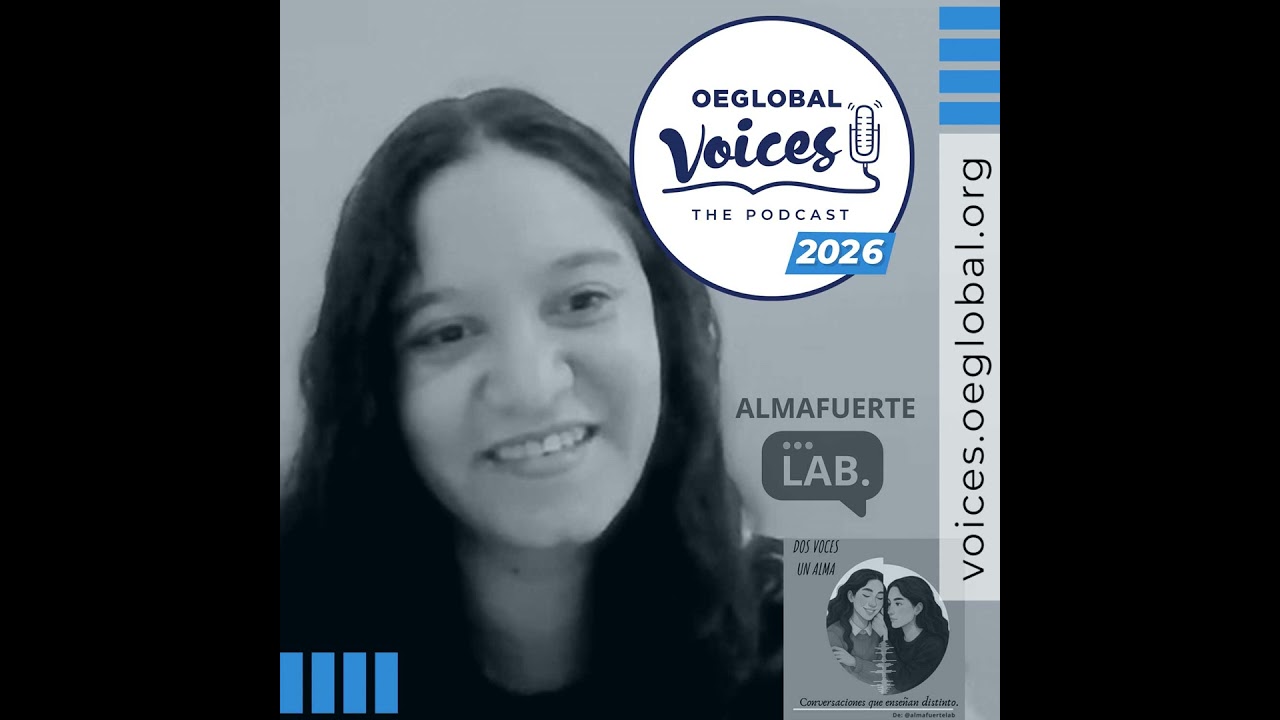
Ana Michelle Tellez Ferrer is the co-founder of Alma Fuerte Lab, an innovative learning laboratory based in Barranquilla, Colombia, that was recognized with the 2025 Open Education Award for excellence as a music educator. Her journey into teaching began unexpectedly after she transitioned from a career in international food and logistics to pedagogy following a profound social exchange experience. Growing up largely within hospital settings rather than typical childhood environments, Ana developed early resilience tools that now inform her educational philosophy. She believes the current system is not prepared for every student and advocates for restructuring education to create safe spaces both inside and outside classrooms where teachers receive adequate support from institutions and states to address thousands of unseen situations affecting students' lives.
The core mission of Alma Fuerte Lab revolves around using open education principles to provide differentiated, disruptive, and multicultural learning environments that reconnect individuals with their intrinsic knowledge while integrating new technological skills. The laboratory operates without traditional funding, growing instead through word-of-mouth support and strategic alliances across Latin America, including collaborations with a pedagogical lab in Peru where Ana explored the concept of poetic pedagogy. Through various initiatives like their podcast "Los Voces un Arma," which amplifies invisible voices from marginalized groups such as women with disabilities, and live streaming formats broadcast on television and radio, the team empowers students to develop both hard skills involving technology and artisanal intelligence alongside soft skills through creative arts and writing projects that foster emotional well-being.
Ana emphasizes that education must remain deeply human despite advancements in artificial intelligence, arguing that tenderness and personal connection cannot be replaced by machines or rigid academic structures. She encourages teachers worldwide to embrace their vocation regardless of chaotic systemic conditions or imposter syndrome, reminding them that meaningful change often starts with believing in one's own potential and utilizing available resources creatively. Looking ahead, the laboratory aims to reach over a million students this year while launching new open classes and expanding institutional partnerships, particularly within Latino communities in Philadelphia where they continue their live show format. Ultimately, Ana's message is an inspiring call for educators everywhere to break free from limiting structures, nurture human connection in classrooms, and generate extraordinary impact by staying true to their passion for teaching even when facing significant barriers or uncertainty about the future of education systems globally.
Read the full video transcript
And this means that open education [in music]
also lends itself well to
providing spaces for others to
teach as well. Within Armelab, we have been able to
modify certain forms of education,
to take it to another format. For example,
[music] we have our podcast Los
Voces un arma, where we interview
agents of [music] change and
make visible invisible voices or
discriminated population groups or sayings.
Welcome to episode 98 of OE Global
Voices, the podcast [music] that
we produce at Open Education Global. Today
we present the voice of Ana Michel
Télez, co-founder of Alma Fuerte Lab,
an innovative learning laboratory
based in Colombia. Ana was recognized
in 2025 with the Open Education award for
excellence as an educator in music.
I am your host, Alan Levin. Our
conversation was recorded on May 8,
2026 [music] with a rather
experimental approach to the podcast. Ana speaks
Spanish and Portuguese, and I only speak
English. We coordinated the recording via
email using
translation tools, and I sent my questions
translated into Spanish in advance.
We recorded on Zoom, where
automatic subtitles allowed us to understand each other
while we spoke. For
audio editing I used the Descript editing software
to transcribe my questions
and then [music] I used
Google Translate to convert them to
Spanish text. My voice that you hear in this
episode was generated by Descript's AI
to be available
in this Spanish episode. I wish my
Spanish [music] was that good, but
enough with the technology. This is a
fascinating conversation in which
you will learn about Ana's motivations and the
various ways in which Alma Fuerte
Labodera supports marginalized students
throughout Latin America. [music]
You'll also hear about their podcast Two
Voices, One Soul, whose reach we would like to
reach.
Please introduce yourself and tell us where you are right now
, because I can see
you. But you'll give me a location on the
map so our
podcast audience can find it.
Could you describe the place where you
are?
I studied in Barranquilla, Colombia,
specifically in
the Colombian Caribbean,
a city on the Caribbean Coast, where
the climate is usually warm all
year round and is quite welcoming.
OK. We are talking today because
last year he received the Open
Education Award for excellence as an
educator. It was obviously a great honor,
but I could describe how I felt upon
receiving this news. He
was a little overwhelmed. In fact, it was through my
sister that I found out I had
won the award
because I thought they were
doing the voiceover at that moment, saying that I had won for my
participation the day before at SAM
for Latin America.
Could you explain what the impact of
receiving this award has been? Impressive,
because for me I can believe the fact
of having won a world competition
with a small project, that is, it
's not the value of what it represents for me
, but what it means
as a small organization.
Could you tell me where you spent your
childhood? What kind of student were you?
What did young Ana think of school?
Ah, a large part of my life was spent in hospitals.
Oh, and basically, well, maybe I didn't grow up
like average kids,
but I can say that I had an
interesting childhood. I think that throughout my
life,
growing up in certain contexts
allowed me to have tools very early on
to face life.
Oh, and as a student, uh, first I have to
say that I have always been a person who,
or rather, I have always asked
that the system is not prepared for
everyone, and I realized that very recently,
and also that, uh, at a generational level,
I think that education should be
restructured and rethought. so that
all people can have access to
education and a better quality of life. That is, so
that boys and girls can have that
safe space inside and outside the
classrooms, which is
a link between school, parents
and students.
Ideally, institutions should have
resources and the state should provide support to
students and teachers to make
classrooms not only inclusive or
differentiated, but also so that
teachers can have support within the
classroom. In other words, it's not
just about thinking that education is
going to a classroom and giving a lesson, no. There are
[clearing of throat] thousands of
situations inside and outside the classroom that
often require support and you don't
know it. Ah, basically when I
decided to enter the world of
teaching, it wasn't easy. I am a
professional in international food and
logistics, which has nothing to
do with education, but I have learned
that things don't just happen and that
a social exchange in 20
basically changed my horizon, what
I was going to do as a professional. That's why
I'm a teacher today. I have a degree in pedagogy,
and I enjoy the creative arts and the
humanistic aspect of the
teaching process. I've realized that pedagogy isn't
just theory; it's not something that simply happens. I've
demystified the idea that
there are many ways to teach, and I
greatly value the fact that my
colleagues are
in the classroom, because it's difficult and
challenging, especially in these generations
where we see many dilemmas and what has been
lost in what is
considered the authority of the teacher.
So, for me, being able to provide
differentiated, disruptive,
even multicultural spaces within the
spaces I lead, and sharing with
other teachers, has
allowed me to see a different perspective
on what it means to teach, especially in
biology.
How did you get started in
open education? Where did you find out about
her?
Uh, I introduce open education
in a different way,
right? that open education
also lends itself well to
providing spaces for others to
teach as well. We have been able to, within a
stronger framework, develop
certain forms of education, taking it to
another format. For example, we have
our podcast Los voces un arma, where
we interview change agents and
make visible invisible voices or
discriminated population groups or groups, for example, women with
disabilities, professional women and
men and women with disabilities who
represent a
vulnerable population.
In the podcast,
we also interviewed many teachers who are
also artists, who believe in
art as a means of social impact to make
a difference inside and outside the
classroom. We also have a
streaming format that is broadcast on
television and radio in collaboration with
the Mar Tierra Integral Center for the
Hispanic/Latino community in Philadelphia.
And we take this format to places where we
also train teachers and people
who, from pedagogy and creativity,
can give us a different perspective
[clears throat] on what it means to teach. And
education is the bridge that unites many
multidisciplinary fields and can be
rethought as a rich format where
people, even though they can listen to
the radio, watch television, or
use streaming platforms, can
generate truly
meaningful and valuable content.
We also do live dynamics where we not
only show the art or
teaching of the guest, but we
also manage to do dynamics with the
audience that sees and hears us
live.
Ah, Philadelphia. I lived near
Philadelphia. You already started talking about the
Alma Fuerte laboratory, which I understand
means Strong Soul. It's a
very powerful program. Could you tell us
more about how the idea for the
lab came about and perhaps give us some
details about other activities that
students do with it?
Alma Fuerte Laab was born and the one who inspires me
Alma Fuerte is my twin sister. A
strong soul is a writer.
And from there I said, "Why not create a
spinoff of what means something powerful?
Ah, and it's like that power, right?, that we
give to people in our case,
through writing, words, and the
different formats of education.
And I'll say it again because there are many
ways to teach and to understand
teaching, dear, to see teaching
as a bridge. And really, within More
Powerful, we generate programs for
well-being and cultural activities,
and it's open to teachers, creatives,
writers,
and obviously many of these programs
are designed to make the practice
more individualized, closer, more
humanized, so that people
feel safe in our spaces,
but also feel
supported. We
also support projects,
people, classroom projects.
We also help create, design,
and facilitate spaces so that
people can develop their ideas, so that
they can generate that space to
reconnect with themselves. So I
think that although it's multidisciplinary,
we're looking at how
these differences
within an educational context can be
presented and can occur in a
way that allows people They can and do
reconnect in some way with their
knowledge, both intrinsic to the
person and the new knowledge they gain
through technology, because we
also use technology and
artificial experiences, and I think that's where
a
distinction is made to close those
educational gaps in diverse populations.
And I think you've already mentioned the
role of open education in the
lab. Perhaps you could elaborate
a bit more and also talk about the
backgrounds of your students.
When
we talk about students
coming from different places,
people and organizations
too, which we've seen a lot of in
recent months, it's about how
we rethink and how we bring these
methodologies or practices closer together
to improve and bring them closer, even when we're
in different countries, and do what's
possible. Right now, we're
developing a Steam project using
techno-writing with the game to
develop
emotional well-being in another Latin American country,
and really to give strength to do
what's possible.
You mentioned your podcast, so we've
talked about it and everything's going well. Tell us about it.
About storytelling.
Why is it important? Are you a
natural storyteller? For us, it's important. From the
beginning, we considered the issue of
representation, visibility, but
also the way people use the
power of their voices. This process
of creating a laboratory based on
research into how people's voices
can not only empower
children, men, women, adults,
etc., but also give them the capacity
to create this community and
do what's possible. Here in this podcast,
which I've heard in more than 17 countries,
and we're already on our
fourth season, we're talking to
people from rural areas. As I mentioned at the beginning, it's
about various disciplines.
Lately, we've been interviewing
scientists, people who do science
and who are teaching children in their communities
about the Earth, about the importance of
the atmosphere, about the importance of
creating things. And
one of the things that has most
caught my attention is the fact that, as I
mentioned recently,
visibility and
representation flow a lot
in children and women. I can
say why... A laboratory created
by women.
Girls can grow up with
representation
in their classrooms, they can hear us, they
can see us.
We can share with them because it's
important that these generations
also understand that
artificial intelligence has come to replace us and that
part of our power as
human beings is to give what we are and what we
have to the world, to put it at the service of
society. And that's what's important
because we forget that even though there are
many machines, even though
artificial intelligence optimizes
many processes, education does
n't take away the human element, and that
tenderness—and this has been learned in
practice—even though there are
many barriers that perhaps divide us
within the classroom, we must strengthen
tenderness in the process and not lose sight of the
fact that I am a
teacher, right?
And not lose sight of why I started in
teaching, because many times the
system leads you to disengage. The
reasons why you started are
born from exhaustion, from
multiple factors that also
make us rethink the teaching profession.
And I think that in our space, many
teachers who have been teachers have their
own Projects because they've made you
realize there's an intrinsic need
to change the game, to
go back to basics, and that means going back to yourself. And it's
also like telling the children that they
have
skills and tools in their hands that,
if handled well, can make them
very bright members of society,
and that right now,
scrolling, being on screen,
also shows that we need more
time in person with each other,
and that's what we don't want to lose, even though
, as I said, many of the
projects we're currently doing with
Alma Fuerte Lab are
in other parts of Latin America. They
bring us closer in some way; that is, we
're not replaced, we're closer,
but we also don't lose that magic of
humanizing.
Could you share some stories
about your students' successes and what they
've achieved? For example,
many of our students even
make headlines with
projects related to
education and culture, and that's how we
directly impact their lives, how we
truly impact them through words,
poetry, and even They
share their knowledge and never cease to
amaze us because it's not
just about inspiring them, it's also about empowering them to
believe in their potential, whether
through writing,
painting, or any
tool that provides them with
long-term well-being. It's not just about going to the
classroom and repeating what's
already known, which is also necessary
because general knowledge is important.
But it's about developing those
intrinsic skills that we have and letting them reach
their full potential, not
just soft skills, but
hard skills like technology and
artificial intelligence. And the
pandemic revealed something very important:
even though they are the
generation that are digital natives, they
weren't. So it's common to
reteach certain things that our
generation learned on its own, and for them to have
those tools to
strengthen their skills.
What are some of your biggest
challenges? Well,
even in terms of the lab, I think
we've grown without funding.
You know this; we've grown by
word of mouth. Literally, this project has
been built with our voices, talking,
we've I've reached many places, but we've
also met people along
the way who are forging a
similar path, and we've been able to support each other. Right now, we're
supporting
many projects and managing many
alliances that generate a
significant impact, and these
alliances obviously have the purpose
of continuing to transform education
through different formats. You
also collaborate with the
cutting-edge pedagogical laboratory in Peru. Could you
tell us more about that? How do
you find the time for it? I was with them for
about four years
, if I'm not mistaken. It was
an interesting experience because I was
the only foreigner in
this school. I really enjoyed
learning about their
perspective that there are teachers within
their poetic pedagogy practices,
which is one of their programs. It makes me
very nostalgic because
poetic pedagogy involves the idea that poetry
or the word has a significant impact on
pedagogical practices, such as reading and
writing, and that the teacher
has a philosophy that the
teacher is an artist,
and that this artist... That teacher in
the classroom has many pixels, many
artistic materials, and it is their
students who, in their own
practice,
develop this arbiter of each
individual. So, how wonderful it is that the idea has been
conceived that the teacher is an
artist and the classroom is a blank canvas
where children can create,
can draw, can write, can
grow, can believe, right?, in these
artistic practices within a classroom
in different disciplines.
Art is not only subject to
illustrative or writing practices,
right? It is also subject to
how, for example, they think about the
historical structure. And how
certain artisanal things represent us; we
often talk about
artificial intelligence, but not about
artisanal intelligence. Artisanal intelligence is
inherent to human beings,
developed with their hands, and that is also
highlighted in the very wonderful experience of
sharing with teachers,
yes? Where we had this
idea that the humanities and the
arts are
not separate, they are close and
can exist in the same space.
I presented the Humanities Festival
in Peru. Um, I've also presented
research papers on how
pedagogy and the humanities can
coexist, and it's very interesting because it's not
just about the teacher's role within
human pedagogical practice, but also about
breaking free from rigid structures, the understanding that the
humanities
and academia can be a bit more flexible in
including pedagogies
within their pedagogical frameworks. That is
, writing,
techno-writing, can be accompanied by
a broader process, right? If you were to think of it, it would
influence it. It's not about distancing ourselves,
but about getting closer.
Well, what's something you're looking forward to
doing this year?
This year, we've been able to achieve
so much
as a lab, and I think this year
my goal is to reach more than a
million students, at least
this year, and continue strengthening the
institutional alliances we
have now for an even greater expansion
of what we're already working on.
Next week,
we're launching the first open class
lab as such, where we've done
all the
educational outreach and Um, how... uh, I was just
talking about this yesterday with my co-producer, and it's about how we
continue this first
live show in Philadelphia
and how we work with the Latino and Hispanic community in the United States
. How do we do it
next week? We're opening the
application period for the
Open Education Awards. Could you
share a message with our listeners
that encourages them to
apply?
My message to everyone who
wants to be in this space is to make the
most of your own resources, but
also believe in yourselves. It's about your
potential in what you're really
building,
because it's not just about the numbers, the
remuneration, the investments, etc.,
which are necessary for a
project to scale, multiply,
etc. But it's also about seeing that
every project has a process that isn't
great because learning is always
progressive,
life will always surprise us,
nothing is written in stone. And if you,
like José, not only believe, but
create little by little every day
, you will eventually
have something bigger materialized. And this... It's
not achieved alone; it's achieved with
mentorship, with people who support you.
Even if you don't have the ideal context
to start projects, to
believe in an idea, look for it outside your immediate
environment. And I say this as someone whose
project was born in another country because other
people believed in our
research idea. I mean, how did we go
from doing research projects to a
project that's currently
impacting so many places, something we
never imagined would happen?
Well,
nobody prepares you for that. It
's simply the fact that
the process,
even if it's not exactly how you want it to
be, has to be so that along the way
you realize
that what you do truly has
meaning for others, which is the most
important thing [clears throat],
but also for the audience that
listens to you, that watches you. In our case, they
pay for our services, but there are
also people who will become
even more interested in the team along the way
, which is super important
because, with
Arma Fuertel, we're not only interested in
training and teaching. And to provide that
safe space, we're also interested in the person
behind it, whether it's an organization, and I
can say, I have a
very close relationship with my colleagues from other
places who have come to the lab. And
we've joined forces to carry out
these projects, and I'm also
concerned about you, Professor, how are you today? And
this is important. So, it's about telling
everyone who ventures into this idea
of
publishing their project in Open Global to
believe that their project can generate a
significant impact on their community,
but in the end, it's not even about
understanding yourself as an individual, but about
trying.
Because many times the
imposter syndrome or saying, "Since everything isn't
solved, I can't do it." No, we
have to work with what we have,
with the resources we have, and
try. You don't know what's going to happen, and that's
precisely what has us in
many places today. We continue to receive
awards worldwide with this
project, and we continue doing the
things we love to do because we
love to teach.
And it's something they don't tell you in
academia; they'll just tell you that you
have potential or that they're simply
going to reduce you to teaching. You can
do so much with education. I've
seen so many teachers who also
teach in the classroom, but they also have their
own projects and are passionate about what they
do, and they generate
significant change in their community, precisely
because they believed
in themselves. Because it's from there
that you can generate that value from the
inside out, right? And vice versa,
how inspiring, you do so much work.
What are your interests and hobbies
outside of work? Oh, my interests
besides reading, obviously, oh, I
like to watch a lot of documentaries,
I'm very analog, I like to do
very creative things, crafts, painting,
doing very creative things, besides
talking all the time, which is what I
normally do.
Oh, is there anything else you'd like to share
with our listeners? I think beyond
what Open Global represents,
right? Oh, I want teachers
all over the world who listen to it, from
whatever latitude you are in, even if it's
difficult, even if there are wars, even if the
conditions aren't right, your work in the
world is Important.
And don't doubt that ability
and that
vocation,
which is so important in society.
Embrace your profession and make something
extraordinary of it, even if the system says
otherwise
in any country, because the
education system in any country will always
be chaotic. So, for me,
the teacher will always be important inside and
outside the classroom, and there are
different paths, all of which are valid,
but above all, vocation will always allow us to do
extraordinary things.
Thank you so much; this has been very inspiring.
Thank you for listening to this episode of OE
Global Voices, the Open
Education Global podcast. We hope this
experimental format works well, and
we are extremely grateful to
Ana for her willingness to try it. Each
episode includes a
different musical introduction selected
from the free music archive. For
today's program, we chose the song "
Bring Peace" by Ketza, licensed under a Creative Commons
Attribution-NonCommercial-NoDerivatives
4.0 International License. You can
find this episode on our
website, voices.org,
and participate in the
subsequent conversations on OEG Connect or
any other social network. where
you interact with us. [music]
If you're listening and would like to
share your work in
open education or suggest a
future guest, [music]
please let us know through our
website or
email us at voiceslobal.org. [music]
[music]