Video summary
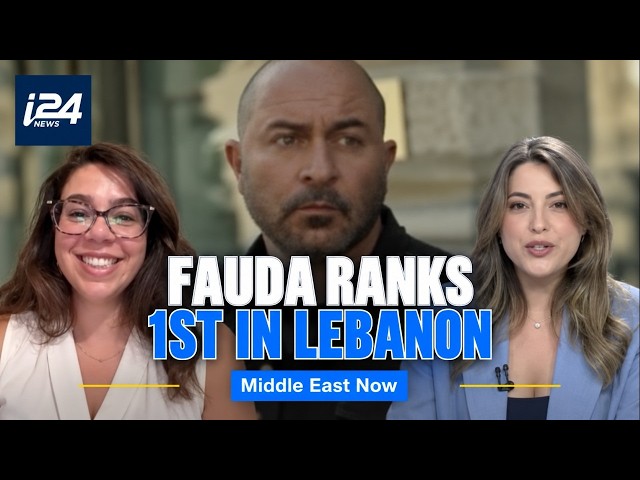
The television series Fauda has emerged as a surprising cultural phenomenon in Lebanon, securing the number one spot on Netflix just days after its fifth season premiered. This achievement is particularly notable given the country's direct involvement in the conflict following Hezbollah's attacks on Israel after October 7th. The latest season resonates deeply with Israeli audiences by focusing heavily on the trauma and aftermath of the Hamas attack and the subsequent war in Gaza, while also ranking highly across the broader Arab world, including Jordan, Egypt, the UAE, and Saudi Arabia. Despite Lebanon's complex political stance and critical views toward Israel, the show has managed to capture the attention of viewers who are deeply engaged with regional tensions.
Maythem Younis, a Middle East cultural and media expert originally from Lebanon, attributes the show's enduring popularity to its well-crafted storytelling that blends politics, Mossad agents, love interests, and relatable characters representing both Israelis and Arabs. She notes that while the first season was also a top hit in Lebanon, the series continues to succeed because it offers audiences everything they typically enjoy in Middle Eastern media. Furthermore, there is a growing curiosity within the Arab world to understand the Israeli narrative and perspective through fiction, allowing viewers to explore realities and stories that might otherwise remain distant or misunderstood.
However, the impact of the show on viewer empathy remains nuanced and depends heavily on individual perspectives. While some Lebanese viewers appreciate seeing how Israel handles terrorist organizations and military challenges, others may find certain aspects exaggerated compared to real life. Younis explains that while the series exposes audiences to new narratives regarding the October 7th events, it does not necessarily force a change in deep-seated opinions for everyone. Instead, the show acts as a bridge that allows people to open their minds to different realities without erasing existing strong feelings, effectively mixing entertainment with complex political commentary that varies from person to person.
Ultimately, Fauda serves as a unique cultural artifact that depicts a significant portion of the Israeli mentality and mindset for an Arab audience, even if it dramatizes certain events for dramatic effect. The series succeeds in painting a picture of life in Israel that helps viewers grasp the internal thoughts and feelings of its citizens, though the line between fiction and reality can sometimes blur. As a fascinating piece of media that fosters a degree of empathy for both sides of the conflict, the show stands as an interesting example of how entertainment can navigate sensitive geopolitical issues, inviting audiences to engage with stories that challenge their preconceived notions while remaining accessible and engaging.
Read the full video transcript
to our next topic. Get this. And this
really TV series about these really
Palestinian conflict is now the number
one show on Netflix in Lebanon. And of
course, it is none other than Fauda.
Fauda has topped the charts there just
days after its fifth season premiered
despite Lebanon having been directly
drawn into the conflict after Hezbollah
began attacking Israel following October
7th. And this season is particularly
personal for Israelis. It focuses
heavily on the trauma and aftermath of
the Hamas attack and a war
and the war, sorry, I should say in
Gaza. The show is also ranking high
across the Arab world including in
Jordan, Egypt, the UAE, and Saudi
Arabia. So of course the question is why
are audiences in countries so deeply
critical of Israel tuning in?
Joining us now is Maythem Younis. She's
a Middle East cultural and media expert
and peace advocate who is originally
from Lebanon.
So Fauda reaching number one in Lebanon
is pretty remarkable given Lebanon's
experience in this war. What do you make
of this? What do you think is driving
people to watch this show?
>> I have to say that Fauda has been
popular in Lebanon and in the Arab world
since the first season.
Um the first season was uh number one in
Lebanon as well. But I think that you
know, it's just a well-done show. It has
everything we like in the Middle East,
you know, politics, uh you have
Israelis, you have Arabs, you have um uh
characters that we all can sympathize
with. You have love interests. You have
Mossad agents. It's just everything that
we love in the Middle East. So it
totally makes sense for Lebanese people
and Arabs across the Middle East to want
to watch it. And I feel that there is
also um curiosity in the Arab world to
see uh things from Israeli point of view
and to um you know, understand maybe
more the Israeli narrative as well
through this show.
>> Right, but do you think that the show is
perhaps creating more empathy for the
Israeli perspective or the opposite is
happening when Lebanese people are
watching this?
>> I think that we can't say for you know,
for a certain fact that it creates
sympathy, but I do feel and I do think
that through culture, you know, through
movies, TV series and so on. People can
have
can it can open up their minds toward
new realities, new narratives. Like
obviously the show talks about the 7th
of October and many Lebanese people were
like we had no idea this this was going
on on the 7th of October, you know. So
it shows for sure and it's exposed the
the audience for sure for new reality
and narrative, but on the other hand
people that
have a very strong, you know, opinion
about Israel can watch and enjoy the
show nonetheless. So I think it kind of
it it kind of takes like you can mix
both ways. It depends on the on the
person. As I can say for the Lebanese
people, I feel like for many Lebanese
people they see how Israel is kicking
Hezbollah's ass. So for sure they like
to see how Israel handling, you know,
terrorist organizations and handling the
enemy. So there is a type of audience in
Lebanon that really enjoy this type of
of shows, you know.
>> I'm interested to hear. I mean, you've
been living in Israel for many years
now. Obviously you were primarily raised
in Lebanon.
Do you think that Fauda is reflective of
Israeli society, paints
picture of the Israeli perspective in a
way that the Arab world could
perhaps better understand.
>> Look, I feel that obviously growing up
in Israel and living in Israel, watching
Fauda sometimes feels a bit exaggerated
in some aspects of it.
But of course I feel like it depict a
lot of the Israeli mentality and mindset
and for sure it shows the Arab world a
lot of messages that Israelis grow on
and think and feel, you know,
mentality-wise, that the reality in
Israel. It It does depict big part of
the reality, but of course we can't
forget that a lot of things are
dramatized, a lot of things maybe
doesn't happen in reality and it's just
a show. So sometimes it's hard to, you
know, draw the the line between reality
and fiction.
>> Mhm. [clears throat]
Well, you know, I have to say I find it
absolutely fascinating that this is a
popular show
across the Arab world. Although I'm not
surprised as somebody who's, you know,
watched Fauda myself, I found that in my
personal experience I was able to kind
of have empathy for both sides of the
equation. It's a very interesting show.
I recommend everybody who's watching us
right now to watch it. Mariam, thank you
so much for joining us. Unfortunately
>> much.