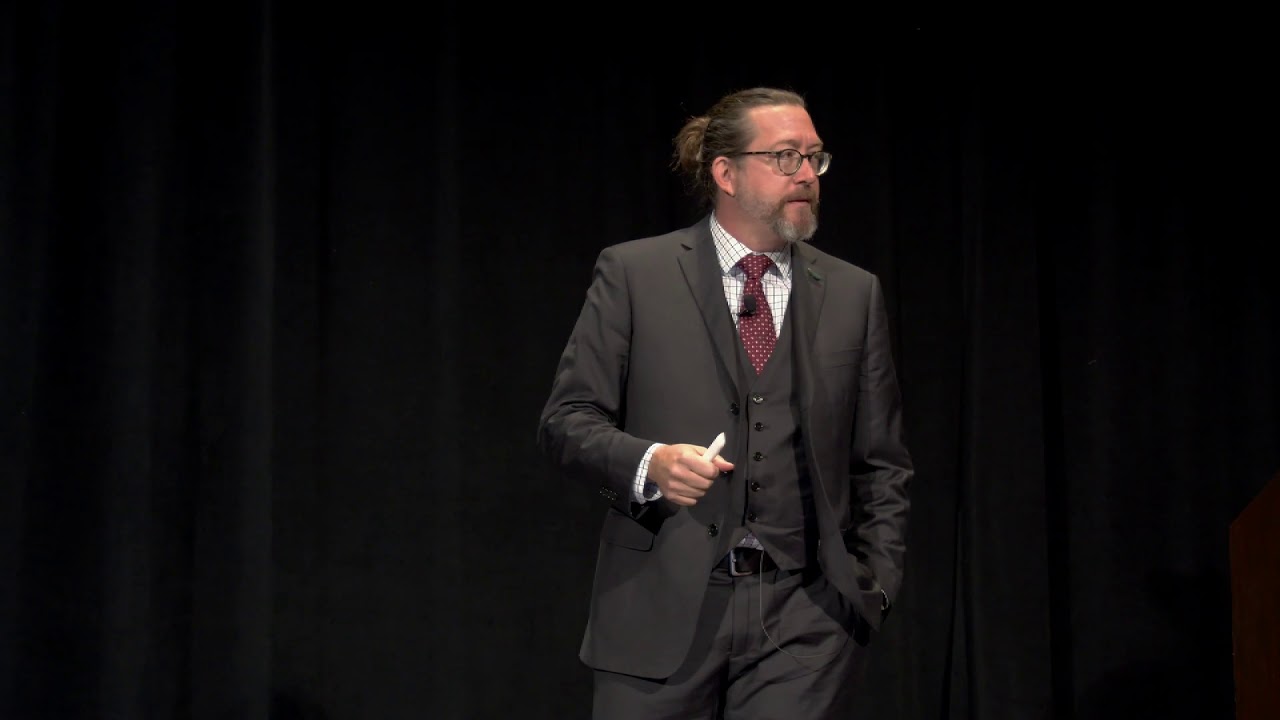
Video summary
Norman Bier, a leader in open education at Carnegie Mellon University, shared his decade-long journey from initial skepticism about "open" licensing to recognizing its transformative power in reducing friction for course integration and fostering faculty collaboration. As a first-generation college student who faced public challenges regarding his feminist identity, he dedicated himself to inclusive education by working with colleagues like Alan Fisher and Jane Margolis to eliminate gender bias in computer science curricula, successfully increasing female enrollment from 7% to parity through data-driven improvements. His work at the Open Learning Initiative (OLI) combines access with effectiveness using learning sciences to design scientifically grounded online courses that create feedback loops between student performance data and instructional practice.
Central to this approach is a "learning engineering" methodology where tools like the Learning Dashboard help instructors identify struggling students, misconceptions, and ineffective activities for rapid improvement without replacing educators with automated tutors or outsourcing instruction to proprietary vendors. Bier argues that designing learning experiences remains a core responsibility of non-profit higher education and advocates for openness in sharing materials, algorithms, and practices so communities can collectively solve complex instructional design challenges where over 200 trillion options exist for individual decisions. To address inherent dangers like algorithmic biases related to race or socioeconomic status, he promotes transparent systems that allow diverse groups to identify errors rather than relying on opaque "black box" technologies, emphasizing ethical data use and the need for intellectual honesty in educational research.
The talk concludes with a somber reflection on recent societal tragedies, including the Tree of Life synagogue shooting in Pittsburgh, where Bier noted how electronic communications can inadvertently inspire violence through misinformation and polarization while urging the community to engage with projects like the Digital Polarization Project to help students find truth online. He expressed gratitude for collaborations across institutions such as the University of New Hampshire and Santa Ana College that focus on core competencies like metacognition and conflict management, stressing that advancing this work requires humility and new social norms regarding data sharing. Finally, he acknowledged the thankless efforts of program committee members who reviewed over 400 presentations despite facing significant criticism during difficult times, reinforcing his belief that collective action is essential to improving student learning at scale while maintaining human oversight in educational technology.
Read the full video transcript
I'm probably not going to do justice to
his accomplishments but here we go
Norman is a director of the open
learning initiative and the executive
director of the Simon initiative at
Carnegie Mellon he has spent his career
at the intersection of learning and
technology working to expand access and
improve the quality of education his
experience in higher education spends
the two-year and four-year sector of
public and private higher education
systems both domestic and international
and also at commercial institutions but
prior to joining all a lie he was a
director and training of training and
development at AI Carnegie Inc a CMU
subsidiary that shattered to deliver
software development education
throughout the international partner
institution he has taught Computer
Sciences courses as an adjunct faculty
at community colleges of Allegheny
County and serve as a founding committee
member of the Cooke Honors College at
Indiana University of Pennsylvania he
currently serves as a member of the
board for the Shady Lane School and the
next generation learning challenges
funded Kaleidoscope open course
initiative please help me welcome Norman
via for our next keynote address that
was fantastic
so we have a lot of abuse for the suit
from my friends in the audience some of
you might have participated in a poll
we're voting on what I was going to wear
for open ed and if you're looking at the
poll it was a tie between a Penguin's
jersey and a political t-shirt I got a
little feedback on Twitter and the
Wardrobe poll was cancelled so I went
with the suit right so first thank you
all for being here thank you for the
kind introduction before we get into the
real talk I've got a couple of things I
wanted to talk about it is an honor to
be keynoting the open education
conference it's a privilege to be
standing here and have this time with
you but I've been reflecting on just how
remarkable it is for me personally to be
standing on this stage to be talking to
this audience I am very fortunate to
lead the open learning initiative at CMU
when I joined the open learning
initiative about a decade ago the part
of the initiative that I was most
interested in was the learning piece at
that point in time
oli was building some of the most
exciting and most robust courseware in
the world and it was thrilling to be
able to join an organization that was
deeply focused on student learning on
improving it and on really helping us
understand how human beings learn the
open part wasn't so interesting to me I
tried to take a little bit of a look at
what open education meant back in 2010
as best I could tell it seemed like
there was a half of a crowd who was
really anxious to bring down the
publishers there was another half of the
crowd that had an almost mystical belief
in the power of an open license to to
enact learning but I couldn't really see
what this work had to do with the deep
scientific work that I was interested in
at oli open education was not for me
it's kind of remarkable to be standing
here on this stage but I was a part of
the open community at least in theory
and so I got dispatched with my
colleague John rende early to open ed
2011 where we were going to give a talk
on learning analytics like a lot of the
country and that fall
I was very concerned that was happening
in the economy very concerned about what
was going on with the Occupy movement
was giving me a lot of hope and I walked
into one of my first open ed keynotes
having spent the morning reading the
news and the news was that occupy
Oakland was being cleared out people
were being tear gassed protesters being
shot I was a little worried about this
and so I was a little bit concerned when
for my first open education keynote I
saw a guy jump out of a tent go through
an entire occupy open edge stick move on
to take a few shots at the earlier
keynoter
it was actually the only person I knew
at this conference and who I knew to be
a pretty nice guy and then move on to be
you know relatively dismissive of
learning analytics rights and thing that
I had showing up to talk about I don't
have a lot of memories from the rest of
that open ed conference I will confess
but I remember two common themes that
were emerging from that keynote things
that I've now been hearing about for the
past 10 years that you know we're doing
open education wrong and in this case I
was doing open Efron's analytics were a
problem but also what's been this
ongoing tension between how we
understand resources how we integrate
those resources into our instructional
practice what should we be doing with
technology and how do we sustain all of
this work I've been fighting with all
this stuff now for a decade the other
thing that I really remember from that
conference was the Twitter back channel
which was mean you know snarky and snide
sometimes almost vicious and I have to
tell you I'm not a nice person like if I
say that the Twitter channel was mean if
that's what got my attention something's
going on there open education not for me
so it's remarkable to be standing on
this stage so I went home put my head
down went to get back to the work of
trying to improve student learning and
at this point the thing that we were
focused on was a project called the
Community College open learning
initiative where we're going to work
through and build out for new gatekeeper
courses we were collaborating with
hundreds of faculty from community
colleges around the country and a funny
thing happened
I have finding that as we were trying to
develop these new courses put together
this new course where anytime we found
material that had a Creative Commons
license on it was actually a lot easier
to integrate into our course and the
folks that were creating these materials
were a lot more interested in talking
with us and working with us on improving
these things finding better ways to make
use of them and it was interesting as
well because I spent way too much time
during this grant working with our
general counsel's office trying to get
approvals and right sub Awards and it
turns out the Creative Commons license
is almost magic once you get your GC to
understand it it ends up removing
friction it ends up greasing the wheels
and so what I was finding in this work
was that open in fact was a prime driver
for that thing that I really cared about
which was improving student learning so
anybody ever had a bad breakup 2013 was
a difficult year in Oh allies history in
fact my support staff when the kid while
admire anybody ever used to well I a
couple of you if you've ever received a
email back from the OL I helpdesk you've
received it from Ken Wahl and Meyer who
will refer to this period in no allies
history only as that difficult summer so
during that difficult summer we saw a
really interesting breakout in the
organization where some of my colleagues
went out to try to take the methods that
we were developing an oli and see if
they could be scaled in a more
thoughtful way via commercial platform
our founding director my boss Kanda
still headed off to the west coast to
Stanford to build out a sister oli
organization and there was a real
question first on what I was going to do
because I spent the summer like Hamlet
hemming and hawing do I stay do I go and
having decided to stay there was a real
question on whether there was a
continuing need for the open learning
initiative whether there was support for
it whether it was a thing that the
community cared about and I'll say that
these were particularly difficult days
for me really a low point personally and
professionally and it was in that period
that members of the open education
community really reached out and lifted
me up told me that this work was
important and it's been from that period
a commitment of mine to see that this
open peace can play a key role in how we
advance and improve learning this
community has become an exceptionally
important thing to me this conference
has become honestly my favorite
conference of the year
look forward to it each year and so it
is remarkable to be standing on this
stage with you keynoting the open
education conference because it's become
so important to me I am a sucker for
public acknowledgments and I don't get
the chance to make them that often and
so when I talk about the people that
played such a key role back in 2013 and
for the past 10 years I was hoping that
you could join me in thanking them it's
a long list not all of them are still
here in the open education community but
for those of you that have played this
key role in my work key role in my own
life and this key role in open education
back at CMU thank you yeah all right
like a lot of you I've spent a lot of
time over the past few weeks thinking
about community I'm for Pittsburgh
lifelong Pittsburgher we call ourselves
users not for us the gentle y'all of the
south or the use of the East Coast
Pittsburgh is a city that is defined by
its geography we're a city of three
rivers and Hills and this means that we
are city connected by bridges connected
by tunnels Pittsburgh is a city of
neighborhoods and I've been thinking
about those neighborhoods a lot lately
how these different cultures and
different distinct areas rub up against
one another how they're able to engage
and maintain their own distinct
identities while still coming together
in some kind of cohesive whole the view
that you see there is actually the view
from my office the first nine years of
my career at CMU I had a windowless
office they just now gave me some space
with some natural light and when I look
out at that view I see some exciting
things so that tower off in the left
your left
that's the University of Pittsburgh that
is the Cathedral of Learning and I love
that language I think its language we
don't use very often today this notion
that we're going to combine the secular
and the sacred in that way the center
you st. Paul's Cathedral Central
Catholic High School see a practice
football field where I sometimes lean
out to give the Viking some advice as
there
training which they don't appreciate way
in the back you see the road of Shalom
Synagogue one of the largest synagogues
in Pittsburgh and on the right you see
WQED Studios which is the home of Mister
Rogers neighborhood loved that view and
I love again this notion that on the one
side we have a Cathedral of Learning on
the other side we have some of the most
interesting children's educational
programming being promoted secularly by
a Methodist minister churches and
synagogues in the middle I like what
we're doing with this combination of the
sacred and the secular in Pittsburgh
you're gonna hear me talk a little bit
more about Pittsburgh as I move on
second thing I've been obsessing over
that's going to show up many of you have
read walk away a couple of you I am
jealous for anyone whose hand is not up
right now and that you get the chance to
explore this book on your own Cory
Doctorow is a man that knows something
about open who's something been
communities knows something about the
weir is that we interact and try to
build things and this is a really
interesting exciting novel and it really
has felt applicable especially over the
past few weeks as he explores these
questions of what happens when we
straddle this weird space between
economies of abundance and economies of
scarcity but he also explores in a deep
way kusas coordination problem this
question of how can we come together as
a larger group to do things that are
beyond the grasp of any one individual
how do we engage in superhuman work
within walk away we also see an ongoing
theme in which dr. al is misquoting a
Scottish writer who in turn was
misquoting a Canadian poet over and over
extolling his characters to work as if
you live in the early days of a better
nation I've been thinking about that as
I thought about open ed and ask how many
of you are here for your first open
education conference or have been in the
space less than a year in fact come on
stand up stand up seriously Bob
there are 450 of you here for a point of
reference back in 2011 there were only
three hundred people attending the open
ed conference the ability that you have
as a group to impact and change and
guide the future of open education is
tremendous you have number US isn't that
fantastic I hope that as you were
standing you looked around a little and
identified some other first-timers at
this conference and I hope that you'll
seek each other out in the break I hope
that you'll share your stories of why
you're here I hope that you'll talk a
little bit about what you hope open it
will be in 2030 and I hope that you'll
take a little bit of time just a little
to stay off of the Twitter back-channel
if this is your first open ed you don't
have to fight and begin thinking
seriously about where you want to take
this community so that was the prologue
now we're into the talk when the program
committee asked me to speak it was with
the request that I talked a little bit
about some of the work that's happening
at CMU around technology around data and
the ways that we are able to use data
and technology to improve learning to
advance our understanding of how human
beings learn I have a usual stick if
you've ever heard me speak you've
probably heard my talk about oli and I
like to spend a lot of time in that talk
diving in talking about the data talking
about we do but I've had an increasing
sense that the usual shtick was not
getting it done
in part because I've been looking at
community kind having community
conversations around questions of what
role should this data play and I'm
hearing an increasing distrust of it I'm
hearing an increasing set of
conversations arguing that we really
need to get back to simply trusting our
intuition and teaching and that should
be good enough so I've been trying to
think about how I can talk about data
how I talk about technology with all of
you and ended up in prepping for an
earlier iteration for this talk talking
with my friend Michael Feldstein Michael
and Phil Hill gave a fabulous keynote
in 2015 almost prescient my don't filled
you in here let's hear it for Michael
and Phil you guys should go back and
rehear their a female
alright so I'm talking Michael Feldstein
and I'm saying you know Michael what am
I gonna do and go in I want to talk
about data Norman you can't go in there
talk about learning analytics and
learning factors analysis and linear
regressions and p-values and blah blah
blah need to go in and tell them a story
okay Michael let's tell a story but this
can't just be a story about me though I
do love to talk about myself this is
gonna be a story about Sophia it's also
a story about Morgan and Morgan who love
to sit beside each other in class and
answer when the others name is Co the
story about Robyn it's a story about
Madeline it's a story about G one story
about aya these are a few of the
students that I've had the privilege to
teach at Carnegie Mellon introduction to
computer science but in talking about
their story and in talking about the
role that open played in their education
and in turn the role that they're now
going to be playing in the future of
open I do need to talk about this guy
look at that handsome fellow he has no
idea what's coming for him
so 1993 I am headed off to a public
university I'm a first-generation
college student Pell Grant recipients so
I'm part of that line down there on the
bottom but otherwise pretty unremarkable
kid right I am headed off to a decent
public university called IUP as a lower
class white American male with all of
the privilege that entails and you know
some of the lack of social awareness
that you'd expect for that
eighteen-year-old dual major English
literature and then because I wanted to
do something practical philosophy
where are my English degrees in the
crowd where are my philosophers I think
the English Lit guys have it reasonably
confident in my leftist politics as you
can tell by the Lorax t-shirt right and
so I was fairly confident when I walked
into my first English Lit class taught
by a man named Ken Wilson and Ken two or
three days into class I don't honestly
remember what we were reading I don't
remember the larger discussion I
remember Ken Wilson asking how many of
you in class would call yourselves
feminists hands went up mine didn't okay
curiosity how many of you would call
yourselves tenderness okay Ken's next
question how many of you believe that
women deserve equal rights how many of
you believe that we should be getting
the same pay for the same job hands up
so my hand went up the second time and
Ken just drilled me why was I possibly
raising my hand the second time and not
the first time he planed me in front of
the class I remember it being
humiliating little bit embarrassing but
I also remembered sending me home and
letting me think that you know how we
identify ourselves the causes that we
choose matter I have never been ashamed
to call myself a feminist since and with
that perspective I headed off to
Carnegie Mellon and went to grad school
and then was very fortunate to be
working with an organization called AI
Carnegie as you heard earlier I Carnegie
was a spin-out from CMU focused on
delivering CMU designed software
development education to a large crowd
we ended up working with a lot of
schools internationally their faculty
work to use our materials almost a
prototypical loi without the open part
and I was fortunate in that work to be
working for a man named Alan Fisher Alan
had been an associate dean back at
Carnegie Mellon and in his work in the
mid 80s working with Jane Margolis sort
of looked around and said you know
there's something strange in the
computer science department almost 90%
of our undergraduate
CS majors are men and the 10% of women
that we have coming into the class
aren't lasting we're losing them each
year why is that Alan and Jane spent
here digging into this and what found
was that there's an exceptionally large
and complicated set of reasons that
we're not attracting enough women into
computing and that when they're there
we're not keeping them some of this is
curricular some of these materials that
we use some of these are preparation and
a lot of it is cultural
I am proud for a lot of reasons to work
at CMU but one of the reasons that I'm
most proud of it one of the things that
I love to point out is that after
discovering this and after trying out
some different things in experimenting
over a twenty year period and Alan's
work our computer science department was
able to move from 7% women to parity we
have 50/50 class of women and men in
computer science I can't take credit for
that so Alan leave CMU to start this
organization called AI Carnegie and he's
taking me and Jane are working on this
book unlocking Clubhouse we're gonna try
to apply some of those same methods to
the courseware that I Carnegie was
building and so when we jumped in and
reviewed our third course in the
sequence and looked up learning
activities turned out that we had a
whole sequence of learning activities
that was biased against women that are
we were losing Leo women we're not doing
as well and they were dropping out of
our program and Alan looked at it and
said well I see this obviously like the
kind of examples I'm using this is
obviously going to cause problems so we
changed the activities sent them back
out into the field check the data and
fix the problem this was revelatory to
me it was it was revelatory that we were
able to engage in this kind of iterative
improvement because it completely
changed how I thought about course
materials and instruction it was
revelatory to be able to work with these
folks and see them taking these things
they cared so deeply about and putting
them down on the ground level making
them work was also revelatory because as
a guy with two humanities degrees I'd
never seen statistics used in such an
interesting and useful way really
exciting so fast forward about 10 years
and the open learning initiative
received some funding to build out
principles of computing
fifteen one ten is a course at Carnegie
Mellon it's our intro course my dirty
secret is that I love to teach intro and
so we began working to build out this
introduction to computing course of
course you can take now inside of oli
and it was exciting we were trying to
put into this course all of the best
things that we knew about learning we
were able to bring together a diverse
team of faculty we were able to bring in
instructional designers and learning
engineers we were able to bring in
learning scientists even brought in an
anthropologist to study the process
designers software developers even
involving a few PhD students were able
to engage in some research when we work
to build this course we really worked
hard I was very fortunate then to be
asked to teach the course this was
interesting because it was my first time
teaching with the oli software let me
tell you it's always scary to eat your
own dog food learned a lot from that
experience but it was also a really
exciting time for me to go back into the
class and talk a little bit about these
questions of culture these questions of
who we invite into computing and so this
is a thing that I really spend a lot of
time talking to my students about you
walk out of beers class you're gonna
learn how to program but you're also
gonna know who Grace Hopper was it was
great supper just found the bug right
everyone's hello grace hoppers found the
computer bug everyone knows that maybe
if you do a quick Google search find the
glam shot Grace Hopper my students don't
get to know Grace Hopper they get to
know this Grace Hopper they get to know
Rear Admiral Grace Hopper twice recalled
to active service promoted from the rank
of Commodore amazing grace hopper for
whom one of the only u.s. warships named
for a woman exists first compiler race
Hopper was a giant she didn't find a
computer bug and my students learn about
the multitude of women that have been
contributing to computing some of the
contributions that were made in some of
our world's darkest hours the
contributions have been made in some of
our greatest technological triumphs and
my students will learn about that weird
drop that happened in the mid 80s the
role that culture plays in excluding
people from our work so my students will
know that now you know it too
so I don't tell you all of this to
virtue signal not bragging although I'm
proud of this work I'm telling you this
as my bona fides this is work that I
care deeply about this is work that I'm
very enthusiastic about and so when we
started to dig into the data when we
started looking at the tale of the tape
though my students were having parody on
grades I was retaining them as well as
we would like and when I'm digging into
student feedback I'm not seeing the real
difference isn't the kind of feedback
that I'm getting but when we look at the
activities it turns out that some of
those learning activities the women in
my class still were not performing in
there as well as the men were so in some
way I was failing these students despite
the fact that we put in all this work
despite the fact that my intuition had
given us the best set of courses that I
thought we could have this could be
devastating right I mean in some sense
it might be thought of to be
embarrassing for me to come up here and
admit to you this is failure but what's
exciting about this what's most Imagi
cool about it is that we don't have to
stop at that what we're gonna do is dive
back in and we're going to fix these
activities we're going to cast a wider
net to find better ways to get student
voices into these activities and we're
going to send them out in the field and
we're going to test them and we're going
to see how they work again and that's
incredibly exciting to me but what's
more exciting is that the act of doing
this research working with one of our
open ed fellow Steven Moore Steven are
you out here hiding in the back so
together Steve and I are us to take this
analysis and use it for this individual
course but to build it out into a larger
set of analytic tools so that we could
take a look at all kinds of courseware
and really try to key in on areas where
we're showing bias against and for
different kinds of demographics and to
me that's an incredibly exciting and
magical part of this work because the
problem for most of us of
under-representation in computer science
that's a huge problem it's a huge
challenge not necessarily something I
can do a
about as an individual but this learning
activity that I've written has some
problems for women I can solve that and
I think that if we're able to show this
kind of information to a broader
population everyone else will recognize
their own ability to solve that - why am
i able to do this well I'm able to do
this because oli is obsessive in its
collection of data forced and foremost
and because I have data that crosses
many sections and many kinds of
institutions we're able to say useful
and interesting things so one way to say
this why I'm able to do this is because
I've got the numbers but a different
version of this goes back to allies
origin story and oli has one of my
favourite origin stories and one of the
best so some of you may remember back in
2001 heady days of the.com boom lots and
lots of excitement over the world wide
web in ways that it was going to change
the world and has changed the world ways
that aren't all good - program officers
Kathy casually Mike Smith made a major
bet in finding ways that this technology
could be used to expand access MIT is
open courseware project was intended to
take any kinds of course materials that
faculty would share lecture videos
quizzes exams notes put them up on the
web and the amount of excitement that
this generated at the time is hard to
overstate Tom Friedman articles in the
New York Times really big exciting
things and this is interesting in part
because this is before a period that we
would clearly I be able to identify as
open education existing right we have
tremendous work happening with the open
universities in Europe we have some
conversations happening around open
software but oh we are is a thing the
idea didn't exist yet so you almost see
it being invented so hot off of all this
excitement Mike and Kathy head down to
Pittsburg gather up some of our learning
scientists and say hey do you see all
that great stuff that MIT is doing yeah
and we see what MIT is doing
wouldn't you like to do the same thing
no no we wouldn't not interesting to us
and so they laughed Myka Cathy happened
to be visiting us on September 11th and
so by the time they got to the airport
no planes flying anywhere I've heard
since that there was some shared hurried
discussion of trying to drive back to
California
Cathy vetoed and so they were stuck
there to come back and talk to us and we
had a fairly unique opportunity to spend
four days with two program officers who
asked okay what is interesting to you
and the answer that they got was look we
care about access we have an access
agenda ourselves and we think that it's
important but what we really care about
is effectiveness what we'd really like
to do is explore the ways that we can
take advantage of these technological
affordances to demonstrably enact
learning and to find better ways to
understand how human learning takes
place okay that does sound interesting
and so with that investment the open
learning initiative is born and we're
born with this mission to go out and
design scientifically based online
course we're taking the best of what we
know from the learning sciences putting
it into our course is but recognizing
that there are big gaps that there are
questions that we need to try to answer
and so we spend a lot of time trying to
answer those questions what's
interesting is that in this moment you
see a tension that has been sticking
with us for almost two decades and it's
that tension between access and
effectiveness but in this moment you
also see a different tension and that we
start to belong together different
communities different neighborhoods and
we start to put them under a single
banner so sometimes showing up with
different kinds of agendas back to oli
one of the things that's special about
oli is that it presents an integrated
view of learning so we've got integrated
courseware and our design process is a
thing that my friend Dale pike called
learning design is hypothesis this
notion that when we talk about a
scientific approach to course design
what we're saying is that deep down we
believe we're making a hypothesis that
this set of learning activities will
produce a certain learning outcome will
help students achieve a certain learning
state when I phrase it this way kind of
sounds like I'm experimenting on my
students how many of you are
uncomfortable with the idea of
experimenting on your students yeah it
sounds a little spooky doesn't it except
for the fact that every time you walk
into a classroom you're experimenting on
your students you're just not being very
explicit in your hypotheses friends
you're not always collecting the data
that you need to but we're all
experimenting on our students
this approach ends up being deeply
rooted in a larger history of learning
science and cognitive psychology at CMU
and so when we talk about how oli works
part of what we're working to do is try
to understand what's happening as these
knowledge states change and to do that
we need to acknowledge that we can't see
learning take place it's happening
inside of our brains and so we're stuck
building models of what we think is
happening and if we're going to do
something useful with those models we
need to get them out of those students
heads we need to be able to use these
models to connect what's happening in
learning science with the kinds of new
instructional practices that we're
trying to design so this means there we
go
this means leveraging that science and
the design of these experiences it means
using these models as we design new
kinds of innovations and it means
instrumenting these experiences now
often you hear me talking about
instrumentation and we assume that this
must mean a technology it must mean
courseware but we can definitely
instrument our face-to-face experiences
as well and what you have in this
instance which is what half this diagram
is an exciting feedback loop we're able
to take these data as they come in and
use them to continuously improve these
practices to continuously refine our
understanding of how these kinds of
resources and innovations work but
what's also exciting is that as we push
this back into the learning Sciences my
colleagues are able to take this in
advance our understanding of human
learning there's an incredible virtuous
cycle that's achievable here at CMU we
talk about this as a learning
engineering approach which is a phrase
that's going to get me some snarky
remarks on Twitter I can live with that
and we talk about it as engineering in
part because we're an engineering school
but also in part because the work of an
engineer in many ways is to build more
robust systems that are failure tolerant
I must acknowledge that failures can
take place and the kind of systems that
we want to build should be able to try
to work around those so when we talk
about oli we're talking about a system
of learning activities that's capturing
different kinds of learner data using
these interactions to give feedback to
students to give really targeted hints
but we're also able to use these to give
new kinds of feedback to our educators
things that they can use to change their
classroom instruction we use these data
to iteratively improve our courses and
so this gives us the ability to look at
different kinds of tools that we can put
out into practice this is an example one
of them the learning dashboard that sits
inside of oli what you're looking at is
a set of estimates on how well students
are achieving specific learning outcomes
sitting underneath all of this we have a
complicated learning model but from an
instructor's point of view very
practical I can jump in to see where my
students doing well in the green where
are the areas that they're struggling
and from there I can dig in to try to
understand what are the skills that are
giving them trouble what are the
questions they're getting wrong what
kinds of misconceptions are they
exhibiting and then I can walk into
class and change the kinds of
instructional activities that I engage
in now I just said that as though that's
easy I'm gonna waltz into class with
some fresh instructional activities
right the reality is that that's the
hard part that we need to be studying
more and better understanding how we can
integrate these tools into our
instructional practice what does that
mean and we're not there yet I am
fortunate that oli is original framing
was as a research initiative because in
the end it can be really comfortable
telling you there's a lot of stuff we
don't know we're still working on it we
have other tools that were able to use
we're able to dive in to understand just
how well situated our individual courses
- giving us the kind of information that
we need as that information comes back
we're able to start to understand the
underlying learning models and make some
improvements this is a tool that's part
of the CMU pool kit it's called the
learning curve analysis any of you seen
learning curves before a couple of you
all right so quickly the idea behind a
learning
that when you look at an aggregation of
student attempts to solve a specific
kind of problem something that's really
focused on an individual knowledge
component which you would expect is that
the first time they try these problems
students should need a lot of help maybe
they're asking for help maybe they're
getting the questions wrong but with
each additional opportunity to solve
these problems you should see the amount
of help that they need to go down so
it's some very basic level what we're
saying is that if you've got a sequence
of problems and you can see that over
time students are able to solve these
you've probably got a pretty good
learning model and in fact the one that
you see up on the screen is a perfect
learning curve it's a thing of beauty
I'd like to tell you that every oli
course generates these beautiful
learning curves straight off the bat but
the reality is that we often see
learning curves that look like this
first one means that we're sort of
wasting students time they already know
these materials the next two are
interesting because they suggest that
what we thought was a distinct skill
probably has some extra stuff mixed in
and we'd probably want to tease that out
and see how we're supporting our
learners the last one I actually still
haven't figured out yet and been looking
at it for years these are some of the
ways that we're able to dive in and
understand what's happening with
learning and how can we improve our
courseware but that ability to make
these changes and to improve it ends up
becoming so much simpler in an open
space and so this is another piece of
work that we're engaging in how do we
actually start to build out better
analytic tools that can be used by a
broader audience how do we take these
data and make them actionable for a
larger population of faculty and
instructional designers you'll know or
hopefully you'll note that when I just
talked about analytic systems I'm
explicitly talking about human and the
loop systems I'm talking about
descriptive systems in which we are
trying to support educators are trying
to support students I'm not talking
about more predictive systems these
statistics are descriptive in nature and
I think that there's often a concern
when we begin talking about this work
that there's a danger of it becoming
dehumanizing that we're really trying to
take faculty out of this loop that we're
trying to
and robot tutors to our to our students
and I don't believe that that's the kind
of work I don't believe that these are
the kinds of systems that we should be
pursuing they're not the kind of one
we're just not in a space where these
kinds of systems can be reliable but two
they sort of miss the larger and
important social aspects learning these
pieces that we know about human
connection and so finding ways to build
these types of analytic systems that not
just maintain that human in the loop but
really are able to enhance the omein
Enterprise of Education is important to
us to achieve that it's been require a
much larger and more diverse audience
contributing to this work though and so
when we think about what the future is
of learning materials I think that part
of that future must include these types
of courseware systems that are able to
give direct feedback to students they're
able to provide data back for iterative
improvement they were able to drive our
larger understanding of how human beings
learn and I often hear an awful lot of
hesitancy about these systems right some
of this goes back a very long time we
and education are naturally conservative
the new technologies have been scaring
us for a while from the Phaedrus no one
catches their socrates is promoting this
newfangled writing thing which is going
to wreck the ways students learn so
changes to our instructional practice
scare us but we also are justifiably
concerned about new technologies because
we've had decades of venture capitalists
and edge upon ORS showing up on our
doorstep and insisting that they're
going to disrupt learning they're going
to give us magic robot tutors in the sky
right and so it's again it's
understandable that they were hesitant
about these kinds of systems but I would
argue that we ignore these types of
systems at our peril because we have
pages and pages of evidence that these
kinds of systems can improve student
learning can deepen it can make it
faster can make it more robust and if we
ignore these types of systems we will
end up seeding the design and
development of these
experiences two folks outside of the
Academy either this means that we will
be condemning our students to resources
that aren't quite as good or it means
that we're going to be forcing them to
pay for things that are no longer open
so the systems are going to be out there
but I think that there's an additional
complication in this and that when we
talk about designing these systems we
are explicitly talking about designing
instruction and I would art that the
work of designing learning experiences
the work of designing instruction is
explicitly the work of not-for-profit
higher education this is a core part of
who we are it's a core part of a work
and I think that we ignore it we
outsource it you know leave our hands
free at our peril it's dangerous and so
I think that we really do need to take a
better effort to claim this space to
engage more deeply with these types of
systems but this means claiming them as
open systems making sure that we can
bring together open content open
algorithms if we do that though we end
up being able to ask some really
interesting questions and solve some
really interesting problems because it
turns out that building these kinds of
systems or to be more specific improving
student learning is one of those
superhuman tasks it ends up being beyond
the work of any single individual how
many of you design learning experiences
good you find it challenging work you
should write and one of the reasons is
that with every instructional decision
that you make you have an awful lot of
decisions that you need to make how do
we get started with any individual
intervention do we start with the basics
should we start with a more challenging
understanding what's best I don't
actually know the answer is it depends
and depending on how you answer you then
need answer some more questions focused
practice distributed maybe something in
the middle and we end up being able to
work our way down a decision tree that
becomes more and more complicated and
this only covers a few of these branches
so with
individual instructional decision you
have a tremendous amount of decisions to
make how can we possibly know what is
best any guesses on how many decisions
you have how many options are in this
space it has hurt a lot a lot fair so
some of my colleagues back at CMU have
actually calculated this fantastic paper
in science instructional complexity and
the science to constrain it over 200
trillion options how can we possibly
make progress as individuals against
this kind of complexity the answer is we
can't engaging with this kind of
complexity more deeply understanding how
learning works requires a lot of things
it's going to require us to make small
thoughtful changes to course materials
it's going to require us to share the
results of using these materials out in
the world I would argue that what it
really requires is openness it requires
open materials it requires open
practices it requires the kinds of
transparency that we expect of one
another and that we've seen generally
from the community I think that making
progress in the learning sciences and
improving learning ends up by definition
being an open challenge and I think that
this is another piece that we need to
think about what a larger and more
coordinated system can look like but
when we think about those systems at
scale we end up really doing superhuman
work we end up really being able to
better understand instructional context
and this to me is incredibly exciting I
love the idea that exploring learning
even for a single human being is
something that more than a single human
being is needed for that this requires
superhuman effort this is exciting work
getting there then solving this
coordination puzzle requires some humans
but we can probably be helped by
software it requires us to have some
consensus on how we want to proceed on
what things are important it's going to
require us to share it's going to
require collaboration and we do need to
acknowledge that if we're taking
advantage of these kinds of software
systems the folks that are concerned
have reason to be we know that there are
dangers
we see over and over in the news that as
we start to implement algorithms and
analytics biases always seem to be
creeping in whether it's racial bias in
health care whether it's on go against
socioeconomic status and education we
see this stuff creeping into our devices
I don't know how many of you saw the
story recently about the soap dispenser
that only worked for white people and my
friend Duda talks a lot how many of you
know you - she's not here which is sad I
was hoping she'd be here so this is
actually her story she talks a lot about
friend who uses a wheelchair and instead
of using the wheelchair to head forward
instead uses the wheelchair to go
backwards a person is able to get a
little more speed that way we're doing a
lot of testing in Toronto of autonomous
vehicles and the algorithms that can
drive autonomous vehicles what do you
think the autonomous car sees when they
see a wheelchair which direction is that
car expected to travel forward right and
so in a lot of tests her friend is
getting hit by the autonomous vehicles
biases are going to creep into our
software biases are going to creep in to
our tools this isn't intentional
nobody's trying to build a racist soap
dispenser I have a lot of friends
working on autonomous vehicles
none of them set out to build robot
murder taxis right but we need to
acknowledge that as human beings these
biases do creep in I mentioned earlier
that part of my training as a software
engineer was to recognize that some very
basic level human beings make mistakes
to argue that it's the nature of
humanity and so we need to build systems
that are able to account for those kinds
of mistakes one way to do that is to
refuse to use black box systems right we
cannot use in our educational practice
algorithms and approaches that we don't
understand in part we shouldn't do that
because we really can't trust them
there's a parlor game at CMU among PhD
students of trying to figure out if they
can reverse-engineer closed
algorithms for learning most of the time
it's not very hard and there's a problem
with these types of closed systems
because that's not science I think that
as an open community if we're going to
take on the work of using and building
these algorithms we have a real
advantage that our culture and practice
of transparency can open up these
algorithms in a way that lets us
acknowledge that they're not going to be
perfect but also lets us borrow from the
old Linux joke that with enough eyeballs
all bugs are shallow I would argue that
with enough eyeballs all of our biases
are going to be shallow that what we
need to do is attract a larger and more
diverse community who are able to
interrogate these algorithms and
understand what's happening we can't
afford to reject these systems we need
to embrace them but and we need to
embrace them on our terms and we need to
recognize that our terms can include
things like thoughtful and ethical data
use I'm not going to spend too much time
on this because I'm already running long
but for those of you that are interested
in this question of how can we collect
data and use it in researcher to drive
these algorithms in ways that are
ethical there been a lot of folks
spending a lot of time on this and I'd
recommend you check out this work that
happened at Asilomar pretty exciting and
which is work that's still in progress
if you've ever heard a talk from oli
you've seen this quote herb Simon was a
Nobel laureate at CMU who left the work
that he was doing in economics to
eventually end up really deeply focused
on learning and education his sense was
that if we're gonna fund 'mentally
improve education we need to begin
treating at his research it needs to be
there and this research needs to be work
that all of us undertake right with the
same seriousness and the same respect
that we undertake research in our core
domains and he believed that this was
work that had to happen in a larger
community and so in some ways I hope
that you'll hear this talk and you know
I'll think about it as an invitation to
join that larger community because what
we need to make this work are larger
shared ethical and open systems we need
to build infrastructure that's going to
support these kinds of efforts we need
to be able to find ways to safely but
also ethically share data we do know how
to share content getting good at it but
we need to be a little more thoughtful
and a little more trusting and sharing
the results of the use of that kind
and on the whole we need to take on the
work of open science so what are we
doing at CMU to try to support this
vision I'm really proud that earlier
this summer we announced the release of
the open Simon tool hit Carnegie Mellon
has taken some of its best tools for
learning science for instructional
design for delivery and we've
open-sourced them it was a lot of work
to bring them together but we've put
them out there in the field we're hoping
that others will jump in and take
advantage of this work and we're hoping
that in making this a larger more open
ecosystem others will begin to plug in
their own tools and approaches this lets
us do some really cool things when this
whole vision of an open system using
open tools works I'm incredibly excited
to be collaborating with colleagues at
the University of New Hampshire who are
building out a set of open modules
intended to simultaneously teach
students about cognition while also
giving them the tools to learn better
metacognition is really exciting I'm
excited to be seeing work happening at
CMU around how we can teach core
competencies collaboration better
writing skills that our communication
skills better conflict management skills
and how these kinds of experiences can
change the larger learning experience
because our early research suggests that
students that are exposed to this kind
of training in this kind of Education
end up reporting a much more positive
college experience which is pretty
exciting I'm incredibly proud of the
work that some of my colleagues are
doing
Amy ogen judith oda chino in
understanding what we do when we take
these technology enhanced learning tools
and start inserting them into different
educational contexts this is a
screenshot from one of my favorite
keynotes
which we don't have the time to dive
into but if you head to my Twitter
stream a link to it is pinned to the top
when you have 40 minutes this is another
way for you to spend your time and I'm
incredibly excited to be working with
colleagues at Santa Ana College crystal
Jenkins Chris - are you here
let's hear for Kristal where we are
fundamentally asking how do we more
deeply involve students in this work how
do I bring those student voices into
understanding where these models are
failing how do I encourage a larger
learner population to help us address
areas that data has identified as
deficient in our course we're really
exciting stuff and so what's needed in
this space are more tools and
infrastructure but what's also needed
are different kinds of social norms
different kinds of commitments
commitments to one another commitments
to the work
it also requires an awful lot of
intellectual honesty a little bit of
humility and I think a willingness to
let our minds be convinced and changed
by evidence and I think that that work
together can help us go forth and live
as though we're in the early days of a
better nation so I hesitated to include
this last part of my talk it was
something that came to me months ago
when I saw the date of this talk the
past few weeks seemed to make it a
little more wrought risky so I tend to
brood on things as wandering the house
and brooding I'm brooding and brooding
and my 13 year old signs what is your
problem dad what is wrong with you well
I'm worried about this thing that seems
really risky okay boomer then he came
back he said why are you worried about
something that's risky dad be brave and
he walked up the stairs and a 13-year
old I'm just gonna be brave started
stuck doing some things so I want to
talk about something that happened in
Pittsburgh a year ago I mentioned to you
that Pittsburgh is a city of
neighborhoods the Squirrel Nut Oil
neighborhood is a neighborhood that's at
the center of our city geographically
but also socially and spiritually
Squirrel Hill has one of the largest
Orthodox Jewish populations in the US
and Squirrel Hill is a central spot
inside of the Pittsburgh ecosystem I
told you earlier that we call each other
neighbors but Squirrel Hill is literally
the inspiration for Mister Rogers
neighborhood Squirrel Hill is an
incredibly important place and a year
ago within this lovely neighborhood we
had one of the worst acts of
anti-semitic violence to hit the United
States some of you probably learned
about this from the news I learned about
it about an hour before it hit the news
when my then twelve-year-old walked
downstairs I said dad I just got a text
from David David is the drummer in my
son's band David says he thinks our
concerts canceled today because there's
SWAT guys outside telling them they have
to stay inside the house and so we began
getting alerts from Carnegie Mellon CMU
is only a mile from the Tree of Life
synagogue began making phone calls and I
hadn't realized until that moment how
many of my staff and colleagues live
within five blocks of the Tree of Life
I associate this with the open education
space in part because we heard about the
shooting went and tended a visual and
the next day I jumped on a plane and
spend some time with my colleagues at
littleman and I ended up meeting on that
and wait to call in a staff meeting over
zoom which was deeply painful
challenging but I also want to talk
about this because as I told you I find
it difficult to not acknowledge things
publicly when I have the opportunity and
roughly a year ago eleven of my
neighbors were murdered so this is see
so and David this is rose this is
Richard this is Melvin this is Joyce who
was a tremendous learning researcher
this is Jerry this is Irving this is
Daniel Sylvan and Bernice these were my
neighbors
and when we talk about what's happened
to those people we can talk about the
weird American gun thing which is too
big of a problem for me to tackle and
when you talk about humanity's weird
anti-semitic thing but that's also too
big of a problem for me to tackle and so
what I do want to note is the weird and
strange role that electronic
communications played in inspiring the
shooter to increasingly up his own rage
these people that he saw as apparently
being too welcoming of immigrants folks
that he believed were taking his jobs
and when you go back and you look at
this message chain what you see are a
lot of small steps that eventually lead
to tragedy see a lot of misinformation
and it leaves me asking whether we as
human beings were actually ever intended
to engage electronically increasingly
convinced that any kind of electronic
communication if it's the only way that
we're going to engage is going to end up
becoming problematic I think that we're
weird primates that were really intended
to see and touch and smell one another
how many of you are familiar with the
digital polarization project alright
well now you've all heard of it I think
that this is some of the most important
work that is happening in the open
education space I hope that you go out
and take a look at it see how you can
use some of these open materials to help
your students better understand how they
can find truth how they can engage with
this crazy stuff that happens on the
internet and how they can contribute
back into this space how they can
contribute their own truths as well and
I think that as a community we would do
well to maybe take this course ourselves
to think a little bit about how we are
engaging or what kind of information we
are spreading to one another through the
reason onic media last quick bit and
with one more Tory doctor I'll quote one
that I love because when we talk about
the systems that we're displacing and
have no doubt that an open education we
are trying to display systems we can
often lose sight of the larger picture
that as we're getting caught up in
our own fights about hierarchy our own
fights about who's in charge we lose the
fact that we are actually displacing
much larger and angrier hierarchies and
communications and so the past few weeks
I think have been difficult and
challenging and in some ways these are
the stakes for the kinds of work that
we're doing doesn't mean however that we
need to accept this we're able to do a
little better with these feuds in these
blood sports
I am deeply thankful that the program
committee asked me to come and and and
speak today it's really been a privilege
and an honor but I want to really
acknowledge the hard work that that
program committee has done
I was speaking last week with a member
of the programming committee from last
year who told me that it was one of the
most thankless jobs that ever done that
they basically spent time receiving
criticism never any praise and that was
last year's committee any of you that
have been engaged for the past few weeks
know that these folks have been in for
an awful lot of criticism and yet what
they have done is put together an
incredible and cohesive program for all
of you it's work that I am excited to be
a part of they've reviewed over 400
presentations and so I hope that you can
join me in thanking the program
committee for this tremendous amount of
work thank you for a Thank You Matthew
Amy
Tania Thank You Regina thank you John
thank you Christina Thank You Kelsey
thanks Brandon so have to harass Brandon
thank you Lisa
Thank You Mia and thank you David
and with that go forth and see the great
work that that program committee has
done go forth and see the great work
that all of you are doing don't do some
good stuff together thank you
[Applause]