Nigeria Federal Ministry of Education unveils Digitalised Nigeria Education Management Information
Watch on YouTubeVideo summary
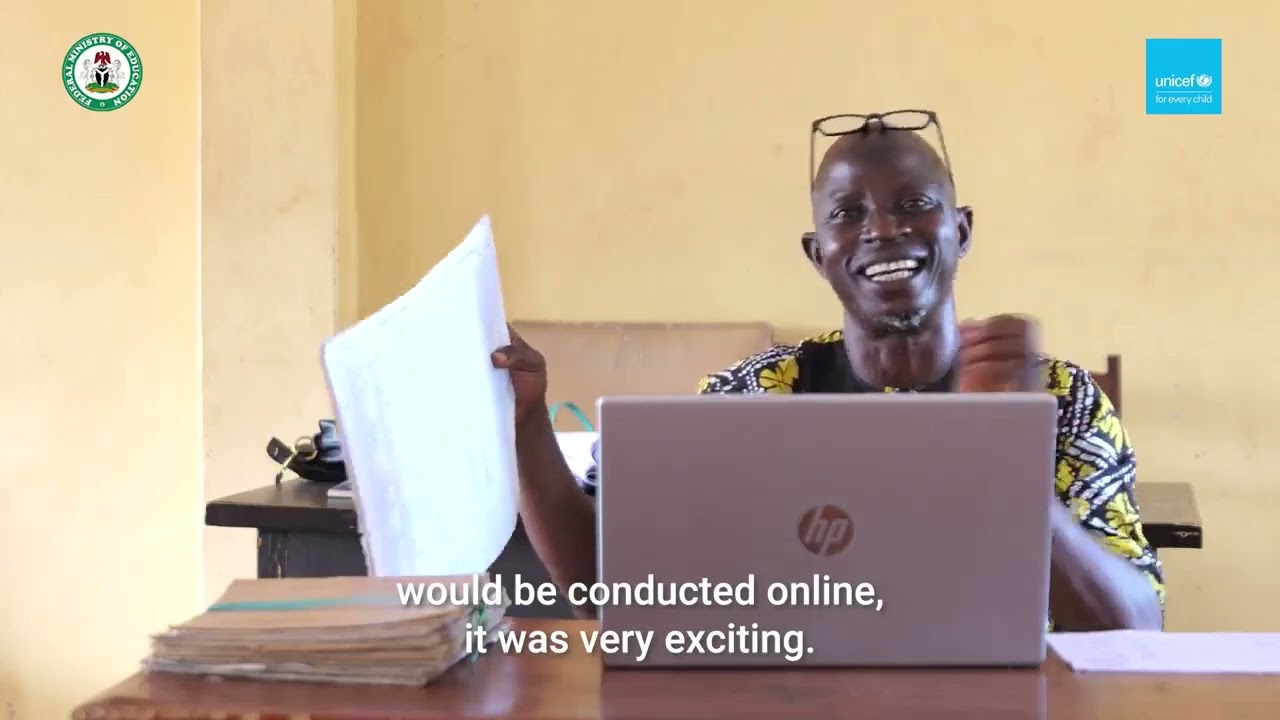
The Nigerian Federal Ministry of Education has launched a transformative Digitalized Nigeria Education Management Information System (DNS) designed to replace an outdated, manual data collection process that was prone to errors, lost records, and significant delays. The previous method relied on physical registers and paper piles that often gathered dust while reports took weeks to reach authorities, hindering timely decision-making for students' needs. This new digital platform addresses these critical flaws by enabling real-time data entry through both web and mobile applications, allowing school officers to instantly capture information regarding learners, teachers, and facilities without the tediousness of manual paperwork or unnecessary alterations that plagued the old system.
A key advantage of this initiative is its ability to provide immediate access to comprehensive dashboards at every level of administration, from local government areas up to the federal ministry. These tools allow ministers and officials to instantly view data for any specific school or local government area, facilitating rapid analysis of resource gaps such as infrastructure deficits, teacher qualifications, and enrollment numbers. By integrating national, state, local, regional, and world-level datasets, the system supports robust comparative analyses that were previously impossible with fragmented paper records. This capability ensures that planning is based on accurate, up-to-date information rather than estimates or delayed reports, ultimately leading to more realistic decisions regarding resource allocation and educational interventions.
The rollout of this system involves extensive training for data officers across all 36 states and the Federal Capital Territory, emphasizing not just technical instruction but also practical implementation to ensure user-friendliness. Every school is mandated to appoint a dedicated data officer responsible for entering daily records into the system, fostering a culture where education stakeholders actively participate in maintaining accurate databases. The initiative represents more than a technological upgrade; it is described as an investment in every child's right to be counted and seen, whether they are currently enrolled or out of school. By strengthening collective accountability through good data, the project aims to ensure that no student falls through the cracks and that educational policies can respond swiftly to emerging challenges.
Ultimately, this digital infrastructure serves as a revolutionary step for Nigeria's economy and education sector by turning raw data into actionable insights that benefit every level of government and partner agency. The system empowers stakeholders to extract specific data points needed for strategic planning and programming, ensuring that resources are directed where they are most needed based on factual evidence rather than assumption. With the support of international partners like UNICEF and leadership from President Bola Tinubu, this project underscores a national commitment to leveraging technology to protect children's rights and improve educational outcomes across the entire country through enhanced transparency and efficiency.
Read the full video transcript
The manual system of getting data is so
tedious.
>> Often lists get lost. We've seen big big
big piles of books and papers uh
gathering dust in the background.
>> It allows unnecessary alteration.
>> Now we will have dashboards that are
available that make sense to the teacher
at the school level. And that's really
how we hope to turn data really into
action. UNICEF has supported to train
[music] MS officers at state and local
government level in the entire 36
[music] state and FCT.
>> We've been here for 3 days now uh
deploying the DEI miss system uh looking
at the federal ministry of education's
vision to make sure that annual school
census learner [music] registry safe
schools tool um and similar tools are uh
available and able to be uh data to be
inputed. We've [music]
uh been able to walk through the
application both the web app and the
mobile uh application. We've [music]
walked through the uh learners on
boarding uh the annual school sensors
all the capturing areas [music]
capturing the learners capturing the
teachers uh the school facilities and
some other things.
>> All our facilitators have been so
wonderful. is not just about teaching or
passing that information. Even to the
extent of us even implementing and
seeing if truly we the the system is
friendly or easy to use. It is [music]
expected of us after the 3 days we we
are going to our local government to
even teach them this. [music] Every
school is mandated to have a data
officer that will be responsible to key
in the data uh for that [music]
particular school into the system. Every
day I come here to capture the datas of
the learners [music] to know the numbers
of the learners in the school. The
school officers in charge [music] of the
data find this system so easy because
they are interested.
>> Before now we feel free registers and
submitted report that took weeks [music]
to reach the authorities. At the time
the minister of education instructed us
that [music] we are going to be carrying
out those data activities online it was
very very interesting. Now once I enter
data is available immediately and we can
act faster for our students. It makes
record keeping [music] much easier and
faster.
>> Today with that digitized [music]
educational information system which is
part of Nigeria data infrastructure.
This data we have the national uh data
we have state data we have local
government data we have world data and
we have regional datas as well that you
can now begin to compare and what we
also done differently [music] with that
DNS is that now all these students we
have them we have their b [music] we
have their demographic information we
begin to now know when this king will
intervene
>> at the federal ministry of education we
know that we cannot improve what we
cannot measure the design of the DNS is
in such a way that it can do a lot of
analysis at the click of a hand. Now as
a minister on my minister dashboard I
can go to any local government. I can
see any school that I want and I can be
able to plan in terms of what resources
are needed. What are the gaps in terms
of uh maybe infrastructure in terms of
teacher quality in terms of teacher uh
qualification all the information are
there about the learner about the school
about the teacher is a very important
step that we have taken. We can be able
to get accurate data and we can be able
to make realistic decision based on
realistic data. [music]
>> Every single sector of the economy can
use this data. So this is transformative
[music]
and this is bleed. This is revolutionary
for our country and we thank President
Bol for this because this president
knows the concept of data
>> in UNICEF. We are super excited about
the launch of the digitalized Nigeria
education [music] management information
system. This is not just a digital
platform. This is actually an investment
[music]
to make sure that every child whether in
school or [music] out of school they
have an opportunity to be counted to be
seen [music] and to have access to
learning. With good data we can make
better decision. we can act faster and
we can strengthen [music] our collective
accountability. And for us as unis, this
is not just a technical exercise. It's
about the rights of children to [music]
be seen, to be heard, to be counted, and
to get access to education.
>> The data being collected is not [music]
about the learner alone. It involve the
school enrollment, the school
facilities, the classrooms, [music]
the system. We are looking forward to
seeing every school, every ministry,
every um agencies, every education
[music] partners to make use of this
digital system, extract the [music] data
from the system to do their planning
decisions and programming. This is a
digital [music] system for the entire
country.