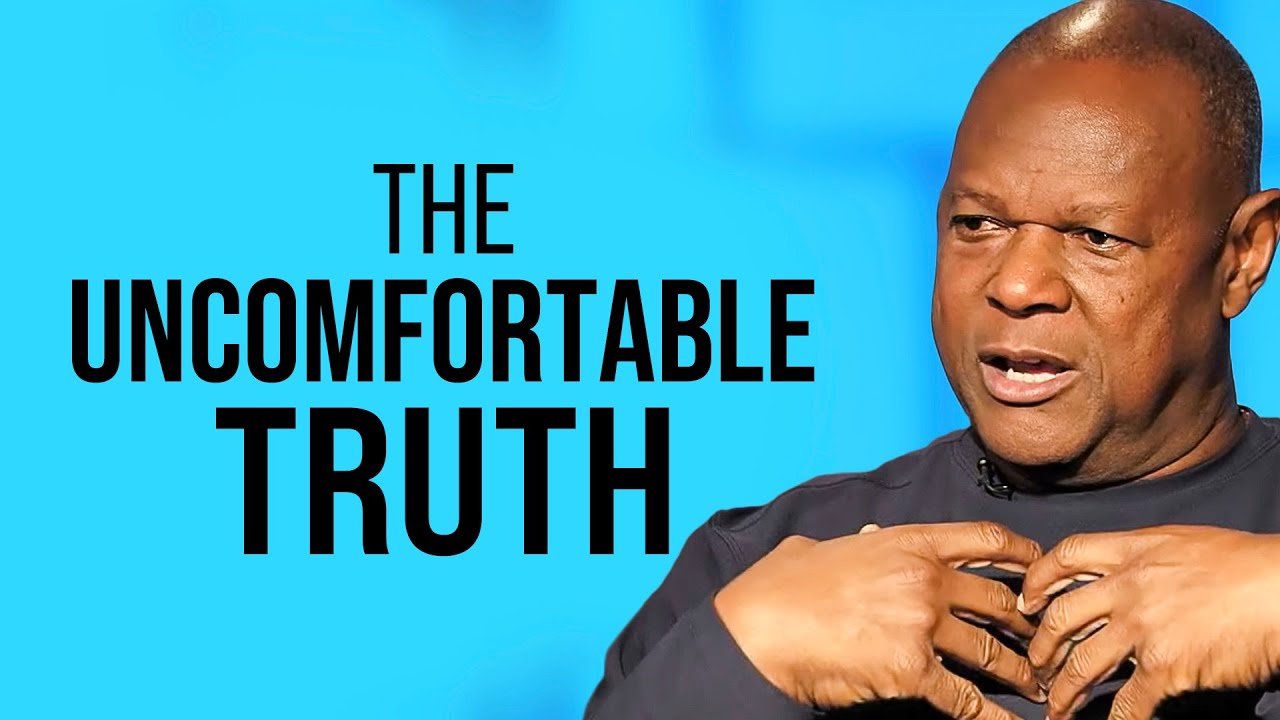
Next Time You Make A Mistake Remember This | George Mumford on Impact Theory
Watch on YouTubeVideo summary
George Mumford, widely recognized as one of the most effective sports psychologists on the planet and a former heroin addict who has remained sober for over 30 years, introduces his philosophy centered on unlocking an internal "masterpiece." Having worked with legendary athletes like Michael Jordan, Kobe Bryant, and Shaquille O'Neal to secure eight championships for teams such as the Chicago Bulls and Los Angeles Lakers, Mumford argues that success is not about fixing broken individuals but rather relating to their inherent potential. He utilizes a concept he calls the "AOF" or "ass on fire" method of motivation, which stems from a sense of urgency regarding one's purpose rather than external pressure. This approach shifts the focus from survival mode, driven by the reptilian brain's fight-or-flight instincts, to growth mode, where individuals operate from basic goodness and abundance. Mumford emphasizes that we are born with wholeness and wisdom; therefore, personal development is an inside job of chipping away at limiting beliefs rather than acquiring new traits. Central to this transformative approach is the practice of mindfulness as a continuous state of awareness rather than just sitting still in silence. Mumford explains that 90% of happiness depends on how we interpret our experiences, noting that research by Shawn Achor shows success correlates with optimism and viewing challenges as opportunities rather than curses. By creating space between stimulus and response through the "mirror mind," individuals can choose their reaction instead of being controlled by automatic negative committees or stories about themselves. He illustrates this with the metaphor of background noise versus background music, suggesting that while external events remain constant, our internal narrative dictates whether we perceive them as obstacles or opportunities. This ability to step back and observe one's thoughts without identification allows for error correction where mistakes are viewed as valuable feedback rather than evidence of personal failure, fostering a mindset capable of handling discomfort necessary for growth. The interview highlights the critical distinction between identifying with a problem versus being in recovery from it; Mumford advises against labeling oneself solely as a "recovering addict" because such identification limits possibilities and reinforces the very behaviors one seeks to change. Instead, he encourages focusing on what one wants to be rather than who they are not, aligning actions with universal principles of love, compassion, and mutual respect. This principle-centered living creates a friendly universe where individuals take responsibility for their reality in every moment. For elite athletes like Kobe Bryant or Tom Brady, this manifests as an intense commitment to excellence that goes beyond mere desire; it requires the willingness to endure pain and put in extra work when others stop. However, Mumford clarifies that such intensity is not mandatory for everyone but must be matched by a genuine "want" rather than forced obligation, ensuring that effort remains sustainable and aligned with one's true vision. Ultimately, George Mumford’s impact theory seeks to help every human being release the divine spark within them, alleviating suffering through self-expression and connection. He challenges listeners to get comfortable being uncomfortable and handle the truth of their situations without denial or avoidance. By quieting the mind and stopping negative interpretations, individuals can slip into "the zone," where performance is effortless because they are fully present in the moment rather than distracted by past regrets or future anxieties. Whether applied to high-stakes sports environments or everyday life, this methodology proves that clarity comes from stillness and an understanding of one's true nature. As Mumford concludes, progress depends on those who persistently adapt the world to themselves through unreasonable persistence, allowing them to live into a future they have chosen with faith, vulnerability, and unwavering commitment to their masterpiece.
Read the full video transcript
You got to get comfortable being
uncomfortable. So, can you handle the
truth?
It's a question and if you can't, then
you if you see that, then you can say,
"Well, if if I'm going to change, I'm
going to have to figure out how to deal
with that discomfort
until the point that I can see what I
need to see, then I can change it." So,
it's the persistence of continuing to do
something until you can do it.
Is is is most of the work. Is is just
continuing to make mistakes, learn from
mistakes, but the mistakes are viewed as
feedback. Not as I'm a failure. It's
it's just an event, not who we are.
So, that error correction is really
important. And when you can see when you
attribute it to something you can learn
or change, now you got faith and
confidence to do it versus if you're
seeing it like, "Oh, I'm just not strong
enough. I'm not tall enough." and all of
that. That's just
that's what I call a negative committee
telling you you can't do anything rather
than saying, "Well, let me see what can
I what I can do." So, it's like a child
learning how to walk. Right? Same thing.
Hey everybody, welcome to Impact Theory.
Our goal with this show and company is
to introduce you to the people and ideas
that will help you actually execute on
your dreams.
All right, today's guest is arguably the
most effective sports psychologist on
the planet. With a master's degree in
counseling psychology, he has taught
mindfulness and performance to everyone
from prison inmates to corporate
executives and some of the most
extraordinary athletes the world has
ever seen, including Michael Jordan,
Kobe Bryant, and Shaquille O'Neal. Known
as Phil Jackson's secret weapon, he was
brought in to help elevate the legendary
Chicago Bulls and Los Angeles Lakers,
and he did just that, helping those
teams reach a legacy-defining run of
eight championships. Jordan himself
credits him with transforming his
on-court leadership of the Bulls, and
Phil Jackson has said, "Time after time,
team after team, I've seen athletes
transform and I've seen championships
saved by players who believed in this
man's one-mind, one-breath efforts." His
ability to transform others becomes
easier to understand when you realize he
first had to transform himself. After
spending much of his 20s addicted to
alcohol and heroin, he learned the art
of self-mastery from the inside out, and
he's remained sober for more than 30
years, a testament to the efficacy of
his methods. There is no one and no
situation that is beyond benefiting from
his unique and transformative approach,
and that's why today he is one of the
most sought-after speakers and
performance experts around. So, please,
help me in welcoming the author of The
Mindful Athlete, George Mumford.
I'm good.
Good. Great to be here. Dude, it is so
good to have you here. I read your book,
God, a
couple years ago now, and was really,
really impressed with
the transformation that you went through
as much as the change that you've helped
other people make. And what I want to
know is, how do you make massive change
in yourself, and how do you make it
stick?
I talk about this idea of having a sense
of urgency. I call it the AOF method of
motivation, which is ass on fire.
So, it wasn't because I decided to be
cool or that I was going to be
intellectual, it was because of a sense
of urgency
that I started learning about who am I
and why am I here, and
can can I connect with the masterpiece
that's already inside of me? Mhm. Can we
create and cultivate the ass on fire
notion? Like, can we build urgency into
our lives?
Can we build urgency in our lives? Yes,
we can. It's
for me
just thinking about my own experience,
first it was, you know, AOF motivation,
and then it was a commitment to
excellence. Mhm. So, when people ask me,
"Well, what what game am I playing?" I'm
pursuing excellence and wisdom with
grace and ease. And so, it's really
about the want to and me deciding or or
taking responsibility. I have a
masterpiece. All I have to do is chip
away to to let it express itself.
And that instead of going because of the
sense of urgency, I can go for the joy
of discovery.
That's really interesting, and I've
heard you talk a lot about Buddhism, and
I know that you lived in a um oh god,
you a meditation center?
Right. So, you lived in a meditation
center for 6 years.
Right. I'm guessing you studied Buddhist
philosophy pretty um intensely.
Yes. And you've said that
instead of being original sin, that
there's the original blessing. Is that
what you call it?
Yes, original blessing. Talk to me about
that. What is that? And what do you
mean?
So, that that means that we start off
with a masterpiece.
And we start off with the basic
goodness, but it's like that still small
voice inside, it's it's still and small,
it can easily be drowned out. And the
idea is to be still and know, as it says
in the Bible, and to realize that that
we were wired for success, but it's how
we relate to our experience that
determines whether
we're we're chipping away or we're, you
know, kind of burying
that sense of of wholeness that we that
we're born with. It's just that we we we
forget it. We don't look inside, we're
looking outside. And so, unless we're
still and we think about it and we
understand that I was born with this
masterpiece. There's no one who can give
it to me or take it away.
It's It's an inside job. And so, if I
look at what's right, it's
it makes makes a lot of sense. So, it's
whether you're coming from a place of
scarcity
or I would say survival mode or coming
from growth mode, which has to do with
the yes, I can, yes to life, and I I
have the capacity and the responsibility
to make it different or to make it make
it better. And so, that's Yeah, so
that's the basic premises. We have
masterpieces. And so, when I go into
work with folks, whether they're
Hall of Fame coaches like Phil Jackson
or
or just
uh everyday athletes or weekend
warriors,
I'm not going in trying to fix them. I'm
relating to their masterpiece.
That's really interesting, and I want to
talk about that. It's really powerful
coming from somebody who struggled
pretty profoundly. The story that you
told about the needle breaking off in
your arm, and you had to tie your arm
off to keep the needle from going into
your heart. I just thought, "Whoa, this
is somebody who really had to figure
things out, really climb out of a hole."
So, in that, how did you not just kick
the out of yourself for allowing
yourself to become addicted? What was
that process like for you of
of moving away from sort of
self-punishment into recognizing that
masterpiece that was still inside of
you? So, when I realized it
that I could beat myself up or I could
love myself and forgive myself like
continual forgiveness, and that I could
differentiate between the ego, and I'm
not saying the ego is is evil, it's
ignorant.
You know, so it's like, you know, we
have the brain, so it's it's like the
reptilian brain,
which only knows fight, flee,
fight for food, and reproduce. That's
all it knows. So, but then we have the
middle brain, and we have the cerebral
cortex. So, when I can engage cerebral
cortex by creating space between
stimulus and response and and and
exercise of my freedom of choice. I'm
choosing to live a principle centered
life that talks about basic goodness,
love thy neighbor,
love yourself, uh forgiveness, uh
compassion, those sorts of positive mind
states.
Now, that's a totally different
worldview.
And so, when I'm in that abundance or
when I'm coming from a growth mode,
uh there's there's a total
change transformation of what I'm
seeing, how I'm relating to things
versus
the the survival mode or the reptilian
brain where we're just trying to
survive. And you can't be in the growth
mode and survival mode at the same time.
Either one or the other. So, it's really
interesting. You um when you were
talking about how people have to like
chisel away to get to what is already
there, and you've talked you I don't
think you said it today, but you've
talked about the Michelangelo quote
about how, you know, he's really just
stripping away the marble to get to the
masterpiece that's already inside.
I was like, I love the metaphor, it's
really beautiful, but I don't actually
understand it. But when you were talking
just now, I realized that you're talking
about the interpretations that we all
have of what's happening.
Mhm. So, and I don't want the the
comment you made about the mirror mind
to go by um without putting a finger on
it. So, if I understand correctly, what
you're saying is the the way that you
create that space is by simply
mirroring back in that instance exactly
what is there without interpretation,
without layers of I'm good or bad, but
just simply this is the stimulus. And
you said something and my mind was so
doing what you warned about, which is
predicting what you were going to say.
That's right. And you said it's like
background, and I thought for sure you
were going to say background noise, and
you said background music. Mhm. And that
really hit me, and it hit me because you
have this whole concept of basically you
get more of what you focus on. So, if
you focus on that it's background noise,
then you're going to perceive the world
one way, but if you focus that it's
background music, even though it's the
exact same situation, the exact same
stimulus, you get a completely different
result. And you've said that 90% of
happiness is
what exactly?
Based on um
it's based on how we interpret our
experience.
So not what's real, just how we
interpret
That's right. So you have people when if
you have So we know that you can predict
someone's this is from research that
Shawn Achor did in his series of books
on happiness advantage and that sort of
thing that you can predict somebody's
success in a job by three things. One
thing is optimism or hope levels.
Second thing is social support. And the
third one is interpreting
a situation as a challenge rather than
as a curse.
So that this changes, so it's a matter
of the brain being in survival mode or
growth mode. So just looking at it, so
when we start with a basic goodness or
we start with joy or start with a
positive mind state, they call it the
broaden and build theory that you
actually
uh your cognitive functioning is
enhanced. In other words, instead of
having this, you have this and your
thoughts and your feelings are different
totally different and you may be playing
out, which we do, thought organizes
things and we're thinking in a way how
we're going to do something rather than
how it's going to go
badly. So it's this whole thing
everything begins with the mind. So if
we the mind is right, everything else is
going to be right. If we see things
clearly and accept the truth, know the
truth and the truth shall set you free,
now our reaction or our response to it,
even if we react to it, we can step back
and say, "Okay, that didn't work out so
well.
If I had it to do over, what would I
change?" And then you change it. And you
might have to like myself trying to get
clean or whatever, you might have to
react hundreds and thousands of times
before you finally realize, "Oh, I don't
have to do that."
But you have to be paying attention and
part of it is having that faith, that
vulnerability to just see things that
are hard to see.
And things that are uncomfortable. So,
in my book, I talk about you got to get
comfortable being uncomfortable. So, can
you handle the truth?
It's the question. And if you can't,
then you if you see that, then you can
say, "Well, if I'm going to change, I'm
going to have to figure out how to deal
with that discomfort
until the point that I can see what I
need to see, then I can change it." So,
it's the persistence of continuing to do
something until you can do it.
Is is is most of the work. Is is just
continuing to make mistakes, learn from
mistakes, but the mistakes are viewed as
feedback, not as I'm a failure. It's
It's just an event. It's not who we are.
So, that error correction is really
important. And when you can see when you
attribute it to something you can learn
or change, now you got faith and
confidence to do it versus if you're
seeing it like, "Oh, I'm just not strong
enough. I'm not tall enough." and all of
that. That's just
that's what I call a negative committee
telling you you can't do anything rather
than saying, "Well, let me see what can
I what I can do." So, it's like a child
learning how to walk, right? Same thing.
It's interesting hiding in there, um, I
hear notions of identity. You talked You
said something so interesting, and I
actually thought it was a part of, um,
recovery to say, "I am a recovering
addict." And you said that they teach
you not to do that. Why do they teach
you not to say that?
Yeah. So, my meditation teacher, uh,
Larry Rosenberg,
when I was in recovery, and he he
understood. He said,
"When you see yourself as a recovering
addict,
you are you are telling the universe
you're identifying with with who you are
instead of saying, 'I'm just in
recovery.'
Uh, right? Because because you're
telling your nervous system how you want
to behave. So, if I'm a recovering
addict, then there's a whole
there's a whole process that I'm
supposed to be doing cuz I'm identified
with being a recovering addict. And
based on what I know of a recovering
addict,
I'm going to be living that out or or
limiting my possibilities but put myself
in a in this frame. So, focus on what
you want rather than focusing on what
you don't want. That's really powerful.
Now, um in that
uh you've talked about clarity being
really critical. Um how do you help
people find clarity? How should people
think about what their goals are, what
they want, what they're striving
towards? How do they build that vision?
So, beginning with a masterpiece pretty
good place to start and then saying,
"Well, what do I want?" Or and then
being willing to
to have the burning desire and then to
put a a a plan of attainment in place
and being willing
to persist and keep changing things
until you get what you want. So, it's
like
we become what we think about. Does that
make sense? So, it's really more about
uh like just keeping it simple and just
well, you know
uh who do you want to be?
You know, what what why are you here on
this planet? If you live according to
the principles of of love, compassion,
you know, uh appreciative joy, uh you
know, celebrating other people's
um successes but how do you overcome
hatred and and confusion and just having
a good heart?
Then I think what you That's what
happened to me. Then I start to get
clear about what what I like to do and
how I could be of service. How can I
help other people? So, in recovery, the
first thing they tell you is is you got
to help somebody else that have the same
problem so you can get out of your
your selfishness or yourself
um
conceit or you know, your ego and just
focus on how how you're going to help
somebody else.
And so, it's the There's no one way to
do it but I what I would say is
that it has everything to do with just
be still and know. Just think about it's
got to be inside job. So, how am I going
to
uh chip away to to express the
masterpiece. Now, I can listen to you, I
can listen to myself and other people,
but I have to find a way that works for
me. But, I have to keep at it and be
willing to learn from my mistakes and
continue to pay attention and to see is
that taking me where I want it go and if
it's not, then what else can I do? So,
you need the mindfulness, but you need
the understanding or the wisdom or what
are the principles involved in in true
north or or what does it mean to relate
to another person? So, we know that
mutual benefit, mutual respect is really
helpful.
Coming from a place of abundance is
really helpful and if we think win-win,
it's really helpful. And so, these
principles, they don't change and
they're universal and they're
self-evident. So, if we're
principle-centered,
then then we'll we'll figure out the
other stuff, but I'll be but those
principles are guiding principles,
they're guiding ideas that help us to
just say, "Okay, how can I be George
based on
taking what I learned from Buddhism or
or philosophy, psychology, or whatever,
but the ultimate responsibility is me,
but I have to have some idea or vision
or possibility. What is the future I can
live into that I'm motivated and
inspired
to live into cuz we live into the future
we
we see. So, when I was a addict,
there was wasn't no future. It was just
this, but once I realized, "Oh, I I
don't have to be that. I can
I can get out of that addiction and live
a life
of love and compassion
and self-expression cuz that's that's
what it comes down to. Basically, who am
I and how can I express myself?
Cuz that's what it comes down to. Yeah,
so what are we all chasing after?
I think everybody
I don't know. You can think people
According to Joseph Camp- Campbell, he
thinks we're all
chasing after a meaning or having a
purpose.
Uh maybe one thing. Some people say they
they're chasing happiness and
and of course Victor Frankl said
happiness cannot be pursued, it has to
ensue. So, you do things that make you
happy. So, I say people want peace of
mind and people just want to be happy. I
would say
or they don't want to suffer less. So,
the way I look at it is if I can
alleviate a little suffering or
eliminate suffering completely,
that would be huge. In yourself and
others. And others, right. When we can
open our heart and see other people
suffering, it helps us to connect and
have more compassion. Can't have
compassion without suffering.
Wow, never heard anybody say that
before. I can have compassion for them
cuz I know from a personal level what
that feels like to be in pain or to feel
like you're not worthy or that, you
know, you're never going to be anything
or you're just um
just feeling really awful about who you
are, self-worth low self-worth or just
feeling like you're you're not worth
anything. When when you can identify
with that feeling,
then it's easier to have compassion for
somebody who's going through that cuz
you know what it feels like and how
awful it feels. And so, yeah, I think
we're we're we're social creatures, but
when I can relate
so the pain I go through helps me to be
more sensitive to other people's pain.
So, it's just really
uh it's
it's just knowing that the universe
works in a certain way. All right, it's
a friendly universe.
If you look at it that way, it's
friendly. If you look at it as dangerous
right?
Yeah, we get to decide. So, when you
look at it as a friendly universe and
there's a lawfulness to it, then align
with the lawfulness and then then that's
how you
You're going to have to go deeper on
that one. I know what you mean. The the
Einstein quote, the most important
decision any of us will ever make is
whether we live in a friendly or hostile
universe. I've heard you talk about that
a lot. So,
I'll want you to start there, but then
also um
just how this all begins to play out. I
think that you have some really
interesting insights. So,
what does it mean that we get to choose
between those two things? Yes. So,
number one, we don't know we can choose.
That's our birthright. We get choice.
And some people say, "Yeah, you're
addicted or you're or you're you know,
your genes and all of that stuff." Well,
we know with consciousness, if you focus
and do certain things, the genes may not
even be turned on. So, it all comes down
to this moment. This moment is the only
time
we can transform. And I say, "Joy now or
never."
So, I got laid off or I get fired from a
job, I can relate to it like,
you know, now what am I going to do? I
don't have a job. I'm not going to be
able to pay the rent or anything. Or I
can say, "Oh, one door closes, another
one opens."
Cool. Okay. So, you know, why would I
want to be somewhere where they don't
want me?
Right? So, that empowers me.
Just by me interpreting it that way.
And seeing that, "Oh, okay. No worries."
And we know this from from research that
people who uh have hope and optimism,
then then they're going to figure stuff
out. If you have the opposite of that,
then you're going to be a victim. You're
going to be in survival mode, and
there's going to be no
space. It's going to be noise and
cluttered. There's no space to create. I
love all that stuff, and I think that
it's even more interesting in the
context of what you do for a living. And
and this I really want to talk about.
So,
you work with some of the
highest-achieving, hardest-pushing,
like, I mean, between Jordan and Kobe
Bryant, I can't think of people that are
more maniacally focused and driven. I
mean, it's insane. Kobe used to make
1,300 three-point shots a day. Right.
Just crazy. So, how do you have this
like,
it's about the not doing. It's about
being still and quiet so you can hear
the voice. It's about, you know,
creating that space and also be like
that intense.
Yeah. So, that is interesting cuz I work
with a lot of people
and
not everybody has that that
pursuit of excellence or wants to be as
in course Michael Jordan and in his
interview said him and Kobe had that
curse. It's not a curse, but it's like
they just have to be a certain way.
So it's really more about understanding
that about themselves, the
self-knowledge. This is how I roll, this
is how I run. I'm committed to this and
then showing them how or giving them the
opportunity to see that okay, so if if
you want to if you want to be better at
making threes, then you got to put in
that work. So you have to have the the
passion, the fire. I mean, that's huge,
the want to, the desire to push through
pain and and that sort of thing, getting
comfortable with uncomfortable. So you
So Kobe had to have that, but it's also
the the understanding that and this is
the interesting thing about the elite
athletes, and throw Tom Brady in there,
they're always looking to get better.
They're always looking at how am I What
can I do now to give me an edge? And
that's why I say they're probably the
best students because they get it and
they want to get better and they know
this is going to help them get to the
next level. So there's a willingness,
but there's a want to there. There
There's a passion there that that that
you have to have. So it's not for those
who need it, it's for those who want it.
So you can have different degrees. Do
you have to be as intense as them? No.
But I I think that we have that capacity
to do that. Now, whether or not we want
to and whether or not we But a lot of it
has to do with what we think
the results of our training is going to
be. So when you know that it's going to
take you where you want to go,
there's a commitment to doing whatever
you need to do to get there versus like,
okay, yeah, I want to cuz people say,
yeah, I want to be like Mike and Kobe,
but then when I tell them what they have
to do, they said, "No, I ain't sign up
for that."
You know, I'm not trying to be like
that. I'm not So and that's but them
knowing that they don't want to make
that commitment.
So it's fine. It's nothing wrong with
that. But the people who really get it
and understand
what it is to
to really say, "Okay, I really want
this." And then and that could be a
problem. You can want it so badly that
it that your effort's going to be marked
up. So you got to want it badly, but
then you got to allow things to happen.
Mhm. That's That's the challenging
thing. But when you have folks like like
if you talk about MJ
uh he just I mean
I I I get I can tell you one time I'm
working out with the team before the
game and he has something going on with
his finger and I have them doing some uh
some kind of exercise and I said, "MJ,
you don't have No, I'm doing that."
That that's I mean it's just he's going
to do what everybody else is not going
to do. Kobe's going to have a finger
there where he can't hold the ball, but
no, he's not going to stop playing. He's
going to change his shot and he's going
to do what he needs to do. But he has
that awareness and the know-how
and the commitment to just doing what he
has to do. If that means
uh putting in another 3 4 hours a day on
top of practice, that's not a problem
because that's what he's committed to.
And so so it it's
it's just understanding what are you
doing? Is it taking you where you want
to go?
Are you as intoxicated by the pursuit of
greatness as I am? I I like when I hear
stories about people like Kobe, like
Jordan who are just driven to the level
of being concerned for their well-being,
that excites me.
And it it ignites something in me and
makes me think about my own potential
and how
much farther than what people think
we're capable of we really are capable
of. Or do you think that that is exactly
what the Buddha was saying when he said
that desire is the root of suffering?
I see it is just me being me.
And this is this is this is this is
where my bliss is. So, I'm following it.
So, for some people they're going to
say, "Yeah, dude, you're you're
Yeah, but that's their opinion. But to
me, I'm just being George. So, to answer
your question, yes, I I think that that
there's commitment and I think because
of that I get I get drawn to people like
you, like Michael, like Kobe, and and
other folks. Why? Because because um
that's that's what I'm interested in.
And that's And that's the energy that
I'm creating.
Yeah, I um man, there's something about
people that are completely committed,
that are completely driven, and that
that I I am drawn to tremendously. It is
so fascinating because um we were
talking before we started rolling, I
think you represent a a type of
mindfulness practice that
could have saved me from years of
rejecting mindfulness because I thought
it was soft. I thought it was weak. And
I felt like the thing in my life I had
to overcome was that that by my nature I
was very lazy. I was very soft. I
couldn't take pain. I couldn't hold a
vision in my head of what I wanted to
become and then execute against that if
early in my life I was not willing to do
the 1,300 three-point shots.
And the the biggest gains in my life
came from when I stopped worrying about
how many shots I needed to make and I
just started making them and falling in
love with the journey for sure and not
worrying about the end result, but
really trying to love my day-to-day
moment. I really resonate with what
you're saying about this moment is all
you have. Right. So, you better learn to
experience or to enjoy that. And I found
joy in the process, in the hard work
because I could finally believe in what
it was that I was trying to become.
And so, for me, you're this fascinating
mixture of you're really going hard for
things. You really um obviously are
attracted to to ultra high achievers,
but at the same time you used to teach a
3-month silent retreat. And I I'm hoping
you can bring that together for people
that that they're the same guy that is
helping the most extraordinary athletes
reach an even
new level, who's not telling them, you
know, don't strive, don't go for these
really big things, but at the same time
understands way that you create that
space is silence. Explain to us the
power of silence. Explain why slow
motion gets you there faster. Yeah, so
when when I when I become a silent
witness and I can observe things, what
happens is in the way my definition of
practice, even though I've done 3-month
silent retreats and that sort of thing,
I don't do that now. My practice from
the time I wake up to the time I go to
sleep.
I can be mindful, you know, what's my
mind, you know, how's my mind? Is it Is
it moving toward, moving away, or is it
just kind of spaced out? And so to me
the secret is the con- continuity of
mindfulness, continuity of paying
attention to what I'm doing and
understanding what I'm doing and why I'm
doing it or whether it's working or not.
So does that mean the continuity of
mindfulness, is that about getting rid
of my story around what's happening and
just being present for the just
realities of what's happening? Yeah, but
you can be aware of the story and see
how it affects you. See, the whole thing
is it's not like either/or, it's like I
got to get intimate with anger, with
frustration, with with jealousy. But can
I relate to it in a way where I'm not
identified with it? I'm just noticing,
oh, when there's anger in the mind, my
jaws are tight and, you know, I'm I'm
looking at people and, you know, I'm
hating.
I'm not really loving, I'm hating, you
know, like, oh, I don't like him anyway,
all that stuff. And then like I see that
and say, okay, so is that who I want to
be? No, then okay, so what do I need to
change? I need to change my my What
matters is whether we react or respond
to it. That's the power. And that's
faith. We get to choose.
Don't let life choose for you. You get
to choose. I get to choose. And that's
what I say. I say, "Yes, and how am I
going to make this work?"
It's going to be great.
What do you say to people that have
tried meditation and they say,
"I I just couldn't do it. I can't make
my mind be silent."
Well, for me, it was hard sitting still.
So, some kind of movement. But, here's
the thing.
It's not about you making your mind
silent. It's about being with the mind
as it is.
See, it's an interpretation of whether
you're doing it right. If you don't
think you're doing it right, you're
going to have a version. I ain't doing
this.
But, if you just like even now, just
sitting and and sitting and breathing,
breathing in and breathing out and
knowing I'm sitting, that's enough.
Knowing that I'm listening and I'm
talking to you, that's enough. I'm here.
I love that.
Before I ask my last question, tell
these guys where they can find you
online.
Yeah, so they can find me at
georgemumford.com.
Uh and then there's a mindful athlete
Facebook page.
And I think my name on Twitter is George
Mumford or George T. Mumford. I can't
remember. I have somebody do that stuff.
I'm not very good on it. And I think
George Mumford at Instagram. So, I have
folks that
that help me with that
that kind of stuff. But, yeah, it's
So, they can find me there. All right.
My last question, what's the impact that
you want to have on the world? I want to
each human being I interact with and
each human being to release the divine
spark or have some access to that peace,
that stillness, that masterpiece
within. So, obviously, I want to relieve
any suffering and I want people to live
more enjoy
and to be more self-expressive, just be
who they're supposed to be.
I love that.
All right, guys. Woo! You are going to
want to read the book. It is absolutely
extraordinary. It's called The Mindful
Athlete and it really shows you how you
can both pursue excellence to hold
yourself to an extraordinarily high
standard and at the same time learn to
create that space in the eye of the
storm so that you can slow things down,
slip into your body as he says, which is
really just a way of saying you're not
thinking about what's behind you, not
thinking about what's ahead of you,
you're not telling yourself a story
about the moment. You are simply in that
moment. And if you've practiced
something enough, then your body's
really going to take over and of course
that's what they call being in the zone
and you're going to be able to perform
your best and do truly extraordinary
things. But if, like me, you're foolish
and you reject the notion of there being
power in the ability to create that
space, you're forever going to hold
yourself back. And I love his definition
of getting to that masterpiece that's
already inside of you, that it's not
about thinking that you start bad and
have to find your path to good. It's
really about quieting your mind,
stopping the interpretation, stopping
beating yourself up, not telling
yourself a negative story, choosing to
live a principled life, which is focused
on creating that beauty, that
connection, finding the love so that in
that moment you can have joy, which is
what is going to prime you to be in the
zone and to perform at your best. I
think he is an extraordinary mind that
you guys will all benefit from greatly,
especially if you want to achieve
something amazing and have fun doing it.
All right, if you haven't already, be
sure to subscribe. And until next time,
my friends, be legendary. Take care.
All right. George, thank you, man.
George Bernard Shaw said it better than
I ever could. He said, "The reasonable
man adapts himself to the world.
The unreasonable one persists in
adapting the world to himself.
Therefore, all progress depends on the
unreasonable man."