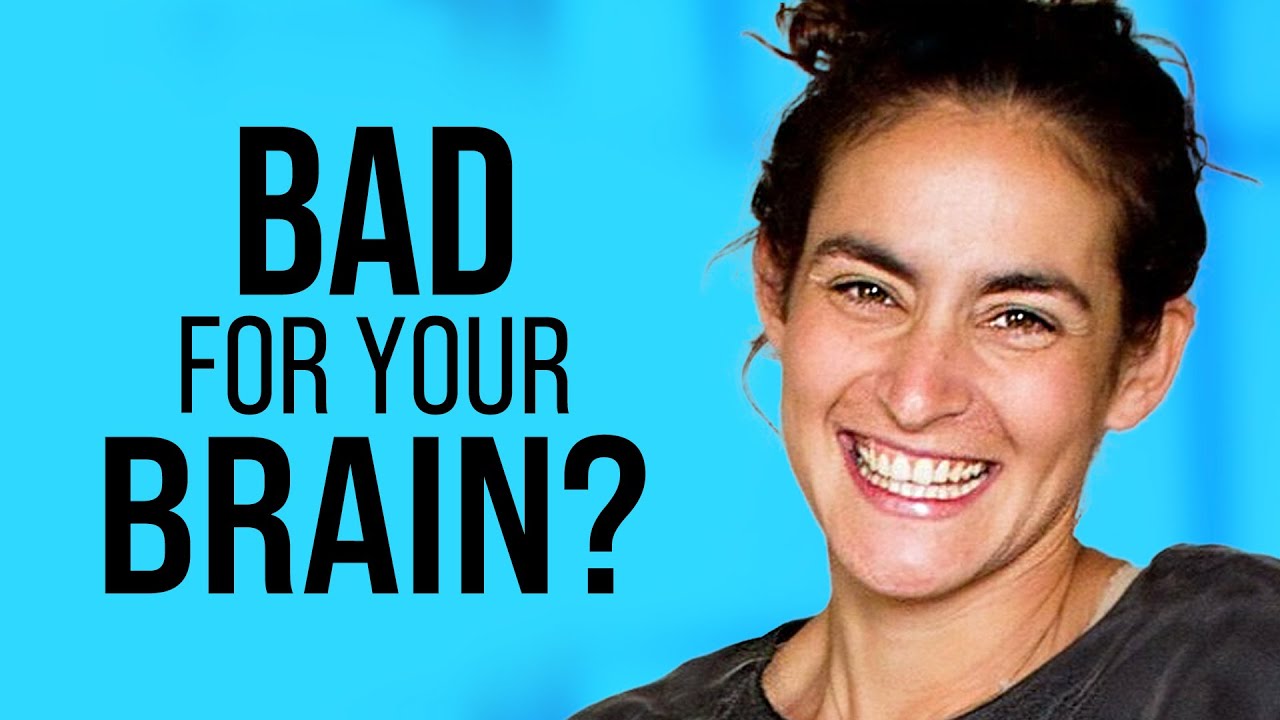
Neuroscientist Explains How Your Brain Is Affected by Fear, Isolation & Anxiety | Moriel Zelikowsky
Watch on YouTubeVideo summary
Dr. Moriel Zelikowsky, an assistant professor of neurobiology at the University of Utah, joins Impact Theory to discuss her research on neural circuits involved in emotion, with a specific focus on social isolation and its profound effects on behavior. Her work began with studying fear and memory, exploring how traumatic events are encoded into long-term memories that can alter future interactions within one's species. While she acknowledges the clinical relevance of these topics for developing treatments, her current lab projects investigate what happens to mice when they undergo extended periods of isolation. The findings reveal a dramatic shift in behavior: isolated animals become extremely violent upon re-introduction with others and exhibit persistent fear responses that last far beyond normal windows. Additionally, their ability to interact socially is impaired; male mice lose the capacity for complex courtship songs used to attract mates, suggesting that social deprivation disrupts fundamental biological functions necessary for survival and reproduction. At a neurochemical level, isolation triggers significant changes in specific neuropeptide systems rather than affecting the entire brain indiscriminately like traditional serotonin-targeting drugs might. Dr. Zelikowsky highlights tachykinin 2 (TAC2), a smaller class of neuropeptides that is heavily upregulated across multiple regions of the brain following social isolation. She describes this elevation as akin to an orchestra conductor stepping in, but one directing antisocial behaviors such as aggression and heightened fear persistence. These systems are normally adaptive for survival—allowing animals to avoid danger or protect territory—but become maladaptive when hijacked by abnormal conditions like prolonged loneliness. The effects of short-term isolation (a day or two) can actually be positive, increasing the desire for social interaction, but once isolation persists for about two weeks in mice—a timeframe that may equate to decades for humans—the brain enters a state where these adaptive mechanisms go out of control, leading to debilitating behavioral changes. The discussion also delves into the anatomy and function of fear, moving beyond the classic view of the amygdala as a singular "fear center" to understanding its complex subdivisions that both increase and decrease fear responses. Dr. Zelikowsky explains that while eliminating fear entirely would be dangerous for survival against physical threats like fire or predators, excessive anxiety—often psychogenic in nature—can paralyze higher-level cognition by diverting blood flow away from the prefrontal cortex. This physiological shift turns manageable stress into debilitating conditions where individuals cannot think clearly or make decisions. The distinction between legitimate external stressors and self-induced psychological stress is crucial; while a physical punch causes measurable trauma, psychogenic stress arises from internal narratives about unworthiness or social rejection, which can rapidly escalate low-level adaptive fear into high levels that prevent functioning. To address these issues, particularly Post-Traumatic Stress Disorder (PTSD), the standard approach involves exposure therapy to build new memories that compete with traumatic ones, such as learning that airplanes are safe after a crash. However, Dr. Zelikowsky notes that PTSD is often resistant to this method because it does not simply involve replacing one memory with another in the same way phobias do; instead, it requires strengthening extinction learning over time. In her own experiments attempting to mitigate trauma by placing traumatized animals back together or into support groups of other survivors, she found counterintuitive results: grouping victims of similar trauma often worsened their aggression and symptoms compared to isolating them with non-traumatized peers. This suggests that interacting with psychologically stable individuals may be more beneficial than seeking out others who share the same traumatic experiences, challenging common assumptions about how best to heal from collective or individual trauma through shared support groups.
Read the full video transcript
Hey everybody, welcome to another
episode of Impact Theory. I'm here with
Dr. Moriel Zelikovski.
Thank you so much for joining me. I'm
super excited. Um, I'm all about
neuroscience, so this should be a lot of
fun.
Great to be here.
If you can just give people a quick
rundown on your background and what you
do, just like a a super quick nutshell.
Sure. I'm an assistant professor of
neurobiology at the University of Utah
and I work on neural circuits involved
in emotion. Lately, you've been work
doing a lot of work on social isolation.
Yeah, social isolation right about now
is a pretty hot topic. What drew you to
um the science of emotion to begin with?
Um I've always kind of been interested
more in clinically relevant type of
topics and so you know nothing's really
more clinically relevant than emotion.
So, um,
and what do you mean define clinically
relevant for me?
Um, I think these would be kind of
topics of research where maybe what you
investigate would eventually lead to a
cure for something or treatment or
things like that um, in regards to how
the human brain works kind of on an
everyday scale.
And do you have anything specific that
you're really drawn to or just sort of,
hey, let me dive into the world of
emotion and see where this goes? Yeah.
So, I mean, I started out looking at
fear and memory, which I I mean, I love
the field of memory. I thought it's
super interesting. Um, for instance,
when something really traumatic happens,
how you store that memory across your
whole lifespan and how it affects the
way you encode new memories and interact
with other members of your species and
things like that. So um I find that
found it really interesting both from a
scientific perspective and understanding
the neural circuits that underly that
but also uh just from you know
understanding human beings better and
why we do what we do and how we remember
the things that happened to us. So
yeah memory and forgetting is something
that is extraordinarily interesting. So
my wife will often joke with me that she
wishes that she has my memory because
I'm ultra forgetful in terms of
emotional amplitude. So if something
like really upset me, I'll still forget
about it a day later or a week later. So
I don't have baggage from my past. I
don't hold on to past traumas, but it
actually really frustrates me because I
also don't remember a lot of things that
I want to remember. So I've
I've always looked at it as a curse. And
she's always not always, but certainly
as we got deeper into our marriage,
she's really like, "Oh man, like how how
does that not wind you up? how are you
not still pissed about that? And I'm
like, that seems so weird to me. But I
know that memories get basically tagged
for either, hey, this is important,
remember this, or you know, this is
irrelevant, forget it.
Um,
so how how does that dynamic of like
stress
I feel find that super interesting only
because I feel like with most people
when they have an emotionally charged
event, it's kind of seared into their
memory in the first place. And then the
more times you retrieve it, the more and
more you're kind of solidifying that
memory in your brain. So usually people
remember these kinds of poignant
emotionally charged memories for a long
period of time. Whether they do so like
perfectly accurately is another issue.
But um it's usually kind of the more
trivial things that people don't
remember. So I find that really
interesting about you.
And what's your primary area of focus
right now? Um are you working with rats
a lot? Like what's your
Nice. Yeah. So I think I would say for
like experimental neuroscience,
neurobiology,
I don't know, maybe like 80% of the work
is done in mice. Um, for a number of
reasons. They're just like, you know,
great model organism. Um, and they have
they're genetically tractable, meaning
you can actually, you know, breed them
and look at certain genes and look at
certain cell types and do kind of all
the fancy stuff that we do nowadays in
neuroscience. and the applicability to
the human condition and brain is very
very high. So, [snorts]
and the tests that you're running now,
are they are they around fear or what
are you working on right now that you're
super excited about?
Yeah. Yeah. So, right now our lab is
working on we have a few projects in the
lab um and kind of most of them are
circulating around this um idea of
social isolation and what happens to the
brain and behavior when an animal's
isolated for an extended period of time.
Um and so we have a lot of kind of
different projects looking at that. And
so the most let's see most exciting one
recently that um is going on in my lab
is someone who's looking at the effects
of isolation on mating behavior. Um
which is kind of a little bit more I
would say maybe more fringe in terms of
interest to the general public. Um but I
think it's super interesting because
he's also um able to record mouse song.
So it turns out mice will sing as a form
of courtship to kind of get the female,
you know, a male mouse will sing to kind
of get the female interested in it. And
so if the animals are isolated, it turns
out that both the mating behavior is
disrupted and also this song is
disrupted. And so we're doing some
pretty interesting experiments.
Are are they singing when they're alone,
like trying to attract, or when you put
them back together now, they can't sing
properly? Male mice will sing to a
female mouse um as it's trying to court
her. And it's it's not not anything that
any of us could hear with our naked ear.
You need very special kind of ultrasonic
vocalization equipment to be able to
hear this song and to also analyze these
very complex um you know bands of
frequency and song bursts and things
like that that um people have been doing
in birds for years and years. And so now
they're kind of starting to do it in
mice and it's super interesting. So, is
it is the song breaking down because
they're essentially getting depressed?
Is it because they're just out of
practice? Like, what's what's going on?
That's a really good question. That's
something we're working on. We have no
idea why the song is being altered.
Though, it does, I think, help to
explain why they're not as successful
mating.
I was going to say, is it, I'm assuming,
less attractive that women are less
likely to respond to it?
Yeah. It's kind of like, you know, if
you're at a bar when we used to go to
bars [laughter]
and a guy's like, "Hey, you want to go
on a date?" versus like, hey, you want
to go on a date? It's who would you go
out with? The one whose, you know,
frequency range is like really short and
doesn't really have anything interesting
going on, or the one that's able to kind
of put some more spice in their song or
approach. So, yeah. [laughter]
Now, it it becomes really easy to
understand why humans put so much energy
into um or why isolation is so
problematic is a better way to say it
because we're such a social animal. Are
mice highly social? Yes, mice are very
very social. Um, and we work on mating,
but I also work on this has kind of been
more of the bigger area of my research.
Um, violence is a big big thing that
happens after social isolation. Um, so
interesting.
Yeah. When
so they they when you bring them back
together, they just want to [ __ ] [ __ ]
up.
Yeah. They're extremely violent. And
actually, it's like one of the best
models for looking at violence, which is
what I was originally interested in. So
if you isolate almost almost any species
you look at if you isolate them they
will be more violent when you introduce
them back with another member of their
species.
That's weird. So what was it um what was
the fascination around violence that led
you to that? Just the thought of humans
can be violent and let me figure out
why.
It was that and it was kind of at the
time where all these you know school
shootings and things were really picking
up.
Um and you know not just school
shootings but all kinds of uh kind of
violent behavior. it was really not not
being looked at so much at a
neurobiological perspective. So I was
super interested in why you know how
people can become really really violent
and then when you start looking into the
past of those kinds of people who you
know are shooters and things there's
either a history of mental health or
social isolation or something like that.
So um
all right well break it down for me in
terms of the neuroscience. So, what's
going on at a neurochemistry level or a
wiring level as as you isolate and
obviously we're extrapolating from mice
into humans, but as we um we're living
through a period of such unimaginable
isolation, like this seems like a pretty
important um question to get to the
bottom of because already we're seeing,
you know, pockets of violent outbursts.
Yeah.
Um and
is this going to escalate would be a
pretty reasonable um question to ask.
So, what happens during isolation?
Yeah. Well, I was going to say one thing
to add is during is after isolation,
animals are way more violent, but
there's a host of other things that
happen, too. For instance, they're
extremely um persistent in their fear
responses. So, normally you might be
afraid if you hear a car backfiring or
the sound of a car honking, you might be
afraid for a second. But if you've been
isolated, that kind of persists be
beyond the kind of normal window for you
to be afraid. So you have this enhanced
fear persistence, this enhanced
aggression, and then you have
abnormalities really interacting with
other members of your species. So um if
you're kind of given access to a another
friend mouse or a new mouse, you're not
going to really spend that much time
with it. Um or for humans, you might not
really be that interested in interacting
with a novel member of your species. Um
and kind of show more hesitation there.
So that's those are some of the
behavioral
that part. I get I get why the novel um
person would become more worrisome.
You're you know going back to the mating
thing. You're sort of out of practice.
Maybe you've lost your groove a bit.
Um but when I think about in
reintroducing somebody that you knew
already and you still don't go spend as
much time with them, do you know like
are we seeing just the the um receptors
for oxytocin are disappearing off the
cells? Like
why?
Yeah, that's a great question.
[laughter] So I think yeah I think you
know there's some stuff that we know and
then there's a lot that we don't know.
One thing that we know for sure is that
this one neuropeptide that I've worked
on called tachikinan 2 is heavily
upregulated across many regions of the
brain following social and
so tact 2 what give me give me some info
what does it do
it's kind of like a neuropeptide so you
might lots of people know about neurom
modulators like dopamine or serotonin
these are all the ones that you know
drugs for depression and anxiety
disorders are all based on and these are
just kind of like a smaller what you'd
think of as a smaller class of those so
and is it like oxytocin feels [ __ ]
Awesome. Some people refer to it as the
bonding hormone. Is it positive,
negative?
That's a good question. But it's again,
it's one of these smaller neuropeptide
systems. So, it doesn't have these kinds
of like you can't just kind of
generalize and say that it does X, you
know, makes you happy, makes you sad.
Um, so its expression is way more
restricted than some of these other
ones. So, um, the good news is if you
find something that it does that's
important or useful, that's great. And
and the other set side of the good news
is that you're not going to be doing
something that kind of affects the whole
brain if you want to target this system.
So, you know, some of the other systems
like for instance serotonin, you know,
there's some great benefits. Obviously,
people are using anti-depressants,
you know, developed decades ago, um,
targeting serotonin reuptake, but the
downside is it's you're targeting it all
over the brain. And you know serotonin
has sometimes opposite effects depending
on where you look. So um these
neuropeptide systems are nice nice in
the way in the sense that you can kind
of target smaller populations of neurons
and um system a system in the brain
that's way less kind of
uh how do I say ubiquitous. So yeah.
So now did you say that tattoo is
increased or decreased in isolation? So
it's increased after isolation and it's
kind of
and what do we think the the point of
that? What what's it pointing at?
Yeah, that's a good point. So I I think
you know there's a few ways of looking
at it. One is that it's kind of acting
in this kind of coordinated manner much
like someone who leads an orchestra
leads the whole orchestra by his, you
know, um direction. And so you see it
elevated in multiple regions. And you
can kind of think of it like a web of
increased activity that um allows the
brain to coordinate a response to social
isolation that includes many different
things. So for instance the enhanced
violence, the persistent fear, the
alterations in mating, those kinds of
things might be coordinated response and
this is one of the way could be
coordinated um which is just this
elevation of this peptide across the
brain.
Okay. Well that's um
maybe troubling. So, we have a conductor
who's stepping in, but what he's
conducting is antisocial behavior, uh,
aggression, sort of, um, being
antisocial.
So, it's interesting. So, okay, you said
there were a few things that we knew.
So, one, we know tactu is elevated. The
conductors in there, he's telling us to
do things, but we also know that the
behaviors that we're seeing on the
outside, so if tact is conducting, it's
conducting some gnarly stuff. Um, so we
have
Yeah. So I think that
that's a really good point and I think
it kind of ties back into the idea that
this kind of social isolation where and
I'm talking mostly about when you are
fully isolated like no other single
person, no partner, nothing. You're by
yourself, you know, have been in your
apartment and haven't seen anyone in 2
weeks at all. Um, and I think that is
not a normal situation. Um, not for
humans, not for mice, not for many
species. So most of the time you're
interacting with other members of your
species and so you wouldn't have this
kind of explosive response in your brain
or in your behavior. So I think um you
know these systems that are usually
probably quite adaptive for regulating
fear which is great in you know certain
to a certain degree cuz it lets you
survive and avoid dangerous things. Um
and also probably being able to be
aggressive and protect your territory if
you're an animal protect your mate.
that's, you know, something that's
adaptive. And so it's really when these
things are kind of go ary or out of
control that it's not adaptive anymore.
So it's not that the system was kind of
maybe designed to do this in some kind
of functionally, you know, beneficial
way, but more it's more that the system
that's usually adapted at low levels has
kind of been hijacked in these
situations that are, you know, what I
would consider abnormal for a social
species.
And when do you see this stuff start to
regulate? Like is it hey they're violent
and um antisocial for a day and then
they begin to normalize they get their
song back or
No, it's kind of it's a long-term thing.
In fact, with when you're only isolated
for a day or so, you have a lot of
actually opposite effects. So, if you've
kind of been in your apartment stuck in
there for a day or two working on a
project by yourself, you seek out social
interaction after and you have a lot of
kind of positive type of um interactions
with other members of your species. It's
really only when this persists for a
long period of time that you kind of
slip into this state that's not adaptive
or beneficial at all in terms of
and in the lab, how are we defining long
time?
Yeah. So, in the lab with mice, it takes
about 2 weeks. Um, which, you know, I'm
just trying to think, you know, they're
usually like live to a year and a half
or two years. So,
you might that might be like times 50
for a human. So, I don't know. But it's
hard, you know, it's hard to like make
that exact analogy. That's I don't like
making those analogies. [laughter]
Do do you have any sense of like um what
we should expect from the unintentional
social social isolation experiment that
we're running now? So we're recording
this. We're what month five?
Yeah.
Of uh co lockdown. So is there you know
do you have a a guess on where our
breaking point is or
Yeah, that's a really good question. I I
have no idea. I think there's another
big thing that you know is a factor
especially with humans. Two things that
are a factor with with humans. One is
that um the notion of kind of social
media and Skype and Zoom and all these
ways that we are staying connected. So
to what degree does that actually help
to mitigate those feelings of
loneliness? It's hard to say. You know,
teenagers have been using the new
generation of teenagers have been using
social media for years and years and yet
they report feeling more lonely than
ever. So, is that how people are feeling
in general right now with social media
or is it actually helping to mitigate
some of the effects of social isolation?
So that's one thing and I think that
would that definitely requires kind of
more cognitive psychology experiments
and um lots of studies in humans and
things like that and that's much harder
to model in a model organism in the lab
because yeah it's like kind of a
specific human thing and then the other
issue is how you are isolating. So some
people are at home with their immediate
family um which probably seems really
frustrating sometimes but is also
probably really beneficial. So in the
lab, if you if you have a mouse that's
with just one other mouse, it mitigates
tons of the effects of social isolation
um versus people who are in a situation
where they are totally alone in their
apartment right now. So I think that's
going to also be a very big difference
um which is like people who have a small
little support group versus those that
have zero. So
yeah, that woo when you look at what's
going on now in terms of um people
feeling like they they're being sort of
locked up against their will and it's
like who am I even pushing back on
because I can push back on the
government but if I go out and I get
sick it's like you know the virus
doesn't really care. So in some ways
it's it's not even people telling me to
stay home. It's just and I'll speak for
myself. It nobody needs to tell me to
stay home as much as I would now at this
point like to go back out. It's I just
don't want to get sick and so and I
really don't want to bring it home to my
wife and so um
there's no one even to like rail
against.
Right.
Yeah. And I think that
so it's like I I want my block of wood
to chew.
That lack of control is hard. Yeah.
Um walk me through the um anatomy maybe
the wrong word, but walk me through the
anatomy both literally and figuratively
of fear.
Oh yeah. So fear has come a long way.
Um, but yeah, I think the kind of
classic anatomy that people recognize
with fear is the amygdala, which is like
this small part of your brain shaped
like an almond. Um, that's kind of been
this, you know, at the forefront or
center of the fear of literature and
research for a long, long time. Um, and
so since then, as I was saying earlier
in the interview, there's, you know,
lots of tools that let you look at
different cell populations in the brain,
um, with a much kind of finer finer
tooth comb. And so because of that,
people have started to find different
sub regions of the amygdala. So you know
a lateral part, a medial part, um a
basil part, things like that that kind
of do different components or in are
involved in different components of a
fear response. And then within those
regions, there's certain populations of
neurons that are involved in um you
know, increasing fear, decreasing fear,
things like that. So um that's come a
long way. what what's the part that
decreases fear and how do we take
control of that
right so this actually it's the same
part so kind of more recently people
have started looking at the central
amydala I shouldn't even say more
recently maybe like 10 years um which is
a subdivision of this kind of amydala
structure um and people have found cells
there that are kind of active during a
fear inducing stimulus and cells there
that are active when that stimulus turns
off so there are cells there that in
theory do the complete opposite of emit
or control a fear response. Um, and so
that kind of gets at why it's super
interesting and useful that we have
these new tools because in the past you
could just mess up one brain region and
say, "Oh, these, you know, animals
aren't afraid or for instance, I think
in humans there's a very rare condition
where the amydala gets calcified and
those patients are not afraid at all."
Um,
that's so crazy.
So crazy and it's actually very
dangerous for them.
So
now walk me through how So um if you had
asked me when I was 18 about fear, I
probably would have said, "Yeah, yeah,
if I could get rid of it totally, I
would." Right.
Um and then I read a study about
emotions and how we actually can't make
decisions without emotions. And because
you can walk through the logic of it all
day, but there's nothing to parse
whether like a tuna sandwich is better
than a pizza. And when there's no
emotion, be like, "Yo, pizza's rad." Uh
you you literally can't do it. And so
they'll just stand there all day. they
can give you the benefits and ultimately
you just have to tell them to eat one.
Um
what what is going on? Like what do we
use fear for? Why is it bad to not have
fear? Like I get it if they're like,
"Oh, they don't recognize that getting
hit by a car would suck or whatever, but
are there more nuanced ways that fear um
is actually advantageous and adaptive?"
Yeah. I mean, I think pretty much in
every everywhere you look, you could see
that fear would be adaptive. So yeah,
you know, there's the obvious cases
where you want to be afraid of fires or
very dangerous kind of environmental
stimuli. There's less obvious cases
where you want to be afraid um in
situations where you might sense
something's off or wrong. Um and you
can't even really put your finger on it.
Um you probably want to be afraid if
you're in a crowd of like lots of people
and everyone's pointing a gun at you.
There's like there's tons of cases where
you might want to be afraid or aware of
the danger in a given situation. Um, so
yeah, I guess the physical dangers I get
those those, you know, obviously like a
gun or a car or something like that that
I get. I'm wondering
Yeah. Like is there is there something
like um fear of being hurt makes you
make wiser decisions? like being able to
forecast into the future and saying I'm
afraid of not being able to feed my
family cuz like I'm thinking about part
of the reason that I would have said
when I was younger um that I would for
sure eliminate fear if I could was fear
at a physiological level for me fear
turns into anxiety which turns into the
blood leaving my prefrontal cortex and I
like I I when I so I went through
debilitating anxiety and I remember at
one point saying to my wife when I don't
have any anxiety I feel like a superhero
I feel like I can think through things.
I can be witty. I can solve problems.
And when I have anxiety, I feel
absolutely moronic. Like I I I actually
can't think. And so I I just like I get
this like flustered feeling. It's so
weird. Now, once I understood that the
blood was literally leaving my
prefrontal cortex and so my higher level
cognition was actually shutting down, it
was like, okay, that makes sense. So
there it's like well the anxiety I mean
anxiety might be public speaking or you
know it's it's not something
life-threatening at least not in a
modern context and so because it seems
to so easily get out of control it's
like I want to sort of better understand
if it's you know and I maybe I just
answered my own question but um you know
if thinking through things like being
able to predict the future break down if
you don't have fear.
Yeah that's a that's a really good
point. I would probably argue even for
those situations, a little bit of fear
is good. Um, and you gave the example of
public speaking. So, you know, you're
like in the back of the stage, you're
about to go give a talk to a huge
audience or something like that. I think
like a few minutes before kind of
getting your heart rate up, feeling a
little bit, you know, I wouldn't say
really afraid, but kind of like a little
anxious about you're about to go talk in
front of a bunch of people, pumping up
that adrenaline and then going out
there, I think can actually be really
beneficial. Um, but I think you know
with a lot of these kinds of more we
what you're talking about is like
psychoggenic fear and anxiety.
Oh yeah. Talk to people. What what's the
difference between fear and psychoggenic
fear? Oh, I just mean so we were talking
about fear kind of produced by physical
um uh stimuli in the environment like
someone pointing a gun at you or
something like that versus fear produced
by something kind of more in your mind
or you know what you think
cuz some of the studies on psychoggenic
stress are incredibly interesting and
it's like if you translate psychoggenic
and let me know if you agree with this
if you translate psychoggenic to um
selfinduced
then it's like Okay, this gets
interesting. And to me, it's
psychoggenic is um the Shakespeare
quote, nothing is either good or bad,
but thinking makes it so. And so, you
know, when you start getting into
physiological stress, you're working too
hard, you're running, you got punched,
like, okay, those are those are
legitimate stressors that can be
measured sort of as having or or they
have a um physical cause often times
externally. When you think about
psychoggenic stress, now you've got
somebody who's um they didn't get enough
likes on their photo and now they're
spinning out of control or they're
isolated and now they're telling
themselves a story about unworthiness.
Um walk me through like and and maybe
this feeds into PTSD. I'll actually be
interested to hear like how we end up
amplifying the problem for ourselves.
Yeah. I mean, I think with humans
there's that there's that disorder
generalized anxiety disorder where it's
like you start amplifying it and then
even just feeling your heart beating
fast can generate its own anxiety
disorder. So, it's kind of this like
vicious cycle where it's out of, you
know, kind of out of control in that
sense. Um but yeah, I think psychoggenic
stress I think very quickly you can go
from these like low levels that are
adaptive to these very high maladaptive
levels that make it difficult for you to
function. Um make it difficult for you
to feel, you know, on top of your game
or that you're doing, you know, using
all of your skills and resources, you
know, well or something like that. So I
think it feels very paralyzing when you
hit a point of excessive fear and
anxiety for most people.
And do have you looked into like how
people begin to unwind this? Like how do
you if somebody has PTSD, which I know
you've looked into a lot,
how do we how do we begin to back out of
that?
Yeah. So I think like the still kind of
the most typical therapy for PTSD is
some form of exposure therapy. It's the
same for other phobias. So if you're
afraid of flying, you can go to a clinic
and, you know, get in a fake airplane
and kind of do that repeatedly over and
over and in a form of exposure therapy
or cognitive behavioral exposure therapy
um where you kind of re relive the
traumatic event or um experience the
cues that predict trauma without the
trauma itself. So that's fairly typical.
How does that help?
So I mean it's actually a lot of that's
also based on rodent research. And so
what you do when you do exposure therapy
is you build a new memory. So a memory
that actually I can get on this airplane
and everything's going to be fine. I can
drink my wine and eat the crackers or
whatever. I can get on this plane and
actually the world's not going to end.
It's going to be okay. So that's you're
really forming a second new memory
there. And a lot of people have worked
on that. It's called, you know,
extinction learning or what we think of
as exposure therapy. And during that new
learning, you can uh again learn that
the plane doesn't mean something
terrible is going to happen. And then
those two memories compete. One that
getting on an airplane, you know, leads
to something terrible and the other that
getting on airplane usually leads to
everything being fine and great. And so,
um, by doing exposure therapy, you're
really kind of just strengthening that
extinction memory and, you know, kind of
making that memory the primary one that
you retrieve when you get on an
airplane. The problem with PTSD is
unlike other kind of traditional
phobias, it's pretty resistant to that
type of exposure therapy and that's why
so many people still work on it. So
other, you know, therapies for people
who are scared of snakes or scared of
planes and stuff have worked pretty
well, but kind of these therapies for
people who've experienced some very
horrific and debilitating trauma um
usually don't work that well or if they
work, it's pretty shortterm. So, lots of
people are still trying to understand it
and you know why some of these classic
exposure therapy methods aren't working
and what we can do instead to kind of
treat uh people with PTSD.
So, in your work on emotions, what's one
thing you've come across that you wish
everybody knew?
H
that I wish everybody knew.
Yeah, that might be useful for people.
I actually have a super weird experiment
that I ran while I was a posttock at
Caltech. Um, and
so I don't know, let's see if how this
comes across. It's pretty weird. Um, so
I was doing a an experiment kind of
looking at this a model of PTSD and I
just thought I thought oh I know I have
an idea. This was to this is totally an
example of like anthropomorphizing
stuff. I thought, I have an idea. If I
give a bunch of these animals PTSD and
then put them back together, it'll help
mitigate the effects. Kind of like when
you go to a support group for um you
know, where everyone else has suffered
trauma and you talk about it and it
seems to make people seems to result in
better outcomes for people and things
like that. So, I took some animals, I
gave them all PTSD and put them back
together. And the next day when I went
in, not all of them were even alive.
They were they viciously attacked each
other. It was hor their symptoms were
even worse
than if than they were if they just
hadn't gone back with other other kind
of members of their species that had the
trauma.
And I was very surprised and I was like,
"Wo, what is going on here?" And then I
decided to run another experiment to
follow up on that where only one of the
animals got traumatized and then I put
it back into the cage with its litter
mates that had not been traumatized and
that seemed to really alleviate the
effects of the trauma. So you could
really kind of um get over the effects
of that trauma or reduce those effects
of trauma by interacting with and being
exposed to, you know, others and being
social but not others who had had trauma
themselves. Um and so
yeah, that gave me the chills. What What
do you think is going on? Is there um
like I show aggression because I have
PTSD and we and then the other person
shows aggression?
It's probably something like that. It's
probably, you know, they all had the
same kind of trauma. So there's might be
an argument that when you, you know,
when you're in a group for other
survivors of trauma, you have such
different experiences that you're able
to kind of gain, you know, perspective
and um feel healthy from that
interaction. Perhaps if you guys were
all at the same in the same, you know,
bad place at the same time, you would
associate those people also at the bad
place. I'm not sure, but kind of it kind
of did make me think, oh, maybe it makes
sense instead of going to like support
groups is might might make more sense to
like go, you know, hang out with like
your three closest buddies that are like
pretty psychologically stable and that
might be actually the better thing for
you to do. Um, yeah, that was very
surprising and weird.
I could talk to you forever. Thank you
so much for taking the time today. Where
can people connect with you and see what
you're up to? Um, I have a lab website,
zelikovskylab.com,
and you can find me there. Um, yeah, I'm
uh not really too much on Facebook. My
Instagram is mostly my climbing stuff,
so I wouldn't tell anyone to [laughter]
go there. Um, yeah, and then I'm on
Twitter also, Moriel Z.
Love it. Awesome. Moriel, thank you so
much for joining me today. It was
amazing. Guys, if you're not learning
about neuroscience, I really think
you're missing a trick. um dive in.
She's got amazing stuff. Obviously, what
she's doing in her lab is so
fascinating. Emotions are so critical.
Um so, do check it out and if you
haven't already, be sure to subscribe.
And until next time, my friends, be
legendary. Take care. Most of us believe
that we see reality as it is. When we
look up and see the moon, it's because
there really is a moon and it would
exist. Even if there were no observers
to see the moon, it would still exist.