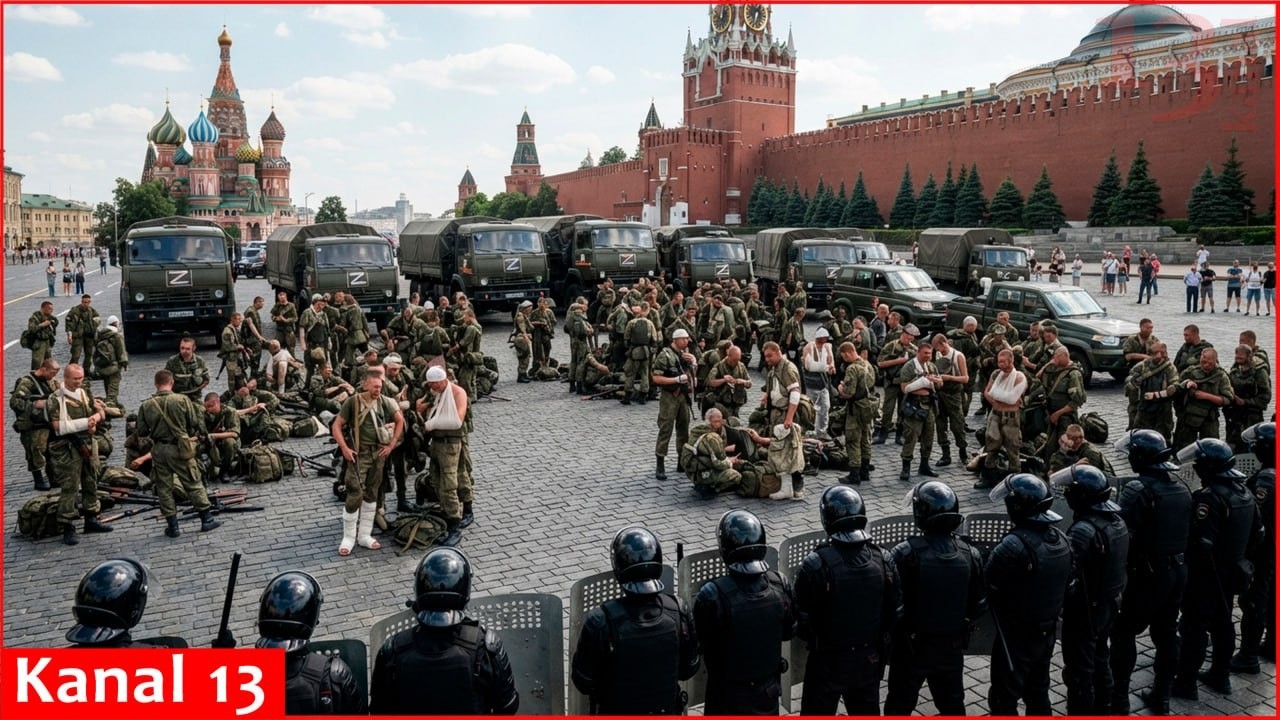
Mutiny by Russian soldiers against Putin: army could destabilise Russian society
Watch on YouTubeVideo summary
Ukrainian President Volodymyr Zelensky has alleged that Vladimir Putin is afraid to end the war in Ukraine because he fears for his own life, believing that stopping the conflict now would anger the occupying forces rather than constitute a victory. According to this perspective, the Kremlin dictator worries that if the war ends prematurely, the returning soldiers will return enraged and turn against him, potentially leading to a mutiny or societal destabilization. Both Ukrainian intelligence and sources within Putin's inner circle suggest that there is a genuine fear of a massive revolt involving up to a million Russians who might rise up against the leader upon their return home.
The core of this instability stems from the fact that Russia has recruited upwards of 180,000 convicted criminals, including murderers and rapists, to fight in the war on Ukraine. Initially, these prisoners were offered pardons after serving six months on the front line, but by 2023, the Defense Ministry changed the rules to require them to fight until the war concluded unless they were released due to serious injury, conspicuous bravery, or bribery. Now that the conflict is nearing a potential end, Moscow faces the prospect of releasing these hardened individuals back into society all at once, which Kremlin insiders describe as an unpleasant and highly disruptive event that requires careful management to avoid chaos.
Security affairs expert Mark Galeotti highlights that the crimes committed by these paroled convict soldiers are already having severe effects within Russia, creating a dangerous environment for civilians. He notes that Moscow's decision to enlist gangsters and serious criminals on such a massive scale ensures that the impact of their return will be unusually disruptive, as many of these individuals are damaged and dangerous people who have not been rehabilitated. The initial recruitment was facilitated through the Wagner mercenary company before shifting directly under the Russian Defense Ministry, but the fundamental issue remains the same: releasing a large cohort of violent offenders simultaneously poses a significant threat to public safety and social order.
Ultimately, the situation presents a paradox where the very people recruited to save the regime are now seen as a potential source of its downfall if not managed correctly. While some prisoners have already been released under specific conditions with the threat of returning to prison if they reoffend, the bulk of the convict army remains on the front lines and will return only when the war ends. Putin appears concerned that this sudden influx of criminals could destabilize Russian society further, exacerbating existing problems caused by their crimes at home. Consequently, the leadership is reportedly preparing for this difficult transition, hoping to mitigate the risks associated with reintegrating a population composed largely of violent offenders who have been away from society for years.
Read the full video transcript
Kremlin dictator and war criminal
Vladimir Putin is afraid to stop the
war. Ukrainian President Volodymyr
Zelensky stated this in an interview
with CBC News. According to him, Putin
fears for his life. The dictator fears
that the war in Ukraine has not yielded
the desired results for Russia, so
ending it now could anger the occupiers.
They genuinely believe that stopping
right now won't be a victory. It will be
quite the opposite. Therefore, if he
remains in this position, he's afraid
the soldiers will return, be enraged,
and turn against him, Zelensky noted.
Both Ukrainian intelligence and Putin's
inner circle believe a million Russians
might revolt against the Kremlin leader.
Therefore, the dictator is afraid to
stop at this stage of the standoff. So,
Vladimir Putin is concerned for the
[music] unpleasant return to society of
Russia's convict army, according to
three anonymous sources within the
Kremlin. The Russian president views the
prospect of an army returning all at
once as a potential risk he wants
carefully managed to avoid destabilizing
society. Russia is already experiencing
severe effects at home due to crimes
committed by paroled convict soldiers,
>> [music]
>> court documents show. Vladimir Putin
recruited upwards of 180,000 criminals
to fight his war on Ukraine. Now,
they're coming home. Multiple anonymous
sources inside the Kremlin have revealed
the Russian leader is preparing for the
unpleasant return of his convict army,
according to Reuters. Murderers,
rapists, and other hardened criminals
were initially offered a pardon after 6
months of service on the front line.
Recruitment began in mid-2022.
By 2023, the Defense Ministry had
[music] changed the rules to make
prisoners keep fighting until the war
was over. Now, sources tell Reuters Mr.
Putin believes the army's return all at
once brings with it the risk of
destabilizing Russian society.
It's something he wants carefully
managed, the same Kremlin insiders say.
The crimes committed by paroled convict
soldiers are already [music] having
severe effects at home, according to
Russian security affairs expert Mark
Galeotti. In a report on Moscow's
demobilization woes, Galeotti says
Russia must prepare for the release back
into society of often very damaged and
dangerous individuals. Indeed, Moscow's
decision to enlist convicted gangsters,
murderers, rapists, [music] and similar
serious criminals on a mass scale will
ensure that the impact at home will be
unusually disruptive, he says. Moscow
first recruited prisoners under the
auspices of the Wagner mercenary company
and then directly under the Russian
Defense Ministry. The initial deal
proposed was simple, survive 6 months
fighting on the front line and [music]
receive a pardon. After a change of
mind, Russia made the rule that convicts
can be released with conditional parole,
meaning if they reoffend, they would
then have to complete their previous
sentence. Generally, the prisoner
soldiers are released from combat
because of serious injury, conspicuous
bravery, or on occasion, bribery, Mr.
Galeotti said. Other convicts who are
still fighting on the front line will
return to society if and when the war
ends.