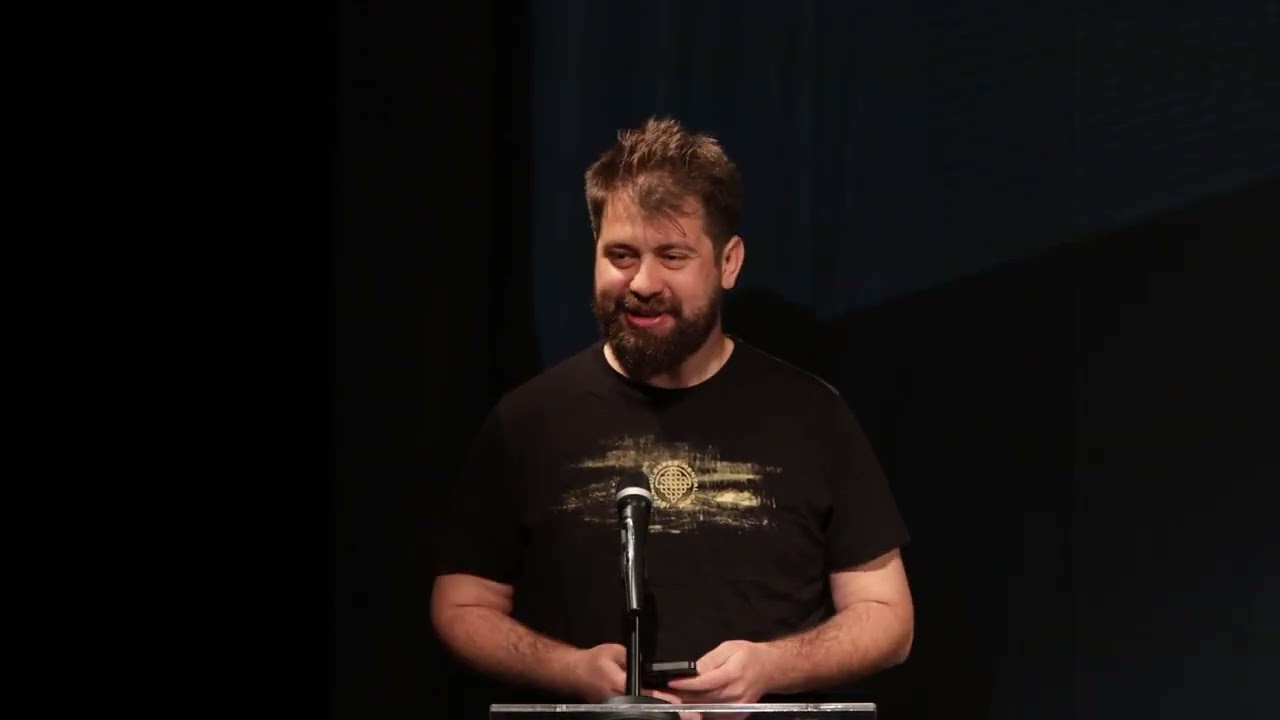
Mobility Justice: Fairer Policies, New Practices, and Radical Solidarity
Watch on YouTubeVideo summary
The conference titled "Mobility Justice" opens with a critical examination of the systemic barriers faced by cultural professionals, particularly artists from the Balkans and Eastern Europe, who have long endured mobility injustices in a world increasingly governed by erratic power dynamics and extreme bureaucracy. The event highlights how bureaucratic systems, while theoretically designed to ensure equality before the law, often function as an endless labyrinth that demands excessive documentation, financial resources, and patience, frequently resulting in visa denials or exclusion from participation even after travel is permitted. For many, this "road" is not merely a metaphor but a lived reality involving dangerous journeys across deserts and seas, often ending not in safety but at new borders and walls, reflecting a global climate of fear where the erosion of rights and the dismantling of public services create unbearable conditions for artists and citizens alike.
Despite these profound challenges, the forum emphasizes the transformative power of solidarity, self-organization, and collective intelligence as essential tools for resistance against authoritarian regimes and neoliberal pressures that seek to marginalize culture. Speakers illustrate how cultural workers have shifted from relying on large-scale, resource-intensive projects to building resilient networks grounded in shared knowledge, horizontal decision-making, and mutual care. A powerful example provided is the guerrilla edition of the BITEF Theater Festival in Belgrade, which emerged after official censorship forced the original organizers to resign; through rapid collaboration and international support, artists created an independent "Naked Theater" that successfully gathered larger audiences and media attention than usual, proving that art can thrive even under oppression when communities unite. Similarly, the student movement in Serbia following a tragic railway station collapse demonstrates how collective living and shared time can regenerate trust and civic engagement, leading to the formation of numerous self-organized citizen councils that actively participate in public security and social struggle.
The discussion concludes with a call to action for artists and cultural activists to reclaim their autonomy by forming strong international alliances with unions across various sectors, including education, science, and media, to strengthen their voices against fragmentation and violence. It is argued that culture, education, and research must be recognized not as expendable costs but as essential infrastructures of democracy that require protection from militarization and corporate interests. By insisting on the democratization of cultural work and engaging in genuine social exchange across classes and communities, these movements can challenge dominant narratives that suppress struggles for justice, ecological integrity, and reproductive rights. Ultimately, the event asserts that only through sustained solidarity, uncompromising practices, and the collective imagination rooted in anti-fascist traditions can we build the conditions for a more just, equitable, and livable future where everyone has the right to gather, think, and shape their own destiny.
Read the full video transcript
Yeah, yeah,
if you need anything, come to us. Don't
hesitate.
And what we'll do now is slowly but
surely kick off this event. And to kick
off this event, I will first invite
Boyana Kostova, the president of the
board of On the Move,
to take the floor.
>> [applause]
[applause]
>> Thank you, Johan.
It is my pleasure to open this
conference because On the Move each year
organizes these cultural mobility forums
to collectively investigate
international artists and cultural
[clears throat] mobility trends.
This year,
2026,
the focus is on cultural mobility
justice.
Talking
about this topic here in Skopje is very
relevant.
But,
it can also be seen as an ironic.
Cultural professionals, artists from the
Balkans, Eastern Europe in general,
have been dealing with mobility
injustice for a long long
long years.
And the world
in which we currently live
is full with injustice.
A world increasingly governed by the
erratic impulses of blind power,
with figures like Putin, Trump,
Netanyahu,
who turn politics into a theater of
irrational violence and extreme
bureaucracy.
Bureaucracy being the culprit.
Bureaucracy has a very special quality.
In its ideal form, it's one of
modernity's greatest gifts.
With it and democracy,
All are treated equal and everyone
stands equal before the law.
Farmer, teachers, doctors, artists, they
all find themselves conscripted into
this labyrinth system.
Never-ending process of collecting
documents,
spending money that you very often you
don't have,
wasting time, having your patience and
believing in the system tested.
And eventually, you can win
>> [clears throat]
>> and you do get that visa and you do
travel.
But even when you get to travel,
you don't always get to participate.
It is an endless road. It is an endless
loop.
For many around the world, this road is
not a metaphor.
It is lived experience.
It is the road to the embassy.
It is the desert road, the sea crossing
to Europe,
the corridor between camps.
And very often this road ends not in
safety, but in more borders and more
walls.
I was born and raised here in Macedonia,
but I'm living abroad for some 25 years.
And I myself am still on that road.
Maybe not geographically anymore, but
but emotionally.
And looking around in this room, knowing
some some of you, I know you share the
same experience.
And sometimes I wonder, is there a way
forward in this road?
Because I've seen many different many
many obstacles in my personal and
professional life on this road.
But it also reminds me that we tried and
that we keep on trying. I I that's what
matters.
Trying to claw our way out
or our way in whatever that means.
We have lived the experience
and our task may not be to preserve the
past
but to ensure that the future cannot be
built without changing
and accounting for this
all moments unbearable present.
But we have an amazing group of
panelists and speakers who have shared
and touched upon these topics.
Uh before I leave
I also want to express my gratitude and
thank you to everyone who's been
involved in organizing and supporting
this event.
Supported by the European Union in
collaboration with Cooperativa that is
on the board member.
Cooperativa being represented by Aris
Shkota from Bombardi Foundation, Nikola
Saric and Ana Grabar and some other
members from uh from North Macedonia.
An enormous thank you to the venue and
the colleagues working in these venues,
Albanian Theater Skopje, MKC, Faculty of
Things That Can't Be Learned, Lokum Fest
for Contemporary Arts, Center Jadro,
Lokomotiva, Center for New Initiatives
in Arts and Culture, the Creative Europe
Desk North Macedonia,
Password Production and Labora
Of course, an enormous thank you to our
producer Galina Strachkova and Milica
Ilić, the curator
for the morning sessions tomorrow with
visual arts, performing arts and art in
public spaces.
We also have here representatives from
the European Commission, the Nevena
Jovanović and Gosia Słomka. So I thank
them as well.
And finally, thank you to my fellow
board members that you can recognize
with the blue stickers that have lost.
And of course, final thank you to the
guests. Thank you both to the team of
Nomad the
here physically represented by Johan,
Maria, and Bernardo.
>> Woo!
>> And
>> Woo!
>> [applause]
>> I'M VERY GLAD TO CHOOSE
AT LEAST ALL THESE wonderful
organizations that you have to work with
to put together this edition of the
festival.
Of the festival of the forum.
I'm really into the festival.
Um
we are also very happy to have our dear
member board Cooperativa who partnered
to organize this event and we could rely
on so many good tips and advice on their
wonderful communication channels. So,
Aris, I would like you to take the floor
and say a few words
in the name of our board Cooperativa.
>> [applause]
>> Thank you. Good morning.
Good morning, everyone.
Thank you for
having us here and thank you for doing
this together.
I'm very happy to attend the Nomad the
event for the very first time and
partner
new member.
I had a bumpy mobility situation last
night related to the day maybe
but I'm happy to be in Boyana City and
happy to be in
Skopje where we keep coming back as
Cooperativa.
Um
Skopje last night I had a moment when I
was struggling to enter my hotel at 2:00
a.m.
and I saw the Swedish Embassy
was a place where
uh, I could get a visa to Germany
through the streets where the Germans
didn't need to be Christian.
Skopje is also the place where, if I'm
invited and permitted, I can come and
apply to get a visa for my mother's
birthday in Bosnia. And also I can come
back to pick it up a few days later.
Uh, so for visas, and it has been a
place where there were no embassies in
the country we live in that we would
come and apply for visas. So for our
mobility, it's important. And also for
our mobility before we could even get
visas, it was one of the few places we
could actually go to as Kosovo citizens,
or UN citizens, or whatever kind of
citizenships we had during my brief, uh,
uh, life. I'm not very well versed in,
uh, mobility, but our lives and
experiences have been shaped by it or
the lack thereof.
So I'm, uh, really happy that, uh, we
will get to look at our current
challenges and current, uh, environment
from the, uh, prism of mobility justice
and mobility injustice today with many,
uh, brilliant friends and, uh,
colleagues who have come here.
I really look forward to, uh, share
discussions in this space with you and
the off space. So welcome to you all and
I,
uh, wish you a pleasant stay in Skopje.
Thank you.
>> [applause]
[applause]
>> Thank you very much,
uh, and as he said his kind words, I
maybe want to say a few words myself. As
we prepared this edition of the forum,
having in mind mainly the questions that
you, as forum members, as artists and
cultural managers active in Europe,
outside of Europe, in Skopje, in all of
past
Macedonia and South
East Europe.
We wanted to bring as as much as
possible all the issues and questions
you might encounter in
in your professional trajectory. So,
what we try to do is to create a forum
where we propose many different parallel
conversations and where hopefully, as
much as possible,
you will be able to contribute. So, the
spirit of the day is really to hear from
you.
We are not, you know, top-down approach.
There are no people that know more than
others. We are full of kindness and
generosity in this world.
And I trust that we will not only
respect one another, listen one another.
The purpose of the day is to build on
collective knowledge, but also to look
at what could be potential solutions. I
don't expect to have full-fledged
blueprints at the end of the day,
but I do know that many of you have
innovative practices, interesting case
studies, leading phenomenal initiatives
at local, national, or international
levels.
And we need to have you in the spotlight
and explain what you're doing and share
this knowledge, this know-how
with your colleagues. So, I hope you are
in this mindset, in the sharing and kind
mindset, in the generous one.
And I'm sure we'll learn a lot about
you.
I
know that the
theme of this forum,
cultural mobility justice,
will raise many questions. What is
justice? What is fairness? How do we
define it? Also, how do we recognize it?
How do we work towards a goal that could
be more justice and more fairness?
And I have no answers to this, but I
know that collectively we will be able
maybe to identify unjust and unfair
practices.
But I hope that collectively we can
not have group therapies
or come
and spend the day
and talk about the awful situation here
and
in many places around the globe,
but try as much as we can, you know, to
go towards
solutions
or positive aspects.
I hope.
I have a lot of hopes.
I want to
say that we start the day
with a rockstar. I'm not sure you want
me to present you this way,
Mariana, but
we are very, very happy to welcome
Mariana
Serkovic with us today. And she very
kindly agreed to to deliver a speech.
What we wanted to do and this is
something that was also a key concern of
ours during the duration of the of the
forum is to situate our conversation, to
make sure that
the voices from the regions are heard
because it's not that often
that European and international networks
come to
this particular part of the world.
And even if we have a couple of break
moments for networking
moments that we
can interact with the Balkan regions, we
really wanted to situate our
conversation and not stay in this kind
of
meta
Um so Mariana, I will give you the
floor. I will invite you to come with me
on stage.
You are a cultural activist, a producer,
a lecturer. You are doing many things,
not only in Europe,
but across the the globe.
And we are looking forward to to hear
from you. Thank you very much.
>> [applause]
>> Good morning, everyone.
Uh first I want to thank
the On the Move platform for this
invitation.
Uh and it's really both an honor and a
privilege to be here and to share some
of my experiences and insights here.
And I really hope that this
uh these topics and
these insights will contribute to a
better understanding of
how global political and cultural
conflicts are perceived from a small
European country,
from
uh
the
so-called Western Balkan country, and
also from within a current resistance a
resistance movement in Serbia.
And I say I'm
uh especially grateful for this
opportunity to speak about this
experience and about
the students uh Serbian students
movement and civil movement because they
really need to be heard and they need
allies uh among you.
I would also like to thank everyone of
you
uh who came outside of this region or
outside of
Europe, have to swap here to this
beautiful
place rich with remarkable people who
deserve the support and recognition of
the international arts and culture
community.
Organizing an international gathering
outside
of
European centers
for me is always more than just a
meeting. It is an act of solidarity and
a gesture of implication towards local
artists and cultural actors.
And I must also remind you that just a
few weeks ago a new procedure
of control at the borders of the
Schengen zone started for all of non-
Schengen country citizens, including
[clears throat] all of us in this
region. So, we are
controlled in a much stricter way, which
makes us feel
very strange, if not unwanted, and this
increases the obstacles that the number
of obstacles for our mobility, not just
for cultural workers, but for all
citizens. Many of the European European
Union citizens actually are not aware of
this of this change.
Finally, I must say I'm extremely happy
to be in Skopje because
I also feel at home here.
In recent years,
you all know it,
we wake up every day to the reality of a
world that is dramatically changed.
The intensity of injustice, terrorized
wars and genocide, hatred spread through
media and social networks, including our
parliaments,
the acceleration of inequality where the
rich grow richer and the poor poorer,
the erosion of rights, the dismantling
of public services such as health care,
education, and social protection,
and the destruction of natural
environments and safe food systems
has created
a climate of fear, depression,
suspicion, and denial.
This is the reality in which we, as
artists and cultural workers, must find
motivation, strength, and reasons not to
give up, and we do it every day.
The mobility of artists and cultural
workers has been one of the most
important features of the European space
in
recent
in the last couple of decades.
It has enabled dynamic exchanges of
ideas and practices of being together,
not only across borders, but also across
social classes and communities,
including micro-mobilities within
cities, regions, and countries.
These exchanges, both within Europe and
beyond,
have transformed practices of
hospitality,
softened institutional rigidity, and
introduced care, sensitivity, and
diversity into how we relate relate to
one another.
This has made our societies richer and
perhaps slightly better.
25 years ago, when I first encountered
European networks in the art art world,
and coming from the politically,
socially, and economically devastated
[clears throat] country,
I
saw the cultural landscape largely
dominated by older white men, directors,
curators,
and mostly male superstar artists who
held power and who decided who mattered.
Today, the situation has shifted.
Many strong women have become leading
voices.
Their perspectives are reshaping
artistic spaces.
Numerous artists from other continents
and cultures are present
on our artistic
in our artistic spaces and stages.
Numerous networks and platforms are
moving beyond beyond Euro-Western
frameworks toward greater diversity,
horizontality, and openness to what lies
beyond the visible center center.
However, alongside this expansion of
mobility and exchange, culture has also
undergone increasing change starting
with over-bureaucratization.
Endless project applications, reporting,
fundraising, and the pressure to meet
imposed metrics
have weakened the capacity of cultural
infrastructures to respond to social
realities and to the shrinking spaces of
democracy.
The freelance condition of many among us
has become a trap.
Instead of enabling freedom, it isolates
knowledge, making it harder to share and
build collectively.
Precarity goes hand in hand with
the mentioned bureaucratization,
but also spectacularization,
commercialization of culture, and all
this pushed culture to the margins of
public life.
At the same time, economic pressure on
institutions has reduced their autonomy
and increased political control.
We are witnessing a shift from
supporting cultural autonomy to managing
a
as an instrument of political
objectives.
The rise of right-wing political
projects has further intensified this
shift, promoting militarization and a
culture of fear.
Their strategies, the right-wing
strategies,
rely on simplification,
emotional manipulation, and
algorithm-driven narratives that
fracture social cohesion.
We are witnessing the erosion of the
public sphere and of trust in democracy.
Culture, education, and scientific
scientific research are increasingly
treated as expendable costs rather than
essential public goods.
>> [cough]
>> Cultural [clears throat] budgets are
shrinking, higher education is becoming
less accessible, academic mobility is
restricted, and science is being
privatized and subordinated to corporate
interests.
Public space itself is being transformed
into a controlled environment where
citizens feel unsafe and where appeals
to the common good become increasingly
difficult.
Peaceful protests are often met with
violence.
State forces no longer defend public
safety but rather protect dominant empty
narratives and interests of the capital.
We have become accustomed to violence.
War is no longer distant. It is part of
our daily lives, and it is coming
closer.
All of this reduces the space in which
we meet,
think together, and sharpen our critical
understanding of the world.
This is why we must defend our right to
gather.
We need time and space to sustain
collective intelligence and a shared
imagination as tools against right-wing
governments.
Meeting, discussing, and learning from
one another are fundamental processes of
emancipation, both individual and
collective.
As a cultural worker
and a Serbian post-Yugoslav independent
culture scene,
I have participated to creation of many
self-organized initiatives and platforms
because self-organization
was the only way for us to work.
Being in the state of permanent crisis
in that part of the
we were and we are still articulating
principles of common work behind
that were and are focused on people as
resources because there are no other
resources available.
We have developed culture based on
solidarity, equality, and critical
examination of our societies,
our own work and relations that we
establish among ourselves.
It has been a long and difficult
journey,
but it created resilient communities
that are capable to resist different
kinds of oppression.
In those conditions
when the cultural policies were
transformed from socialist to hardcore
neoliberal,
large-scale spectacles,
resource-intensive
festivals,
and oversized cultural projects were not
a solution.
We developed networks
instead
of these
large projects, the networks that allow
people to
people communication on a regular basis
that allow permanent learning as a
method of work and production, and
sharing responsibilities and resources
among
ourselves.
Unfortunately, these processes remained
only in the civil sector and independent
culture.
Our public institutions
were never transformed.
In the current political crisis, these
public cultural institutions are just
ambitions.
Today,
we can share this experience with our
international colleagues and advocate
for the creation of international
network of time space situations
that allow people to come together,
to be safe there, to be treated with
care, and given time.
>> [laughter]
>> This requires much more solidarity and a
willingness to relinquish certain
comforts and privileges.
Being together is transformative,
but it requires time and commitment.
It's not a project.
Slowing down and embracing practices of
degrowth
can help us shift focus from production
and competition toward building
relationships and being attentive to
processes.
I want to share one example that comes
from Belgrade.
Uh an example of through this current
political crisis,
in December uh last year,
we organized with absolutely no
resources and with the international
solidarity
uh
a guerrilla edition of the famous BITEF
Theater Festival.
Some of you probably know BITEF as one
of the oldest uh
theater festivals in Eastern Europe.
It was censored. It was censored because
it invited the curators invited Milena
the Swiss
theater director
and because the programmers programmed
four
the new performances of four young
theater makers and dance makers from
Serbia.
All these four new projects and Serbian
artists
were dealing with
the current crisis and with the
state systemic violence against people.
Because of this
and because of the censorship the
artistic team decided to
resign
and instead in conversation with
artists, colleagues, and independent
scene and independent
venues
in only two or three weeks we created a
so-called Naked Theater
Independent Theater, Nezavisni Teatar.
A guerrilla edition of the festival that
was
an amazing event that gathered a lot of
international guests that
gathered much more audience than
usually, that gathered a lot of media
coverage, and it was all done in a
solidary way where where everyone when
everyone was doing what what they could.
We created space for artists and for
audiences.
Uh,
and our international invited artists
were solidary enough to come and to
present their work for free.
Uh,
other artistic
programs and it made
uh, it was a proof that art and culture
be
censored
and oppressed.
So, after all,
can we imagine our institutions across
Europe and beyond stepping outside their
buildings? People who work there, can
they go out of their institutions? Can
they enter the streets and share
knowledge with fellow citizens?
Can these encounters become part of
artistic research, rooted in
conversations with neighbors, workers,
diverse communities?
And can these same people be invited
back into institutions to speak and
shape them and create this time and
space for imagination?
This is, of course, not about turning
artists into social workers, a demand
often imposed by neoliberal cultural
policies.
This is about genuine democratization of
cultural work and engaging in social
exchange and mobility across classes and
communities.
We need to build new infrastructures
based on shared knowledge, consciously
directed towards social transformation.
Today, artists and cultural activists
are in the forefront of progressive
movements against war, against
authoritarian regimes, for Palestine,
for ecological justice, for reproductive
rights, and against exploitative urban
development.
They make visible struggles that the
dominant narratives try to suppress.
Let's look, for example, at the city of
Zadar in Croatia, where a cultural
active artistic initiative grew into a
political movement advocating for
justice and solidarity-based urban
policies.
Today, this movement governs the city,
implementing transparency, social
inclusion, and
equitable cultural strategies.
The real social force, led by cultural
workers, artists, and cultural
activists.
Solidarity and self-organization
must become the foundation for our
future actions.
We cannot wait for funding structures to
define our work.
We must reclaim the right to decide how
we organize, how we produce, and
collaborate.
Networks grounded in democratic and
inclusive decision-making are far more
difficult to silence.
We can also learn from the Serbian
students and their movements.
After the tragic collapse of the railway
station canopy in Novi Sad in November
2014,
which killed 16 people
and exposed deep corruption,
students refused to continue so-called
normal life.
They blocked their university and built
a new network.
By living and spending time together,
they rediscovered the power of shared
time and space. Time and space, this is
important.
This This is the condition for
collective thinking, debate, and meaning
through exchange.
This is when the collective intelligence
appears.
In such situations, the complexity of
our world can appear in its full depth.
In these discussions and gatherings,
they
slowly analyze and talk about this
complex world.
What emerged was a powerful collective
intelligence
capable of shaping a politically
articulate and strategically refined
Importantly, the role of art students
and their ways of thinking, sensing, and
organizing was central to this process.
What began
What began across five university
centers quickly expanded beyond academia
towards different social groups,
classes, professions, and communities.
Through collective encounters,
gatherings, and marches across cities
and remote villages,
they won over the media control
controlled by the regime, and they
reactivated something really essential:
the capacity to trust, to care,
to help, to stand together.
This wave of of solidarity actually
surprised everyone, every citizen.
It reminded people of how meaningful it
is to rely on one another
as colleagues, as neighbors, and as
fellow citizens.
These effective alliances, brought into
the public sphere by the students,
created a new form of communality
grounded in trust, solidarity, and
shared desire for systemic change
beginning with the transformation of our
relations.
This is one of the most profound and
tangible outcomes of the movement.
On this basis, they enlarged their
platform by encouraging citizens to
self-organize in their neighborhoods
and take over a part of the burden of
this political and social struggle.
They are coming now around 50
self-organized citizens councils across
the country.
Uh with two main goals, to help and
support the student movement, and to
educate other citizens and neighbors
about their civic roles, to reaffirm
their powers, and actively participate
in public security.
Culture and the arts,
right now need
real and serious unions.
Our working rights are eroding rapidly.
Where I come from, they're almost
completely dismantled.
We need international alliances of
artists unions to strengthen our voices
and support one another across local
struggles.
This must go hand in hand with alliances
with other workers, workers in
education, science, and media.
We should learn also from historic
examples
>> [clears throat]
>> of worker unions from the 20th century,
and reimagine the efforts done by many
of our predecessors in cultural and
artistic
before and after the Second World War.
The student movement in Serbia managed
to create also a new platform of unions
to unite unions from all fields and
industries, and to make them work
together for the first time after 36
years.
There are unions of artists, cultural
workers,
that encounter the workers from all
other
fields. This experience and this
encounter are precious.
In this moment of deep uncertainty and
fragmentation, our task as cultural
workers is not only to respond,
but to reimagine,
to insist on culture as a space of
encounter,
shared knowledge, and collective
responsibility.
What is happening in Serbia, Palestine,
Ukraine, Slovakia, Poland, Lebanon,
and in our region
of Europe
is a part of a broader struggle over
democracy, public space, and
the struggle for our shared future.
We also have to speak
as artists and cultural workers about
the oppression
that is happening to us.
Over the past months, cultural workers
in Serbia have been exposed to
continuous violence,
dismissals,
threats, blackmail, arrests, media
harassment, censorship, and physical
attacks.
These cases are being documented so that
nothing is erased or forgotten.
We need your support to make this
visible through your networks, your
institutions, and your political
channels.
And if we are to resist the forces that
divide, dissolve, and silence us,
we must remain connected, organized, and
present for one another,
rooted in our anti-fascist traditions.
Solidarity cannot remain a word. It must
become a daily practice.
And it can begin immediately by sharing
the resources that we have, supporting
each other, and sustaining our networks
even as their forms evolve.
We must insist that art, culture, and
education,
and research are not secondary sectors,
but essential infrastructures of
democracy.
Ones that must not be overshadowed by
narratives of security, control, and
militarization.
Because if we lose the spaces where we
can meet, think, and imagine together,
we lose the very possibility of
contributing our precious knowledge to
shape our own future.
Only through sustained alliances and
shared struggles, uncompromising
practices of solidarity, and collective
imagination can we create the conditions
for a more just and livable world. Thank
you.
>> [applause]