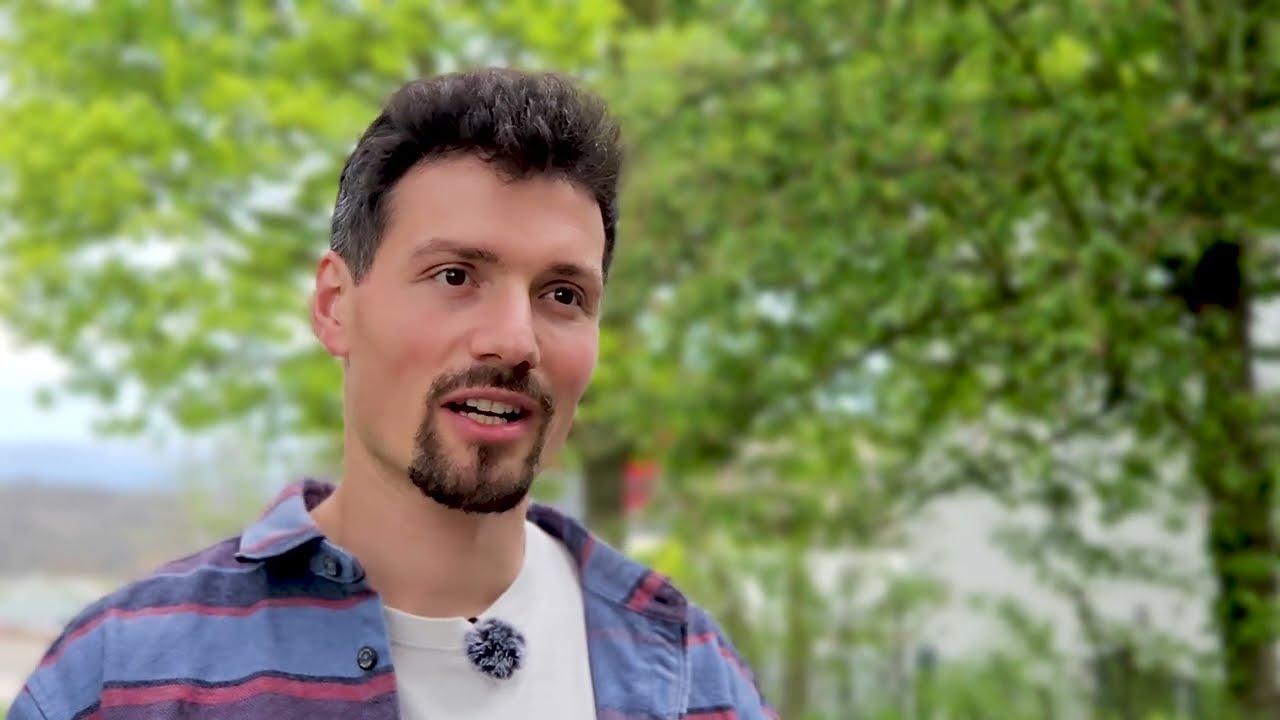
ML Cluster Alumni Spotlights: Jakob Schlör Shapes the Next Generation of Weather Forecasting
Watch on YouTubeVideo summary
Jakob Schlör is currently working as a machine learning scientist at the European Centre for Medium Range Weather Forecasting, an institution where he developed his interest during his PhD by utilizing their globally recognized data products and networking with researchers from conferences there. His primary role involves creating sub-seasonal machine learning models that forecast weather conditions beyond the typical ten-day window used in standard predictions, extending up to six weeks into the future. These forecasts focus on weekly averages over periods of three or four weeks, providing critical insights for sectors like agriculture regarding planting schedules and drought risks, as well as assisting electricity providers in managing renewable energy production and demand planning.
The models Jakob develops are trained on forty years of historical data, primarily from satellites, representing a significant leap forward compared to traditional numerical weather prediction methods that have been refined over the same period. Remarkably, these new machine learning approaches, which were developed within just three years, now outperform decades of conventional model development in accuracy and efficiency. This technological advancement allows for more reliable long-term outlooks that are essential for strategic planning in industries dependent on stable climate conditions, marking a pivotal shift from short-term weather alerts to broader seasonal forecasting capabilities.
Beyond the technical achievements, Jakob highlights the profound value of the collaborative environment fostered during his doctoral studies, which connected him with peers and colleagues who remain friends today despite working across diverse fields united by machine learning. He emphasizes that this interdisciplinary exposure provided him with a comprehensive overview of various domains within the field, resources he frequently references in his current work. However, he also acknowledges the mental challenges inherent in PhD research, where projects often deviate from plans and researchers can feel isolated when comparing their progress to others who seem more successful in publishing papers.
To navigate these difficulties, Jakob advises aspiring researchers not to hesitate in seeking help or talking to peers, as most colleagues are likely experiencing similar struggles with loneliness and uncertainty. He suggests that forming joint projects is a powerful strategy for maintaining motivation and enriching the research experience, noting that it does not matter whether an initiative is individual or collaborative since no one ultimately cares about ownership but rather about collective success. By fostering open communication and teamwork, researchers can create a supportive community where shared challenges are addressed together, making the journey of scientific discovery more manageable and rewarding for everyone involved.
Read the full video transcript
And now I'm actually working at the
European Centre for Medium Range Weather
Forecasting, where I'm a machine
learning scientist. And the European
Centre for Medium Range Weather
Forecasting, short ECMWF, um is
basically the European weather agency,
where we develop uh weather forecasting
models. In my PhD, I was working with
data from ECMWF, because
uh their products are quite known
worldwide in the community. And then you
also meet people at conferences from uh
the institution. And so this is how I
got to know about the job, which was
announced, and then I applied to it. And
yeah, I I didn't I wouldn't have thought
about it that I would get in, but it's
uh very happy I'm I'm working there now.
My job is develop to develop a
sub-seasonal uh machine learning model.
Sub-seasonal is what we call it ECMWF,
this beyond uh 2 weeks. So typical
weather forecasting is for the first
10 days, but what the models I'm
developing is for the times for the time
longer, for the longer time scales. So
I'm I'm forecasting up to 6 weeks, and
I'm looking at what is the weekly
average um in 3 weeks, 4 weeks, and so
on. So this is what my model predicts.
And this is maybe not so relevant for um
people who plan their vacations or uh
for the private sector. It's way more
important for agriculture, when to plant
seeds, when to expect rain, is there a
drought coming? It's also very important
for electricity providers. So um where
they plan in advance um what the demand
and the production will be with
renewable energies.
We now have machine learning models
which learn from the last 40 years of
data, mainly satellite data.
Um and what we found is that these
models, which we developed just within
the last 3 years, are now better than 40
years of model development in numerical
weather prediction.
The best thing about the PhD here was
the connection of the people I got to
know.
It's really like peers, colleagues, and
now are still friends I see regularly.
Um
and then the environment where you had a
lot of
people from very different fields which
were connected through machine learning,
but this helped me to get to know
different fields and gave me really like
a nice overview of what's out there and
I can go back and reference to that many
times.
A PhD can be mentally quite challenging
sometimes. You have your research
project, but it doesn't go as planned.
You seem to like work on it just by your
own. You can feel quite lonely and you
see other people who publish papers who
seem to like do great.
And I think my advice there would be
really talk to talk to your peers, talk
to your other colleagues. They probably
feel the same.
Don't hesitate to ask for help.
And yeah, try to find projects together
because it's way more motivating and
enriching to actually work together on
something and nobody cares in the end
whether it's your project or you have a
joint project.