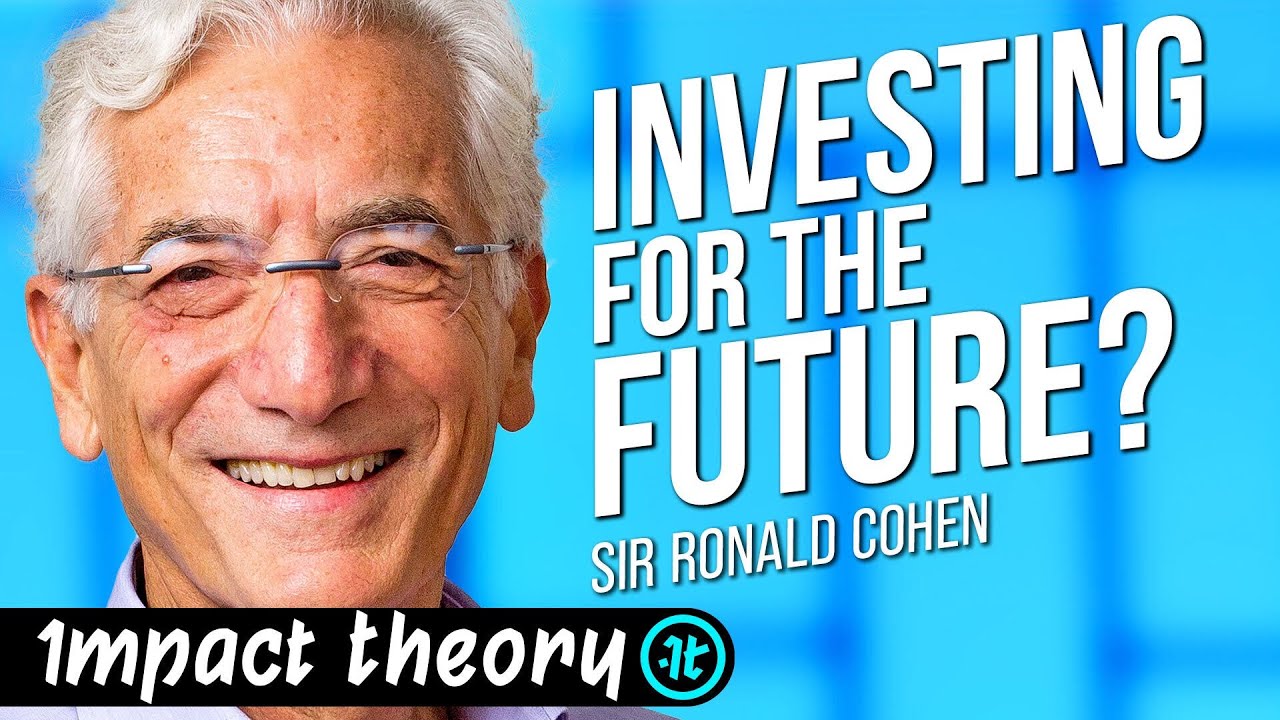
Millionaire VC Shares His Advice on How He Became Successful Investing In "Impactful" Companies
Watch on YouTubeVideo summary
Sir Ronald Cohen, a refugee from Egypt who arrived in Britain at age 11 with his family after being displaced during the Suez Canal crisis, shares insights on how he transitioned into venture capital and championed impact investing. His journey began when he received a scholarship to Harvard Business School via the Henry Fellowship, where he encountered the emerging field of venture capital in the late 1960s. Cohen explains that while risk has always been part of investment decisions, it was only recently measured systematically following the Great Depression and the introduction of Generally Accepted Accounting Principles (GAAP) after 1929. Today, we are witnessing a similar shift with impact investing, where investors can now measure not just financial returns but also positive contributions to society and the environment. This evolution allows companies to be evaluated on their ability to solve major challenges like racial discrimination, environmental damage, and inequality while generating profit. Cohen argues that traditional philanthropy often fails because charitable organizations remain small, risk-averse, and dependent on begging for funds, whereas impact investing creates a self-sustaining economic engine by aligning the selfish desires of investors with positive societal outcomes. He highlights Social Impact Bonds as an early tool to optimize this balance, where returns depend on achieving specific social goals like reducing recidivism or school dropouts. Currently, there is approximately 40 trillion dollars invested based on risk and impact alone, signaling a massive shift in global capital allocation. Cohen emphasizes that making money at the expense of people or the planet is unsustainable; companies must now compete on diversity, equal pay, low carbon emissions, and ethical operations to attract talent, consumers, and investors. The interview addresses skepticism regarding capitalism versus communism or socialism, with Cohen asserting that systems based solely on state ownership fail because they misunderstand human motivation for innovation and entrepreneurship. He notes that while governments can redistribute wealth through taxation, this alone cannot solve large-scale issues like climate change without corporate action driven by market forces. Furthermore, he points out the dangers of perverse incentives in measuring impact if standards are not standardized; therefore, mandatory reporting on environmental and social metrics is essential to ensure transparency comparable to financial audits. Cohen cites data from Harvard Business School showing that hundreds of companies create more damage than profit annually, underscoring the urgent need for systemic change through measurable accountability rather than relying solely on voluntary corporate responsibility or government intervention alone. Looking toward the future, Cohen discusses how rapid technological advancements in artificial intelligence and machine learning necessitate continuous reskilling to prevent obsolescence, drawing parallels to historical shifts like the decline of horse-drawn carriages due to automobiles. He provides an inspiring example from Israel where young women in religious communities were trained remotely via coding programs to earn four to five times their previous salaries as cashiers, becoming breadwinners for their families. This approach demonstrates how impact investing can fund education and job creation even in restrictive environments. Ultimately, Cohen concludes that the only viable path forward is harnessing capitalism's dynamic nature while integrating risk-return-impact optimization, supported by government regulation ensuring standardized measurement of corporate impacts to protect employees, consumers, and investors alike.
Read the full video transcript
[Music]
hey everybody welcome to another episode
of impact theory i am joined by somebody
today that i think you guys are going to
find incredibly interesting it is sir
ronald
cohen thank you so much for joining me
today pleasure to be here with you tom
all right i am super excited to talk
about your book impact and i think so
obviously with the title impact theory
people know i am obsessed with impact
and what we can do on our own lives and
at grand scale
you're coming at this as somebody who
has built it an incredibly successful
investment firm if you would walk people
through exactly what impact investing is
and what you see as the future of this
movement well tom we're all aware
of risk when we make
decisions
we're all aware of the return that we
get when we make an investment
but to date
we've left impact out of the picture
and things are changing
we see young people in particular like
those joining us today
refusing to buy the products of
companies whose values they don't share
because they disagree with using child
labor or they don't like the pollution
they're creating
they also don't want to work for these
companies
and this has become
noticed by investors so today for the
first time in history
we see
massive sums 40 trillion dollars
being invested on the basis of risk
return
and impact
so what impact is about
is improving lives and the planet and
what impact investment is about
is generating profit
as well as impact
and it's basically changing the world
we've had a technology revolution all of
us are aware of that
this technology revolution is being
followed by an impact revolution now
where companies just making money isn't
good enough
they've got to make money and they've
got to make a contribution to solving
some of our
big challenges improving lives improving
positive opportunity
reducing racial discrimination
increasing diversity reducing
environmental damage
and i'm glad to say
that technology enables us today to
measure the impacts of companies
we can measure the products
they have
and the impact that they create
we can measure what impacts they create
through their employment and their
operations
their operations influence people and a
planet
and so we begin to have a different type
of economic system creating a much
better world than the one we become
accustomed to
all right i think there's two key pieces
that make your story incredibly
interesting and those are
um
you as a refugee i think people getting
a little bit of background on that would
be incredibly powerful uh and then the
other part is how you came to this
impact investing specifically when the
government the uk government reached out
to you i think those two pieces will
help contextualize you well i consider
i've been very lucky in my life but it
didn't always look that way at the age
of 11
my family and i were kicked out of egypt
because
some of you will know of the suicide
israel britain and france
tried to take back the sewage canal
which the egyptian leader nasa
nationalized
and as a result of that i find myself at
the age of 11 with my parents and my
younger brother
living
with 10 egyptian pounds in our pockets
and the suitcase each and clutching as i
mentioned in my book my snap collection
under my arm but it turned out to be a
blessing in disguise
we ended up in britain because my mother
had a jewish passport as well as an
egyptian one we were welcomed in britain
i went to state schools my education was
paid for
at
oxford i got a
scholarship called the henry fellowship
to go to harvard business school
and when i arrived at harvard business
school
i discovered venture capital which was
just beginning this was the end of the
60s
and i sensed that
this idea
of young people
creating new companies that can innovate
better than big ones
was really the right idea
and i felt wow this is going to be big
and i had an obligation to bring back
something of value after the terms of my
scholarship
to the uk
and i brought back venture capital
okay so
uh you make a i heard a joke that you
made in one of your interviews where you
were saying you know this was a time
where uh there was a kid i think it was
an older kid somebody in college that
was saying oh my dad is an adventure
capitalist and you were like nobody knew
what this was
one thing that i took away from your
book which i found really interesting is
the sense that some of these things are
pretty new
and so you've got
in 1929 you have this sense of like hey
we have a problem here we've got no
generalized um general recognized
accounting practices so even that is in
the last 100 years in the last 50 years
you've got the idea of risk so walk
people through
some of this stuff and then if you can
sort of end with what venture capital is
so that people understand how these
things work
okay so
venture capital is about putting money
behind
people usually young people
who want to create huge businesses
and they have a good idea of how they
can do it and they can recruit a team to
do it and so by putting money behind
them you give yourself the opportunity
to make a great gain if they become
successful and they ipo
or sellout
at the beginning
people thought it was very risky top
like when i started out it was so
difficult to raise money for this
it took us years
but then as you saw the bill gates's and
the steve jobs and others
who were dropouts from university built
companies that became bigger than the
established leaders like ibm
the idea called tom and today
it's a trillion dollar pool
it funded the tech revolution basically
what i didn't realize which i think is
what you're getting at tom
what i didn't realize
is that i happened to be
at business school in the us at the time
of the birth of venture capital and
something else very important
which was
people were beginning to measure risk
now everybody invested with risk in mind
as we were saying but nobody had ever
measured it
when you began to measure it
people began to realize hey this new
game venture capital well it may be
riskier
but it makes more money then it brings
risk so it's worth investing in
so
you began to see
venture capital and then private equity
and then hedge funds
become very important parts of
portfolios
today
taken together
these three different ways of investing
probably account for a quarter of a
sophisticated
institutions or families
wealthy families portfolio
so
venture capital
came because we could measure risk
now what's happening
is we're beginning to measure impact
and impact investment is coming because
we can measure impact
and as you were saying
in the 30s after the great crash of 1929
when the stock market collapsed
the us
introduced
generally accepted accounting principles
so every company had to report its
profits in the same way which until then
they didn't have to do
and the use of auditors who basically
said these figures are right
they had a legal
uh obligation
uh going with with making that statement
now that gave transparency on the profit
of companies
and today i believe we're on the
threshold of getting transparency
on the impacts of companies so we can
look at the profit and the impact but we
can have an accurate view of what this
company is actually achieving because
making money at the expense of the
environment or people
isn't the way to do business and it
doesn't help solve the social and the
environmental issues we face
so the reason i bring that up is i
really want people um watching this to
understand that these systems are
created by people and they are not
immutable that changes happen with
frequency and when somebody has an
insight because you've talked about the
people at i think it was chicago
university
had the insight around risk and it was
an insight and the new insight that
you're bringing forward is hey you can
actually measure some of the things that
the companies do
that have a knock-on effect we'll call
that impact so whether it's
deforestation whether it's pollutants
whether it's
you know like you said child labor
whatever like you can actually start
looking at this stuff measuring it and
that key insight
gives you the tool with which to change
the system and begin to shape it because
i am so worried that people just get
terrified that these systems are so big
that they can't do anything yeah you're
right you're right and we wouldn't have
been able to talk in these terms about
measuring impact 10 years ago time
big data
and computing power
enable us to do this
previously we couldn't have done it it's
the first time humankind can begin to
measure
what our company does to people and the
planet as well as the profits of the
lose
yeah that the
the timing of everything and
understanding what the underlying
insights are i think will help people
see how they can plug into the system
so one thing that i want to
talk about is so as people are looking
at the companies that they want to
support they're looking at the companies
that they want to um
work for or whatever the case may be
what are the elements that you think
people should be paying attention to
so you should be paying attention
to the products of the company
is this a product you're comfortable
consuming
does it do more harm
than good for that company to produce it
soon you'll be able to hold up your
phone to the barcode to the product you
want to buy and you will see
the environmental and people
impact of that product and of the
company that makes it the second thing
is it's employment practices
if today it's a great company with a
great product but it doesn't have enough
diversity
doesn't pay the same amount for men and
and women
people of color don't advance in the
same way through the organization
despite the fact that they have the
skills
then it's your obligation to change it
finally
if its operations
are creating huge pollution if it has a
huge fleet of lorries running on on
petrol
then get the company to shift to
electric
vehicles
these changes are happening all over the
world now
they're examples of very successful
companies doing just that
and convince your company
that doing good and doing well
is in its best
interest
if it wants to make more money
the best thing it can do is to do good
and do well because it will attract
talent
like you
consumers
and investors and
it will avoid getting taxed and
regulated
and young people
get this all the people have got used to
the old system
and begin to
find a million reasons often not all of
them
a million reasons why this isn't going
to work
but with 40 trillion going in this
direction
in esrg investing with a trillion as
much as the whole venture capital pool
in the world
of impact investment proper where you
measure the impact as well
already in in existence
that is the future
okay so if i am putting myself in the
shoes of somebody watching this who may
be inclined towards cynicism
uh i think well why aren't we just
taxing the rich just redistribute the
wealth tax the rich get them like a 90
tax bracket they'll still have plenty of
money uh why aren't we suggesting that
so
i'm not saying that you don't need to
tax those who are better off governments
need
to redistribute
wealth and income each country picks the
extent to which it's comfortable doing
that
what i am saying tom
is that won't solve the problems
that we face
because it's not big enough
however much government stanks
it's a timing proportion
of what companies produce through their
products through their employment and
through their operations
it's tiny
so however much distribution you take
care of you're not going to solve these
issues but
if companies begin to compete with one
another
on the basis of diversity
of equal pay
of low carbon emissions
then investors bring that change about
for you
because the money would go to the
companies that are doing a better job of
delivering profit and impact
and those that are left behind like
exxon mobil for example
will see their share price full
by two-thirds in the space of three
years because they're doubling down on
fossil fuels
which investors think is a crazy thing
to do
yeah
it creates 39 billion dollars of damage
a year from its operation stock compare
it with bp 13 billion
shell 23 billion as an investor are you
wise investing in exxon mobil
it could get taxed and regulated it may
not attract the talent anymore and its
customers may leave it no so you go to
those who are doing a better job and i
think just bringing this transparency
which i view as a human right
transparency of the good and the harm
that companies do is a human right for
everyone who is an employee for everyone
who's a consumer and for everyone who's
an investor
okay so now i want to go back to um how
you got into this in the beginning so as
i'm not a born entrepreneur so i had to
learn about business i had to learn sort
of how to view a problem through an
entrepreneurial lens
and when i heard that the uk government
reached out to you and said hey look
we've really tried to address poverty
but it's proven to be a more pernicious
problem than we could have imagined and
so help us look at this from an
entrepreneurial lens i want to know why
is poverty so pernicious and what is an
entrepreneurial lens and how does that
help
so the first thing i realized
when i began to look at poverty and
everything it
it causes
is we have governments and we have
philanthropists dealing with the issue
businesses are out of it investors
around it
i was involved in
luckily for me being there at the birth
of the venture capital industry and
contributing to its development
it was a new way
of funding people who want to make money
and i said to myself how can it be that
we can't be imaginative enough to find
new ways of funding those who want to
improve people's lives
right
so far i'm sure you you agree with me
it's a good question
so then i said if you look at the way
philanthropists work
they've led to a system
where all the charitable organizations
they're funding are small and have no
money
is that side of a system that works
no
as i said this thing of just giving
money away just doesn't achieve the
results
the sums aren't big enough either
there's one half trillion
uh pool of philanthropic money in the
world
and you got 200 trillion of investable
assets
so then the question was how do we bring
investment to those who want to do good
and 10 years later
after that call i received from the
government in 2000
a team of young people 30 year olds
and i
developed the social impact bonds
where basically we said you can have an
investment where you return depends on
reducing number of prisoners going into
prison
reducing number of kids who drop out of
school
increasing number of people
who are off the street and into jobs etc
now at that time
i thought we found a new tool
to help philanthropists because they can
now attract investment money on top of
the grants they make
but then with the passage of time since
2010
i realize
the social impact bond
really
optimizes it tries to
give the best balance of risk return and
impact and that's the direction the
world's going in
so what looked like an instrument that
was clever to achieve
a more modest objective
now signposted the way forward to what
our economist could do
imagine if every
company
and its investors
tried to optimize risk return and
positive impact
rather than just risk return imagine the
change that this would create in
pollution alone
i'll give you a number just to focus the
attention
at the harvard at harvard business
school i share an effort
to turn these numbers we're talking
about pollution
uh lack of diversity
into dollars and include them in the
accounts of companies
which is what's going to happen
we put out the figures for 1800
companies and all of you can go to hbs
iwa look up the data set
you'll see 1800 companies from across
the world
with their numbers
they tend to be big companies because
they make this information available
under pressure usually from their
shareholders or their boards or all
their customers
if i say to you tom that 250
of these companies create more damage
than they make profit in a year
doesn't the light bulb go on
in your mind
and i say to you a third of them 600
companies
create damage environmentally from their
operations alone
not from
you know their product or their
employment
equivalent to a quarter or more of their
profit
and that together the 1800 create three
trillion dollars
of damage a year environmentally
you know what does that do to you
doesn't it immediately give you a sense
of what
by measuring
i can really begin to understand the
scale of the problem and who's creating
it and who's able to solve it put a
pin in this for people so you are very
aware that what you measure is going to
become a huge part of this you're very
aware that it can create perverse
incentives and people have to pay
attention to that um the reason i'm not
steering the conversation into that is i
think the hey we're going to iterate on
this over time it's just a question of
can we agree that there is a metric that
we should be slotting in here
for impact and so that makes a lot of
sense to me
now i want to
explain something fundamental to people
uh because this believe it or not for me
like i learned this really late in life
and it might be useful for people so
investing is basically hey we have all
these people that have made money
inflation is a thing so if you put your
money in cash over time your buying
power goes down so people want to invest
that money to make a return bigger than
inflation so that they're getting
wealthier over time and not less wealthy
your parents are doing this with their
401k you know it's not just the ultra
wealthy that are doing this
so now
the sib the social investment bond
you've got something where the
government participates says we take
this money in tax
and now we're going to pay for
performance which i think is so
brilliant
so hey less recidivism in the prison
system for instance
so dear investor i'll give you call it
three percent back on your money so if
inflation is two percent i'm going to
give you three percent so a little more
so now you can put money in and actually
get a return that's making you more
wealthy for making the world a better
place
and i bring all of this up in the
context of i think it's milton friedman
who talked about the invisible hand of
the market
and that notion that buyers are real
people
with hopes and dreams things that matter
to them and that as an investor
what we're trying to create here is a
way for people to get a return on their
capital
that actually moves the world forward
so just i i want to anchor people on
that so they know you're not blind to
the potential challenges but that they
really understand sort of where this is
going
okay now i want to talk about capitalism
are you a proponent of capitalism is
getting a real ugly name these days
i think capitalism means using markets
and capital
to deliver
growth
and profit
in the economy
i am in favor of that i don't think
communism is better
i don't think very prevalent that deeper
socialism is better
so it's two chairs for capitalism rather
than three jobs
but
we can't let capitalism be driven by
profit only
we must have markets trying to achieve
profit
and something good for society or the
environment otherwise
capitalism creates problems at such
massive scale
that even governments can't cope with
them which is what's happening with our
climate challenges and what's happening
with black lives matter
right so i believe as i say in the book
that if we bring impact to the center
of our economies by measuring it
we begin to change the behavior
of the actors in capitalism
who are primarily
all of us as employees
and then all the companies we work for
and all the investment organizations and
the investors that are funding them
so i'm in favor
of harnessing capitalism
to achieve risk return
and positive impact and i actually think
tom
it's the only way the only way
to cope with the huge social
and environmental challenges we face
governments can't do it
companies have to do it
and companies won't do it
voluntarily all of them very few of them
100 maybe 120 have actually embarked on
trying to measure their impact
it looks to them like some new idea that
is going to make their lives even more
difficult
but investors want it
and when half of all professionally
managed money says to companies hey guys
you've got to start worrying about your
impact we want to know
why you're causing so much deforestation
and two-thirds of us shareholders vote
against the management because what you
because of what you're doing through
you's obama
when that begins to happen companies pay
notice and i think most company leaders
would rather do good and do well
than create problems and make money
but it's the power of consumers and
employees and investors together
that are going to get them to change
their their behavior now you say well
okay so you don't need government that's
your next question i can feel it you do
need government because if government
doesn't say hey every company's got to
report on its impact in the same way
just as we do
with your financial numbers
then every company will pick its own
numbers and you'll never be able to
compare accurately and investors will
make wrong decisions because they don't
have the right information
fortunately
i think we're going in the direction of
everyone recognizing
that we do need
to have standardized measurement of of
impact and that it needs to be
to go beyond paragraphs of words
it needs to go to numbers
numbers that you can compare to the
profit you're making
that all make sense to me i want to go
back to something that you said about um
communism isn't going to do it deep
socialism isn't going to do it
why not i want to get to the physics of
this like what is it so this is the part
of the reason i brought up milton
friedman is you have this notion of hey
guys
humans are a certain way and
while wildly complicated and oftentimes
irrational
there are certain things you can predict
in their behavior to me communism and
socialism break down because of a
fundamental misunderstanding of what
motivates humans and how humans begin to
game the system
um what's what's your take on
specifically why those things aren't the
solution
so we've seen
uh in in russia and in other places
that communism meaning by that the state
owns all of the
production resources of
a country where everybody is paid
more or less the same salary and so on
so forth achieves much lower levels of
economic growth and prosperity than
companies that are driven by the profit
motive
i think because of what you said because
of human motivation
because if you plan everything for
people you kill innovation and
entrepreneurship the ability to think
out of the box the freedom to try to
execute it
and and investors are better judges of
what's going to work than governments
are
and entrepreneurs are better judges of
what's going to work
than you know the governments are
so what i have
found is that if you're going to reduce
the prosperity that you're creating you
won't help as many people
what you have to achieve is that
increase in prosperity being spread much
more widely than it has been
to date
and as we were saying earlier
you can do that
by
redistribution through tax you know of
income
and wealth and we need redistribution of
income and wealth
different countries will give you
different proportions but
there are very few countries where
people say you should have no
redistribution of income and wealth if
you happen to have got lucky that as i
have done and benefited from a great
education at the expense of the state
and you've made a lot of money
you should pay more tax
it's fair
that i should pay more tax it's fair i
was given a hand up i want to give other
people a hand up too
but
if you
tax people
so much and we've seen it in the u.s and
we've seen it in the uk and elsewhere
that you take away the incentive to
innovate and to put in a lot of hard
work and effort to try to build a
company up we all end up being worse off
or less better off okay
so
i believe that just as we've evolved as
human beings from apes
our
system our economic system
evolves too
up until
a few decades ago
we seemed to be able to cope with the
consequences of capitalism we didn't
have the climate change problems we have
today we didn't have the inequality
beginning to create rebellion
and
violence and
dysfunction
within our society and
political systems we seem to be able to
cope but now we no longer come the scale
is so great the floods and the droughts
and the the fires
are so great
that they threaten the existence of the
planet so hey we got to get going on
being wise and creating a system which
is capable of taking these consequences
into account now
the key to all
of this
is the
risk return and impact will actually
deliver in my view in my humble opinion
better growth and profits
now that may sound counter-intuitive
because we think of impact that we think
the laterally very often
but if you look at the changing values
that are happening today
people not wanting to buy products work
for companies invest in them and so on
and so forth if they're creating hard
and wanting to go to those that are good
doing good that's changed the rules of
the game
and if you add to that the huge leaps in
technology that can improve people's
lives on the planet artificial
intelligence machine learning augmented
reality
you know the human genome and the life
sciences
we've never been humanity has never been
in a position to deliver impact
more widely and more deeply and finally
if technology enables us today to
measure the impacts of companies
then those three things together
are changing our system it's reflected
in the trillion of impact investment the
40 trillion of esg
the millennials and and zgen who don't
want to buy products and or work for
companies and so on so forth
so we are at a
turning point
in terms of our economic system
one thing that i want to um sort of
define for people that i think your work
in the book impact does is take
this philanthropy so my beef with
philanthropy has always been it is not a
self-sustaining economic engine
so for anybody that's ever looked at
a philanthropic organization they are
constantly going to people who have
figured out a self-sustaining economic
engine and begging for money and you
talk about that in the book you talked
about here that you're keeping these
organizations really small they cannot
take risks um and so it's it's sort of a
terrible model all over
and the thing about capitalism that
works is it
i i don't mean this in a in a negative
way but i've always said you want to
align selfish desires so i'm trying to
align my selfish desire for what i'm
trying to do in my life with my
employees selfish desires with my
customers selfish desires so i don't
need them
to be
any more altruistic than their
selfishness will lead them to be
and find a way for this to perpetuate
and that's what i see
is happening in what you're pushing for
in this movement
now
i think
one of the things that you're going to
be up against or we're going to be up
against is this is the core of my
existence
uh is
there there is pushback in the sense of
communism and socialism sound
a lot better than capitalism
so the fact that they they have such
good pr
is uh it's very difficult so i want to
contextualize this
you were a refugee
you had to start over from scratch it's
not so hard to believe an 11 year old
doing that i want to talk about your dad
who's 42 43 something when this is
happening
what was he saying to you was he like
this is unfair it shouldn't be was he
hey we're gonna get
a new skill set like what what was he
saying
you know uh my dad uh never complained
he told me once uh
when i was a little bit older probably
when i was 18 or something
that he'd walked up and down the streets
of london
uh wondering what
he should do
but he didn't he didn't think of
implying himself or finding employment
he wanted to create a business of his
own
which he eventually did with my uncle
who was a textile engineer
and the advice he always gave me
is don't work for others you go out and
do your own thing
and when it was tough
and there were partners who didn't
believe we'd be successful who left he
said to me you just persevered you know
you you'll get that
my mum was equally important my mum
presented everything as a positive
challenge a positive opportunity
as she baked a chocolate cake the minute
we arrived in the uk for us to feel that
life and you know i hadn't changed i
mean you know she told me that
why she did it
subsequently
she was very courageous about it and
she too
never complained i mean i guess you you
would say she was really a a fighter
and what she dropped into me and my
brother
and so did my dad but she in particular
is education
is the only possession that can't be
taken away from you
so having lost everything in egypt you
can understand
that i applied myself to getting
decent education
now when you talk in terms of
communism and socialism and so on
sure
my dad could have ended up um working
for a company owned by the state and
you know he would
you know he maybe
wouldn't have done
worse financially in the end because his
venture wasn't a great success but he
had this urge
to go there create a company
do the best for his kids encourage me
and my brothers
to do the same
and i think
that's a more natural instinct
funnily enough
than the instinct to form everybody
into organizations that keep them equal
human nature
is about striving
striving for survival striving for
success it's all about striving
and our system
encourages and enables the striving the
problem as we were saying earlier is
that this driving
has been
purely material up till now with few
exceptions obviously you had the quakers
and you had other
business leaders who cared about the way
they made money and cared about the
welfare of their workforce they're
always
worse
but it's only
when you begin to think
why should it be striving for money
alone
why shouldn't be striving for money
and improvement in people's lives in the
planet
and you realize that well
that's where the world's going
that's what
the majority of us want
and that's what investors are showing
that we want and you know and they want
and so it's changing whether we're in
favor of it or not it's changing
the role of companies
for the better i love that you have
introduced this idea of striving i think
that the the recognition that sort of
the
human brain is wired to incentivize
striving right to go out to hunt to
survive to fight to live um
and recognizing that is whatever
structure we put in place is going to
need to take that into consideration
and when i think about uh the pandemic
that we're living through now and coming
out of that and how it's changed the way
that people do business companies have
scaled back
and realized whoa we can actually do
this they're going to want to hold on to
that so now you can have a lot of people
that are displaced now here's where when
i was saying that communism has good pr
so there's a sense of um just it's
unfair it shouldn't have happened to me
somebody should be looking out for me
and
losing sight of that humans want to
strive i think exacerbates this problem
there's a whole meme
around learn to code
i don't know if you've heard about that
but it's people's reaction to say hey
you have to re-skill
and when i first heard that i i could
not fathom that people were reacting
negatively to the idea of re-skilling
so how do you help people look at like
your dad did the need to recontextualize
yourself and not come with your hand out
asking for somebody to take care of you
yeah
you know
we've gone through periods in history
where whole industries have been
made completely redundant so
just one example the arrival of the
motor car
killed the horse and carriage
industry right
you could no longer sell horse whips
or carriages
and
human progress involves
this type of destruction as we call it
today the thing is it's happening now
much faster and much more frequently
within a person's life
so we have to build our
ourselves into people who are constantly
sensitive
to where the opportunities are and how
they can put themselves in the in a
position to take advantage of them so in
the old days if you were a co-miner
coal mines have been there for 100 years
the coal mines closed
where were you going to find the job
today
i think we say to ourselves look
technology
is changing things so fast thick
retailing retailing has been transformed
now by the internet
where are the people who used to work in
shops going to find jobs in the future
what skills can they have
are we going to keep moving towards a
service economy where basically machines
help us to increase wealth all the time
we can all share in it and we look after
each other after all we have bigger
aging populations
people are living longer they have needs
in terms of health and
so on so forth so
we begin to think of reskilling
as part of our system
it's not unnatural
that you should have several
careers
in you know in a lifetime and so you
begin to see the tools of impact
investment now creating career impact
bonds
that teach young people who don't know
how to code
to code and to get into jobs
where their coding skills enable them to
make
more money me i can give you an example
from israel where i sit as we talk today
where you have young girls who were top
of their class living in villages
in the drew's community which is a
branch of
of islam
and they can't go outside of the village
for religious reasons
but we've created
locations for them to work for tech
companies remotely
about 60 of them
will have been trained and got into jobs
where they make four to five times
the monthly salary they make when they
work as cashiers in the supermarket
these young women are becoming
the bread owners of their families
you know
so
you know of course here you're talking
younger people but it could apply to a
50 year old
there are lots of skills
that
you know that people can learn and so we
have to think imaginatively
if we see the fossil fuel industry going
down
and we see clean energy going up we have
to say well how do we reskill
people
so that they can find jobs in clean
energy
what are those jobs going to involve
you know is it is it going to be
in solar farms that are generating
electricity battery manufacturers to
store
you know that
that electricity
uh
is it gonna be other forms of uh of
electricity generation that so you know
we're gonna go
towards
what are going to be the ways of of
remedying
um you know fossil fuels
and similarly
uh with the water
water is crucial to the development of
the world we can't just develop
developed economies and forget about
emerging countries you see what's been
happening with refugees trying to
get into europe from africa in search of
a better life and then the us from from
mexico
we have to find solutions for them too
those solutions
will involve education of these
populations which
companies in the developed west
can create products for as i was saying
earlier the ability to use technology to
provide remote health remote education
and
so many other things remotely is greater
than it's ever been
and so i think tom
when you think in terms of of a system
that can cope better with these
challenges which come from human
ingenuity and innovation
a system like
capitalism
which is dynamic
and resilient and reactive if it is
channeled in the same way will be better
than a system where the government tries
to plan
everything from above but
we can wait and see if we find communist
systems that work in the future and do a
better job of it then we have time to
look at their methods and adopt them
that is the perfect place to end i love
that you put a button on it of
what i'll call the entrepreneurial
spirit of what works what actually works
all we care about is what works so once
we agree on what we're trying to achieve
then it is merely what is the most
effective path to get there
sir ronald cohen thank you so much for
joining me today where can people
connect with you where can they get the
book which you should tell people that
all the proceeds are being donated i
think that's important
that's correct to impact charities you
can all get the book on amazon uh the
ebook is only a couple of bucks so that
everybody can afford it uh the hardback
is also
inexpensive the paperback will be coming
out in the united states in a month or
so
all of the profits are going to all the
royalties are going to impact
charities
spread the word about it it explains how
all these pieces fit together
and
you have each of you
a major role to play in this impact
revolution as consumers as employers as
investors as government officials
so let's all do everything we can
to bring this revolution about the fates
of
billions of people
and the future of our planet depend on
it
i love it all right guys speaking of
things that will influence the future if
you haven't already be sure to subscribe
and until next time my friends be
legendary take care
once you have a fear
that you might be wrong
but you have still
the audaciousness and courage to go
forward
you're a lot smarter
than the person who thinks they know