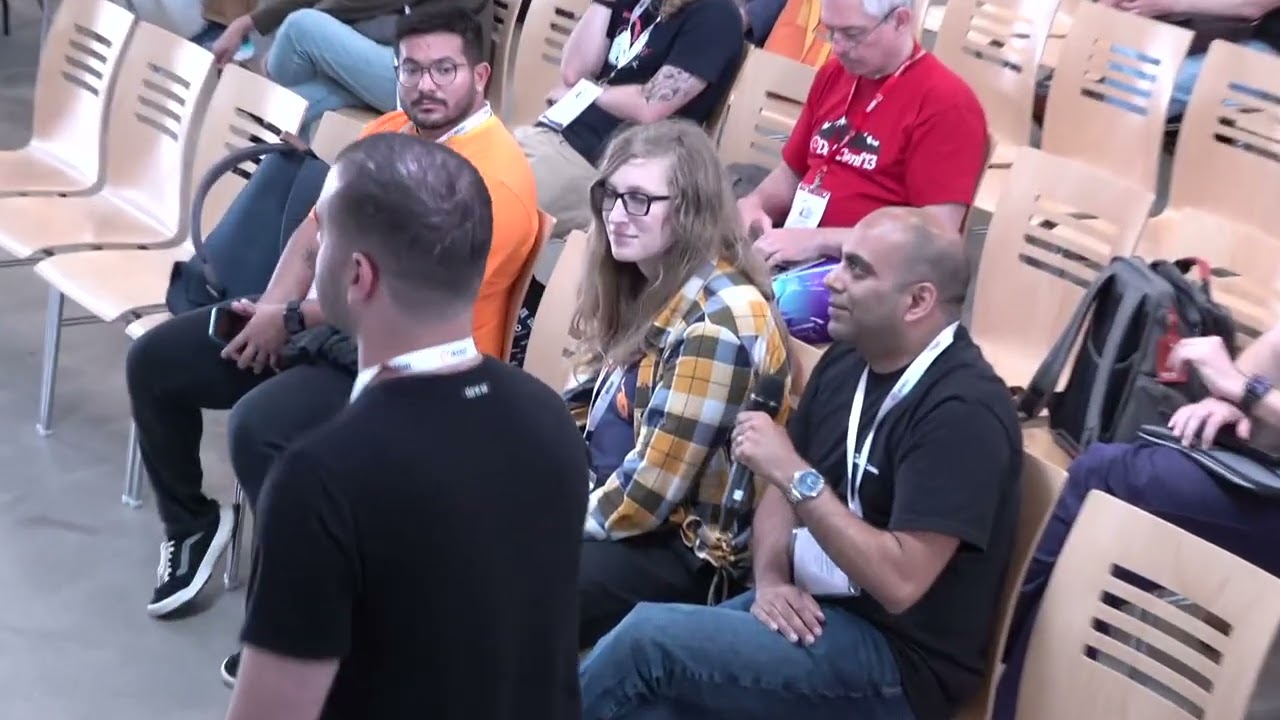
Video summary
The session focused on promoting merge request-based collaboration as the standard method for contributing to Debian packages, primarily hosted on Salsa CI. The speaker emphasized that while Debian policy currently lacks explicit mention of Salsa or GitLab workflows, there is a strong community preference for moving away from isolated development and patch uploads in favor of open code reviews. A key argument presented was that relying solely on uploading new package versions without prior discussion often leads to friction, whereas merge requests allow contributors and maintainers to collaborate efficiently before any changes are merged into the archive. The speaker highlighted that over 10,000 merge requests have already occurred within the Debian group, demonstrating significant adoption, though many maintainers are unaware of how to configure notifications to receive alerts when new requests are submitted to their packages.
A major portion of the discussion addressed the technical and procedural challenges surrounding notification settings and repository hosting. Currently, Salsa does not automatically send email notifications to package maintainers by default, requiring manual configuration for each project, which creates a barrier compared to systems like Debian Bug Tracking System (BTS). The community debated whether Salsa should automatically link to maintainer fields in packages to solve this, but technical limitations and the "chicken and egg" problem of establishing consensus before implementing such features were noted. Additionally, the talk touched upon the diversity of hosting preferences, with some maintainers using GitHub or other platforms due to concerns about GitLab's licensing model or community size, though the overwhelming trend is toward Salsa. The consensus leans toward encouraging all new contributors to use Salsa and merge requests, provided that maintainers are willing to engage with them rather than ignoring them indefinitely.
The conversation also delved into specific workflows regarding patch management and branch formats, particularly the tension between using applied patches versus unapplied patches in Git repositories. The speaker advocated for recommending `git-buildpackage` and standard Debian packaging practices but acknowledged the difficulty of changing long-standing habits among experienced maintainers who are accustomed to managing separate patch queues. There was a strong sentiment that merge requests should not become "black holes" where contributions go unnoticed; instead, if a maintainer does not respond, other community members should feel empowered to step in and collaborate. The session concluded with the drafting of a Debian Policy proposal (DEP 18) aimed at making Salsa usage and merge request workflows official recommendations, ensuring that new contributors have clear guidelines and that maintainers are held accountable for reviewing incoming changes rather than rejecting them without engagement.
Read the full video transcript
Uh welcome to the next session of DEPCON
25. Uh now we have Otto who is a Debian
developer for a long time and the main
maintainer of salsa CI pipelines. Uh
it's very important uh infrastructure
for Debian. I think most of packages are
being um hosted on Zarsa and many of
them are using salsa. I'm using also
almost for all of my packages instead of
those who are building years. And now we
have a both merch request basic
collaboration for Debian packages. So
please welcome Otto here.
[applause]
All right. Hello everyone.
Is the mic working? Hello everyone. Yes.
So um I'm not the only maintainer or
developer of South Sici but yes I'm one
of the um main people there and uh I
this talk or uh buff session is about
merge requests. So obviously I'm in
favor of merge requests. I'm I like code
reviews. I don't think people should
work on their Debian packages fully
alone and and uh on their own all the
time. and I like code reviews and in the
context of Debian at the moment the way
I think they should be done or most
efficiently done is through merge
request. So that's the topic for today.
But I would like to hear like what
opinions people have about merge
requests. Do you want to use them? Do
you want to do something else or how do
you want to do them and so forth? And
there is also a pad. The address is very
long but you can find the link in the
schedule.
So
basically what is a merge request? Let's
start what by defining what we're
talking about. So 90% of Debian source
packages are hosted on salsa.debian.org
or at the moment and uh anyone can sign
up for an account there
and uh for most Debian source packages
unless it has been explicitly disabled
you can fork it and you can submit a
merge request using the GitLab's UI and
uh and you you don't have to be a Debian
developer anyone can do it and when it's
done it's they are also public and you
don't have to be the maintainer, but
anyone can actually comment on those
merge requests
and we are already using them to like
hugely across Debian. Uh how many here
have done a merge request on salsa?
How many of you have reviewed one? How
many of you have merged one?
Yes. So most people are are doing this
and indeed just in the Debian group we
have over 10,000 merge requests already
happened and 800 of them are by the way
open if you want to go and review
somebody else's
and uh also one thing I want to
highlight is that by default the
settings we have on salsa at the moment
are such that if you have a project on
salsa you won't get email notifications
when somebody files a new merge request.
So I just wanted to point out that if
you are maintaining something go and
check go to the project click on that
bell icon dropown thing and make sure
you don't have your global settings but
you have the watch settings on like in
this screenshot so that you will receive
an email every time somebody submits a
new merge request. What
>> project or team?
>> This this setting is your own setting.
So open all the projects, all the
packages you maintain and then do this
for yourself. You can also go to your
profile and then there's a subpage about
notifications which will then list uh
all the settings you have at the moment.
There there's also uh settings to fiddle
with the project ones, but this is the
most important because most of the time
the packages that you actually upload
and maintain, you want to be the person
getting a notification when there's a
retro request.
Uh how many knew this and have this
configured?
So not everyone but many. Good.
All right. So what's the basic mechanism
of how a merge request works? So
uh the submitter opens it and it's
basically they have a branch and they're
proposing that branch to be merged to
the target branch and anyone can give
feedback or comment it and the submitter
can at any time update that branch. They
can add commits or they can just uh
rebase and force push new versions of
the stuff. And I I prefer to force push
the new version because the merge
request is supposed to represent the
thing that the recipient can go and
merge as is. Uh if salsa CI is active,
it will also provide kind of automatic
review telling that did the build pass
and did auto package test pass and
things like that. Uh then in GitLab
there's this feature that you can click
on approve on merge requests as a token
that you approved it and depending how
your project is configured it might show
up in the merge uh merge git message
that who approved it and then there's a
you need to have higher permissions to
be able to merge it and you can either
merge it in the UI by clicking merge or
you can just the oldfashioned way you
can pull it on your own laptop and push
and GitHub will then GitLab will or both
of them actually will detect that that
exact commit went on the target branch
and then mark the merge request as
closed. So that's that's the basic
mechanism of how it works. And then of
course how do you do a code review in
general? That's a bigger topic and I
have some of my opinions in my own blog
if you want want to check that out.
Okay. So in the context of of Debian
today, what does the project say about
merge requests? Well, basically
nothing. So if you search the Debian
policy with the word salsa, it doesn't
it it hasn't isn't actually mentioned
anywhere at all, which I think is a
little bit surprising. So
I did try to submit one change there but
it wasn't accepted.
So but uh maybe in some future version
of the policy we might mention something
that we have this salsa thing and it's
good to use it.
Uh the developers reference does mention
salsa in a couple of places but the
process is describing on how you
contribute a package basically the
salvaging process which Andreas was
talking about earlier today. Uh that
process description today is based on
the assumption that
when you want to contribute somewhere
you basically just do a new version of
the package and upload that. And uh in
my view that's
uh not very collaborative. I think that
posting a merge request
and then uh having that merge request
open for maybe 3 months or something and
then seeing if the maintainer will ever
respond or or object or something. If
they respond and object, then you know
that you shouldn't probably go uploading
anything and just deal with the or like
collaborate in the merge request until
it gets merged or rejected. But if it
nobody responds anything, then you can
probably
uh and if there's no other activity on
the package either, then that probably
could be a sign that it would be okay
for you to go and merge it yourself and
fix the thing.
uh I don't have any proposals for the
policy manual or the developers
reference at the moment regarding this
but I did start last year to draft a DEP
18
to to kind of make it uh explicit that
we in Debian do have salsa and we
recommend using it for people who want
to have a efficient calibration.
So it looks like
like this. How many have seen it?
A couple. So basically I'm I'm proposing
that uh Debian packages should by
default be hosted on salsa and they
should be in git
and
and uh the merge request feature should
be enabled and people should be using it
if they want to have collaboration
with the assumption that participating
in the merge request uh review is is
easier than the other alternatives.
And then also as a salsa CI uh
maintainer and and promoter, I also hope
people would run SAC CI at least once
before uploading. And obviously if if
people are using merge requests, then
the SAC CI will give automatic review
results on on the basic stuff that
things work.
Yeah.
All right. So this was my introduction
to the topic and now I'd like to hear
people people's views that
uh what should the Debian project say or
recommend about merge requests and the
one more thing is like why do I think
it's important that the Debian project
would say something is because I don't
want to like u it's not about enforcing
that everyone has to do this but to
establish I want that there should is
some clear guidelines on what is kind of
the default process for doing doing
things.
So that then when for example new people
join the project and start contributing
it's clear for them what they should be
doing and if they do the thing that is
clear then the maintainers
would uh they would have a less friction
with the maintainers because they're
doing something that is familiar and
makes sense to everyone.
Okay. Uh, yeah, please.
>> So, at the moment, if you're a new
contributor to Debian, you have two
choices. You can file a merge request in
Salsa or you can send a patch to BTS.
Yeah. I'm not very keen on this. I don't
know uh like how we can get out of that,
but I think it's harmful for the new
contributor experience for there to be
multiple ways to do things and for
maintainers to have different
preferences about how they accept
contributions. So, I wonder where the
room stands on um ideally doing
something. I'm not saying get rid of the
BTS, but doing something to make that
situation better.
Any responses?
So, I just noticed
>> I just noticed that uh for every package
that I have in Salsa that I'm a
maintainer for, uh the notifications
aren't set to send me any notification
when a merge request goes in. So, I have
to manually go into every package that I
that I'm a maintainer for in Salsa and
configure it so that it will send me
notifications. Whereas with BTS, BTS
uses the maintainer field of the package
to send information about change
requests for that package. So should
Salsa be sending notifications to the
maintainers instead of having you
manually configure all the notification
settings? I I think yes, but I think
it's also a chicken and egg and that's
why I'm like doing this session because
if we don't first somehow somewhere
establish that people actually like
merge requests and are happy using them,
then the salsa maintainers don't want to
put this as a default setting.
>> If I if I'm maintaining a package in
salsa, I've already said I want people
to be interacting with me through salsa.
If I don't want to get notifications
from salsa, I should probably not upload
something to salsa.
>> I I agree. But there is actually people
who have packages in salsa who say that
they don't want to have any
notifications from
>> they could go and configure it to turn
it off. But by default, a maintainer
package
>> could be. Yes.
>> Yeah.
>> Let's let's do that. But
>> I just I just realized I had never
received a merge request from Salsa. Not
because there weren't any merge requests
in Salsa, but because I had never
manually I had assumed that uploading
something into Salsa would make it so
that it would talk to me because every
other GitHub certainly does. GitHub
spams me with email all the time.
>> So if if here's enough people that we
have consensus on this thing and then we
could announce it that let's configure
things this way.
>> Yeah.
>> Then I think the salsa admins would
believe that yes, this probably is what
the majority wants. But it's not a
matter of configuration.
>> I don't think it's as simple as a matter
of configuration because salsa simply
doesn't know who to send it to.
>> There's a maintainer field in the
package.
>> Yeah, I know. But Salsa is not connect
is a GitLab instance, right? So it
doesn't Salsa could have code that went
and looked in the Debian directory.
>> The usernames,
>> we agree, but I'm saying that's why it's
not a configuration. It's going to take
some work.
>> It it is possible because the usernames
are the Debian
names as well. And we already have uh
some email notification scripts. I think
>> you know I'm talking about actually
using a maintainer field in the package
to figure out who to send the mail to
>> if you have the owner of the project.
So you can set the order
>> but I think the technical details on how
to implement this is doable but first
there needs to be like the decision
somehow made by this group that this is
actually what we want and that the
emails from salsa are more useful than
they're annoying.
>> So I think then the onus is on anyone
who objects really like we need to hear
from the other side. So, who in this
room would prefer not to have that? Me
not. I wanted to refer to to Keith. Um,
I I I I had to I had the safe the same
problem with uh forgetting or or not
seeing merge request for months until I
chance. But you can send the email to
owner to the owner of the project
because there was someone who created
the project and has some interest in it.
Um and you can this one has a email the
profile so you can send it to them and
for for other people they can subscribe.
>> Yeah. Okay.
>> Okay. Thank you.
>> Who was the first?
>> Okay. [laughter]
No, I would say that most people that
are here probably uh agree with our what
we are proposing. I don't think we have
many people that disagree here. So I
don't think we'll find uh anything like
thinking differently here but I totally
agree just like uh we we do something
like that with newcomers in Brazil. It
works pretty well. So I think this
should be the default is yes. Yes it is.
Someone mentioned on IRC that maybe we
should uh create a bot to redirect all
merge requests to BTS. I don't know if
that would be useful and if the the
broader community would agree with that.
I yeah I I don't think so. But
>> yeah, he wants to say something. Yeah.
>> And possible we've moved on a little bit
for for just a uh on the uh SA merge
quest versus patches in the BTS for
newcomers idea. There seems to be an
assumption that the people who are
pushing for change from officially our
BTS is the way to do it. um are
responsible for making it a perfect 100%
solution. Um whereas it'd be nice if we
could get to a point where we like
enable merge requests to be usable. Um,
and if some people aren't getting the
right notifications or whatever reason
for that as as the maintainer, um, maybe
they should write something that
integrates between salsa and the BTS and
puts the onus on the other way around to
say, um, yeah, that was my thought.
[snorts and sighs]
I think what Otto suggested is the best
that we are going to have today.
If we want something else that salsa
cannot do at the moment, it's it's kind
of open source. So people can start
doing merge requests against Git against
GitLab to implement that. But I would
like you to consider that we have a
truckload of packages where there is no
onetoone relationship between the
project owner or or or a project member
and salsa and the maintainer or the
uploader. We have many teammate packages
where the maintainer is a mailing list
or the package tracker so that salsa
does not does not find the their their
relationship to to the salsa user. And I
would most certainly not
like having a mail message for
everything that happens against any
package in the Debian project in salsa.
>> Yeah. Okay.
>> So that's why I'm like as a short-term
solution, I'm advocating that people go
to your own packages and enable this
notifications because
like we can't maybe do it on a group
level because then everyone in the
Debian group would get massive amounts
of emails and so forth. And and also we
had on the mailing list on Debian Devil,
we had some discussions recently about
the notification emails and if we dig
them up there's links by the salsa
admins to the scripts they are using and
there is actually some bunch of
automation checking the checking like
who is who and and stuff. So I think uh
further automation in this field is
definitely possible but I think it's a
chicken and egg that we first need to
say that we actually want this and we
want to embrace this and not have this
as a secondass citizen.
>> Um I would like to ask somebody maybe on
IRC uh just to document the stuff which
we are um document the stuff on other
part what we are discussing now just not
to lose it.
>> Yeah. So
>> yeah, a small comment about the
notifications is that you can activate
them at the group level. So maybe not
for the Debian group, but if you're part
of a team that has so many packages, it
can be useful to activate it at at your
team groups level. And another comment I
wanted to have is um earlier someone
said like if you put your package on
GitLab then you're okay with I don't
know merge request, notifications,
anything. If you put it the other way,
it means if you're not okay, you
shouldn't put your package on GitLab,
which is I think a very wrong message to
send. So, we should be careful on the
way we phrase things. I think it's
beneficial to the project as a whole to
have everything in salsa or any git
instance whether or not you agree with a
particular process.
>> Okay, thanks. Uh G, um are there any?
Yeah, I think yeah. So, going back to
the someone said something about uh it
being two different ways to contribute
patches either directly on the BTS or
through a merge request. I don't have a
problem with that except if merge
request get ignored. So, that's where we
that's why we talked about
notifications. But I'd like to point out
that there are other ways to notify
maintainers. You could get uh the number
of merge requests on uh tracker debian
or and on the other dashboards used by
maintainers.
And another area where we are probably
uh a bit lacking is that by default
merge request are enabled and
maintainers are probably not aware that
merge request are enabled for their
package and that people might submit
merge requests that they're not looking
at.
So UD already has data about uh linking
Debian packages to salsa projects and
has information about through VCS watch
about the number of open merge requests.
So it would be probably uh alpha day job
to to add information about merge
request on uh on tracker and various
other dashboards. So I can help with
that.
But I think on DDPO page there is
already some kind of sign that merch
request is open or maybe I'm missing
something. No.
>> Okay. Good.
>> Not on track. Okay. I see. Okay. uh
doesn't
>> also I wanted to remind if people prefer
to not use the browser there is like the
salsa command line tool and then there's
the gab generic gitlab command line tool
and you can use this to list
uh open merge requests and things like
that. So some people don't want to have
any emails at all and they are concerned
about how they can like access it other
ways. So just a reminder about that
command line tools exist as well.
>> Okay.
>> I I have I have one question uh about
the merge request uh being fast forward
or just having the merge commit on top.
Do you do you find anything on that
document about about that if we're going
to follow a pattern? Because personally
I prefer linear history but then in
bigger projects it might get difficult
and then like if some projects might ask
their committers to sign their commits
and then you can't rebase them anymore
because otherwise the hash won't match
anymore. So I I wouldn't at this point
recommend anything too strict about
that. I I would like just start with
let's recommend or like state somewhere
that if the maintainer doesn't have like
some really good reason the package
should be on salsa in git
and it should accept merge requests and
the maintainer should
uh should not be hostile towards merge
requests and and since it's easy then
also please have si enabled and look at
the results.
>> Okay. Uh I have I have a small question.
Uh is DEP 18 uh in what state is it
ready to be reviewed and maybe accepted
or you want to add some?
>> So it is a draft but uh we I I started
it last year and we had a whole bunch of
discussions. Some people probably
remember this from the meeting lists,
but it has been like without changes for
maybe four months or five months. So,
it's now as a draft and I actually have
a merge request on on making it a
candidate.
So if you want to check this DEP 18 out,
you can either file new merge request to
change the text or if you think it's
fine, then you can go and vote on this
one and and express your opinion that
way.
>> Okay, thank you.
>> I just saw of an edge case just trying
to think of um not me but who would
object and why. Uh there was a package
that I um was involved in where I was
surprised to see that the VCS field
pointed to GitHub. Um but the I think
the reason for that was the upstream
maintainer in GitHub was also doing the
Debian packaging and so they preferred
the branch there. And so I don't know if
we've got a um an opinion about
the trade-off between I really like the
idea that everything is in salsa. you
tell contributors they can reliably
expect you you you train them to look at
salsa and I really dislike the idea that
um you know Otto onboards a new Debian
contributor at devconf and shows them
salsa and 3 weeks later the contributor
is lost because they're trying to do a
contribution to a package and it's not
on salsa. So that's my view but I can
see the reason that somebody wanted it
on GitLab uh sorry GitHub. So where do
we stand like so
>> do we need to take a position?
>> So actually most of the packages that
are not on salsa are not using any
version control at all. So this is a
tiny amount of packages that are on
version control or are in git but are
hosted somewhere else. Some of the
people think GitLab is too proprietary.
They don't like the open core model. So
they prefer to host it on codeberg or
forger or somewhere else. And then some
people think that there's not enough of
a community there and the main developer
community is on GitHub. So they prefer
to host it on GitHub to like entice more
contributions. But I think both of these
are like very marginal at this point.
And at least one of the guys with his
packages on GitHub
uh promised that he's going to mirror
everything on salsa as soon as I publish
a blog post explaining how to have
multiple remotes on your Git repository.
Okay.
Does anybody want to comment something?
Okay.
Uh so I I'm one of the soft admins and
several of the ideas you guys uh uh
suggested here requires automation and
that requires code. So if you want to
write the code, we are open to it. And
if you write the code before the conf
ends, we we can deploy it before the
conf ends. But like uh linking me Quest
to B to the BTS is doable via the uh via
either web hooks or the GitLab API. Uh
there is a I I experimented with
experimented with uh adding a custom
issue tracker to GitLab. So we could in
theory write a custom issue tracker that
will list the bugs in the BTS in the
GitLab in in
instead of the GitLab issues that's
possible as well but requires code.
So,
so yes, if we we are open to to making
things work, changing these defaults.
For instance, if you want to notify the
owner of the the repository by default,
that's easy to do. for new repositories,
for the existing ones, we'll have to
write the code to go over the API and
and change to to whatever we want to
change and always
allow people to opt out because I mean
requiring stuff to be on South at this
point is kind of redundant because most
of the packages are in salsa. If you
look at trends.net that Lucas did on the
VCS hosting graph, sure is just
dominating everything. everything else
is shrinking
and yeah
>> so actually to that point I'm mentoring
a bunch of new people and I actually see
many times that they have the package on
GitHub and then I tell them that hey you
should actually have it on salsa and
then they ask why and because I like
that but I can't tell that Debian likes
that because there's no like backbone
for that so are there any uh any people
in the policy writers with any views on
should salsa be mentioned there in some
form
>> did you have some comments
>> I did but it's not about this maybe
I don't know if you can change the
subject
>> and what what was your name I just put
that you were in the room
>> they say Antonio
So, uh, at the risk of opening yet
another controversial can of worms, I I
don't think I'm going to get an
agreement from many of you here, but I
just wanted to grind my axe. Uh, in
particular today, my we should be using
a patches applied git branch format axe.
Now, I know that this is not popular
within Debian. Most people are using
basically the GBPQ format or you know
the same format with manual quilt but
I've seen multiple people outside Debian
try to deal with code that they got from
salsa and end up with very strange
things because if you start with the
patches unapplied branch you can't if
you build the package the Debian patches
don't get applied maybe it builds maybe
it doesn't dish build package might
apply the patches in which case you've
got a dirty git tree. Now, um you can't
just update the code in the tree where
the code is with your editor. You have
to do some kind of weird magic thing to
turn it into a patch in Debian/patches.
Now the tooling we have for maintaining
patch cues
in git as patches applied is not as
mature and there aren't as many like
great options and it's not as easy but
there is some good tooling for this. If
you normally have no patches,
then just using git merge is actually
really great. Um, then you're not paying
much of a price for having
like not maintaining your patch queue as
a set of diffs because if that set of
diffs is normally empty or one tiny
hunk, then you kind of know what that
thing is. Anyway,
I have a tool called Git Debbase which
is used by the Zen team to maintain a
large patch queue in a large package. It
may not be suitable for everybody.
I think what I would like to ask here is
that we don't
nail down that we're doing everything
patches unapplied because patches
unapplied is deeply weird by external to
Debian standards and
you know I I had a friend who who built
a version of a Debian package and they
got the source code from Salsa and they
were trying to like debug something and
they didn't know to use dpage build
package so they used make they ran
configure make and what they got was an
executable that didn't have Debian
security patches applied but ran.
And that is kind of the worst case
failure of a patches unapplied branch
format and it's very easy and it can
just happen.
Anyway, I think I've made my point.
>> Thank you.
>> Here here um a couple additional points.
Uh first of all, I don't think it's good
for um merge requests to be a black
hole. you either they should be disabled
or they should get yield notifications
but they should not be just enabled and
go nowhere and also I've I've double
checked and um sal itself um supports um
mirroring um other repositories so the
um maintainers don't need to do any um
thing manually they just check the box
and then it'll do the right thing
>> okay thank you
>> actually I think the black hole is also
fine because uh yes if you as a
maintainer don't respond anything
you there's still other people who might
respond. So what I see happening in
several packages is that the original
maintainer is passive or maybe like does
something twice a year. But then the
bigger the problem is the more people
are affected and then those people can
discover each other and collaborate and
do do something and if you turn off
merge requests then makes it harder for
them to discover each other and the
issue.
>> Fair point.
Um I have also a comment regarding uh
what you said about uh un applied patch.
So I think it's good to have patch uh in
patches not applied because if you are
importing a new version of uh software
so you need to be sure that the patches
which are in most of cases DBN specific
are still can be applied because if you
are just importing new version you're
just overwriting or what is so just my
comment I do not have a hard opinion on
that
Then uh
okay so uh yes Ian I I got your point
and uh I I was uh seriously seduced to
change my ways. My I think the main
problem with uh having a repository with
patches applied is that it's a departure
from the native Debian packaging uh
format and all the tooling is optimized
for the for for handling the patches
separately and all the error messages
and lint reports and everything else is
based on the conventional model. So it
it would be a a mental
conceptual change for for me to retrain
myself to use a patches applied uh
branch
and uh I'm afraid that I I would have to
go back anyway because I will eventually
have to fix some bug and find out some
problem and and all the tooling just uh
uses the conventional I mean the quer
package format. So I I would have to
understand that anyway and in the end at
the end of the day I would have to use
that package format anyway but I'd like
I I'd be happy to get rid of this but I
think we would need some deeper
>> maintainers that's a bit difficult.
>> I I'm sure it does. It's a it's my point
of view that uh I finally learned
something. I I understand how things
fits to fit together.
And uh I would have to do it some other
way which may be more straightforward
for people not involved in Debian
packaging but it is not for me. Can I
propose that we skip the topic of
patches applied because it's uh we're
not really discussing like we're I'm
proposing that we should use salsa and
git but I'm not proposing here
explicitly that we should use a specific
git format there.
>> That's good. I'm glad to say that on the
stage but that's not what your document
says.
Uh yeah,
>> the document explicitly mentions GDP.
>> Yes. So
>> and all I want is for you to
>> All right.
Uh I I
>> uh thank you. So, I'm glad to hear uh
that you say that on the stage, but the
document that I read earlier today um
explicitly mentions GBPQ get bill
package and
uh assumes and recommends that you're
using patches unapplied branch format.
If you want to soften that, that would
be great.
>> Okay. Um, so in this step 18 indeed I do
recommend git build package and I
recommend it because it's currently the
most widely used and if I today like
mentor somebody to start Debian
packaging I would recommend them to use
this
and uh you
uh you are developing new tooling and
and uh
>> I developed five years ago. Yeah. Or
Yeah. But um
in in Debian context it's it's still
new.
I think this is pretty softly stated
already.
>> We have one more question here.
>> Yeah. Sorry again on the same topic but
I have to mention that in some teams we
prefer to use Debian only repositories
without the upstream source code in
Selsa and I think it makes a lot of
these topics a lot easier. Basically we
work with the upstream repo on the one
side not in not in salsa and pure Debian
packaging in with just the Debian folder
on salsa and I found it much easier to
work with than having to
dance with all the branches.
>> Okay, thank you.
Um I want to mention
>> I I I think that the the the main
problem is that you you're in some kind
with this patch in Debian you are
distorting the the the way that is
standard in GitLab. So that's why it's
sometimes uh for newcomer they don't
understand why we use patch like this
and we don't make branch.
>> Yeah. If you do a merge request that
updates a patch, you will see a patch of
a patch. Yes, that's not very clear.
>> And it it has some effect in fact also
in the interface when you upload then
you you have got some message that uh
you can accept the merge request just
because you you were pushing two
branches.
>> I've seen this.
>> Yes. So for this is actually on topic on
merge requests. So I would use
>> when I do a merge request it's or when
you anyone does a merge request it's
just proposing to merge one branch to
another. And when using git build
package which most people are using at
the moment if you do a new upstream
version import you can't really do a
merge request which would push all of
those branches at once. But I don't
think that's a problem because those two
other branches, the pristine tar branch
and the upstream branch, they are not
supposed to contain any changes that you
did. So in the review code review
process, you can't really get the
feedback that you should [clears throat]
go and change that because you're not
going to change it. It's mechanically
inherited from upstream. So for new
versions, I I recommend that you only
just do one single merge request for the
actual branch that has the Debian stuff
and that gets reviewed and then when
that's done then then uh it merged and
the the other branches get merged as
well.
>> Yes, but but but sorry but you need
permissions to do that. If you have a
contributing as a new new contributor to
a to a repository
um and you want to update something and
you don't have permission on that web
for what whatever reason because you are
new and not known and whatever you still
need a way to get exactly that upstream
and pristine branch into that. You push
it to your own fork and then the person
merging it will pull from your fork.
>> Okay. Okay. Yeah. Yeah.
>> Okay. Um any more questions? We have
3 minutes.
If not uh I have one more point. I do
not know whether it's related to it. Uh
what I find annoying. So my most of my
packages are on all of my packages on
salsa and since the beginning of
packaging history and I'm just taking
from git making some updates upload the
package into Debian and it's been
rejected because somebody enued my
package which is totally okay but I do
not know how to uh motivate the people
to uh bring the change back to salsa and
not to forget it because uploading to
NMU is easy but uh it it takes some time
then if you do not have those changes
being documented in g so I do not know
how can we change this processes maybe
just a point which we need to think
about but it's really annoying because
you need to take uh change from arch
heave you need to rebase my it's it's
really not a good stuff
so my my workflow is to run the git uh
build package
uh DCS something which will then
automatically fetch from unstable
whatever is newest if there is something
just to check that it's doing this but
ideally the tool should be doing that
automatically by itself when I do like
pull or something else so it's not very
ideal and also I'm not a big fan of
people doing NMUs so that the way I
learn about the NMU that it's already in
the archive like I I would much rather
have a merge request and Then like if
I'm on vacation for 3 months then like
still I think it's better that somebody
posts a merge request and then I at
least have a chance to like discuss the
thing before they proceed and then they
go and do the NMU or something like
that.
>> Okay.
>> But then of course like the fundamental
problem is that the archive is not in
Git. So it's possible to bypass git
completely but that's so so so
also like in these discussions of what
should we like recommend in Debian
there's like always the discussion that
what's the next generation tooling and
what could we do in the future and
should we have a new package format
should we have a monor repo and
everything there and so forth maybe in
the future but at the same time we need
to have like new contributors today and
this week joining us and we need to tell
them something and we should be able to
agree right now that what is the tooling
that most people use and then somehow
like have
consensus that if new contributors are
using that tooling then the the
maintainers shouldn't like
be negative towards him.
I mean yes I I think what I'm finding a
bit frustrating about this is apparently
there are several people who are in this
room who don't know about like DG for
example which has existed for 12 years
that is not new tooling. It's extremely
solid and helps solve many of these
problems.
um merging patches applied workflows
don't have an NMU integration problem.
Many of these things become a much
better if you use the tooling that is
not like some kind of blue skies thing
that we're doing in the future. It's 12
years old,
>> but it still has like [snorts]
things that probably needs to be
developed into it. No, it's
like it's hardly changing.
>> Guys, I don't have to interrupt you. We
are out of time. Thanks a lot for your
productive uh discussion and a lot of
comments and questions. And Otto, thanks
for bringing this topic. And I would
like to ask you to thank Otto also.
[applause]