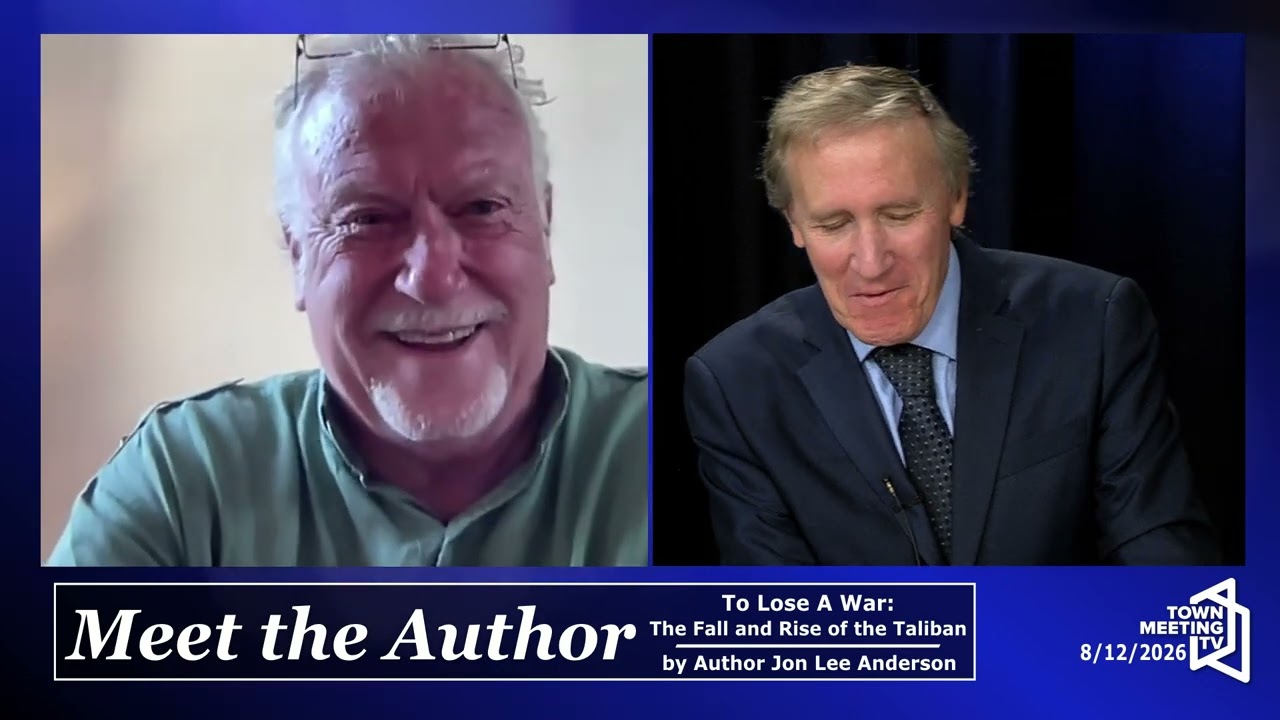
Video summary
Jon Lee Anderson joins the program from his home in Dorset, England, reflecting on a career that began in the early 1980s reporting on Central American civil wars and includes three years spent in Cuba writing about Che Guevara. His extensive body of work spans over two decades of coverage across Afghanistan, Syria, Iraq, Iran, Libya, and numerous other nations where he has profiled international figures and won prestigious awards such as the George Polk Award. Anderson attributes his path to a childhood marked by frequent global travel with his foreign service officer father and children's book author mother, who fostered a multicultural environment that made him feel more at home abroad than in the United States during turbulent times like the assassinations of Martin Luther King Jr. and Robert F. Kennedy. This early exposure led him to seek adventure as an explorer eager to witness history firsthand, eventually shaping his identity as a foreign correspondent dedicated to living life intensely rather than remaining comfortable or stagnant behind a desk.
The discussion centers on Anderson's latest book, "To Lose a War: The Fall and Rise of the Taliban," which compiles his long-form reporting from Afghanistan following the U.S. withdrawal in 2021. His early dispatches from after September 11 revealed an initial optimism that Western intervention could succeed against jihadist forces, yet field experiences quickly eroded this confidence as he encountered a landscape defined by deep-seated xenophobia and untrustworthy local power brokers. Anderson describes the chaotic reality where warlords who appeared to ally with American interests were often double-dealing or harboring anti-Western sentiments, creating an environment of constant danger where one could not trust anyone outside their immediate bubble. He highlights how the nature of warfare in Afghanistan differed significantly from conflicts like Iraq due to a pervasive "warrior logic" reminiscent of Machiavelli's *The Prince*, where moral absolutes were discarded for survival and victory, leading to frequent betrayals among allies and attacks on coalition forces by individuals within their own ranks.
Beyond the tactical realities of combat, Anderson addresses the profound psychological toll of witnessing such brutality and the ethical dilemmas faced by journalists embedded with military units who risked being mistaken for targets themselves. He recounts harrowing moments involving child soldiers recruited because they lacked developed consciences, as well as incidents where trust between American troops and Afghan allies completely collapsed over trivial disputes that nearly escalated into murder within secure bases. To cope with the trauma of life-and-death environments, Anderson adopted strategies common among fellow reporters, such as taking time in Jordan to decompress before returning home while carefully shielding his young family from the grim details of his work by focusing conversations on their daily lives instead. He acknowledges that emerging from a world where rudeness could be misinterpreted as hostility required conscious effort to manage temper and maintain perspective, relying heavily on strong familial anchors like his wife and children who provided stability amidst global chaos.
In concluding remarks regarding the current situation in Afghanistan five years after the U.S. departure, Anderson urges continued engagement with the Taliban despite their tyrannical actions against women and girls, arguing that ignoring the country will not resolve its problems or allow it to fade away unnoticed. While he cautions against simply distributing frozen assets directly to the regime without conditions, he emphasizes the necessity of opening a dialogue rather than turning one's back on Afghanistan entirely. He notes the complex reality where underground schools operate alongside strict decrees banning female education, suggesting that humanitarian efforts should focus on supporting women and girls who remain trapped there despite their desperate need for opportunity. Anderson leaves listeners with the recommendation to read his book as an essential resource for understanding both the historical depth of Afghan conflict and the urgent human stories still unfolding today under Taliban rule.
Read the full video transcript
[music]
We are grateful to our friends at
Northshshire Books and Monroe Street
Books for their underwriting of this
program. Northshshire Books has outlets
in Manchester, Vermont, [music] and
Saratoga Springs. and Monroe Street
Books is on Route 7 just north of
Mberry. Both are wonderful independent
[music] bookstores and we thank them.
Hello, I'm Lewis Meyers and welcome to
Meet the Author where I am truly honored
today to have with us from his home in
Dorset, England via Zoom, Mr. John Lee
Anderson. Mr. Anderson is an American
author and journalist who began his
career in the early 1980s reporting on
Central America's civil wars. Uh he
spent three years in Cuba and wrote a
biography of Che Guavara. As a New
Yorker staff writer, I've been reading
him for many many years, his long form.
uh since 1998 he has reported from
Afghanistan, Syria, Libya, Iraq, Iran,
Lebanon, Somalia, Angola, Congo,
Liberia, Brazil, Cuba, Venezuela, Sri
Lanka and many other countries. Uh he
has gone where angels fear to tread. Mr.
Anderson has profiled a number of
international public figures. Uh he has
won several awards for his reporting
including the prestigious George Poke
award, the Maria Moors Kitt, and several
Overseas Press Club awards among others.
So I'm truly uh grateful and honored to
have Mr. Anderson with us today.
>> Thank you, Luis. Lovely to be with you.
>> We're going to be talking predominantly
today about Mr. Anderson's book uh to
lose a war uh the fall and rise of the
Taliban. Uh this came out several years
ago after the United States left
Afghanistan. It's a compilation of a
number of his long- form reporting from
Afghanistan over over 20 years period.
It includes a new preface and an
afterward uh looking at the events that
took place as the United States left.
So, we're going to talk predominantly
about Afghanistan, but I want to step
back and ask you more general question
about what led you to become a foreign
correspondent for uh covering foreign
wars and other issues. Uh I know that uh
looking at Wikipedia that you uh growing
up traveled uh you and your family of
origin were in in many places around the
world. Can you tell us about a little
bit about your early years?
>> Sure. Yes. I mean, [clears throat]
well, I was about to say I think it had
a lot to do with my childhood. My father
was a was [clears throat] a a US foreign
service officer um
agricultural specialist, I think, uh as
opposed to a CIA agent supposedly. My
mother was a children's book author.
They were pretty progressive people as
well. Um and we traveled the world. Um,
I lived very little in the United
States. I'm one of five kids. They also
adopted kids from different cultures.
So, we were also a multicultural family.
Um, we lived in Taiwan, Korea,
Indonesia, Colombia,
um, and and England. And then when I was
a teenager, I started seeking [snorts]
independence myself. and they allowed me
to live for a year in Liberia with an
uncle and travel in Africa. Later I I
did the same in Central America as a
young teenager. And so,
you know, I I guess I I sort of ran with
what was the family pathology, which was
feeling like the world was something
that that I belonged in. I didn't feel
comfortable in the United States. uh the
first year we came back to live in the
United States uh that it coincided with
the murders first of Martin Luther King
and then of Robert F. Kennedy. Both of
them were figures of veneration in my
family's household. So it was it was
with a real feeling of tragedy that not
long after RFK's death, we we then moved
abroad again to Indonesia and I really
didn't want to return to the United
States. Um and it be it set off a kind
of pattern of behavior uh in which I ran
away when we returned and thus my
family's solution was to send me to West
Africa with an uncle. That in turn set
off its own pathology because I didn't
want to come back and I wanted to
replicate that that experience again and
again. And but long story short by the
time I was 17 or 18 I had a kind of twin
mission. One was to
to experience the original world as much
as I could um through as I saw it
adventure. um I wanted to be a kind of
an explorer
and I wanted to witness history in my
time and and I think the convergence of
those two interests there's overriding
interest of mine together with um to
some degree my parents restraining hands
but also facilitating hands and in the
case of my mother encouraging me to be
creative to try to write led me
eventually to becoming a reporter and
which you know allowed me to eventually
you know make a living doing what I
wanted to do which was to to live life
to the max.
>> You most you most certainly have and
we're going to talk about that that some
of those experiences. Um did you I mean
it's remarkable that you were traveling
on your own as a young teenager through
Central America. Did you have much in
the way of formal schooling?
>> Oh yeah. you know, I I went to, I think,
11 schools. Um um one time I was in
three schools in one year. You can see
that my my my educational upbringing was
pretty fraught in that sense. Um I was
always the new guy, you know. I had I
had to to get used to I had to be very
adaptive and to change frequently. Um I
usually went to international schools
although my parents were great believers
in immersion and local culture and at
times they put us in local schools as
well.
So at various moments I was um thrust
into different linguistic environments.
Mandarin speakers, Swahili,
um Spanish, Bahasa. Um, the only one
that really stuck with me, um, because I
sought it out again was Spanish. Um,
but, um, you know, I had I had formally
speaking the usual education, but it was
a bit, um,
you know, it wasn't the usual one. Um,
and I didn't finish high school. Um,
which doesn't mean to say I dropped out.
I I was moved into the English system.
And then um so in a sense I don't have a
high school diploma. And then after a
couple of years in Central America, my
family sort of forced me to go to
college and I and I did two years in
college before going off to lead
expeditions in South America.
So and I never returned.
So I I'm probably the least educated New
Yorker writer that exists.
>> That that that may well be true. and but
uh and you wear that proudly. Um you
live in Dorset, England now, I should
have mentioned, with your wife and you
have three grown children. Dorset,
England, I guess, is more settled and
less perhaps less violent place than
many places in the world you've uh found
yourself. Uh what is it like to be
living in a somewhat calmer environment?
>> Yeah. Well, I guess it's sort of
equivalent to Vermont, but without the
guns.
>> [laughter]
>> Um,
you know, Dorset is a place that my
family came to live in when I was 15.
And again, it was a completely foreign
environment. I we were the only
outsiders in the little town where we
moved to along this coast, a place
called Lamri Reges, just down the coast
from where I live today, Bridport.
But the woman who I eventually married
was my sweetheart at the time. and we bu
we sought each each other out despite
the fact that I moved on after 2 years.
My family effectively broke up when I
was in England. Um she and I sought each
other out over the years and I
eventually hunted her down and married
her and so we started out in London then
Oxford. Sure. Oxford and um later went
to Cuba and Spain. But um
around the time our children were um you
know 7 n and 11 we realized that they
were they had been entirely educated in
spanglish in Spanish sorry and were
speaking a kind of spanglish. So we
thought we would come to England because
it was closer from Spain to give them an
experimental year in you know in in our
language and it coincided with 911.
I went off to Afghanistan, didn't come
back for months, and basically we just
ended up staying. Um I don't have a kind
of embargo against the US. I I go there
often. Um, I even went and sort of set
up shop there in Trump's first term out
of a feeling that I was an expat and I'd
never had that feeling before and out of
a sense of alarm that my, you know, my
native country was um, succumbing to
kind of desperatism.
Um, and I actually, you know, maintained
a household there and here for two
years, but that wasn't very practical.
So, you know, I go through it a lot. I
have a brother and a sister who live in
the States, another in France. So, you
know, we we I go there frequently. Um
but yes, um Britain is although I'm not
a Brit is the place I live and it's
definitely a sanctuary from the world I
usually report on.
>> Sanctuaries are are probably much
needed. And let's talk about your career
as a foreign correspondent. It's clear
from everything you've just said that
it's understandable how you may have
become a for correspondent. You probably
weren't going to be sitting at a desk
covering the labor department somewhere.
But um
what kind of people, if you could
characterize, become foreign
correspondents?
>> It's a good question. And to be I'm not
sure I've ever been asked that, but it's
a good question. I think roughly they
fit into if thinking of Americans but
maybe it applies to other nationalities
they fit into probably a couple of broad
categories.
There are there are the kind of
corporate journalists, institutionalists
who a bit like people who go and work
for the State Department, you know, who
who have learned their craft and then
are hired because they're good, because
they're smart, or because they went to
the right school. Maybe a combination of
all of the above. And they work for one
of the major media institutions, whether
newspaper, television, or radio. And um
and some fall into foreign
correspondentship
by fluke because they got sent on a you
know a major
story somewhere and but there's a fair
number of them that that have it in
their bones to be foreign correspondents
that want to cover a bit like I was
saying I did to be there in the first
line of history you know and and
witnessing
of the history of their time. Um there's
a certain amount of glamour of course
that comes with it. This that that
seduces people as well. This idea that
you know you can gallivant around the
world wearing a scarf and with a retinue
of um you know of people at your becking
call. The the idea of a dangerous life
is somehow romantic. It's been written
up in books, you know, Boys on
Adventures since for a couple of
centuries now. And it's also the stuff
of movies. So, I think,
you know, again, I've I've sort of
diverged, but I've said kind of people
who are just doing the job and some do
the White House, um, some do the Labor
Department like you said, and some,
you know, are drawn to the idea of the
international
um the international arena. And then
there's some who who go in it for the
glamour. You know, there's always people
who say, "Are you an adrenaline junkie?"
And I would say I'm not. But I do like
to live life. I like to know that I'm
living it. I don't want to feel overly
coddled or or particularly comfortable.
Um it's boring to me. I feel like one
stagnates if things are just a bit too
easy.
And then there's another category, uh,
Luis, I would say, who are sort of
freelancers. People who do this because
they really are adventurers. They want
to just live their lives. They're a bit
like if if you were comparing them to
horses, they're like wild mustangs. They
they just want to be out there on the
free range. And if I if I had to total
up that sort of crowd, I would call them
the tribe. They're people I know. I've
been run we run into each other in
conflicts occasionally in conferences
but usually it's in some conflict over
the over the years over over dozens of
years in some cases the same people and
it's a handful it's not many some have
died um there's been some attrition
um but there's a handful more than a
handful there's about three or four or
five handfuls of these people from
various nationalities who
who thrilled thrilled to be
at the cutting edge of history. Damn the
consequences
and um and and want and that's the life
they want to live. I you know is it
comparable to say people who do other
dangerous things like firefighting or
maybe Formula 1 drivers you know maybe
maybe there's something in it but
usually they're they're more
idiosyncratic than that they are people
with a a
large sense of history they have a
romantic attachment to history I think
and to life and Um, and yeah, it's it's
the life they want to live.
>> A movie, and I don't know if you saw it,
uh, called A Private War about Marie
Culvin, who you may have known. Um, uh,
Marie Culvin was actually an American
who was one of the chief foreign
correspondent for the London Times, won
a number of awards. Um, went to cover
the war. She was lost an eye in Sri
Lanka to gunfire where or shrapnel where
you were as well. She was in Iraq. uh
and then went to Syria with the in 2012
during the uh the uh spring uprisings
um and uh Bashier al-Assad's military
intelligence tracked her down in Holmes
and had her and killed her. U and the
movie I thought uh Rosman Pike plays her
Marie Coven incredibly well um displays
a a woman who had multiple motivations.
I think there is uh clearly what you've
just said wants to be on this the
immediiacy of history. Uh there was
certainly some adrenaline. There was
competitiveness with her other
journalists out there and then there was
a desire to help people and ultimately
according to the movie that may have led
to her death. She would not leave people
who were trapped in the bombing at
homes. Um, so it was a whole mixture of
of uh of motivations and I suspect from
what you've just said that that that is
not uncommon.
>> No, I mean I knew Marie not well. We met
a few times in different places and I
respected her hugely. She was very
brave, a bit crazy brave if you know
what I mean. Um, I think those of us who
didn't know her knew that that was an
aspect to her. She took chances beyond
the the normal. Um, you know, I know
that it sounds to the average person
probably nuts that you go off to a war
zone and to be in a country where there
is war may seem dangerous enough, but
once you're there, for most of us, there
are ways to be safer. There's ways to
protect yourself. There are roads you
don't go down, places you don't stay.
you know, you have a six sense about
what could be a fatal decision or not at
the best of times. And Marie
continuously put herself into uh
imminent harm's way in a way that other
people didn't. When she died, um I was
not surprised and I say this, you know,
with respect, of course, because as I
say, she is someone I respected and I
liked. I happened to be I had flown to
Beirut two days before with other
friends because another friend of ours,
Anthony Shadid of the New York Times had
just died leaving Syria where he had
been with rebel forces and our friend
Tyler Hicks had basically carried him
out. He died of an asthma attack. It was
a real tragedy. We attended his funeral
and literally the next morning we're in
a hotel feeling, you know, in mourning
and watched Syrian television to see
that Marie and another young lad that I
also knew, Renee Ashlik, had just been
killed in homes. And it was a terrible,
it was terrible. And it was just the
beginning in a way of a whole string of
deaths, some of them more brutal than
others, including friends that were
executed by ISIS that happened in those
years. Um, and that caused some of the
attrition I was talking about. Um, Marie
Marie, you know, was there's it's not
surprising that there's a movie made of
her. she, you know, she took very little
care of for herself and had a great deal
of luck
um and and was, you know, a larger
than-l life person. And yes, the tribe
is made up of people like that.
>> The one time we have met, and I'm sure
you don't remember this, but but uh it
was about 20ome years ago in Washington
DC at the wonderful independent
bookstore, Politics and Pros, and I
think you were doing a reading. I can't
remember which book, but I the question
I asked on that time was, "What was the
scariest situation for you when you were
out in the field?" And I remember your
all these years I've remembered what you
said. You said a teenager holding an
AK-47.
>> Yeah, that's one of them. Yeah, kids
with guns, you know, they're dangerous.
Um, once I asked a
Nicaraguan Contra gerilla, well, he was
telling me actually about how they were
targeting people in v villages held then
by the the then Sandinista government
for execution.
And he explained that you know they were
looking for certain types of people the
the mayors or head people in the village
school teachers those who had acquired
the advers the enemy's ideology
and it was a moment of cander and I said
well how how do you kill them and he
said we use the 14y olds and I said what
do you mean he says yeah we that we make
them dig their graves and they usually
beat them to death and I said oh my god
that's horrific how why why do you use
the kids youngest recruits? and they
said because they haven't earned a
conscience yet
and that always stayed with me and later
on you know in Africa where you had the
the whole phenomena not only Africa but
the many of the child soldiers that
began you know the kind of savagery of
conflicts like Liberia or Sierra Leone
and others where this phenomena of the
boy the child soldier around the world
the implacable young killer really
became a phenomenon on in the 80s and
90s and and until today. And of course,
I have run into them over the years here
and there. And they are definitely the
most dangerous of all because,
you know, very often they've been
brutalized
um into becoming killers and they're
they're in a kind of fever. Sometimes
they're also drugged. So yeah, the the
younger they are, the more dangerous it
is because as that man said to me so
many years ago, they haven't yet learned
to have a conscience.
Let's talk about Afghanistan because
that obviously was the book the most
recent book. Um uh all of the way the
book goes is you start with before you
do the preface and then you start with
your earliest dispatches from around the
time of 2001 when the United States
became involved there again and uh and
to the withdrawal in 2021 exactly five
years ago tomorrow I believe. Um,
>> and it's depress illuminating and
depressing uh to read the uh the uh
progression or lack thereof of United
States involvement. Um
what was your first I think you went
there shortly after 911
uh and you begin talking about um uh
some of the leading figures in
Afghanistan at that time um and how what
was happening. Uh tell us about those
early times. Did you sense any at the
time do you think you had any feeling
that the United States involvement could
make a difference?
It's you know it's such a good question.
Um
just to remind you that I also had been
in Afghanistan
11 12 years before as the Soviets were
pulling out at the end of their 10-year
war in which you know couple of million
of millions of Afghans died and you had
the rise of the jihadis supported by the
Americans, Pakistanis and Saudis that
included you know some of bin Laden
eventually um began to pour into that
place as a battleground. I went there on
two extended trips in 88 and ' 89 and um
so I had a sense of this country but
from the battlefield and then I went
away and of course the world turned away
as Afghanistan succumbed to civil war,
the rise of the Taliban, 9/11 and then
we came back. I felt on the day the twin
towers were knocked that were you know
attacked. I was sitting in Spain and
felt that I knew that it was probably
Osama bin Laden
based on some of his actions and
statements and and I told the New Yorker
I felt I should go to Afghanistan that I
was sure that we were going to go to war
there and sure enough we did. They said
yes go and I went. this time
um in a very different circumstances to
12 years before.
Um now
it's interesting because I went with the
apocalyptic
phenomenon that had been the attack on
New York and Washington in my head like
so many other people. I had this idea of
Afghanistan in the grips of these
irudentist
jihadi Taliban and their friends
al-Qaeda who had pulled this off. And I
came in from the north where some
warlords
um who had been seeking western backing
now now began to acquire it and began to
fight against the Taliban from their
little spur of territory they controlled
on the northern border. And with CI help
and B-52 bombing from the United States,
bombing the troop concentrations, the
cities in Afghanistan began to fall as
the Taliban essentially disappeared.
They didn't sort of fight to the end,
but they disappeared along the way in
these battles that where I was sort of
watching them take place and then moving
on to the next place. It was very
sketchy. There was a sense even behind
anti-Taliban lines of a kind of swirling
anti-western
quasi jihadist sentiment. I had a number
of encounters with fighters in the
field. You didn't know where they were
coming from, but they were hostile. And
in each of these cases, I managed to
come out of it okay.
But there was a sense that you couldn't
trust anyone, that you had to watch your
back, and that this was a kind of roing
landscape in terms of its xenophobia.
The fact that this was a a land of that
had only known warfare that knew
outsiders as as infidels or something
else. Um, and even when we got to Kabul,
the capital, which was, you know, quote
unquote, liberated by the Americans,
there was still a sense of a kind of
feral sense, especially in the
outskirts. Um, and so,
you know, I sought out some of the
warlords that were now siding with the
West in this onward battle to finish off
the Taliban and reshape or reconquer
Afghanistan. And it was a real mixed
bag. you know, one of them who had now
sided apparently with the West and whom
the Americans were allowing to con
control a huge territory on the
outskirts of Kabul was in fact a former
mentor of Osama bin Laden. And he seemed
to me in our encounters to be an uncon
unreonstructed jihadist, very hostile.
Um, so this began to show up in my
pieces, the pieces I wrote for The New
Yorker. I wouldn't ever say in those
days in 2001 and two and so on that I
thought that it was a doomed mission. I
believed that the West would prevail.
How could it not? You know, this was it
was both a a righteous police action
initially
and
it was right for Afghanistan that these
jihadis, you know, be be vanquished.
That was certainly how I felt as a
westerner. Um, and and yet my
experiences in the field, which again
begin to pepper my my my chronicles of
what I'm seeing, show a a s they're
seated with doubt. And um although I I
would I would say now as I would have
said you know a year ago when I brought
the book out that I didn't I could not
be clairvoyant and p predict what
happened. Um, in those early years, I
was concerned about what seemed to be a
lack of application, a lack of interest,
a lack of curiosity by the West of of of
and of the Americans who led the whole
experience of truly engaging with
Afghanistan. And within a year and a
half, of course, we were diverted by the
Iraq war. And I went there. Um, I had
this sense that the Taliban had not gone
very far.
And sure enough, you know, I was there a
lot in 2001 and two. Then in 2002 and
three and four and five, I was in Iraq.
The first time I come back is in 2005.
And by then, the Taliban are coming
back. And from then on, it becomes this
inexorable story of their comeback. By
2010,
I was predicting their eventual victory.
I didn't I couldn't quite see how it
would happen. But everywhere I went in
Afghanistan, it it was closing down. You
really couldn't watch your had to watch
your back then. The warlords that were
supposedly allied with the Americans
were sometimes doing double duty were
were two-etiming them. I had a couple of
experiences that where, you know, we
were attacked in the field by people
that were supposedly allied with the
Americans. You you really couldn't
trust. I'm not talking about the average
Afghans, but the the authority figures
in these regions where the Taliban
clearly had formed what everybody was
referring to as a shadow government.
>> You know, in the book there are some
>> some of the chapters or some of the
pieces. I mean, you were not uh there
with your trench coat somewhere in a in
Kabul's relatively safe place. You were
embedded with small units of Marines
outside the wire. You were being shot
at. and you know bombs and bullets don't
usually differentiate between the
Marines and the and the journalists. So
there were some really um very scary
moments to read in the book um for you
and as well as for the others. One of
the unusual things it seems to me about
the Afghan fighting which perplexed and
disturbed Americans was this idea of
switching sides. And you just touched on
a little bit, but that in other wars uh
I mean the Afghans uh sometimes were
incredibly brutal
to their opponents. Uh at other times
they would say come on over and lay down
your arms and you can fight with us. and
and the whole masses of soldiers would
do that which is not thought to be the
American way and and we haven't seen
that in other even in Iraq it wasn't
that way the Shia and the uh uh Sunnis
were not uh fighting for each other at
that point. So how did Americans deal
with this situation where one day you
they might be fighting with you and the
next day against you?
>> Well yes eventually it became a real
issue in the beginning of course the
Americans weren't really on the ground.
they were bombing. There were CIA
officers, you know, operating or in
special forces kind of behind the scenes
with warlords and those warlords were
moving people around and getting making
deals with people on the other side to
join them and that kind of thing. You
know, I I noticed all of this, but when
it when I really was clarified for me
was rereading Makaveli's The Prince oh
probably seven or eight years ago. I had
read it as a as a teenager I think and
then I reread it and what's fascinating
is that the kind of
warrior logic amoral logic of war that
Makaveli describes uh taking place in
medieval Italy is exactly what I I had
seen and I have always seen in
Afghanistan. It's not about right or
wrong. It's not about even
who you're with. It's about winning.
It's about how you prevail. If you must
betray someone in order to prevail, it's
what you do. There was there was one
warlord in particular in medieval Italy
that Makavei was, you know, reserved
special praise for. And this was a man
who betrayed his allies, killed, you
know, thousands, but ultimately
became out as top dog. And that was to
be admired. And in a sense, that is the
that's ultimate warfare. That is war in
Afghanistan. That's how it's played.
There are differences between clans,
families, you know, history, true
enemies, that kind of thing. Even
ideology. But this more ancient form of
warfare in which might makes right is
really the one that um played out on the
ground. And I think it did beevil the
Americans once more American troops and
then NATO allies began pouring into the
country by the tens of thousands. You
know, they had different experiences
around the country. Um, and it was it
was largely kept hermetic, but if you
were there, you you would find out
things about h how the Brits were
fairing in their area or the Germans or
the Americans for that matter. And by
the
by 2008 and n and and and and beyond
that there was increasing numbers of
what they call I think it were called
green on blueue attacks or green on
green attacks. What were those? That was
attacks murders of American, Canadian,
British, German soldiers and officers by
their allies in uniform Afghans. Now,
were those Taliban in disguise in some
cases? Yes. Or were they simply
um Afghan nationalists who couldn't bear
any longer to be ordered around by um
you know by by a foreign national who
they saw as an imperial invader. Maybe a
combination of all of them. But there
were hundreds of those attacks and I
think significantly more than any other
modern conflict. So by by 2010 111 I
remember going to a base in in the
eastern Afghanistan small what they
called a combat outpost where there was
a small group of young American soldiers
led by a captain a young guy you know
educated well-intended
and it turned out that the Afghans who
with whom they were supposed to share
this space that they couldn't talk to
each other there was almost a they had
almost been a murder And it had to do
with one of the Americans had um
one of the Afghans had a cat and the and
he had I think he had shot on the
American sleeping bag something like
that. The American wanted to kill the
cat and as a result they nearly came to
blows and when I say blows it it became
a real issue and there was a real worry
that one someone would be murdered and
what during the days I was with them I
was the only person who could move
between the two sides within a base the
Taliban were out there al-Qaeda was
there but within the base it would you
could cut the air with a knife and when
we went out on patrol there was a the
Americans believed that the scouts they
had had somehow betrayed them and were
in league with the Taliban. You there
was complete lack of trust. And that was
the piece I wrote, I think early 2011,
where, you know, the the the
subtitle was,
you know, is it time to leave
Afghanistan? And I did predict that the
Taliban were inevitably going to retake
the country because the Americans were
nowhere. You know, they were cooped up
in these little bases or big bases, they
moved around in in helicopters
and whenever you moved through towns or
villages or on the roads with them in
these armored vehicles, you could see
the looks they got. You know, it it felt
like being with Martians um who'd
invaded planet Earth.
>> And you you you talk about this in the
book. It is a gigantic country
geographically. It is one of the poorest
and most illiterate countries in the
world. Uh different than for example
Iraq and Iran which have had you know
very educated population in many many
parts of those countries. Um and foreign
invaders whether they be British or or
Soviets and now the Americans have uh
constantly been repeatedly been thrust
out. uh and there is basic feeling that
uh insular feeling in in Afghanistan
that it's not part of the larger world
uh and that uh anyone who comes in is is
seen as an invader I suppose. Um there's
another country you mentioned
peripherally Pakistan which uh clearly
was aiding the Taliban uh for many years
and uh now is paying a price for that.
But um that's right.
>> We we flooded Pakistan with money and
pro uh and and arms and much of that was
being funneled to the Taliban. Uh why
did we keep doing that?
>> It's such a good question. you know, um,
look, this was something from the very
early days in Afghan in the war, you
know, when we all went up to Tora to
where the special forces were supposedly
having going to get Osama bin Laden to
Tora and the the mountain range
bordering Pakistan. Well, he got away.
And it was pretty clear from everything
the the few reporters that were around
could tell was that he had gotten away
with the support of some local warlords.
This had been an area where he'd made
strong over many years and and and with
the Pakistani authorities. He was now
inside Pakistan. And you would over the
years you would talk to American
diplomats or others and say why, you
know, why aren't we going after the the
jihadis, you know, bin Laden and other
groups that were allied with the Taliban
in Pakistan? Um, and there was never an
effective answer, but my understanding
evolved uh to
the following extent. The United States
was very aware that Pakistan on the one
hand was an ally and and yet on the
other hand was an adversarial country
and that it part of its intelligence and
military services supported this
anti-western jihad that had attacked us
and continued to and in fact sometimes
bombed or murdered Americans in
Pakistan, not just in Afghanistan. Um
but they engaged with the part of the
state where they had you know um
ambassadors wearing suits and ties much
like you're wearing today uh Louis or um
those military men that they believed
were on the west side but it was this
kind of schizophrenic culture uh
schizophrenic society that they had to
tread carefully with because after all
Pakistan had become a nuclear state. In
fact, the man who had given North Korea,
Libya, Iraq
um and um the nuclear knowhow was
nonetheless than um than a nuclear
scientist in Pakistan who under American
pressure was being held in a kind of
house arrest
but never truly imprisoned for what he
had done. So this nuclear proliferation
we we've also seen over the years and
which led you know uh Bush and others to
talk about weapons of mass destruction
and of course um actually you know a lot
of it can be laid at Pakistan's door. So
I think you know history will be full of
analysts trying to figure out if we
could have done things differently with
Pakistan. The fact of the matter is we
never dealt with the source of the
problem which was the jihadist support
from within Pakistan itself and um tried
to deal with the symptoms um or exercise
pressure on the tame part of the
Pakistani state that was not pro pro-
jihadist. But Pakistan since its
inception has practiced what a few
countries um o over the years have
practiced which is what they call
strategic depth which is you know it's a
very neurotic country. It was carved out
of India out of the Raj for as a Muslim
state and in the years since then it has
supported terror and terror groups in
its surrounding neighbors because it
feels weak in order to protect itself.
So rather than engaging positively in
its neighbors uh territory, it weakens
them through terror in the case of
Kashmir
um and you know in the case of the
Taliban in in Afghanistan and like you
said the chickens have kind of come home
to roost because as as always with these
groups there's there's more radical
Taliban who formed in an ISIS breakaway
and and and there's also a an original
an originally
um Pakistani intelligenceformed group
that is also a kind of Pakistani Taliban
that wants to convert Pakistan itself
and it's receiving support from the
Taliban and Afghanistan. So yeah, it's
it's created so many Frankensteines that
Pakistan is at risk of of succumbing to
its own uh the monsters.
>> Step back for a minute. We we've only
we've got about 10 minutes. I do want to
step back for a minute. In the book, you
obviously been in so many situations
both in Afghanistan and around the world
where your life was at risk. You saw
horrific things around you. um
among people yourself and others who do
what you do, is there a form of things
that you carry home in the sense of if
not PTSD, just sort of the things that
you carry.
>> Um I've always well [clears throat]
um I think I've got that under control.
I say that, you know, with with with
in a kind of qualified way because I
recognize that I've been I've gone
through what I would call dark periods
before. How did they manifest
themselves? Usually with a hot temper. I
tried never to bring that home. I I
mostly didn't. But I would have
altercations
and rude with waiters or people in
airports or in shops that I felt were
being rude to me. And I I later on now
of course I recognize that as a kind of
PTSD. When you emerge from a environment
where it's all about life and death,
regular society can seem really
frivolous and
um rudeness can be misinterpreted. I
think it's similar for people that come
out of prison. You know this idea that
you you you must show respect and if you
don't it's a life or death situation.
Um, so I I learned to be careful about
that. And this usually would kick in
when I'd been in say usually Iraq for
several months. Afghanistan too, but
Iraq was particularly fraught there. Um,
every day one was in Iraq for a long
period of time. One's life was at risk
and you were very aware of it. So um it
was difficult not to have some kind of
consequence. What a number of us did,
I'm talking about fellow reporters, was
we would come out usually through
Jordan, which we called kind of joularly
the kingdom of boredom because nothing
happens there. And we would stay for two
or three days in a hotel in Aman and you
know sort of hang out, have meals, get
ourselves cleaned up and just sort of
diffuse and then go home. And it was
something we did without really planning
it or talking about it. But I recognized
eventually that, you know, instinctively
we were trying not to carry baggage
home. Um, I have a family and my kids
were growing up. They were pretty young
when I was going through all of this.
So, also, you know, you you don't tell
them everything. I would get on a
satphone and talk with them every day
that I could, but I'd usually try to
make it a conversation about their daily
lives rather than mine, you know. And I
think that's also for me that was
healthy that was cubrious to be
connected with the kids and my wife and
you know be in touch with what really
was important in my life which was my
family.
>> Well, you were fortunate to have them.
I'm sure for those who don't have those
kind of anchors, it might have been even
more difficult.
>> That's right. the um I mean you do talk
in the book at the last chapters about
the American withdrawal which became
five years ago tomorrow as we've
mentioned um we won't we don't have time
to go into that either Donald Trump or
Joe Biden's decisions regarding that but
what we do know is that a lot of people
were left behind some managed to come
out Afghans who had helped America a lot
were left behind obviously the women and
girls in Afghanistan are struggling
terribly at this point Um, we have a
pretty robust Afghan refugees
resettlement program here in Vermont,
proud to say. But for individuals who
would like to help
people in in Afghanistan,
um, is there any particular
organizations you would recommend or or
ways that they can be involved where
they feel they they really are their
money or contributions would be of real
value?
Gosh, I mean, right off the top of my
head, Luis, no, I don't because
because I'm I'm aware, you know, I'm in
touch with Afghans who to this day are
trying to get out and desperate to leave
or because of their children or girls or
whatever. And it's been a real problem
um in not least because of the
anti-immigration
uh temperament and policies enacted by
the Trump regime.
um and they've been particularly hostile
towards Afghans but Muslims generally.
Um it's it's a problem. Um I believe
that there are some uh organizations
that particularly help women. I'll
follow up with you so that maybe you can
um uh publish them when this comes out.
But I'm unclear uh exactly at this
point. It's also an issue of of of
what's public because my understanding
is that you know there's a kind of very
very xenophobic tyrannical
part of the Taliban that have decreed
these strictures against women and then
there's a a group that is allowing them
to have underground schools and so on.
It's unclear to me how public um one can
be about this if you know what I'm
trying to say.
>> Yeah. But there are there are NOS's
there are people who do work and and try
to get books and funds and so on to uh
basically women and girls who have no
choice but to stay there and are trying
to be educated despite their
confinement.
>> If you were the United States president
today knowing what we know and knowing
all that you know about Afghanistan what
what would you do right now in regards
to Afghanistan?
Look, I would engage
with the Taliban. I say that with
caution, but I would engage. It's a it's
a it's a fatal comple. They control the
country. The country is not at war at
the moment. They have committed all
kinds of uh criminal acts and they have
been tyrannical, but they are not a
monolith. And we have learned to our
great regret and to the world's great
regret not to ignore Afghanistan as we
have in the past. It's not a problem
that will go away if we turn our backs
on it.
>> That billions of dollars in assets are
being held.
>> Well, yeah. I mean, look, I I I wouldn't
go so far as to say that the billions of
dollars in assets that are held should
be dispersed to the Taliban. At the very
least, I think we need to begin a
conversation.
>> Well, conversation is what you've had
throughout your career in so many places
in the world while you were dodging
bullets. You still managed to hold
conversations, which is uh uh should a I
feel should uh you should have received
every literary award there is. But um I
want to thank you. I want to wish you
safety and in all of your future
ventures. Uh we really appreciate you
being here with us today on Meet the
Author.
>> And the book again is
>> to lose a war, the fall and rise of tal
of the Taliban by John Lee Anderson. Um
if you want to know about Afghanistan,
this is the book [music] to read. So,
thank you for being with us and thank
you for being with us to our audience
and please join us next time [music] on
Meet the Author.
[music]