Video summary
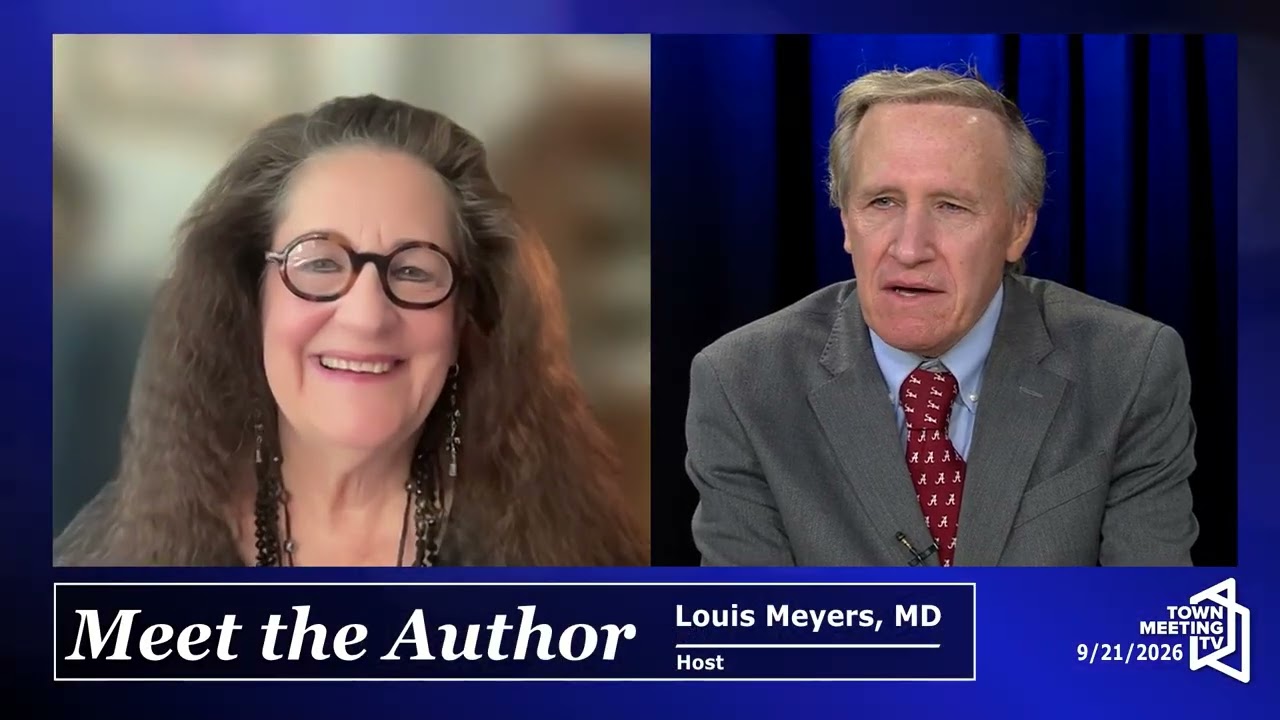
Jayne Anne Phillips, a celebrated author and Pulitzer Prize winner, joins the program to discuss her profound literary contributions, particularly her epic novel *Night Watch* and her new non-fiction work, *Small Town Girls*. *Night Watch*, which won the 2024 Pulitzer Prize for Fiction, is set against the backdrop of the American Civil War and explores themes of identity, memory, and the devastating impact of conflict on ordinary families. The story follows a twelve-year-old girl named Connelly Lee who is taken to a psychiatric asylum with her mute mother by a man she calls "Papa," only to discover that he is actually her father, a soldier suffering from severe trauma and memory loss due to an injury sustained at the Battle of the Wilderness. Through Phillips' vivid use of dialect, historical research, and motifs like mirrors and light, the novel delves into the fragmentation of identity during wartime and the enduring search for connection amidst chaos.
In contrast to her fiction, *Small Town Girls* serves as a writer's memoir that examines Phillips' upbringing in a small West Virginia town and the lives of her parents, who experienced "starruck" or star-crossed lives marked by early loss. Rather than a traditional autobiography focused solely on personal achievements, this collection of essays explores inherited memory, the stories of ancestors, and the resilience required to survive hardship. Phillips emphasizes that literature can reveal truths deeper than historical facts alone, allowing readers to enter past eras through the experiences of characters shaped by their times. The book also highlights the resourcefulness of women in rural communities, whether they stayed to run their towns or left to build lives in cities, celebrating the strength found in acknowledging and learning from the past to forge a better future.
Throughout the conversation, Phillips reflects on her writing process, noting that she does not outline plots beforehand but instead allows narratives to emerge organically like poetry, maintaining a rhythmic flow that sustains energy throughout long works. She discusses the importance of kindness as a saving grace in dark historical settings and shares her thoughts on Confederate monuments, expressing a desire to pair statues of defeated soldiers with those representing opposing sides to foster understanding rather than division. Her family background, including her father's military service in New Guinea which influenced *Machine Dreams*, further underscores her commitment to portraying the human cost of war across generations.
Phillips concludes by sharing that she has four sons and two stepsons, some of whom are poets and actors, who have read her books but were never explicitly encouraged to do so. She hopes that audiences will engage with her works to find strength in human resilience and to appreciate the interconnectedness of personal history and broader societal narratives. By dedicating *Small Town Girls* to all small-town girls who stayed or left, Phillips affirms that these communities remain vital hubs of culture, education, and leadership, driven by individuals who possess a unique ability to adapt and thrive despite challenges. Her dedication to research, photography, and the preservation of family stories ensures that the voices of the past continue to resonate with future generations.
Read the full video transcript
[music]
We are grateful to our friends at
Northshshire Books and Monroe Street
Books for their underwriting of this
program. Northshshire Books has outlets
in Manchester, Vermont, [music] and
Saratoga Springs. and Monroe Street
Books is on Route 7 just north of
Mberry. Both are wonderful independent
[music] bookstores and we thank them.
Hello, I'm Louisis Meyers and this is
Meet the Author [music] where we talk
with authors about their lives and their
works. I am so honored today to have
with us Miss Jane Anne Phillips from her
home in the Boston area. She's here with
us via Zoom. Miss Phillips is has
written many novels uh including a book
called Nightw Watch uh which came out in
2024 and it was awarded the Puliter
Prize. Several of her other novels have
been shortlisted for national book
awards. She's been a huge influence on
on other younger writers. Uh her most
recent book is called Small Town Girls.
This is her first non-fiction work uh
where she it's really a collection of
essays but with a focus on uh her the
small town in West Virginia where she
grew up. Um so we're so honored to have
Miss Phillips. Welcome.
>> Well, thank you for having me. Glad to
be here.
>> So I wanted to spend the first part
talking about Nightw Watch which was an
earlier book just just two or three
years ago, two years ago now. Um this is
a tremendous novel. Uh from the first
few pages,
let me just in say that it takes place
during the Civil War and then in the
years uh fair immediately after. Uh from
the first few pages, I felt that William
Faulner still walked the earth. Um the
uh the uh not just not really the plot
but the characters, the the uh
description of the land, the the dialect
uh all captured something so vivid. Um,
it really captured me from the first few
pages and never let up through the
entire book. Um, can you tell us a
little bit about what this book is
about? Tell readers, uh, give us just a
synopsis.
I grew up in West Virginia, not far from
the what was once the Trans Alagany
Lunatic Asylum.
And um during those years there was a
very important uh doctor psychiatrist
named um Kirkbride.
He was an incredible influence just for
a time in the treatment of mental
illness with a way of treating the
mentally ill that he called moral
treatment and it simply meant treating
the mentally ill in a humane way.
Um,
meanwhile, the book actually begins with
a 12-year-old girl named Kona Lee being
hustled into a buckboard by the man
she's been taught to call Papa.
He's about to take the mother who has
been mute for the past couple of years
due to the abuse he really has umed
out on her for treatment to this asylum.
And so she gets into the buckboard
thinking that she's simply journeying
there to deliver her mother. And at the
end of the chapter, uh, which was the
first piece of writing I did on the
book,
her so-called father
leaves her at the asylum with her mother
and then they they go into the asylum.
And the ironic core of the book really
is that
um while the world is total chaos uh in
many ways parallel to what we're going
through now uh that is conspiracy
theories are rife identities are really
tribal there's not much dialogue between
the south and the north um
families are refugees they're they're
traveling
Many times families are separated. In
nightw watch the family is separated
really for years and part of the book is
the search to unite the family.
So that is the way the book starts. When
you start an really an epic book like
this that covers years and and some viv
very vivid characters. Do you have this
all planned out in your mind beforehand
or does it sort of develop as you go
along?
I really don't plan out beforehand
because I'm not that kind of writer. I
began as a poet. I still really compose
the lines as a poet might with a sense
of the rhythm of the line and the
internal rhyme and um I always want my
books to sort of arise from an inside
spot that is uh the narrative is sort of
coiled within the book and it comes you
know it widens and widens as the book
goes on. So when I began the book, I
just knew that very first section that
they arrive at the asylum. Um,
and the book really became very layered.
Uh, for instance, there's a scene early
on when they first come into the asylum
when Nightw Watch appears to let them in
and Eliza [clears throat]
faints, the mother, and he picks her up
and carries her to a couch and gives her
smelling salts and she suddenly awakens
and she sees his face.
She doesn't say anything. And this is
this is we get this from the point of
view of of Connelly Lee her daughter who
says something like I was afraid she
would call out but but she was quiet
and the second time you read the book
you realize that she recognizes Nightw
Watch as
the husband she hasn't seen in many many
years but she realizes somehow in a kind
of six sense she knows that he doesn't
recognize her and so she keeps her
counsel. She doesn't she doesn't reveal
that she knows who he is. And in fact,
the reader knows as the book goes on
that he does not know who he is. That
because of this terrible injury to his
head during the battle of the
wilderness, there are parts of his life
that he simply doesn't remember.
the the character I mentioned the
dialect um much of which is written in
the dialect and when they speak which
seems very uh realistic for that time.
How did you how did you go back and find
that that rhythm in that dialect?
>> Well, I I did so many so much research
for this book. I have shelves of books
devoted to Civil War battles,
uh, the way people grew their food in
the mountains. Um, and somehow by
immersing myself in photographs and
diaries, um,
writings from the time, when I wrote
that first section, their voices were
there. And I often find that's true in
my in my books. whatever section I write
first sort of has the voices inside it
already already alive and the the hard
work really is sustaining the energy of
that beginning throughout the whole
book. Um, and I felt when I finished
that section, um, Connelly and getting
into the buck board, um, there's
everything that's going on on the
surface and then beneath the surface,
you pick up hints very early. For
instance, when Papa ropes
Eliza's ankle to his, as they start out
on this trip, you realize that something
is is wrong here. And Connelly herself
is a sort of unreliable narrator because
we begin to understand that there are
huge swaths of the past that she herself
doesn't remember. She doesn't know her
own last name. For instance, she's been
raised um by women who love her and who
have taught her to be very resilient and
very resourceful at taking care of
herself in the wilderness, but she
doesn't know about her own family
relationships and her own family
history. And all that begins to been re
be revealed to her as the book goes on.
>> Yeah. identity uh or missing identity is
a uh a very important uh uh pattern that
throughout the book um there is a woman
I don't know if I'm pronouncing it right
Dearbla who is really the grandmother um
and she is a real mountain woman who is
very extraordinarily independent uh and
has raised the daughter and the
granddaughter but also in involves some
interesting spiritual elements uh in
that she feels that that she can see
spirits or sense uh presences that may
or may not be there. Uh how did you
connect to her character?
>> Well, her name is actually pronounced
Derla in Irish. We actually had a
neighbor who that they called Dearbla
and I took that name when I checked the
Irish uh pronunciation. It it's it's
Derla. Um
she's a very important character in the
book. She has a kind of I wouldn't say
six sense but a kind of insight and I
think you'll find this is true uh with
women in general especially at that time
when women were really expected not to
express their opinions uh especially
someone of her class. Um she has come to
America as uh the child of uh workers on
on the plantation and um
she makes a trip with her most beloved
family. They're trying to actually to
escape to Canada, but they they end up
in West Virginia uh at the very top of
these mountain ridges where they find
isolated uh abandoned cabins.
Um she simply has come of age in a time
when women needed to take care of
physical ailments
and uh providing meals and trying to
survive in ways that were often
um not outwardly um apparent. I I
studied a lot about um how people
uh made use of medicines from plants,
how they grew crops in the woods, how
they preserved food in rude sellers. Um,
and
Dearville tells Connelly repeatedly,
"Don't call me a a a masterwoman or or a
witch or a or a I don't have a mystical
um a mystical ability.
It's almost as though she feels that
every human being might have these
capabilities if they were attuned to
them. it's presented more in that light.
Um, but it's clear that Conn Lee has
picked up so much from her and there are
scenes such as, you know, she looks in a
mirror at one point and sees her
granddaughter. Um,
and we actually see
reflections all the way through the
book. The use of mirrors, use of looking
into windows. There's a point when um,
Connie and Eliza and Nightw Watch are
standing beside a coach uh, that's used
to transport people to the to and from
the asylum. And the three of them are
reflected together in the window. And
there's just a moment when Connelly has
a sense that
this is more than a reflection.
Um she doesn't yet know how the three of
them are connected.
>> Yeah. Light and mirrors are are a
ongoing motif in the book. There's one
scene of course where a small mirror uh
changes their lives uh reflecting the
light into the woods and and bringing uh
evil into their lives. Uh um but I won't
give away any more of the plot. There is
another book um that this your book is
different but it called to mind the book
Cold Mountain by Charles Frasier. Um I
don't know if you know him or have ever
spoken with him. Um that of course is
that was made into a major film. Uh uh
it's about a civil a confederate soldier
trying to leave the war and return home.
um and uh the destruction and looks
looking at the women who are have been
left at home to fend for themselves
essentially when all the men went off to
war.
>> Um so there are some echoes of that book
but as I say they're very very
different.
>> Um
have you ever has there been any talk
about this being made into a movie?
Because I could almost picture scenes
from it. It's a very interior book but
and yet I could see it a movie.
There has been talk.
>> What talk?
>> My agent says talk is cheap or you know
many are called. She says few few
receive an answer. So I think it's would
make a fabulous film.
>> I do too. Let me ask you this. I I uh
part of the book takes place in
Alexandria, Virginia, which I I I think
was Confederate held for a while in the
war and then the Union took it over by
1864 when when you describe it. Um, I
actually lived in Alexandria, Virginia
for many years. And so I I know many of
the streets that you talk about, some of
the big hotels there were turned into
huge hospitals for the Civil War uh
injured. Um,
in recent years uh in Virginia and uh
nearly all of the Confederate statues
have been removed uh and I think for
good reason. Um I don't know if it was
there when you were there. There was one
statue in at Washington Street which is
in the heart of Oldtown which was very
different. Uh it was a um it was not a
general with his saber on a big horse.
It was an infantry man, Confederate
infantry man uh who is uh clearly looks
tired, defeated, his rifles pointed to
the ground. He's head facing south down
Washington Street toward Richmond. Uh so
you can imagine he the war is over. He
is uh going to try and walk home. um
that statue was removed and not to put
you on the spot, but I don't know if you
ever saw the statue. Do you would you
have removed that statue or or left it?
>> I didn't see that statue, although it
may have been there because of course I
was working on this book for nearly
eight years. Um,
I would have left that statue
and I might have put one beside it of a
Union soldier facing the opposite
direction.
>> That Oh, that's an interesting thought.
I like that,
>> you know. Um
that would have been I mean because part
of the point of uh Nightw Watch is that
people on both sides
felt the same difficulties and I think
ultimately
that was known. You know I think that
the war in a sense broke down some of
the division and of course some of it
still exists today.
Um,
but my books about war, including Lark
and Termite, which has to do with the
Korean War, uh, Machine Dreams, which
has to do with the Vietnam War and a bit
with World War II, are really about how
wars affect ordinary people. Both the
soldiers who are not in charge and the
families who are waiting for them. And
the fact that a war really does three
generations of damage that children
raised by men who have been damaged by
war, morally injured, physically
injured, uh what we now call PTSD, that
they grow up affected very much by that
war. And I think it even goes on to, you
know, a third generation.
>> Were there military people in your
family?
Uh my father was in the military um
stationed in uh New Guinea and that's
very much a part of machine dreams, his
experience and his letters um to my
great aunt who raised him. So I've
always used uh research um to get as
close in as I can to the actual moments
in which the book occurs.
>> Yeah. You write about the fighting in
what was called the wilderness which is
uh down in Spennsylvania I think
Virginia just horrific and I' I've read
about it in other sources where you
write about Union Confederates the same
experience. I mean they almost became
faceless. They were literally fighting
handtoand unable to see you know just
surrounded by smoke. It was just
horrific. So yeah there were no generals
with their sabers and horses there. They
were just uh just horrible scenes of
people trying to survive.
>> In fact, what happened in the Battle of
the Wilderness was that there was so
much the trees were so thin and so close
together that a man had to walk
sideways. So it meant that all the
combat was handtoand.
Um and there was so much guns smoke, you
know, uh in the air, as you say, that
the woods simply caught fire. And it was
an enormous fire that killed many many
injured men who couldn't escape the
fire. And uh my character who who is as
you pointed out earlier, namelessness is
really um a thread that runs through the
book that you know when you join the
military you become a serial number. If
you're a prisoner, you have a serial
number. When your name is sort of taken
from you, you become part of a mass. And
that's what happens to all infantry
soldiers
um or all prisoners or people who are
captured or people who are deported or
whatever. They lose their names and once
you lose your name um
and so I felt as though this was going
to be a constant throughout the book.
And my character
called Nightw Watch goes by a series of
names. I mean when he's in the war he's
referred to as the sharpshooter. And
once he goes to the asylum um where he
has a very different kind of life um the
terrible injury that he sustained has
really changed him but he still has this
ability to work with people who are
troubled, upset, manic. Um
and then we don't know really until the
very end of the book
what name he chose for himself before
the war.
So that's an everchanging thing and yet
his identity I think for the reader is a
very very strong one. Um and he has in a
way a sense of what his relationships
were even though he no longer remembers
them.
>> Well I think with for all of the uh evil
of war and and the uh the horror of war,
there is also a thread throughout the
book of kindness. Uh people are there
are moments where people are kind to
each other. whether it's the doctor to
his patients or nightw watch to his the
people and and and uh the grandmother to
her granddaughter. So that is the saving
grace I think of the story. Um that it
does it's not entirely dark that there
is kindness uh and in the end perhaps
kindness wins out. So I I definitely
want people to read Nightw Watch as well
as the other books you've mentioned. But
I wanted to move on to uh your book
Small Town Girls. I'll hold it up, but I
think we'll also have it on the on the
graphic uh form. This is the book that
came out this spring, which I'm sure
you've been talking to others about. Um
it is your first non-fiction book. Um it
seemed to be a collection of essays. Um
how did you go about conceptualizing
this book?
Well, this book is called a writer's
memoir because you know from the very
beginning that someone one who will be a
writer who is a writer is speaking about
her childhood, her origins about I mean
it's not um smalltown girls is not a
typical memoir telling you know I did
this and I did that. It's not so much
about me, the person, as it is about
things that I have loved, things I've
lost, things I've witnessed, things that
mean the world to me. It's about writing
itself. I talk about two writers, Steven
Crane and Bria J. Pancake, who have been
very important to me. Um, I talk about
time. Um, there's a lot of loss and
transcendence in the book. There's a
real sense of mothers and daughters and
um inherited
memory that is your grandmother tells
your mother's stories, your mother tells
you those same stories.
uh that sort of confidant relationship
and I felt very early on that my both my
father and my mother had very starruck
lives that is starcrossed lives lives in
which they sustained very early um
losses
and it made them into
people whose stories I felt should not
vanish
and I think when you have that kind of
uh motivation to in more or less save
your parents' lives to be sure that
those lives don't vanish. Um, that's an
incredible motivation and I think it's
really been part of my mo motivation
from the very beginning because machine
Dreams was also in a sense the story of
a hometown um the story of a family
decimated by the Vietnam War. Um,
and I think
the atmosphere of a historical of
historical era is very important because
it through the characters we can
actually enter a time that we did not
live through. And I think that's very
important because history tells us the
facts, but I think literature tells us
the story inside the facts and that
story is often more true and lasts
longer. Our guest last week uh was
Andrew Stanton. He's a collaborative
memoirist and he talked about writing
memoirs not only with famous people,
which he has, but also with everyday
people who want to tell their life
story. So there there's an art in that,
but but but you did it all on your own
without without a collabor uh if that's
the right word. Well, I've had a lot of
I'd had, you know, 60 years of
experience writing my own book. So, I I
was probably primed to write a memoir.
[laughter]
>> Oral history, a southern thing, telling
stories from generation to generation,
or is it more uh general?
>> Well, I don't know. I mean, I think we
have these kinds of families everywhere.
Um, it may be a little bit more of a
tradition in the South because at least
in the past, I'm not sure this is true
anymore.
uh the pace of life might have been a
little slower. Um
but I feel as though this book really
makes people think about their origins
no matter what they are. It it helps
people think back [clears throat] to the
stories of their parents and their
grandparents because it's such a conduit
into the past. And I feel as though the
more and more we know about the dead,
the more alive they are for us. And we
need that ability to see the past, to
prepare or make or transpose a better
future, to maybe learn from mistakes.
And it's also a incredible source of
strength, I think, because I think both
of these books, Nightw Watch and
Smalltown Girls, are really about the
amazing resilience of human beings.
um that we we can be destroyed by loss
or we really can be we can learn
something from it that almost pulls the
the strength of the past into ourselves
and that's surely a better way to live
um and to go forward.
When I first saw the title of this book,
I for some reason I imagined also that
you had gone back to your West Virginia
town, which you did, and I'm sure you do
periodically. Um, you're someone now
who's obviously gone out into the world,
has accomplished rather remarkable
things, Puliter Prize, and all these
other awards, but I'm sure many of your
friends from those years stayed in the
town. Um, we have in here in Vermont, we
have a lot of small towns, uh, and a lot
of young women who build wonderful lives
in the towns they grew up in. Um, I was
just wondering what it was like for you
to go back and see some of your
schoolmates, uh, who had built their
lives in the small town where you grew
up.
>> I'm still very much in touch with some
of those people and I can tell you that
I mean, the book is dedicated to all
small town girls, those who stayed and
those who left. And the small town girls
who left have gone to the big cities and
become,
you know, they've led interesting lives.
I feel that small town girls have a kind
of resourcefulness because they have
known so much about everyone that they
grew up with. And the small town girls
still in those communities where they
grew up are probably running those
communities. They're helping build the
schools. They're running for office.
They're changing the arts scene. Um, and
that's certainly has happened in my
hometown.
>> How has it changed? Uh, your how many
how big was your town where you grew up?
It sounds like it was quite small.
>> Well, I think it was six or 7,000
and it's about the same today or maybe a
little smaller. Um but the town today uh
has sort of upgraded the downtown in
such a way there are flower boxes and
flowers hanging everywhere. Uh they've
um made new businesses like a hemp
factory outside of town. They have
turned the old colonial theater into an
arts building where all kinds of uh
public events can happen. I actually
read there from Nightw Watch uh on the
stage where I used to watch movies as a
child. Um there were new parks, new
venues for people to gather for musical
events outside and small towns from Ohio
and and Kentucky actually come to
Buchanan to see the town and talk to the
leaders of the town about how to in
invigorate a downtown of a small town.
So, I think they've done remarkable
work.
>> Well, many of our Vermont towns were
were trying to do the same, I I think,
and in in many cases succeeding. Um, I I
don't wasn't aware if you have children
or not.
>> I sure do.
>> When they read your books,
>> I have four boys, two stepsons, and two
sons.
>> When they read your books, what kind of
feedback do you get from them? Because
you've talked about this generational
sharing and and how important it is. Oh,
no,
>> no. I mean, uh, they a couple of them
have have read this book and and talked
with me about it because one of my sons
is actually a poet, uh, Saurin Stockman,
and the the other is an actor. So, you
can see that I completely failed in in
uh, raising them to be corporate uh,
rich men or whatever.
>> Um,
but I I never have encouraged them to
read my books. you know, they can read
them when I'm gone if they like.
[laughter]
>> Well, I hope people will read these
books now because all of your books, uh,
just so powerful. Um, uh, and, uh,
starting with this new one, Smalltown
Girls, and Nightw Watch, and all the
books you've mentioned, you bring worlds
to life, uh, both inner and outer worlds
to life in a way that is very, very
special. Uh, and I want to thank you for
being with us.
>> Thank you so much. I do have a website
www.jayanfilips.com
where you can see all of my books, read
reviews and see a lot of the research
photographs for each of them because
photographs have always been very
important to me.
>> Can people contact you with comments on
the books or through your website?
>> Uh not really, but they can always write
to my agent and that's right on there.
>> Okay. Exactly where
>> and she's very letter or email. She
always
>> setting it up. Yes, she gets right back
to to you. So, she's wonderful. Anyway,
thank you again for being here and uh uh
much good wishes for the future.
>> Thank you so much. I really enjoyed it.
>> And [music] please join us for our next
episode of Meet the Author. Thank you.
[music]