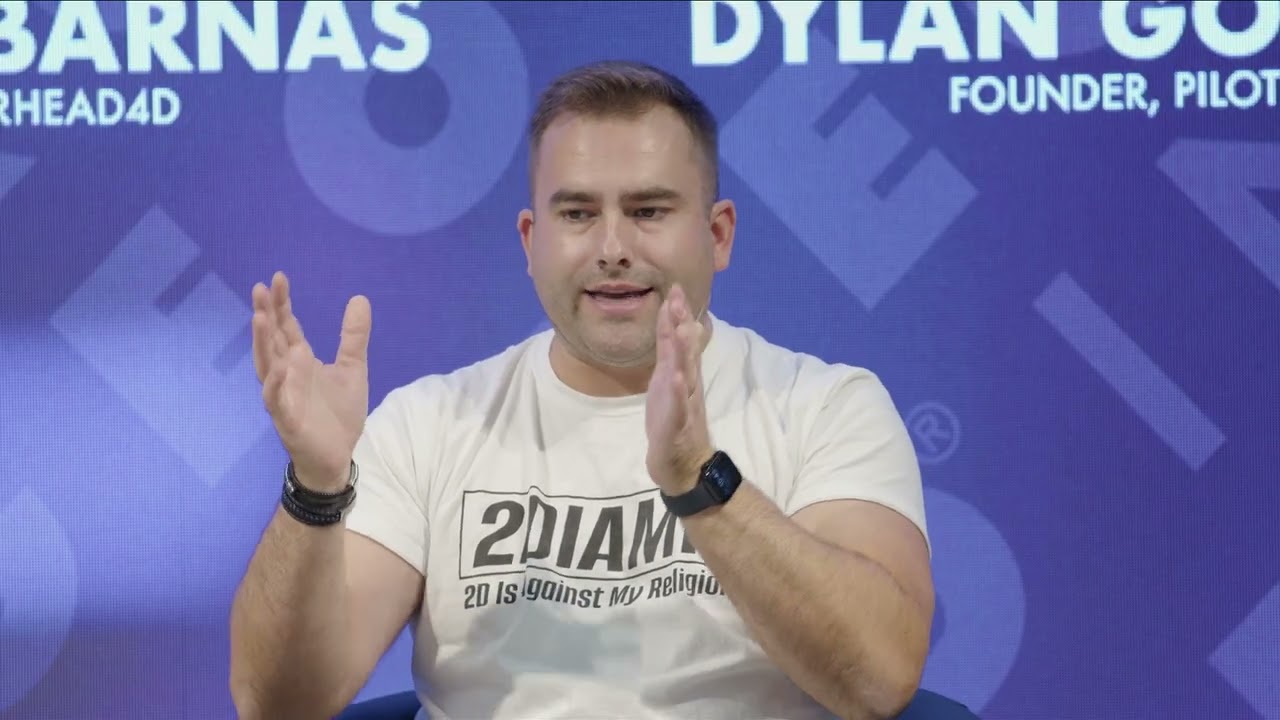
Marketing for Reality Capturing with Rami Tamimi, Michal Gula, Dylan Gorman & Tomas Barnas
Watch on YouTubeVideo summary
The panel discussion featuring Thomas Barnas, Michael Gula, Dylan Gorman, and Rami Tamimi highlights that effective marketing in reality capturing is fundamentally rooted in education, trust-building, and acting as a bridge between complex technologies and the industry. The speakers emphasize that their primary role is not merely self-promotion but rather serving as educators who simplify rapid technological changes for busy professionals. By translating technical specifications into practical knowledge, they aim to empower viewers to make informed equipment choices based on specific needs rather than marketing hype. This approach distinguishes them from traditional brand ambassadors or exclusive influencers; instead, they operate with integrity, ensuring that only a fraction of their content is paid while the majority remains free and value-driven to establish credibility.
A central theme of the conversation is the preference for demonstrating workflows and processes over showcasing final products or specific brand features. The panelists argue that understanding how to execute tasks like running a resection or applying GNSS corrections provides true value, whereas relying on theoretical data sets or vendor bias offers limited utility. To achieve this, they advocate for an agnostic approach that teaches users how to utilize various tools effectively regardless of the manufacturer, often using practical comparisons such as consumer LiDAR versus total stations to prove that accuracy is achievable with the right methodology. This focus on authenticity extends to their content strategy, which prioritizes real-world implementation and third-party validation to expose product blind spots, ensuring that brands are judged by unbiased experts rather than corporate messaging.
Regarding distribution and audience engagement, the group outlines a strategic funnel that leverages different platforms for specific purposes. They view TikTok and Instagram as entertainment channels designed to grab attention and drive traffic to long-form YouTube content, which serves as an evergreen repository for fundamental concepts and searchable solutions. LinkedIn is utilized for quick professional updates and networking to convert interest into business relationships, acknowledging that while posts have short lifespans in feeds, they are crucial for reaching professionals. The speakers also discuss the importance of choosing a representation style, noting that while a charismatic CEO can be a face for a company, engaging individuals who connect with audiences are often more effective than technical experts who may lack relatability, suggesting a "Spice Girls" model of multiple distinct personas over relying on a single leader.
Ultimately, success in this field relies on humility, approachability, and the willingness to start personal branding efforts immediately despite perceived imperfections or a lack of formal credentials. The panelists stress that waiting for readiness often prevents action, and maintaining field experience alongside social media activities is essential to preserve credibility and distinguish genuine expertise from theoretical knowledge. By consistently providing high-quality education and real-world experience, they demonstrate that trust is built through authenticity rather than traditional advertising or cold outreach, which ultimately drives sales and fosters industry innovation more effectively than any other method.
Read the full video transcript
So hello everybody again.
>> Oh I think it's working.
>> What if
>> you want to put it between you and
Michael?
>> Is it working? Can you hear us? Is it
working?
>> Yeah perfect.
>> I believe so. Uh so uh my name is
Thomas. I will be leading this uh panel
discussion. Uh we are here representing
uh besides the marketing in reality
capturing also the collaboration of
three dice conference and interjeo.
So uh three dice is I would say in this
case representing the future of reality
capturing. So uh we are often telling
about uh the the new technologies how to
combine the technologies besides the uh
standard known technologies and I would
like to introduce uh these three uh
panelists here. Uh I will give them a
word to introduce themselves and then we
will go to the topic of marketing in
reality capturing. So please Michael,
>> thank you. So uh I think that the
inevitable part of of the reality
capture and especially the future of
reality capturing is also marketing part
because uh we need to speak and teach
people all about the new technologies.
So uh guys will introduce themselves on
my behalf. Uh I'm very active on on
LinkedIn for last three years. I have
97,000 followers in the field of uh
reality capturing in basically anything
3D and that helped me to grow not only
my business but to also help multiple
companies to grow their audience and
their brand awareness.
>> My name is Dylan Gorman. I am the
founder of Pilot Bite. Uh we do a lot of
UAS education around drones, data
collection, implementation. So I
typically work with a lot of engineering
and surveying companies since this
technology is constantly evolving. Not a
lot of people know how to use it. So
I've created a platform of about a
100,000 followers between YouTube and
LinkedIn to really help educate and push
forward the technology.
>> So my name is Rammy Tamimi. I'm a
professional surveyor and a PhD
candidate uh studying geodetic
engineering. Uh really my uh my journey
started with just basic surveying out in
the field and it's quickly evolved into
trying to educate the next generation of
surveyors. Uh through my YouTube channel
which has about 80,000 subscribers now
uh we've built the largest community of
surveyors and we've tried to find ways
to educate them outside of the normal
traditional route. So we started the
survey school online to provide
education for those who are actually
trying to implement surveying in a
practical way whether it's for their
business or for their personal growth
and um I'm excited to be on this panel
with all of you gentlemen.
>> I would say we have here like three main
topics. one is also in the name of the
of our session that's marketing but it's
about education as well and then you
need some followers that you have
audience to share your uh knowledge or
ideas I would ask first question uh how
do you see your audience and whether you
can segment it because we had like
different platforms where you are uh
showing your stuff but also different
approaching whether you are selling
product selling service you want to
share the knowledge so Do you see there
any like segmentation in your audience
where you to whom you are targeting?
>> Yes. Uh I I think the the main
difference among us will be that uh my
approach is uh not to sell any product
directly in terms of my audience is not
my client. Uh my goal is to build
anformational hub. So anything I put out
on LinkedIn is about sharing the news,
sharing new technologies. Uh I'm not
trying to be a reviewer. So you will
almost never see like like u suggestions
like you should buy this or you should
buy that. Uh my goal is to just be a
proxy to just give you the information
about new technology, about news, about
anything that is happening in the 3D. Uh
that being said my audience is not my
clientele. These are if I should give
them any name it it would be a product
because my clientele is uh on the other
side it's it's the companies it's it's
uh all those companies you can see here
all over the expo place which are
struggling with uh delivering the
information about their products uh
because it's usually the last thing that
they are considering like building their
own brand ambassador uh pushing their
presence on social media and so on. So
that's what I'm helping them with.
>> I would say on my end, my audience is
really who I'm trying to sell to, but at
the same time, I also help work with a
lot of these companies that exist here,
right? A lot of them have their own
biases when they put out information. I
try and cut through the bias and give it
in my own interpretation, right? Because
I worked on thousands of of projects, so
I know how to implement the technology.
What I help my viewers or the potential
clientele on my end is to understand the
technology, right? Everything is
constantly progressing, constantly
revolving. So, it can be kind of hard to
keep up with all this technology that's
constantly coming out. So, I focus on
the drone side. Uh but it's not just the
drones itself, it's also the software
and the application, whether it's AEC,
uh whether if you watched my
presentation before for search and
rescue. Um there's so many different
implementations of the tech. So, I help
translate all of the complex ideas that
some of these companies have, whether
it's a spec sheet, and actually put it
into the real world as a full
implementation.
>> Yeah. I mean, for me, it it really just
started as a place to make videos and
content about surveying that I wish I
had when I was in college. Uh, I was
teaching, you know, my first year in my
PhD, you know, introduction to surveying
for kids at university and they
struggled. there was COVID, there was
nothing there online. And so I was like,
you know what, I'm just going to make
content for them. But then quickly that
content expanded beyond just my own
students to every surveying student that
was trying to take a class uh and COVID
was affecting them. And it wasn't just
COVID, it was just the whole industry
struggled with resources. So I found a
need and I found a way to be able to
fill that need which was through the
medium of creating content on YouTube.
So in today, you know, I I work with a
lot of brands and a lot of companies to
sponsor and showcase new technology. So
a company comes out with a new total
station or a new GNSS receiver, I am
usually one of the first people to get
my hands on it because I'm going to
showcase it to an audience of people
that are very interested in learning
about that technology. And now with you
know the growth of the channel and my
involvement at conferences you know I
get to meet a lot of folks in person and
I'm providing them with the ability to
study under me you know to show them
exactly what they need to do to grow and
to continue to become better surveyors.
>> Yeah. Uh Ramy I would stay with you uh
just following uh today what you said.
Uh so the the content you are sharing
it's practical. So it's the things which
you touch and this is very important to
also say and emphasize that you are a
person or all of three of you are uh
people which are from the field. So you
actually have the experience and you are
not just talking about it but you always
try it and um I would just say like for
those who don't know your your channel
or your videos Ramy it's that you are
getting all the devices as you mentioned
you are testing them and then many times
comparing also at three dice you had a
great uh uh speech about comparing
iPhone and the lighter scanner. So maybe
you can also say a little bit about the
the comparisons or or what you're trying
to to teach people also.
>> Yeah. So the what I'm famous for is
taking the iPhone scanning with the LAR
sensor and then comparing the accuracy
of that LAR sensor to a high accuracy
total station. So I mean it's an orange
and apples comparison but in reality the
data is the same and what I did at three
dice was I talked about you know how if
you do it the right way and you actually
understand the survey applications you
can actually achieve a decent amount of
accuracy with just an iPhone. And you
know this this was part of my research
right and I was doing this research uh
at Ohio State and I decided to make a
video about it and that was the one
video that you know really took off made
a lot of people open up the way they
think uh and it's like hey a surveyor is
talking about using you know consumer
level tools an a smartphone that's not
designed for surveying but using it for
that application and actually getting a
decent amount of accuracy. So uh I
always push the way these sensors are
designed and I try to use them in ways
that you know can evolve and improve the
industry but I always make sure that
accuracy is important. We compare it to
our traditional equipment. Uh we follow
the path of research to ensure that we
have the best integrity for our data.
>> Yeah. And Dylan if you would follow up
with that uh what's your generally
target? So I know like uh what what I
know from uh what I've seen about you
and heard about the trainings you are
providing and uh what I specifically
like is that you have an experience with
multiple softwares. So you are not
trying just to teach one which is my
case mainly like I if I have experience
very deep in uh in one target but I
really like and appreciate that uh
someone is taking care of multiple
softwares and then trying to give the
best out of all of them to people. Yeah,
absolutely. And I think to kind of build
on top of what you were talking about
and what you just asked, um there is no
one tool that fits all, right? So that's
why I like to teach an agnostic approach
to the technology, right? There's so
many different tools that exist, but
they're not always the right tool for
the job. What I also do with these
companies is take it off of, you know,
the pretty. You're always going to have
the perfect data set from whatever
website you go to, whether it's a LAR
sensor or a photographer camera or a
drone. They're always going to give you
the best of the best. They're never
going to show you, you know, the real
world to an extent. So, I always like to
take theory and bring it into the real
world and show people the actual
workflow, not the end result. I show
them from the beginning all the way
through to the postproduct. And I think
that's very valuable for people that one
are just getting into the industry or
two maybe it's a surveying firm, right?
They're used to all of these other
tools, but then they know that they need
to adopt drone technology or UAV data
collection. So I give them more of like
a reality check of, hey, this is
actually how it's done, not the oh this
is all the pretty data sets that exist
online.
>> Yeah. Great. Thank you very much. Uh
Michael, coming to you. uh Ramy and uh
Dylan they are more educating or
teaching people of the uh the industry
use tools and uh and pipelines as well.
Uh but you are more focused on marketing
and you are trying to share with people
how to become a brand ambassador or like
how to become a brand themselves. How
this is helping companies or why this is
important from your point of view? Maybe
I would go back to to why I chose this
path instead of for example teaching
people how to do laser scanning. Uh when
I was about to start doing LinkedIn uh I
always knew that I love exploring new
softwares, new hardware to to be
thinking about using
uh a piece of software or hardware in a
way that have never been thought before.
Like that's why I'm I'm very interested
in for example iPhone scanning because
uh it's as you mentioned it's something
that people
it's not meant for scanning for for
first reason and and the second is that
you would never compare iPhone scanning
to total station because it simply
doesn't make sense but it's the effect
of of a purple cow uh cow as it it's
called in marketing. So it's something
that you would never expect and that's
what is actually interesting uh to
people. That's that's why you're so
successful with with that because it
doesn't make sense for surveyors but it
makes total sense for general public
because they are interested like people
are interested in in uh in iPhone
scanning. So uh I knew that if I'm
struggling with keeping up with all the
new softwares and hardwares, there must
be multiple people that uh are going
through the same uh issue, right? And
since I know most of the companies have
like like they are too busy with their
jobs, they are too busy with uh with uh
just just getting the most value of what
they actually have already. uh I knew
that this might be my ve value added to
them that I will uh keep them free from
need of the study of every technology. I
will just simplify it and dumb it down
as as much as possible and just uh give
them the new information in very easy to
understand way and and just to simply
simplify it as much as possible. So I'm
not using high-tech uh terminology. I'm
not trying to go very deep in the
technology. I'm just trying to Hey
audience, come here. This is new
technology. This might be interesting
for you. Just pay attention to it.
>> Yeah, this is this is great. And how do
you see um all three of you? Maybe we
can open it as a discussion. uh the
difference between promoting or
showcasing the final result. So when
Michael just mentioned it's like he's
helping to people to uh show them hey
this is the product but are you going to
show the product itself or you want to
show the process and learn people more.
So what do you see as more powerful for
all everybody who is here and if they
have their own company is it better to
market and promote the final thing which
can come out of it or maybe some
processes and knowledge sharing behind.
>> Yeah I mean the process is in many ways
more valuable than the actual product.
um understanding how a GNSS receiver
receives corrections, understanding the
different methods, the benefits, the
disadvantages. That to me is far more
valuable than how many channels a
certain receiver can receive. I mean, at
the end of the day, all these receivers
do the exact same thing. All these
drones do the exact same things. All
these total stations do the same thing.
So, the brand really comes down to just
how we as creators make money, right? We
have brand exposure. We have an audience
with a lot of people watching us. So
these companies pay us to bring in brand
exposure and that's just how we make a
living. But the reality is you're not
here to care or care about the brand.
You care about how do I run a traverse?
How do I run a resection? How do I set
up an RTK base rover system? That's what
you guys care about. And that's the
value that we're trying to give to
people that are trying to learn about at
least surveying, you know, um because to
me, that's the true value of
understanding your profession. And as
long as you understand how it works,
when to use it, uh you're going to go
buy whatever brand you want. Now,
naturally, the sponsor of the video may
get a little bit of, you know, leeway
because they are, you know, the brand
that I'm using, but that doesn't mean
that other brands don't work. You know,
we're not putting anybody down. They all
work. They're all the same. um just you
got to find the one that fits your
specific need.
>> I think it also comes down to
information is power. I think for a very
long time we've all just kind of
condensed everything and just kept it to
ourselves and you know I think a lot of
us kind of fault that we don't want to
empower our competitors but I think it's
good to learn from that and that's the
approach that I always take when I am
broadcasting out information right
everybody can anybody can pick up a
drone and fly it and have it collect
data but not everybody can properly go
through the exact workflow to collect
that data to then get your output. It's
that saying, you've said it a lot, crap
in, crap out. Different way of saying
it, but um it's it's very true. And I I
think by providing this value to the
industry in terms of collecting the data
the right way, but also demonstrating it
with the companies that I work with, it
makes people feel a little bit more
comfortable when they start integrating
that technology. Again, we're in a rapid
evolvement of everything that's
constantly coming out, and it feels like
it's on a six-month uh schedule at this
point before it used to be years. And so
again, I kind of go back on the thesis
of information is power. And I'd rather
just provide as much information on the
product that I'm working with, whether
it's a software product, whether it's a
hardware product, and give that out as a
holistic approach as opposed to just
segmenting out, you know, only the good
pieces of it, because that's not a
realistic approach, right? There's
always going to be an issue whenever you
have a new piece of technology. So, I'd
rather show that and talk about it than,
you know, just hide behind a wall of
money and pretend it doesn't exist
because that's not realistic. We all run
into tech issues all the time. So
>> uh my goal with my content is uh not to
be speaking about technical details
because
uh you have this uh goian curve. It's
it's normal distribution of of people
and we also within our industry there is
this majority of people who doesn't care
about the the hard data because they
don't understand it. There is very few
people who actually understand when when
you're speaking about the lighter about
the the the accuracy and and you go
deeper and deeper in in the in the
terminology there's very few people that
actually understand that. So my goal is
to to communicate uh complicated stuff
to to mass uh portion of of this this
group. So for example when since we were
talking about the iPhone I will give you
an example uh if I would would be doing
a content about uh what parameters are
there are in a iPhone lighter like what
uh what accuracy or what what density it
has and so on like very few people would
be listening. But instead of this, I
took my iPhone, I scanned my whole house
and the video got like 1 million uh
impressions because people are very much
interested it in what can be done
instead like like how does it work like
in in a high detail. Okay.
>> Um I would say there that most of the
people are as you also mentioned that
the process is more the king and not the
final result. Uh I think the problem
also on the like social media or
promoting and marketing is that uh
people are overthinking too much. So do
you see it more like rather deliver and
put an output outside or like some uh
some informations before like
overthinking and really like killing the
idea and thinking two weeks about it
like how I will form it. It's like
rather deliver uh more informations out
or rather being like very uh
correct with every sentence and do it
like high quality but once a month. I
>> I'll speak on this one. Um I'm very much
the lather. I like to take my time and
put together a piece of content because
I'm delivering a lot of information but
condensed in 15, 20, 30 minutes. But it
also depends on the distribution channel
that you're putting your content out. If
it's on LinkedIn, I'm very fast-paced,
right? The longest post that I'll put on
LinkedIn, if it's a video, is a minute
and a half. But that's because our
attention spans are very rapid. And I
think this has to come down to the Tik
Tok and Instagram reels and YouTube
shorts, right? So if you're creating
content that has to do with very fa
fast-paced, you have to forget about all
the intricate details. You just got to
put out, hey, this is what it can do and
get that wow factor. Whereas if you're
on a distribution channel like what I
like to do on YouTube, there's I just
make it very information packed. So, I
want to make sure that every single
detail I I cross my my my tees. I dot my
eyes and make sure that it's providing
value to the person that's watching it.
But again, it comes back down to the
distribution channel of where your
content is going and who your audience
is.
>> Yeah, I'm going to echo what you're
saying. Distribution channels are not
all created equal. Um, not to hate on
LinkedIn, but LinkedIn is very much a
quick post. Within 24 to 48 hours, your
post is not being shown because it's
buried in the feed. Whereas on YouTube,
we have this concept known as evergreen
content. And evergreen content is videos
that will live on forever. If you were
to search, how do I make an apple pie?
and someone made a video 10 years ago,
you'll still watch it because making an
Apple Pi doesn't change, right? And so,
we have to be very strategic about how
we make content. If I'm making content
about this year's new iPhone, by the end
of this year, that video doesn't get any
more views. But when I make a video
about how do I run a resection,
re-section is a concept that will not
change. So I have videos that I made
back when I was, you know, my first year
of teaching that still get hundreds of
thousands of views because people
genuinely want to understand this
concept. Even if the video is from 3,
four years ago, it's evergreen. It
always exists. So quality for me is
number one. Even if I'd only distribute
a video every two to four weeks, I know
that video is going to live on for a
very long time. Uh, I'd rather take my
time with making content, especially if
I'm trying to build relationships with
my students or with other um sponsors.
Uh, that takes time, you know, so making
rapid fire content that's not as
valuable really hurts, you know, the
quality of your work.
>> No offense.
>> No, no, no, no, no, no. Take him because
that's that's absolutely true. like uh
YouTube and and LinkedIn in particular
if we were discussing the these are very
different platforms serving their own
purpose and as you mentioned the the
YouTube is evergreen content it's
basically a Google with video right so
uh every time you need some some u
particular information you go to YouTube
and you search it you would never go to
LinkedIn and search for some exact
information you LinkedIn is basically a
Tik Tok for those who don't want to
admit they are on Tik Tok. Okay. So,
they build up also the the account on on
LinkedIn just to feel more professional,
right?
But it has its attention. It has its uh
it's its volume uh in terms of content
in terms of audience. So uh I explained
it to to all of these companies that uh
are trying uh paid ads on Facebook, paid
ads on Instagram, especially from our
industry, it doesn't work because those
professionals you want to speak to, they
are on LinkedIn. Okay? So so u you don't
want to be explaining deeply on LinkedIn
uh what your uh things do uh how your
solution works. No, you want to just
grab attention and then direct people to
either uh direct messages or to your
YouTube channel or wherever you want.
Okay. So, uh we are not in fight and
none offense was taken because I know
what's the purpose of of LinkedIn and
what's my positioning on on on LinkedIn.
>> Well, they're also both very effective
channels. Absolutely. Right. There there
is no wrong channel to to distribute
your content on. Right. you have there's
more I would say there's more
qualitative leads that you come through
LinkedIn because there's more
professionals on there where for us on
YouTube yeah we can have a video that
has 400,000 views but realistically
maybe less than 1% of those are
qualitative people that are going to
actually buy the product but that
doesn't matter right because that's the
channel that we chose to distribute our
content on where your leads right it's a
it's a different approach but there is
no wrong way to go about it it's just
getting that information out there I
think that's the most important part
>> yeah and it's also different way how you
get the attention because uh with
YouTube uh the the user is expected to
go to YouTube and to be searching for
something in particular to get to your
content right instead with LinkedIn just
imagine yourself guys you're doom
scrolling on toilet right you're you're
just swiping through the LinkedIn and
and whatever is interesting you you just
watch it right so this is yeah the
comparison to Tik Tok is I think very
very adequate
>> very accurate yeah
>> but you um already touched The topic I
wanted to discuss is uh next and that's
the distribution channels. So uh you are
like uh Dylan and Ramy are focused more
on on YouTube as Michael is more on
LinkedIn but if you look across the
platforms you mentioned already like
YouTube um Instagram, Tik Tok, LinkedIn.
Is there any benefit you would say like
for your focus to be specifically on
that platform or you need to use all of
them to be successful on one?
>> You know I we all have Instagram,
LinkedIn and YouTube, all three of us.
And obviously we have strengths in
certain channels uh just because we've
focused on them. We started them first.
And
as much as it pains me to say this,
they're all important, right? They all
bring different types of leads. They all
provide different types of values. Uh I
I look at Instagram and Tik Tok as more
of entertainment, you know, oh, look at
how cool this shiny new sensor is. And
once someone is interested in what I
have to say over there, I think the next
step in the funnel is the YouTube
channel where there's more serious long-
form content. Um, perhaps once they've
watched enough of me on YouTube, they
want to connect with me professionally.
They find me on LinkedIn and so they
connect with me on LinkedIn. Now I'm
sharing, hey, I'm at Inter Geo. I'm
attending these sessions. I'm speaking
at these sessions. Now they connect with
me in person. They spend time with me.
And ultimately if that person wants to
get even closer with me and wants to
start to do business with me or they
want to learn from me that's when I
start to refer them to the survey
school. So for me it is a funnel that
starts with maybe just some
entertainment goes into real you know
value turns into a professional
relationship and then ultimately becomes
someone that wants to work with me and
actually grow their skills.
>> Yeah. Uh
it's like with kids uh you have three
kids, you love them all equally, but you
have your favorite uh always. So it's
the same with with these platforms. We
all know that like in this idealistic
world of Gary Vaynerchuk, if if you know
him, he's the very well-known guy and
he's saying that you should be posting
like 50 times a day on all of the
platforms. Yeah, this is the ideal world
where you have like 50 people in your
office doing only content for you. This
would be great. We know it. We would
love to have it. We don't have resource
for it be because it comes with the
budget. It comes with people and
everything else. Uh so I yeah uh I would
love to do also YouTube. I would love to
do also Instagram heavily, but you
simply at this stage, you simply don't
have enough time and resources for that.
I think on my end, I'm going to be a bit
more biased. Um,
Tik Tok X and was it Instagram? I think
those are for me irrelevant because the
pe people that are more serious about
learning the technology, if you're going
to have a more engaged user, they're
going to be on YouTube, right? I bet you
every single person here goes on YouTube
before they go and buy something, right?
I think we can all shake our head yes to
that. Um, but if I want to learn a
little bit more about a person and
connect with them, I'm going to go to
LinkedIn. So, I think there's more
valuable transactions that can happen
between both of those platforms compared
to Tik Tok X and Instagram. Uh, in in
addition to that, I think we've seen a
massive shift when it comes to the
marketing. It used to just be a company,
a brand, right? Just a brand. You you
you think of car brands, right? You
think Toyota, Kia, Ford, right? Us
Americans here.
>> And now in the geospatial world, right,
yes, you've got Trimble, you've got
Leica, you've got all these other
companies, but we're starting to see
that shift, right? I think we're kind of
numb to companies just pushing pushing
pushing products on us. And you want to
find someone who you can trust,
especially if you're going to invest a
ton of money into a product. So, I've
seen a lot more value in building a more
personable relationship with someone who
you can trust or feel like you're in
similar shoes. And I think that's been
happening over the last few years,
right? I think Gary Vaynerchuk is more
of a
very very tailored in on that.
Obviously, it's for his own interest,
for his own business, but for us here,
right, we're helping connect people to
the brands, but through our own biases,
right? people like us for us for for our
thoughts, for our feelings on on
products. And I think that's what we
excel at. So, kind of to bring us full
circle back, I think um LinkedIn and
YouTube are probably the best places to
connect and and grow as like a market. I
was asking about the online world but do
you see it important if you are building
such a powerful brand or channels as you
have you three have that you are
appearing or coming to conferences
meeting with people or do you think
would this work also like just in online
world like a covid times when everybody
was locked. Our position I think might
be different to regular brand
ambassadors because we are actually more
more in the field of being influencers,
right? When like I mean it in in the
most like convenient way how how I can
but we are already influencers working
with big comp big uh companies and
alongside the influencer thing we have
also the educational thing. guys are are
teaching about uh surveying about
drones. Uh I'm helping uh people and
companies to build their their LinkedIn
presence. So we are doing also the
educational part but being an
influencers comes with yeah we went
through this hole and we all get
recognized by the people and and uh uh
we we usually happens that somebody says
hi and we have no idea who is it because
we are putting out so much content that
uh people on the other side already
thinks they know us but we have no idea
about the about the other side and I
don't want to sound like a like a pop
star or whatever. But it's it's it's
very natural. Once you have like tens of
thousands of followers, you can you are
not able to to recognize everybody. But
for a regular uh brand ambassador of of
the company, this is also very important
because it will happen to to them as
well and it's actually serving their
purposes. because it's totally different
if you get approached by your potential
client because they know you from
LinkedIn compared to when you are doing
cold calling and cold messaging and
whatever is the traditional way of
reaching out to people.
>> Well, I think it's also built off of
relationships, right? You're not going
to go buy a product because you just
think it's cool, especially going to
spend a ton of money on it, right? You
want to have a good relationship. And I
think we've seen just building on what I
was talking about before, the transition
from companies pushing products to now
brand ambassadors or individuals like
myself and Ramy in creating that trust.
And I think it also becomes more
powerful whenever we're able to meet
with the people that we connect with
online. Granted, both of us, we have our
own education platform and we teach in
person as well. So there's a little bit
more uh in it for you and I versus, you
know, on your end. I don't know, maybe
maybe it is different. Um, but I think
creating that personable relationship
helps drive more success in terms of
sales, in terms of just being able to
educate, uh, and really just help the
industry on our part.
>> For me, being approachable is very
critical because I'm a human being. I'm
a surveyor just like everyone else, and
I'm not special, right? I haven't done
anything that anybody else couldn't do.
So to be humble and to you know even
though I don't know the person in front
of me and maybe they really you know
appreciate what I've done for them and
have built a lot of trust with me you
know that's just the least that I can do
for my industry right what I've done for
my industry is you know it's something
that's so necessary and so you know
needed that I I feel like I shouldn't be
praised for it. I'm just a normal guy
like anyone else. So being approachable
is critical and not just for viewers but
also for companies. um these guys that
are working on innovating, creating new
software and hardware, they are spending
a lot of time on the back end developing
these tools to improve the industry. So
we also need to show some appreciation
for the hard work that they've put in.
And while we are influencers and while
we have a say in terms of you know how
we want the direction of our industry to
go, it's a big responsibility. Um at the
end of the day, our viewers and our
sponsors are what make it possible. So,
you know, we we we appreciate everyone
that watches us and learns from us and,
you know, gives us feedback. Uh, but
truly, it is just something that I think
is a big responsibility for me that I
have to continue doing because I think
it's exactly what this industry needs so
that we can continue to innovate and
inspire the next generation of surveyors
and drone pilots and, you know, 3D
scanning technicians and professionals
all over um in in the geospatial world.
So, um, nothing special. I'm not that
special. So yeah
>> I think Dylan just mentioned that uh you
are dividing let's say two groups of
people here once like influencers and
then the other side of uh more brand
ambassadors like from my point of view
you all are brand ambassadors for
yourself but you are there to help the
other brands to become better and uh how
do you actually choose your clients or
how how the collaboration starts starts
because as you said like you are on the
side of influencing and then there is
coming another person who is becoming a
brand ambassador and or maybe they need
a brand ambassador. What would you like?
>> Maybe since I use those two terms as a
first maybe I I will try to explain the
difference because um being a brand
ambassador means that you are being the
the face and voice of the brand. So this
usually comes with the people that are
actually employed with the within the
company. Uh they have their logo in
their um social media or whatever. Uh
you can usually meet them uh in the
booth on the expos. So these are people
that are that easily can be as active as
we are on on social media but are
tightly connected to the to one company
and it can be a persona of of the
co-founder or CEO or just the person
that is dedicated to building a brand
awareness. Okay. So these are brand
ambassadors. It can be also uh person
that is uh outside of the company but
the connection is very straightforward
and you can see it everywhere this yeah
this is our face like he's doing also
other brand collaborations but this is
our brand on the other side influencer
is somebody that is very rarely being uh
exclusive with with some brand so uh I I
guess it goes with you guys as well like
I can be doing uh collaboration
uh I don't know with with u XG grids the
one day and the second day or second
week I can be doing collaboration with
uh CHCNF because my goal is not to be
selling just one brand my goal is to be
giving out the information about
interesting technologies
I would say technically yes we are brand
ambassadors for our own companies but
it's not even something that I really
put out there We're we're kind of the um
the cheerleaders of of these companies.
But when it comes to how do you actually
get started, you have to build some
integrity or you have to have integrity,
but you also have to have just a a good
track record of putting out good
content, which is why I was talking
about, you know, information is very
valuable and I like to provide as much
in information as possible, right? It
helps create that credibility with the
company so that they understand, okay,
he knows what he's talking about. If I'm
talking about a drone and specific
specifications on it, on its
capabilities, its payloads, all these
different things, and I'm constantly
putting that out, there's a lot more
credibility there. There's a lot more
trust that's built. So, before a company
can even approach you or you approach
them, you have to have something to show
for yourself. And it's pretty brutal the
first six months to a year. Now, this is
not something I thought that I was ever
going to do because it just kind of took
off by itself, but it was more because I
was providing very valuable information
to the industry first. And then the
influencer side came naturally. And so
now when it comes to connecting with
brands, it's either I'm reaching out to
them or they're reaching out to me.
There's a handful of brands that I've
been walking around here saying, "Oh my
god, we want to work with you." And
there's some others that I'm going up to
them saying, "Hey, I want to work with
you." So it kind of goes
hand in hand together. Now granted, I've
been doing this for four years, so it's
a little bit different. I I sorry I I
would just add to that that like there
is one of the biggest biases in in our
position like thinking that everybody
knows you. Nobody knows you. Even with
with our followings it's like daily
business. We reach out to some company
and they're like okay who are you and
you would expect them to know but they
don't. So yeah
>> it goes back to what I was saying. We're
not anything special you know. Um, sure
we have followings and we have people
that watch us and maybe trust what we
have to say. That doesn't mean every
brand wants to work with us. And for me,
like
as long as the brand is providing value
to the survey industry, I'm willing to
work with them. Right? If you're a brand
that doesn't really fit the the mold,
there's no sense in me sitting here
talking about your company.
If it's someone that is providing
photoggramometry solution or or you're a
LAR sensor, I want surveyors to, you
know, open up their minds and to look at
these new technologies as a way to
innovate. So, yes, I will talk about
your brand on my channel. Um, I don't
like the term brand ambassador because
it does sound more like I'm focused on a
brand. I really am not. I work with
whoever wants to work with me. Uh, or if
I find an interest in a company, I may
approach and be like, "Hey, are you
interested in working with me?"
Sometimes they say yes. Sometimes they
say no. you know, it's it's a business
at the end of the day. So, for them, it
has to make sense uh to go down this
route. Uh but truly, I mean, this goes
back to what I said earlier. I don't
really care what the brand is that I'm
using. The video needs to follow what is
the workflow, what is the question that
is being answered. You know, I want to
provide you a solution for a problem
that no matter what brand you used it,
this is the solution for, right? Uh and
so again what we use brands for is one
to get access to equipment, second to
get paid because this is what we do for
a living. Uh and so that we can continue
to make free content online for our
viewers and third we have the ability to
give exposure and these brands are
looking for exposure. So we give that to
them in exchange we able to create the
content that is valuable to the
industry. Uh I I would maybe add add one
thing because uh now it looks like
because we we have been speaking about
this for several minutes. Uh we are far
from every content being paid. Okay. So
so
>> that's true. Yeah.
>> Don't don't
>> as long as much as we are speaking about
the collaborations with companies, it's
like maybe only 20% of of our content
that that is actually being paid because
it comes with the reputation that Dylan
was speaking about. You need to build a
reputation and you won't build your
reputation only on on paid uh
collaborations because like Ramy said
like anybody can come to us and and say
hey would you do paid post with us or
paid video? Yes, I would as long as as
the as the uh reputation factor or risk
is not high. I mean like the the company
is known, right? is not somebody totally
new potentially scamming company. As
long as as the company is is relevant,
we are ready to do the collaboration.
But to build up the reputation, it's 80%
of just hard work sitting on your ass
and doing content just to please the
audience. And if I mean please, I mean
to put out something that is interesting
for them and for what they are actually
following you.
>> That's what I did when I first started.
I mean, I was making videos for my
students at Ohio State University. I had
no sponsorship. I had no following. I
didn't even know what I was doing. All I
knew was this is how you do the survey
process for my students. So, we all
spent that first six to 18 months just
making content for the sake of providing
value, not getting paid, not really
setting any kind of goal to be famous.
It was just I want to make this content.
I want to put it out there and hopefully
someone benefits from it. That was the
intention. My first year I only made 250
bucks.
>> Yeah. Exactly.
>> So it didn't it didn't even pay for
anything. It was it was more putting it
in there. Exactly. It's the hard work
that you have to constantly put in and
constantly show up and constantly show
people, hey, I am a credible source. I
do know what I'm talking about.
>> Now granted, right, people like to use
the word influencer as a bad word,
right? I personally don't like
influencer. I feel more of an educator
is more of how I position myself, right?
I'm educating people on the technology,
whether it's a workflow, whether it's a
piece of hardware, but I've spent the
time, I spent the years developing that
alongside with my decade of just being
in the industry. So, I take that
expertise, bring it with my, I guess,
personality, which is why people like
watching my content, and then help
provide that as a valuable asset, right,
for these companies that are trying to
get their products into the world. So
yes, we're going to get paid for certain
things, but that doesn't always mean
that our opinions are paid and and
bought for for everything that we put
out. It's just a a side effect of it. I
guess
>> that's actually what I was asking Ramy
on the beginning whether he is posting
videos about the stuff or like all of
you which you have and you have tested
and this is like important uh add-on to
it because you also said on the
beginning that yes most of the things
you have yourself, you have to test and
you know what the products are doing. So
like from my perspective, I really
appreciate that that uh like the things
which you are sharing uh all of you are
uh are tested and are with hands-on. So
it's not just the information you read
from their website. So this is great.
And speaking about this like would you
say that every company uh should build
their own or like should have their own
uh brand ambassadors or is it enough if
they are using uh people which are in
the field like you? There's nothing
wrong with a company having a brand
ambassador. I think it's important that
every company has some presence online.
Um the challenge that most companies
face is okay, obviously you're going to
talk good about your product. I mean,
why would you talk bad about your
product, right? Doesn't make sense. So,
at some point, even if you have lots and
lots of followers, you're going to need
a third party to come in and validate
that your product is actually
worthwhile, you know, and that's when
they start looking at people like us and
many others on LinkedIn that, you know,
have a following and say, "Hey, try out
our product. Let us know. Be honest. Rip
us rip us apart. Give us good feedback."
So at a starting point, every startup
should have a presence on social media
because without any presence, I mean,
nobody's going to know you or recognize
your brand and even we will be like a
little hesitant to want to work with you
because we don't know what you do. But
once you've got that and we support you
in some way, not just us three or four
on the stage, you know, like there's
many others online, um, that's when you
really start to build trust with your
future customers.
>> I think it's also being transparent,
right? There's a lot of companies, like
I said, that like to hide all the cards
against their chest. The more
transparent you are, the more you put
out there, the more people are going to
trust it and in turn could potentially
lead to a sale, which again, to your
point, I think having a third party
somewhat unbiased, right? We will have
our biases. There are things that we
specifically like, and we're going to
talk about the things that we like.
There's going to be things that we don't
like, but guess what? We're not using
every single tool to the fullest
capacity. Right? If you're focused on
civil survey, you're only going to be
doing civil survey. If I'm working with
construction companies, I'm only going
to be talking about the construction
application of a tool. Again, whether
it's a software or a piece of hardware.
So, I think being more transparent is
what's going to help companies win in
the long term, but also it helps expose
them to areas that they may have their
blind sides on. Right? Every company
thinks their product is the greatest
thing on earth, but that's not the
reality of it. And I think we just need
to be transparent. And I say we
companies, but that's what we also do as
well. And actually, my favorite videos
doing are the comparisons of taking this
bigname brand and this bigname brand and
seeing how they do in a head-to-head
comparison. Not talking about all the
best parts of it, but talking about the
differences in the technology. And I
think that's not just where the end uh
consumer is going to learn but also
these companies because they're also
watching our stuff too. So
>> yeah, but we are speaking about you as a
brand ambassadors and then we had also a
discussion.
>> We also have opinion
questions for you. So I wanted to get to
that. I I I wanted to add to to guys
because that's very true and uh for me
it's also about uh policies because I
strongly believe that every brand should
have their own brand ambassador their
their leader like every music group band
have their frontman every company should
have their frontman that is on social
media that that is present there because
it's a organic and free marketing for
for the company so I strongly believe in
this. But
when I mentioned policies uh especially
with big corporates that you can see uh
here, they cannot talk about whatever
they want. Uh the CEO cannot be speaking
freely. So they always need to to uh
follow the rules of the company, the the
brand identity, the the language, the
tone of voice, everything around that. I
don't like I don't care. I I can say
on the stage. They cannot
and and that's that's something that is
giving the the authenticity and the the
the natural feel to the audience which
brand official brand ambassadors of the
company cannot do. Okay. So even though
I strongly believe every company should
have their own brand ambassador, I think
they also should be working with with
external uh influencers and ambassadors
because it gives them the opportunity to
uh to be also in uh in channels and
situations where they are not able to be
naturally because they cannot afford it
to be there but they want to be there.
and we can take them there.
>> You mentioned CEOs. So would you say
that uh
founder or CEO on the end shouldn't be
the face of the company for like
internal brand ambassador? I know you
are speaking about like external ones
but if you are internal should that be a
person who is who founded that company
or is it better some uh technicians or
marketing person later on when the
company grows not like one man show? I
think it comes down to personality to be
honest, right? You can't you can't build
an online relationship if you have no
personality. People want to feel like
they can actually connect with you, not
just listen to a talking head who can
read off of the script. And I think
that's why all three of us have done
very well. We're very personable people.
People can relate to us. You can't just
throw a boring CEO, no offense, there
are a bunch of boring CEOs, and just
have them read off of a
>> PR of them.
>> Yeah. So that I don't know that's how I
feel about that.
>> Yeah. But you've got CEOs like Steve
Jobs who will always be remembered as
one of the greatest CEOs to ever live.
He took Apple from some he made Apple
was kicked out and when he came back he
made it better. So like you said it is
about personality and hey not everyone's
born with a flamboyant personality and
that's okay. You need to recognize that
as the CEO that hey, you know what, I'm
a really technical CEO. I'm really, you
know, involved in the coding of my
software, but I have a marketing, you
know, head that would be perfect for
this role. Other CEOs have no technical
skills whatsoever. They're just very
good leaders and they could be the face
of their company, uh, internally or
externally. So the way I look at it is
as long as the person that is the face
of the company is engaging and provides
us excitement and shows us that you know
what, I'm really excited about this
product, you guys are going to love it.
It's going to change your lives. It's
changed my life. You're more likely to
sell. But when you've got a boring CEO
that's very technical and talks about
how the Python code they use integrates
with this JavaScript,
no one's going to buy that product.
>> There are basically two strategies. uh I
call it when when I'm speaking to my
students I I call it like the uh Elon
Musk strategy and Spice Girl strategy.
So with with Elon Musk you have this one
leader, one frontman. Tesla has never
paid a dollar for for a marketing
because he's a strong frontman. It comes
with also haters like there is many
people that actually hate Tesla and and
uh just because of the persona that is
in front of them uh because of Elon
Musk. But then there is this other
strategy called Spice Girl strategy
where you have actually five different
personas, five different girls. uh each
of them communicating in their own tone
of voice uh dressing differently uh
looking differently uh appealing to
different audience to different men and
women. So so this is also an alternative
uh to a strategy within companies where
you can have actually like four five
brand ambassadors within the company
each of them communicating in their own
way in their own tone of voice
representing the same brand.
Uh yeah, great. Thank you for that. And
uh I had another uh point actually
because we discussed that um you all are
brand ambassadors, influencers and that
Ramy and Dylan are teaching the
technology but um I wanted to touch a
little bit your teaching part which you
also mentioned now that you are not only
brand ambassador or brand yourself but
you are also teaching people how to
become that person like how to build the
successful LinkedIn profiles, how to
become uh more successful. Can you tell
us something about this?
>> Yeah, it came quite naturally because uh
my journey on LinkedIn is is actually my
my proof of concept, my my proof of
work, right? So, uh I don't have to
explain to my students that I know what
I'm talking about because I went through
their journey that is in front of them.
So uh like if I compare to myself to
other like LinkedIn teachers and and all
these uh mentors and whatever
most of them are theorists. So like uh
one year ago they were teaching like
soft skills of uh business doing or
negotiation. Uh this year LinkedIn is
overhyped so they jump on a LinkedIn.
they're teaching LinkedIn because very
it's very easy to learn basics in in two
weeks course and just start selling
courses but it's totally different to be
hearing things and and consulting things
with the person that actually went
through that path and that's the main
reason why I'm not trying to sell my
education on LinkedIn to people that are
totally outside of our industry because
this is this is what I live every day
what I've built in last three years from
basically zero followers to almost
100,000. Right? So, I know what I'm
speaking about and I went through that
path. So, I'm able to walk with you.
Maybe the last uh question for all of
you or uh let's see uh would be is there
anything you would say uh to people
which want to start with uh either like
pushing their brand to become more
visible or approaching people as you
what they should be aware of or what
they should know before they come to you
to to ask the right thing.
>> I think be open to criticism.
Uh, I think that's very important to be
open to criticism, but don't take
everything that you say online
>> as factual, right? I think we all need
to do our own due diligence and
understanding what exists out there. Um,
and I'm going to cheat here. I'm going
to add a second part. Just just post.
I'm a perfectionist, so it is hard for
me to post a lot. That's why I just
stick on to YouTube because I know that
I can get a perfect post. Where on
LinkedIn, again, it's a very fast-paced
thing. Most people aren't really going
to pay attention if you spell a word
wrong. As long as you get the
information out there, just do it. I
think you start getting that repetition.
You're going to get more comfortable
with it.
>> Yeah. I mean, for me, um, I had every
reason not to start. I'm still in
college. Oh, I just got my first job.
No, well, I I I just started my master's
degree. No, I mean, I just started
teaching. I'm always just starting to do
something, right? Oh, I still don't have
my license. Like, there's always a
reason not to start. And I think that
that is every reason to start. I didn't
have my survey license. I didn't have my
PhD. I still don't have my PhD. I'm
still working on it. Um, and I and I
just felt like, you know what, I want to
start. I I'm not going to wait until I
finish all these things. Who knows how
long they take. Maybe it'll take me
longer if I start now, but this is
something I really want to do. there's
something I genuinely think will benefit
others. And so if you're in that boat,
whether it's starting a company or
starting work on social media or or just
starting a new job, you know, it could
be something very simple. Just do it
before you're ready. Start before you're
ready. You will adjust. You will adapt.
You will get yourself where you need to
be once it's real. Um, so long as you're
just talking about it, it's a thought,
it's an idea, it's fairy dust, it's not
real, and um, you're in full control.
>> Excuses are like buttholes, like
everybody has one. So, as as long as you
want to find excuse, you will find it.
So, uh,
the more you don't need your social
media presence right now, the more you
need to start right now. Especially if
you're right now comfortable with your
uh, salary, with your company, this will
change. Unfortunately, we are living in
a times when it will change sooner than
than later. Uh, don't expect to be
working for the same company for next
10, 15, 20 years. It will change. It can
change from day to day. So what you can
do for yourself right now is build your
personal brand. So when the time comes
you will be able to get new job like
this.
>> Thank you very much for that. If you
will have any question to our guests
like feel free to reach them after the
session. I think we we will not hear
you. So maybe we just or try
>> to ask
question.
>> Yeah. Can I
>> Yeah, sure.
>> Sure. Can I get the mic? I'll just pass
it on but we won't hear it. Yeah. Can
you come closer? Uh, and
>> Yeah. Yeah.
>> Because they need to hear you and at the
same time speak into the mic so the rest
can hear you.
>> So my question is was was uh what was
the turning point when you go from being
on the field and being an influencer and
uh and brand uh
>> ambassador ambassador.
>> Thanks for your question. Thanks.
>> Um there is no turning point. I still go
out into the field. I still do surveys
in the field. Maybe not at the same
capacity that I did back in the day, but
I'm still out there doing work. Um,
still working with clients, still
dealing with contractors, and you know,
and the reality is that it just becomes
another part of your life. And while
some people may stop completely working
and just focus on social media, and I
don't think there's anything wrong with
that, I'm a believer that I should
continue to be in the field facing all
these problems because it's just a more
authentic version of me. When I go to
speak to others that are in the field, I
can relate to them and say, you know
what, I also had that issue. Yeah, I
know the the corrections network was
down last week. Yeah, I couldn't get a
fixed reading. I had to set up my base.
These small connections that you make
with your audience shows them that
you're in it with them. You know, you're
not just sitting on the sidelines
pretending like you know what they're
talking about. No, you have field
experience. And I think I speak for all
of you because you're still scanning and
you're still flying drones. You know, we
we are still out there doing the same
work. It's just we also have social
media on the side.
>> I'm pretty much just going to echo what
Ramy said. I literally a few hours ago,
I just won a new bid that I have to go
now book flights for and go on the other
side of the world to go do a project.
So, I'm still very much in it and and
still working, but it also helps keep my
credibility because I could sit here and
theorize all day long. We all could, but
then that's going to take our
credibility away from us. And that's why
people trust us, that's why brands come
to us, that's why companies provide us
products. So that not only can we
leverage it in our day-to-day behind the
camera because realistically anything
that goes online for me is 1% of what I
actually do behind the scenes. And I
think that's very similar to all of us
um up here. We everything online looks
amazing but behind the scenes it kind of
sucks.
>> No credibility is the perfect word for
for this because uh yeah we have this
following but if we went out and trying
to sell lipsticks for example nobody
would care for it right but the the the
fact that we are every day in the field
or every other day it doesn't matter uh
it gives us that cred credibility that
once we say something it actually has a
meaning
>> there's weight to it. Yeah.
>> Yeah. Any other questions?
No. Then thank you to our guests and uh
Rammy Tamimi, uh Dylan Gorman, and
Michael Koula. Thank you very much.
>> Thank you. Again.