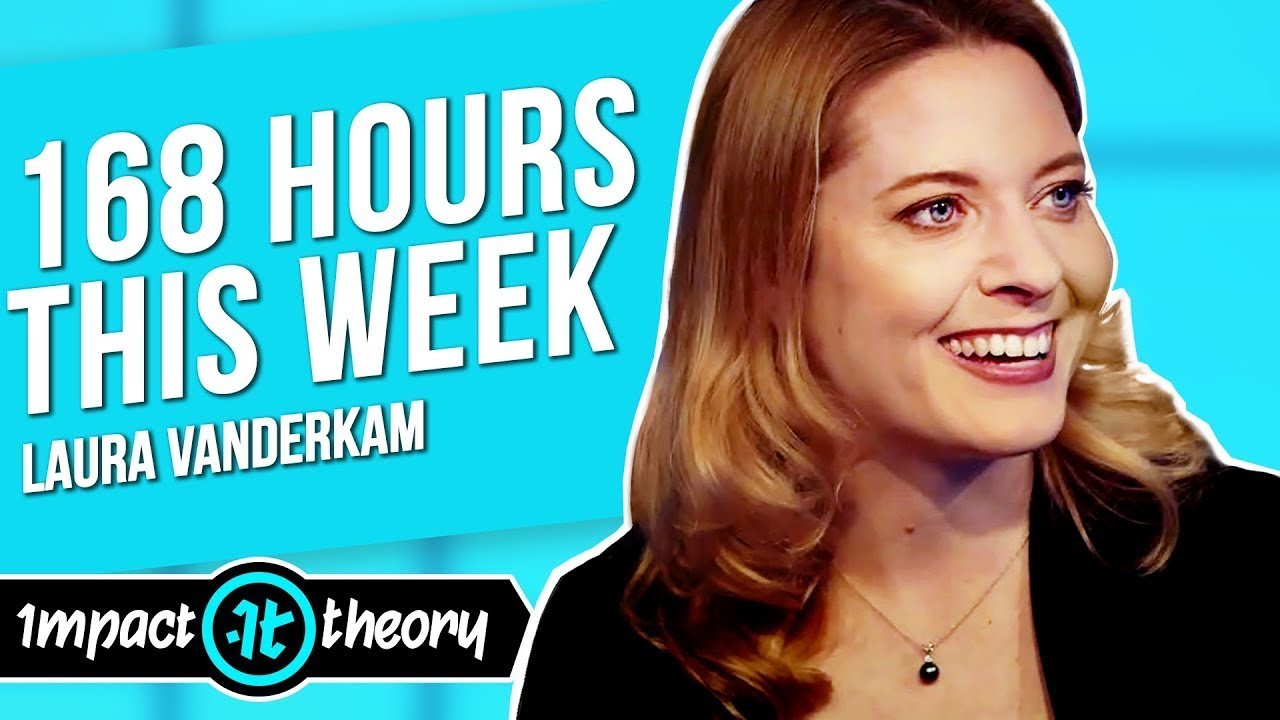
Manipulate Your Sense of Time With 3 Steps | Laura Vanderkam on Impact Theory
Watch on YouTubeVideo summary
Laura Vanderkam, author and speaker behind *Impact Theory*, challenges the common narrative that individuals simply do not have enough time for their personal pursuits by introducing a paradigm shift in how we perceive our schedules. She argues that the belief "I have no time" acts as a self-fulfilling prophecy; when people accept this story, they look only for evidence to support it and miss opportunities where life is actually going well. Vanderkam suggests that while seconds march forward irreversibly, our perception of available time is deeply tied to memory. By intentionally creating memorable experiences—such as answering why a day will be different from any other—we can manipulate the feeling of having more time. This approach encourages replacing repetitive routines with authentic activities and "micro-memoirs," where individuals proactively cement memories by paying attention, engaging senses like smell or sound, and describing their surroundings to ensure those moments are retained in memory rather than fading away unnoticed. To manage priorities effectively, Vanderkam utilizes the concept of time diaries and a specific mathematical reality: there are 168 hours in every week regardless of how one feels about it. Even with a full-time job working 40 to 50 hours per week plus sleep, individuals still possess significant "other" hours for family, exercise, or volunteering; the constraint is often mental rather than temporal. She illustrates this with her famous water heater story: when an emergency occurs like a broken appliance, people suddenly find seven free hours because they finally prioritize it. The lesson is to treat high-priority goals—like training for a triathlon or writing a book—as urgent as disasters by creating artificial deadlines and treating them with the same intensity. A practical tool she recommends is maintaining a "100 Dreams" list of things one wants to do, ranging from visiting 33 countries to local bike rides, which helps fill open time slots in weekly planning rather than defaulting to passive activities like scrolling on social media. Vanderkam emphasizes the importance of intentionality and strategic scheduling to combat task-switching costs and reclaim lost productivity. She advises shutting down notifications or batching communication into specific windows, such as checking emails for 15 minutes every hour followed by 45 minutes of focused work, which drastically improves efficiency compared to constant interruptions. Furthermore, she highlights that Thursday at 5:00 p.m. is mathematically the midpoint of a week if one counts from Monday morning rather than Sunday night; recognizing this allows people to balance their workload across the entire cycle instead of burning out by mid-week and neglecting personal life until Friday afternoon. By front-loading priorities for Mondays and Tuesdays, individuals can handle emergencies without derailing their goals, while using low-opportunity-cost times like late Fridays to plan future weeks ensures that valuable time is not wasted on indecision or procrastination. Ultimately, Vanderkam's philosophy centers on the idea that expectations are infinite but time is finite, meaning we must always be choosing how to spend our lives rather than reacting passively to demands. Successful people do not feel starved for time because they cultivate an abundance mindset and build in open space for serendipitous opportunities like deep conversations or spontaneous ideas. She notes research showing that spending time with friends and family correlates directly with a higher "time perception score," whereas excessive online activity often makes one feel more rushed. By investing in "effortful fun" activities—like hosting dinner parties rather than passively viewing photos on Instagram—and consciously choosing well among infinite demands, individuals can achieve professional success without sacrificing an awesome personal life. Her upcoming novella, *Juliet's School of Possibilities*, further explores this theme through a character who learns to navigate the chaos of modern expectations by realizing that doing everything is impossible and that true fulfillment comes from making conscious choices about what truly matters.
Read the full video transcript
I have huge switching costs. So,
yesterday for the first time in my said,
I've shut down all notifications. Um
it changed my day so fundamentally. Like
I was in shock. It felt unbelievably
efficient.
It probably was. Because we lose so much
time every time we are looking at a
notification and you then you have to
get back to what you were doing and then
by the time you're back in what you're
doing, there's another notification.
Imagine that. Um So, you know, and if
you can go till the end of the day that
is that is great. Um I a lot of people
can't quite do that and so then if they
think that's the goal, they're like,
"Well, I can't even try. So, I'm I'm not
going to bother." But, you can
check in frequently. But, even if you
just said, "Okay, 15 minutes on the
hour, I'm going to be in responsive
mode. I'm going to be looking at my
texts, my emails, my phone calls,
whatever. And then I'm off for 45
minutes. And then I'm back on for 15
minutes and then I'm off for 45 minutes.
So, yeah, that if you can figure out
ways to control the inputs for chunks of
time during your day, you can you can
get so much more done and not lose all
that time on task switching.
Hey everybody, welcome to Impact Theory.
Our goal with this show and company is
to introduce you to the people and ideas
that will help you actually execute on
your dreams. All right, today's guest is
an author and speaker whose TED Talk,
How to Gain Control of Your Free Time,
has more than 5 million views. Her work
has appeared in some of the most
prestigious publications in the world
including The New York Times, The Wall
Street Journal, Fortune, and Fast
Company. A natural skeptic and playful
contrarian, her books including I Know
How She Does It, 168 Hours, You Have
More Time Than You Think, and Off the
Clock include sharp, witty insights into
how we can all get the most out of our
precious time. She's also written two
novels, sung at Carnegie Hall, and
co-hosts her own podcast called Best of
Both Worlds. But, before you assume that
she lives a soulless, barren existence
where she has chosen to sacrifice all
joy for the sake of time efficiency, let
me tell you that she also is a wife and
mother of four young children who
somehow even manages to write almost
daily for her thriving blog.
Additionally, she's appeared on
countless television shows, including
such mainstays as The Today Show and Fox
and Friends, as well as being
interviewed for hundreds of radio
segments. So, please help me in
welcoming the author of the upcoming
time management fable, Juliet's School
of Possibilities, the woman who is
proving mathematically that you really
can have it all, Laura Vanderkam.
[applause]
How's it going? Thank you for that.
Thank you.
Welcome. I have to say, you worked at
Carnegie Hall and I have to say I have
to
Had to. That was [laughter]
That was amazing. I loved that. And one
of the things that I found really
interesting in researching you was the
quote on the cover of 168 Hours. And I'm
going to paraphrase it, but it was
basically, "Opening Laura's book
convinced me that I had time to read it
and that I had time to reread War and
Peace in the original Russian. Thank
you, Laura, so much for opening up my
schedule." So, how is it that you're
able to open up people's schedules? What
is the insight that you've had that
really shifts people's paradigm? Well,
honestly, I think it is a paradigm
shift. A lot of us are walking around
with the story that I have no time for
anything. Either, you know, if I'm
giving it all at work, I have no energy
for my personal life, or if my personal
life is so complicated, I'm just going
to have to coast for a while at work or
give up up completely, or if I manage to
do those things, I'll have no time for
my own personal pursuits.
And that lack mentality becomes a
self-fulfilling prophecy. When you think
you have no time, you look for evidence
to support that. And you know, we all
have busy moments. We all have crazy
moments.
But if you walk around with the story
that actually I do have time for the
things that matter to me, well, you
start to look for evidence to support
that. And there are certainly moments
when you know, life is going well. And I
think we should celebrate that. And when
people see that, then they start to find
open time. One of the cool things about
your approach is one, it's a pretty no
BS approach in terms of the math and
breaking it down for people how much
time they have. But one of the things I
found really empowering is this notion
that you can actually extend pleasure.
Explain that. What do you mean by that?
How do we cultivate memories, which is
another really powerful idea that you
have? Yeah, so there's a couple ways of
looking at time. I mean, one is very
straightforward. It marches forward. We
have 60 seconds in a minute, 60 minutes
in an hour. And once a second is gone,
it is gone. You cannot get it back. So,
there's that. But time also has this big
relationship with our memory and how we
perceive it. And when we think about how
much time we have, that's actually a
function of how many memories we have of
any given unit of time. I mean, one way
of thinking of this is if you go on a
vacation somewhere exotic, you know, it
can feel like a week has passed before
breakfast. And you know, cuz your brain
has no idea what it needs to remember.
And so it's remembering all of it. And
as it's remembering all these things,
it's making you feel like you have more
time. Whereas if you consider an average
Tuesday, I mean, most people can't even
remember getting dressed in the morning
and getting to work. Somehow it
happened, but it's just gone, right?
It's not there at all. And so when you
know that, you can start to manipulate
this, your perception of time. You can
put more memorable things into your
life. One thing I tell people is to try
to answer the question of why today is
going to be different from any other day
in your life. And if you can answer why
it's different, you're more likely to
remember it. And if you have more days
that you remember, you start to feel
like you have more time. Do you have
advice for people on how to make an
average day different? That was one
thing as I was going through the
research, I was like, "Wow, my days are
so repetitive. It's crazy."
And some of that is intentional. Some of
that is me trying to be efficient. Um
and then as I was thinking about how to
really make the average day for me
different, I was struggling to do like
authentic things where I'd really be
pursuing something I was interested in.
So, how do you advise people around
that? Yeah, so I mean routines are great
things and and you talk about this and
many of your guests have talked about
this and the importance of routine
because they make good habits automatic,
right? So, we want to have good routines
in our lives. But we don't want routines
to be the only things in our lives
because then every day is the same as
every other day. Um so, ways to think
about this sort of authentically, maybe
think about like what am I going to do
on this weekend? Well, I could just, you
know, watch TV, putter around the house
and then it will feel like I didn't
really have a weekend. Or you can maybe
make a list of, you know, anything in
life or, you know, the world you might
want to see or particular if we're
thinking about a weekend, you know,
things within 2 hours of your house
probably that you're going to want to
see. Uh but anything you might enjoy,
things your family members might enjoy.
And then you can look at say, "Well,
what of those things could I put into my
schedule?" And you know, on an average
day, it might be something as simple as
trying a new restaurant for lunch or
having a conversation with a colleague
that you've always just kind of waved to
in the hall. Um it could mean
participating in a meeting that you
normally just observe. Like you actually
speak up. But when you do little things
like this, uh you feel like you have
more time. And if you really pause and
enjoy these things and take in what's
happening, then you can stretch the
experience of time
you think if if we were going to go
through somebody's diary and you've
looked at a lot of time diaries with
I've seen thousands at this point. Uh
yeah, it's
a ridiculous number. Do you feel like
you're getting to know the person by
looking at their time diary? Oh,
definitely. I mean, although some people
put in more details than others. But, uh
you know, yes, you get to know them
because you start to see like oh, well,
this person, you know,
always does lunch this way, or this
person thinks about what he or she is
doing in the morning before going to
work. This person clearly likes hanging
out with their family cuz they're coming
up with fun stuff to do in the evenings
together. You know, this person likes to
do things with their friends and and
thinks about that. And and you really do
start to get to see what a person values
in their lives because that's what's
reflected in how they spend their time.
Yeah, that leads me to priorities. And
you have the story you've told a
thousand times about, you know, the
person whose water heater breaks and if
you had asked them moments before they
would have said there's no way I have
seven free hours in my week. It breaks
and they find the seven hours.
But, that hits at something bigger to
me, which is the priorities and taking
control of that, which seems almost as
important as the time itself.
How do you think about priorities in
your life and what have you learned
about prioritization from all the time
diaries you've seen? Yeah, it can be
very difficult to prioritize things that
we personally want to do or we know
would be good for ourselves and that we
want to, you know, do big in the world,
but are not immediately deadline driven,
or not, you know, doing for someone
else, for our boss, for our families.
And and of course, the story of the the
water heater is, you know, when
something big happens in our lives and
we have to deal with it. There's a
sudden disaster. It could be a client
emergency, or you know, a family
emergency. You find the time, right?
You're going to deal with it. Um the
question is, how can you make other
things in your life feel that urgent?
How can you treat the things that are
priority to you as the equivalent of a
broken water heater? You know, there's
water all over my basement. I have to do
something about this. Well, we don't
think that like, oh, you know, training
for a triathlon is water all over my
basement. Got to get to it. Writing that
book, water all over my basement. Got to
get to it. Um you know, spending time
with my family, water all over the
basement, got to do it. It just it it's
hard to make that um change in in our
mindset, but if you can, if you can
light at least a little bit of that fire
under you, um I mean, there's there's no
limit to what you can do.
So, touching on that, I'm a huge
proponent of cultivating something,
whether that's really thinking about
what you want or it's the expanding the
pleasure, cultivating memories, deciding
what you want. You have this notion of
the micro memoirs. Um, walk people
through that. I think that's pretty
profound and I really want to hear more
about how you are essentially
constructing the way that you're going
to remember something. Yeah, so memory
is not just a straightforward thing. I
think a lot of us think of memory as a
filing cabinet. I mean, you just put
something in it, it's there, you know,
it kind of fades as time goes on, but
but it's there, right? Exactly as you
put it in. That's not the way memory
works at all. Uh, if you think about
telling a story of say, you know, your
honeymoon, you and your spouse are going
to tell it in different ways. It's going
to change over time as you see how
people react to it. And eventually, the
story becomes the memory. Uh, it may not
be exactly what happened, maybe it kind
of pushes things together, that the
characters become more pronounced, the
plot is is more focused than it is in
how real life happens, but that becomes
the memory. And and so you can actually
think about this as you are proactively
creating memories. Um, you know, so if
you're going to do something
interesting, you might pause and think
ahead about like how can I make sure I
remember this? Like what could I do to
cement this into my brain? And there's
all sorts of things you can do. I mean,
you can obviously pay attention during
the time. Um, if there's somebody with
you, you can talk about having this
experience together. You can even
manipulate your senses. Uh, I know
probably people have had this experience
of a certain smell is very associated
with something in your life. I mean, it
could be as simple as like a hotel bar
of soap. Like you remember that hotel
and every time you sniff that scent for
the rest of your life, it immediately
brings you back there. Or a song, you
know, if you listen to a song over and
over again during an experience, that
song, when you hear it again, it will
bring that experience back. So, you can
actually do those things. How do people
become present in that moment? I know
you've you've talked about that bike
ride that you took and and, you know,
you're thinking about all the things you
have to do. How did you become present
in that moment? Well, sometimes, I mean,
something is just so amazing that it
forces the presence on us. If people
have had that, you know, pure experience
of awe, something is just so beautiful
or you see, you know, you're driving
around and you're seeing an amazing
vista, you know, these things can stop
you in your tracks.
So, so there's that.
But, you know, it's the nature of the
human brain to think about something
else. And it's almost comical. I mean,
you can be looking at this amazing
sunset and all of a sudden you're like,
"Did I pay my electric bill?" Like, you
know, it's just the way the human brain
works. And and there's not you can't
completely conquer that. But, you can
kind of steer yourself back to it and
take in more and say, "Okay, rather than
think about my electric bill, let me
just challenge myself to look at the
colors. Let me describe the colors of
the sunset to myself.
Let me try to, you know, name the things
I see in this picture. Let me think
about writing this later. Let me
just think about how I would describe
it." And and by consciously putting your
brain back in the the scene itself, that
that can help with that. That's really
interesting. Thinking about how you
would describe something later to really
force you to sort of pick out the
details. I think that's really
interesting. Talk to me about the the
writing your Christmas card a year in
advance, the notion of like planning
where you want things to go. Yeah, so
you can do this for both work and
personal. I mean, figuring out what
actually matters to you, figuring out
what are your priorities and what steps
you need to take to get there.
It, you know, it's difficult, but but
there's some practical ways we can think
about doing this. So,
in your personal life, you think about,
you know,
people don't do this so much anymore now
that everyone sends photo cards, but but
back in the day, those of us who are old
enough to remember this, but people
would send these letters
that would describe what their family
did during the course of the year. And
you send this around to your far-flung
friends and relations who somehow
haven't followed you on Facebook or
whatever.
And you know, these letters are often
horrible. I mean, they
go on about how amazing everyone in the
family is and how awesome the year has
been, but they serve a purpose, which is
that they tell your friends and family
what you did in your personal life that
mattered [clears throat] to you. So,
the way you can use this is picture
yourself in December of, you know, the
end of the year.
And if you were writing one of those
letters,
picture yourself, you know, writing
that. And and think that it's been an
amazing year. You're writing one of
those obnoxious letters because it has
been so amazing.
What would be in it? Like what would you
want to tell your friends and family you
did that was so amazing? And so if you
can write that letter many months ahead
of when it you would be sending it,
well, then you know what you want to do.
I mean, this is the year you planned
that extended family trip to Ireland
over the summer. You know, this is the
year you ran that 10K. This is the year
that you joined a choir with your
daughter, right? There's all these
things you might put on a letter. And if
you think about that ahead of time, then
you can actually do them so that the
letter can come true.
I think at this point in the discussion
is probably worth doing the math
breakdown for people cuz I can hear
people saying, "This is all amazing.
This is great. I just don't have time
for this." So, there are 168 hours in a
week. I love to use that number because
it's one people don't think about. The
reason to know this number
is well, one, it's a better depiction of
life. I mean, we don't just live our
lives in days. Tuesday and Saturday both
have the same number of hours. They are
both, you know, just as frequently
occurring on the calendar, but they look
very different for people.
Whereas a week tends to be the more
repeating cycle of life.
But if you work 40 hours, so that is a
full-time job,
if you sleep 8 hours a night, so that is
56 hours per week. That leaves 72 hours
for other things, which is quite a bit
of time, you know? And that's with a
full-time job. And people say, "Well, I
don't work 40 hours a week. I work more
than that." Okay, fine. If you work 50
hours a week, that leaves 62 hours for
other things, for, you know, family
commitments, personal commitments. You
work 60 hours, that leaves 52 hours for
other things. I mean, we're still
talking a lot of time, you know, even if
you you keep bumping up the work hours.
So, is there time for spending time with
your family? Sure. Is there time for
exercising? Sure. Is there time for
volunteering? Sure. You know, even if
you are working long hours. Now, you
might need to be creative about
organizing some of those hours. You
might need to think about how much
energy you have at different points.
But, mathematically, the time is
probably there.
What do you think about guilt? I think a
lot of people have guilt around how they
should be spending their time. They
certainly have a narrative about their
relationship to time.
And I don't know how much you get into
this, but like, whether it's in your
personal life or in your blogging or
speaking, do you talk to people at all
about overcoming some of those emotional
hurdles, which aren't based in math, but
the pushback they'll give you makes it
sound like it's based in math? Yeah, I
mean, well, people will say, you know,
there's just not enough hours in the
day. You know, there there is often the
feeling that we should be doing
something else. Um, that you know, if
you're at work, you should you're
missing out on something at home. If
you're at home, well, your you know,
colleagues are covering for you, and
therefore you should feel guilty about
that. On the weekend, the house, you
know, there's a million projects you
need to do, and so if you're relaxing,
well, that shows you're a lazy person or
something. You know, there's all sorts
of stories we can tell ourselves about
that. And I think that does play into
the narrative. And it encourages us to
think that we have no time, because then
that's an excuse, you know, I don't have
any time, therefore I can't do all these
things. And I say, "Well, that's fine if
we can't do all these things, but we can
still choose the ones that we wish to
do." And how do people lose their time?
So, if we all have these hours,
I think that people would be a little
bit surprised if they were to do a time
diary about how much time sort of leaks
out of their life. What are some of the
big ways that people lose time without
really being aware of it? So, honestly,
the biggest way people lose time is by
being unintentional about it. Um you
don't think about what you'd like to do
with your time. And so, you could do
something, but you don't because you
haven't thought about it. Uh one obvious
thing of this is on on the weekend, you
know, maybe you've
could go for a bike ride that would
require like getting up and doing it uh
you know, going out somewhere in the in
the morning. You don't think about what
you want to do until it's like 1:00 p.m.
on the weekend, and then by that point
you you can't go do the longer ride, or
you know, there there things your family
needs to get to, so you're not going to
be able to fit it in. Uh and and so, big
chunks of time can sort of disappear
because we haven't thought about what
we'd like to do with it.
I think that's so important. And I love
the idea that you have about taking
Friday's afternoons, which you have a
whole really interesting thing about
Saturday 5:00 a.m. is the midpoint of
the week.
Or Thursday 5:00
Thursday, sorry. Sorry. Sorry. I was I
was I [laughter] was I was I was
scandalized by that. Uh yes. What? Yes.
So, um the the way that I combated this
sort of what should I be doing, I
created an important things list. Um but
talk to people about that Friday
afternoon and how they can build
intentionality. Why Friday afternoon um
and why it's important to realize that
Thursday at 5:00 a.m. is the middle of
the week. Well, so Friday afternoon is
when I plan my upcoming weeks. And you
know, people say, "Well, what's the one
thing I can do to spend my time better?"
I say, "Well, we should figure out how
we're spending it now. You should do
that." So, I take some time Friday
afternoon,
um make myself a short three-category
priority list for the following week.
Career, relationships, self.
What are my top priorities in each of
those three categories? The reason to
make a three-category list is that it is
very difficult to make a three category
list and then leave one of the
categories blank. Uh so that's just like
a simple nudge right there. You make I
can't leave that blank, you know, oh I
got to put something in that. So then
relationships gets a priority. Hey,
great. Uh self gets a priority, great.
Um but just, you know, a couple things
in each. Look at the next week, see
where they can go.
Um and as much as possible, I try to
front-load the week uh cuz if you put as
many of those priorities as possible
Monday and Tuesday, well, then when
stuff comes up, because stuff will come
up cuz that's life, uh
you've either done it before the
emergencies arise, or if the emergencies
happen to arise on Monday and Tuesday,
there's still time the rest of the week
to get to it. Whereas if you plan all
your priorities for
Friday, you know, stuff happens and and
you can't do it. The reason for Friday
afternoon is pretty much that it's a low
opportunity cost time. Most people are
doing absolutely nothing of consequence
by Friday afternoon. You're kind of
sliding into the weekend. You're like, I
I wonder if I can slip out of here. Like
is anyone going to notice? Maybe I just
will pick up my phone. But if you think
about what future you should be doing,
you can take what would be wasted time
and turn it into some of your most
productive minutes of the week. I love
this concept of 100 dreams.
What is that? How do people use it? Why
is it important? Yeah, so this was a
great exercise that a career coach
shared with me many years ago, which is
you know, it's a good answer to that
question of
[clears throat]
people think they have no time and so
they don't think of what they want to do
with their time. And then when time
appears, we do whatever is easiest
because we don't think we have any time.
We haven't thought about it. So that's
why we wind up scrolling around on our
phones all the time.
The list of 100 dreams sort of helps to
solve this. So, completely unedited list
of anything you want to spend more time
doing.
Um so, the first third is easy cuz
people often want to travel more. So
it's like the 33 countries they want to
visit. So we got that. All right. But
after that, it starts getting a lot
harder. People are like, oh well,
there's that state park an hour away,
you know, we've lived here for 6 years,
we've yet to get to. Or I you know, I
really want to bike more. There's a
couple bike trails near my house I want
to do or you know, I should read poetry
or I I'd like to go try that restaurant
somewhere or you know, get to the
library and do whatever. Like you start
to get far more doable um as you get
toward a hundred. You have to come back
to this several times um to to actually
get to a hundred.
But then having this list when you have
open time or you're making your priority
list for the upcoming week you say,
well, let me pull something off that
list. You know, maybe this is the
weekend I will go to that state park or
you know, I will go for that bike ride
on you know, Tuesday over lunch if
that's an option in your life.
And then you're doing cool things,
right? That intentionality aspect I
think is so critical. You talked about
how if um for a long time I wanted to
read more but I didn't plan ahead and so
I didn't have a good book and suddenly
once I planned ahead and I had a good
book and it really captured my
imagination and it was a page turner.
All of a sudden I found little spurts,
three minutes here or seven minutes
there and I was suddenly reading a lot
more. Um I think that's really
interesting. What other things like that
have you found where just a little bit
of intention can really dramatically
shift the way that you use your time?
Yeah, books are a big one because yeah,
if you don't have a good book to read
you will do whatever's easiest and you
can get on Instagram in 30 seconds
whereas if you can't get a to a book in
30 seconds then you won't do it, right?
Um you know, thinking about things to
listen to in the car. Um I spend a lot
more time in my car than I thought I
did. Uh I kept track of my time and I
realized I'm in my car well over an hour
a day on average so you know, if that is
time. Um what can I do with it? And I
was just listening to whatever was on
the radio.
And I was getting really sick of a lot
of the songs that were on the radio. I
you know, and so I started listening to
more podcasts and you know, things like
that and well, yeah, there's a lot of
cool stuff out there but if I wasn't
intentional about the time and thought
about well, let me load up a podcast on
my phone and then the time's completely
gone. Yeah.
How can people allocate
a
a usable amount of time to things that
they're passionate about, but that are
ultimately going to take a long time to
do? How do they keep that from being
overwhelming? How do they make sure that
they have success so they're not
discouraged? Do you encourage people to
think of their life in in a year chunk,
in smaller chunks? So, if it's a a big
project like writing a book, you want to
say in that year-end holiday letter that
you wrote a book. Well, then you can
start breaking it down and putting
things related to that on each week's
priority list, right? So, maybe this
week you think, well, what step could I
take toward doing that? Well, I'm going
to write, you know, just what is the
thesis of my book? All right, I did
that. Great. That's all I have to do.
All right, the next week I'm going to
write maybe a couple chapters I think
could be in that.
Great, you've done it. The next week
you're going to start writing little
outlines in each of those chapters.
Okay, done that. Moving forward. You
don't want to overwhelm yourself. You
want to don't want to bite off more than
you can chew, but if you are writing
1,500 words a week for the rest of the
year, you're going to have a book at the
end of it. And not a short one,
actually. Uh so, it's these little
things done repeatedly. If you only you
know, set yourself a very small goal,
but you meet it, and then you just keep
going. You can do amazing things.
Why did the topic of time become such an
obsession for you? I mean, you've really
written a lot about this topic. Well, I
mean, I have always been interested in
productivity.
Um and and I can sort of see that going
back through my life. I think it became
a real issue for me, something I truly
cared about when I became a parent for
the first time, um almost 12 years ago
now. And I was trying to figure out,
well, how am I going to make time for
all these different areas of my life.
Obviously, I want to be a good mom. I'd
like to spend a lot of time with my kid.
Um I also have these other things I want
to do that I don't want to give up. And
a lot of the story out there is that,
well, you know, once you're parent, and
particularly a mother,
that should be your whole life. Like,
nothing else. And I was like, well, but
I like these other things. I want to do
them, too. So, how am I going to make
that work? And so, I started studying
people who were doing a lot with their
time. And you know, that's when I
started to see that idea of thinking
about a week instead of a day. You
mentioned earlier that idea that 5:00
p.m. Thursday is the midpoint of the
week. So, when I track my time, I start
Monday at 5:00 a.m. That's my time
diary. Seems like the start of the week,
Monday at 5:00 a.m. So, it goes Monday
5:00 a.m. to Monday at 5:00 a.m. If that
is the week, then the exact midway point
is Thursday at 5:00 p.m.
Which, you know, you think about a lot
of people, Thursday at 5:00 p.m. kind of
sounds like the end of the week, right?
You know, that's we're we're we're done.
That's that's it's all over at that
point. But it's not. It is
mathematically the exact midway point.
And the reason I think this is
important, particularly from this
question like work-life balance, like,
am I spending enough time with my
family, or my, you know, career, or my
working too much, or am I gone too much?
A lot of the time when people are
looking at their work-life balance,
they're looking at their work-life
balance from Monday at 5:00 a.m.
to Thursday at 5:00 p.m.
And I don't know what your work-life
balance is during that window, but I'm
guessing that your work-life balance
from 5:00 p.m. Thursday to 5:00 a.m.
Monday is entirely different. And it's
possible that those two balances start
to, you know, balance each other out.
And and when we see that and look at
time holistically,
uh then we we stop viewing life so much
as either or, you know, pitting work
against family and work and family
against self and all of that against,
you know, community and friends. And you
know, there's space for all of it. In
your research, you were saying that very
successful people actually have the
least, what I'll call these aren't
aren't your words, but the least abusive
relationship with time. They actually
feel in abundance. And how have they
gotten to that point, especially and
been as successful as they've been?
Yeah, well, I think it's related because
when you're telling yourself I have no
time, well, then you don't have time for
doing these important things. You know,
you just have to react to everything.
and and then you're only reacting.
You're never moving forward.
Um you know, I don't have time to start
that business. I don't have time to do
whatever. Uh whereas the people who have
a more abundant perspective on time,
well, they do have time to start that
business cuz they've got all the time in
the world. Why not? Why wouldn't I start
that business? And and so I think that's
a very important mindset shift. They're
they're very careful about I mean,
they're intentional with their time. So,
they're only putting in things that they
think are important for them to do. I
would say the one other thing that I've
seen a lot of and I think is so
important um cuz it's a bit
counterintuitive
is that people who are really good with
time um and who are doing a lot are very
good about building in open space.
And they do that for a couple of
reasons. One is that it's practical um
because everything
takes longer than you think it will.
Uh and nobody really likes to be late
and rushing. It's very hard to feel good
about life when you are always late and
rushing everywhere.
Um but it's also about how we get
opportunity in our lives. Uh if you're
having a really good conversation with
someone, it's good to continue that
conversation and see what great ideas
come out of it uh rather be like, "Oh,
yep, got to go." You know, looking at
the time cuz I know I have another
meeting. I have 10 more stacked up
today. Um and and so they're very good
about creating more open space so they
can seize those opportunities. Yeah,
that makes a lot of sense.
One thing that I found for me that's
really been extraordinary and I just did
yesterday an experiment with this and I
think it's going to work. It's a little
too early, but I have huge switching
costs. And so, um historically, until
yesterday, I would check my phone
routinely cuz if somebody had a
question, I wanted to make sure that I
got back to them quickly. So, I just
felt like I was getting nothing done.
So, yesterday, for the first time, I
said, "I've shut down all
notifications." Um
it changed my day so fundamentally.
Like, I was in shock. And so, I told
everybody, "Look, I will get back to you
by the end of the day, but not until the
end of the day. So, I didn't even
basically come out of um my office until
like 5:00 p.m. or something. And then I
started getting back to people and
responding to text message. It It felt
unbelievably efficient.
It probably was because we lose so much
time every time we are looking at a
notification. And you then you have to
get back to what you were doing. And
then by the time you're back in what
you're doing, there's another
notification. Imagine that. Um So, you
know, and if you can go till the end of
the day, that is that is great. Um I A
lot of people can't quite do that. And
so, then if they think that's the goal,
they're like, "Well, I can't even try.
So, I'm I'm not going to bother." But,
you can
check in frequently. But, even if you
just said, "Okay, 15 minutes on the
hour, I'm going to be in responsive
mode. I'm going to be looking at my
texts, my emails, my phone calls,
whatever. And then I'm off for 45
minutes. And then I'm back on for 15
minutes. And then I'm off for 45
minutes." So, yeah, that if you can
figure out ways to control the inputs
for chunks of time during your day, you
can you can get so much more done and
not lose all that time on task
switching.
Now, I know if I ask or I assume if I
ask you that you would say that what's
important to one person may not be
important to another. But, you've shown
like some correlations between people
doing a certain kind of thing and it
really having a substantial impact on
either the ability to create more
memorable experiences and thusly the
time essentially dilates and they feel
like they have more of it. Um what are
some universals where when people do
that, it really seems to have a a
profound effect? Well, one of the things
that it is really good for feeling like
you have more time is spending more time
with people whose company you enjoy.
And that seems very straightforward.
Like, of course, we should see friends
and family. That sounds great. And yet
people don't do it um because it takes
effort to do. So, I did a time diary
project where I had 900 busy people
track their time for a day. Um and then
I asked them questions about how they
felt about their time. And I could give
them a score because I called it a time
perception score. So people who felt
time was abundant or people who felt
time was scarce and they were starved
for time.
Time perception scores rose in direct
correlation with how much time people
spent interacting with friends and
family.
And it's not that the people who had the
highest time scores had more time than
anyone else. I mean these were all sort
of equivalently busy people. And it
turned out that the people with the
lowest time perception scores spent more
time watching TV and more time online
than the people with the high time
perception scores. So they all had
leisure time. It's just they were
spending it in different ways. And it
turns out that being social tends to
make you feel like you have more time.
Whereas
being social online often makes you feel
like you have a little bit less. It sort
of gets away from you. And you know, I
say this as an introverted person. I'm
not saying you have to be in a party
every night. But there are people that
you like even if you are very
introverted. And and what you can do to
spend more time with those people
will will be time well spent. There's
this idea of effortless fun and
effortful fun. And getting together with
people whose company you enjoy is
effortful fun. Right? It takes a lot of
work. You got to call them, make plans,
you got to go do something together. You
probably have to dress up or not dress
up, but at least you know,
wear clothes. Like you can't you know,
necessarily be in in your pajamas.
You know, you make a plan like you have
to do it even if it was like not a great
day at work. Like you're going to still
go do it.
Whereas you know, surfing the web
doesn't demand any of that. Right? It's
completely effortless fun. So that's the
difference between throwing a dinner
party which is effortful fun and looking
on Instagram at photos of other people's
dinner parties which is effortless fun.
You know, they're both a reasonable way
to spend an evening, but one is
obviously going to be much more
memorable and feel much more sort of
profound like you have this time for
doing awesome things in your life if you
actually have the dinner party.
So you know, you want to make sure you
invest some in that kind of behavior.
All right. So people have been listening
to this and they're super intrigued.
What do you hope people take away from
Juliet School of Possibilities? I found
it really interesting that you did it as
a novel and I was surprised by the
things that she struggled with. I
thought it was going to be
and maybe I feared it was going to be a
little more straightforward. It actually
ended up being quite nuanced. Um and I
found the the breakdown of what she was
struggling with to be very interesting.
So, what do you want people to take away
from that? Yeah, so I mean I've I've
written a lot about time management and
you know, strategies and ideas and time
diary studies and it's like, well, if
I'm going to keep writing about this, I
have to try a different tactic. So, I
decided to write a novella about how
people spend their time. Um and Juliet
School of Possibilities is about a young
consultant whose life is falling apart
on various dimensions because she is
trying to do everything. Um and
particularly as you move into
management, you can't just do what's
right in front of you. I should I think
about what is the right thing to be
doing. That's very difficult and so
she's really struggling with it. And so,
you know, her her company gives him her
an ultimatum, her personal life is
falling apart, too.
Um and until she, you know, meets this
mentor figure who helps her see how you
can learn to choose well even when there
are infinite demands on you. And so,
what I hope people will take from this
is a phrase that this this mentor, this
Juliet woman, keeps telling her which is
that expectations are infinite,
time is finite.
You are always choosing.
Choose well.
And the reason I like this phrase is is
because
you know, we have this idea, well, if I
just work harder, I can I can get all
this stuff done or maybe if I'm just a
better person, I can do meet all the
demands of my personal life. No,
expectations are infinite. You cannot do
everything. Even if you work 24 hours a
day, even if you never slept, you still
can't do everything that somebody might
want you to do.
But once you you that, you realize that
you're always choosing
how to spend your time, then you can
start to make those choices more
consciously. You can actually choose
well. And think about how I might choose
well in any given moment to create the
life I want.
I love that.
All right, before I ask my last
question, tell these guys where they can
find you online. Yeah, well, I hope
people will come visit my website,
lauravanderkam.com. It's just my name.
Um and you can find out more about my
books and podcasts and stuff there and I
blog, you know, at least a couple times
a week. I guess I'm still stuck in 2006
with that, but I I started blogging and
I realized I like it, so I'm just going
to stick with it even if people stop
reading blogs. Um so, hopefully people
will check that out as well. Awesome. My
last question, what is the impact that
you want to have on the world?
Well, I hope that I will help people
realize that they do have time for
whatever is important to them. I mean,
we talk ourselves into this idea that,
"Oh, I'll never be able to do X. I'll
never be able to do Y. I just don't have
the time." And I don't know if that's
true. I believe we do have time in the
168 hours we all have each week for what
matters to us. And particularly, I would
like to help people see um that life is
not either/or. That professional success
does not need to come at the expense of
having an awesome personal life, nor
does an awesome personal life need to
come at the expense of achieving, you
know, great things in the world,
changing the world in some way to make
it a better place. So, I hope I can help
people see that there's time for both.
Awesome. I love that. Guys, I was really
surprised at how much nuance and depth
there is when you go and look at this
one topic. I was I wasn't sure like how
much it was going to be broad or if it
was going to be something where you're
really going to get the gist of quite
quickly, and she's done an extraordinary
job of really showing all the ways that
your life is defined by the way that you
think of time, and then how you think of
time echoes through all of the choices
that you make. She talked about it here.
She goes into great detail in her works
about that. Her books are phenomenal.
They're really fantastic. It's actually
super interesting to see one done as a
novella, so that you get more of an
emotional connection. You're there in
the room as her life is falling apart,
and you see the way that she begins to
change that notion of time and begins to
thusly rebuild her life. And it's
really, really insightful and really
interesting. And that is a hallmark of
everything that she does. There's just a
level of insight that's data-driven,
which makes it all the more fascinating
that I think you guys will really
resonate with. And then, if you
experiment with this stuff, it really
will change the way that you approach
your own life in profound ways. And
yesterday, having had the experience of
how making one little change about how
often I checked my phone had
an unimaginably big impact on my day.
That That one change.
This is important. And I think if you
dive into her world and really put some
of this stuff to use, it will have a
radical effect on your life.
All right. If you haven't already, be
sure to subscribe. And until next time,
my friends, be legendary. Take care.
Thank you so much.
Everybody, thank you so much for
watching and being a part of this
community. If you haven't already, be
sure to subscribe. You're going to get
weekly videos on building a growth
mindset, cultivating grit, and unlocking
[music] your full potential.