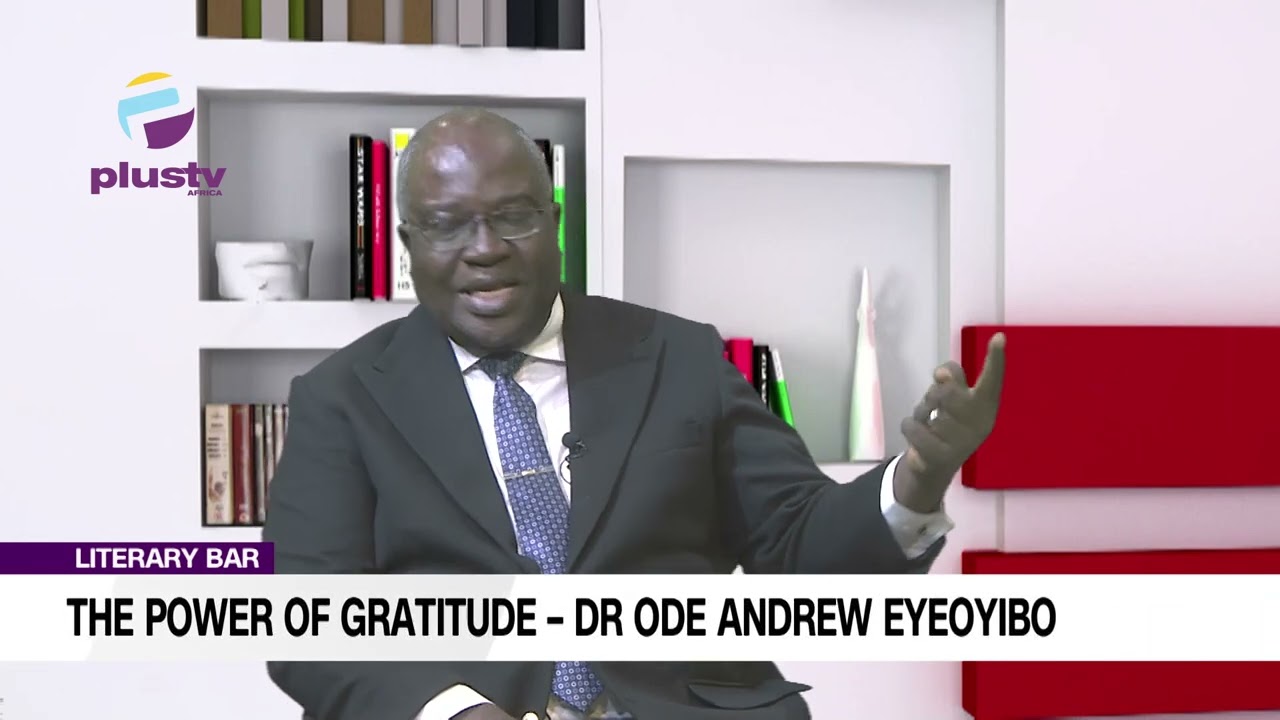
Video summary
In this first installment of their discussion on "The Power of Gratitude," Dr. Ode Ayubu challenges the common misconception that thankfulness is merely an emotional reaction to favorable circumstances. He argues instead that gratitude is an objective reality and a spiritual force that serves as the foundation for a fulfilled life, regardless of external conditions like economic hardship or political instability in Nigeria. According to Dr. Ayubu, true gratitude shifts one's perspective from asking "Why should I be grateful?" to understanding that situations often improve *because* we choose to practice thankfulness first. This mindset transforms disappointment into discipline and allows individuals to find solutions even when facing severe challenges such as unpaid school fees or lack of resources, effectively turning a state of mind into a catalyst for positive outcomes.
The conversation highlights how cultivating an attitude of gratitude acts like making deposits in someone's emotional bank account; just as kindness naturally invites reciprocity, thankfulness opens doors to opportunities and creative solutions that worry closes off. Dr. Ayubu shares personal anecdotes where his practice of thanking God led to innovative ideas, such as launching a book via WhatsApp rather than expensive physical events, demonstrating how a settled mind free from anxiety can generate new paths forward. He emphasizes that while people may offer little due to their own limitations, the recipient's role is not to complain about what was given but to receive it with sincerity and appreciation, thereby resetting one's consciousness to focus on abundance rather than scarcity or entitlement.
Furthermore, Dr. Ayubu addresses criticisms regarding "toxic positivity," clarifying that genuine gratitude does not deny pain or suffering but refuses to let those feelings dictate a lack of thankfulness. He illustrates this point by recounting an encounter in an elderly care home where he initially felt pity for himself due to his own minor inconveniences, only to be humbled and inspired by a woman with amputated legs who remained joyful throughout the service. This example underscores that gratitude is not about ignoring reality but about choosing joy despite it, which reduces internal tension and fosters resilience. Ultimately, the discussion posits that gratitude must become an instinctual part of one's identity—a default setting where thanking God for everything, including oneself as a gift of grace, becomes the natural response to life rather than a forced obligation.
Read the full video transcript
[Music]
Hello and welcome to the literary bar.
How are you doing? I know that we're
well into the second half of the year.
For some, it's been great. For some,
it's not been exactly what they hoped
for, but something is clear. We are
still here. And maybe it's time to
unleash a superpower that is latent in
all of us. Gratitude.
My guest today says that gratitude is
the key to unlock a life of fulfillment.
Join me after the break to get your own
keys to this life-changing principle
from one of my favorite people of all
times.
My guest today is a liter family member.
Dr. Ode Ayubu is a sage, very wise. He's
a practicing lawyer, author, poet, and a
pastor. He's also a personal and
business development coach. He has a PhD
in theology and teaches philosophy based
on biblical principles. Pastor Od is a
senior pastor at Ezra House, a word of
love church focus on transformational
teaching, training, and disciplehip. His
might of the beautiful Fumilola, and
they are blessed with a lovely family.
Welcome Dr. Oday.
>> Thank you.
>> Hi, Padre.
My Patrick, how are you?
>> Always good to be here. Always good to
be here and to see you.
>> I shouldn't ask how you're doing cuz you
look well.
>> Well, can I feel great?
>> Well, I say in some looking too great.
Too great. Not too great.
>> I need to look less great.
Six pack.
Look, I call you pad. It's just going to
keep sticking out of my mouth. Doctor,
pastor Mike Padre.
>> So, um, you've written yet another book,
The Power of Gratitude.
>> Yes.
>> Yes. And, uh, it's about unlocking a
life of fulfillment.
>> Now, we're in uh, the second half of the
year,
>> right?
>> And, um, for a lot of Nigerians, you
know, there's nothing fulfilling about
2025.
>> Yeah. All those prayers, expectations,
aspirations,
what's happening?
>> What's happening?
>> So you say what you're saying is that
those prayers, those expectations, those
uh what do you call those things that
have been
>> resolutions?
>> Those resolutions have not been
fulfilled.
>> Yes. Yes. Yes.
>> Okay. And so
>> well as I was saying to you before
Nigeria and this is against everything
that I really want to say but this is a
true for a lot of people
>> a country seems to be going
>> to a place that we do not like
>> yes
>> in a hand basket. I'm not going to call
you but you know.
>> Yes I know.
>> So but I mean there's violence here.
There's a hunger here. The corruption is
endemic. Every time you check the
newspapers, politicians are just talking
about themselves, which party they are
joining, coalition, no one, I challenge
anybody, nobody opens a newspaper and
sees developmental talks or the
government has completed this project
here or maybe this and that and that and
then you come out with a book and you're
telling us to be grateful,
>> right?
>> We feel powerless. So, how can we be
grateful?
>> Okay, that's a good one. We feel
powerless. So how come we be grateful?
We are powerless. So how can we be
grateful?
>> Yes.
>> Right now it's like this
gratitude uh this thing that we're
talking about is an objective reality.
It's not subjective. Let me tell what I
mean by that.
>> You're not grateful because this and
that and that and that and that
>> Mhm.
>> are working well.
>> Yeah.
>> Right. That's subjectivity. So I'm happy
because this is good. I'm happy because
that is good. No, gratitude is an
objective reality. in a sense an
objective component of a fulfilled life.
>> Yeah.
>> In other words, you're not saying I'm
not I'm not saying my life is fulfilled
because I have this, I've done this,
I've done the other, right? I am saying
>> for me to have a fulfilled life is a
function or a consequence of my attitude
of gratitude.
>> Okay.
>> Separating the verse from anything else.
>> Okay. Let me quote the book directly
because you said gratitude is more than
a feeling. It's a spiritual force. Yes.
What does that mean?
>> That's exact. So I sort of I've I've
explained that now sort of using
psychological words if you like. Right.
It's a spiritual force. It's an
attitude. It's a mentality. Is a is an
objective reality.
Right? is you know other words it I'm
using the word objective to separate it
from happen stance because from our
opening statement which is so true
>> we why should we be grateful what should
we be grateful about when everything is
fallen now
>> and that's a subjective view of
gratitude
right so the way it works is this I am
not grateful because this happened
>> right turn it around this happened
because I am grateful.
Now that now comes to
that is the transformative
>> or the creative power of gratitude.
Right? That sounds very Mexican and you
know all of that but that's what that's
what I mean that's so we start the
starting point for gratitude is I am
grateful not I am grateful because or
not I'll be not I'll be grateful if
>> great grateful and thankful I read the
same
>> gratitude thankfulness appreciation
all of that they all all in the same
family but all in the same family that
consciousness that mentality that um
appreciation for what is.
>> Yeah.
>> Right. Not a depreciation for what is
not. So
gratitude is a focus.
>> We're talking about gratitude to God or
gratitude to people or
>> it's all this book covers all of that.
Okay. Right. I mean fundamentally I'm
going to say gratitude to God but just
gratitude you know it's um I was
counseling with a young couple after
church yesterday and I said to
the husband that you know
the little whatever little thing you do
for your wife
>> Mhm. What everything you do? You tell
her thank you. You tell her sorry. You
go and wait for at the bus stop. You
help her carry a bag. You help her
whatever it is. What did you do for her?
Every time you do something for her,
you're making a deposit.
>> Yeah.
>> In her emotional bank account.
>> Mhm.
>> Right. And what then happens as that
banker keeps getting filled up? The
natural tendency is response.
>> Yeah. retaliation which sounds like a
bad word but now she wants to do
something good to you for you because
you're doing something good for her.
>> Yeah. In local palent we say somebody
comes to your house they give you a good
meal and they say oh when you come to
mine I won't tell you yet.
>> Yeah.
>> That's that's just the whole idea. So
it's so it's not a question waiting for
something to happen before you do
something. It's it's a question of
thanking God for what is happening.
>> Mhm.
>> Thanking God. thinking. So you you send
me a meal for instance and all you have
is a little bit of rice
>> and half an egg.
>> Yeah.
>> Right now in my house I mean usually a
full pot of rice and six pieces of meat
whatever it is.
>> But my first thought is not
kind of what what so this man looks at
the whole meat and she goes me have an
egg. That's my first thought. My first
thought is thank you
>> for sharing what you have. God knows
what she what she got us from. That's
that's that's that's that's what I'm
talking about.
>> Mhm.
>> Right. So if we coming back to the more
global winner, if we looked at our lives
like that, no matter how
terrible and troubles and tedious and
tenuous the times are, no matter what's
going on, right? You know that within
any situation, there's always something
>> to be thankful. And what that does I I
was using the example of you know uh
something happens and you're flustered
flustered disturbed perturbed first you
want to do is you explode but of doing
that and because remember by time you're
exploding you're out of control you're
basically out of control you're not
thinking straight you're out of control
right so instead of doing that you if
you like what was my expert again you
discipline your disappointment you like
the way the Bible puts it Bible
language. You gather the loins of your
mind. You gather yourself together and
out of that gathering you say
thank you.
>> Okay. We're looking at
school fees pay rent you can't pay.
>> Yes.
>> Um meals you're owing.
>> Yes.
>> Okay. Can we how do we gather how do we
discipline that disappointment?
>> All right. So here's the way this goes.
salary is not coming.
>> Now think about it. Now I'm going to
tell you and I was giving the analogy
initially.
>> A young man came to me once and said pas
the problem I have with you is that you
minimize our problems.
>> Yeah.
>> When I come to your counseling you
minimize and you just laugh at my
problems. So I said okay. So I said okay
let's just put in our thinking caps now.
What is the opposite of minimize? I said
this is maximize. So, okay, here's what
you expect me to do, which sadly is what
most of us do actually.
>> Mhm.
>> I come to you with a problem. Ah, he's
out
and I begin to tell you some problem
that I have where he's bigger than
yours. Have I helped you?
>> No,
>> I have not.
>> No, but it makes me feel better that I'm
not the only one going through it.
>> Fine, but does that solve anything?
>> Well,
>> is that moving you on from there? Ask
your depression. I didn't leave that.
No, no matter what feelings you have
with that moment, I didn't leave that
place. your the weight of your pronounce
comes and now the weight of their own
problem.
>> Okay. Okay.
>> What I then said what I then said to
this person but what I what I say to you
like again this Bible language right the
Bible language says that with every
temptation God will make a way for you
to escape thereby.
>> Yeah
>> there's no temptation that comes upon
you but sus come unto man
>> but with every temptation. So the first
part is everybody goes through this.
That's the first part. But the second
part is with every temptation, God will
make a way for you to come out. Now,
here's the problem. When you're worrying
and you're frightening and you're
forcing, here's what you're never able
to do. You're never able to find out
that way out.
>> Mhm.
>> Because by taking thought again, Jesus,
you cannot add an inch to your height.
Says do not worry.
It says, "Take no thought." Think what
you just said to me now. Take no thought
saying, "What shall we eat? What should
we wear? Where should we live?
How shall we pay school fees?"
Take note of saying those things. Why?
Cuz your father in heaven knows you have
need of those things. As for you, seek
first the kingdom of God as
righteousness, and all these other
things were added to you. You see what
that does? This is not magic. I just
call it mics. It's not magic, right?
It's a state of mind, a state of
consciousness that opens you, as it
were, to a resolution resolution.
I mean, you you I mean, I've been in
situations where I've been broke. I
didn't have any money. And I says,
"Lord, um, I thank you so much for
giving things, but Lord, I need some
some money."
Because of that state of mind, a thought
comes to my head. It might be call such
and such or do such and such. I mean,
let me take a classic example. One of my
books I I I launched recently. Now, when
I say I launched the book, I didn't do
the usual you get rent hall, invite
people, all that stuff. The idea for
what I did came through Thanksgiving.
You know, I said, "Lord, I've done this
book now. I need some money, right?" And
so I'm thinking, "Oh, thank you, father,
for the book. Thank you for this. Thank
you for the other." All of that. And I
just had an idea. Have a launch.
Have a WhatsApp launch. Send out PDF
copies to every person on your watch and
just say to them, you know, I launched
this book. Could you
>> Mhm. Now I cook. What the point I'm
making is that idea came
>> from Thanksgiving.
>> From Thanksgiving because because no let
use that idea came because my mind was
settled. I was not confused. I was not
disturbed. I was not discombobulated. I
was not bothered. I was not flustered. I
was none of those things. I was not
worrying, frightened, fen. I was
thanking God.
>> Are there levels to this thing? Because
I mean you you have friends you can call
on to do this. There are people that
have problems that have nobody.
>> I just give you an example.
>> My point is the bigger point is this.
>> Whatever your condition or your
situation,
>> right? From that position of gratitude,
things given.
>> Yeah.
>> Right. You will find an answer. Whatever
your answer is, if even if you answer go
to your children's say, listen, I don't
have any money to pay the next year.
>> First term, second term, third term. No,
whatever you want to say. I don't have
money to pay.
right for this whole year. In fact, I I
have a example of that. This woman is a
widow. I teach children in this very
expensive schools and there was one year
she couldn't pay. She spoke to the she
went and met the teacher said, "Look,
this is the situation."
You know what happened?
>> All children give a scholarship.
>> They gave them scholarship.
>> Yes. For the rest of their time in that
school. I'm just what I'm saying to you
is that the point is it's not so much
the end result but that the starting
point
>> where you're starting from
>> and how long you going to keep up in
that place. Well um this this is a
>> you ask me one question about the
spirituality of this that's yes that's
so a phrase that you hate is this not
what will concern to toxic positivity
>> okay
>> where everything is just okay like I
have this issues with you
>> when I would say oh padrick you say be
coming down
>> be coming down and you know these are
some times when you really really need
to vent what's that math again it takes
you how many muscles to do what
>> 75 to 25 muscles to frown 25 to smile.
It takes him more energy to fret, to
fuss, to worry, to be disturbed,
discomated than it is to just be happy
and be calm.
>> So that energy that I have when I'm
annoyed
>> where if I smile is I've used 25%. It's
remaining 40 now. So what would I use
that remaining energy to do?
>> Now here's the point.
>> Mhm.
>> If instead of wasting expending energy
>> Yeah. and frowning.
>> You actually spend energy in smiling.
You be in a better position to resolve
whatever situation you feel
>> if just by feeling better.
>> So what what you said you don't like
that phrase toxic positive
>> because those are expressions we use.
Okay.
>> Right. To justify
>> our willingness to do the right thing.
You say something like toxic
masculinity. A man has been a man has
been the head of his house. He's been a
father to his children. All this tox
that's rubbish. That is just a statement
come by feminist women. They don't want
to be they shouldn't be married.
But seriously, that's that's my
understand. I mean I I'm let me give an
example like this. I say this is my
teaching this right. The fact is it is
the father who has responsible to
discipline the child not the mother.
Now can you say I said, "Well, I just
did." Cuz that's is that what the Bible
says? Because when the Bible was
referring,
>> what if there's a single mom or a widow?
>> Just wait. I have widows in my church. I
have single mothers in my church. Right.
And so basic kind of again within our
own context, you know. Right. In our own
context, we still find this is your
situation. But then a lot of the
discipline now a lot of what happens
talking to the men in the church or the
pastor in the church who helps do all of
that stuff. Now that is not a perfect
solution. But now remember this.
Remember when you state a principle the
fact that there's how do you say there's
a situation that doesn't fit that
principle does not negate the principle
itself. That is the principle.
>> The husband is ahead of his wife his
wife not of women of his wife not of
women generous. So let's be clear on
that. Let's be very clear on that. Yes,
>> we're going to get but I mean coming
back to gratitude because we hear the
word dispense a lot like you say oh
there's no toxic positivity no if you
give something to a child a you didn't
come out to say thank you but a lot of
people forget to say thank you when you
do when people do stuff for them.
>> Okay. So if we forget to thank human
beings,
>> forgetting God is just
>> see that's that's that's why I said it's
all about this cuz one so one one of my
um one of my grouses with Nigerian
society
>> Mhm.
>> is the fact that we've lost
uh politeness. We're just rude.
>> We're rude. We're abrasive. We're
aggressive. We're thankless. We don't
think we're ing. I really like from uh
the things no longer is J is one of
those books when there's this family
says oh this person is an ungrateful
ingrate more stuck in trade as collector
assassination I really think yes but
that that's where we are that's what we
become wecome an ungrateful
unappreciative generation
right so that's where it starts that's
how teaching the children grandchild
whatever it is I mean thank you oh thank
you is is you you can't you can't get
away with it. So that's what we've lost.
So because we lost that now because you
say so instead of thinking
you know I gave you a cup of water.
>> Mhm.
>> Instead of saying thank you I complain
that you didn't give me a cup of coke.
>> Well
>> that's the mentality.
>> Mhm.
>> Right. You know I'm born in Nigerian.
Instead of saying thank you I'm a
Nigerian. I complain that I'm not an
American.
and stuff. Now, here's my point. The
point is that I used everything.
>> The more appreciative you are, I think
it was my godmother who told me this
many years ago.
A person who tells you thank you so
profusely.
It's really set himself up for another
favor.
>> Yes. Yeah.
>> So, it's not just bribery in I bribe you
that makes you give another favor, but
there's a way I can appreciate what
you've done for me.
>> They thank you and they that you want to
do more for me. Can you can you reset
your mind in that? I mean the example
you gave initially of the woman who
gives you uh half a plate of rice and
half half an egg.
>> You can see the person be very
disappointed. But how do you reset your
mind without feeling guilty like okay
she actually gave me all that she could
but I really would have preferred a
whole egg.
>> No sometimes that's the first thing you
think about like not enough.
>> Here's what happens. Now there's another
sort of mantra that I have. It's called
everything you get in life you get by
right of consciousness.
>> Okay?
>> Right? So the reset that you call it,
it's not something that happens in the
moment. The reset now is developing
an attitude of gratitude consciousness.
So by time you develop that through you
know your confessions your affirmations
and your practice your deliberate
practice you get to a place now where
that now that's is no longer it's no
longer it's it's an instinct your first
instinct
thank you
so you don't that space between
well I really would have wanted this
that space keeps getting narrower and
narrower and narrower with consciousness
until it doesn't exist anymore until you
actually get to a place where you don't
even need that other thing anymore.
>> But sometimes people have things you
know they can actually give you more
>> but they give you small
>> that's on them. That's always the case.
>> So the fact is you just hang it in your
mouth. Oh god.
>> That's what I'm saying. If you have a gr
consciousness doesn't matter. It's on
them. I mean it's their property and
they choose to give you just a little
bit of it. That's on them. M
>> you your job is to re to receive what
they give you with the highest gratitude
with sincerity meaning it it's on them.
Now let me also tell you something else
right there's some like this that you
know it's not just a matter of being
misly or being stingy or being careless
being casual of being rude and
disrespectful.
>> I refuse that.
>> Okay.
>> I just said oh thank you.
>> Yeah.
>> I don't want that. But now again I'm
refusing not because I'm angry. Actually
I'm refusing. It's a there's a principle
involved there cuz you're being
disrespectful. You're being rude. You're
not being it's
>> that's when somebody gives you something
you know that is not worthy.
>> Yes.
>> Yes. You're being rude. You know it's
not worthy and you know they can they
can actually do what is worthy.
>> Does you got to qualify that? So how
does that tally with the Bible
principles where you say in all things
be grateful.
>> I'll give thanks. I'm grateful
>> but I don't want it.
>> I'm grateful. I don't want it because
that's why I made the point of saying
I'm not angry.
>> I'm not doing that any kind of anger.
I'm doing it out of the fact that you
know
is that what God says in Malachi.
>> It says um
you sacrifice diseased animals.
give your governor that and say what it
will do to you.
>> Yeah.
>> So the point is there's this
understanding that yeah there's some
things they're just not worthy.
Now was a different where say I come
here or somebody comes here right and
you just going to pay them a fee and
really what they get paid is $5,000 per
hour but you only have $50
because that's where you are at the
moment. Well that's different. So for me
that's huge. Oh, that's mega,
right? I I remember I went to a meeting
once and I was on the speakers of this
conference and they call for offerings.
So, they said things like if you have
this amount come, there's a man come.
Then the man said, so I stood I was on
the platform. I stood up. I had 5,000 in
my pocket. I put the offering. Then the
man said, if you have 100 naira or 50,
stay where you are. There's no space for
you here. Ah,
>> wow.
>> I just put my money back in my pocket. I
want you to sit down or the next day
they heard
I mean how rude how insulting these
people they have hunting that's the last
money they have they trek to that place
they're hoping to use the money to go
back and then you're insulting them now
>> maybe they didn't get the part of the
widow's might in the Bible perhaps or
they just overlooked it
>> yes so all of that
>> but but but the the key thing is
gratitude like really value or virtue
must be a consciousness.
This is it's like a it becomes um um
like your default setting. In fact, I
don't I don't like the word default
setting. It's not default setting. It
becomes your setting.
>> Okay,
>> it's who you are. If it is slides and
dice you or comes as gratitude because
that's not become part of you. So, it
doesn't matter what it is. Doesn't
matter who it is. Doesn't matter where
it is. You thank God.
I I remember preaching in an old
people's home some years ago in England
and some bouncing up and down. You I
said I used to quote this guy. I used to
I used to complain that I had no shoes
or that I met a man that had no feet.
Then I turned there's a lady right in
front of me. She had no legs. I mean I
can this I'm talking in the 80s. I can
goosebumps on now. As made that
statement I used to complain that I had
no shoes that I met a man that had no
feet. I turned around and saw this old
lady in a wheelchair. Her two legs had
been amputated. Oh my god. And guess
what this woman was doing from the
beginning of the service to the end? She
was smiling.
>> Oh.
>> The old husband wer in greeted me to
smile. They were just smiling.
And that meeting was interesting about
that meeting. This I'm talking about 80
uh 91 92
in Tottenham in England. At that m was
an old people's home. One of the ladies
there died that night. She was 90 or
something years old.
>> But the last words to her great
granddaughter
was I met a young man who told me who
said that my life was worthwhile cuz I
said you're here. You're old. You l the
carpet. You're in a wheelchair. But you
grandmama, you grandfather. you're
spending all this time praying for your
children, your grandchildren. God bless
you. That's what she had.
And that that was the last his grand
told us later was the last great
granddaughter.
>> In in terms of gratitude, um my moral my
moral instruction teacher in school
would say if no one
uh no one can blow your trumpet like
you, you know, so find your tune and and
sing it. And I realized that even as we
say thank you to
>> should we say thank you to ourselves we
recognize
>> I do it regularly.
>> Oh I do it regularly.
>> What do you thank yourself for?
>> Everything really. I mean for instance
when I go home now I'm going to thank
myself for listen to it.
>> Mhm.
>> That I was so clear
>> and you're looking so good.
>> Well there's that. There's that. Thank
you.
>> I was so Oh yeah. Oh yeah. I've shared
that. I'm going to thank God for you my
love.
>> Is that not arrogance
>> to thank yourself?
>> To thank myself because here's now again
think about this right. I have a
gratitude consciousness also have a
grace of God consciousness. All my grace
of God go consciousness. Everything I am
I have by the grace of God. I can do
what I'm doing here now or it's by the
grace of God. So yes. So thinking myself
I'm definitely appreciating God's grace
in my life that made me able to do this.
in that kind of this is not um this not
what do we call this in this kind of um
fake humility.
>> No.
>> Oh, are you are you very smart? Are you
intelligent? You get cuz I am top of the
class.
>> He's a humble brag.
>> I didn't Yeah. You know, I didn't you
know I make a joke. I said, you know, I
I am proud of my humility.
>> You know, the the point is the point is
that you got to be great. Because here's
the deal. If you're not even thankful
for yourself, for your own life, you
can't be thankful now. You're kind of
grumpy cuz you're just unhappy.
But if you're happy, you're singing,
you're dancing, you're just, you know,
galliv.
>> Totally. Totally.
>> Mhm.
>> Totally. I understand that but again by
study by prayer by conviction I come to
a consciousness that we're teaching that
that's why I say by saying it's an
objective thing
>> not subjective
it's not dependent on circumstance or
happen stance it's dependent really on
decision
>> okay
>> that you make that you know that this
thing makes your life better
>> okay
>> reduce your hyper your tension
everything really makes your life better
Okay, Patrick, we'll take a short break
and when we come back, we'll collect the
key to unlocking this life of
fulfillment.
>> Okay, see yourself.
[Music]
>> We've come to the end of part one of
this beautiful conversation, the power
of gratitude, unlocking a life of
fulfillment with Pastor Odoyu.
[Music]