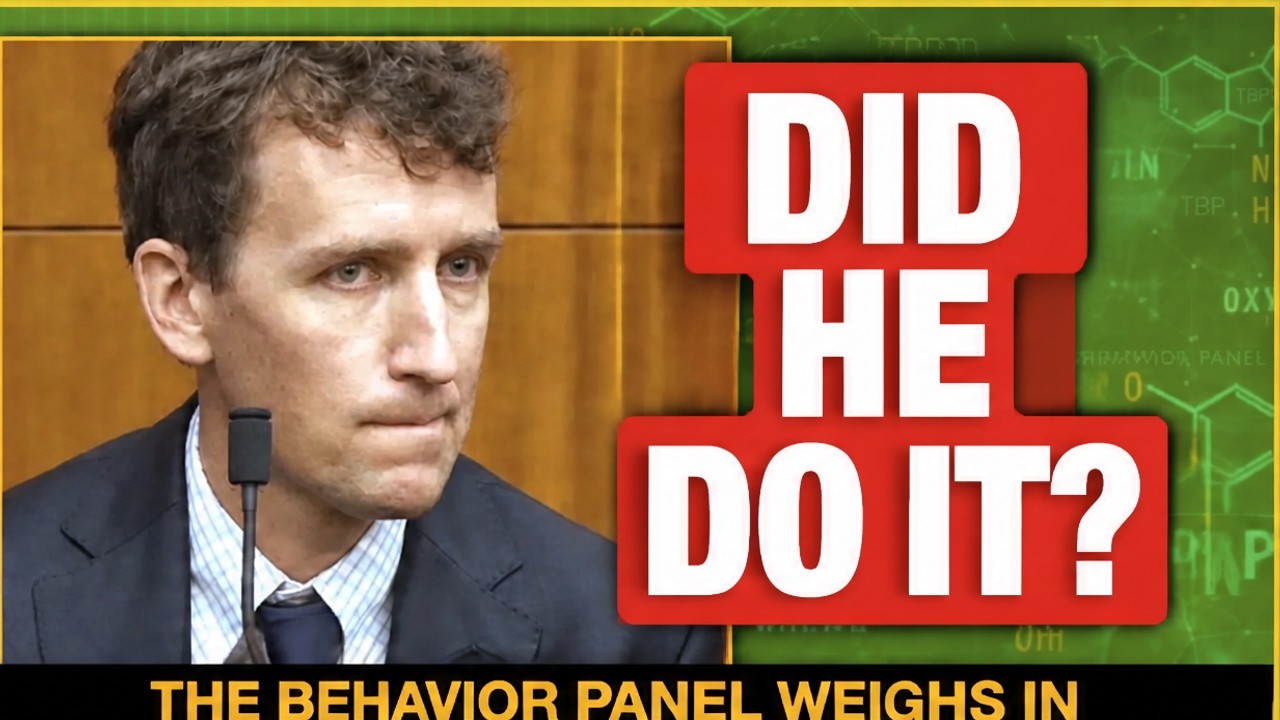
Lindsey Clancy Trial: Is Patrick Clancy Hiding Something? (Expert Analysis)
Watch on YouTubeVideo summary
The expert analysis of Patrick Clancy's testimony in the Lindsey Clancy trial focuses on determining whether his behavior indicates deception regarding the murders of three children or if it reflects genuine trauma. Observers note that while Clancy displays a consistent baseline when answering questions about mundane details, he exhibits significant physiological and emotional distress when confronted with specific aspects of the crime scene, such as photos of Lindsay's injuries or descriptions of locked doors. These reactions, including compressed lips, rapid blinking, deep breaths, and a "thousand-yard stare," are interpreted by the panel as authentic responses to reliving a horrific event rather than deceptive cues. The experts emphasize that his body language, characterized by swaying, lip quivering, and jaw tightening, represents mechanisms for containing intense pain and anger caused by extreme stress, warning viewers against misinterpreting these signs as guilt or lying.
A critical part of the examination involves distinguishing between Clancy's memory commitments and potential deception, particularly regarding discrepancies in his answers about suicide method searches on different dates. The panel clarifies that variations in his phrasing, such as shifting from "I don't believe so" to "No," reflect differences in how he processes information under pressure rather than an attempt to hide involvement. Furthermore, Clancy's admission to searching for information on country singers who died by suicide serves to contextualize his earlier statements, showing a willingness to clarify nuances rather than maintain a deceptive facade. The analysis also addresses the legal distinction between knowing facts and appreciating criminality, suggesting that Clancy may possess logical planning abilities while suffering from a mental state where his motives felt real to him, such as altruistic filicide driven by suicidal ideation, which complicates the assessment of his intent without implying deception.
The experts also scrutinize Clancy's account of discovering Lindsay with deep cuts on her wrists and a red line across her neck, noting that the wounds were not actively bleeding at the time he found her. His description of the 911 call, where he struggled to connect due to his phone switching between networks, is attributed to the immense stress of the situation rather than an attempt to fabricate a story. The panel argues that Clancy missed opportunities to mention his wife's alleged psychosis or hallucinations when questioned about her statements regarding voices, indicating that he was simply answering honestly while in a state of shock. Ultimately, the consensus is that Clancy is not hiding involvement but is instead a victim of the tragedy who has been emotionally worn out by three years of court proceedings, reliving a traumatic nightmare within a bureaucratic system while displaying honest pain rather than deceptive indicators.
Read the full video transcript
Today we're going to talk about Patrick
Clancy. Now, there's a lot going on with
him. A lot of people think he's actually
involved in the murders.
Let's take a look at his behavior and
see what we think. Greg, tell us about
the videos we're going to watch.
>> Yeah. So, all we're going to do here is
see what he was a defense witness, but I
believe this is prosecution that's
asking him questions. We'll get a pretty
good storyline and throughput. Let's see
what you think. Um, so on Monday, um, I
had asked you some questions about, um,
the Surface Pro that you and the
defendant, um, had in your home and had
access to and about whether you had
looked at a site, um, on suicide methods
on August 22nd. Um, if I could ask you,
did I did you look at a site for suicide
methods on August 23rd, 2022?
>> I don't believe so.
And I had also asked you on Monday about
um
when you were leaving the home on the
night of January 24th, 2023,
um your observations of Lindsay and and
the children. Do you recall that?
>> Yes.
>> And you had testified that um you
observed Dawson on the couch eating um I
believe you said chicken nuggets and
green beans. Is that correct?
>> Yeah. Do you recall um if you're facing
the couch where he was on the couch?
[cough]
>> Um if if I were facing the couch, he
would be to the right.
>> To the right. Okay. And um
showing you a photograph of the living
room. Um where there are some bowls on
the couch. Um is that a fair and
accurate depiction of how the couch
looked that night?
>> Yeah.
>> We could have this photo mark.
>> All right. Any objection?
that may be admitted
[clears throat]
>> now. Um,
as you're getting ready to leave the
house to head out to get the takeout,
um, did Lindsay say anything to you?
>> Nothing specific that I can recall other
than maybe goodbye.
>> All right, Greg, what do you got? Yeah,
we're going to see him with compressed
lips. I'm going warn you up front. A
bunch of you that watch us all the time
are going to find red flags in places
we're going to not agree with you. This
is a really good story. Really horrible
story, too. But those compressed lips in
the beginning, I think are withheld
emotion. I went back and looked for
pictures of him talking. He doesn't do
it all the time. So, it's outside of his
baseline outside, which drives back
home. My point, we're talking about
baseline in this courtroom, not baseline
while you're at home eating Cheetos. His
eyes blink as he processes data. This
guy's a sales guy for Microsoft. So,
it's probably highly likely he's
accustomed to a lot of data input before
he gives back information. So, you have
to take into account context. And I know
somebody's going to say he's doing
romancer because he's looking too hard.
But he isn't. He's looking hard in data
intake phase, but the minute he ask a qu
he has to answer a question, he looks
away and then comes back. And we're
going to look. He's going to his right
almost every time. and I'll point out
when he doesn't and places and him why,
but he goes away to re to recover some
information and comes back and answers
that question. That's good baselining.
He's got nothing to lie about here, so
we're going to get a good baseline out
of him. When we see him ask the question
about how the couch was set up and shown
a picture even, well, that's an
emotional thing if that's the last time
you saw your kid alive. So, we see his
eyes go to the same place, recover
information, then drop down into his
right in emotional accessing as he
thinks about it. One interesting piece
to pay attention to in this guy's look
at his forehead. No involvement
whatsoever. None in this first clip. So,
we're going to look for that and look
for is there a reason he does it? Is it
learned behavior? But wherever. And one
of the other things that everybody else
is going to point out is a single
shoulder shrub shrug. And it's when he's
asked, did she say anything else? And he
says, nothing specific I can recall.
That's appropriate. I don't remember.
So, that's appropriate. So, he's really
illustrating his thoughts. Let's see if
he deviates from this baseline, Scott,
so that you're not last. What do you
got?
>> Okay, thanks. Yeah, the lip compression
and that big deep breath and that eye
lock, those are all triggered by stress.
And at the same time, the emotional wear
on him from something like this, the
most horrible day of his life. Seeing
all that and being involved that
learning that everyone in his family is
gone now. That's that's unimaginable
imaginable. So three years of that
wearing wearing on him think every time
he thinks about every time he comes up
he's been thinking about this court case
coming up all that. So it's been on him
a lot. So I think like one of the first
what what you do when you first start
looking at someone you find you decide
what's missing that should be here. Like
Greg just said we're not seeing grief
muscle. We're not seeing any any
engagement in the chin boss. We're not
seeing anything uh that's overdone in in
the facial expressions department as far
as emotions go. And that's because
they're they're just worn out. He's done
that over and I'm sure over and now it
could be a situation where he's the kind
of person that doesn't do that or
doesn't have those things show up. But
if he is, the reasoning behind that
would be because he's just been doing
that so much. He's literally worn out
and he delivers his answer without any
of those awkward pauses we see when
someone's someone's being deceptive.
Every time we see a head nod or
headshake, those are confirmation nods
and shakes. Like even if he's shaking
his head no and saying yes, it's like
yes because there's a rhythm to that. If
he said yes and backed up a little bit
and his head was doing this just a
little bit, then you'd say that might be
deceptive. You have to look for other
cues and clues around that to make a
cluster to give you a better idea of
what's happening because there's not
people are relying a lot a lot on one
thing and that's the way his eyes look
in this. He looks like cober eyes. Don't
do that. Don't go down. Don't go down
that road. We make fun of that road all
the time. And everybody I know that's in
the body language and behavior world,
they make fun of it, too. So try not to
go down that road. It doesn't. It
doesn't.
>> You mean it's not true. [laughter]
>> It's Well, let me ask Chat GPT.
>> Now, I'm going to change. Hang on.
Chapter three.
>> I [laughter] got to go edit my book.
>> Go in. Get it done. So, and like Greg
was saying, the shoulders the shoulder
shrugs there at the end. Those are those
are appropriate. They should be there.
They should be there because he he's not
sure. I heck, I just did. I was not
sure. So, he's not sure. So, you see
that thing go up. That's fine. And he's
not getting specific about all the
details by adding um qualifiers to all
this minutia about spec every situation
which is happens a lot when someone's
being deceptive. They're lying about
something. They want to make sure they
create that picture of your in your head
of exactly what happened. He's not doing
that. He's just answering the question
and telling what happened. And he's not
thinking about what happened most of the
time. He's just delivering the answer
because he remembers those things. But
he doesn't reme remember the minutia.
The person being deceptive usually
remembers all the little tiny things
that were going on in there. That's not
happening here. So, leaving to the house
to get food and and things from the the
drugstore and all that, that's something
that happens all the time. They they're
doing that. They've got three little
kids at the house. They're doing that
all the time. And that's what happens.
So when he leaves, you know, he's not
going to be paying attention to all the
little details any more than you do when
you go outside to take out the trash or
anything else because it's something
it's a behavior that happens every day
or quite often over there. So, okay,
Chase, what do you got?
>> Yeah. So, they ask him this question and
it's the one question here if he
searched suicide methods.
>> He doesn't say no. He says I don't
believe so. So, pay attention to that.
They're asking him about the past and
when he's saying I don't believe so,
that's a current belief.
It's not a memory in [clears throat] any
way. So that that stood out to me not
knowing anything about this case. And
keep in mind there's a massive
difference between us telling you what
we see and us telling you like about the
case. We have no idea about the case.
We're not experts on the case. We
haven't reviewed the evidence. We're
looking at behavior here and behavior
should be case agnostic. A lot of you
tell us that you actually fall asleep
watching our body language and behavior
breakdowns, which we love. And from a
behavior point of view, it's absolutely
fascinating. But if our voices are
sending you off to sleep, we want to
make sure you're getting the most
restorative rest possible so you can
wake up sharp and ready for the next
day. And that's exactly why our sponsor
today is Helix Sleep. Helix Sleep makes
premium customized mattresses ship
directly to your door. Here's what I
love. You go to their website and you
take the Helix Sleep quiz. It asks you
about your body type and specific sleep
preferences and matches you with the
perfect mattress just for you. And this
personalized match can completely change
your sleep quality. Your brain gets the
real rest it needs. You're waking up
truly recovered. And that can
fundamentally shift your baseline energy
and of course your behavior. Now, here's
the facts. In an independent sleep
study, 82% of participants saw an actual
increase in their deep sleep cycle using
a Helix. That deep sleep is exactly what
your brain needs to recover. And USA
Today just named Helix a most trusted
brand for 2026. So, thank you Helix for
sponsoring. Visit helixsleep.com/tbp
to take advantage of their Labor Day
sale and save up to 30% off on selected
mattresses. Get the rest you need. Link
down in the description below and pinned
in the comments. Have a good night's
sleep. Um it I think the best case
scenario it it should be. But this
morning I went down a rabbit hole
of forensic psychology and it gets
fascinating in this case here. So
everybody keeps get getting dragged
toward this label here like postpartum
psychosis of some bipolar disorder.
There's depression going on.
So I looked this up. Um this is
according to whatever source I looked
at. So, Massachusetts law asked this
really precise question. At the exact at
the time that the murder happened, did a
mental disease deprive her of what they
call substantial capacity to appreciate
the criminality of what she was doing or
to conform her behavior to the law. And
Massachusetts uses this one word
appreciate very deliberately. So it
means like I understand and not just I
know a fact but it's actually
appreciating the fact and it's a big
difference in in legal terms. Huge
distinction there. So someone could
theor the theoretically understand
police are going to call this murder and
also experience reality through a a
mental state that's so distorted that
the act of murder feels morally
necessary.
And this is kind of like I really this
is like philosophy
like I'm trying to like I'm reading John
Bodriard here. So So if you raise
criminal responsibility
uh the burden belongs to the
commonwealth or the state, right? So
they have to prove criminal
responsibility. So what they're
basically saying is it's very narrow.
What functions in her mind were still
online
in 2023 when that happened? So the jury
is having to judge a mind that doesn't
exist anymore. And and so it's it's a
really interesting state. The brain is
there. Uh the the mind or state of mind
isn't okay like
what was the there was one final thing
here. So the diagnosis helps construct a
little bit but the function is what
decides the forensic question not a
diagnosis. A diagnosis is never the
question in in the forensic state. I
didn't know that until today. Mark, what
do you got?
>> Yeah. Yeah. So, uh yeah, difference
there between knowing and appreciating.
Quite uh quite quite interesting. Uh I
agree with you, Chase. The only thing
that I had an issue with in this video
was I don't believe so. You know, he
knows that he didn't look at anything on
the 22nd, on the 23rd. He doesn't
believe so. And so there was a little
like okay what's going cuz just like you
chase I'm like what the hell is this? I
don't know anything about this. So a
little flag went up where going okay why
why can you commit to the 22nd and not
commit to the 23rd. But look I mean
there's a possibility he is just happy
with the idea of of of not you know for
him that I don't believe so is the same
as not at all. I don't know. we'd have
to go through more of his language to
work to work that out. Uh Greg, I
completely agree with you. The the the
tightness that we're going to see in his
face, which would often look like
withheld opinion in other circumstances,
um it is withheld. I think he is
protecting
what's coming coming forward for him. I
make that decision because when he's
shown a photograph of the scene, we
really see the face tighten up
>> around that and many many air areas of
it tighten up. I would say to protect
him from what he's seeing and protect
from him issuing out his feelings about
that would be my my my judgment on this
at this point. So there's lots that I
see that makes a lot of sense here for
somebody who is themselves a victim of
this situation and just one thing there
that I don't believe so just for me like
you Chase I go oh hang on what's going
on what's going on here so it made me
interested to go go forward and see
whether that
develops in any way in any way Greg
>> I'll give you a data point so the only
reason I know is because I watch a lot
of videos to try to find this. I didn't
watch the I didn't watch the case in
order and that kind of thing.
>> But when the defense attorney starts
asking him questions, he asked him, "Did
you search?" And he says, "No." He said,
"Did you in fact look up the death of a
country singer called Tom Hall?" And he
said, "Yes." And he said, "And how did
you die by suicide?" And he said,
"Probably you click this and it took you
to this." So there's some nuance to the
actual question, right? So, is it the
nuance of were you searching because
you're right because you're trying to do
something nefarious or did you search
because you were double clicking down
the chase the rabbit hole
rabbits
>> but you know
>> country and western singers who'd off
themselves for whatever reason. Um, so
on Monday, um, I had asked you some
questions about, um, the Surface Pro
that you and the defendant, um, had in
your home and had access to and about
whether you had looked at a site, um, on
suicide methods on August 22nd. Um, if I
could ask you, did I did you look at a
site for suicide methods on August 23rd,
2022?
>> I don't believe so.
And I had also asked you on Monday about
um
when you were leaving the home on the
night of January 24th, 2023. Um your
observations of Lindsay and and the
children. Do you recall that?
>> Yes.
>> And you had testified that um you
observed Dawson on the couch eating um I
believe you said chicken nuggets and
green beans. Is that correct?
>> Yeah. Do you recall um if you're facing
the couch where he was on the couch?
[clears throat]
>> Um if if I were facing the couch, he'd
be to the right.
>> To the right. Okay. And um
showing you a photograph of the living
room. Um where there are some bowls on
the couch. Um is that a fair and
accurate depiction of how the couch
looked that night?
>> Yeah.
>> We could have this photo mark.
>> All right. Any objection?
that may be admitted
[clears throat]
>> now. Um,
as you're getting ready to leave the
house to head out to get the takeout,
um, did Lindsay say anything to you?
>> Nothing specific that I can recall other
than maybe goodbye. Then when you
approached the basement door, do you
remember if it was open or shut?
>> It was shut.
>> So did you open it and yell down?
>> Yeah.
>> And there was no response.
>> Correct.
>> And um showing you a photo here. Is is
that a fair and accurate depiction of
the stairway down to the basement level?
>> Yeah.
>> Have this marked as the next case
>> that may be admitted.
>> [clears throat]
>> Do you recall when you open the door to
yell down whether the light was on or
off?
>> Yeah, it was on, but Lindsay always left
the light on. Okay.
>> And you said you called Lindsay. Um, was
that a phone call?
>> Yeah.
>> And was that at approximately 6:09 p.m.?
>> Yeah.
>> And did she answer?
>> No.
After
calling down um the stairs to the
basement, did you leave the door open or
did you close it?
>> I don't remember.
>> Okay.
>> I I would think I closed it cuz I always
try to keep it closed. Um I'm not sure.
>> Okay,
>> Chase, what do you got?
>> So, one thing that came up for me here
um and I was wrong this morning is
people who are remembering tend to leave
a lot of holes. people who are making up
will fill in a lot more holes. Uh, but I
think this is different. He's answering
questions that are dry as hell, very
factual, and probably all tailored to
these yes or no corners that he's he's
got a stand in. U, but you'll see that
he he does these little rapid blinks
while he's answering. You'll see his
eyes kind of do this blinking thing.
This is very common in people who want
to stay small in the room habitually. Uh
or they're or they're not comfortable
asserting themselves or or
setting a boundary or pushing stuff.
Right. This looks like to me like a a
good baseline here for how he says yes
and how he says no. Um
Greg, I'd be curious if there's an
incentive here since you know more
probably about the case than any of us,
which is still 1% of what Yeah to it.
No.
>> U is is there I don't know if he has
incentive here. I'm not sure what the
case is
uh looking at. So if he's looked at as
some kind of suspect or something like
that.
>> Not l So the the what I know about the
case is she has pled guilty pleaded
guilty to murdering the three children
but by you just covered it by the
postpartum psychosis. So all they're
trying to do is prove is prove that
she's not a murderer in her DNA. I I
suppose they're just trying to get her
off of that charge so she won't be in
prison for the rest of her life and then
whether she goes to a mental institute.
Who knows? I don't know any of that. So
I don't think there's any he has any and
he's moved on. He's remarried
>> and everything is different for him. So
he has no real incentive here as far as
I know. So,
uh, I I we're going to I'm going to take
everybody you watching right now, even
if I'm sitting on your iPad on your
kitchen counter, we're we're going to go
all the way down the rabbit hole with
this forensic psychology stuff. I got
obsessed with this this morning. Like,
what what are these weird philosophical
It's not legal. It's more It's way more
philosophical. So, the prosecution's
pointing toward this planning stuff. So
Lindy Lindsay allegedly sends him out of
the house to go pick some stuff up from
the store or something. There was this
sequence, right? There's uh
deliberate actions and all of this is
relevant, right? But if you look at
forensic psychology, it forces you to
separate executive functioning from
something called reality testing. And
this is like standard psychology, which
I know a lot about both of those things,
but I didn't know it in this this
context. So those are different thing a
person can reason from a reason
logically coherently from a
catastrophically false premise.
You can still reason from something just
batshit crazy. So imagine someone
genuinely my children face some
unbearable fate unless I save them by
killing them. If it becomes
psychologically real planning can occur
down logic process logic works just
fine. Yep.
>> Yeah. So she can check the time, create
privacy methods, all this kind of stuff.
So the forensic fight now becomes was
the problem itself real
at the time in her mind.
>> So planning tells us something about
like the cognitive part of this. The
reality testing tells us like whether
the world that
she was imagining actually existed or
claims to imagine. So this is why
prosecution is seeing planning as
evidence of responsibility and the the
defense side of everything can and look
at some of the exact same behavior and
argue that an organized person was in a
psychotic or mental break reality.
Right? So it's a completely different re
reconstruction of the mind producing it.
That was like a French philosopher to
me. like Sartra is is what that reminded
me of reading that this morning. Uh
Mark, what do you got?
>> Yeah, so I would you know in the UK we
there's a little bit of simplicity to it
which is there's responsibility and
diminished responsibility and so then
you know well what is diminished
diminished to what extent what at what
point have you become irresponsible you
know you have or no responsibility
whatsoever. So, um, so I think that's
one of the areas that's being played
with with here, as you point out, Chase,
in some very, um, uh, levels of minutia,
which are which are, you know, tricky to
comprehend, especially when you've got,
you know, children that have been
murdered. That's that's a little finite.
That's a little, you know, that's not
diminished. That's that's completely
final. Um, look, I I've only got one
thing to say about this one, which is we
get a single shoulder shrug on I'm not
sure. That's really good.
>> Beautiful.
>> That's really That's really good. Like
that's, you know, as as you've often
said, Chase, you know, that's what the
truth looks like. That's what the truth
looks like. It's like, yeah, I'm not
certain about that. I'm not sure. So,
that is um uh that's a great example of
of of truthtelling. And so for that part
of the video, I had nothing more to look
at that uh that solved it for me. Greg,
what are you going on?
>> Yeah, Mark, it's funny because later I
call him the poster child for single
shoulder shrugs because he's
illustrating exactly what we always say.
When I'm uncertain, I raise one
shoulder. I'm telling you a fact and I
do it. Now we have a problem. But he
isn't. He's uncertain and he tells you
that out loud.
>> So he's got no reason to lie. There's
nothing urgent here. To your point,
Chase, he has no incentive. And I can
only imagine the complexity of the jury
instructions that this jury had to face
considering what we're just talking
about. You know, there's no such thing
as law of the ether, as they say. So,
the complexity of this law has to be one
that's really racking them. The reason
they are back out again tonight, I'm not
going to talk about her. I there's only
a couple of pieces of video clips of her
that I've seen. And we got to remember
she's on antiscychotics and all that
kind of stuff. So, when people are
looking for normal, I would say don't
look at her for normal or for a baseline
because you can't really read it from
across the room. She's not talking. This
guy I accesses the same place when he
answers it was shut. He's fidgety by
nature. I'm going to use a word that
Scott and I use all the time on TV. He's
apprehensive. It's clear he's
apprehensive. And he's not apprehensive
about being discovered. He's
apprehensive about having to live
through this again. And you can see it
because the minute he's released from a
question and she turns to do something
else, all that energy comes out. And it
all comes out. It's not coming out when
he's under duress. when he's being asked
a question, like if we were asking a
murderer, they would it would come out
then. But he does touching his hair, his
face, going up right up to his right
where we typically associate with visual
cues and then downright into where we
typically associate with with emotion.
And then he goes just moves his eyes
over to his left to an internal voice
and goes into a thousandy stare. What we
mean by a thousand yard stair is your
eyes go out of focus. Watch this in the
second time and pay attention to his
eyes going out of focus and him going
behind his eyes to work on something and
it's likely what he doesn't want to
relive because you see a bunch of tongue
juts come out that we associate with
distaste or disapproval then back down
the the lower right and back down the
lower left. This whole thing is and then
he even swivels his chair a little bit.
But he's doing all that while he's
sitting quietly waiting for her to to
present whatever is going to go into
into the case. and everything goes away
the minute she asks a question. So
that's all internal stuff for him.
Probably related to the death of his
children and that you can only imagine
how horrific the destruction of a family
he valued was. Then he's back to this
more than normal eye contact. Breaks
away to the same location when asked a
question. And then Mark punctuates
beautifully. I don't know. This is a
great example of a baseline coming out
over and over and over. And also a great
example of I always say as long as your
mouth, your brain, and your body are all
telling the same story, you're
congruent. His brain is doing a
different story while he's not being
asked questions. You can see he's
running a whole different tape in his
head. Scott, what do you got?
>> All right. Since we brought up uh
existentialist philosophers, I'm going
to say say this more lies on the on the
the side of of nichch instead of well I
guess art could go on they could go down
both roads but the way my perspective
will be from the niche perspective as or
let me go Kofka because there we go
because this guy Kofka has a story about
a fellow who woke up and he was a
cockroach and didn't say why turn into
the [ __ ] and nothing else it just said
hey this cat wakes up and he's a
cockroach he starts living his life like
that and the world's dealing like this
this I woke up and found out he was a
monster.
So, because every a lot of people think
he's the guy that did all this stuff.
And so, what we're seeing is the body
language of him reacting to to that and
I think trying to keep his his head
together during all this because the
questions are bringing him back to those
moments of the most horrific day of his
life. And there's these short he comes
back with these tight short answers and
that that's why we see that big deep
breath there at the beginning. That big
deep breath and that and letting go
because it's it's horrific. He's having
to go back and every question she asks
him, he has he has to think of his
child, his children's faces, what they
were doing, how they were sitting, what
was going on right then, right? The last
time he ever saw him. And then it gets
worse here in a couple minutes. But then
we see that head scratching and and
that, you know, his fingers going going
weird places and goofing with his ears
and stuff. Those are those all look odd,
you know, when he's fixing his hair and
all that. If you look at if you layer
that oddness over top of it, you say
there's a monster or just what about
some guy who's just stressed more than
he ever has been in his life. And that's
what we're seeing here. So
yet when you see a queue like that, you
see two or three things pop off at once.
You have to take into consideration, you
have to ask yourself what are what are
those and what else is going on around
those? What's happening in that in
what's going on in real time in that
situation? You have to take all that in
consideration. You have to put all that
into into the um information you're
sorting through. How does what's
happening affect what you're seeing? And
is what you're seeing affecting this
guy? And it is that rapid blinking and
and the voice volume, you know, and tone
going down like that. That's not fading
facts. Usually it is. If someone's being
dishonest, they're being deceptive. A
lot of times they'll get quieter toward
the end. His go really quickly because
that's his brain is saying, "Let's get
away from this, man. I don't want to
talk about this anymore." So it keeps
getting low and it goes a lot quicker
than it does with fading facts. So like
Greg was saying, if you see these and
compare them and say, "Wait, that's
something we hear all the time. It
doesn't that mean this? It means it
means this over here in specific
situations but not this one because
we're dealing with a a different
situation here. So
that's where I'll end mine there. All
right. Is that everybody?
>> Yeah.
>> So I went last.
>> Yeah.
>> Okay. Just making sure.
>> Then when you approached the basement
door, do you remember if it was open or
shut?
>> It was shut.
>> So did you open it and yell down?
>> Yeah.
>> And there was no response.
>> Correct. and um showing you a photo
here. Is is that a fair and accurate
depiction of the stairway down to the
basement level?
>> Yeah.
>> Have this marked as the next place
>> that may be admitted.
[clears throat]
>> Do you recall when you open the door to
yell down whether the light was on or
off?
>> Yeah, it was on. But Lindsay always left
the light on. Okay.
And you said you called Lindsay. U was
that a phone call?
>> Yeah.
>> And was that at approximately 6:09 p.m.?
>> Yeah.
>> And did she answer?
>> No.
>> After calling down um the stairs to the
basement, did you leave the door open or
did you close it?
>> I don't remember.
>> Okay.
>> I I would think I closed it cuz I always
try to keep it closed.
>> Um I'm not sure. Okay. [laughter]
Um, and so after you called Lindsay and
didn't get a response, what did you do
next?
>> I started checking upstairs.
>> And where did you check upstairs?
>> Um, first the bathroom. I thought maybe
they were taking baths. Um, but there's
no one there.
>> And then where did you go?
>> The kids bedrooms.
>> Was there anyone in the kids' bedrooms?
>> No.
>> Um, and then did you go to your bedroom?
>> Yeah.
>> And were you able to get into your
bedroom right away? No, the door was
locked. And that's when I knew something
was wrong. [clears throat]
>> And when you realized the door was
locked, um did you have a way to unlock
it?
>> Yeah, the previous owners
um when they installed the door knobs
had these uh like these keys that they
tape to the back of each door. So, I got
the one from Corora's room. Then I
started unlocking the the knob.
>> Okay. And um when you unlocked the door
to your bedroom um did you go in?
>> Yeah.
>> And what did you see when you um opened
the door and went in?
>> I just saw blood everywhere
and the window is open.
>> And
showing you here a photo. Is is this um
the bed in your bedroom?
>> Yeah.
Now, the way the bed is in this photo,
um, kind of pulled away from
[clears throat] the wall and slightly a
skew or at an angle, is that the way it
was typically?
>> No.
>> And when you left the bedroom that day,
um, for the last time prior to coming
home later that night, was the bed in
that position?
>> I I don't think so.
>> It may be admitted.
and you said you saw the window. Is that
correct?
>> Yeah.
>> Was it open?
>> Yeah, there was wind blowing in.
>> All right, Mark, what do you got?
>> Yeah, [clears throat] what have I got in
this one? Um, okay. The door was locked.
Um, that's when I knew something was
wrong. And you get a little bit of
movement in the chin here, you know. And
I I I looked at that and I thought,
[clears throat] okay, well, this could
be good because I think it could be, you
know, a little bit of emotion and chin
boss, but actually I think it's actually
milling in the in the mouth there. I
think one of his self soothers at the
moment is just and along with this very
kind of closed face as he tries to
control the emotions there. I think it's
a side to side motion rather than the
muscle here. I'm willing to be picked up
on that and taken to task. Um but either
way I'm I'm okay with it. uh I saw blood
everywhere and the window was open and
we see the breathing rate and capacity
go right up at this point. So so I think
there is the reliving of um some very
powerful emotions there. Panic, fear, I
would I would imagine it feels like it
looks like panic and fear to me. And
again, if if this was somebody, so I'm
taking on what I what I imagine
some people are saying about him. I
imagine they're saying that he in some
way was complicit and planned this or
did it or I don't know. I don't know.
[clears throat]
>> If that were true, if that were true, I
wouldn't expect him to be able to have
that emotion at that time because none
of it would be factual. and he'd have to
act it. And if that's him acting it,
it's too good. Like, it's radically too
good for acting. Uh it's a real feeling
that he's having um right now. So, it's
a good good sign. Uh the only problem I
have uh with this is um he's asked if
that bed is typical for the way it used
it it was normally. He says no. Uh they
then say is that how you left it when
you left it that and he says I don't
think so. Yeah, I don't think so. Okay.
So I am concerned like why don't you
know how that the you should know if you
left the bed that day. It's if it's so
radically out of place. You would know
it was radically out of place. It's like
wow who who who just moved the bed as I
just got out of it. So there's there's
there's some kind of logic and
credibility down there. But again, is it
his thing of like I don't believe so. I
don't think so. For him, I don't believe
so and I don't think so is good enough
as a no for him. It's good enough
>> as a as a no. So yeah, I don't know
enough about him and the culture.
This is me just trying to pick at it and
go, okay, what can I find? Okay, I found
that, but it doesn't match up with
anything else. It's not a cluster. It's
one thing that I'm having to go and
search for. And listen, if I go
searching for it, I will find it. But
does it make it accurate? No, I don't
think it's making it particularly uh
accurate. Uh Scott, what do you got on
this one?
>> All right. I think those short tight
answers again that lets us know he he
doesn't feel the need to add qualifiers.
We're not seeing these big emotional
upheavalss like you see a lot of times
in people who are and that happens
sometimes when someone is actually
feeling those emotions again because
they're reliving it and they'll come to
this shock thing and they'll have this
big upheaval of emotion. But when you
see somebody in a situation like this
who's been going over this for like
three years or something, they're just
emotionally worn out, just tamped down.
So the shoulder shrugs that you, you
know, usually indicates a lack of of
confidence, those should be there.
That's normal. And those single shoulder
shrugs like with the chin going over
there. I'm all the time talking about if
it's a shrug and the chin goes over.
Most of the time, man, that's deceptive
most of the time. But there are no
absolutes. And he actually does that
once. The other one single shoulder goes
up and he's shaking his head. No, as a
confirmation shake. So, but when he gets
over over here like this, I think he's
he's doing eye blocking as well. So,
that's three things at once. It's not
just the chin and the shoulder. that
doesn't knock it out of why it couldn't
be deceptive, but I'm under the
impression that that's not a deceptive
cue in this situation. So, I'm going to
ride I'm gonna ride on that one being
non-deceptive. All right, Chase, what
you got?
>> Yeah, y'all got it. Um, y'all had a lot
everything I had. Greg, I hope you can
talk about his chewing motion and and
some horses here in a second, but I
will. I'm sure. [laughter]
So this part obviously it's dark as
hell. It is hell. It would it would be
it's the hell on earth for anybody. This
is the worst thing that could happen to
somebody I think.
>> Uh so on the forensic psychiatry angle
of this uh they've been studying parents
that kill their children for decades. I
forgot what it's called. something
aside.
Um, but this this guy named Philip
Resnik, he developed this classification
system that is is insane. So, it's five
big things. So, you have uh filicide is
what it's called. altruistic,
acutely psychotic, unwanted child, uh
fatal maltreatment, and then spouse
revenge,
which is all five disgusting, horrible.
Uh but the disturbing one is is this
altruistic. So this this what they're
talking about here is a parent killing a
child while believing the death relieves
the child of some kind of suffering.
uh and I think it was 70% of the time it
accompanies some kind of suicide. So
a parent could del develop this belief
if if the child becomes motherless,
they're going to be in some terrible
existence and it's going to be way worse
than kind of like taking them along if
they're suicidal. Um, so prosecution,
uh, they they brought on this forensic
psychologist. His name is Kirk Hileburn.
Uh, and he reportedly testified that he
believed,
uh, Clancy was suicidal and she thought
her children would be better off, you
know, what if she died. But he rejected
the idea that she was psychotic and
concluded that that she totally
understood everything that was going on,
everything she did wrong. So, think
about this. The prosecution can
essentially say, "Yeah, she believed she
was sparing them suffering and
simultaneously say uh she remains
totally criminally responsible for
everything."
And what we're saying here is motive and
mental capacity are separate, two
separate forensic
questions, I guess. So saying she
thought she was saving them solves
nothing all by itself. So the real job
is figuring out for these forensic guys
what is the thing that produced the
belief was it like depression uh
psychotic delusion and these things that
she's hearing voices maybe like those
are called command hallucinations
so the machinery is actually where the
case lives and I didn't know that until
I was today years old what do you got
>> yeah I'm going to disagree with you guys
about emotion I think he does show a lot
of emotion here but it's so contained
that this is the beginning of it This
guy's face is really contained. I agree
with you guys there, Mark. I do think
the chin boss is actual grief, is actual
emotion. His flutters several times,
which is why it looks like it's coming
out of his chewing faction. But the
chewing actually comes after. And I
think the chewing is a way to deal with
the stress that's caused. That's an
adapter. But I see that chin boss engage
like several times and flutter. And the
reason I think it's control is watch his
upper lip get really long. I mean, you
have to really pay attention, but his
upper lip extends and that is that is
containment of emotion. And we see him
when she starts asking these questions,
he he gets to where he anytime he gets a
second, he does a whole lot of this
adapting. Looks like a baseball player,
coach, you know, signaling and that kind
of thing. But his chin drops and gets
lower and loader and lower. And then
Mark, that you brought it out, his
respiration exhaling in between breaths
almost to the point of hyperventilation
looks weird. Then you see that
fluctuating chin boss a few times, a
heavy swallow, and his eyes reen. So all
that stuff, watching that upper lip
extend down, that looks like containment
of emotion to me. And we always talk
about you should have residual emotion
from horrific acts. You should remember
it. You should feel it. You should
express it in your face. And I think
that's what we're seeing. And that
mouthgrooming is just a way for him to
release whatever is going on. Now, the
cause of the stress here, I think if we
were doing this about the woman we
covered last week, we'd be like, "Yeah,
she's full of it. She's lying. And
here's why." Because she would, to your
point, I mean, all of you have brought
it up at different times. If you ask
her, "What did you see?" Well, I saw a
bed that was sitting different. She
wouldn't have said exactly what she saw.
She would have given you a reason why
and rationalized and done something
different with it. This hard eye contact
and this reding of the eyes, that looks
hurt to me as much as anybody. It's
starting to be. If you don't have
empathy, this is a hard one to see, but
if you do have empathy, it's a hard one
to see. But it gets worse. It gets
painful to watch this guy. It is so
brutal. Just stick with us.
>> Um, and so after you called Lindsay and
didn't get a response, what did you do
next?
>> I started checking upstairs.
>> And where did you check upstairs?
>> Um, first the bathroom. I thought maybe
they were taking baths. Um, but there's
no one there. And then where did you go?
>> The kids' bedrooms.
>> Was there anyone in the kids' bedrooms?
>> No.
>> Um, and then did you go to your bedroom?
>> Yeah.
>> And were you able to get into your
bedroom right away?
>> No, the door was locked and that's when
I knew something was wrong.
>> And when you realized the door was
locked, um, did you have a way to unlock
it?
>> Yeah. The previous owners
um when they installed the door knobs
had these uh like these keys that they
taped to the back of each door. So I got
the one from Coror's room then I started
unlocking the the knob.
>> Okay. And um when you unlock the door to
your bedroom um did you go in?
>> Yeah.
>> And what did you see when you um opened
the door and went in? I just saw blood
everywhere
and the window is open.
>> And
showing you here a photo is is this um
the bed in your bedroom.
>> Yeah.
>> Now, the way the bed is in this photo um
kind of pulled away from the wall
[clears throat] and slightly a skew or
at an angle, is that the way it was
typically?
>> No.
>> And when you let the from that day um
for the last time prior to coming home
later that night. Was the bed in that
position?
>> I I don't think so.
>> It may be admitted.
And you said you saw the window, is that
correct?
>> Yeah.
>> Was it open?
>> Yeah, there was wind blowing in.
>> And when you saw Lindsay on the ground
there under the window, um, which
direction was her body facing?
>> Her head was closer to the house. Her
feet were away from the house.
>> Okay. And did you go to her?
>> Yeah.
>> And did you um observe any injuries?
>> Yes.
>> And what did you see?
Uh she had deep cuts on her wrists.
Um and she had a red line across her
neck. I I wasn't sure what it was at
first. Um but she cut her neck.
>> And um do you recall that these wounds
weren't actively bleeding at the time?
>> Um I later learned that I said that on
the 911 call. Yeah. And and when you
observed these wounds, um is it correct
that the 911 operator um asked you um or
instructed you to apply pressure if
needed?
>> I I don't recall the whole call, but I I
believe that's probably true.
>> Okay. And and you didn't at the time
feel the need to apply pressure to any
of those wounds. Correct.
>> Correct.
>> Did you say anything to Lindsay when
when you found her in that state? Yeah.
I said, "What happened?"
>> And what was her response?
>> She said, "I tried to kill myself."
>> Did you um ask her anything else?
>> I said, "Where are the kids?"
>> And what was her response?
>> She said, "They're in the basement."
>> And at that time, she didn't tell you um
that they needed help or they were in
danger or any or they were injured.
Correct.
>> Correct.
And so you mentioned um talking to
someone on 911. At what point did you
call um 911?
[snorts]
>> Um I don't know the exact time, but it
took a few minutes because my phone was
switching between Wi-Fi and 911. So I I
almost just started calling out for the
neighbors, but eventually it went
through.
>> Okay. Um so you had some difficulty
connecting, but eventually you connected
to the 911 operator.
>> Yeah.
>> Okay. And um did you stay on the phone
with them? um while they were sending
people to respond.
>> Yeah.
>> Okay.
While you're on um the phone with 911,
are they asking you questions and you're
responding with information about her
condition?
>> Yeah.
>> Okay. Um and if you could just look at
the screen here. Um I just Is this the
model of the first floor of your home?
>> Yes.
>> Okay. And so, um, we have here, um, the
sliding glass doors. Um, where would
the, um, basement door be in this model?
>> Directly before below the stairs.
>> All right, Mark, what do you got?
>> Okay. Um, I said, "What happened?" She
said, "I tried to kill myself." There's
a lot of uh, adapting there, and
especially like a venting around the
back here. Again, [clears throat] you
know, if you take that on its own, just
on its own merit in in isolation, then
yeah, you could go, okay, kind of red
flag. Why is he so nervous about that?
Not going
he's reliving the situation and the
panic of the situation and the um well,
the enormity of it. He's already
hyperventilating like he's going to be
getting hot from from all of that. Um
and and and in the reliving of the heat
of the situation,
um the 911 call for me, you know,
there's there's some I don't I'm not
quite understanding the logic of this
that the phone is trying to get a signal
and it keeps jumping to to Wi-Fi. Um as
well, I' I've not experience though the
phones can do some bizarre stuff.
Electronics can be a bit bizarre. So,
look, if I was wanting to play on the
side of he's he's a party to this, then
yeah, I would raise that as what is this
story about not being able to, you know,
make a fast 911 call? What's all this
nonsense? Um,
and again, you know, if these are these
adapters and this swear this this um um
uh chair swinging was going on and it
wasn't in his baseline because it shows
up all the time. He's a bit squirly all
the way through cuz it's a nasty
situation going on here. It doesn't kind
of, you know, with people who are being
deceptive, you hit them with a question
that is designed to put them under
stress and pressure. Yeah. And they
start peeking. It's like, "Oh, right.
That was because of my question." That
he's like that all the way through.
>> All the way through. So, um, yeah, the
only issue I have with this one is is
the 911
call. So, if you if if you think I've
hit on something and you're on the side
of like, he did it, put put your put
your comment down below, Mark, you're a
genius. You found out about the 911
call. Uh, Greg, what do you got on this
one?
>> Yeah, Mark, if it were material, I might
even look there myself, but it's not
material because she's okay. If she had
died because of lying on the ground for
another hour while he was running around
be a different story for me. I agree
with you. It It's odd. But it's also
kind of pertinent that when I looked at
my phone and it was trying to switch
over to voiceover IP, you know, you
would remember that because it'd be
stressful. The stressful stuff is what
you remember. We talked about him having
no no brow involvement. I'm a little
obsessed with brows, but him having
little to no forehead involvement. But
watch when they say, "Did he or did she
have any injuries?" Watch his brows go
up in shock very quickly. Residual
emotion. One of the few times we've seen
his brow move at all as he starts to
talk about these two things. Now, we
expect residual emotion in all these.
And then it's followed on by his
emotional eye accessing looking down
into his right. If you think about the
last funeral, your your eyes will do the
same. And then he's describing her
injuries. He even illustrates a line. He
doesn't put up to her throat, probably
out of taste or out of personality.
And when they ask him, um, I forget what
they ask him about, and he says, "I'm
not sure." And he does that single
shoulder shrug again. He's got disdain
or contempt in his face when he says she
cut her neck. He looks disgusted almost
at it. And then he does, I called it the
other night, the baseball coach
signaling all that stuff. And I think,
Mark, you're dead on. It's He's got so
much stuff going on in his head and so
much pain and so much other. I mean, you
can only imagine this has been, I think,
2020 or 2023. I don't remember when it
was, but if it's been several years
since this happened, you probably are
just now starting to get a scab on the
injury. Just starting to get a scab. Not
healed, not anywhere near healed, and
probably never will, but having to
relive it, it has to be just brutal and
tough. Um, Chase, what do you got?
>> Yeah. So, y'all covered what what I
would have said about the 911 call. You
can you can see the stress. It's it's
honest. It's very clean. Everything's
straight here. Um I I had a I have a
textbook still to this day called the
detection of malingering and deception.
And there's there's a piece in this. So
the alleged voice that she heard in this
case uh is people hear these command
hallucinations. You have to do this
thing. uh and they make some kind of a a
decision about credibility right away.
They either believe her or they say
everything's [ __ ]
So, a forensic psychologist approaching
this is going to get a lot more surgical
or has to uh you examine the
phenomenology of the voice. What did it
sound like? Uh did she recognize the
voice? Did it feel like it originated in
her head or somewhere in the room? Those
are two those are important distinctions
there. Did the voice have some kind of
identity? Was it a male?
And and how did she attribute authority
to this voice? That's a big deal. So,
and the other questions is is there a
larger delusional system attached to it?
Has she ever heard it before? Has she
ever been able to resist it before?
Uh what happened if she ignored it?
Right? So, there's a whole lot of
questions, right?
uh that matters because these things
that they call these command
hallucinations
they have patterns. So a classic
forensic review that that where they had
all this review of these papers uh they
published these rates that that ranged
crazily like from 40 to 90% give or take
which tells you that hearing a command
alone predicts nothing.
40 to 90% it's just all over the place.
So the it predicts nothing. So the
compliance with people hearing these
internalized voices and I wrote these
statistics down uh was associated with
things like recognizing the voice
and having the hallucination jammed into
another delusional system.
So the content like you need to kill
XYZ, you know, that grabs everybody's
attention, but the relationship, how the
person, the the perspective
carries a a ton more value. I was going
to say slode,
but that explains why the prosecution
psychiatrist, his name was uh Gregory
Sat,
uh attacked these characteristics of the
account. So the continuity, the timing,
all tons of inconsistencies that he's
that he says. So he's essentially
asking, and I'm sorry to go along here,
but here's what he's essentially asking
here. Does this claimed experience
possess the architecture that we expect
from the phenomenon that I'm hearing
from this lady?
So you examine the symptoms under the
label, right? Because one label doesn't
mean identical symptoms. It's not math
and it's not science. Psychology I just
don't think is science at all. I I think
it's numbers and data and predictive
analytics and stuff, but it's not like
doing a Excel spreadsheet. Humans don't
fit on those.
>> We've just lost all our subscribers who
are psychologists.
>> Sorry. [laughter]
All right. I'm going to focus on the
part where he's asking about speaking to
Lindsay and with all those cues and
things popping off because he's talking
about his person, his wife who he just
found outside with all that stuff wrong
with her neck and the things going on
with her wrists and that's what they've
been talking about and that's
mind-numbing and it's horrible when you
think about that and you're thinking
about your person doing that. You
weren't ready for that, man. you're out
getting Chinese food or something and
some at the at Walgreens and you come
home and you find that you're
discovering this stuff. Nobody prepped
you. Nobody did anything. You just
walked in and said, "What's going on
here?" Couldn't find anybody. You and
you stumble upon that. Yeah, that's
pretty hardcore, man. So, keep in mind
because we see that that that weird
cluster of cues. That's going to happen
to anybody. when when you start, like I
said before, when you start seeing a
bunch of cues pop off, that means stress
has been introduced into that situation.
What caused that stress? Is it um
something that was said? Is something's
introduced to the situation? What's
happening there? And then when you see
these cues pop off, look for other ones
around that. So, you see one cluster,
what else? What else is going on in
another cluster? Or is there another
cluster? What's going on in real time
around that situation? Think about
what's happening here. He's in court,
like I said before, 90,000 times. He's
talking about his family being is, you
know, isn't with us anymore. So that and
what that means is there's a lot of
stress when somebody scratches their
nose means their nose probably itches.
When they scratch their head, their head
probably itches.
[laughter]
So I'll find a spot in there. I'll go
like this. And that's all I'll say about
that. Uh Mark, what do you got?
>> Yeah, you just just make yourself
freeze.
>> Okay, [laughter] that's what I'll do. I
think you were last again.
>> Yeah. Yeah, you were last. I've been
>> Okay. Sorry, we had problems on what
number we were on in
>> Yeah. And Scott froze.
>> And when you saw Lindsay on the ground
there under the window, um, which
direction was her body facing?
>> Her head was closer to the house. Her
feet were away from the house.
>> Okay. And did you go to her?
>> Yeah.
>> And did you um observe any injuries?
>> Yes. And what did you see?
>> Uh, she had deep cuts on her [snorts]
wrists.
Um, and she had a red line across her
neck. I I wasn't sure what it was at
first. Um, but she cut her neck.
>> And um, do you recall that these wounds
weren't actively bleeding at the time?
>> Um, I later learned that I said that on
the 911 call. Yeah. And and when you
observed these wounds, um is it correct
that the 911 operator um asked you um or
instructed you to apply pressure if
needed?
>> I I don't recall the whole call, but I I
believe that's probably true.
>> Okay. And and you didn't at the time
feel the need to apply pressure to any
of those wounds. Correct.
>> Correct.
>> Did you say anything to Lindsay when
when you found her in that state? Yeah.
I said, "What happened?"
>> And what was her response?
>> She said, "I tried to kill myself."
>> Did you um ask her anything else?
>> I said, "Where are the kids?"
>> And what was her response?
>> She said, "They're in the basement."
>> And at that time, she didn't tell you um
that they needed help or they were in
danger or any or they were injured.
Correct.
>> Correct.
And so you mentioned um talking to
someone on 911. At what point did you
call um 911?
>> Um I don't know the exact time, but it
took a few minutes because my phone was
switching between Wi-Fi and 911. So I I
almost just started calling out for the
neighbors, but eventually it went
through.
>> Okay. Um so you had some difficulty
connecting, but eventually you connected
to the 911 operator.
>> Yeah.
>> Okay. And um did you stay on the phone
with them? um while they were sending
people to respond.
>> Yeah.
>> Okay.
While you're on um the phone with 911,
are they asking you questions and you're
responding with information about her
condition?
>> Yeah.
>> Okay. Um and if you could just look at
the screen here. Um I just Is this the
model of the first floor of your home?
>> Yes.
>> Okay. And so, um, we have here, um, the
sliding glass doors. Um, where would
the, um, basement door be in this model?
>> Directly before below the stairs.
>> Um, at some point in time, do the first
responders make their way down to the
basement?
>> Yeah.
>> And, um, do they take over care of the
children?
>> Yeah.
>> Where do you go?
>> They sent me upstairs.
>> Okay. And um
at this point, your honor, I'd move to
submit the 911 call as the next exhibit
>> that may be allowed uh pursuant to the
earlier Order.
taken to a hospital.
>> Yeah.
>> Um was that uh Beth Israel Deacon is in
Plymouth?
>> Yeah.
>> Did you also go to that location?
>> Yeah.
>> And at the hospital, were you able to
see your children?
>> Yeah.
>> Um and was Kowan then transported to
Children's Hospital? Yeah.
>> Did anyone ever tell you not to leave
your kids alone with Lindsay?
>> No.
>> In January of 2020, 2023, did Lindsay
ever tell you that she wanted to harm
your children?
>> No.
>> Did she ever tell you she was going to
kill your children?
>> No. All
right, Chase, what do you got?
>> So, watch his body. The breathing is a
like when we talk about a shift in
breathing, this is it. This is the
classic textbook breathing jumps. It
moves from the chest and it goes up and
it it moves from uh
relatively slow to high deep breaths.
face touching spikes like crazy. He's
swaying around and adjusting himself.
This is a person is trying to kind of
hold still and and stabilize is is the
word that I came up with this this
morning. He's trying to stabilize
himself.
>> But listen to the answers. Did anyone
tell you not to uh lead the kids with
her? Did she say she wanted to harm
them? All this other stuff. Uh
stress and honest can coexist. If you
watch our channel, you already know
that. But if you take the if you take
the body for a lie, and Mark's going to
love this, that's called the Oll error.
>> Yep.
>> So the the questions put his kids and
kill in the same sentence.
So the nervous system is going to move,
right? The nervous system do stuff. Uh
let's go down the psychology rabbit hole
forensics really quick because this is
fascinating. Um, the mind that the jury
needs examined is a mind that just
existed in 2023 for for like a I don't
know a couple hours.
>> Nobody gets to interview that version of
uh Lindsay, is it Lind Lindsay?
>> So
experts do this thing where they they
kind of perform something closer to
archaeology, right? They collect a bunch
of fragments, medical records, treatment
uh records and stuff, medication
changes, what other people observe like
doctors, friends, all this kind of
stuff. Uh same way they do like an ADHD
diagnosis.
Um,
with all this stuff they're looking at,
jurors, all the jury heard the evidence
that in in all these weeks before the
killings took place, Clancy or Lindsay
searched topics like hallucinations,
psychosis, postpartum depression, and
ways to die uh in the weeks leading up.
So now watch how dangerous
interpretation can become in a
courtroom.
So the defense can look at all those
internet searches and say she knew
something
scary was was going on. She was trying
to understand her own mind that was it
felt like it was deteriorating. Right?
So the prosecution can look at the same
exact stuff and they ask the question if
she understood these concepts
beforehand,
how much did that knowledge influence
the story that she's starting to tell
herself
and then a forensic psychologist has to
resist kind of choosing one side or the
other side because one Google search is
that definitive?
F no. Right? It's it's just full of
ambiguity. So one strange statement
carries all this ambiguity.
So convergence is where the confidence
level comes from. So do 20 different
pieces of evidence all over the place
start pointing toward the same
psychological state and and that's what
they've really got to prove here in this
case. Um all these questions that
they've got to ask. So evidence created
before the crime
[snorts]
usually carries a different forensic
seriousness
from all the explanations after what
happened. Right? So that's how you
rebuild a a mind that that doesn't exist
anymore. It's just one little fragment
at a time. And that's what they're
trying to do. That was fascinating to
me. This didn't have anything to do with
the body language year. If that was
boring, I apologize. It was unbelievably
fascinating to me to read some of these
things.
>> Uh Scott, what do you got?
>> I want to delete all that anyway, so it
doesn't matter.
>> Okay, [laughter]
>> that's Yeah, that's something you would
absolutely do.
>> Yeah, I'll take care of it. Don't worry,
I'll take care of it.
>> Please go ahead with your
[clears throat]
>> We'll put it out of that.
>> Go ahead with your stuff, Scott. Please.
>> My fascinating part. Okay, this only
takes about 30 minutes. [laughter]
Okay, here we go. There's not much I
want to be able to add to anything that
I've said so far because it all goes
back for me to stress and that's what
we're seeing. Everything we're seeing
pop off and happen goes back to the
stress he's feeling. So, I'm not going
to go over and and go over the same
things over and over and over. Greg,
what do you got?
>> I'm going to run down a long list. If
you want to know whether you have
empathy or not, if you're watching this
and you feel like LA, you ain't got it.
I'm just going to tell you because your
body should be able to pick up on all
the things we see in this guy. When she
starts talking about the 911 call, you
can see his anxiety build. He starts
getting he's naturally a little twitchy
as you know, but he starts moving faster
and he's keeps moving and then as soon
as they start playing the call, he has
exasperated exhales. You can see them. I
mean, it's pronounced. He's constantly
adapting, not like he was doing before.
He's downright eye accessing. That means
he's feeling emotion. There's a strong
intake breath. And then he braces his
neck and his chin so he can hold still.
He eye blocks with his chin down to
protect his throat. And then we see Mark
that same thing we saw earlier, but much
more pronounced. That fluttering
movement across his chin boss, this
muscle here, you can see he's trying to
contain it. He drops that upper lip down
to try to contain that. And then his
upper lip actually starts to quiver.
That's emotion all day. And if you can't
see the pain this guy's going through, I
mean, there's still more stuff even
there. When they ask him about seeing
his children, there's so much emotional
containment that that lip drops again
and his eyes reen. There's a shortened
response to everything that he asks.
This is just hard for me to watch. And
if you don't find it hard to watch or if
you think he's guilty because he looks
like he's in that much pain, I would go
back and look at everything he says and
follow it through. To Scott's point, he
lost his entire family in the night. In
the night. And now he's reliving this.
What is it, three years later?
>> This is brutal. hard to watch for most
of us. Sure. For you too. Mark, what do
you got?
>> Uh, yeah. Um,
well, let's actually Chase, look, you've
given me a bit of content here talking
about a fellow's error. So, um, so
Aellow's error, first coined by Paul
Ecman, I think in the book Telling Lies.
>> You're right. Yep.
>> And so, you know, everybody here is
interested in uh body language behavior.
Let me just take you through what a
fellow's error is. In the Shakespeare
play a fellow, Deszdona
um is accused by uh Aello of um of uh of
uh sleeping around.
>> Yeah. Yeah. Adultery with uh Yago. And
um and she realizes that to try and
convince him is point is not going to
happen. She's never going to be able to
convince him. And she is frustrated with
that. And that frustration causes her to
cry.
Iago, sorry, a fellow believes that the
crying is a signal that she is guilty
and therefore he kills her erroneously.
She has not been unfaithful at all.
She's always been faithful. It was just
her frustration that produced the tears.
He reads it as we often do in the heat
of a moment. we read body language
absolutely incorrectly and it's a raw
shack test. It's more of um a good
example of what's going on in our own
minds than somebody else's mind. So uh
Ecman coined the idea of a fellow's
error. Uh yeah, listen point of of of I
guess order here is that Greg, I'm right
in saying we don't get to hear in that
video the the 911 call,
>> but he does.
>> But he does. So when people watch when
you watch that when you watch it back
after this you're not hearing the 911
call but you're seeing the results of
that call
>> great
>> on him. Um it is uh to to your to
everybody's point who's been talking
about Kfka it is purgatory for him that
what you're seeing is somebody in in in
a nightmare. It's purgatory for him and
uh you know Kfka denoted Kfka was the
first absurdist uh arguably um and he
thought that purgatory to your point
Chase was not a a physical place uh he
thought it was a place in the mind
somewhere that a contained space in the
mind and it was denoted by confusion and
guilt and powerlessness.
And so I think you have those elements
there in that 911 call. Confusion,
guilt,
>> powerlessness. It's a classic CFKA
purgatory that he's in now because also
he's in a bureaucratic system. He's he's
in um he's in a court of law which is
classic. It's the trial, you know. So,
so it's a classic Kfkaresque absurdist
nightmare here, but to the to the
highest degree because it's absolutely
real for him. No doubt about it. Uh,
look at it again and and see what you
see now. If you were ever at all
doubting that this is somebody going
through hell right now, this is what it
looks like when they're trying to
contain it within the bureaucracy of the
system that they're in right now.
>> So it kind of like crosses streams with
the metamorphosis.
>> It does.
>> Um at some point in time, do the first
responders make their way down to the
basement?
>> Yeah.
>> And um do they take over care of the
children?
>> Yeah.
>> Where do you go? They sent me upstairs.
>> Okay. And um
at this point, your honor, I'd move to
submit the 911 call as the next exhibit
>> that may be allowed uh pursuant to the
earlier Order.
taken to a hospital.
>> Yeah.
>> Um was that uh Beth Israel Deacon is in
Plymouth?
>> Yeah.
>> Did you also go to that location?
>> Yeah.
>> And at the hospital, were you able to
see your children?
>> Yeah.
>> Um and was Kowan then transported to
Children's Hospital? Yeah.
>> Did anyone ever tell you not to leave
your kids alone with Lindsay?
>> No.
>> In January of 2020, 2023, did Lindsay
ever tell you that she wanted to harm
your children?
>> No.
>> Did she ever tell you she was going to
kill your children?
>> No.
Did you receive um
a few days after this this happened, did
you receive a phone call um from the
defendant while she was at Brighamin
Women's Hospital?
>> I think it was um like a week or so
after. Yeah.
>> And um what did the defendant say at
that time about what had happened with
the children?
Uh, she didn't talk about our kids. She
talked about what she went through.
>> And what did she say about what she went
through?
>> She said she heard a man's voice telling
her that if she didn't do it now, she
would lose her chance or something like
that.
>> And did she also tell you that she had
had a moment of psychosis?
>> I don't recall.
Did she mention the children at all
during that call?
>> I don't think so.
I mean, not directly.
>> Had she ever mentioned psychosis to you
before?
>> No. I didn't know what psychosis was
until after this happened.
Did she ever tell you she was hearing a
man's voice before?
>> No.
>> All right, Mark, what do you got?
>> Yeah. So, here in the video, they're
putting forward this first time I've
heard it, putting forward this idea of
of psychosis.
And um he doesn't jump on it in any way.
He doesn't I if if for me there was
guilt involved, this would be a great
opportunity
to jump on this even subtly and just add
a little bit of fuel to the fire there.
Just add something in there, you know,
subtly and does not take that
opportunity
uh at all. which which somebody who was
complicit in this in some way or had um
had some guilt beyond what he probably
already feels. I mean, you know, if your
kids have have uh been murdered,
uh you're going to feel some guilt.
You're going to feel some even if you
would, you know, absolutely nothing to
do with it, you will find some guilt
somewhere. That's the Kfka-esque
nightmare. you will find some guilt.
There'll be plenty stored up for you.
But he doesn't jump on it, which again
is a great signal for me that he's
nothing to do with it at all. Uh Chase,
I'd love to hear your thoughts on this
one.
I I listen to pronouns
maybe way more than I should. So this
guy named uh man something Pinabaker, he
wrote this book called The Secret Life
of Pronouns. It it it really it was very
influential to me. Scott Pinbaker.
>> I've got him. I've got him with James.
>> James. It was James.
>> It [clears throat] is James. Yeah. Is
that okay?
>> Uh who's a Texas guy as well. U But he
keeps the word our kids in there.
>> She talked about our kids.
>> Yep.
>> That's
>> She didn't talk about our kids.
>> Not the kids or she talked about my kids
like they were his. She took them. she
doesn't deserve to own them. The
ownership gets stripped away in his
mind. Doesn't happen. Uh and then the
voice, some man's voice telling her if
she didn't do it now, she would lose her
chance or something like that. Uh he he
doesn't want to make the quote neat.
That's a big deal. So he's like, I don't
recall on this psychosis stuff then. I
don't know uh what psychosis was until
after all this happened.
In my opinion, and I could spend half an
hour breaking this down. Uh I don't
think he believes the story about her
hearing voices. That's my opinion. I
think he's just answering uh what what
happened on a call. I don't think he's
buying it. And you can hear maybe some
of that uh before he explains it. She
didn't talk about our kids.
That's the line you need to pay
attention to. First thing he says, she
didn't talk about our kids.
Uh so I don't think I don't think he's
he's all in. Greg, what do you got?
>> Yeah. I think two big things. There's
another pronoun, she what she went
through. And he emphasizes she in that
one that is powerful because it wasn't
about our kids. It was about her. When
they ask him these questions when he
first starts, you see his blink rate
increase and people are going to go,
"Oh, he's lying." That's just his
processor working. And he wipes his
nose. An old absolutist trope about if
you touch your nose, you're lying. Well,
he just about cried. You could see his
eyes were red. He likely has some mucus
on his nose and that's probably where
he's wiping or it's uncomfortable. He's
wiping his nose. Then he goes into this
emotional eye accessing that we said
before. Residual emotion should be there
about his wife calling and then she
didn't talk about our kids. I agree with
you, Chase. If you hated her, you would
have thrown under the bus. And he's not
I don't think he's said a bunch of
horrible stuff about her. He's been
contained as far as I can see all the
way up through here. And then he says
she talked about what she went through.
And right after he says that he presses
his lips closed immediately. I mean
presses them unlike what we've seen yet.
Sets his jaw does two tongue juts and I
know you're marking that one. Scott does
two tongue juts and chews the inside of
his mouth as an adapter or thinking
move. I think that's anger containment.
And I agree with you. I don't think he
bought in. I think he is just not going
to say anything other than what he's
asked and he he doesn't exasperate
exhale as they're asked about the kids
as he's asked about what she said about
the kids before he says that um that
hour. I think it's sharp. It's contained
and this is containment of anger. I
think if we look really closely, if we
slowed this down, we'd see some
tightening of the jaw a little bit more
than you can even see on the surface.
So, I agree with you. Scott, what do you
got?
>> Yeah, I don't have much on this again.
Yeah. But well, we know why. But uh I
agree with Mark because if that was his
shot right there, man, if he wanted to
like he could have said, "Man, let me
tell you what was going on over there.
She used to freak me out. I wake up in
the middle of the night and she was
talking about some man over in the
corner. It wasn't that thing where
you're trying to wake up, you know,
sleep paralysis. It wasn't that. She was
having a discussion with some and she
could have gone down that road or he'd
always say she he could have said she
was all the time going do what and look
around and nobody would be there. Is
that you talking? Things like he could
have just run that thing home, but he
didn't. So, you know, so I I agree with
with Mark on that. And again, I'm laying
everything on stress from all that.
That's that's why we're seeing all we're
seeing.
>> Did you receive um
a few days after this this happened, did
you receive a phone call um from the
defendant while she was at Brighamin
Women's Hospital?
I think it was um like a week or so
after. Yeah.
>> And um what did the defendant say at
that time about what had happened with
the children?
>> Uh she didn't talk about our kids. She
talked about what she went through.
>> And what did she say about what she went
through? She said she heard a man's
voice telling her that if she didn't do
it now, she would lose her chance or
something like that.
>> And did she also tell you that she had
had a moment of psychosis?
>> I don't recall.
>> Did she mention the children at all
during that call?
I don't think so.
I mean, not directly.
>> Had she ever mentioned psychosis to you
before?
>> No. I didn't know what psychosis was
until after this happened.
>> Did she ever tell you she was hearing a
man's voice before?
>> No.
>> All right. It's got pretty interesting.
Mark, how's it looking to you so far?
>> Yeah. So I guess the question here would
be is there any deception here? I don't
see any deception at all. Is there
withholding?
Yeah, I would say there's behaviors
about withholding, but withholding
emotion, withholding
um the pain, not showing that. Um could
there be some withholding of some data?
Yeah, I think there could be he could
have some fuller answers to some of the
questions and he's not delivering that
fuller answer. An example of that I
think Chase would be in that last video
there where he may have an answer that
says le I don't think she she was
psychotic in any way. I'm not buying
this. Um, but he's withholding that.
Maybe maybe leaking out in the in the
pronouns as you as you say, but he's not
overtly
um taking the opportunity to speak his
mind. So, is he withholding? Yeah. Um,
is he is he deceptive? No, I don't think
so. Chase, what are your thoughts?
>> Yeah. Yeah. So, I think here's the the
big question that might sit at the
center of this whole case is can
somebody understand that killing is
illegal
while experiencing it as morally
necessary.
So, if if you could imagine holding the
the same two beliefs at or these two
beliefs at one time, police are going to
call this murder and these kids are
going to suffer unless I save them in
this way.
So the the first one tells us she
understood the law. The second one tells
us that the this result might have felt
like
inside of her head, right? Forensic
psychology kind of lives in that gap.
So, the jury, the jury that's deciding
right now, and maybe by the time this
video comes out, the jury will have
decided
uh whether she understood the true moral
meaning of what she was doing
or whether ill some kind of illness
rewrote that like totally rewrote it.
That's that's the big thing here. And
God bless those kids.
uh people who hurt kids.
I I it's extremely hard for me to to
have an ounce of sympathy, a a milligram
of of sympathy for any of those people.
And I maybe I I want it to be the case
where there's some mental incapacitation
here because
>> Chase, I'm I think I'm right in saying
that she has to it's understanding at
the exact time.
>> Yeah. So the understanding can change
pre and post.
>> Yeah.
>> So you got to go the jury have to go
inside somebody's head at a specific
moment.
>> Yeah. It it's remote viewing is is
basically what they're asking the jury
to do.
>> Um Greg, what do you got?
>> Yeah. The one thing that I did read is
that she was making some something she
written down or said that they had
tracked where she was saying that they
would all go to heaven and be together.
she was actually saying those words
which meant it took rational thought to
know she was taking their lives. And so
there's there's a lot of stuff here and
we're not here to solve any of that.
We're not here to solve was she in was
she capable. We don't know the facts.
What we do know is there are people who
want to blame him and say he did it
because so we looked at the video. I'll
tell you what I saw was a guy in pain. A
lot of pain. In fact, some of this was
hard to watch. And the pieces that I cut
out are even harder to watch. So,
there's pieces of this you just don't
want to see and you feel sorry for them.
This is a tragedy regardless. If she had
a psychotic break and she killed these
kids because she thought it was the
right answer, it's a tragedy for her and
for him and for the children. If she
with any kind of intent or any other
reason killed these children, it's a
tragedy still. I mean, this is a
horrible thing when you go back and
listen to what people said about them
and, you know, said they were loving and
all this. This is a whole family
destroyed in one evening and a guy who
has to live with it the rest of his life
and a woman whether she feels remorse
for it. We don't know. The thing I would
warn you about when you watch videos of
her and you see her with a blank stare
is she's on some antiscychotic drugs
that mimic Parkinson's masking which
means low facial expression and blink
rate. So be really careful when you're
watching any of those not to assign.
Even I look at it and go hell I can't
tell because it's what we see. Scott,
what do you got?
>> Yeah. The reason I like this one so much
is because we see someone who is uh
stressed as much as you can be stressed
and we're seeing all these things fly
off of them from a body language
perspective. We're seeing the
neurological part of it happening
because we don't see much happening in
the face when it comes to facial
expressions. We're seeing the the um the
lyic system isn't popping off and and
all these odd things like that. We're
seeing the natural things you try to do
when you're when you're uncomfortable,
when you're when it when it isn't on
fire. But I'm sure in a lot of ways it
is. It keeps I'm sure it has to keep
getting a shot in there at some point
because when he starts reliving those
things. So I think it's fascinating to
see somebody under that much stress and
we get to see what those uh stress
points are. We see we see him come out
in his body language from goofing around
with his hair and his ears and and
goofing around with his mouth and the
way he moves a little bit in the chair.
And I think he I think he did a
fantastic job of keeping it all
together. I don't I don't I still don't
understand how he could keep all that
together after witnessing that kind of
thing, living through it, especially
being in his family. So, I think that's
that's this is an opportunity for us to
see to to look at someone who, in my
opinion, is being honest, but a lot of
people think they're being deceptive
because of all the things they're doing
with their body language. Because we
teach to look for body language, to look
for cues, and we're seeing tons of them,
but none of them point toward deception.
So that I think that it's a great
example of of that. All right, fellas.
Thanks another good one and we'll see
you next time.
>> The behavior panel
>> seen yet. Sets his jaw. Does two tongue
juts sets his jaw. Does two tongue juts
sets his jaw. does two tongue juts.
>> Can't you