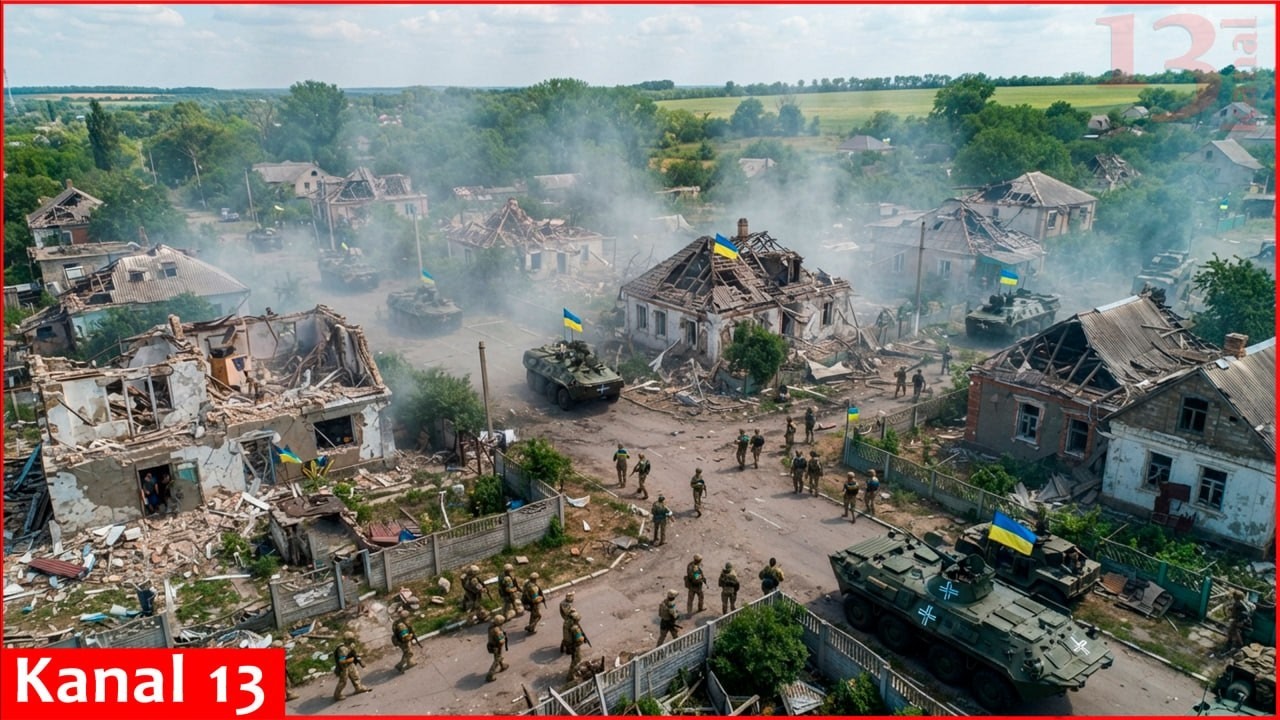
Liberation of Dnipropetrovsk region by Ukraine: fighting is taking place in area of one settlement
Watch on YouTubeVideo summary
The liberation of the Dnipropetrovsk region from Russian occupation is currently underway, though full control over the territory has not yet been restored. While Ukrainian forces have successfully liberated 26 settlements across the Donetsk, Dnipropetrovsk, and Zaporizhzhia regions since January 2026, fighting continues in specific areas such as the village of Daknoy. This ongoing offensive operation, which began in early 2026, has allowed Ukraine to regain control of approximately 745 square kilometers of land this year, effectively stripping Russia of nearly all its territorial gains made after troops entered the region in June 2025. In some instances, Ukrainian advances have pushed Russian forces back beyond the borders of Dnipropetrovsk into neighboring Donetsk and Zaporizhzhia regions.
Assessments from various international sources highlight the scale of Ukraine's recovery in this sector. The US-based Institute for the Study of War conservatively estimates that Ukraine has recaptured at least 627 square kilometers in the Dnipropetrovsk region, contributing to a net Russian loss of 233 square kilometers across the entire front line since the start of the year. Specific settlements identified as liberated include Zelenyi Hai, Novokatskoye, Grushevskoye, Tolstoy, Zorka, Yalta, Podovnoye, Mirnoye, Voskresenka, Yanvarskoye, Voronezh, Turnovo, Berezovoye, Stepnoye, Kalinovoye, Privolnoye, Zelenyi Yar, Rybnoye, and Krasnogorskoye. Despite these significant territorial successes, military sources confirm that the area around Daknoy remains under Russian occupation, indicating that the conflict in this region is far from over.
However, these military gains come amidst a concerning escalation in Russian missile attacks on Ukrainian cities using ballistic and hypersonic weapons. Deputy head of the main intelligence directorate Vadim Skibitsky reported that Russia has intensified its production of Iskander M ballistic missiles and S-400 systems reprogrammed for steep ballistic trajectories. In July alone, Russian forces launched 198 such missiles, marking the highest number since the beginning of the year, with estimates suggesting Russia is producing over 100 of these advanced weapons monthly. Intelligence suggests that Moscow may be stockpiling these munitions in preparation for a large-scale winter campaign specifically targeting Ukraine's energy infrastructure.
The intensity of this missile threat has created significant challenges for Ukraine's defense capabilities, particularly regarding air defense interceptors. President Volodymyr Zelenskyy noted that Ukraine received nearly three times fewer interceptor missiles for its Patriot systems from allies this year compared to the expected support in 2025. This disparity in weapon supply coincides with Russia's ramped-up production of long-range strike capabilities, raising fears of a concentrated assault on critical infrastructure during the winter months. As Ukrainian forces continue their offensive operations to secure the Dnipropetrovsk region and push Russian troops further back, the balance between territorial liberation and the defense against overwhelming missile barrages remains a central focus of the ongoing war.
Read the full video transcript
The liberation of Dnipropetrovsk Oblast
from Russian troops is currently ongoing
and control over the region has not yet
been restored. Sources in the General
Staff told Suspilne. Control over the
Dnipropetrovsk region has not yet been
fully restored. The area around the
village of Daknoy remains under
occupation. Fighting continues, the
military commented. The offensive
operation in the Alexandrovsk direction
has been ongoing since January 2026.
According to the General Staff,
Ukrainian forces have liberated 26
settlements in the Donetsk,
Dnipropetrovsk, and Zaporizhzhia
regions. At the same time, according to
the Deep State Map, Ukrainian troops
liberated the settlements of Zelenyi
Hai, Novokatskoye, Grushevskoye,
Tolstoy, Zorka, Yalta, Podovnoye,
Mirnoye, Voskresenka, Yanvarskoye,
Voronezh, Turnovo, Berezovoye, Stepnoye,
Kalinovoye, Privolnoye, Zelenyi Yar,
Rybnoye, and Krasnogorskoye. Earlier,
President Volodymyr Zelenskyy stated
that Ukraine announced the completion of
an operation in the Dnipropetrovsk
region,
during which it regained control of 745
square kilometers of territory and
liberated 26 settlements this year.
According to Al Jazeera, the
counteroffensive stripped Russia, the
aggressor state, of nearly all its
territorial gains in the Dnipropetrovsk
region after Russian troops entered the
region in June 2025.
Ukrainian forces, according to the
publication, also pushed them back
beyond the region's borders into the
Donetsk and Zaporizhzhia regions. The
US-based Institute for the Study of War,
which assesses territorial control based
on geolocated data from open sources,
conservatively estimated the area of
territory recaptured by Ukraine in this
region at at least 627
square kilometers according to the ISW's
assessment. Russia has suffered a net
loss of 233 square kilometers across the
entire front line since the beginning of
the year.
Meanwhile, Al Jazeera reports an
intensification of Russian strikes with
ballistic and hypersonic missiles on
Ukrainian cities. Zelensky stated that
this year Ukraine received nearly three
times fewer interceptor missiles for its
Patriot systems from its allies than it
will in 2025.
Vadim Skibitsky, deputy head of the main
intelligence directorate, told RBC
Ukraine that Russia is ramping up
production of Iskander M ballistic
missiles [music] and S-400 missiles
reprogrammed to fly along a steep
ballistic trajectory. According to him,
in July Russian forces launched 198
ballistic and hypersonic missiles, the
highest number since the beginning of
the year.
Skibitsky also stated that Russia is
producing more than 100 ballistic and
hypersonic missiles each month and may
be stockpiling them for a large-scale
winter campaign against Ukraine's energy
infrastructure.
>> [music]