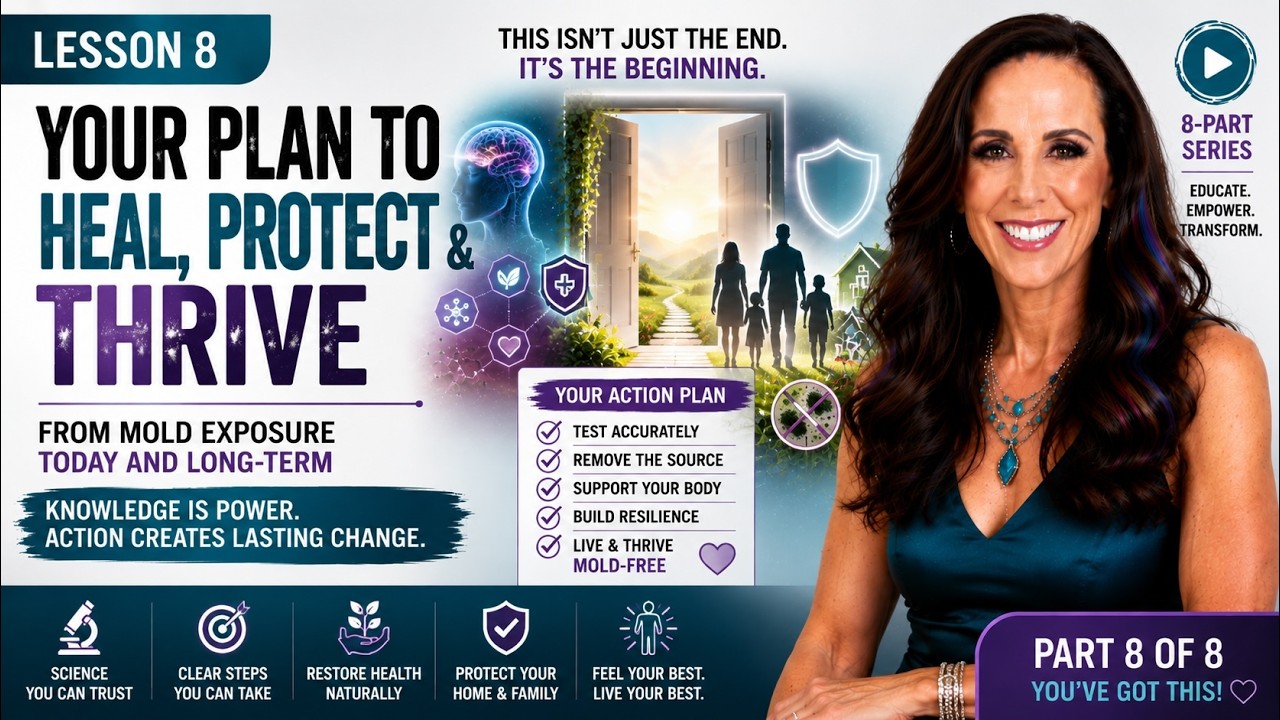
Lesson 8: Recovery Starts With the Environment | The First Step to Healing from Mold Exposure
Watch on YouTubeVideo summary
The most significant mistake individuals make when attempting to detox from mold-related illness is remaining in the very environment that caused their sickness without actively trying to improve it. Recovery cannot be fully achieved while the body continues to absorb toxic environmental signals every single day, which acts like filling a bucket with poison faster than one can clean it out. Even if moving locations is not immediately possible due to financial or physical constraints, there are still actionable steps available to reduce this continuous exposure, such as opening windows for ventilation, installing high-quality air filters in the bedroom, or temporarily staying with friends and family.
True healing begins by identifying and correcting the source of the problem whenever feasible through moisture correction, professional remediation, and a comprehensive environmental evaluation. Only after minimizing toxic onboarding do other recovery strategies like detoxification protocols, mitochondrial support, nutrition, sleep optimization, IV therapies, and nervous system regulation become truly effective. Without first addressing the external exposure, these internal healing efforts are rendered less efficient because the body is constantly fighting against new toxins entering through breathing or skin contact rather than focusing solely on repair and restoration.
It is crucial to understand that one's environment serves as a powerful tool for health that is often overlooked by patients seeking treatment. The goal here is not to create fear around mold but to adopt a balanced approach where individuals take seriously the need to know what contributes to their specific health issues. If an issue involves mold, it is essential either to leave the contaminated space or perform necessary remediation before investing significant money into testing and supplements that may yield limited results if the exposure continues unchecked.
In summary, decreasing toxic onboarding must be a priority before expecting full recovery from mold toxicity symptoms. While there are interim measures one can take when unable to relocate immediately, these actions should not delay efforts to fix the underlying environmental problem permanently. By prioritizing environmental correction alongside internal healing practices, individuals can stop their bucket of toxic load from overflowing and finally allow their bodies to heal effectively without constant interference from external pollutants.
Read the full video transcript
Hey guys, do you know what the biggest
mistake I see when people are trying to
detox from mold-related illness?
It's not what you think. It's staying in
the environment that made them sick
without trying to improve that
situation. You cannot fully recover
[clears throat] while your body
continues to receive that onboarding of
toxic environmental signals every single
day. Even if you can't move, there are
ways to improve the environment like
dilution is the solution to pollution,
which is what I always say, opening
windows, getting an air filter in your
bedroom, or if you can move, stay with a
friend, go to a hotel, whatever you can
do to decrease that toxic onboarding.
Otherwise, you're going to stay stuck
and your bucket's going to continue to
fill up with toxic load, and you won't
get well. I've seen it over and over
again.
Healing begins by identifying and
correcting the source whenever possible
through moisture correction,
remediation, and comprehensive
environmental evaluation. Only then do
detoxification, that mitochondrial
support you might be taking, nutrition,
sleep, IV medications, or IV vitamins,
and nervous system regulation, vagal
nerve toning, or
all of those kinds of things we do for
Olympic system regulation and immune
recovery become more effective. You have
to get out of the exposure first or
minimize your toxic onboarding with
mold. My goal is not to create fear
around mold. In fact, I think I'm a very
balanced approach with this, but it is
important to know your environment, know
what is contributing to your health
issues, and if it's mold, get out or do
the remediation to to do what you can.
Like I said, if you can't get out, there
are some things that you can do in the
meantime, but it's very important to
take that seriously, especially before
you spend a lot of money on testing and
supplements and all those things that
can help. Um, it's
helpful for people to understand that
their environment is one of the most
powerful tools and often overlooked for
their health.
Okay, guys, stay tuned for my next
series coming soon, and follow for more
great information on mold toxicity and
environmental medicine. I'm your MD, Dr.
Jill Carnahan.