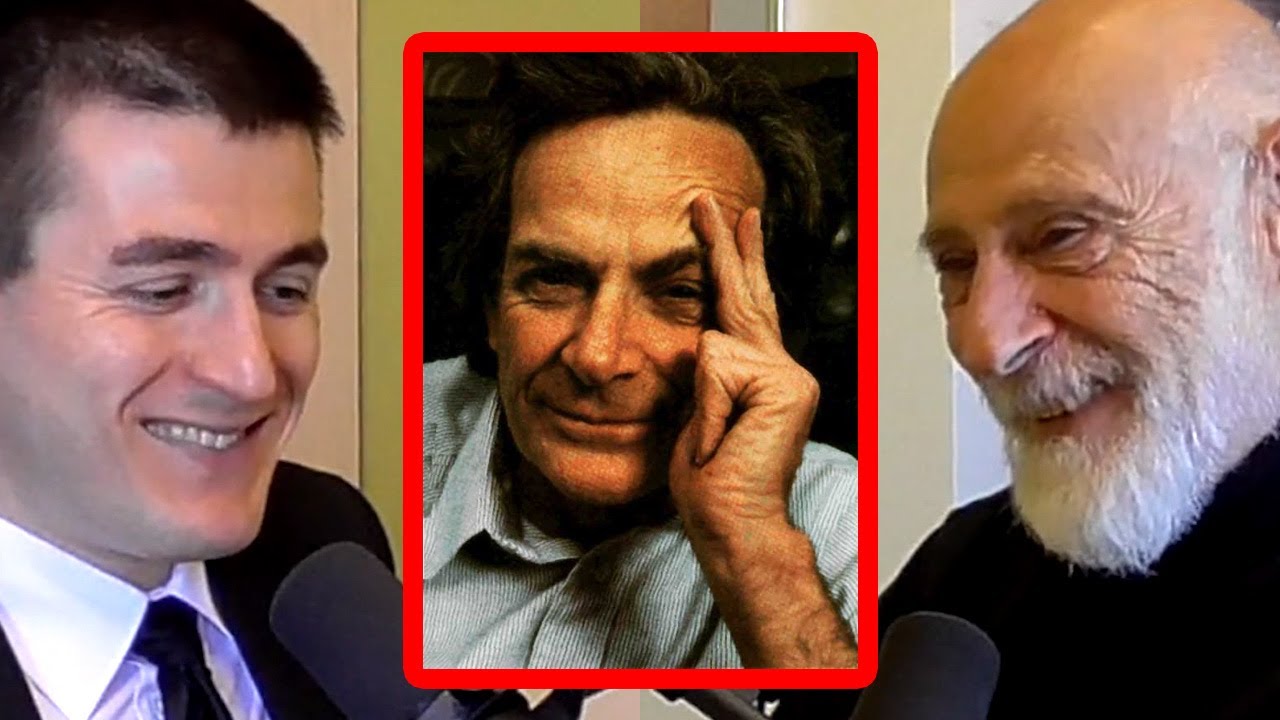
Leonard Susskind: Is Ego Powerful or Dangerous in Science? | AI Podcast Clips
Watch on YouTubeVideo summary
In this segment of the discussion, Leonard Susskind addresses the complex role of ego within the scientific community, asserting that it serves a dual function rather than being purely beneficial or detrimental. He argues that successful scientists must possess both arrogance and humility to navigate the challenges of research effectively. The necessary arrogance involves the conviction that one is capable of conquering nature's difficulties; researchers need this confidence to believe they can win battles against complex natural phenomena through their intellect and effort. Without such a bold self-assurance, many might hesitate to tackle profound questions or persist in the face of immense difficulty inherent in scientific inquiry. Conversely, Susskind emphasizes that humility is equally critical for maintaining intellectual integrity over time. Scientists must remain open-minded enough to acknowledge they are likely wrong on any given occasion and be prepared for their current understanding to change abruptly. This openness allows them to accept new ideas from younger researchers or peers who might challenge established paradigms with concepts the senior scientist does not yet comprehend, leaving them feeling lost but ultimately enriched by that experience. Susskind suggests that managing this tension between confident assertion of one's abilities and a deep recognition of personal limitations requires a special kind of personality capable of balancing these seemingly opposing traits simultaneously. Reflecting on his own career trajectory, the conversation turns to whether Susskind ever experienced moments where he felt completely wrong about fundamental concepts or questioned his specific abilities. He clarifies that while he did harbor doubts early in life due to his working-class background and discomfort within an academic environment unfamiliar to him, these were not rooted in insecurity regarding his intellectual capacity. Having entered the field of physics at nearly twenty years old without prior exposure to it as a concept from his family, Susskind admits to feeling out of place but never doubted whether he could succeed or secure a job. His internal struggles stemmed more from cultural and environmental displacement than from any fear of professional failure or lack of talent. The dialogue concludes with an affirmation that the ideal scientist is not defined by a single trait but by the ability to integrate confidence in one's potential for discovery with a humble awareness of human limitations. Susskind notes that his own work echoes this balance, embodying both outside-the-box thinking driven by ego and the willingness to remain open to new perspectives. He rejects the notion of chronic insecurity about success, highlighting instead how early discomfort was overcome not by proving one's worthiness but by simply engaging with the field despite feeling like an outsider. Ultimately, the synthesis of these attitudes allows a scientist to push boundaries without losing sight of the vastness and unpredictability of nature itself.
Read the full video transcript
[Music]
jumping back to a fireman just for a
second he had a little bit of an ego yes
what do you think ego is powerful or
dangerous in science I think both both
both I think you have to have both
arrogance and humility you have to have
the arrogance to say I can do this
nature is difficult nature is very very
hard I'm smart enough I can do it I can
win the battle with nature on the other
hand I think you also have to have the
humility to know that you're very likely
to be wrong on any given occasion
everything you're thinking could
suddenly change young people can come
along and say things you won't
understand and you'll be lost and
flabbergasted so I think it's a
combination of both you better recognize
that you're very limited and you better
be able to say to yourself I'm not so
limited that I can't win this battle
with nature it takes a special kind of
person who can manage both of those I
would say and I would say there's echoes
of that in your own work a little bit of
ego a little bit of outside-of-the-box
humble thinking I hope so so it was
their time where you complete you felt
you looked at yourself and asked am i
completely wrong about this oh yeah but
the whole thing about specific things
the whole thing what do you weigh which
cold thing me and me and my ability to
do this thing oh those kinds of doubts
first of all did you have those kinds of
doubts no I had different kind of doubts
I came from a very working-class
background and I was uncomfortable in
academia for Oh for a long time but they
weren't doubts about my ability of my
they were just the discomfort and being
in an environment that my family hadn't
participated in I know nothing about as
a young person I didn't learn that there
was such a thing called physics and
thought I was almost twenty years old so
I did have certain kind of doubts but
not about my ability I don't think I was
too worried about whether I would
succeed or not I never I never felt this
insecurity am I ever gonna get a job
that veteran never occurred to me that I
wouldn't
you