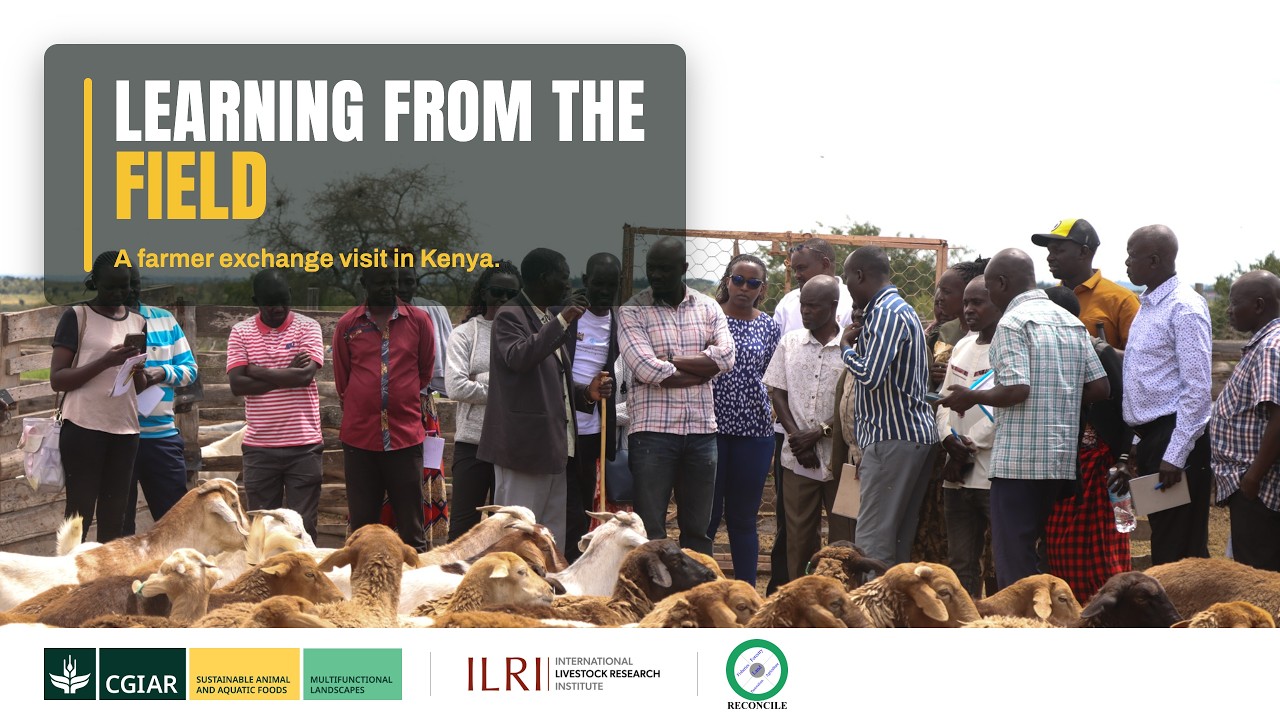
Learning from the Field | A Farmer Exchange Visit in Kenya
Watch on YouTubeVideo summary
This visit organized by a project focused on small ruminant production systems brought farmers from Bingo County to Kenya with the primary goal of demonstrating the potential for raising sheep and goats more productively and profitably. The initiative utilizes an entrepreneurial ecosystem approach that targets three key actors: producers, market agents or traders, and input service providers. By exposing these visitors to successful model farmers in Kajedo County, the group aimed to illustrate how indigenous flocks can be significantly improved through better management practices. This exposure allowed the visiting farmers to witness firsthand the growth potential of specific breeds, such as the pure red Maasai sheep, which they observed were much larger and more robust than those typically found in their home regions due to previous issues with inbreeding at the community level.
The tour continued by highlighting advanced agricultural techniques essential for sustainable farming, particularly focusing on large-scale fodder production. Visitors visited a pastoralist who successfully grows various types of feed crops and sells surplus produce, demonstrating that similar pastures can be cultivated back in their home districts like Edlands. A critical issue addressed during the visit was the prevalence of harmful inbreeding activities within local communities; by observing successful breeding programs at farms in Machakos County, the farmers learned how to enhance genetic quality without relying on external breeds alone. This experience provided them with practical guidelines and a new perspective on managing their existing livestock populations to overcome biological limitations caused by isolation and lack of diversity.
The educational journey concluded at the Eri Capiti Research Station and Wildlife Conservancy, where experts showcased best management practices regarding breeding, reproduction, health maintenance, and feeding strategies. At this facility, visitors had the opportunity to interact directly with other farmers and observe a specialized sheep management unit that exemplifies high-level agricultural standards. The visit emphasized the concept of "super improvement" through superior breeding methods, aiming to shift the mindset of local producers from subsistence farming to more commercial and efficient operations. By combining lessons learned from two distinct farm visits with insights gained at the research station, the program sought to equip these farmers with a comprehensive toolkit for improving breed quality and establishing reliable fodder sources.
Ultimately, the organizers hope that this field exchange will trigger a significant mindset change among the participating farmers, encouraging them to adopt the new skills they have acquired in their daily practices. The expectation is that all participants will return home ready to implement what they learned about large-scale fodder production and genetic improvement of their livestock flocks. By internalizing these lessons from both traditional model farms and modern research institutions, the farmers are poised to transform their local agricultural ecosystems into more productive enterprises. This transfer of knowledge not only addresses immediate challenges like poor growth rates but also builds long-term resilience against climate change by promoting diverse feed crops and healthier animal genetics within their specific environmental contexts.
Read the full video transcript
This uh visit we brought farmers from
Bingo County where we have a project on
small roomland production system. And in
this production system we are using the
entrepreneurial ecosystem approach where
we targeting three actors that is the
producers, the farmers, the market agent
and traders and the input and service
provider. And the main aim of this visit
is so as to show them the potential they
have in terms of raring the sheep and
goats to where they are very productive
and profitable. So we've taken them to
farmers that we've worked with before
who are now model farmers and be able to
improve the indigenous sheep and goat
flock and now they're very productive.
We took them to two farmers in Kajedo
County. one rares pure red masai and
they're able to see the potential that
the red masai sheep has in terms of
growth because they realize that the
sheep they have is quite smaller than
the one they saw in the first farm that
we went to and then after that we took
them to another pastor who is doing
foder production at scale and is able to
able to sell the extra so they're able
to see the different type of foda crops
that are there and they're able to see
the pastures that are being grown and
they're able to realize that they can
grow the same pastures in the land and
in the edlands where they come from.
Climate change.
the breeding that they currently doing
there you find there are a lot of
inbreeding activities that are really
going on at the community level that's
why we brought them to Kajiad County and
um here at Machakos County for them just
to see how the breeding activities can
be can be enhanced using the local breed
that they have without uh by just
observing some few uh guidelines that
they have been able to learn during this
entire processes.
forage.
for more than 2 years.
>> And then right now we are at the Erie
Capiti Research Station and Wildlife
Conservancy whereby we are able to show
them the best management practices in
terms of breeding, reproduction, health
management and feeding and they're able
to interact with other farmers and the
sheep management unit here.
M treatment
leveling
3,000 4,000 5000,000
meaning
super improvement breeding. Yeah.
We basically hope that after this
learning there there's going to be a lot
of mindset change. I really expect that
all what I foresee these farmers is to
be able to upake uh to put into practice
what they have learned in this entire
field processes just basically from the
two farm that we visited yesterday and
the one that we are visiting here at
Capit at Ill Capit research institution
and wildlife conservancy. So for them to
basically put into practice what they
have learned in terms of the foder
production and also in terms of
improving their breed quality.