Video summary
Melissa Armo introduces a specialized trading strategy centered on analyzing market gaps, which she defines as significant price differences between a stock's previous close and its next open. Rather than viewing these movements merely as trends, she interprets them as definitive signals of institutional "power" money flow that indicate where the majority of market capitalization is moving—either into long or short positions. By aligning trades with this dominant momentum instead of opposing forces, traders can avoid being whipsawed and capture rapid profits within minutes using margin trading or options puts, particularly in scenarios involving major stocks like Apple and Tesla where significant gaps reveal strong selling pressure from institutions.
The core methodology involves a disciplined morning routine rather than impulsive pre-market reactions, focusing on rating potential gap setups based on specific criteria such as a twenty-point drop to identify high-probability directional changes. Armo distinguishes between "good" gaps that signify genuine shifts in market direction and common "nothing" gaps, noting that downside moves driven by institutions often occur faster and more predictably than upside rallies. While primarily designed for day traders seeking quick entries and exits to manage stress during volatile news environments, the system allows flexibility where options positions can be held longer if momentum persists; however, she clarifies that this approach relies on simple directional analysis of institutional flow rather than complex strategies like iron condors or spreads, though students may adapt it later with lower-risk structures.
Success in mastering this "Golden Gap" system requires consistent daily attendance at live sessions to maintain cohesion and avoid missing critical information regarding position sizing and mental discipline. A major challenge for many learners is reverting to old habits such as buying dips or seeking a magical solution like prop accounts, so the course emphasizes overcoming these tendencies through new patterns and advanced price action reading instead of relying on sporadic participation. The curriculum teaches precise entry and exit strategies using options or day trades to achieve excellent risk-to-reward ratios while helping students break free from inconsistent behaviors that undermine profitability in volatile markets.
To support continued learning, upcoming classes are scheduled for August 22nd through the 23rd with an offer of free access to the trading room and newsletter through 2027 for those who sign up by Friday. This extended commitment ensures students can start before the fall earnings season regardless of their current experience level or schedule constraints, providing a structured environment to refine their skills without skipping segments that would leave them lost in the material. Ultimately, the video concludes with an invitation to join these sessions to build consistency and mental strength necessary for navigating institutional moves effectively throughout the year.
Read the full video transcript
Lots going on right now. For those of
you that don't know, my name is Melissa
Armo and again I am going to talk today
about the strategy I trade which is
based on gaps. We're going to go over
actually today's trade too
and I've been trading for a long time
now.
It's hard to believe. I cannot believe
that it's 4 and a half months until the
end of 2026. I feel like time is just
flying by. I think once you start
trading and you really start getting
into it and realize that you have a
passion for it, you're not going to
stop, you're not going to give up until
you get it right. And again, it's a
process for me. It was a process, too. I
ended up taking one class, did not learn
how to make money, but then I ended up
developing my own system, but that took
three and a half years. So, it's it was
a long process for me. And for many
people again, they go through class
after class after class after class and
jump around from doing different things
till they figure something out or find a
good system or take a class like mine.
I'll talk about my class at the end. I
teach a class once a month. But we're
going to talk a little bit about gaps
and how you can trade successfully using
gaps. If you have questions, again, you
can email me at melissatheckswish.com.
You can call me. I'm a live person. I
live in New York. I see Orin there. or
lives in New York too. Um, you can call
me at 929-3200 GAP. You can follow me on
probably YouTube is the best place to
follow me, although I am on X and
Facebook as well. So, let's talk about
what makes stocks move,
how do they move, how do they move up,
how do they move down, well, money.
That's the only way it can happen. So if
a stock is moving up, you have to have
momentum to the upside.
That means that buying money has to come
in where people buy the stock or the
market. Okay, some people are very
bullish on this market right now. I'm
I'm really not. Um but some people are
what makes a stock go down? Selling. Now
again, you have shorts. I like to short.
We're going to talk about today's trade.
Today we did a short, but mostly it's
selling. So people dump stocks usually
when panic or something happens. So
again, the money goes out of a stock and
the momentum goes to the downside, in
which case you'd want to be short or do
a put. Again, we're going to talk about
options today a little bit as well. A
put is an option, which is a short. If
you do not want to do day trades or
margin trades, the only other thing
available for you to short is doing
options, which again you would buy a
put. But anyways, what makes stocks
move? The simple answer is very easy.
It's money. And it's a lot of money.
More money than you can ever think of or
conceive, even if you pictured it in a
vault, you know. And it's it's
interesting because again we we envision
in our mind when we talk about billions
and billions and billions of dollars and
yet it's more than billions. It's
trillions of dollars that run through
the market on many many stocks and the
overall market in any given day. So all
we need is just a tiny tiny fraction of
that. A small piece of that in reality.
Lots of times people start trading they
think oh it's impossible and I can't
make it and I'm never going to get
there. You know that's not true. You
only need really one good trade a day to
be successful. You don't need to be
taking all kinds of crazy amounts of
size. You don't need to trade for six
and a half hours a day. You don't need
to do even 10 different strategies. You
just need one good strategy that you can
utilize. And then of course, depending
on the size of your account, you can add
size to it or you could take a beginner
size. Okay, the idea is getting in where
the money is going. If the money is
buying the stock and going up, you need
to be long. Otherwise, you're going to
lose. Again, if the money is coming out
of the stock, people are selling it,
dumping it, then you need to be short if
you want to make money or you're going
to lose. So again, there's a lot of
money in the market and I'm looking for
what I call power money. It's not just
any money because again, there's lots of
money. I'm looking for the power money,
the money that's big that has the
ability to move a stock because you
always have people going opposite
directions. There's sometimes you can
even see a tugofwar happening where you
can't even tell who's in control, the
bulls or the bears and there's like a
tugofwar. I don't bother with things
like that. I'm looking for right in my
face. See it? No question about it.
Power money. So power money in the
market is created by institutions who
set the tone for a stock's move in the
day. Again, we're going to go over
today's trade. It was a short. We did
Apple. People dumped it. They dumped it.
Why? I don't know. Doesn't matter to me.
Again, we'll pull up that chart in a
minute. But if you become a specialist
in defining what institutions are buying
or selling, then you will have a huge
advantage in your trading. Power Money
sets the trend, makes the trend, and
changes the trend in charts. And this is
why you can trade options or do day
trades or even swing trades with my
method specifically because if you're
following the power of money, it doesn't
really matter how you take the position.
Again, whether it's a swing trade,
whether it's a day trade, whether it's
an option or even a long-term option,
okay? The key is getting the direction
right and getting the pick. Okay? I'm
seeing some people come in late. Again,
if you're here late, if you want to chat
or ask me a question, you have to go
choose my name. uh new chat and then
chat in the box to ask me questions if
you want to ask me something. Okay, I'm
the only one that can see everybody's
chats.
Anyways, we're talking about power of
money. What is it? How does it get
there? Where does it go?
It's there. It's there. Even if you
think it's not there, it is. If you're
not trading in the side of institutions
in the market, you will have a hard time
seeing lasting and consistent success in
your trading. You have to learn how to
read and trade in the side of
institutional money. Even if you think
it's not, there it is. I'm gonna I'm
gonna use an example. I walk in Central
Park every day unless it's raining. One
day, this was like two weeks ago,
actually. I happen to be walking on a
path that I've walked I walk every day.
Um I saw two rats like on the path
eating something and then I saw another
rat and another rat and another rat. In
fact, I don't remember if I even posted
the video on YouTube or not. Um, and I
thought, "Holy crap, that's a nest."
Like, that's a rat's nest. Like, there
was a shrub and then there was a path
and then there was another shrub. Like,
it was a pretty narrow path and I
thought, "Oh my god, I walk by this
every day and there's a rat's nest
there. It's was there every day." And I
never knew. I never even knew it was
there. Now I know. You know what I mean?
So, I now when I'm walking by, I'm I'm
I'm looking. I'm looking. I want to be
careful. You know, it's the same thing
with power money in the market. You may
be in a position and you think it's
great and you think it's fine and maybe
you're even up in it or you hold it or
you go to bed. It could be an option,
could be a swing trade or or could even
be a day trade. You get in in the
morning and you think you're in a good
trade and you think you're in the right
direction and all of a sudden boom,
you're down or you get up the next day
and you're in an option and you're
upside down. Why? because you thought it
was going a certain way, but power money
really was there anyways and you were in
the wrong direction. Do you follow what
I'm saying? And it whipsaws you around.
This is happening a lot with people with
the market. I would say the last few
weeks. When I say the market, I'm
talking about the QQQs.
People are trying to make money going
long. People are trying to make money
going short. And they're getting whips
on. So, getting back to the rat story,
the rats are there whether I see them or
not.
That's nature and power money is in the
market going in a certain direction in
charge of stocks and ETFs like the QQQs
whether you see it or not. So you got to
make sure you're in the right direction
or again you can lose. Okay. Well, here
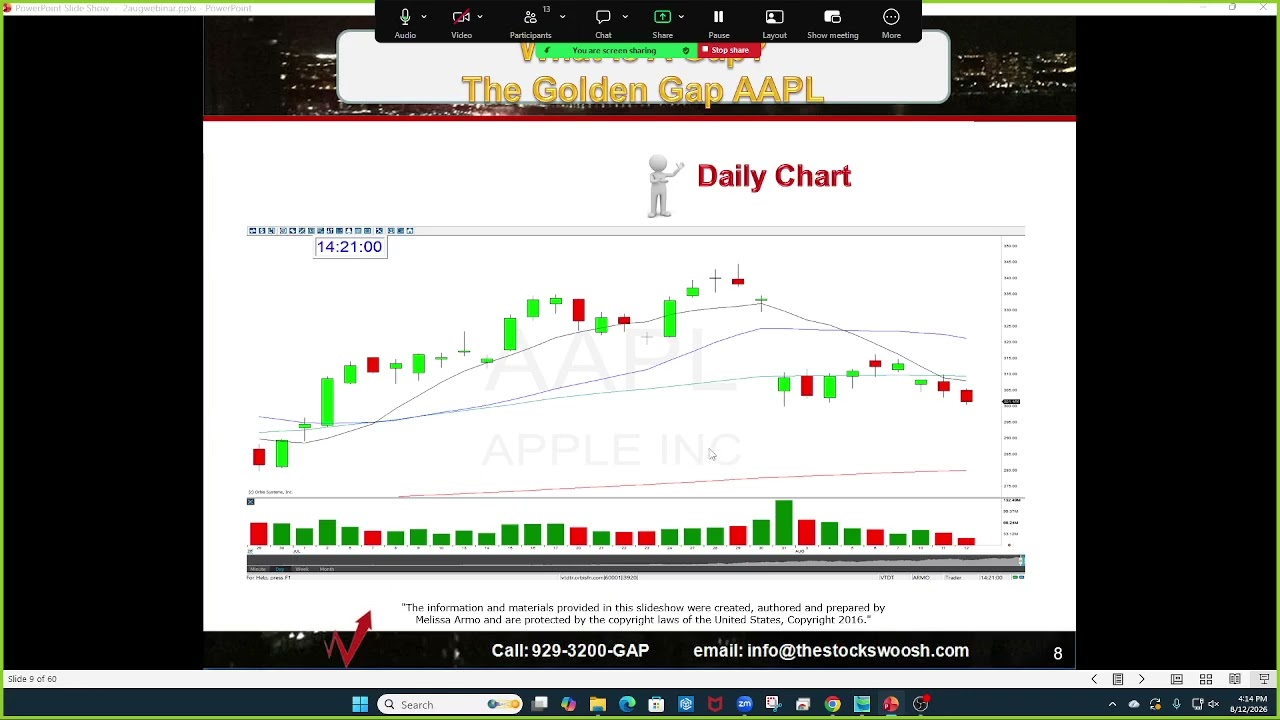
was the one we did today. Okay. So this
was Apple. So again, here was today. So,
I trade stocks that are gapping. We
actually been doing a couple trades in
Apple recently. You would have wanted to
be short Apple today. You couldn't have
made money if you were long. So, again,
stock closed here, open here, dropped,
fell. Boom. Again, this is a short. If
you tried to go long here, you would
have lost. Now, again, if you're saying,
"Well, how do you know who's in control
and what's going on?" Again, I developed
a system and a method where I rank the
gap to determine who's in control to
decide if I want to take the trade or
not. But I will say one thing. This is a
good example here, Apple, where you're
seeing kind of a tug and war.
This is going on for the last two weeks.
Okay. But we we shorted this today. We
made money shorting this today.
Actually, here was the trade. Uh we
shorted it. This is a margin trade. This
is a day trade at 30385. Got out at
30230. We were in and out of this very
very quick in less than 5 minutes. It
was a beautiful trade. I'll show you the
1 minute chart. And again, I'm trading
for a long time. You could have taken
less size. You could have taken more.
Made 4340. Again, less than 5 minutes.
Here was the trade. So, this is a one
minute chart in Apple. Again, every day
I'm looking to get boom, a move as soon
as I can, as quick as I can. Get in, get
out. Now, I could have held this trade.
I just want to show you here. I got out
right here. Here I was done. Boom. But I
could have held it. I actually could
have made a lot more. I did a put, too.
Now, for those of you wanting to do puts
and you're like, I don't want to do
margin trades. I just want to do
options. I'm doing options, too, but I'm
holding them longer than the time I'm
doing the day trades. If you want to do
your day trades as options instead of
margin trades, you would take a closer
strike. You would take whatever the
closest strike is. In other words, there
is a Wednesday expiration for Apple. You
would have done that here today if you
had done the trade with me if you wanted
to do it. That's not what I did. I did
an Apple out for longer because I'm
doing the Fridays, but you could have
done today's expiration.
So, when I'm doing a put, it's a short.
Again, same thing, but I hold my options
longer than my day trades. Okay, any
questions about that? Again, I'm not
sure if everybody understands how to
chat. You have to choose my name on the
chat box.
I see some familiar faces. I see Ann,
Jesse, a couple other people. Anyways,
what happened with Apple? If we go back
to the daily
again, who is in control of the Apple
today? The bears. The bears are in
control. And you could say, well, why
did it sell off? Well, I mean, you could
Google. There's like a lot of things
that have been going on with Apple
recently. There really wasn't anything
today that made you go yikes with the
Apple. But there's been lots of things
going on with Apple, you know, so
there's a couple lawsuits and some
social media things. So, but there
really wasn't anything today. The Bears
just decided to dump it and sell their
position in this. Okay.
Orin's there. John can hear too. Okay,
good.
Okay. So, again, we're talking about
power, money. We're talking about
control.
I mean, again, you can look at this and
see where the stock opened and where it
dropped. So, if a stock like Apple drops
$5, that's pretty good. Again, I didn't
get this whole move as a day trade. I
only got a snippet, a snippet of it. And
that's all you need to be able to make
this kind of money or more. So, again,
getting out of the trades very, very
fast in this type of environment, I
think, is very advantageous. Why? We've
got news with the war every other
second. Trump tweeting, there's so much
going on. If you can get in and out and
make your money in five minutes, it's a
lot less stressful. It's a lot less
stressful, I'm telling you. And then if
the option continues rest of the day,
fine. You can watch it again before 4:00
or hold it overnight. Again, you have
more time with options. With day trades,
you don't have a lot of time. You only
have between 9:30 and 4 anyways. Okay,
but let's get back to talking about
power, money, and momentum.
It's the power money from institutions
that causes these unrelenting moves in
one direction. Again, today is a good
example because people dumped it. They
dumped their apple. And this is again
this one directional bias is what we
call momentum.
Sometimes I go long. Again, I'm mostly
short, but I will go long. But if I'm
going long, I'm looking for momentum to
go long too to the upside. So don't
glance over this concept. I mean, this
is how you as one individual trader can
make money because none of us here have
billions of billions of dollars to
trade. We have to take whatever we have,
whether it's a certain number of
contracts, a certain number of shares,
choose our risk wisely. You can't risk
your whole account and say, "I'm going
to take this much risk per trade and get
the maximum maximum move I can get out
of it." So again, very difficult to do
if you're in some rinky dinky stock
where you have to scalp it and you can
only make 30 cents, 20 cents. Then
you're never going to get to the point
where you can make thousands of dollars
unless you're taking 20, 30,000 shares.
And that's just too risky, too. that's
even too risky too to take those types
of size positions in stocks that aren't
even liquid enough. But, you know,
getting back to what I was saying about
power money, there is a powerful message
here that will change how you look at
the markets and how you trade.
It's really about going with who's the
control, who's in control. And I'm not
talking about the trend. Do not confuse
what I'm saying with trend. Apple's
actually in an uptrend. It's actually in
an uptrend, but we shorted it today and
we made money and we've been shorting it
and making money. So, this isn't about
that. Plenty of people can dump stocks
that are in uptrends.
Do you follow what I'm saying? Or vice
versa. People will buy stocks in
downtrends and you can get momentum to
the upside in a downtrend. Now, I
personally did not buy SpaceX, but that
had a big momentum move a couple days
ago. I didn't do it. I didn't go long
it, but you could have. Okay? And if I
had, I would have been out. I'll tell
you that. But anyways, learning how to
read the footprints of big money in the
market will turn you into a great
trader. It doesn't mean that every trade
you take works, but once you start to
see what's really happening here, you're
going to get a lot more winners and
losers. And then some of the winners are
going to be big winners. Apple was just
a regular trade for me. It was just a
regular trade. It was fine. It could
turn into be a big winner though for me
if the put continues. We'll see. So
again, that's how you're really going to
get big moves. Everybody wants this big
big trade and everybody wants a big one.
You don't really know necessarily all
the time when you're going to have that.
It it there's a lot of factors that
contribute to sometimes whether
something really moves in a big big way
or not. If the market had fallen off a
cliff today, Apple, god knows, would
have gone to like 275, 280. You know,
the market's trying to hang on. We'll
see what happens with it, but it might
not. It might not tomorrow. We'll see.
But again, this concept of what I'm
discussing with you about control and
being with the power of money and going
with that to profit, trading momentum,
looking for momentum will allow you to
have good solid trades as an individual
trader. Again, whether you're taking a
100 share lots or one contract or, you
know, 2,000 shares.
Anyways, here is Zapple. Again, we're
just going to talk very briefly about
what is a gap. So, I trade gaps. For
those of you that don't know what a gap
is, we're going to go over it right now.
A gap is a difference between the close
and the open. So, this was back here
last week. Was it Friday? Friday, Apple
closed at one number. Open on Monday at
a lower price. So, every day there's a
close and every day there's an open. In
the US stock market, weekends are
closed. So, again, 4:00 was here, 9:30
was here. This gap down, open, dropped,
boom. So, again, this had a gap down.
Okay. So, what's a gap up? A bullish gap
would be here. This closed here, gapped
up, rallied. You could have gone long
Apple. I'm going back like a couple of
weeks. So, can you go long every bullish
gap or short every bearish gap? No. It's
not that easy. If it was that easy to
trade, no one would have to think or do
anything. We'd never lose any money. You
know what I mean? Everybody would win
all the time. It's not like that. Here's
an example of a gap down that reversed.
Again, I'm going back a month. This was
here. We closed at one price. The stock
gapped down. It did not fall. It
flipped. Okay. So, I'm looking at gaps.
I'm always trading in the direction of
the gap, but I'm not always taking
everything in the direction of the gap.
Is that clear?
Any questions on that?
Here's another one. CBX, we did this
trade.
This is a bullish gap. So, we went long.
This is oil chevron. Again, this has
been moving on news. Stock closed here,
gapped up, rallied. Boom. We were
talking about momentum. What's happening
here? People are buying Chevron. They
don't think the war is over. I don't
think the war is over. So, on that, we
agree. And institutional money is coming
in and buying it up. It's buying it up
in here. So, we did calls, which you
could have got out the same day or could
have held it one more day. You could
still be in it, actually. So, again,
this is a bullish gap. This was a long.
Okay. So again, the control in this
aspect here of the momentum trade that
you would have wanted to be in, you
would have wanted to be long. If you're
short here, you're you're upside down.
Here was the market. This was well, this
was from yesterday. Actually, let's pull
the market up. Um, can you see the
market
right now? I just flipped the chart up.
Can you see it
without me taking the thing on and off?
You should be You should see the QQ's.
John says it's there.
Okay, good.
David's saying the chat's disabled. Um,
it's it's not, but maybe you just don't
know how to use it. You can email me,
David, because I just saw your email.
David's new. I don't know why it's
saying that. I'll have to ask the
support guy because some others are
chatting. But just chat, email me if you
have a question, David or anybody else.
I don't know. I don't know why it's
saying that. Um, let's talk about the
market.
Okay, so here we are again.
The market is in an uptrend. We're not
that far off the highs. Fact, the last
time we made a brand new all-time high
was 63. Again, we're just talking about
the QQQs right now, not this buy. We ran
up to 74865.
So the trend of the market is what? The
trend is bullish. Okay. But again, you
could have shorted the market at
different periods in here in the last
month, which we did,
and made money because we sold off. I'm
going back here to the end of July. So
again, let's talk about what is a gap.
Even here the market was still in an
uptrend. Uh the market closed at 70535,
gapped down here and opened at 69467.
Closed here, gap down, fell off a cliff.
So even though the market was in an
uptrend, even here it was, you had a
huge sell off in here. Huge, beautiful.
Actually, from this day in here, 705
down to 661, it was almost $50. That's a
big move. Now again, one of the reasons
I prefer to short and I focus on
shorting is because moves to the
downside happen much much faster than
moves to the upside.
So I mean that's just that's not a rule.
It's just something that I've noticed
trading for almost 20 years and why I
decided to focus on shorts.
So anyways, why is reading institutional
money so important? It is important to
read the flow of institutional money in
the markets. You can make money from
their moves. Again, as an active trader,
you want to make money today, tomorrow,
this week, by the end of the week.
Whether the market sells off or goes
higher or they raise rates or they lower
rates, none of that should matter to you
if you're an active trader. You just you
got to make money today. It's Wednesday,
tomorrow's Thursday, then we have
Friday. You literally have to break down
your every day like that. A lot of
people get overwhelmed, you know, they
get overwhelmed when they're trading and
they want to make all the money back
that they ever, you know, lost trading
from doing crazy things at the
beginning. It just doesn't work like
that. You literally have to take your
time and chunk it out and look at every
day as an individual goal, whether it's
$500 a day or $1,000 a day or whatever.
And again, your goal should be set based
on your risk. You should be trying to
make one to one. So it's important to
read the flow of institutional money in
the market so you can make money from
their moves. When you trade with its
power, you're following the trail of the
money flow. Again, that changes or could
change on a daily basis. Okay, a bank
flow of money going in a certain
direction is what moves the market and
stops. And again, getting back to the
what the example I was saying before,
institutional money is in charge of the
market and stocks at all times. Again,
the rat story is a good example. I can't
see those rats every day, but I know
they're there now. So, when I walk
around that corner, I'm careful. I don't
want a rat running over my sneaker,
you know? So, again, it's like when
you're with the power, you feel more
relaxed and not so in fear about the
trade losing. Do you know what I'm
saying? And if you're against the big
money, it's scary. I think you're
starting to see that a little bit in the
last few days in the market. The market
has not been moving up and following
through to the upside. The market's been
selling off. Personally, today we had
econ out today. I didn't think there was
any takeaway from it at all. I thought
it was a big fat nothing burger and
everybody on TV was hyping it that
they're not going to raise rates in
September. I don't believe that this
means anything. The number that was
today and the market reacted
accordingly. I think what I what I was
my gut intuition was right because the
market didn't rally today. It gapped up
and sold off. So the market really
doesn't believe that there's not going
to be a rate hike no matter what Poly
Market says or all these other betting
places say. Do you follow what I'm
saying?
So it creates long-lasting momentum and
sets trends. When you're looking for
institutional money, you're really
reading the side of power in a stock.
You want to be on the side of power in
order for you to make money trading.
Very important. If you're on the side of
power,
it's going to be easier for you to make
money. It just is. And you won't have to
take necessarily some huge size. And
again, ideally, even if you're in an
options trade, even if you want to hold
it, an option, if it's going to go and
it's in control with institution of
money, should go within 24 to 48 hours.
Should start to go in your direction.
Now, here was another one we did. This
really was the gap of the month last
month in July. Too early to say what the
gap of the month will be for August
because we're it's only August 12th,
but we were in the height of burning
season here last month and we had a gap
in Tesla. So, I'm just showing you this
here. This is a one minute chart. This
is a great example of momentum. This is
also a great example of selling because
that's what happened here. People dumped
Tesla. Again, why doesn't matter to me.
I don't even know what the earnings
said. But the night before the stock
closed up here snug as a bug around 373
and change gap down here in the morning
absolutely got crashed and was under
340. We shorted this and we did puts. So
you can see this again. This is a one
minute chart.
This is just selling selling selling
selling selling selling selling. This
can't get a breath of life. If you're
trying to buy this for a gap fill or
trying to buy the dip or buy Tesla or
whatever you're getting killed here.
It's just breaking every every second
it's breaking off. This is a good
example of momentum and it's a good
example of what I do very well trying to
find stocks like Apple that are that are
under pressure that are under selling
pressure. Those are the ones I'm looking
for and then I decide to short. So
again, how can you read the side of
institutions in the market? How do I do
it? I do it by reading gaps. We've
talked about a little bit about what a
gap is, but it's really my skill set of
reading the gap, reading the direction
that allows me to pick Tesla or pick
Apple. So, gaps are a secret ingredient
in charts that many people overlook and
yet they hold a lot of significance.
They're actually very important. There's
nothing more important than a gap.
Actually, gaps make the trend, set the
trend, and continue the trend in stocks
in the market. They set the trend
because they are definitive and
demonstrative change and show a price
and what is called an event. And again
in the case of Tesla in particular that
event was created because of the
earnings. Okay.
Sometimes you have gaps in the QQQs
because of economic events like we have
some economic data tomorrow morning
quite a bit before 9:30 before the open
and then we have also a consumer
sentiment number Friday after the open.
So there's still some more inflation
data out this week that could move
markets Thursday and Friday. And again,
they could create tomorrow a gap in the
market. Gaps are a real show of the
power of money. Gaps either continue the
trend or in fact change the trend. Very
often when something's going to change
trends, sometimes it just happens like
that out of nowhere. There there's like
no uh precursor necessarily to it. You
follow what I mean? It just changes just
flips. That's a lot of times what people
find scary, especially if they're in a
stock and they're long a stock and they
think they have a good trend and then it
flips. If you follow the gap, you'll be
following the power of money and that is
the whole point. Okay,
any questions here so far? Again, I know
some of you haven't figured out the chat
thing. Um, David was asking about it. I
think if you choose my name,
if you choose my name, it should let you
do it.
Does anybody else have questions? If you
don't know how to chat or it's not
letting you, again, you can email me at
melissathestockswish.com
if you have questions.
Okay, I'm going to keep going.
We started talking about institutional
money. There's one thing and one thing
only that can move the direction of a
stock and it's money. It's not a little
bit of money, but it's a lot of money.
more money than a whole trading room of
people with a thousand people in it
could even do. It's what I call power
money. Power money is in charge. Power
money is in charge of the stock's
direction. Trends are set and moved by
the power money people of which there's
a lot of in the market. It's large hedge
funds. It's big banks that take
positions.
Lots of hedge fund money in the market.
Retirement funds, retirement money, big
big traders. The amazing thing is that
as negative as traders and analysts talk
about the power of money people, they're
the reason that one individual can be
successful in the market. If you didn't
have the power of money moving stocks,
we never be able to make money long or
short. Honestly,
you know, the volatility and momentum
that's in the US stock market is what
makes it so beneficial and advantageous
that people all over the world want to
trade our market. Even in their people
in different countries, it's fluid. It
moves. It has a set close and open.
It's got lots of volume. You will get
filled in trades. Again, I'm not doing
stocks that have low floats or no volume
or too sprey or penny stocks. I'm not
doing any of that crap. All that stuff
is just crap, crap, crap. Everything
that we do, like we did Apple, Tesla,
you've heard of these companies. You
know these companies, okay? They're not
going to go under either. It's not like
you're going to be in a position one day
and then the company's going to go
under.
Let's talk about another one we did.
INTC.
So, let's talk about a gap. Stock closed
here, gap down. Boom. Fell. Let's go
back to the end of July. Stock closed
here, open here, dropped, fell. Could
have held it for a week, came all the
way down again. This was right around
100. Fell all the way down where to 80
bucks. This is a big move. This is a
large move for a stock of this price
point. It's a 20% move. And again, you
would have been in puts to get this
carry on down through into there. This
was the end of July.
But again, there's a lot of gaps in
there. A gap is a difference between the
closing price of one day or the opening
price the next day. It's a break in
price action from one day to the next.
Simple. Okay. And guess what? Almost
everything gaps every day. It's very
very rare that something something would
not get. It does not mean it's a good
gap. It does not mean it's a predictable
gap. Do you follow what I'm saying? What
do I mean by predictable? That I can
look at it in the morning and say this
is going to drop, which is what I said
with Apple today. Some gaps are just
nothing gaps. Maybe they go up, maybe
they go down, maybe they go with the
market. On any given day, most stocks do
go with the market. The market rallies,
the stock rallies. If the market falls
like the market fell today, the stock
falls too. So there's there's many gaps
on any particular day, but there's not
many many good gaps. Do you follow me?
So I invented a system to find the good
ones because there's less good ones than
not good ones. And again, it's about the
predictability.
It's if this then that. And that's how I
look at the checklist when I'm going
through and trying to decide what to do.
Now, here was another one that we did.
Stock closed here, gap down. When was
this last week? Closed here, gap down,
rallied. Closed here, gapped up, fell.
Closed here, gap down. Boom. We did a
short in this. Boom, boom, boom. This
fell. This broke 470. So, we did a day
trade in the AMD. Now, I'm just going to
show you here. I'm showing you a
15minute just to give you a different
vantage point here instead of a one
minute. But this was yesterday the 11th.
Look at look at this
right out of the gate. It's the first 15
minutes of the day. It's up here around
$474 and change. This fell what? Boom.
$10 out of the gate. Boom. What? Again,
we're just talking about institutional
money. What do you think's happening
there? Somebody dumped it. Somebody just
dumped that thing. So again, if you're
long this,
it's not good. So again, this makes you
want to do what? Well, you should think
about going long, but it's the
antithesis of what a lot of people want
to do. A lot of people want to go long
when they see a selloff like this. I
mean, you I'm sure you've heard the
buying low, selling high. That's not how
you make money as a trader. It's really
not. If you're a long-term investor and
you have, you know, all the money in the
world or your retirement account and you
want to buy something and hold it,
that's a different story. You're doing
that on cash. That's long-term
investing. That's not trading. That's
not trading. Do you follow me? And a lot
of people just get confused because in
their mind they're thinking buy low,
sell high,
investing, investing, investing. But
that's not trading.
Does anybody have questions about that?
Again, if you signed in late, you can
chat me by uh choosing my name, the new
chat in the chat box, and then you have
to choose my name to write a message to
me individually or you can email me and
I'll see it. Anyways, getting back to
the AMD. This was a nice drop here in
this stock. We did a late day trade in
this, which I don't normally do, but it
was right there in our faces. $469. Now,
if you're like, "Oh my god, that's so
expensive. I don't want to do this." You
could have bought a put. Okay? You could
have bought a put. You could this
closest date of the expiration. Again,
this is a day trade. Then added at 468.
Average price was 468.50.
Again, almost a $3 move out. Done. Boom.
46575. Again, I'm going to go back in
here and just show you this was a late
day trade. We did this late in here. Got
the drop. So, I did not do this
immediately on uh yesterday. What was
yesterday? Tuesday. But I'm just showing
you here again. This is what this is
selling and this is selling.
And that's how you can make money. So,
it was $11,000 profit on a $5,000 risk.
That's pretty good. You could have
risked a,000, could have taken less
shares. could have again like I said
bought a put at the closest expiration
date. Any questions about that?
So again, gaps happen in the market on a
regular basis. However, some gaps are
better than others. Some gaps are
nothing gaps. Like I said, a lot are.
But luckily, each day we usually find at
least one or two good ones. And some
gaps are very powerful displays of
institutional money. Those are the ones
we're trying to find. That's what I have
to do each morning. like tomorrow. I
don't know what I'm doing tomorrow. It's
too early. I'll look I'll look tomorrow.
Okay, every day I could be doing
something different, something new. The
most important gaps in the market are
gaps that signify a change in direction
or a bigger move in the same direction.
Ideally, that's what I want. And
understanding which gaps are meaningful
and which gaps are not meaningful in the
market will help you to know what to do
and when a change is occurring. So
again, I'm looking every morning to find
a good gap. If I can find a good gap, I
can do it as an option. I can do it as a
day trade. I can get out fast. I can
hold it. I can do whatever I want to do.
I don't need to worry about the market.
I don't need to worry about the market
direction. Now, here was one we did.
This was a market trade. So, like I
said, I do puts as well and calls. CVX
was a call. We did the QQQ690 puts. This
was that week I was talking to you
about. So, we got in here Thursday the
23rd. So, let's look at the chart. Feels
like a long time ago compared to the
sell-off, but here it was. Remember, we
were just talking about this. Stock
closed here, gap down. Again, I'm
usually doing it at the strength. You
want to do it farther away, you'd pay
less. I wouldn't mess around with the
date that I give you on the newsletter.
And then this was a drop. So, this was a
nice trade. This was a short. Again, a
put is a short. Again, the momentum was
going where down.
So, the cost of this wasn't cheap, but
this still cheaper than if you did a day
trade or a margin trade because the mark
both the Q's and the spy now are
expensive no matter which direction
you're doing them. Cost was 820 12
contracts 98.40 sold at 22 profit was
$16,560.
Return investment was 168%. Again,
that's an advanced trader risk. If you
took a smaller Oh, no. I didn't show the
beginner here. I'm sorry. I'm sorry. If
you took one, I meant to do that, but I
didn't. If you took one contract and
spent $820
and sold it, you could have still made
168%. You could have made a,000 1,380.
Let me write this in here.
Sorry about that. I forgot to put the
beginner example. So, this would be one.
So if you risk 820 bucks, but again $820
is cheaper than shorting it on margin.
Although I will tell you that even at
this price point, the QQQ's actually
have a very tight spread if you are day
trading, which which is great because
there's lots of volume in the market.
Down here's the volume. And so you're
going to get filled. You know, you're
going to get filled.
But that was a beginner example.
Any questions
about anything I just said?
My system identifies the good gaps.
Correct.
Correct. In fact, let's look. There's an
earnings tonight. Let's see what it's
doing. I didn't look here. We may as
well look.
Oh, here we go. Here we go. right here.
This is a gap. Do you see this, John?
Now, I don't know what this rates. I
don't like to rate gaps at night cuz
honestly, I'm a morning person. I'm
fresh in the morning. I get up very
early. I'm tired by the end of the day.
But I will be rating this tomorrow. If
this rates 20 points or more per my 26
point rating system, I'm going to short
Cisco. Why? It's gapping down. Now,
again, the other reason I don't rate
stuff at night is this could not be down
tonight, tomorrow. This could flip. I
don't know where it's going to be. Now,
you're seeing it right now. It's around
119 and change, but this could be
totally different by the morning. Woo!
There we go. We just broke 119. Do you
see it? This is a live gap. So, every
day I'm looking for the best gap. So,
this is something that I'd put in a
watch list, John, and then I would go
through and rate it. I'd scan and I'd go
and I would write down my gap list.
Cisco will be on the list tomorrow
unless it totally flips up and then I'll
rate it as a bullish gap. But right now,
it's gapping down and I'll go through
the points and I'll rate it and I'll say
see if it rates 20 points or more.
Again, it's still moving here, so it's
kind of too early to see. And I just
told you that we have economic data
tomorrow morning. So, this is a this is
a market stock. So, this is a market
stock. Therefore, this could move with
the market. If the market has a positive
reaction tomorrow on the data, I don't
know. I have no idea what it does or
what the data says. But anyways, I go
through each morning and rate maybe five
things, maybe 10. I don't rate 3,000
things every morning. Again, without,
you know, going into the details, once
you learn the system, you can scan with
your eyes manually and you're going to
say, "No, no, no, no, no, no, no. Maybe
maybe Cisco." and then you put it on a
list or maybe this one. Do you know what
I mean? So then you have a little like
maybe we'll do Apple tomorrow. I don't
know. Now right now Apple actually is
gapping down too. It's only down a
little bit. Little baby bit 20 cents,
but it's still gapping down. Okay. So
again, I will make a watch list. Then I
will rate them. And then I'll try to
pick the best one at the highest rate.
And then I'll do it if it sets up. And
then I usually have two picks in case
the one I like doesn't set up because
again, I'm not trading in the
pre-market.
You could do this as a day trade. You
could do it as an option in the room.
I'm doing day trades.
Again, if you're on the newsletter, if I
like this tomorrow, is Paul here? I saw
Paul sign in. I see Otto.
Uh, they're on the newsletter
there. I see Paul. If I like this,
see auto too. If I like this, I will
send out a newsletter probably tomorrow
morning at 8:00 or something early. No,
8:30. But you don't take the trade until
it it opens. So, look now. Now it's
jumping a little. Now it's jumping up.
Look, now it's over 120. So, like I It's
too early. It's too early to see what's
what with this yet. Do you follow me?
But this is this is something that would
be on my list for tomorrow.
Well, that was a good question.
Anybody else have any questions?
Again, I know some people
don't know how to chat or say they're
having trouble with the chat. I'll have
to ask my support guy with that, but you
can email me if you're having trouble
with the chat. if you have a question.
Okay, I'm going to keep going.
So, anyways, you got to focus on the
right information. There's Ann. Ann can
chat.
Do I ever work directions with iron
condors? No. If that's something that
you want to do, if you want to learn my
system, learn the rating system and then
do that, that would be something that
you would choose to do on your own.
Again, some people are doing spreads.
They learn the system, they want to do a
spread. There's less risk at play.
That's up to you. I'm not teaching you
how to do any fancy dancy options,
uh, iron condors or spreads or any of
that. It's simple directional trading
for me where I'm trading the momentum.
If the gap rate's 20 points or more to
the downside, I'm buying a put to enter
it and I'm selling the put to exit it.
If again, if you want to adjust the
strike price, if you're like, "Oh my
god, I want to pay $8 for a Q." You
could do a lower strike, you could do
the target and pay less.
Again, if you want to use the system to
do that in a different way, then that's
something that's a personal preference.
That's not the system itself. For me,
though, again, if I'm doing CVX and I
think the stock's getting bought and I
see the bullish gap and the gap rates
good, then I want to go long it, then
I'm just buying the call and then I'm
selling it to exit it. And that's what
I'm doing.
Um, Orin has a question.
Can you take the course over a couple of
days? You have three babies. I I would
not suggest
like jumping in and out of the class in
one day. Like if you want to do day one,
you know, in August and day two in
September or do day two the Sunday in
August or do I wouldn't jump in and out
during the day because you're going to
just be totally lost.
I would try to do one day at least of
the weekend if if skipping a whole
weekend with kids and stuff is too much.
But we do break in the morning for 10 15
minutes for a bathroom break, water
break, coffee break in the morning and
the afternoon. And we do have a lunch
break, but I would the class is 9:00
a.m. to 5:00 p.m. I would I would not
skip in and out of the day because
you're going to just be lost. you know,
you're you're paying for the class. You
want to get the information. You want to
understand it. You want to ask
questions. You don't want to miss when
other people are asking questions. Some
some of you are asking questions which
are helping other people of the people
that are here. So, you can do one day,
one month, one day, another month. If
that helps you, Orin. Yes. But if you're
if you're like, you wouldn't know what
you missed. Do you know what I'm saying?
If you're like if you're there from like
9 to 10 and then you come back at 12,
like you're you're going to be lost. Do
you know what I'm saying? It's like not
cohesive.
No, you have to be there live. You have
to be there live. But again, if you have
questions and you're in the live trading
room with me, you can always ask me
questions in the room every day after
we're done trading. I said, "Does
anybody have any questions?" or you can
call me,
you know, I mean, I'm here.
But you want to get the program
together. Like again, if the first day
is the 26 points, so you want to get the
points and you want to get them in
order. You know what I mean? You don't
want to be jumping around, you know? You
don't want to be lost.
Okay.
So anyways, let's talk about just in
general classes and things. I was
talking to somebody the other day about
classes
that it was a client that did my class a
long time ago
and uh he actually found me on YouTube.
I think it was when I first started
getting on YouTube. Like it was a long
time ago. You know,
I have YouTube and when I upload videos,
it's funny. I get commercials or ads
from other places and sometimes I watch
them just to see what other people are
saying or whatever and you know and hear
with other people. I get that there's a
lot of stuff out there and I understand
that not all of it is good. You know I'm
very intuitive. I can you know tell when
I think someone is knows what they're
talking about or not. It's the same
thing when I go. Actually, to be honest
with you, when I go on television or
even now that I hear people on
television, I can tell when the person
like is talking on TV and doesn't have a
clue what they're talking about, it's
like they almost are just you
regurgitating like some kind of talking
point and they really somebody else
wrote it for them. You know what I mean?
So, it's kind of funny now. I can see
both sides of it from talking on
television with people that are
so-called experts and also teaching
classes and you know then seeing and
hearing other educational places. So I
get that not everything out there is
good but not everything out there is bad
either. You know what I mean? So people
from all walks of life have come and
taken my classes. And one thing for sure
you're going to learn is you're going to
learn about gaps. Whether or not you do
them as day trades or options, whether
or not you fully take advantage of the
system and really trade with me and show
up in the morning and get in every day
and be in the room and trade actively.
Well, that's up to you. That's up to
you. I mean, it's up to you to make it
work once you learn it. Do you know what
I'm saying? But, you know, you don't
want to be shortsighted.
You want to think of it like you're
learning something, you're going to use
it, you're going to use it for a long
time, and you're not going to worry
about making the money back quickly,
quickly, quickly. Sometimes people do
multiple classes over the year or
subscriptions that cost more than even
the price of my class and they spend
them on bad programs and I know this
because I've heard the horror stories
from people and then they come back and
then they don't have the money to take
my class because they spend it on
another class. Do you know what I mean?
Depending on what you're risking, one
good week or one good trade, you can
make the money back. But that should not
really be your goal. Your your goal
should be to learn it, to understand it,
and then to utilize it for your own
advantage that you can make money in the
market. Grow your account. If you have a
small account with five grand, grow it
to 10. You have $10,000, grow it to 20,
and so on and so forth. Some people that
are trading with me are only doing
options because they are familiar with
options and they're trading their
retirement account and they're not doing
margin trades because they can't short.
You can't short in your retirement
account but they can buy puts. So I
have, you know, a good percentage of
people that are retired. They're there
in the room and they're trading the
retirement accounts. Then I have some
working people who work maybe they work
three days a week or doctors or dentists
and then the other days that they come
in the room two days a week whatever
they make it work you know but it's I am
on the other side of both things having
been a student having taken a class and
spent the money for a class which
actually the money that I spent for the
one class I took costs more than my
class even now and that was more than 15
years ago which is kind of interesting.
um you know it's it's you know you have
to look at something and say I'm going
to learn something from this and I'm
going to use this then and I'm going to
move forward. If you said to me what was
the biggest challenge that people have
that come training with you Melissa?
Actually is Leroy here?
Leroy is an old student. Leroy are you
still here? Leroyy's here. I don't know
if you can chat Leroy.
Some of the biggest challenges of people
that come to me is they don't size
themselves correctly. They'll take too
much size in one trade, not enough size
in another. That is the one of the
biggest things for people. They're not
equal with their sizes or consistent.
And the other challenge for people is
that they will not stop doing things
that were bad habits that they did
before they met me. And one of those
things we were talking about we were
talking about buying the dips like
remember when we were talking about that
where people will
they'll like sometimes they'll do a
trade with me sometimes they'll do
something else. Sometimes they'll do
something they did before and then
sometimes they'll do a trade with me.
They're kind of all over the place.
they're not focused just on doing this
which you said well then if again why
would somebody revert back to something
that they did before
human nature human nature I don't know
you know human nature is people tend to
want to revert sometimes back to things
that they did before even if they didn't
work you know what I mean
so again you know it's it's our minds
I'll just say this I got to get back to
the lecture here and Leroy if you can
chat chat me if Not you can email me you
know our minds are very very very very
powerful
seriously and if we have a set way
I don't want to say stubborn but it
could be that it's just the way our
minds work where we are looking at
something in a set way there again here
let's here let's let's pull up apple
this goes back down again Um,
here we go. Oh, no. Let's talk about the
market. This is a better example.
I just showed you that trade we did when
we shorted.
I'm sure there was some people that were
on on trading with me on the newsletter
that didn't do the trade again. Paul,
you're here. Otto, you're here. I don't
know if either one of you chat, you were
on the newsletter. Did either Paul or
did you do the puts in the market when
we got this selloff here?
I don't know if you want to tell me.
Again, some people have a set way that
they look at something and they have a
hard time looking at a different way.
So, I look at this. I look at this and I
immediately have 100% conviction this is
a short and I do it and I do it and I
get it and I drop it gets the drop and
the trade works. Some people though
again from things they learned before
they met me are stuck in that mode
buying the dip or buying gap bills or
buying support or buying low selling
high. Do you follow what I mean?
And and it takes time. It takes time for
people to I don't want to say erase but
it is kind of like you know get learn
something new, get used to doing
something new and erase that old thing.
Because I mean, if you're coming to me,
there's a reason you're coming to me.
You're not making money on your own at
all, or you're losing. Or maybe you're
brand new. You don't know how to trade,
and you have to learn how to trade. Or
maybe you are making money, but you're
not making enough. You're really not
making enough to put in the worthwhile
effort for you to get up each morning
and do it, you know. But those are the
those are the issues that I find
with people.
Okay,
any other questions? But, you know, in
general, there's just no holy grail. You
do have to learn it. You have to learn
how to do it. I think it helps people
when they follow me in the room because
if they're still learning and they're
new and they trust me, then they can
follow me. If I say Apple's a good
short, they can do it. But there's no
holy grail indicator that you can buy
that alerts you to daily signals. That's
another false misnomer as well. You
actually have to use your brain to do
it. And that's okay. You have a good
brain. You'll get you'll become smarter
by doing it and using your brain. The
more you use it, the smarter you get.
You learn how to trade using a system
and then you yourself implement it
daily. Again, and if you want to do it,
learn a system and do it in a different
way with options like you're talking
about, that's up to you, then that's
you'd make it your own doing that. But
again, it's the idea of being proactive
and actually doing it. But I think a lot
of people procrastinate waiting for the
perfect time to do something. And there
there's no time when all the bells and
whistles are going to go off. It's just
whether or not you really want to get
serious about trading. But honestly,
it's not serious in a way that it's a
it's it's a bad serious. It's a fun
serious, you know? I mean, it's exciting
to learn something new. It's exciting to
learn something that can teach you how
to make thousands of dollars in the
market in five minutes like we did in
Apple. That's exciting. You know what I
mean? I mean, at least I find it
exciting. The most valuable information
for people to trade though can be found
in reading price action and gaps.
Understanding chart reading of gaps and
how important the patterns of price are
in the market will assist you in being
profitable. Reading power money when it
sets up will help give you conviction to
trade. Again, just like I talked about
with the market, it's called 100%
conviction. Seeing when and where the
power money positions are getting in is
like finding a gold mine. That's how I
coined the term golden gap. I said,
"This is like finding gold when I see
it, when I find a good one that rates 20
points or more. Seeing gaps clearly and
how they're creating trends, changing
trends, and making momentum is a
powerful way to trade." Again, you got
to be with the power of money. Very
difficult to make money if you're
against it. You can use this information
to enter trades yourself so you can get
paid along with the power money moves.
Again, it is easy once you get on the
right side of it when it comes in in a
big way. And again, we're aggressive.
I'm in trades very very early. Apple
today was a good example, but we were we
were in the Tesla early too.
But you know, becoming great at one
thing for me at Scaps and particularly I
focus on shorting will achieve the
results you want in the end, which is to
make a living doing this or really to
make any money doing this or to
supplement your lifestyle if you're
retired. Again, one of the biggest
challenges for people and I think this
is more so human nature than one
specific person or personal problem for
people. Human nature is that people are
always looking for the holy grail and
they always want to jump around from
thing to thing to thing. One of the
biggest
holy grail things that's now out there
just recently this year is the stuff
with the prop accounts. You've seen it
out there. You can trade 10 prop
accounts and pay, you know, $50 a prop
account and trade a million dollars and
make a hundred grand in a month. You've
heard all the crazy crazy claims. If it
sounds too good to be true, like I just
said, something like that. Trust me, it
is. And this is the next holy grail for
people that they think that the all
these prop accounts. If you don't know
how to trade, you're not going to make
any money with a prop account, you're
going to lose and you're going to just
waste money in fees. You have to know
what to do. You have to know how to
trade. And you have to know how to trade
whether you have five grand in the
account, $2,000,
or 2 million.
You just, you know, people think that if
they have a big account, then they'll be
better off. No, you could just lose
more. Really, you still have to know
what to do.
Any questions
about anything? This was uh nice
testimonial from Phillip.
And what else? So again, what do you
start? How do you do it? You take the
class and learn. The class is next week
in August 22nd and 23rd. If you want to
join, you can start trading before the
class though. People are already doing
that. So again, how much money can you
make? The share quantity you take is
determined by the number of shares you
take based off the stop amount. So if I
say 30 by 60, that's either 30 cents for
the day trade or $1.30. If you want to
do the option, then you would buy the
put when I say 30. And if I say 60, if
it hits over that number, then you got
to take it out, then you would sell it.
Okay? The most important thing is
getting the directional bias right in
the trade. You get this from the
accuracy of the strategy you're using.
And for me, it's based on the gap rating
system. So I look at a gap in the
morning and go through a checklist. If
that checklist meets the criteria that
range 20 points or more, I will take the
gap in the direction of the gap. If it's
17, 18, 19 as a 50/50 chance of working
or failing, in which case you're really
not supposed to do it. But if I call a
trade like that in the room that ranks
19, I do it with me. Again, my system
can be used for day trades or options.
I'll tell you if I call a day trade on
the day and I call an option on the day
that means I really really really really
really like the gap. Tesla was one of
these. Again going back here stock
closed here gap down. We did puts we did
day trades. It all worked. The stock
kept falling.
Again this is a good example of power
money because people dumped Tesla. I
don't remember what the earnings said on
this. It was a couple of weeks ago but
people dumped it. Here was the day trade
we did in this though. Again, you could
have bought a put, which I did, but this
was a day trade. We entered at 336.90,
added at 337. It was almost the same
price. Really nice trade. $336.95
was trying to get $10. I mean, this is
close enough. $16,390.
This is this trade here. Getting in this
here and getting out and it kept going.
We This is That was not a low of the day
exit by any stretch of the imagination.
Again, I tend to get out of my day
trades very, very fast. We did do an
options in this, too. 723. We did the
325s. Again, this trade was set early in
the morning before the open. You buy the
put for the 325. Here's the strike.
Here's the expiration date. Again, I'm
doing the Fridays and you pay the price
and you do it and you would have made
money here. So, you see where it was
opening and you would have bought the
325s and you see where it went and you
also could have held it. This was a nice
trade. It was 344%. I This wasn't even
the best I could have Oh, I could have
held this longer. I could have even held
this longer.
And I didn't do a beginner. Oh, no. I
did a beginner size for this. Three
contracts with 1350. You could have made
46.50.
Again, you could have done one. You
could have risked $450.
you know, you you have to do what works
for you. But that that's still doing a
put
was cheaper than the than the day trade.
But remember, you can do day trades now.
You can do margin trades now with less
than 25,000. That's the other reason why
I find it interesting that everybody's
hyped up still on these prop accounts
because again, you can trade on margin
with, you know, 10 grand, five grand.
But my point about the holy grail, there
is no holy grail. There's no two
intersecting moving averages. There's no
series of indicators. If you just stick
them on your chart, a Fibonacci, a this,
a that, it's always going to work.
There's too many variables. There's too
many things going on. There's too many
things to look at. When I said I look at
26 things, that's a hell of a lot of
things to look at. I'm not rating 3,000
stocks in the morning, though. I'm
making a watch list. I told you what one
thing that's going to be in my watch
list tomorrow is Cisco. Probably Apple,
too. So again, I make a small watch list
and then I rate those picks and that's
how I go through the process and that's
what you learn in the class. Try to find
the best pick every day. How you take
the trade is up to you. If you want to
follow me, you do the day trade in the
room. If you want to do the option with
me, you do it.
So, but it the checklist is what you're
learning. And that's day one. That's day
one. That's the most important thing.
The Golden Gap system is a 26 point
professional bearish gap rating system.
Again, I'm mostly shorting. If I call
long, you can do it with me though.
Again, everybody really knows most
people go long. Shorting that a lot of
people don't know how to do a lot of
people and again I don't know why are
scared to short
and they get crushed when the market
sells off, you know, which who knows
what happens tomorrow or Friday. The
purpose of the system is to help you
evaluate which gap to trade each morning
using a checklist. This is the meat and
potatoes of what I do. And I do it every
day and I don't skip it. And again, I
could do it at night, but I'm too tired
at night. My brain is tired at night.
And things change in the morning. It's
better to be sharp and fresh and right
before the open and figure it out. This
checklist tells you what to trade when
and in what direction. The 26 point
checklist predicts directional bias in a
stock. And that's how you're going to
make money because if you're in the
wrong direction, you're going to lose.
And the benefit of doing this is I'm
trying to pick the right direction and
I'm trying to pick the direction that's
going to have a big move which means
that institutional money is going to
move it. It's going to either dump it or
buy it. Okay? Again, depends if we're
going long or short. But the checklist
measures gaps by rating them in the
daily chart to find stocks to trade that
have number one a high probability of
directional bias for the entire day. Big
move in the day. Early confirmation of
my bias in the move between 9:30 and 10.
Again, many of these trades set up very
fast, which is good. And then precise
entries with follow through and a good
risk-to-reward target potential. Um,
Paul, are you still here? Paul did the
Apple today. I know because he emailed
me, but Paul got out.
I don't know, Paul, if you know how to
chat. If you just don't like to hold
anything when it's up, Paul, Paul does
options. If you want to get out of
everything as soon as it
as soon as it goes green or
if you want to email me, Paul, I don't
know if you know how to chat cuz that
was something that I emailed you back.
If you want to do an option and get out
every day before 4, if it's up, that's
fine.
I I personally I think Apple's lower,
though.
So anyways, you will learn the strategy.
You will learn the 26 point checklist.
We're done with the day trades by
usually 10:00 a.m. 10:15, sometimes
earlier like today. And you don't have
to worry about the market. And this is
the, you know, a beneficial thing in a
sideways sloppy market like we're in
right now. It's very tough for people if
they need the market for a move.
Market's up in the morning, down in the
afternoon, vice versa. gapping up, not
following through, you know, and then
you have the afternoons to yourself to
do whatever you want to do. So, the
course teaches a 26 point rating system
to find the best stock to trade each
day. How to enter and exit the stock
intraday to get excellent risk-to-reward
trades. Again, I'm looking for one to
one and many times we get more. Showed
you a bunch here that were more um
you're going to learn technical analysis
on an advanced level. how to read
selling, how to know what to short, how
to read where something's going to go,
looking at the chart. It's a more
proficient way to read support and
resistance also in the right direction.
Because again, a lot of times people
have things in their head that they may
have learned from other places or other
classes or other systems, but they don't
work. And they don't work because if
they did, you'd be making money already
if you knew how to do them. So, it's
like opening up your mind, make it a
blank slate, learning something new.
Somebody says, "Well, what if I never
traded before?" Actually, if you've
never traded before, that's fine. That's
great because you learn something brand
brand new and you don't have any bias
necessarily or any bad habits. Do you
know what I mean? Now, somebody that's
been trading for a while has experienced
trading. They're familiar with what to
do technically, you know, how to press
the buttons, how to get in, how to put a
stop, but maybe they've learned
something that they that they have to
just kind of delete,
you know, and to focus on one strategy
in a detailed manner so you can become a
good trader. So, it's a complete system
how to learn how to trade. It's it's
it's a lot, but you have to learn it.
And again, if you're in the room with me
every day, you can ask me questions. So,
the class for August is not this
weekend, it's next weekend. It's August
22nd and 23rd, 9 to5 Eastern time. It's
online. Cost of the class is $6,999.
You could be anywhere in the world and
take it because it is online. And again,
this is a class you'd want to do if you
want to start trading with us before the
fall earning season. So, I'm doing a
huge special, which some of you I know
have been thinking about doing the class
and you may want to take advantage of
it. It's a back to school special. This
is for anyone. Old students can come
back, take advantage of this. New
students can come back and take
advantage of this or come and learn it.
If you sign up for the Golden Gap course
by Friday, what's today? Wednesday. So,
you have tonight, tomorrow, and Friday
to decide, you'll receive the following
free the trading room through next year.
That's huge. That's all of the rest of
2026 and all of 2027. You'll be locked
in with this price with the room, the
options newsletter, all of my trades for
the rest of this year and all of next
year. Again, this is huge. And the
market report through next year, too,
and then you do the class and you learn
it. So, again, if you want to split up
the days because you have babies, Orin,
you can do that. But I would do, you
know, day one, one month, day two
another month or day two, one month on
the Sunday or day one. The class is set
up so you could break it up in two days,
but I wouldn't be in and out, in and
out, in and out because you're going to
just be lost and miss stuff.
Any questions? This is a really good
offer for those of you that have been
thinking about joining. And if you like
being in the room, you don't even have
to think about anything or worry about
anything until January 2028, which is
even crazy to even say 2028. But again,
the whole point is a support system of
you getting my trades and following me
and learning, you know, and everybody
has a different learning curve. Some
people pick up things like that. Some
people need time.
Everybody's coming from a different
place. It's it's, you know, I don't know
everybody here personally. I get to know
you when you become a client and you're
in the room every day and we're emailing
and talking and then I see sometimes
questions people have or a kind of
guest. Like I said, I'm very intuitive,
but I do my best, you know, to make
learning fun at explaining things. I
think pretty good in the class.
Any questions from anyone about
anything.
So again, I don't know if I'm doing
Cisco. Don't jump into that short
tomorrow. I'm saying it's a watch.
Again, that'll be something I rate
and whatever else we get tomorrow.
Any questions from anyone?
Ann, I don't know if you're thinking
about signing up.
And I see a bunch of new people.
And David, I I don't know if you want to
email me because you said the chat isn't
working.
We're at the end of earning season. It's
still earning season, but it's the end
again. Cisco is in earnings tonight, but
it's the end. Then we have Labor Day.
Then we come back in September. Then we
have the Fed meeting. And then we have
the next earning season, which is fall.
And then that then that goes till
basically Thanksgiving. So there's four
quarterly earnings seasons during the
year. It's when stocks report earnings.
You just get a lot more trades in
earning season. But it's not like we
don't trade in non-earning season. No,
we do trades. You can have a gap for
news. You can have gaps for lots and
lots of reasons. Again, the market gaps
and the market can gap from economic
data. Look at the war stuff. Again, CVX
is not an earnings gap. That was, you
know, oil war news.
Like, let's look at that quick.
Everybody go.
This got up to 1973.
Yeah, hopefully you can you can join in
whether you decide you want to jump in
now or not. I mean, if you're trading
actively now, if you have time to trade,
I think about this offer because it's a
great deal if you if you know you want
to join. You know, you have to be
available to the class, you know, next
weekend.
But, I mean, again, I had another guy,
it was an older student. he wants to
come back. He's trying to sell his
business and he's been wanting to come
back. You know, whether you decide to
sign up now or, you know, at the end of
the year, it's like you're going to pay
the same thing because the price of the
class is $69.99 and everyone pays that.
You'll just get to start earlier now.
You'll just have more free time and get
more trades with me. This is a good
offer.
Orin, do you have any other questions? I
know you were going to call me and then
I never heard from you,
but you can still call me, Orin.
Again, it's it's really really really
it's like it's so
just like if I could find the words to
explain to people how knowing what to do
and having conviction and not knowing
what to do, it's like it's like night
and day. It's I can't like you can't
like really understand it until you get
to the point. And again, you you won't
until you actually do the class, you
know. But once you do the class and you
rate a gap, you know, like if you had
done the Tesla, if you were there in the
room and then you see it and you do it
and you rate it and then it goes, it's
like, "Oh, this is like magic." And then
you're like, "Oh my god." You know,
because when we decide we're doing
something and we get in these trades
that the stock has barely started to
trade. That's the whole genius of the
system that you can predict that it's
going to fall that that I could even
predict that it was going to even go to
325. The day we did the Tesla, it didn't
open at 325. It was 20 points away.
Do you know what I'm saying? I'll pull
that up really quick for everybody to
go. I mean, that's the genius in the
system to be able to predict where a
stock's going to go based on where it's
gapping before it goes there. Otherwise,
it's too late and 80% of the momentum is
gone and then you're chasing it. It's
actually open here at 3:41. So,
remember, I sent that trade out in the
pre-market. So, I called that 16 points
away from where it was opening and it
crashed through. It actually went all
the way down to 3:15 on that day. And
that's what you're going to learn from
me. You're going to learn that because
this isn't even here. I mean, I don't
even know if you people understand this.
Again, I don't know what everybody
knows, but like this that isn't even
there.
Like, I get up in the morning and that
bar is not there. Do you understand?
There's nothing there.
This is what we did today.
This is the genius of my system. This is
this is why I'm really good at what I
do. Like today, this see if I can get
rid of
that wasn't there today. I'm not showing
it to you
and I'm saying this is going to go down
and it it wasn't even there yet.
Does everybody understand what I'm
saying?
That's what you're going to learn.
That's the genius of what I do, which is
makes it so special. And this is how you
make money. Because if you're waiting
for it to fall already, it's gone.
You're scalping it. You're not getting
the big move. You're not getting a great
price in an option, you're you're not
getting a good day trade entry. Do you
follow what I mean? The genius in my
system is seeing that somebody's going
to happen before it does it. I'm not
seeing the gap. I'm not predicting the
gap. Like I didn't know what Cisco was
going to do. Could have could have could
have flown up 100 points. Look, now it
just broke 118.
But tomorrow when I get up, I will rate
this gap before it even trades. Do you
understand? And that is that's what
you're going to learn.
And it's really something special
actually. So I don't you know, we'll see
what we get tomorrow.
busy time, busy day.
Those of you that are here that have
been following me, I think you should
think about the offer because you'll
just get a jump start on trading, you
know, this year. And um or if you want
to call me, call me. And anybody else
that couldn't chat, just email me here
if you want to tonight. So, if you want
to sign up, email me. I'll send you sign
up forms. If you have questions, email
me there. And have a great night,
everyone.