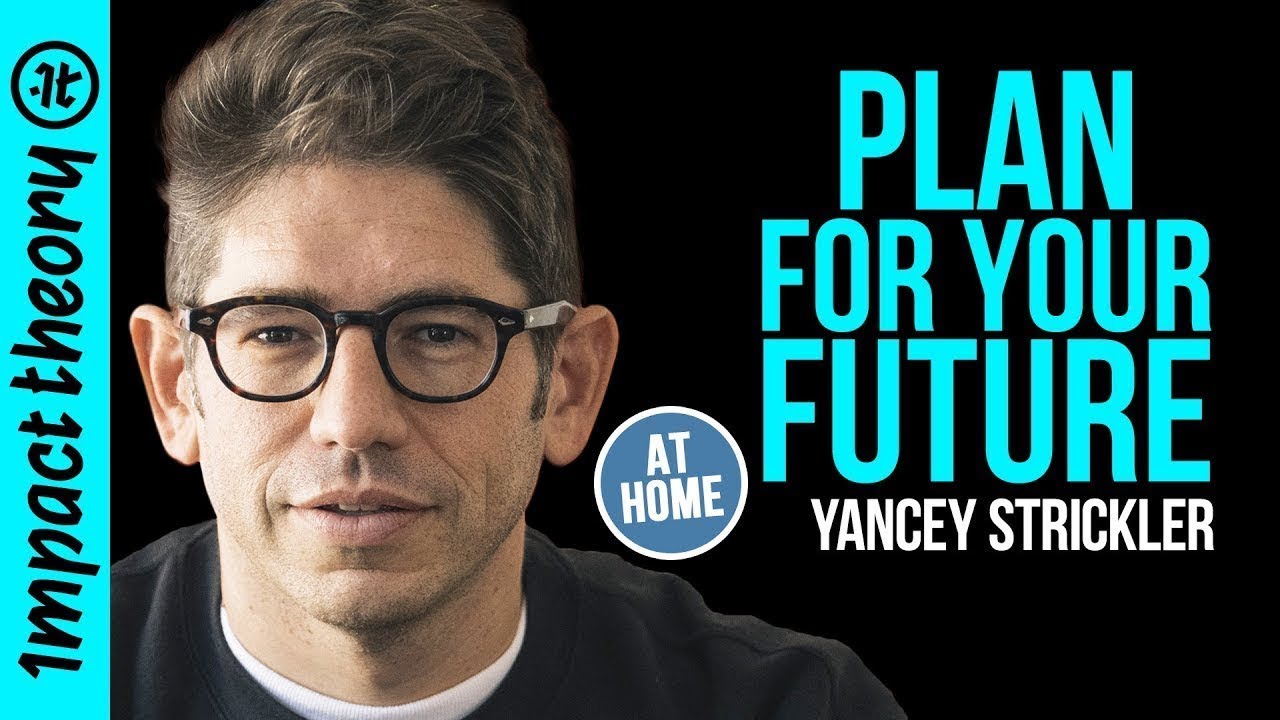
Kickstarter Co-Founder Shows Why It's Time to Re-Evaluate the Economy | Yancey Strickler
Watch on YouTubeVideo summary
Kickstarter co-founder Yancey Strickler argues in his new book, *This Could Be Our Future*, that society has become dangerously obsessed with financial optimization to the exclusion of other human values like happiness and accountability. He traces this shift back to 1970, when economist Milton Friedman published an essay asserting that a business's only social responsibility is profit maximization. This philosophy gained traction during economic crises in the early 1970s, such as the oil crisis and stagflation, leading policymakers like Nixon to abandon the gold standard for fiat money focused on perpetual growth. Strickler illustrates this cultural pivot with data from UCLA studies showing that while goals like having a family or being creative have remained constant since the 1960s, the percentage of college freshmen prioritizing becoming "well-off financially" has skyrocketed from 28% in 1970 to over 80% today. He describes this era as the "mullet economy," where earnings for executives and the top one percent have soared while wages for the majority remain stagnant, creating a system that optimizes for short-term financial gain at the expense of long-term societal health. To counteract this narrow focus on immediate profit, Strickler introduces his concept of "Bentoism," a decision-making framework inspired by Japanese bento boxes and the philosophy *Hara Hachi Bu*. This model expands an individual's perimeter of self-interest from just their current desires ("Now Me") to include four distinct dimensions: Now Us (current community/friends), Future Me, Future Us, and Near-Term Orientation. Strickler explains that by visualizing decisions through this two-by-two matrix, individuals can avoid the trap of short-termism where sacrifice feels impossible because one only sees their immediate needs. He shares a personal anecdote about declining a speaking engagement for a company he disliked; while his "Now Me" wanted financial security and intellectual challenge (saying yes), his "Future Us" voice insisted on building a better matrix by not preaching to the choir, allowing him to make a coherent choice that aligned with his deeper values rather than just reacting to immediate impulses. The practical application of Bentoism extends beyond personal choices to corporate governance and community impact. Strickler details how Kickstarter became one of the first Public Benefit Corporations (PBCs), legally required to balance financial goals with producing positive societal benefits, a structure he helped codify in Pennsylvania before it spread state-by-state. This legal framework ensures that company charters act as constitutions binding future leaders to specific commitments rather than relying solely on individual goodwill. He cites the example of pop star Adele using an algorithm to sell tickets directly to her most loyal fans at fair prices, bypassing scalpers; this decision maximized long-term fan loyalty and revenue while optimizing for communal value over immediate maximum profit per ticket. Strickler emphasizes that technology now allows us to measure non-financial values like happiness and community engagement in intricate ways, offering a path forward where we can define new metrics of success that do not require sacrificing the well-being of others or future generations. Ultimately, Strickler's message is one of reform rather than revolution, urging people to adopt tools that help them navigate complex value systems without judgment. He encourages individuals and organizations to use frameworks like Bentoism as a "user interface for life" to make consistent decisions toward meaningful destinations. By expanding our definition of self-interest to include the future and those around us, we can break free from the limited perspective that has dominated Western capitalism since 1970. Whether through weekly journaling sessions with his community or helping others weigh their options using the four-box model, Strickler aims to provide practical language for a world often trapped by financial metrics alone. His vision is a future where success is measured not just by GDP or stock prices, but by how well we can light up all four boxes of our lives simultaneously, creating a more generous and coherent existence that benefits both the individual and society at large.
Read the full video transcript
[Music]
the the fascinating opportunity that we
have now is that the the ability to
define new values to distribute goods to
make decisions has has never been
greater everyone this episode is brought
to you by our sponsor better help an
online counseling company with the
mission to make professional counseling
accessible affordable and convenient I
hope you enjoy everybody welcome to
impact theory
today's guest is Yancey Strickler he's
the co-founder and former CEO of the
game-changing company Kickstarter which
gave birth to the now massively
successful crowdfunding model he's also
an author and speaker who was recognized
by the World Economic Forum as a young
global leader and by Fast Company on
their vaunted most creative people list
Roofing has bonafides as a very unique
thinker in his new book this could be
our future a manifesto for a more
generous world he has given birth to an
incredible new idea that he calls bento
ism something he hopes will radically
overhaul our approach to living life and
defining what's valuable Nancy welcome
to the show man thanks that was so rad
I'm like looking for the other person in
the call so I guess congratulate them
yeah I think we will find them very
rapidly dude I love love the way that
you talk about being a CEO the way that
you talk about dealing with insecurities
and feeling like you weren't the you
know the sort of thing that everybody
holds up is the typical Silicon Valley
entrepreneur there is something about
the way that you think about the world
and that you process through it that I
find not only engaging but very
accessible and so when I think about
people that are gonna help shape how we
move forward it's people that can
process like that and I'd love to hear
your assessment of what the the problem
is how we've sort of gotten obsessed
with perhaps the wrong value system and
then we'll obviously get into bento ism
and all that but first I think hitting
people with sort of where you think
things have gone off the rails a bit
would be super useful yeah I mean
I mean I'm an optimistic person it's a
part of me says where to begin with
where things have gone wrong but also
feeling like loving the world loving
human beings like very feeling very
optimistic about you know maybe less in
this moment than in a normal time but
still you know I grew up I grew up in
South West Virginia on a farm I grew up
Christian evangelical Christian and like
had no neighbors just read books all the
time and like dreamed of being a writer
and was always on that path like moved
to New York became a music critic and
then met a friend got in Perry Chen
who'd had the idea for crowdfunding he
thought of this notion and and at the
time I like worked at a web site like an
editorial role so that maybe the most
technical person I think he had met and
so we start making this company and I'll
derail you but I found this super
interesting is it true he was a waiter
yes yes
I mean yet he was an artist you know he
waited tables at a cool a cool
restaurant it's not like he was roomed
with you know he was in Silicon Valley
as part of Y Combinator which is how
people think the stuff normally stars I
had no idea that that was sort of the
humble beginnings of Kickstarter which
is pretty extraordinary yeah I mean he's
just a creative I mean the three of us
who are co-founders myself to Charles
Sadler and Perry were all creative
people who you know the kinds of things
that we liked were very hard to fund you
know if you're the the creative industry
before Kickstarter you only got money
for things if if they would be
profitable right because it's an
investment and but of course most
creative idea is like maybe you hope
they'll become profitable but really
you're just trying to make the thing in
your mind be real in the world like
that's every artist driving motivation
but yet that that motivation is
irrational and and inadequate in that
world before so what was interesting
it's like we didn't want to be
entrepreneurs that wasn't like a dream
but the idea was so powerful of
Kickstarter and what came to be called
crowdfunding and like to make it true it
had to be a company so we just had to
figure out how to do these things that
we had never had interested in before
and what's interesting is that like
there's it's quite painful quite painful
to be learning so iteratively but also
it lets you second-guess a lot of
assumptions that other people just like
don't even think about you're just like
why why does it work that way and and so
that led to like maybe a slower
processing in some way it's like we
wouldn't immediately jump to like what
the obvious move is like an early
example is the company was like six
people and it was growing about a year
we've been around for but a year and we
needed to hire another customer service
person a seventh person and we suddenly
realized that hiring that seventh person
would mean we would have to add a second
table in our office because we had one
table that could fit six chairs around
it or the way we need the seventh person
we realize we can't fit it there and we
have this crisis of we're gonna have to
get a second table and if we get a
second table that's not just opening up
the seventh seat that's opening up eight
nine ten eleven twelve and like and what
does that mean
and you would think like growing and
staffing is automatically a good thing
but for us it's like what does that do
for control what does that do for our
goals are we sure so there's that kind
of mentality that that just comes up
like I don't belong here
like I'm not native here so it's just
like the customs are aren't as ordinary
what really changed for me was that what
I really saw you know from the beginning
we said we never want to sell the
company and we never want to try to IPO
we we thought that for us coming from
like music backgrounds and creative
backgrounds the idea of selling out
which is like to make something that
other people enjoy and then it's
financially exploiting that to remove
yourself from your community to us is
like the worst thing you could do so we
always said to potential investors and
everyone else like think of Kickstarter
as the Green Bay Packers of the internet
we want to be a public trust we fulfill
our role we don't go don't do things we
shouldn't do we're not stupid you know
but you're just trying to do that one
thing and be bound to the public
interest for all time you know we're
only taking 5% as a fee that's enough to
keep the lights on but we're not going
to get super rich off of this and it's
like a fair deal and this is what the
world needs and success for Kickstarter
is the long-term
meaningless of that which was a weird
thing to do which is a weird still a
weird thing to do and the paradigm that
we were in of tech and VC is like you
raise huge funding rounds you know the I
became CEO about three and a half four
years in just being live and within a
month of me taking over our two most
significant competitors at the time
raised sixty million dollars in VC
funding from like the biggest funds
there were and we took a lot of pride in
being scrappy not doing that kind of
thing but you have this gut check moment
of like wow do we need do we need to do
what everyone else is doing but what we
saw is that by them taking that money
they are in effect signing a post day to
check where every decision must work its
way backwards to justifying whatever
that valuation was and that actually
that's gonna harm them over the long
term it's not gonna bind them with the
interests of their community it's gonna
create a lot of weird things but what we
saw over and over was that everyone
which is optimizing for this financial
profit maximization that that every
decision laddered back to that and this
is where you would see a company sending
like two newsletters a day and spamming
you know this is where like the weird
things would happen we're good like why
why did this company start treating me
like [ __ ] all of a sudden like why did
this happen well it's the answers they
had to grow right they had to grow so
can we remove ourselves from that game
and so this led us to become a public
benefit corporation so like we
reincorporated the company to where we
wouldn't just be expected to maximize
profits as a for-profit company is
traditionally expected to do but that we
would legally be required to balance our
financial goals our financial
responsibilities with producing a
positive benefit to society and and our
idea was like there are more people out
there like us who don't quite fit into
this world but who but like could have a
big impact business is an awesome way to
have an impact it's like so wide open
like people like us should definitely be
going into business and maybe maybe if
we carve out this path it could be a
little bit of a template so the next
person that comes up says yeah I'm gonna
go the Kickstarter route
and instead of every potential funder
looking at them like what are you even
talking about which was what we got
instead they might say okay well I could
see what that looks like yes that means
a 3x return instead of a hundred X
return what whatever those things might
be really fast to decide start to take a
tangent really fast tell me a little bit
more I don't know about public benefit
corporations so obviously I know enough
about your story to know that the big
thing was it would keep you from getting
a fiduciary lawsuit from your
shareholders saying you guys weren't
maximizing their shareholder value that
I get but is that the sole reason they
exist or is there some other functional
benefit that it provides there's no
functional benefit there's no there's no
like tax breaks or anything like that
there's no special status it was created
by three entrepreneurs who actually
started the and one street basketball
league really yes who became private
equity guys and then while doing private
equity just really felt like this notion
that only financial valuations mattered
was stupid they're just like this is
dumb and so they these three guys went
state-by-state to argue for a new
classification of corporation that would
have to balance these things that would
take the additional responsibility of
producing a public benefit and that
would be legally held responsible do
that it started it started in
Pennsylvania and they went
state-by-state but it was entirely
around like this model that we've been
using is outdated and and and really the
selling point for a company is that you
are distinguishing yourself from your
competitors of saying we're not like
them but for us with Kickstarter what we
cared about was that the our Charter
which lays out like 15 commitments the
company's has made is is a legal
document that all future leaders of the
company will be held accountable to so
like a constitution where you can change
it with a certain number of yeah we have
with two thirds of shareholder votes you
can change you can amend it you also
needed two-thirds of votes to approve it
in the first place so it is it is
amendable but it's a you know requires a
process and yeah and we just saw this as
a
distinguishing ourselves and and laying
out those commitments in such a way that
in the event that we as founders got hit
by a bus or the company changed hands
they wouldn't just be relying on
oh well good people work here thus we
make good decisions instead there is a
more fundamental structural framework
that says how decisions should be
approached I was CEO when we made this
conversion and to be honest I didn't
know if it was going to be [ __ ] or
not like I did like just a piece of
paper or what is this going to be real
and and it was real what I found what I
found was that the kinds of things we
wrote in our PPC charter were like
things that have always been true of us
maybe we didn't never articulated it but
like nothing in there is weird or out of
character but before values were like a
guardrail you would you would bump up
against maybe if you're like going
astray it's just sort of keep you on a
path as a PPC instead I felt like these
values they were like middle the road
mandated like I have to maximize the
value of like elevation of respect for
creative people and in culture and like
that needs to be a way that we think
about our responsibility and so to me it
made it made our values less of a
passive thing and more of like a an
imperative to act and and so yeah just
things would come up and you're like
what we have to we have to be like we're
PBC you have to do this and and even
when we face like failure for instance
not long after this we had the worst to
like project failure to date like a
project that it raised a couple million
dollars to make a drone just like just
vanish basically just had an oblique
message without without saying much but
hey we're PBC so what are we supposed to
do so we win and we found the toughest
investigative journalists we knew of who
had been like really hard on us in the
past and we hired them and we said we
want to pay you to write the story of
what happened here you can interview me
you can interview everyone you can we
will promote the story because we just
want people to we want to try to solve
for this so that like this could be a
learning moment and we don't want to
hide from this but like this feels like
the accountable thing to do so like
there are there were those kinds of
days of thinking that just felt I don't
just a different mind a different
mindset all right so this feeds into the
whole concept behind the book and what
our future could look like that I find
so interesting so you've got this
basically the hypothesis and correct me
where I go wrong here the hypothesis is
basically we've gotten into financial
optimization to the exclusion of all
others we've sort of forgotten about the
the humanity behind all of this and if
we're focusing on GDP gross domestic
product and we think that that tells us
whether the world is going in the right
direction or the wrong direction
we don't factor in happiness joy
accountability things like that that
where we are going to have a very
serious sort of emotional existential
crisis of nothing else is that
relatively accurate yeah yeah I mean I
you know I think that over the last 50
years we've become obsessed with
financial growth and and as a country or
as a globe I would say the West
primarily I would say the West and that
and that has had a lot of power it began
in the US and and this belief that all
decisions like I believe there's an
implicit belief that the the correct
choice and a decision is whichever
option makes the most money and I've
been in enough executive meetings that
Kickstarter and other companies where
routinely you face 50/50 decisions where
option a has a clear financial outcome
and then there's some downsides that are
hard to quantify but like they're there
and there's option B that has a lesser
financial outcome and less of the and
also less of those downsides and nine
times out of ten they're gonna choose
option a because it's justifiable you
can only defend option B in a crisis
where you feel like you have to
apologize that's the only time you
generally go for the one that's not
maxing out for that and it sounds
innocent enough
it sounds innocent enough but when that
happens repeatedly you see a decay in
other spaces but I think are focused on
financial value has been has been
perfectly rational you know there's like
a Kenzi in like economic argument Milton
Friedman argument for
like the rationality of financial value
GDP does correlate to many positive
things about society there's a lot there
for sure it's not like we've been off
the rails wrong but it's gotten out of
control and the the fascinating
opportunity that we have now is that the
the ability to define new values to
distribute goods to make decisions has
never been greater right technology
technology allows us to measure things
in such more intricate ways like if you
can imagine in the past someone says
let's let's make a decision other than
money it's like okay well what what are
we looking at what are we counting here
it's it's hard to say but in the book I
give an example of Adele the pop star
Adele she goes on tour when her tickets
go on sale they immediately get bought
by scalpers and then people have to pay
hundreds or thousands of dollars more
Adele found this startup that had built
an algorithm that would measure how
loyal a fan was to her as an artist it
analyzed their listening data whatever
and allowed her to invite the top 20
percentile adele fans in each market
offer them a ticket for 50 bucks they
could resell the ticket if they want but
and the show still adele made money but
the idea was that for maximizing for
this loyal communal value set that there
would be a different kind of experience
one thing that I think is important to
note about that story is that now you
talk about this in the book that artists
can actually cooperate with Ticketmaster
maybe others to actually get a portion
of the scalped price so it's not like
where Adele it didn't matter she
actually could have benefited benefitted
from that which I found it made the
argument even more compelling to me yeah
and so for Adele Adele is just looking
at this with it a different value set
right she's still thinking of herself
interest like she's playing shows she's
like making money but yet what she is
optimizing for is not her own take she's
optimizing for a fans experience and and
again it's that's very basic but like to
do this in a way that's mathematical
that's replicable that's scalable to me
suggests a different kind of transaction
a different kind of decision where it is
building on top of that financial value
like this wouldn't work for Adele she
was losing money every show right like
what it works she's satisfying a
threshold but the point is that she's
only trying to satisfy that threshold
and the opportunity she sees as a layer
above that now what's interesting is
that this is self-interested for Adele
right if she does this she creates more
loyalty and that probably creates even
longer-term fans and you could very
easily argue well this works out better
for Adele in the long run and that's
exactly it
that's exactly it could work out better
for the long run for all of us to write
this ain't the same kind of thinking in
the same way of approaching our goals of
not just maximizing for now me is that's
that's the secret
that's the secret that's the secret to
more meaningful success that's the
secret to to be meaningful in culture
and so Adele's choice is yes it's it's
easier for someone like her or Taylor
Swift to give up some of the money right
but we also all know that there are
moments where you don't take the job at
the higher salary because the commutes
too long basically requires too many
other sacrifices right we as individuals
I think know how to navigate those kinds
of situations they're hard they're hard
they're especially hard if we're in a
place of desperation but collectively
collectively it's like we've given up we
aren't even trying to make decisions for
anything other than financial outcomes
in part because we've lacked the
language or the justification and so I
believe my my book is a part of a not
this is not the only person making this
argument but I think that this is the
trend that's happening now and and I
think in this idea proposal been to ISM
I think I have a practical way for us to
get there like very don't don't tell
people a dues yet yeah we're gonna go
hard on that first one thing that I
found really helpful in the book you
have this key idea that you touch on
which is hey look I know it feels like
it has always been this way but I
promise you it hasn't you outlined the
three-point shot and basketball and you
talked specifically about the economists
there are arguments that have led to
where we're at now that it's not as
long-term of a thing as we think it is
and I was shocked by that I was like
whoa like because
as I was born after this started it does
feel to me like this is the only way
when I started my last company
dude we honestly everybody was like all
right this is just dumb we were like
we're no longer going to make
profitability our highest value we're
gonna make adding value to the customer
the thing that we're a total slave to
and that just seemed so counterintuitive
but we were reacting to the way that we
had done business before and felt like
we were suffering forget like I'm sure
the customer was getting less value than
they could have from us as well but like
even that felt like even if we're
serving the customer well we're not
having fun like this isn't fun like
trying to be a slick marketer just is
not interesting to me and so after doing
that for years
realizing that money wasn't making me
happy we had this total reaction against
that we said all right we have a new
North Star and that North Star is going
to be value creation and so but I felt
like I'm going against like the way the
world is it never occurred to me that
there was like a demarcation point not
that long ago where it was like hey
everybody gather around real quick we're
gonna optimize financially and boom and
now we're sort of seeing the world
carried out a process give us some of
those quick benchmarks of how this comes
to be yeah well I mean it's it's if you
look at how companies operated in the
1940s 50s 60s it really 1970 is kind of
the point where the mentality shifts but
then those earlier decades like the idea
of stakeholder capitalism which is like
the most progressive idea like that was
normal that was like the non woke boring
thing to do there's a great
visualization that GN made in 1955 to
show their year and it shows like how
money was distributed and they bragged
about the high taxes they pay they brag
about the worker raises like base they
showed everyone benefits from GM like
here as here is why we are a good
company you know companies were judged
by the number of employees like
employees were judged by their loyalty
to the company and vice versa and this
was just the value set and and my theory
for why this was the dominant value set
for American capitalism in the 1950s and
60s I think it's about the Cold War we
think of the u.s. like a cold war is the
US and the Soviet Union locked in this
like militant
they taunt and there was that
competition but there was also a
economic competition to see which system
of social organization capitalism or
communism could best provide for the
middle class like which system could
produce the biggest middle class so
really the scoreboard of the Cold War
was the middle class of the Soviet Union
versus the middle class of Americans and
so that bound every company in everyone
America to this common purpose of
bettering the middle class because we
got a win like capitalism faced this
existential competition and competition
made it better now what happened is
capitalism crushed communism and then it
became a lot of lethargic monopolist as
often happens when you don't have anyone
to push you anymore but it really
changed when there was a clear moment in
1970 Milton Friedman you know amazing a
economist thinker made this case that
that idea that businesses should be
thinking about social responsibility the
stakeholder model idea that we've been
in that what it would a stakeholder
model so stake so stakeholder capitalism
means that you make decisions thinking
about all stakeholders which are
employees investors suppliers and the
community around your business so like
the families of your employees this is
like my favorite business guru is a man
named Konosuke Matsushita this Japanese
man who started Panasonic he was a big
proponent of this but it's just this
idea that like you as a company have a
lot of responsibility you're a meeting
point of many different parts of society
this is what makes business so powerful
and that power comes with responsibility
and and in the Vietnam War era this
really got kicked up a notch where
people were saying well what what
accompanies need to be doing for the
greater good like Americans are
sacrificing their lives people are dying
but like what what does it need for a
company to do that and that's when
Friedman came out with this essay that
said the only social responsibility that
a business has is to profit and profit
is the only goal and profit maximization
is the only rational outcome of business
to pursue and this idea
change how businesses ran and and and it
and it what was so perfect for it was
that in 1973 America had a major
economic crisis there was the oil crop
the oil crash inflation stagflation and
this is the moment when Nixon in the
u.s. moved off of the gold standard and
decided it would no longer be fiat money
or it would be fiat money and that we
would just print our way out of this
crisis and from that point on America's
policy became we must produce economic
growth every year no matter what even if
just to pay down the debt that we're
building up on an annual basis but like
the operating mentality for every
business began to change and and and you
started seeing things like private
equity start to reach in and take
control these companies and you know if
you trace the wages of American workers
there's a point where productivity keeps
growing wages stay flat if you if you
track like job security if you track all
kinds of things there's just this great
divergence where inequality really began
and in the book I call it the mullet
economy where I say you know for most
people it's like business in front like
the mullet where their earnings are
getting cut every year like that's 90
percent of people like offshoring no
more raises greater job insecurity
meanwhile for the for the top one to ten
percent it's this glorious mullet going
down the back we're over the same period
of time since 1973 the average American
workers gotten a 10% raise adjusted for
inflation over those same years the
average American executive has gotten a
1000% raise these are directly
correlated these are directly correlated
so this was like a philosophical shift
for business and and again that like
made sense because there was a crisis
moment of hey our companies have become
too big the economy is not working the
way we thought Vietnam has screwed us up
where the hell are we and a crisis you
go looking for what how do we solve this
and Friedman had this very simple idea
we should just orient around economic
growth if we only focus on economic
growth that will solve the rest of it
and you know because we can convert
money into any other values if you make
enough money people can give money way
to charity to solve the social ills that
come of that and so this was just this
thesis and it I mean it's not it's
wrong I believe that it is incomplete I
believe it's incomplete
and so just we've been operating on that
playbook for the last 50 years one of
the ways one of the ways I show how it
took took hold is this amazing study
that UCLA has done since the 1960s where
ever year UCLA asks incoming college
freshmen all across the u.s. a lot of
questions and one of them is about their
goals in life and it lists like 10
different life goals like having a
family being good at your job being an
artist and and one of them has to do
with money being well-off financially
and in in 1970 the percentage of
incoming college freshmen who said being
well-off financially was essential or
very important was just 28% just 28%
that year the number one life goal was
to quote develop a meaningful philosophy
on life 84 percent of students said that
was essential can you imagine can you
imagine the most recent year this study
came out 2017 the biggest life goal and
on college freshmen to be rich 82
percent say that is essential less than
half say that having a philosophy on
life is essential anymore and if you
look at these numbers over 50 years
every year and surveyed 50 60 million
students have taken this like every
value is flat like having a family stay
the same being creative say the same
beauty being good at your job those
rates have stayed the same it's this
growth of being rich that has just
really it's it's shocking when you look
at it it's just like just a straight up
into the right line so at just our whole
value system has become has really
shifted dramatically and but you know
it's it's hard to recognize the water
you swim in right yeah David Foster
Wallace this is water you talk about
generational change it takes about 30
years that change and that brings us to
bento ISM the bento box the bang now I'm
dying I needed people to understand all
of that so that we can get into this
it's a really interesting concept lay
that out for people and then know that
I'm gonna press you until I understand
oh yes my bento box to get to
decision-making well
I you know I just I'm a curious person I
love to read I love to understand and
I'm like I'm very non-judgmental like I
really I there's a I learned a phrase
recently of meta modernism after post
Mountain modernism as meta modernism and
meta modernism is to look at things
without judgment and simply look for
what's useful and the idea is as my
vision this is them this is the current
view is that like you can hate Amazon
while also reading like Bezos the
shareholder letter every year because
he's like brilliant right you know what
it's like there is this you're just
simply looking for the utility of things
and that this is like this an emergent
mindset so I I again I'm like I'm not a
I'm not a bomb thrower I'm a reformer
I'm like you know I love that about your
book honestly I wasn't I'm never sure
when people have sort of this grand idea
of where we're gonna go if it's just a
reaction against what we have or if it's
like you said finding the utility and
that comes across and every every
interview I've heard with you certainly
in the book it's very even-handed like
you said it's not like capitalism is
some evil thing it's just incomplete and
so you know where do we get what do we
take that's working what do we discard
that's not I find that very useful I
started giving talks while I was CEO
about this idea of like there is this
value system that's running away I first
started talking about it when I saw my
neighborhood in New York City the Lower
East Side flipped from gentrification
and just like watching this insanity of
every storefront around me turning into
a bank and being like what how does this
make sense and and just started talking
about this in a way that it was like
people could feel it so I spent I spent
a couple years or many years just trying
to understand this reading a lot of
philosophy a lot of economics like kind
of going to the sources like what is the
what is the argument for utilitarianism
why is money the most utilitarian value
what is the how have we defended other
values and my belief my assumption was
always that financial value is simply
the first value we've learned to
rationally express that financial value
is a proxy for goodness that is
mathematical
that is tradable and that is universal
and that that process can be repeated
for other values and that's simply the
money is simply the first way that we
did that and but like but what is this
justification for money mattering and so
one day I was just doodling in my
notebook and I drew a hockey stick graph
you know a chart this is classic Silicon
Valley chart of a line slipping up to
the right and I was just drawing I was
trying to visualize self-interest so I
drew this hockey stick chart and and I
had this thought of like this x-axis
along the bottom it's measuring time and
so it goes all the way from now far into
the future so I just my notebook I just
drew that line out farther and I thought
this y-axis measuring self-interest it
also grows because as our self-interest
grows so do our responsibilities like
for me the difference between being
single and having a family is enormous
or being a solo entrepreneur and having
employees is enormous so that Y goes
from me to us as it goes up as your
self-interest grows so to set
responsibilities and so suddenly this
like hockey stick was just a tiny slice
of this large picture that was quite
mysterious to me what is all this others
face and so I turned it into a very
simple two-by-two just drawing lines
through it and suddenly I had these four
boxes and they they lined up with these
axes where in the bottom left there was
now me is this the hockey stick graph
this is what what I want to need right
now this is how I think of my selfish
desires on a day-to-day basis on the
bottom right was future me and future me
is this older wiser version of me that
either becomes true or not true every
day based on the choices I make you know
I think of my future me is like my
obi-wan my inner obi-wan Kenobi how how
do I get there like who'd what decisions
does obi-wan make today to become
obi-wan my now uh so the top left is now
us that that uh space and now us is like
the the people I rely on and who rely on
me my friends my family and early on I
had to say that like us us is not every
living thing in the world it's not the
global humanists us it is the us of like
the people that you really care
about the people you have to look out
for and then finally in the top right
there's future us which is imagining
that same group of people 30 years from
now so probably your kids and their kids
too and I had this flash of like whoa my
my self-interest is not just this now me
space which is all I've ever really been
able to think about it's actually all
four of these spaces because every
decision I make impacts future me it
impacts and now us like my footprints
are all over the place even though I
have no idea that's what I'm doing as I
drew this graph and next to it I thought
what is this a picture of and I just
wrote beyond near-term orientation like
this is just a simple two by two matrix
to see beyond your near-term orientation
and then I realized that was an acronym
for bento bento and just a week before
my wife had shown me this book about a
key guy Japanese life's purpose a key
guy and it talked about the bento box
and she just pointed out to me because
it said the bento has the four
compartments and a lid that lets you
have a variety of dishes not too much of
any one thing and that the bento honors
a Japanese dieting philosophy called
Hara Hachi Bou which says the goal of a
meal is to be 80% full that way you're
still hungry for tomorrow and I thought
oh my goodness this is this is a bento
box but for my values and decisions a
way for me to not just over indulge on
right now but to leave space for
tomorrow and to think about these other
parts of my life and so that immediately
began became really kind of the UI I
used to make all decisions in my life
and to navigate my life because what you
realize is that and each one of those
spaces our values our priorities our
goals are things that are uniquely
important to you and the opportunity
that we have is to make decisions that
light up all four of those boxes that
are self coherent and like the fullest
possible way and once you see that and
once you begin making choices like that
you discover that like this is what it
means to be in a flow state of life
right like we know how there being a
flow state maybe when we're working out
or like dancing or hiking or do
drugs or whatever those things are but
like how do you get in a flow State on a
Tuesday at 3 o'clock when like you don't
like anything you have to do this shows
you right this shows you what it means
to to live up to yourself to to step
into the fullest version of yourself to
be coherent um can you so yeah I think I
know what you mean by self coherent you
talked a lot about that in the book yeah
I like the concept but I think giving
its people in like a fully yeah I may be
useful you know I think of it as being
you know in integrity with Who I am and
that like my best moments my best
moments are when I am like actual izing
all parts of myself and I'm making a
choice that like fulfills my goals that
it out give a couple examples of like
ways I've used this to show what I mean
um you know one of the ways I make a
living is by doing uh speaking like paid
speaking and and I well sometimes get
invited to speak by companies that I
don't like that feeling off values to me
and I've always said no and and not long
after I had came up come up with the
bento I got asked to do another one of
these and when I made my bed to I went
through this process of a self inquiry
to find what was in each space for me so
I I said well what is my now me want to
need and I thought well what about what
do I need on a day-to-day basis well I
need you know financial security I need
a challenge intellectual challenge
I need my health you know basically you
need the bottom two rows of Maslow's
hierarchy so I like list of all those
things out and I want to come up with a
simple phrase to encapsulate what was
most me about that so I said show people
the matrix my now me the I used to show
people the matrix whenever I'm doing
something that's showing people a matrix
like that's me and sync with Who I am my
future be voice well I came to realize
that's the voice that says don't sell
out this is this voice that's always
telling me it's like made Kickstarter be
what it has to be like be law be true to
your values never let go of that that's
what's so important and value and also
that I need to create harmony I'm a
child of divorce and so I'm always like
trying to bridge conflict so my future
me values are are
don't sell out and create harmony so
when I make decisions I'm always looking
to do that my now us is about deep time
real deep time with select number of
friends and my future us is about
building a better matrix and so when I
got asked to do this talk I I saluted
and asked each of these voices what it
should say just simple yes/no so I asked
my now mean should I do a talk for a
company I don't like my now me wants me
to show people the matrix so it said
yeah dude that sounds cool let's do it
like this is what we're about my now ah
so that was a check yes my now says deep
time it's like well you know an hour and
a half to talk about ideas that's cool
check yeah well we're in my future us
wants to build a better matrix says yo
dude you can't be preaching to the choir
like if you want to build a better
matrix like this is where you got a be
like double check for a future us and
then my future me voice which says don't
sell out says no your selling out you're
just trying to do this for the money
you're trying to justify something that
is actually against your values and
suddenly that voice that have been
pissed off in the past I saw it for what
it was it was this bouncer it was this
big dude looking out for my values right
he just stand-in there being like nah
you can't come in but yet I could see
the full picture I could see that that
gave me the agency to tap the bouncer on
the shoulder and say no no it's cool
I've got this and I ended up making a
180-degree different decision than I
would have before starting that process
and I did it knowing that I was coherent
that I wasn't betraying who I was that I
wasn't is one something I need to feel
guilty about this is actually something
that truly reflects what is important
about me and and allowed me to overrule
what it felt like one of the most
important parts of me right that I don't
do things like this and and so that
ability to just sort of put myself in
context let me let me make a wiser
choice and and so I approach all
decisions in that way now and the bento
shows like I show how for a smoker a
smoker like smoking is rational from a
now--my perspective because now me is
addicted to nicotine and quitting sucks
even though for a future me now us
future us all though say dude you
what are you doing but but now me want
you to keep smoking in the same way
sacrifice is unthinkable if we only see
now me because sacrifice means giving up
something now to get something more
later even though if you like put the
question of sacrifice to your bento you
would see a red X and now me and you'd
see a green check than the other three
boxes for the world today where we only
see now me that is an unthinkable
decision right sacrifice is unthinkable
why would I do that that's irrational
and so it became this way of sort of a
bird's-eye view to take yourself out of
this like interrogation box view of the
world of like we're only seeing 24 hours
ahead of us and I've come to think of it
as I have expanded my perimeter of
self-interest right if you expand your
perimeter that's what you have to defend
that's what you have to be mindful of
and so my perimeter includes us and my
perimeter includes the future and what
that means is that I can think about
future events before they happen I don't
have to wait for something to reach me
to act I can position myself I can
anticipate I can try to manipulate the
future to what I want it to be not that
I'm going to be 100% successful at this
but honestly most people are blind right
so the one-eyed King rule so even just
having a sense of that space gives you
such a leg up and allows you to
consistently make decisions towards a
destination and that you know my
experience as a CEO everything like that
is a single hardest thing to do so any
tool that allows you to make consistent
choices in a direction like the the
exponential compound interest of that it
is just like out of this world
especially when most people have no idea
what they're doing talk to me about how
you develop or here maybe is the right
word the voices of the different boxes
on the bento box I know you've done a
lot of journaling you seem to have an
uncommon level of self-awareness and I'm
curious if there's a process behind that
that people can leverage that maybe
aren't as aren't at the same level of
self-awareness I don't know if that
comes naturally or if you developed it
but if you know assume that somebody
doesn't have a high degree how would you
what tools and tactics do you have for
them to use
I make every serious decision my wife
and I both make every serious decision
using the bento like asking each box
just like does this is this vibe with us
or not and we even have a family bento
and then I do a weekly journaling where
I use the bento to create my to-do list
right because my to-do lists are always
just like whatever the work stuff
errands I have to do but yet like to
manifest the world I want I have to move
beyond that now me space right and so
that's it's become a ritual way to
reshape my time so it's it's become a
like I really think of it as a user
interface for life
it's a UI you know what's really about
philosophy is that lets us understand
the world what's hard about philosophy
is that doesn't exactly give us a tool
to apply it I think the philosophy of
the 21st century is UI it's UI it's
things it's the meta modernism what can
we apply what can we use what's useful
what has utility and I believe that this
shift of expand that expanding our self
interest from now me to these four
spaces that perimeter self interest that
expansion I believe that is the linchpin
change that like everything else changes
as a result of all right so assuming
that we can get people to adopt that
let's take a harder case with a bento
box that you covered in the book it was
whether or not you took a family
vacation man I was like following the
checkmarks I'm like yeah he's going on
the vacation they're like we didn't take
the vacation so it's because how do you
how do you weight the different boxes
like because you I think three of the
four boxes if I remember right we're all
yes take it but one said known you ended
up not taking it so how in that moment
did you decide to weight the different
boxes well because certain decisions
have more relevance to certain spaces
than others so it's like you know if
you're having a decision about that
involves other people you know like that
us-based probably is the rightful ruler
of that outcome rather than like the now
me space so it's not that I don't think
all four boxes are always weighted the
same and just someday they are they take
more importance so in that one my now me
was that I had a deadline for the book
and if I go on vacation I'm definitely
not
my deadline and it's like I think that
ultimately has to overrule these things
but it's you know it's you do get into a
lot of I mean I've like taught the bento
model to a couple thousand people at
this point and workshops and and I help
people make decisions and frequently
people get stuck to bento say one thing
to say another thing
three say one one say the other and
you're like what do we do and what you
see is that this maps out why certain
decisions are bad for us you can use the
bento to see what short-termism is to
see what sacrifice looks like to see
what probably the most common mixed
response I get are people who's there
now us now me answers to the question or
know their future us future me questions
or yes and this is always about a dream
it's always about where they want to go
the job they really want to have the
thing they really want to do and now
says no but future says yes and so then
they say well what do I do I'm stuck but
this is where by seeing that full
picture you are empowered because I say
to them well then we have a next
question which is what does it take for
your now us and now need to say yes why
do they say no is it you need emotional
validation is it financial validation
like what is it that that needs okay
let's break that down let's make a goal
let's imagine well what is the point in
which Nami could become a yes right and
let's that could be very simple you know
unless it's like iterate towards that
but rather than being stuck with this
like these emotional feelings like I
would be when you know weird company
would ask me to speak and I would just
be mad like let's not be mad let's not
be frustrated let's let's take our power
let's take our seat let's have some
agency in this let's break this down and
so you know my experience is that CEOs
leaders I mean everyone's just trying to
do the best they can the best they can
with what we know and I think that this
is the this is the missing information
that can allow us to make even better
decisions dude well said well said and
thank you for taking that - such a
tactical place I love the way you think
I love how thoughtful you are about this
stuff where can people connect with you
and continue to engage with you and
these ideas I'm all over the place
well there's bento ism or you can like
it guides you through the process it's
like a web version of teaching you how
to build out your bento it's also just
an awesome website it's like it's like
going to a spa it's so relaxing I just I
would really encourage you to do it
I also do these 20 minutes every Sunday
I get on zoom' with whoever joins
normally about 50 people or so and we do
journaling together we journal our week
ahead so we we tap into our pintos
together we all write together we have
some shared accountability there's a
Google Doc where we all say here's what
I'm going to do this week and that's
just a very organic community that I
don't know once covin started I'm like
well I'm doing this anyway why not just
turn on the camera and that's becoming
something really special and then I'm
just online at Y Strickler calm but
folks are well are welcome to join the
weekly bento that's just bitly / weekly
bento i send out invites on thursdays
and people can come but you know i'm all
about just giving people practical tools
to help them get where they they know
they need to go like people are smart
people know people know when things are
right or not right like you know we all
have this capacity it's just we're
lacking the language we're lacking the
tools and but they're here they're here
alright I think I have guess as to what
you're gonna say but my final question
what's the impact that you want to have
on the world I want to expand how we
define our self interests from just now
me to be now me future me now us and
future us I think our world is trapped
by a limited perspective and expanding
the perimeter of self-interest is what
will finally let us make choices that
benefit us not just now but in the
future as well I would say that is very
coherent with your message man thank you
dude so much for coming on I really
really enjoyed your book I think that
you're thinking about some incredible
things you've got an amazing idea for a
way forward thank you for sharing it
with us
guys if you haven't already be sure to
subscribe and until next time my friends
be legendary take care everybody it's
time to talk about all of our favorite
sub
mental health is there something holding
you back or preventing you from
achieving your goals or even just
interfering with your happiness do any
of you suffer from depression or anxiety
as a lot of you guys know I've suffered
from anxiety for years and trying to
tackle something like that on your own
is not always the optimal strategy but a
lot of people are super nervous to try
out therapy or they don't really know
where to start or they're just plain
embarrassed but now there's a service
called better help that makes therapy
more accessible and affordable better
help is professional counselling done
securely online using your computer
tablet or mobile phone through video
calls phone calls or text messaging with
licensed therapists who are certified by
their state's board to provide therapy
and counseling
it is not self-help and it's not a
crisis line it's an online service
available worldwide and it has a massive
network of counselors who have a broad
and diverse range of specialties so you
can get a counselor with the sort of
expertise that might not even be
available in your local area
better help assesses your needs and
matches you with a licensed professional
therapist within 24 hours you can log
into your account anytime to message
your counselor and better help also has
group in our sessions every week where
members can learn in groups directly
from licensed counselors on multiple
topics like relationships and ways to
overcome anxiety especially if the
thought of seeking help makes you
nervous or embarrassed be sure to check
out the over 60,000 positive reviews
posted on the better help site and
that's better help hele better help is
committed to making it easy for you to
access the therapeutic help you need
even if you have never gone to
counseling before it's free to switch
therapists it's more affordable than
local therapy and they even have
financial aid available if you need it
better help wants you to start living a
happier life two-day visit better
help.com / impact and again that spelled
better h e LP and join over 5
Jarrid thousand people taking charge of
their mental health with the help of an
experienced professional better help
cost just $65 per week and financial aid
is available for those who qualify
during the signup process as an impact
Theory viewer you can get 10% off your
first month so visit better help.com
slash impact and get the help you need
today alright guys if you need this one
please give it a shot take care and be
legendary look the person in the eye or
look between the eyes on their eye
rather cat-like into the eye okay and
just beat just relax the more uptight
you are the more you try and be exactly
perfect the more you turn somebody off
they see that all day long