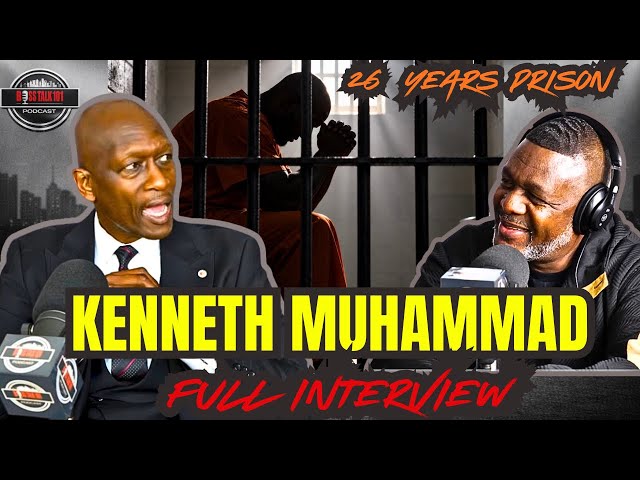
Kenneth Muhammad Done 26 Years Prison For Murder On Life Sentence Explosive Interview!
Watch on YouTubeVideo summary
In this explosive interview from the "Boss Talk" podcast, host Eco sits down with Kenneth Muhammad, a former inmate from Memphis who served less than 26 years of a life sentence plus 15 years for murder. Born and raised in Saginaw, Michigan, within a close-knit family that migrated north for factory work, Muhammad initially struggled with internalized issues stemming from generational trauma, financial constraints, and a lack of emotional support despite having both parents present and maintaining good grades. His journey took a tragic turn in February 1993 when an argument escalated into rage, leading to the killing of someone he knew; following his arrest, trial, and conviction, he was incarcerated until his release on July 17, 2018. During his time inside, he had a son born while he was imprisoned, and upon his eventual release, he gradually reconnected with his wife and grandson, viewing their reunion as a second chance to break generational curses and heal the rifts caused by his absence.
Muhammad's transformation from a young offender into an advocate for juvenile justice reform is deeply rooted in the support he received from fellow inmates and his spiritual evolution within prison walls. Initially relying on basketball as a coping mechanism, he found true redemption through the teachings of Minister Farrakhan and the Nation of Islam after reading *Message to the Black Man*, which led him to apply principles of self-examination and correction even in high-security facilities known as "slaughterhouses." He credits brothers Bo Pete and Quinton Quinn Sanders with helping him connect with his past self and navigate the psychological toll of incarceration, while also highlighting the systemic failures that allow children to be taken from families under the guise of protection only to face life sentences due to shifting laws. Inside, he describes how inmates organized themselves into a "United Nations" to prevent violence before drugs were introduced to break that unity, noting the deteriorating conditions, poor food, and the use of cell phones as surveillance tools that facilitated snitching in Tennessee's prison system.
Upon re-entering society, Muhammad faced significant barriers including failed drug tests and employment rejections based on his criminal background, which he viewed as a sham designed to keep him marginalized. He emphasizes focusing on positive, centripetal forces rather than negative, centrifugal ones, drawing parallels between the biblical Exodus and the current plight of Black Americans in the United States, describing the country as modern Egypt where the government acts as Pharaohs targeting Black youth. While he maintains a strong 23-year marriage as a testament to God's plan and advocates for restorative justice over adversarial legal processes, he also addresses religious tolerance by challenging traditional interpretations of Christianity and Judaism in favor of a spiritual belief system that transcends race and tradition. Muhammad concludes by reflecting on the inevitability of death and the importance of not taking possession of others' lives, even when facing enemies or violence, encouraging those seeking help to reach out via his email or social media to continue the work of healing and accountability.
Read the full video transcript
Great. Great. And sister, this boss
talk, so we talk real talk.
>> That's real. That's exactly right.
>> In the Quran, one of my favorite verses
say, "Speak straight words,
>> man."
>> So I'm going speak straight words. And
if if I offend not,
>> the thing about it is this.
>> They want to put us in a box. You got
two parent home, you got a working
family, two and a half children, a car
in the garage, a dog, you going to have
a good life. But when you black in
America, that that don't matter. That
don't matter.
>> Yeah, we on Boss 101. Yeah, we going to
talk. We going to have fun. We be on
fire. We be lit. Lit. It's a unique
hustle.
>> Check it. Check it. Check it. This is
Unique Hustle. It's your boy Eco and I'm
here with the lovely amazing official
Miss Jamaica. What's going on?
>> None. You know, going y'all stop what
you're doing right now. Go like,
subscribe, follow us from all social
media platforms. When I mean all, I mean
all. I mean our Facebook, Instagram, Tik
Tok, Snapchat. You name it, we're on it.
Just Google us Boss Talk podcast 101.
We'll pop up first in line. I guarantee
you. But y'all see us on the streets and
talk about, man, I love what y'all
doing. Keep up the good work. How can we
be a part of Boss Talk? This is how you
can be a part of Boss Talk. Under each
and every interview, including this one
right here in the description section
below, there's a link that says join our
membership. Click that link, follow all
the instructions, and that's how you get
to see all the exclusive content y'all
been asking us. Where's this interview?
Where's that interview? You got to be a
member to see it. Or go ahead and
download our app at Boss Talk101 on any
Apple or Google store. Thank you. And we
love you,
>> man. Listen, guys. I got a guy in here
today. He don't need no introduction.
I'm in Memphis, Tennessee. It's going
down today, man. I got a guy here, man,
that uh he going to give us his story,
man. The people going to hear what's
what's on his mind, man. Mr. Ka Muhammad
is in the building. I use the clap, but
I don't have no clap. I don't I started
using the clapper, but it's a little
cheesy when you hit things. They know
that's fake.
>> That's right. I can't be fake cuz I'm
too real.
>> That's right.
>> Let's get to it. Killer, man. What's
going on down here in Memphis, man?
>> Oh, man. Memphis is is a beautiful city.
You know, everything's well. It's a
beautiful day. Uh the music festivals in
town. I know you all had a wonderful
time last night.
>> Man, let's just be real. I got turned
out. They turned me out over there.
>> What? I got on the stage again, man.
Once I hit these stages, man, I think
I'm a rapper.
>> Okay.
>> So, I start doing all my stuff, man. And
they don't want that.
>> But you in Memphis, so once you got on
stage, I got asked the question.
Everybody want to know, did you do the
gangster walk?
>> I tried, man. But I ain't I ain't got it
all the way down past.
I jerked, too. Y'all jerked. Y'all jing.
>> See, I thought I thought that was going
to be a little too hard. First time. I
kicked two feet up. And then after that,
I said, man, I can't do that, man. My
legs started and I caught like I caught
a cramp. Stay one more week. YOU HAVE
IT. STAY.
>> STAY ONE MORE WEEK. YOU GOT to stay one
more week.
>> Man, thank you for coming on the show,
man. God bless you, bro.
>> Man, God bless you,
>> man. Let's get to it, Mr. Jamaica. Let's
show them how we do it.
>> Yes. So, you're born and raised here?
>> No, ma'am. I'm actually born and raised
in Sagenol, Michigan.
>> Get out of here.
>> No. Sag.
>> That's where my daughter was for a
while.
>> She She left my house and went to Sagen.
That's where my mama was at.
>> Sagas.
>> I went up there.
>> Oh, yeah.
>> I had to go see my daughter.
>> Oh, yeah. Where you live?
>> She was Well, no, it wasn't Flint. It
was
>> No, she was in Sag. Just like you said.
I don't know the street. I just pulled
up on them. It was a uh we did a we did
a photo shoot and everything up there
cuz I I didn't have this at the time. It
was before that. She this was in 201
maybe about 2012 2013
>> 2014 something like that. And I went up
there and y'all you know and and and and
Dr. Muhammed he he's from up there.
>> He went to University of Michigan. Yeah.
>> But ain't he from Chicago but he went
over to me to to Michigan.
>> Right. So y'all be y'all hanging out up
there?
>> We I passed across. We done some things
together. Um I knew he was a U of M
alum. So once he found out I was from
Michigan, so we kind of you know
>> Let me tell you something, man. That's
that's crazy because you didn't fix the
water in Flint.
>> Huh?
>> And and and I thought you to fix that.
What else was it? What have Mount
Pleasant is up there? Oh, yes it is. It
is. Y'all got some stuff up there. I I
drove through I me and my wife flew up
there and then I drove to uh I drove to
Chicago.
>> So I rented a a Suburban at the airport.
>> Yes.
>> It smelled like it rigged weed
>> marijuana smell. I don't know what
>> it's a new cologne up there.
>> And we I told them when I got in that
truck, they ended up call I said, "Man,
I can't get this smell out this truck."
>> And I don't smoke a drink. So it's like,
"What is going on?" Cuz see people don't
understand if you don't smoke or drink
you I mean you can smell it but if you
engaging in that then it's like it's
normal. It's real normal. They can't
tell you know the children come home you
be like hey what you I don't smell like
smoking man. You got the whole house
smelling like
>> that's right. But that's just because
it's so common place now. So common
place.
>> Wow man. Go ahead.
>> So in Sagenol were you raised in the
household with your mom and your dad
together.
>> Yes ma'am. And were they also Muslims or
you got to be a Muslim as you got older
and you chose to become
>> I chose to become a Muslim later in
life. My mother uh
>> she's from the south and as a little
girl
>> What part of the south?
>> She's from Arkansas, a little town
called Bird Song.
>> Okay.
>> And their her mom um moved up. I think
she was probably um eight or nine years
old and they moved up because of the
jobs in the factory. And so once they uh
migrated north, then the rest of the
family started coming up, you know,
piece by piece. And so um
>> we still had a part of the family that
was here and joiner. They moved up to
West Memphis and then Memphis. So we
would come to Memphis as a child. I
would come to Memphis at least once a
year. On my dad's side, this family was
from uh southern Florida, you know,
Brooksville and real country. So you
know, all our people come from the
south. You can be up there and somebody
say, "I'm from Chicago. I'm from
Detroit." Sagena. Okay. Where your
grandmother from?
>> Exactly.
>> Shout out Shout out Shout out to OG Pyu
to Marv, man. Uh we know where his
family from. We not going to say it
until I get him over here, but uh uh
yeah, you're exactly right.
>> Yes, sir.
>> And your dad, where was your dad from?
>> My dad's from uh Union Springs, Alabama.
>> Okay. So, he's also from the south.
>> Absolutely.
>> So, so they migrated. How did they end
up being in Sagenol?
>> Well, General Motors was doing a lot of
hiring.
>> General Motors.
>> And so when one person comes up and get
a job, then they they looks out for the
rest of the family. Uh I as I got older,
I started learning the story, you know,
because they never talked about it. So
they would all come up if you was from
that town. Everybody would live in the
same house whether was related or not
because really we all related. That's
right. And so as they got jobs in the
plant then you know they was able to you
know move out and uh different kind of
housing and whatnot. So that's that's
how it happened. That's how it happened.
One person come up then they sent for
somebody else.
>> Wow. So you grew up seeing them working
hard.
>> Absolutely.
>> And I had to work hard myself.
>> How many siblings did you have?
>> I only have one sibling. I have a
sister.
>> I have lots of you know what we would
call first cousins. Yes, sir. Yes, sir.
In our in our culture, we like brothers
and sisters. So, you know, I have a
large extended family, but in our
household, just I was the oldest and I
had the younger sister.
>> Okay. So, you had a lot of
responsibilities.
>> Yes, ma'am.
>> So, how did were you when you started
working?
>> Early. Early.
>> Okay. When you say working, you are you
talking about getting paid or you
talking about working? Cuz I was all all
I ever remember is working. Whether it
was cutting grass, shoveling snow,
raking leaves, painting houses, those
were the things that you had to do. My
dad worked in a plant.
>> Okay?
>> And so I see him coming home with soot
all over himself. And he was like, "Hey,
you know, cut the grass. Show me how,
you know, he was using this push
lawnmower." And then we, I mean, we got
an electric.
And so I was like glad. I mean, before
snowblowers, it was just the shovel.
That was my weight training, you know.
It was just a shovel. So I saw that
demonstration. Everybody in the family
worked. The men worked
>> and and and the women took care of what
they took care of, you know, and you was
expected to do certain things. When you
got up in the morning, the regiment was
don't come down here and touch nothing
eat until you wash your face. That's
right.
>> Clean up your room, make your bed, get
dressed.
>> Military like Bill,
>> it was automatic. And if those things
didn't happen, uh, don't don't touch
that.
>> That's right.
>> Make sure that happened. And so, by me
being the oldest, then I had the
responsibility of making sure my sister
did, you know, certain things, you know,
uh, dad going to work. Um, I got to make
sure she get to school. You know, I had
to cook breakfast even though it was
just busting open the can of those those
biscuits. Yes, sir. You know, with the
little butter.
>> I done got hungry now. I boy, that bit
goof. You know what's going on. You
smell it. Start.
>> Oh, that morning start your day. Oh,
don't let it be that hungry jack with
the flakes.
>> BOY, NO. I TOLD YOU IT AIN'T NOTHING.
>> You thought you thought you was doing
something there, but you thought you was
doing something. So,
>> that's how we came up.
>> You see, I think that structure is
missing in today's society that that
work. You see a lot of these kids come
up and they be wearing pajamas all day
long. They're not getting their face
don't even look like they've been washed
and they start their day doing this.
They jump in their car running around
looking that way. And I'm like, where
did we go wrong?
>> I think what happened was this because
we all say this when I get to being an
adult, you know, we always think our
parents were a little too strict.
>> I'm not going to do that. I'm going to
loosen up. You know, let them have some
fun in these things. And so when you go
to high schools, which I do sometimes,
and you like, okay,
>> it can't be any adults letting you walk
around these pajama pants, house shoes
on, you know, bonnets. You couldn't come
into our school like that. I mean, right
at the door, if you wasn't dressed
right, you know, hey, go home. I know
your mama didn't send you out like that.
>> Exactly. I would see uh young sisters
and sometime they may have on something
might be a little too provocative.
That's right. and they would say, "Hey,
uh, you can't come in here like that,
you know, and do it in a way where it
wouldn't be demeaning, but they would
say, hey, you more valuable than that.
You don't want that kind of attention
because, you know, you get the wrong
attention." They didn't explain it. You
know, you had to be clean. You know, I
was a friend of mine. We been together
since I can't remember not being with,
but they had these little thing called
hygiene tests. Okay. And they will make
sure that, you know, your face was
washed, you know, your teeth was
brushed, and you got tested on that kind
of stuff.
>> Yeah. Yeah.
>> And you got rewarded for doing it. So we
we we look forward to doing that.
>> Yes, sir.
>> But some kind of way because we thought
that was too stringent. The debt
discipline was too oppressive. We we
fell back and then over generations you
see what you see, right?
>> You know it. They didn't just wake up
>> not caring about how they look. You
know, these things were allowed. That's
real.
>> And we learned that discipline, excuse
me, discipline is an honor.
You know, now
>> there's a way to discipline and not be
abusive. None of us condone abuse.
That's right.
>> But sometimes you got to, you know, have
a standard and then bring a person up to
that standard. You know, we make a
saying now, meet them where they are. I
understand what you mean your intent is,
but okay, if they down here in the sloth
trough, I I'mma go get them, but I'm not
going to stay. I'm There has to be a
standard. And what I've learned is once
you give a person an expectation,
more than likely they live up to it.
>> You don't. You talking about pulling him
up.
>> Pull them up. Yeah. Pull up.
>> We we we used to use that when I on
lockdown, man. Pull up, man. You know,
cuz it was a safety program. I never
went to it, but I knew they're just what
they were saying like they trying to
pull you up, man. You got to pull up on
that, man. You know, you don't need to
be doing that. And so that's I like
that. You know, you got to pull them up.
You don't meet them where they at. You
pull them up. pull them up. That's hard,
man.
>> So, growing up, were you raised in the
church?
>> No. My mother, I don't know what
happened. She came kind of
disillusioned, I'll say, but she became
a Jehovah's Witness.
>> Okay.
>> And she was, I mean, she was all in. She
became what they call like a pioneer.
She would go out and spend so many hours
out in field service knocking on doors,
>> passing out the watchtowwer in the wake
magazine, the books.
>> And of course, I got to go with them to
make sure everything good. And I'm like,
please don't let let's don't let this be
our neighborhood.
>> Boy, don't let no one of my friends see
me. One of my friends see me.
>> Oh man. You know, but the thing was and
and know God has a way of uh molding and
shaping you. That's right. And you don't
even know. So I would go out and people
would she'll knock on doors and people
would be rude or whatn not but she would
always say you know well thank you have
a nice day God bless you. She never
returned life for like she was very
dedicated um when you're Jehovah's
Witness there's a lot of study and they
have a lot of books I love to read cuz
being on punishment I couldn't go
outside so I I got to read a book.
That's right. So I would read and and I
understood it but only thing I didn't
understand why why everybody don't look
like me. Everybody white but the the
understanding was different than the
traditional church and it made more
sense but I didn't the eurosentric
aspect of it I really wasn't feeling but
you do what you told at a certain age.
She say hey when you get to be 16 then
you don't have to go. So I just really
on the countdown and then at 16 I
stopped going. But that's that's how I
was raised up.
>> And your dad was he didn't partake in
it?
>> Uh he was vehemently against it at
first.
>> Even though I was young I could kind of
feel the the tension but my dad was a
very committed man.
>> And so the marriage was the marriage.
That was the point that they disagreed
on for years. And then you look up. My
dad's a Jehovah Witness now.
>> Oh, he goes to all the meetings, goes to
all the assemblies. He goes out. And
>> what was the turning point for him?
>> Hey, my mother warmed down. You know,
>> my mother just warmed down. She just,
you know, she didn't force it on. She
just kept, you know, you know, you you
see something for so long. You be like,
well, you know,
>> hey, you know, it's it's not a bad
thing. It's working. You want peace in
your house or whatnot. And he's I mean
he's all into it now. I I see him. I get
pictures when I talk to him. I be like,
"Okay." Yeah.
>> How old were you when you converted to
being a Muslim?
>> I was what?
Probably about 34, 35.
>> How older?
>> Yes, ma'am.
>> So, okay. So, before you get into that
part cuz Okay. How old? So, you were in
Sagenol to how old?
>> I graduated high school in 1983. I I was
17 when I graduated. Uh, a year later I
went to school in the south. That's how
I got to Tennessee. My mother's brother,
my uncle, lives here. He went to the
University of Tennessee in Knoxville and
he was a track star. I mean, he was he
was a track star.
>> And your mom stayed in um Michigan.
Michigan wife. Yes. And so he moved here
and you stayed with him
>> and I came Yes. And moved in with him.
>> Okay. And then so you out of away from
mom and dad was your uncle any different
strict wise cuz you were grown. So you
know for men when you get grown they
give you a little leeway like go figure
life out. I'm not going to be on you
this this this this. How did that lead
you during that time growing up where
now you had to make your own decisions.
You had to be your own man.
>> Sis that's a great question and I think
what we make the mistake because a
number don't make you grown. M
>> so I'm 18 19 and I really was real
sheltered.
>> Exactly.
>> So being on my own I made a lot of you
know mistakes. My uncle was like my idol
and so I didn't want to disappoint him
but sometime he had to sit me down and
talk to me like uncles talk to nephews
and he gave me the leeway to do things
that I didn't have at home. And so I it
was trial and error trial and error. And
so uh I get it right then I might get it
wrong. you know, he say what he say and
then boom, I had to I had to keep going
on. So, it was an adjustment period for
me. When I got to school, I was a good
student, but when I got to school, I
didn't have nobody told me about going
to class. I was there to play
basketball. I was like, "Okay."
>> Yeah. Cuz you have the height,
>> you know? I play ball. So, we practiced
at 3:30.
>> Were you any good? I
>> was all right. You know,
>> I I heard the tail end of it. Let me get
on in here, man. I I size you up when
you got here. You know what I'm saying?
I'm short, but I was a point guard. I'm
going to tell you right now, if I catch
you out there and I'll catch you on
that, man. Listen, man. Don't get
>> I'm not going to come inside. Don't even
trip. I know I ain't as tall as you and
I know what you I know what you're
trying to do, man.
>> Okay. But I was winging.
>> So, you were fast and everything.
My jumper made everything go all right,
>> man. That was my special.
I jump shot. So, I played on outside. So
you said you had a lot of trials and you
went up and down, but tell me about a
pivotal pivotal time in those years
where you know made you into the man
that you are today. Something that could
have went totally left but it didn't.
>> It went left. That that moment it went
left.
>> Tell me about that time.
>> Uh
>> and how old were you?
>> Uh I think I just turned 27. Okay.
>> It was in February 1993. You'll never
forget that, you know, I was um charged
with uh murder right here in the city of
Memphis. Uh I was arrested, charged,
went to trial, uh found guilty, and
sentenced to life plus 15 years in the
state penitentiary.
>> What happened? What cuz you can talk
about the case, right?
>> I can I I I'll talk about the case.
>> Okay. But what what happened that that
led you to that situation? Like cuz
sometimes, you know, when you're going
through it, you you play that back in
your mind so many times trying to figure
out how did I end up here? All the
instances that I could have changed but
didn't change or didn't do something
different that led me here. Tell me
about those times so I can totally
understand.
>> Let me and let me just say this. Let me
interject and say,
you know how you start the interview off
and you be like, "Was your mom and dad
in the house and all that?"
>> Why you have to say it like that?
>> That's how you say it. And it be like,
"Yeah, they was there."
But it's something about
you face these. See, you got this on
you.
>> Mhm.
>> You understand that? That changes
everything in where I'm from and where
we at.
>> Absolutely.
>> You understand what I'm saying? That's
the start. I don't know your story, but
I know what I know your story because
something happens when you have to go
out and face life. That's why I'm tough
on my son or tell him about these things
when we have these intimate
conversations because I don't know what
your life going to be but I know it's
going to be something else cuz this on
you and I just say that on them man stay
on
>> you hear what I just am I right
>> you right stay on them
>> but that's the reason why I ask these
questions because yes you have a lot of
people come from broke bro bro bro bro
bro bro bro bro bro bro bro bro bro bro
bro bro bro bro bro broken homes and a
lot of people will be under the illusion
to feel like those are the people who
normally end up getting in trouble and
going to prison and stuff like that. So
for the main fact that you had that
mother and father, you had that
structure, you had, you know, certain
things that no a lot of people didn't
have, but you still ended up facing this
charge and making certain decisions like
as a parent, where did we go wrong? How
did that happen? What could we have done
different to get you to go the right
path, so to say?
>> Great. Great. And sister, this boss
talk, so we talk real talk.
>> That's real. That's exactly right. In
the Quran, one of my favorite verses, it
says, "Speak straight words,
>> man."
>> So, I'm going speak straight words. And
if if I offend not,
>> the thing about it is this. They want to
put us in a box. You got two parent
home, you got a working family, two and
a half children, a car in the garage, a
dog, you going to have a good life. But
when you black in America, that it that
don't matter. That don't matter. I had
both parents in the home, but the home
wasn't um I want to say the typical
home. There were problems in the home.
Uh I would never um begrudge, you know,
my parents cuz they did the best they
could with what they had to work with,
but they were dealing with generational
issues. You know, sometimes uh the rob
was a little too much. You know, today
the things that I went through would be
labeled as abuse.
>> That's right. That's right. That's
right. I feel you all abuse and so you
couldn't do that. So having having that
kind of structure at a certain point, I
left home when I was 16, you know, cuz
it got to the point where, hey, I can't
deal with this. I'm going to school. I'm
getting good grades. I aspire to go to
college. When you're Jehovah's Witness,
they was against that kind of thing. So
I wanted I wanted I had dreams and I
didn't feel like my dreams were being
supported.
>> You know, I'm doing everything, you
know, I supposed to. an honor society,
you know, can you imagine being honored
for getting good grades and your parents
don't come
>> and then you do that a couple times and
it get to be talked so you purposely
don't excel to the degree that you can
because you don't want that.
>> Can you imagine not having the type of
wardrobe that everybody else have? Can
you imagine that having money when you
go out your basketball team, you know,
your stuff get some, you know, we go to
McDonald's or whatnot. You know, back
then sometime the school paid for,
sometime they didn't. So you you know,
you normally you have a couple dollars
somebody would give you, but you sitting
in the on the van cuz you don't have no
money.
>> I'm I me and your story a lot alike. You
see, so them the things you internalize
it. You put on the face, you know how to
act, but when you show up at school, you
know, you might be late because I stay
across town, I'm the bus didn't come,
>> but you can't get nobody to take you to
school. You know, there's a car in the
driveway,
>> you know. So, you got to you you
carrying all of that.
>> That's mental mental abuse.
>> You don't know that it's going to affect
you or when it's going to affect.
>> That's right.
>> So, what I I said that to say this. So
as as I began to get more freedom, you
know, you want to make all the great
choices, you know, especially when it
came to interacting with other people,
you know, uh you get a sense of
entitlement. Hey, I supposed to have
this. I supposed to do that. And you do
that in college and sometime they let
you get away with a lot of things. You
don't have to be nice. You can talk to
uh
>> uh sisters any kind of way you want to
and it going to matter cuz they they
liking you. But once you get out the
when you're in the military before they
send you home, they kind of deprogram
you. Don't nobody deprogram no brother
from that. That's right.
>> And you and you become narcissistic. You
thinking everything around you. And then
one day you wake up and they don't. And
people start holding you accountable for
things and you run away from
accountability. You don't want
responsibility.
>> Come on now.
>> And then when it hit you and all of a
sudden you're like, man, how did I get
here?
>> Come on. I'm sitting on lower level 2011
popular.
>> Come on now.
>> On the door slamming. I got urine and
feces on the floor. You know, I'm I'm
I'm in a suit then.
>> I'm sitting down there like, man, what
is going on? How do I get in here? Cuz I
thought I could do whatever I wanted to.
And then you get into a situation, it
get heated and you don't understand how
to bring it down. That's right. And all
of that pent up rage you've been having
since you 6 7 8 it comes
>> comes out
>> and you like how why did I respond that
way is because you never dealt with the
first
>> trauma. That's right.
>> And see now we talk about those things
but we weren't talking about those
things in
>> and you didn't deal with it because we
didn't know how to communicate our
feelings. That's really cuz the whole
time in the beginning part where you
were talking about with your parents and
you know they you having certain things
built up mentally is because you weren't
able to come to them and some parents
would say well child stay in this
child's place so you don't talk about
certain things with your child and that
was a bad thing back then because they
feel like no whatever we say that's what
it is but not know how you internalize
everything and hold it in and it it it
affects you as you get older. So now
this generation is starting to talk to
their kids. But some things, yes, you
talk about abuse when people call it
abuse now, the things that we went
through then, but sometimes you we look
at these new kids and be like, you too
soft. You you you taking a little bit
too far, you know, with abuse. That's
not abuse. Because if we didn't go
through this part of it, we wouldn't be
as strong as we are today. You
understand what I mean? I'm not talking
>> that's a great point. And so
I mean to cut you off, but
>> again I I believe in this divine path
for all of us
>> and my the man that raised me was my
stepdad and he was I mean good man, but
he didn't handle certain situations.
When I got out of prison, we sat down
and we talked and he apologized and and
he was like, "Hey," because he say, "I
didn't have to handle you like that. I
was handled like that. That's all I
knew."
>> Listen,
>> but I'm going say this,
>> I didn't know I was as strong as I was.
Cuz when I got that life sentence and I
had to go behind them walls, you got to
deal with that. And it's either sink or
swim. You going to be a sheep or you
going to be a wolf,
you know? And you got to find a balance.
You don't want to be too hard, but you
can't, you know, you you don't want to
get prayed upon. And so, I had a
strength that I didn't even know I had
that whenever I had to rely on it, I
could draw cuz he I had to be strong
coming up. I was able to think.
>> I was able to rationalize. I But I still
had that compassion and love where hey,
we don't have to go this way. There's a
better way. And so all of those things
was put in me. Sometime they was put in
good, sometime they was put in not so
good, but but they got deposited is what
I'm saying. So I don't want it to uh
make it seem like uh I'm throwing off on
on any of that. I'm glad I I thank God
every day for my parents because without
them one, I wouldn't be here and without
the way I came up, I wouldn't have
survived what I had to go through.
>> That's heavy, man. Listen, man. And I'm
uh and and uh it's just dope to hear
your story, man. Man, listen. Kendall
Muhammad is in the building. He not
playing no games. It's a conversation
that need to be had.
>> And hold on. I'm going to keep going.
You know, I just want to say the thing
about your dad. I went through the same
thing. So, our story parallels a lot. Um
I tell it all the time about how he
never nobody came to the school. Nobody
my functions. I I got my first hug from
my daddy uh uh when I graduated. That's
the first hug I ever got from him. And I
never was told I love you. Nothing like
that. So, it was hard. I had I worked
with him since I was young. We had a It
was a OG pup wood. I'm I'm I'm I'm
coming out the closet. It we haul wood.
It was a very hard job. And but at the
end of the day, I knew structure. He
didn't he treated me like one of them.
like it was no connecting like father
and son like that. It was I'm showing
you what I was taught and I don't know
nothing else too. So at the end when I
did find out who I really was when I
understood I had a second chance in life
I forgave him brother and I started
telling him I love cuz I know if I
change then he got to change
>> you understand what I'm saying. So I
start saying it more. I'm mess I'm I'm
really playing the game with him because
I know I know how now I got to break
generational curses.
>> Got to.
>> So that's how I was able to before he
passed, you know, get my breakthrough
with him because I know his dad went
through something. I know his daddy's
dad went through something. I met uh
Grandpa Nook. He was born in the 1900s.
No, 1800s. Late 1800s.
>> Yeah.
>> You see what I'm saying? So I You start
You start seeing it and you start
forgiving. I started feeling bad for him
because of my grandpa's son get killed
on back of a truck. He driving one of
his third son. He had 14 kids, nine
boys, five girls. You see what I'm
saying? And one of them get killed. And
at the end of the day, I asked Marco the
other day. I said, "Man, shot man, I did
you ever meet?" He's like, "I never met
him." He the youngest son out of 14
kids. And so it's like that kind of
stuff right there make you feel sorry
for the for your dad, sorry for what
they've been through. And that's how I
was able to pass through it. But this
ain't my story, this yours. But I just
it's similar. It's the stuff going to
school and not having this or having
that, the support system wasn't there.
And being ashamed because you didn't
have the finances. I did all that even
though cuz daddy was getting drunk on
the weekend. Mom and him were fighting
like hell. When my my my I tell them
story all the time. My mama tried to
blow my daddy head off with a 12 gauge
shotgun. I was four years old. I still
have the house now that they was in
because I keep it and I look at that
wall all the time.
>> Yeah.
>> You know what I'm saying? I said I was
young and mama tried to blow his head
off.
It didn't happen. And she hid right
above it just a little bit. She would
have knocked him out. I never got to
really know who he was.
>> Absolutely. But I remember that day cuz
she dropped a gun and ran.
>> Let's get back to it, man.
>> So when you went to prison, you said you
served a life sentence, but how how much
time did you stay in prison for?
>> A little under 26 years. I went in in
February 1993
and I was released July 17th, uh, 2018.
>> Wow. And how old were you when you went
in?
>> Um, 26.
>> 26, you said.
>> But I want to go back. I want to go back
cuz I don't want to jump in story. I
want to hear about you going to trial. I
want to hear about all of that different
stuff where cuz I I went, you know what
I'm saying? I I I didn't go I didn't get
the life sentence, but I have faced the
life sentence.
>> And did you have children before you
went in?
>> I had a girlfriend and she was pregnant.
And the thing was
>> we wasn't steady. You know how the
lifestyle was.
>> Yeah. Come on, man. And so when I got
arrested, I was, you know, I'm thinking
I'm focused on that. And then, you know,
one of my friends say, "Hey man, I saw
your girl, man." You know, I said, "Man,
she did tell me she thought she was
pregnant." And I hadn't even called or
nothing. You like, "Wow." And so
>> she had the baby.
>> Um, my birthday is August 10th, his
August 17th. So she brought him down
>> and uh I called. She's like, "Well, I
ain't know you know how you was
feeling." I said, "Hey, bring him down."
Cuz I could hear a baby crying in the
background. So, you know, you got that
two-way glass.
>> That's right.
>> And so that's the first time I saw my
son. And then so I called mom. They come
straight to Memphis cuz mom going to
know cuz I was like, "Well,
>> you're not sure if this is yours."
>> I mean, you know.
>> Yeah.
>> Mom like, "Oh, no, no, no. Just like you
when you was born. I got the pictures
with them." Hey, scoot the baby up and
go on up to Michigan, you know, to be
busy, meet the whole family, you know.
That's that was that was great.
>> That's good.
>> You know, and right and again, it was a
blessing. Um, the first time I touched
them, I was the jury was deliberating,
you know, they was in the courtroom.
First time I touched them, first time I
had time to spend some time with them
was, you know, in the prison yard, you
know, that little section.
>> But it's funny. Well, it's ironic. I
won't say funny. This past year, I
celebrated my 60th birthday.
>> Come on, man.
>> Yes, sir.
>> 60 years old.
>> Yes, sir.
>> Boy, I want to get there. You know what
I'm talking about.
>> You look good, too, man.
>> And and you know, I had reconnected with
my son a little bit, but I didn't want
to push up on him too hard. I was like,
you know, when you ready? And we talked.
He stays in Texas. I went down to see
him and was cordial.
>> Yeah.
>> And then, but my wife, she unbeknownst
to me, she talking to him regular.
>> Wow. She got him to come to my
>> 60th
>> and he spoke and he remembered all of
those little visits and county and of
course man I couldn't control
>> I know your emotion and but the thing
was I would always say hey when I have
be a father I'm going to make sure
>> I'mma do certain things and he won't
have that
>> come on man
>> and I put him in the same situation
>> and come on man
>> he was there with his fiance who's now
his wife now and they've had first
child. I said, "Hey, man. Hey, you
turned out perfect. God had his hand on
you." I said, "Now we going to move
forward, but this my grandbaby. This
your child, man. This going to be right.
We going we going to break all of that.
You know, you know, he going to be the
next dawn of the family."
>> I love it, man.
>> And and those are the things that you
sit back and you can reflect on and be
like, "Wow." I You and Twisted Black, I
interviewed him. He did 17 years in in
uh federal prison and he his his he him
and his son it disconnected them
somewhat
>> and I brought him on the show and him
and his son but he got a grandson now
and I met his grandson too I was like
man that's what it's all about when you
can reconnect that's like a second
chance
>> second chance brother
>> man we love second chance man but boy
that first one boy we boy it could go
bad man but I want to go back to just
you after the situation happened, as
much as you can talk about it, you know,
cuz it's up to you cuz I know that's a
touchy situation, but at any rate, man,
just like how was it like
>> once once you bumped your head and can
you talk about what caused you to go
over the edge?
>> Yes.
>> Okay. Because at the end of the day, the
way we live our lives, you know, is a
testimony. And if it can save or help
one person, then who am I to withhold
that?
>> That's right. I'm a open book. I've been
on the 6:00 news. I've been on the
inside fold of the newspaper. You know,
cuz that's how they do. They glorify
crimes that they do.
>> That's right.
>> You know, they commit them.
>> Come on, man.
>> But when we make a mistake, it's it's
from See, I told you. You know, it ain't
nothing.
>> That's right. You do. you gonna always
we try to reduce you to to what they
consider our lowest comedy and it's up
to us to uplift ourselves. But I say
that um I got into an argument with
someone that I knew,
>> man.
>> And and it escalated and at the end I
killed him.
>> Wow.
>> I'm saying it like that. I'm not
excusing that. I'm taking full
accountability. I went over the edge. I
sat there and like why did I respond
like that? It was sort of like that
wasn't even the person I was dealing
with. I was dealing with it was I was it
was rage.
>> Yeah.
>> All of those other things I didn't
understand
>> that kept bottled up just exploded all
at one time.
>> And so when you do that and then you sit
there and you realize the first thing
was the extreme sense of loss cuz this
is somebody I know. Most of our crimes
we commit against people we know.
>> The second thing is is grief cuz you
know hey man you gone. You know then
there's remorse that you're not able to
deal with because the in the criminal
justice system they say it's adversarial
for a reason. So you want to see them in
court you know you see their parents and
their family you want to say hey I'm
sorry no don't talk to them it's going
to make it worse. You know you want to
write a letter. No, no communication.
You're gonna be uh charged with trying
to intimidate a witness,
>> right?
>> You know, these are the things you said.
So, you don't go to trial right away.
It's years before. And so, now they're
sitting there, no communication with you
or your family. And so, they thinking
that, uh, man, you didn't care nothing
about
>> they like you're a cold blooded dog. You
this, that, and other. Not knowing that,
you know, you can't even sleep at night.
you know, cuz you you re you replaying
this and you say, "Man, if I have did
this or if I just stayed at home and
that came out or I not answer that phone
call, you you got all of these
scenarios. You're working. Don't nobody
understand those things." And so this is
why the the push now for restorative
justice is a great thing and why, you
know, the right is against it. So I went
through all of those emotions.
>> Did you was it over a girl? Was it over
money? Was it just an argument of rage?
Y'all just out hanging out.
>> I just argument. I won't get into the
details. So, but again, I was wrong.
>> You was wrong from the You was wrong.
>> I was wrong.
>> So, you was more like uh was it bully
bully type tactic or did you if y'all
was friends? It was relationship.
>> Okay. Gotcha. Relationship.
>> But you know the funny thing when I'm
listening to you say that all I can
think about this happens so frequently
in the streets among friends
>> among blacks for sure. Right. I've heard
this case before in not exact situation,
but where friends got into an argument
and it got heated and I didn't mean to
do that. I took all my rage out on him.
This is not the first time I've heard
that. So, I know it happens a lot.
>> Let me go a little further. Even when we
did J MK and him and his friend him J MK
was with his best friend and they was
shooting at somebody else and the bullet
ricochet from his gun and killed his
best friend
>> and the family what you talked about
earlier the disconnect he couldn't talk
to the family that knew him and grew up
and they wouldn't even
>> and they were mad and they mad to this
day I don't know if they ever figured it
out
>> because they was together he ran and
left his friend because they took off
their and when he went to school they
arrested he wasn't but
And they charged him as an adult.
>> As an adult. Yes.
>> But but he ends up getting out because
they didn't get him the way they
supposed to. They some stuff was wrong
cuz that's a tricky case.
>> It is. It is. You know, depending, you
know, nor know if you're white, it's
negligent homicide. If you're black, you
know, you got a murder case.
>> That's real. So that was one of the
cases that where you see somebody have
to go through a murder. Uh you Okay. You
see somebody going through that and it's
like when we had the conversation he and
he bumped his head cuz he was raised
from 15 all the way in prison till he
was like 20 27 28 and he come home and
he bumped his head a little bit. He
don't know life
>> right
>> he never was on the outside and inside
trying to do time and it's tough.
>> Yeah. You learning on the fly. You're
trying to grow.
>> You learning on the fly, you know. And
uh here in Tennessee, 2011 popular
>> is probably one of the wor it's worse
than most prisons.
>> Wow.
>> You know, and you you got to you got to
learn fast.
>> And so Whoa, whoa, whoa. Let me let me
get this [ __ ] to prop this. My dog. He
just pulled up, man. OG Pyru just pulled
up in the game. Ayatollah Morv. He here,
guys. We about to go down through there
now. And don't be offended at nothing he
say. Anything he say, you know what I'm
saying? Don't hold it. This is his
opinion only. And uh we don't want to be
judged by his opinion on Boss Talk 101,
guys. And we can move on from
>> You better take my opinion seriously.
Everything you say can and will be hosed
against you in the court of Royce
Grimes.
>> Shout out to Bumpton in the building,
man.
>> Brother Kenneth here.
>> Hey, brother Kenneth is here because OG
linked me with brother Ken. I like to
keep it so real. This brother O OG
always, that's why I brought him, man.
He going to always do something. He
might do this, but he going to do that.
And that's what I like about it. When he
do that, I can't get over it, man. We
got to do that.
>> So, man, just to have you on the show
and for him to link me with you, I was
excited coming down here that I was
going to get to talk to you. Cuz one
thing I always ask him, this something I
as said, man, you know somebody that
been been through something because I
know it'll help somebody. I always ask,
know, G be like, yeah, I know such and
such. He always know somebody I can get
s I was like man let's do that because
that's what really matters bro cuz your
story can help somebody when they done
been through it. You know what I'm
saying? Absolutely.
>> That's all it man. Thank you OG. I'll
give you flowers.
>> We got to we got to give it to uh to
brother Bo Pete. The brothers is locked
up inside. Brother Yeah. Uh brother
Quinton Quinn Sanders and brother Ali.
Uh they the ones really hooked me up
with him. They are they they hey this
the brother out here sister Jada X. Wow.
>> Uh those are some of the people I pushed
when we were down here for the Martin
Luther King juvenile life and the the
importance of you know on the juvenile
justice system. These brothers they've
been locked up since they were 17 and 18
and they they you know they have it
where they have to do a mandatory 50
years man
>> you know. So that's what they're working
on from inside and coming out. And this
brother been right there with them in
them trenches and came out and uh doing
an amazing job out here on re-entry and
trying to bring brothers out prison and
trying to keep younger brothers out of
prison.
>> Thank you my brother. Thank you. And and
and and sometime you have to go in in
order to see how to pull people out,
right? You can't pull them out if you
ain't never been a lot of people try to
reach people they can't reach because
they never been in their situations. And
I always looked at that when I was going
through my situation like why did I come
through here for? What and and you start
to learn this is why that's why boss
talk like it is because I always get
somebody that been through something
because of something I've been through.
>> But you know again and a lot of people
tell me like uh man you got a story.
>> Yeah.
>> No, I don't think so.
>> Okay. Because it's people just like us
>> never snitch and never went to prison.
>> Right.
>> He got a testimony.
>> You brother I was listening brother
saying his his career our
selfishness
and the things we didn't realize how
selfish we were.
>> Come on now.
>> But that entitlement
I don't get no accolades for flunking
the third grade. Do you?
>> Come on now.
>> Going to prison is like flunking.
>> Yeah. Yeah. It ain't a place. You
flunked out. It's not a place. It's not
a place. You feel what I'm saying? So, I
I was just telling the brothers last
night when we were talking and we were
talking about uh how I got to prison.
And I was explaining to them how our
brother, he was like, "Man, yeah, that's
that scared Straight program." The uh
the white guy that was with them.
>> Yeah. Yeah. Yeah.
>> He said he he's from up north and he
said, "Man, yeah. I went to San Quinton,
man. that scared straight and n and I
said, "Well, it don't work for
everybody,
>> right?"
>> Because I was in juvenile hall and they
at that time in this in the 60s it was
prison preveners and and they came into
prison and I they came in juvenile hall
and we're in TN juvenile about 11 12
years old and we started right there. We
did this and we went to camp and I went
to Hawaii. I'm in San Quinton. You
couldn't make it in San Quinton. you'd
be washing somebody draws or you'd be
somebody wife. We were scared right
then. Then I got to thinking I'm tough.
And I went to camp. I went to Hawaii and
I got to San Quinton. And when I got to
San Quinton, I got a I said, "Man, y'all
know Billy Jackson." He says, "Yeah." He
said, "Billy just came back on a
violation." I said, "Where he at?" So we
got to the lower yard. I got a life
sentence now,
>> right?
>> So I said, "Billy, you remember me?" He
said, "No, youngster. Where I know you
from?" I said, "Remember you came in
juvenile hall and you said that the
things that you went through and if we
went through it, we'd be watching
somebody draw. We'd be somebody else's
wife. Who wife are you?"
>> Oh, brother. I I CAME ALL THE WAY TO
find out,
>> right?
>> Because sometimes people take that as a
challenge.
>> Absolutely.
>> That's right.
>> You you you don't have to have a PhD to
go to prison.
>> No, sir.
>> You know what I'm saying? But I have
some very few cuz I ain't got many
friends left that grew up with we all
they all dead or rich but if some
brothers knew the girl that they was
going to marry in the third grade.
>> Mhm.
>> You know what I'm saying? Uh one of my
old he a little bit older than me. We
used to laugh at laughing at Mickey
Miles. Okay.
>> And shout out to Mick.
>> Mick's father. We used to laugh at him
cuz he was 17. We were he like three
four years older than us. and his father
would drive him to the barber shop. We
all walked to the barber shop. We we
doing our thing. Uh Mr. M. Uh
how many you got there, Mr. Reynolds?
Oh, I got about five. Said Mick right
here. I'll come back and pick him up.
Mick, you going to walk home? AND I GOT
AWAY from my daddy.
But he was more scared of his daddy than
he was us.
>> That's right.
>> And it kept he respect not scared in
them days. It was scared because it beat
the [ __ ] out you.
>> Yeah.
>> And so I'm, you know, old people always
have long stories, but I'm just saying
some of the things that we went through,
like you said, I'm I'm like you. I'm
entitled. I I lived in the same house
all of my life. First time I ever spent
the night away from home was in juvenile
hall.
I grew up on nightmare on Elm Street.
>> I I never went to the refrigerator. Was
no food there. I ain't never had no
shoes I had to put stuff in. But I went
through the same thing that the boys at
the projects did.
>> Come on.
>> Because it it's it's systematic.
>> Because no matter where we are, we still
block.
>> That's real.
>> You you dig what I'm saying? So on this
end of the spectrum, on my end of the
spectrum, we all from Texas to
Louisiana, from uh Michigan to Compton,
we all in the same game. That's our Hey,
listen man. That's OG Pyu to Lamar, man.
Listen, this Boss talk 101. We down here
in Memphis is going down and we got this
treat going on for y'all, man.
>> So, brother Kenneth, tell us about what
you're doing out here with the with the
with the youngsters and the re-entry.
What you know, after you made your
transition and came out here and became
an upstanding black man, push it.
>> Wait a minute. You a just jumped this
subject like this. We had an interview
going, bro. It
>> It's still going.
>> But you taking it another way. You
steering the car over here?
>> No. The car going straight.
>> There's two steering wheels in this car.
>> No, it ain't but one steering wheel in
this car.
>> Okay, I see the steering wheel on your
side.
>> No, I ain't can't drive. I ain't got a
license. I want all the listeners to
know when I walked in the door. It
started with these two. It started and
it's all love that sitting there. I
mean, if you was in the room, you can
feel the love. It's beautiful, man. I
just I I didn't want to leave out the
part of when he first got like I did you
when he first got to prison. You know
what I'm saying? cuz I always be
interested in that being a brother
that's that that you ain't never been
but you heard these stories like you was
just talking about and the scared
straight thing was you scared straight
or was it a thing where you had a
reputation built up you know what I mean
that first day in
>> absolutely and I think u what I could do
is marry the two and just transition so
I go in
>> uh and while you here at 2011 you really
just fighting your case you know there's
a procedural things you go through we
all know that uh if If you got a murder
case, they going to be seeking the death
penalty. So that's what you got to deal
with. But the thing was, I was on the
fourth floor and that's where they put
all of the violent charges. There was a
brother that worked the unit, you know,
he would come in a couple days a week.
It wasn't his regular part. And he would
always start off saying to get respect,
you have to give respect. And he was a
cleancut brother, you know. I was like,
man, you know, all right. you know, he
would always say, "Sir, brother, you
know, he never demeaned or degraded us."
And then he would start talking about
someone named uh Minister Faracan. So, I
was like, "Okay, I've heard of
Farrakhan. I know I know white folks
don't like him and a lot of people, but
he pro black, you know, we good." I
wasn't into him like that, but I was
familiar with him.
>> And so, he said, "Hey, brother, you
know,"
>> he said, "Life ain't over for you." I
said, "Well, man, they trying to take me
out, so I don't know." He said, "Man,
you ever read message to the black man?"
>> Come on now.
>> So, I said, "Well, no, but
having, you know, people in the jail
that I knew." And so, I got a book,
Smoking In. You know, if you can smoke
it in other country band, I know I can
get a book. I got Message to the Black
Man.
>> Come on.
>> And that's the first time I had read it.
Like I said, I had went to college. I
was playing ball. I had never read
Message to the Black Man. I had read the
autobiography of Malcolm X. I knew about
the Honorable Elijah Muhammad and things
of of that nature. So, I sat there
literally, man. OG, I read probably
>> 285 pages in one sitting. I couldn't put
the book down. Wow.
>> Finished it the next day, then went back
and reread it. You know, they like,
"Man, what man, you know, Kenny G ain't
been out the sale yet?" I was like,
"Man, I'm reading this book, bro. I
can't put it down."
>> That's right. And so a young brother uh
he had just turned 18 when he caught his
case. He had come back lost in travel
had life. He was down. He come to my
cell. I said, "Man, I don't even know
what to say." I said, "I'm looking at
the same thing." I said, "But here go
this book." When I read it, man, it just
made me feel better. I said, "I'm going
to give it to you." And I gave him that
book. And of course, so once I got found
guilty, I probably stayed down another
month before they shipped me off to the
yard. M
>> so I'm getting to the yard now what you
saying you know how I'm going to do time
was I scared straight you know the thing
was I wasn't in the street like that but
I had family members so when they heard
I was in that he said look man the same
rules apply he said man don't get
nothing you can't pay for
>> he said if you don't have no habits
don't pick up none
>> that's right
>> and he said man keep it straight you
know and he told me what that meant he
said man we messing with you know those
boys in there I said well man I don't
have issues and so I had money to get
whatever I needed. So I never was in
debt. You know, I had a good name. If I
needed some, I could get it on my name.
If I say I'm going to get back to you
Monday, you you don't have to look for
me. It's that Monday. So those things I
already had. I played basketball. So in
in prison, you know, sports is real big,
right? I mean, they got gambling
tickets. So I was one of the better ball
players on the yard. So, you know,
that's how I gained notoriety doing
that.
>> Wow. But after about eight years, you
know, I'm going to visit every weekend.
I'm I'm doing that. Getting up in the
morning, you know, I don't want nobody
think I'm perpetrating. I just get up
and uh smoke me a joint cuz I got to try
to make it through that day.
>> That's right.
>> But then I heard this brother inviting
me to to the NOI services. And so I went
to the NOI service and I heard Mr.
Farcon and he said something man that I
was like I had never heard this. like he
was talking to me. He said, "There's no
human being that cannot be redeemed."
>> And up until that point, I was jailing.
I was just using different things for
coping mechanism. Playing ball all day
is a coping mechanism. Lifting weights,
coping mechanism. Going to visit on the
weekend. We try not to get a ticket to
go to lockup so we can make it to
Saturday and Sunday. Coping mechanism.
But you can't do no life sentence like
that.
>> Cuz that girl that's coming to see you
the first couple years, she ain't going
to be coming in year 20. And you know
what I'm That's right.
>> You know those things you able to do,
you ain't going to be able to play ball
25 years. And so you going to have to
mentally evolve and go somewhere. When I
heard Minister Farhan say that, I sat
there. I said, "Man, are you serious? I
got blood on my hands. I'm like, it's
over for me." People in my own family
talking about me in the past tense and
not even realizing it.
>> So I said, "Wow." Brother gave me a
book. It was a pamphlet then called
self-improvement basis for community
development.
>> And so I just started looking at it and
it was based on three principles.
Self-examination,
selfanalysis, self-correction. And so I
began to apply the things that I had
learned and automatically I would get
migraines every couple of months. My
headaches was gone. The brother it was
Ramadan G and he said, "Hey brother, you
going you want to participate?" I had
heard about it. I mean, the brothers
will give me the food trays cuz I could
buy them. I said, "Man, I'mma try it."
And he said, "Only thing, you can't
smoke or sell no dope." I said, "Well,
for 30 days I could do that."
>> And so I got to doing it and and we
would go out in the morning and we would
read the Quran and then the brothers in
the nation, you know, they very
disciplined. They was very together.
>> And so, but here's the thing I noticed.
>> The word start circulating. Hey man, you
know, hey KD man, he down there with the
Muslim. I think he about to be a Muslim.
So they like, brother. I said, no man,
I'm just down here trying to do
something different, bro.
>> But I started enjoying it.
>> Yes, sir.
>> And so after the the Ramadan period is
over with, the brother asked me, say,
brother, what do you think? I said, man,
you think you can do this? He said, man,
accept your own and be yourself. I said,
man, I'm going to do that. And and I
started applying it. And so it opened up
my eyes and I realized everything I had
went through in life. It was like a
jigsaw.
>> Come on now.
>> I just needed the right thing to put it
together. I had these things that was
locked away from me. I didn't have a
key.
>> The teachings gave me the key.
>> Yes, sir.
>> And so then brother start putting life
in me. I was just with the minister
making sure he got to where he had to go
to. He was he was I mean he was teaching
hard. I had no aspirations to teach
Islam or nothing.
>> He say, "Bro, you see yourself up
there." Up there doing what?
>> You see yourself when you Hey, when you
talk, you got Hey, brother. I'm not
gonna be doing no talking. I didn't do
any of those things at that time.
>> That's right.
>> But here's these brothers that I
respected. They was they were serious
brothers. You know, they were serious
cuz the NOI is never really the largest
group.
>> But then nobody bother them cuz they
meant what they said. My prayer, my
sacrifice, my life and my death is all
for Allah.
>> They meant that, you know, and and we
are never the aggressor, but you know,
we want peace, but man, if you want
something else, man, you get that, too.
>> Wow.
>> Go get it.
>> Yeah. Absolutely. And so we started
doing that. So now I could do things on
the yard with impunity. I sold drugs. I
walked around. you know, all of a sudden
I become a Muslim. I'm in the hole.
But then I'm in the whole pen
investigation. I was like, I didn't do
nothing. Yes,
>> sir.
>> And they can extend it 7 days, 7 days.
So every time I went, I stayed 21 days.
I come out, you know, you have starved
or whatnot, but it gave me time to read,
gave me time to study.
>> And so I eventually they transferred me
to an institution uh that was a
slaughter house. So I'm there. I'm the
only nation brother there. But there was
a brother. He was a what we call a
supporter of doctor.
>> He just had he just had the crescent
moon and stop drew on a piece of paper.
>> I got there and we started jamming. I
started man building. I man you know
Allah blessed me with being able to
speak all of a sudden. So the brothers
started you know uniting behind the
ministers teaching me
>> and we just sharing what the minister
saying. And so after about three years,
Mohamds Ma in Nashville, uh, which was
close to that institution, they be we
got them to come in and establish
formally
a study group. Now, here's a prison that
was a slaughter house. I mean, I mean,
it was it was South Central, brother.
Okay.
>> I mean, I ain't never seen so many blue
flags in my life. And, you know, the G's
was heavy. Then the vice doors, you
know.
>> Yeah. M
>> but on Friday, hey man, we going down to
Juma. And you know, it was hard to get
them kind of brothers in the same room,
but the teachings showed us how to to
unite and unify
>> common interest
>> and started establishing programs.
People don't know this about prison, but
it's a class system as well. That's
right, sir. If you don't have a high
school diploma or GED, you can only have
basic jobs.
>> Tennessee paid 17 cent an hour. I don't
know what it was for Cali. 17 cent an
hour. You could work a whole month and
get $25.
>> That's right.
>> And had to buy your soap, had to buy
your toothpaste, had to buy your
deodorant,
>> man.
>> And then they could mark it up. I read
the policy 100%. They could mark it up.
So something that cost4 out here might
cost you $2 in there
>> and you got $25 to spend.
>> So you know the teachers I'm saying you
promoting criminality cuz that's right.
You know that's right.
>> Self-preservation. So, I started using
those things, setting up programs,
mentoring youth. We had a pastor torch
program. We had a uh something we called
a transition program. Say had a brother
come in and he's he's a part of one of
the street organization since he was 15,
but he's 32 now
>> and he's evolved.
>> Wow.
>> So, you know,
>> we made it fashionable where he could
transition and relationship. That's
right. and not lose and not lose any
rain, not lose any faith, not be
discredited. And we set up all those
things while we were inside.
>> That's crazy because it seems like God
was preparing you for what you were
about to do outside.
>> That's that's that's the point. That's
what I've been to. That's why I said we
going to transition. So, I'm doing all
these things. This where I first met
both people. They put him in a sale with
me. and both people I I mean tragic
story and and and it wasn't nothing
premeditated about it but because he was
a a young black youth and they attached
him to a street organization they want
to make him a poster child for
everything that's wrong.
>> That's right.
>> And they did they did to him everything
they could.
>> Wow.
>> Then you know they did in such a
erroneous way they had a new trial. Now
they put the codefendants and uh make it
easier for them to get out if they give
statements. I don't know if they did or
not, but they're out. He's the only one
that's still locked up.
>> Wow.
>> He didn't been to trial two times and
they gave him the same excessive
sentence. They changed the law and he's
still holding the bar. Wow.
>> And you want to talk about justice? What
is just us? They get that.
>> Yes, sir.
>> So when I get out, I get out on a
Tuesday. The MOS picked me up. My family
was out of town. I I go straight to MOS,
get all my paperwork in. That weekend,
I'm on a radio show about my experience,
man.
>> And I just been rolling. So, uh, law
prepared me for what I'm doing. That's
right. I started volunteering my time
going to the juvenile justice. The
brothers in the Mars, couple of them
were police officers. They said, "Hey,
come out here and speak to the youth."
And I came out and they were sitting
there and it went well. know they kept
inviting me out, kept inviting me out.
>> Blessing.
>> Then um
>> people started hearing about it. I
started going different places. I um
started working for the Ver Institute of
Justice in New York, man.
>> You know, doing those kind of things.
And then that led me to what I'm doing
now uh which is uh restorative justice
program with the Rafa Institute. And
what we do is a pre-adjudication
diversion program. So uh say a young
person get in trouble instead of having
that albatross around their neck they
complete our program then all of those
things are taken care of and then we
step in and give them the soft skills
and the hard skills depending on what
they need. We do assessments stability
plan and because most of the youth
you'll see there's something they're
lacking whether it's at home whether
it's mentally now um economically
because you can't uh detach economics
from crime. You can't detach poverty
from crime. You have to. And so, having
done all of those things in prison, it
was a natural trans uh position when I
got out here. It It's not like it's even
worked. Uh, bro, it's just like
something I've been doing for, you know,
since 2000.
>> So, you was already you was you was
pretty much already headed that way in
confinement.
>> Hey, look at that. That's hard to God
always do it like that, though. You be
thinking you doing something. He got a
plan, man. Way bigger than what you even
think as Grant. That's crazy.
>> Go ahead, OG.
>> It was just something that we were y'all
were talking about earlier and we're
talking about growing up.
>> Yeah.
>> And and like you say, see, he came in
with Minister Faracan. All right.
>> I came in with Honorable Elijah
Muhammad. Yeah.
>> I came in the nation in 1964. Okay.
>> Right. And in the transition from the
50s to the 60s,
white America had a thing for youth
called encourageable.
>> Okay?
>> If you if you you wouldn't go to school,
didn't obey your parents,
juvenile system would take you until you
were 18
>> in California. They did it in
Mississippi, too. Okay?
>> And it was called encourageable, right?
So
they would take you from your family
because and they really did that to
depressed families. You know your mother
that she got 15 kids and no man in the
house on welfare and you running away
you stealing. You do a couple little
stealing. So they bring you know I come
to juvenile hall cuz I was bad white
folks. And so I come to juvenile hall
and be some brothers in there out of the
projects and stuff was in there for
encourageable. What the hell is you
won't mind your mama? You know, so they
grew up like that in in encouragement
the this the state had them. So now in
the 70s they changed incorable
to tell you now if your mom and father
do something to tell us we'll arrest
them.
>> Wow. So now from the 70s to the '9s to
the dang near the 2000s,
you were scared to death of your child
because he'll tell on you.
>> Yes. That's right.
>> So now now that they bring the black
child with the power,
>> right?
>> So now you got a 5-year-old girl. I'll
call the police on you. Now I wish I
would have said that to my daddy or my
mama.
>> The police or something. You better call
when you finish this. all the under.
So now we got the transition where
>> they seen the tragedy of they little
white children with their im with their
privilege. So now they well this is how
we can do black kids.
>> COME TELL US.
>> WE'RE your savior. You don't need your
mom and your daddy.
>> Come on.
>> So now here it turns in the 2000s.
They sick of [ __ ] So now it's your
childhow
>> and if you can't handle them now you can
go in California
>> the juvenile justice system is gone.
They putting everybody every the the
life sentence in the 300 years y'all was
getting and we was laughing that because
when I went to prison a life sentence
was 7 years
>> right
>> life without a possibility was 14 years
9 months.
So now that was indeterminate
sentencing. Now when it came to
determinate sentence this the trick it's
man you was before with indeterminate
sentence I didn't have to do nothing and
stayed out of a way for a year I get
four months off my time
>> just being there I only do eight months
on the year
>> right
>> with determinate sentencing they called
it day for day you get a day they give
you a day but they could take 90 days
from you
>> so you end up Come on.
>> Come on now.
>> So now they didn't change the system
from seven to life
>> to 25 to life.
>> Right
>> now 25 years in California, you got to
do 20 years 8 months to the board. Then
you got to do the seven years for life.
So at the bottom, if you to do
everything good and don't get in no
trouble, you got to do 35 years.
>> You know what I'm saying? So
I'm just showing how the system
sublimitably
takes our children from us like the pipe
piper.
>> Yeah.
>> You know what I'm saying?
>> Yes sir. Yes sir.
>> And and it's we don't have the accumment
to understand how to take them back. You
know like it's the hardest thing you I
love Minister Faracan but Jesus is still
white.
>> Yes. and and we don't get the
understanding that there the devil is
real. He's
>> real
>> and we've been here with him and right
the honorable Elijah Muhammad said what
do we like about the devil cuz he gives
you nothing
>> and and it's just like a woman the man
that treat her the worst she love him
the most.
>> Wow. You know, so in that in in growing
up, we're in a same kind of system, but
now it's so critical with our children.
They're taking our babies and ain't
nothing we can do about it. It's
something we can do about it, but we
don't want to do for ourselves and get
our justice.
>> You know, I I one of me and my buddy was
talking last week and we were talking
how we grew up. If we were together and
the police would pull him over, he had
to we we we would be right there.
>> That's right.
>> Yes, sir.
>> Man, y'all going. No, we ain't going
nowhere until he
>> That's right. That's right. That's
right.
>> Uh today we go somewhere as homies and
the police stop me. Everybody, oh, they
got him. They laughing at it. Think
about it. I I go back to even Park. They
got footage of him. He would stop. If
you see the police stopping somebody, he
would stop. He would get involved. He
didn't mind even getting and he was he
was so-called entertainer. A lot of
people see like oh he he wasn't
gangster. He wasn't this. But he was a
man that would step out
>> and say something. But you know I'm
going tell you and this beautiful point
uh G beautiful points because it's
social engineering is what you're
talking about.
>> That's right. Exactly what you're
talking about.
>> Exactly what you're talking about. We've
been socially engineered not to care. I
remember coming up like that and you
stop one. Well, you got a problem one.
That's right. That's right.
>> But now it's totally different.
>> It's totally different.
>> And and and and we was brainwashed and
indoctrinated and thinking that our open
enemy is our savior.
>> And and that has an effect on how you
move. You see, we hear it all the time.
Well, you better go to prison and all of
a sudden you Muslim. Well, because you
in an environment where they not openly
recruiting you to the church,
>> you know, they they feel like they
didn't got you. You see, and like you
say, um, I love how you put it. I failed
a test when you come to prison, you
know, so you need a retest or a makeup
test. And so when you get it right and
you come out, people like, are you, man,
you out, you in one piece, you in your
right mind? They doing all these tests
cuz just cuz you out physically, you
still can be mentally captive. Yes, sir.
And what I realized after doing all
those years, I left the penitentiary,
but I got released into a different type
of prison because people out here are in
prison mentally. That's right.
Intellectually.
>> Let me just say this, man. Like, like
for y'all, you know, like when I went I
actually I became more I was not a guy
who followed God at all. But when I read
the Bible, I started reading and I I
start being a Christian because I read
that verse, if any man be in Christ,
he's a new creature. Old things have
passed away. Behold, all things become
new. And I also started to research it
and research the Quran and Hinduism,
Buddhism. I was trying to figure it out
cuz I didn't trust nothing.
>> But then when I was reading, I started
to see the lies that basically about
Jesus is white and all that. I could
read that in the Bible and see that that
wasn't what it said. So that made me
even more try to figure it out like what
why would they say this? This say them
that worship God must worship in spirit
and in truth. So it never did say that.
So I'm looking at it and I'm starting to
look at tradition and I started to fight
away from tradition and away from I
always would tell brothers I was
teaching I would say man I done tied my
camel to a day tree and walked on hot
desert sand.
I I'm not Americanized with the
systematic way and that's why I would be
talking and God put a Muslim brother as
my silly and he would pray every day and
I would read every day and I end up
going to Tylen services and everything
else because I respected him for the way
that he was disciplined.
>> Yes, sir. And I sat right there and I
was the only one the one that would talk
about the scriptures with him and talk
in a debatical way cuz everybody else,
man, that's endless genealogies, man.
You don't supposed to talk about that
and you and I was not like that. I was
conditioned to understand what the
Jehovah Witnesses was talking about. I
was trying to understand everybody's
angle,
>> right?
>> And that's what made me understand I'm
worshiping spiritually. I'm not going in
like everybody else trying to figure out
and and and and I would get kicked out
when I came out of prison. I get kicked
out of churches cuz I was going to ask
questions at the end and say, "Why did
y'all do this here when this don't say
this in the word?" I was doing the same
thing but in my own way defending the
fact that this Bible is not even what
you're telling people. And it got me
pushed out of a lot of rooms. I'm
telling you. So it's the it's it's the
same type of deal where
>> so even you know in scripture in in the
Quran the Torah the Bible it does not
say oh ye Christian it don't say oh ye
Jew it says oh ye believer
>> correctly
>> yeah yeah
>> that's all we got if you know uh uh Mr.
Farrakhan said that if a gang member
dies believing in the gang, Allah is so
merciful. He'll take him in when he send
the preacher to hell.
>> Because the preacher was hypocritical.
>> Correct.
>> And if whatever you believe in your
heart, that's why it's our job to tell
you it's a god.
>> Yeah.
>> That's all that's all Jonah had to do.
>> Just tell them.
>> Just tell them. That's right. You see,
and and he saved the Ninevites.
>> That's right.
>> The only ones at a time.
>> The only ones at a time. Just give the
words. And where did it come? And people
miss what Jonah did. It wasn't Jonah.
They say when the king heard the m out
of the mouths of babes,
>> right?
>> Yeah.
>> And white America took the Jonah story
and made it the pipe piper story. Come
on now.
>> Even the gourd and all the stuff that
came up when he went through his
situation to give him a representation
of what he had went through basically
and this is you you know when you he
caused the gourd to come over his head
and he basically was in a depressive
state mad because he didn't do what he
wanted him to do to the nine ofites.
It's a thing where all of this stuff is
symbolic and it helped me to understand
how to move through obstacles in life
and I I try to relate everything to me.
I used to tell brothers when I was
locked up. I said, "Man, if you can't
show it to me where you read it at or
say, I don't even know what you're
talking about. You got to show me." And
I was that type of dude. And if I told
you something, I was going to show you
why I believed the way I believed. I
never would tell you if I couldn't show
you. That's why from Genesis
Revelations, I would always be
explaining it. And at the end of the
day, I would always come into conflict
with not just not just a Muslim, but the
people who supposed to be my brother
so-called, you know what I mean? But I
always was asked questions like King
Haram in the Bible, like uh King Solomon
is supposed to be the richest and wisest
man or whatever, but it wasn't couldn't
have been about money because he had to
borrow stuff to build a temple from King
Hyram.
>> Mhm.
>> See what I mean? This stuff would I
would challenge the situation.
>> Yeah. We call that mathematics.
>> Exactly. That's all it is. That's
mathematics. And that's the thing, you
know, the most said this, put a clean
glass next to a dirty glass. If if a
person all they have is a dirty glass of
water to drink and they thirsty, they'll
drink it. But if you put a clean one
next to it, they'll make it the right
choice. So in Islam, there's no
compulsion. You know, we just simply
state what the truth is and then you
free to decide.
>> Come on now.
>> You know, and the thing, you know, the
brother mentioned one of the ayats, uh,
it says whether you're Christian,
whether you're Jew, whether you're
Savior, you know, those who believe and
do good, man, you gonna have your
reward.
>> Wow. You see, and those are things that
we learn in prison, everybody's not
going to think the same. That's real.
>> So, if I come talk to a brother and
whatever he's affiliated with, I'm not
going to condemn what he's doing. I'm
not going to come to his brother here,
you know, he trail setting [ __ ] and I'm
not going to sit here and talk about
Tuki and man, that's, you know, that's
his guy,
>> correct?
>> You know, but I'm going to find some
commonality, you know. I'mma find
something that's central and essential
to both of us and focus with that. You
see, and that's the thing that has
happened, you know, to us, especially as
black people. We banging everything. The
biggest set trippers and bangers are
religious. Come on, man. You just saying
don't put a a stumbling block in the
front of your brother. That's exactly
simply said. And it's the same thing
that I read. So the concept only thing I
seen with you guys was the discipline to
where the prayer came at a certain time.
The way y'all faced and all I was
watching all that, you know what I mean?
And it was like, dang, man. They we
these so-called uh Christian, they just
run around and it ain't no nobody
holding nobody accountable in certain
ways when I was and I would trip off of
that. But then I would get criticized a
lot cuz I might stand up in the middle
of everybody and just say, "Man, let's
do parallel circle." They like you
wasn't doing that in the world and now
they everybody was on my job. I'm trying
to get I'm trying to change and they
condemning it because
>> but that's out of ignorance.
>> Yeah. Out of ignorance.
>> And it's not really ignorance. It's out
of fear.
>> Yeah. There you go. You know, and and
the same thing you say about
Christianity.
>> I can pray whenever I don't have to do
this. But it's out of fear doing the
right thing. Because when you go to
visit your girlfriend, you wash up, put
on cologne.
You dig what I'm saying? So when you go,
so you don't do that for God.
>> Wow.
>> You know what I'm saying? So there's
proper preparation prevents poor
performance. The five Ps, you know? So
that's
uh brother man more uh how you in the
street and you a Muslim like
>> that state this religion.
>> Yeah.
>> Allah knew I was a [ __ ] when he made
me. He didn't make me the pope,
>> right?
>> You know what I'm saying? That's what
Dubc asked me. Said, "Mom, you a Muslim?
I'm a DIFFERENT KIND OF MUSLIM.
Strippers need to be saved, too. Don't
they?"
>> That's it. THAT'S IT.
>> SOMEBODY GOT TO GO.
>> SOMEBODY GOT TO GO, MAN. It's funny you
say that cuz I told his brother the same
thing. I said, "Man, I didn't know where
I I done witnessed in the strip club. I
done rededicated my life in the in the
girl front yard and left and didn't even
MESS WITH HER.
PREACHING NOW, BRO.
>> SO, it's just it's important,
you know, and and man, you know, now
that's what I love about the South
because
I mean, you brothers have a dedication
no matter what it is that we had in the
60s and we lost it in LA. We've become
so Neapolitan,
you know, political. So I'm
nonpolitical. I'm a warrior. I'm not an
even good soldier in the nation, man. I
ain't going to take no order
by by the grace of Allah. I'VE NEVER
BEEN ON F TIME. But see, and I should
have been, but man, that's how I told
him, man. Don't put no in my brother. He
he got good Shahid Muhammad. That's his
guy,
man. He took, man, I he used to bully me
when we was kids. He was a businessman
>> and had no business at all taking my
quarters.
>> You know, but it's just like and we were
saying before about our children and how
we make enemies of each other.
>> Okay.
>> And I I I holler about that all the
time. If you come through my
neighborhood, them youngsters going to
pull they they going to pull away where
you from blood. But when the police
come, they drop their gun and run. What?
Where did the gangster come in at?
>> That's crazy.
>> I We had I had an argument with some
brothers in San Quinton back in ' 83.
>> Okay.
>> And we were they were we were talking
about Scarface. That's the name of
Scarface. And And we talk about
Scarface. And so a killer to me is a
killer.
I don't discriminate in killing. If you
got to go, you got to go. You know, so
they were talking about how
he Tony made the right decision when he
was paid to kill Miss Snitch and the
kids was in the car. Right.
>> Right,
>> man. We don't kill no kids.
>> No women and no kids.
>> If I'm a rat, my kids is rats, too. All
rats die.
>> I don't agree with that. I mean, you
don't have to agree with it, but
professionally
I get you. Okay. Look at the godfather
>> when dude killed the godfather's father
and did he tried to get the kid but he
got away. Don Carleon got away and he
grew up to come back and kill him.
>> You feel what I'm saying? Yes, sir.
>> So, when you have an enemy, you kill
everything that that's around with the
enemy.
>> Wow. You you know what I'm saying? So
and and and I was I was talking to
somebody and we were talking about my
cases and and like how do I feel about
murder and
some people say it's a and I learned
that I'm not the author of life and
death,
>> right?
No matter what I do to you, if a lion
took his hand off you, you ain't going
to die.
>> Wow.
>> But everything he does, he sent a man to
do it. always a man,
>> you know. So, I can't take
possession of a body that didn't belong
to me. I've been stabbed three times in
prison and I'm still here. Wasn't my
turn.
>> Turn.
>> I done seen dudes get stabbed 40 times
and survive. I done seen them get
stabbed once and die dead. Dead.
>> Wow.
>> So, when it's your time, I don't care
where you are. when he show uh it's it's
a scripture it's it's a part of the
hadith and it says that the death angel
came looking for so and so and they was
asking about this man and say the man
heard him and he ran to the other city
and when he ran to the other city he RAN
INTO THE DEATH ANGEL OH he said man you
I was just over there looking for you
and I WAS I DIDN'T GET you I was going
to get so and so in. But since you here,
>> since you here,
>> peace be still.
>> Wow.
>> You know what I'm saying?
>> Let me ask you a question, man. Like
this, when you got out, how tough was it
to to maintain and do the things? Did do
you hit some points out here where you
was doing this job and you hit some
roadblocks and some places where it took
you a little bit, but you got past it?
You know what I mean? Whether it be some
stops like you can't get in this door,
you can't get in that door. You know
what I mean? every door. Did every door
just pop open or was it some times when
you had to sit there and say, "Man, am I
ever going to get this door open?" Man,
this ball starts, right?
>> I was out and Amazon had just come to
Memphis. So, 2018. So, they having this
um job fair, but you hired when you walk
in,
>> you get your ID, you getting your
schedule, the last thing is the drug
test and uh background check. Background
check.
>> So, I go through all of that. Now I'm
sitting in there, everybody smelling
like they just smoke one. Everybody in
there, how you going to pass the test?
So I say, "Well, how what kind of test
they giving?" They was giving the
cheeks. Wow. Well, when you learn how to
beat drug test in prison, hey, take your
piece of candy that's going to dilute
the the jaws and it ain't going to come
back. They're going to come back
inconclusive. You see? Oh, thank you,
OG. Thank you, OG. You know how they do.
So now I got a college degree. Now I'm
knowing all of this is is getting some
boxes put on a truck. But hey, you
supposed to be gainfully employed once
you get out, you on parole. So, all
right, I'm going to get something and
start there and work my way up. I get a
letter telling me I'm not qualified.
You know, they turning me down because
my background. I said, "You mean tell me
I can't even pick up a box and put on a
truck?"
>> Right. Right.
>> I said, "Man, this a sham. It's a sham."
So, now I'm like, "Okay, I got to figure
this thing out." So I started doing
things, taking a few um speaking
engagements or whatn not just keep some
change. But I had a great support system
cuz I the what I told Bo Peak I
practiced myself. I always thought like
a free man.
>> So the monies I would get I would always
set a certain percentage to the side.
Hey, if I get out I want to have enough
money to go to Savior's Day. Holy day at
home told me I'm good after that. You
know that was it. So, my support system
was was phenomenal.
>> That's right.
>> Uh there was a brother in the mosque
that worked for UPS and and they was
having a brotherhood day and I'm kind of
like,
you know how sometime you be like
frustrated. So, they had I was like,
"Man, I'm not going over there. I ain't
I don't want to fool with nobody."
Brother called me. He said, "Hey,
brother, you going to come over?" And
it's about an hour into the thing. I
said, "Well, brother, you know I'm
late." He said, "Man, we still here."
So, I showed up. We got to talking. He
said, "Man, call this guy." And then I
mean I called the guy, they called me
in, did the interview. I'm waiting on
somebody to come in and tap me on the
shoulder after they do the background
check.
>> It never happened.
>> So I I got in after about 6 months cuz
you know my background was in
management. I got a um I had an NBA now,
but I had a BA then.
>> Yeah.
>> And hey, supervised position coming up.
You want that? I was like,
>> what? So So the door started popping
open. Yes, sir.
>> Well, because I didn't put up a lot of
pictures and stuff uh in myself, but I
had a couple things. I had by Minister
Rockman, I am a soldier,
>> and I had uh I want to say it's
Ephesians,
>> but it says, "Seek ye first the kingdom
of God and all of his righteousness, all
other things will be added to you."
>> So, I said, "That's what I'm going to
do." M.
>> So when I got out and I started
soldiering,
>> you know, I started doing that and he
just the God just started bringing
people into my, you know, we don't
believe in in no spookism. So, um, I
heard Minister Nuri teaching on this
>> that, you know, there's two forces,
>> you know, there centrial force and
transfigural
force. I'm not pronouncing it right.
>> Centrifugal.
>> Centrifugal. Thank you.
>> Centrifugal.
>> Yeah. Centrifugal. Thank you. And so one
pushes things away from you that's not
like you, but the other one draws things
to that's similar. And so the the the
the math is that as you are doing
positive things, positive things come to
you. Come on now.
>> And the negative things go away from
you. That's right. And so that's that's
what I I focused on. And when I had
those setbacks or or just I just believe
that you know what I heard a brother
tell me he said man didn't bring you
from there to leave you now.
>> Come on now.
>> You know and I've had some things happen
since I've been out. You know we uh it
may be a time for another show. I don't
know.
>> Oh we going we going we going we going
to definitely bag one up. We going
>> I want to say something that what uh
brother has said. You know, I would
there's a scripture in the in the Bible
and it talks about the time of Moses and
Pharaoh,
>> okay?
>> And he saw the children of Israel
multiplying
>> and he got with his advisor and he said,
"The children of Israel are multiply."
He said, "Come,
let us deal wisely with them before they
join on to an enemy and come against
us." The same thing is happening in
America. Come on.
>> America is a modern Egypt. The president
is the modern pharaoh. And that children
of Israel, we have been erroneously
taught that we thinking it's somewhere
else. It's really black people. We the
only people that's been in bondage for
400 years. You talk to a Jew, the thing
they pride themselves in is just like in
the book of John chapter 8 when Jesus
told them, he said, "You shall know the
truth and the truth will make you free."
The Jew replied, "How be it you say we
will be made free when we have never
been in bondage to any man." That's
right.
>> They had Moses's history. They knew they
weren't the people that were prophesied
to that was in bondage. That's the black
man and woman here in America. We are
the people that are strangers in the
strange land. We the ones that
fulfilling the prophecy in Genesis, but
we haven't been told that. So now they
seeing us rise. They seeing our young
people, man. They warriors by nature.
Why? Because the God that created them
is a warrior god.
>> He's not this milk toast sisified thing
that's been presented. He's a warrior
god and he needs soldiers to do this
kind of work. So they say, "Man, come
let us now us." A conspiracy is two or
more people engaged in the act usually
murder. What was the plan? killed a male
and sped a female. Not that he loved the
woman more, but he had a different role
and purpose for her. So, I killed a
male. Who was the president talking to?
Cuz this is the Pharaoh. He talking to
his DEA. He talking to the CIA. He
talking to the FBI. He talking to
Homeland Security, the the
>> Secretary of Education. These are his
magicians and so now I'mma kill the
male. I got to first make you killable
in order to kill you in front of
everybody and have your death ruled as
justifiable.
>> Yes, ma'am.
>> See, so now I got to paint our youth
with a broad brush. Come on.
>> Make them look a certain way. Oh, they
this they encourageable. Hillary Clinton
came up with the term super predator.
Think about that. And we didn't say
nothing. Super predator. See, like you
have a pre uh inclination to do wrong.
And everything we do, they blasted and
now the people are cry out because
grandmama got a a reasonable expectation
not to leave her yard and something bad
happened to her. So now they calling out
to the enemy, hey, come in and do
something. That's how the task force got
here. You had your eye on Memphis the
whole time, but you were just waiting to
create a situation so you could come
down here and do what you already had
planned. They want to take the city, so
they got to do something with the young
people. Huh? I got to lock you away in
prison. He said life sentence was 7
years. In Tennessee, it was 13. Then it
went to 25. Now it's 51 years. When you
do a study, the sociologist that studied
it, man, you lucky to live 30 years in
prison and and not get killed or die or
or be out of your mind. So, how are you
going to serve 51 years? Come.
>> But he just just told me that I couldn't
imagine. He just told me he said,
"Ramar, we ain't got nobody in our
Tennessee prison 60, 70 years old
>> that didn't done 60 or 70." One of my
homeboys, uh, Bosy Burton, he'd been
down since 1968.
>> Still doing time. Wow. Almost 60 years
in prison. Went to prison when he was
16.
>> Wow.
>> You know what I'm saying? And to imagine
that the prison system is so
diseased that a man can't do 50 years.
>> Can't. He said, "Man, we ain't got
nobody here can survive."
>> 50 years.
>> Look at the food. Wow. The food has
depreciated. They used to grow food
prison farms or what they used to call
them. Now they have what they call cook
chill. Now air, which is a multi-
conglomerate that serves all these
institutions. Jay, all of these people
are like, man, vultures that pray off
the backs of our poor people, you know.
Uh, you get sent you from Memphis, but
you get sent out east to a prison.
>> You know, your family can't
>> transacting.
>> Yeah. Come on. They can't do that. You
know, Teddale, you know, it's one of the
worst prisons in the in the United
States. You know, it make Angola look
like a day camp.
>> What,
>> man? Tale. Oh, man. The thing in prison
now, uh, it started as I was leaving the
drugs, you know, because when you don't
have programs or you don't have that
that that visual of strong black men,
see, the nation had produced strong
brothers. And even if you wasn't in the
nation, we would go out on the yard, we
work out together. Then you have
Christian brothers, hey man, can we work
out with y'all? Sure. You know, then the
brothers in the street organizations,
they they would lean that way. They
would say, "Man, come on." So, we all
working out. If something go on, we know
we had set up what we call a United
Nations. We come to the table cuz we
don't want no war.
>> You know, there was a young brother. He
was in the pod. He didn't know about the
shower security. And so, he kind of
walked in front of some white boys and
they called they felt comfortable enough
to put their hands on them. What they
did is they did a interview. What they
do out here is called a poll. They take
a poll.
>> Mhm.
>> Hey, is he with y'all? Is Hey, is he
with y'all? No. Now, if you say, "No, I
don't know him." What you giving them is
license, which was what we had to teach
them. The reply is, "Well, he's not he's
not with us, but what's the problem?"
Act concerned about the brother.
>> That's all.
>> That's all you got to do. So, they put
hands on the brother. And so, now we on
the yard. The word get out. So, they
come out to the yard. They say, "You
know, brother minister, you know this
what happened. Now what you want to do?
I said, "Well, brother, let's talk cuz
they ready to move. If I say move, then
it's gonna move."
White boy out there. Can I see? I said,
"No, sir. We can't talk right now. We
can't talk right now." So, I mean, we
walking now
to me, it's a 100 other brothers cuz I'm
talking to the the top guys. You one of
the the chieftains of the vice lords in
particular, and he got their guys.
So I said, "Well, brother, find out what
the young man want to do."
Well, the young man, he only had a
little time. He didn't really want that
kind of action. I said, "Well, you know,
it still got to be dealt with,
>> right?"
>> So, they requested a meeting. I said,
"Well, you come in, you have uh your
lieutenant wait for you outside the
room. They going to check you and we
going to sit down and talk." And this is
what I told him. I said, "Brother, under
no circumstances
do any white boy put their hands on a
brother,
affiliated or not." I said, "We
discipline our own. If you have a
problem, then you say what the problem
is and then if he's in error after we
investigate it, cuz we not taking your
word, then we'll deal with it." And I
said, "And we'll allow you to do the
same." I said, "This can never happen
again." And he said, "Yes, sir." He
said, "Man, we don't want no problems."
And of course, they they don't,
>> you know, and but you have to talk like
that. See, I wasn't talking for Muslims.
I'm talking for the whole body. Cuz
that's what Minister Far say, speak for
the whole.
>> That's right.
>> Speak for the whole. And when you got
structure like that.
>> So what they did, they introduced drugs.
They start flooding.
>> That's right.
>> And so when you not mentally strong or
or fortified in something, then you
start taking drugs. Now that become your
god. That's right.
>> You wake up, that's it. It's all you
thinking about. So, it's hard to
organize brothers now. You don't have uh
brothers in the law library fighting
their cases, man. They just trying to
get high.
>> They allow you when when these first
came out.
>> Cell phones, right?
>> To get caught with a cell phone, you was
going to max. No question.
>> For sure.
>> Now, they even write you up for it. They
just take it.
>> Yeah.
>> They barely write you up for it. Why?
Because this is a pacifier. See my baby
but it's aformational process
>> in the right hands.
>> No no no what I'm sayingformational
process in California
>> they put phones in the institution
because every phone is mon you can't
hide nothing in there.
>> I'm with you now. Yeah.
>> So now you Hey blood what happened on
the street. So now they go and monitor
every number
>> and now they know who's on the street.
So now somebody oh man he snitched on
me. No you snitched on yourself. Yeah,
>> these phones.
>> Absolutely. Absolutely. Absolutely.
100%. Because they could block them cuz
they have these wands they can block.
>> Yeah. They got they got phone blockers,
but they they would use them when they
first came out.
>> Yeah.
>> But they found out it was too much
information.
>> They have
>> because see a cell phone why this is
they call it the Obama phone cuz it's a
snitch phone. The reason that they start
giving free phones because the
crackheads will give them to the dope
dealers.
>> Wow.
>> Now they can ping your phone. You think
you got a burner and you getting burnt?
>> Come on, G. Yes, sir. You know,
absolutely. Absolutely.
>> See, he this wicked plan he has and we
fall into it for convenience.
>> That's one thing I love about his state,
Texas. Boy, look at I had a white
attorney named uh uh um Richard Cobb. He
told me in 1978,
he said, "Never say nothing on the phone
that you can't say in court.
All phones are tapped."
>> All phones.
>> You know what I'm saying?
>> And we the only ones don't believe that.
>> We the only ones don't believe.
>> They have it on the on the jail phone.
They say all these calls are being
monitored and and and and young young
slug talking on the phone. gossiping
like this girl and you in court then
they bringing up all this like how you
know you told them
>> you told I I got one of my little
homeboys out out of Georgia hey Major
Grahams here on the Facebook he got a
switch
>> a gang of money
>> and some hair and the next day he get
busted
>> right
>> he called me oh gee so my [ __ ] you told
on yourself
>> that's right
>> you got the same clothes on you had
yesterday. Wow. So, yeah, that's so and
and let me shout out to uh brother Bo
Pete, free both Pete, free Ali, uh Terry
Smith and Quinton uh uh Quinton Sanders.
These brothers is working hard to try to
get about the penitentiary and they
doing they brought us down here when me
and Melvin came down here from prison.
>> These brothers got y'all come down here.
>> Had us come down here, bro. That's that
I mean this this is how deep they are.
But see they say whoever run the ghetto
run the prison.
>> Yeah.
>> So the prison is just a myopic view of
what society is.
>> You feel what I'm saying? And when you
get that kind of unity just like we saw
yesterday. It's nowhere in California we
have OG rappers like that.
>> Wow.
>> Cub them is OG's. Yeah. in Cali 40 years
in. But what's the man DID? THE BELLY
DANCE.
>> I forgot his name, but I know exactly.
>> Man, you I don't know none of that music
cuz in the ' 90s I was in prison,
you
>> and I both I, you know, I wasn't privy
to it. But I'm listening to them
brothers. These is grown men rapping,
>> loving it,
>> you know, and and and being embraced by
the youngsters
>> that they I'm looking at this. It's like
it was like going to a cookout.
>> Come on, man. you. I was so happy up in
there. You You not really tripping about
being on stage and this. I almost
>> I got him on the stage yesterday. No,
you
>> Yes, I did. I pulled him out.
>> I almost
Yeah. He was the guy told me, "Shout out
to my boy Dead Wilder." He say, "Man,
where OG at?" Cuz I'm already out there,
you know. I ain't got much of a dance,
but I'm Yes, sir. I'm enjoying the vibe
of the music. I said, "There you go
right there. Get him out here, man." And
he did that because he wanted people to
know that we came down here to support
them, too. So I thought, you know, he
wanted you to be seen that he came this
boy.
>> I got to say this, it was a couple years
ago and it now that was a cold winter in
Memphis Martin Luther King was the
march. So we all met. We had a a meeting
the day before. I don't know it was a
church, but it was somewhere. And that's
where I first met my brother.
>> Okay. Okay.
>> And uh Benny was there.
>> Benny. Yeah. We was at We was over at at
the museum at the sister sister Carleta
I think her name is.
>> Yes. Sister we all that's the first time
I had met the brother in person. Yeah.
>> And and when I walked in there was a
brother and certain people if I hear a
certain thing I know it's a brother from
prison. That's how they refer to him.
Yeah.
>> So when I looked up, I hadn't seen him
in decades and he was on the phone with
the brothers in the prison facetiming,
you know, and so then we sat there. It
was beautiful. And then like I say, Bo
Peep and uh brother Ali been knowing
them. But like I say,
>> these brothers, man, under them
circumstances still got the love,
compassion for their people to try and
put something together from the inside.
And and that's beautiful. And I was
talking with both people. I talked to
his mother a few weeks ago.
>> Okay.
>> And he kept saying, "Brother," he would
say, "A" he said, "A man, I remember
when you told him this." I said, "Bro,
you always telling me what I told you."
I didn't even think you was listening
back then. But but I said that to say
it's our job to pour into these these
young warriors. Yes, sir.
>> You know, and
>> how much more time you want them to do?
nothing the the you know they'll get set
off because I got set off when I first
went.
>> Seriousness of the offense is what they
use here in Tennessee. Well, your
offense is not going to change. That's
what got you the time.
>> So my, you know, my track record is
supposed to dictate whether I get
another opportunity. We love saying that
this is a country of second chances.
That's what we say
>> only when it we only for white folk. It
ain't for us.
>> Think about this, man. I'm I'm about to
wrap this whole thing up, but just me
going up there, me and Larry Hoover Jr.
and hanging out with him when his daddy
when he turned 50, I went up there and
and basically he was in maximum
security, his daddy was. And we
celebrating, you know, Larry Junior's
50th birthday, but also bringing up the
fact that his dad been locked up for
over 50 years now. And I'm up there just
trying to figure out a way to bring
light to this. This was before um before
Trump pardoned him and he ended up had
getting to come out and a lot of people
and Larry called me that day when they
did that. And a lot of people don't
understand that was a win. Like I told
that that's a win because he been in
maximum security all this time. Now he
never got to hug his grandson or hug his
wife. Now he get to do that right
>> at 75. He's 75 now.
>> But he been in there since the early
70s. You know what I'm But see, you can
say that's a win, but for my mentality,
I've been secluded.
>> Correct.
>> And to put out on this, I remember the
first the first dude name was Bob Wales
when I first went to prison. And Bob
Wills, it was a old life. Did 42 years
in prison. Old grouchy man, you I kill
you. You with a stick. And so in 1975
when they had determined sentence they
parole Bob Wales to Delansancy Street on
but for 42 years he had been going
clockwise
>> right
>> and his whole life had been clockwise.
So his peripheral vision to go he had a
nervous breakdown cuz he wasn't used to
having to do things on his own.
>> You you feel what I'm saying?
>> So it's a big change.
>> It's a big change. you apostate. I ain't
done that much. But it was a when I
first I I had never been to a mall
before when I first got out of prison
>> and we didn't have a mall.
>> It was overwhelming when you came out.
>> When I got in my mom and took me to the
mall and I'm seeing if a white boy
coming past ME, SOMEBODY GOT TO DIE this
way. It's quickly coming
>> counterclockwise is murder,
>> right?
>> Everything is clockwise. So your mind is
still calling.
>> So I'm looking I'm walk and do this this
Mexican dude walked and bumped me and I
HIT HIM AND EVERYBODY WHAT'S WRONG WITH
this mind?
>> I had to go sit in the car because it
was over
>> overwhelmed. Are you ALL RIGHT? WHAT
WHAT'S WRONG?
>> That's hard
>> because some things like you got a
pattern in survival of your life,
>> right? So this man been in a ADX and
conforming with people with liked minds
and hear my 22y old ass come up on him.
brother can man hold up. You're talking
too loud.
>> Hold on. And and same thing with you.
Yes, sir.
>> When you came out just I always ask that
question. I got OG, but I got to ask you
this like how was it trying to
reestablish yourself? You know what I
mean? Back into the community being that
you have been confined for all those
years.
>> Individuals out here, they don't mean no
harm. We didn't play in prison.
Everything was serious. So it's a lot
of, you know, joking course gesturing
and joking.
>> I remember I was at work and I walked by
a few youngsters and you know having
discernment, you know, you got that six
sense of being locked up and so you come
in, you can read the room real quick. So
I'm knowing, okay, you just said
something concerning me. I don't know
what it was. And then he laughed and
chuckled.
>> So I said, hey, bro, what's what's
what's up? What's funny?
>> Oh man. I said, no. I said, "One, I
heard my name. Now you laughing."
>> Laughing.
>> I said, "So now tell me what's funny." I
said, "I want to laugh, too. I want to
feel good, too." You know, I'm going in.
I'm not on the yard. My brother had to
grab me. He said, "Hey, he he said he
said, "Oh, G, you scaring me, man. You
spooking, man." I was like, "Man, yeah."
>> Yeah.
>> Because of where you had been all the
years.
>> I was like that.
>> Yeah, man. Here you are laughing. So,
when you think I'm a [ __ ] or a toy,
>> I don't know what it is. Well, we we got
we got to figure this out right now.
>> Wow.
>> Some We either going to laugh together,
somebody going to cry,
>> man. Listen, respect. That's just
respect.
>> You guys dope, man. I I sure I can talk
to y'all the rest of the day, brother.
But I ain't going to lie to you cuz get
to the
>> Yeah, that's right. And that's why I'm
I'm shutting it down, man. I just want
to tell you thank you, brother. Man, if
I'm ever back down here or you ever in
Texas, man, I'd love to redo this again,
sit down again with you, man, because
it's so many jewels in what you you
guys, man. Listen, man. What we all been
through, but what you guys been through,
brother, man, is blessing others that's
out here trying to figure out how to
navigate and stay out of those doors.
How did you do it? We don't have nothing
to look at to say, "How did you do it?"
And we need this information out there.
Thank God for a podcast where other
brothers can see brothers that's out
here really doing it and God being on
their side and helping them to make it
through. You know what I'm saying? So,
thank you so much, bro, for coming on
the show, brother. I got to
>> I hope you enjoyed as much as I did.
That's all.
>> I did. I did. I want a shout out of
course to brother I told him my paths
crossed and and you know when I got the
message that he wanted to talk to him,
I'm like, "Yeah, my number sure." And
then once we we hooked up, you know, so
it was it was beautiful. Sister Jada
them. We got to our sister soldiers,
Sister Jada, Sister Sean. Uh they I mean
they they riding for the brothers
inside. And we got some black women
that's truly, you know, that are trying
to make this a better place. Everybody
in a hoochie,
>> man. Thank you so much. And I and last
but not least, man, I want the listeners
to know because one of the things, man,
that we have to understand
>> that we can't do it alone. You got to
have a right. Help me. And I got here,
you told me yesterday was your 23rd
wedding anniversary.
>> 23rd. Yeah. We've been married for 23
years. Me and Miss Jamaica.
>> That is a testament, man. You know, God
knew what he was doing when he gave us
this black woman. Come on.
>> I'm going tell you, I've been blessed to
do a lot of things, but the best thing I
did after two years of being out, man, I
was blessed to meet my wife. Praise be
to Lord.
>> And my wife is is the rock. You know,
she's always pushed me out there. She
said, "Hey, you you know, she encouraged
me to do more of this, man. It's
needed." But, you know, I want to say, I
just heard this this week, right? Yes,
sir. And it says, "For every Adam
there's a Eve. And for every Eve,
there's a Adam. And if you're not, you
the snake."
>> Hey, that's I like that.
>> Yeah, I got to use that one.
>> I got the
>> Thank you so much for coming on the
show, man. How can people get a hold of
you if they trying to get help?
>> Uh, brother, uh, you can reach me. Uh my
email is kenneth rafar aph.org
and email me and uh we can go from
there. Okay. And that uh we give a phone
number we can talk. I'm easy easy to get
in. Oh
>> you're you're not on social media.
Facebook Instagram.
>> Kenneth Muhammed
Facebook Instagram is all the same. You
know man say Kenneth Muhammed and at
Miles 55.
>> Listen man. Thank you guys so much man.
I appreciate you man. There's a lot of
love in this room, man. And I tell you
what, man. I I You did it again, OG. You
You brought me something in. You brought
me a jewel in, man. Something to put
some fat on my head. I'm trying to get
this trying to wrap my hands around the
rubbish. I do. I get one.
>> Say the trash can't get a steak every
night.
>> Hey man, thank you for coming on the
show, man. We love you, brother.
>> It's been another great segment of Boss
Talk 101, where the bosses talk, man.
Yeah, we on Boss Talk 101. Yeah, we
going to talk. We going to have fun. We
be on fire. We be lit. Lit.