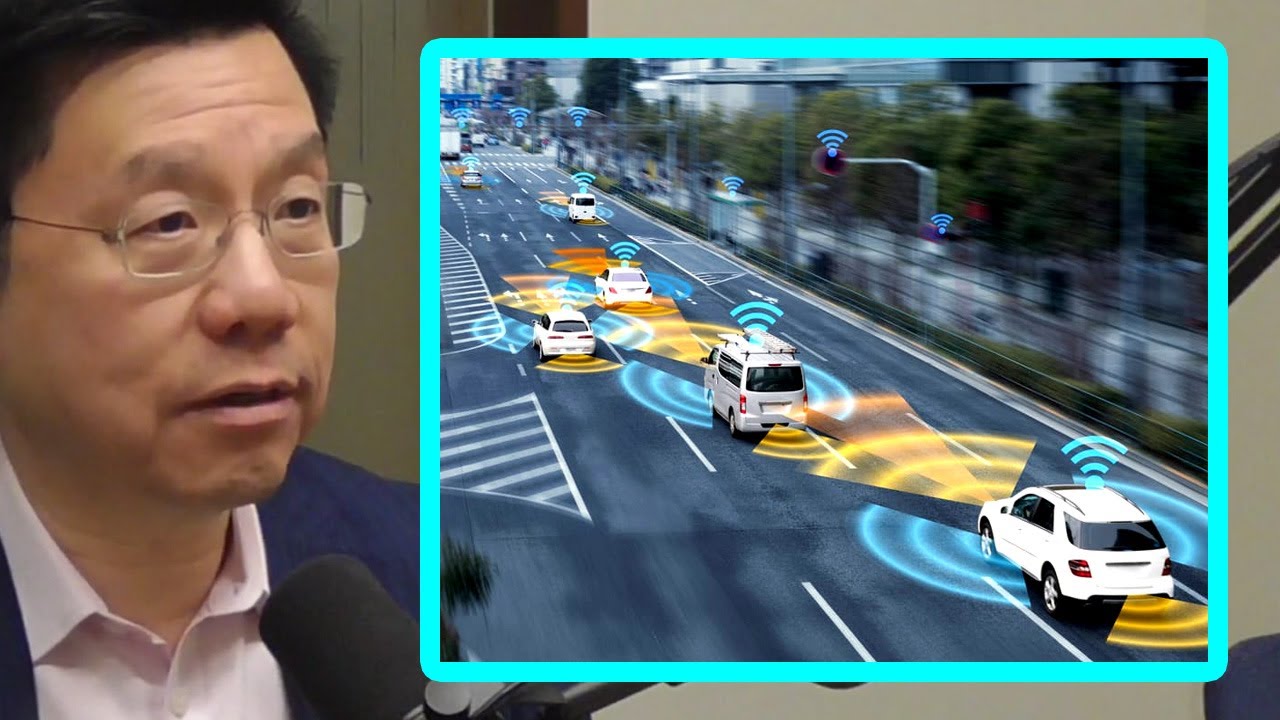
Video summary
In the discussion regarding autonomous vehicles, Kai-Fu Lee addresses whether full autonomy can be achieved without substantial investment in infrastructure, concluding that this is not a simple yes-or-no issue but rather a matter of timeline and feasibility. He suggests that while solving these problems entirely on software alone might take decades—potentially 15 to 30 or even 45 years—the integration of infrastructure augmentation could significantly accelerate the path toward Level 5 autonomy. This perspective highlights the complex interplay between technological advancement and physical urban planning, noting that achieving full self-driving capabilities likely requires a symbiotic relationship with existing road networks rather than relying solely on algorithmic improvements. Lee points to specific examples where new cities or significant infrastructure projects are being developed to support autonomous technology, though he notes skepticism about building massive metropolises like Chicago specifically for AI purposes in the United States. Instead, smaller-scale initiatives appear more viable and currently underway. He contrasts this with historical precedents, such as the construction of the U.S. highway system under Presidents Eisenhower or Kennedy during the mid-20th century. This era serves as a powerful example where massive government investment in infrastructure yielded tremendous prosperity over subsequent decades, suggesting that similar strategic spending could be justified for autonomous vehicle adoption today. The conversation also touches upon the geopolitical and economic realities of Western countries regarding such investments. Lee questions whether it is truly impossible for nations like those in Europe or America to commit resources toward building dedicated lanes or smart corridors for self-driving cars, drawing a parallel to how President Eisenhower secured the necessary political will and funding for interstate highways. He implies that while current public sentiment might differ from mid-century priorities, history demonstrates that visionary leadership can mobilize resources for transformative infrastructure projects. The potential benefits of such investments are framed not just as technological milestones but as catalysts for long-term economic growth and societal change. Ultimately, the summary underscores the speculative nature of predicting exact timelines for full autonomy while emphasizing the critical role of physical infrastructure in speeding up that process. Lee's analysis suggests that waiting passively for software to solve every edge case is inefficient; instead, a proactive approach involving city planning and targeted construction offers a more realistic pathway forward. By studying historical successes like the Interstate Highway System, policymakers might find inspiration to replicate similar feats for the autonomous era, ensuring that technological potential translates into tangible societal benefits without requiring unrealistic expectations of immediate total autonomy.
Read the full video transcript
[Music]
do you think on the autonomous vehicle
space it's possible to solve the problem
of full autonomy without significant
investment in infrastructure well that's
really hard to speculate I think it's
not a yes/no question but how long does
it take question you know 15 years 30
years 45 years clearly with
infrastructure augmentation where
there's ro the city or whole city
planning building a new city I'm sure
that will accelerate that they of the l5
I I'm not knowledgeable enough and it's
hard to predict even one we're
knowledgeable because a lot of it is
speculative but in the u.s. I don't
think people would consider building a
new city the size of Chicago to make it
the AI slash autonomous city they're
smaller ones being built I'm aware of
that
but is infrastructure spent really
impossible for us or Western countries I
don't think so the u.s. highway system
was built was that during President
Eisenhower or Kennedy as Eisenhower yeah
so so so maybe historians can study how
the President Eisenhower get the
resources to build this massive
infrastructure that surely gave us a
tremendous amount of prosperity over the
next decade if not century
you