Video summary
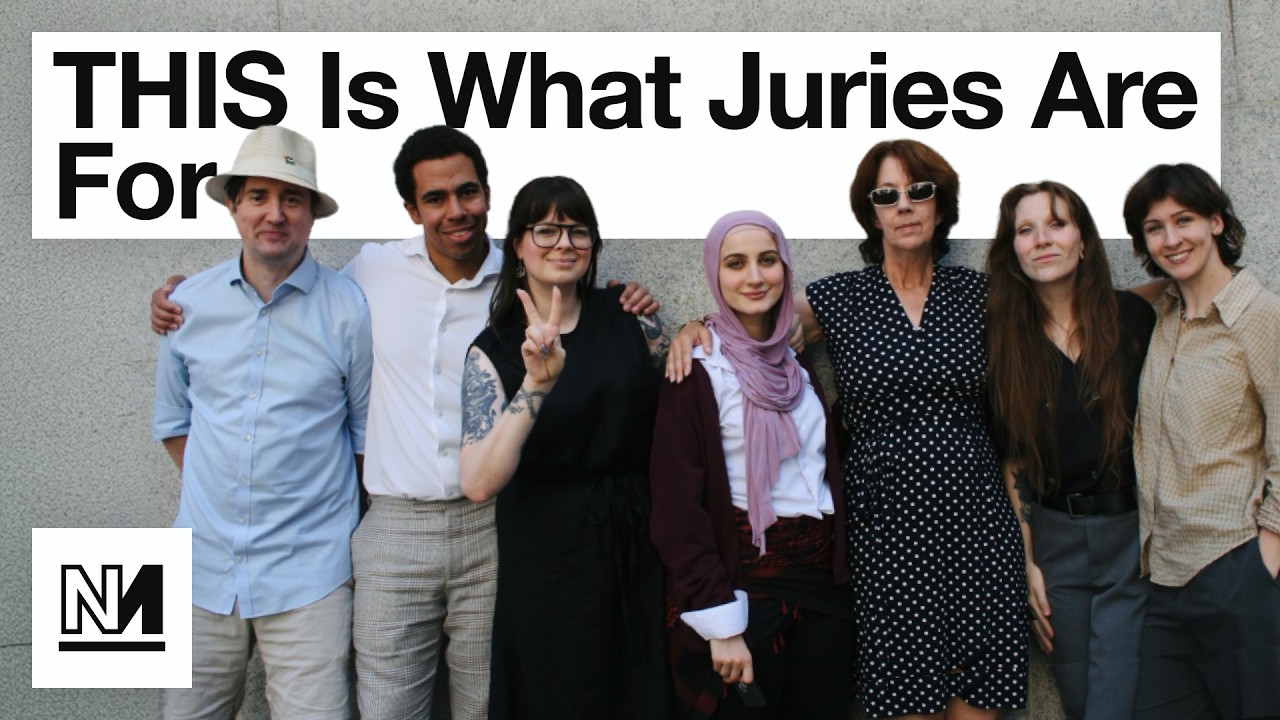
In late June, eight individuals accused of involvement in a Palestine Action break-in at an Elbit weapons site near Bristol faced trial at the Old Bailey in London. Although none of the defendants were physically present at the site during the incident, they were charged with violent disorder and criminal damage for allegedly planning the action, compiling equipment lists, purchasing items used by others, and coordinating the break-in and its filming. Seven of these defendants had previously been acquitted of aggravated burglary charges after a jury cleared the six activists who actually entered the facility. In this latest proceeding, all defendants denied wrongdoing, and after 37 hours of deliberation, the jury returned no verdict on any of the remaining charges against the seven, effectively causing the case to collapse without finding them guilty of anything.
A significant development in this trial emerged when the jury asked the court whether the defendants would be sentenced as terrorists if they were found guilty, a question the judge noted was for him to consider rather than the jury. This inquiry highlights a growing concern regarding the breakdown of trust between juries and the judiciary, stemming from a precedent set in a previous Filton case where four activists were initially convicted of criminal damage but later had a terrorism connection added by the judge during sentencing. In that earlier instance, reporting restrictions prevented the jury from knowing about the potential for such an upgrade, leading to speculation that jurors in the current trial may have felt deceived or reluctant to convict if it meant unknowingly condemning defendants to harsher terrorist-related sentences.
The discussion also touched upon "Hoffman's bargain," a legal concept originating from a 2003 House of Lords ruling involving activists who attempted to stop an illegal war by damaging military equipment at Fairford Air Force Base. This principle established a tacit agreement where direct actionists could express their conscience through criminal damage in exchange for judicial leniency, provided they admitted to the specific charges without contesting the broader context. However, this bargain appears to be eroding as judges increasingly identify terrorism connections independently of prosecution arguments, often after convictions are secured. This shift undermines the traditional understanding that property damage cases, such as spray-painting a shop front or splintering windows, do not constitute terrorism, leaving jurors uncertain about the true implications of their verdicts and potentially more hesitant to convict.
Looking ahead, the Crown Prosecution Service may attempt to secure a retrial for the seven defendants who received no verdict, though doing so could be significantly more difficult given the widespread public knowledge of the potential for terrorism charges in similar cases. The uncertainty surrounding whether judges will again find hidden terror connections after initial convictions creates a challenging environment for future prosecutions involving Palestine Action and other direct action groups. Many of these individuals have already spent considerable time in prison on remand, sometimes arrested during dawn raids by counter-terrorist police, facing charges that some observers view as exaggerated or unrelated to actual terrorist intent. As the legal system navigates these complex issues, the integrity of jury deliberations and the fairness of sentencing remain under intense scrutiny, with implications that could extend well beyond this specific case.
Read the full video transcript
In late June, eight defendants alleged
to have been involved in a Palestine
action break-in at an Elbit weapons site
near Bristol stood trial at the Old
Bailey in London.
Um Ian Sanders, William Plasto,
Alexandra Herbic, Tota Hocha, Hannah
Davidson, Yulia Brigaderova, and
Madeline Norman were all charged with
violent disorder and criminal damage in
relation to that action um despite none
having been present at the Elbit site
when it happened.
Um William Plasto was acquitted of the
violent disorder charge during the
trial. Um today though the jury has
returned no verdict on all the remaining
charges against the seven, meaning it
was unable to find them guilty of of
anything of any of the charges.
Um the prosecutor in the case had
alleged that the seven, so sort of part
of what's known as the Filton 25, helped
plan the action. So they weren't there,
but they're saying they were involved
the allegation was that they were
involved um and that they compiled an
equipment list, undertook undertook
sorry reconnaissance,
um purchased items used by others, and
coordinated the break-in and its
filming. Um all seven had previously
been charged with aggravated burglary as
well, but were formally acquitted of
that charge in February this year um
after a jury cleared the six activists
who actually broke into Elbit or who
were actually alleged to have broken
into Elbit, I should say, um of that
charge during their first trial. Now in
this latest court case um all defendants
denied any wrongdoing, and after 37
hours of deliberation the jury was
unable to find the seven of them guilty
of anything. It means that the case
found it collapsed. There might be a
retrial. We don't know. Now according to
the Filton Defense Committee during that
deliberation, this is the key bit,
the jury also asked the court whether
the defendants would be sentenced as
terrorists if they returned a guilty
verdict. Now the judge, we understand,
replied that it was a matter for him to
consider and not for the jury to worry
about. But the fact the jury thought
that was a relevant question
really is notable. So back in June
a judge sentenced four Palestine Action
activists who had been found guilty of
criminal damage at the Filton site as
terrorists. Now that was after he found
a terror connection in their offenses.
So the judge found that. But during that
trial the jury had not been informed
that that could be a possibility.
And reporting restrictions at the time
meant it could not become public
knowledge that defendants might be
sentenced as terrorists if they returned
a guilty verdict. Now we speculated at
the time that the jury might have felt
more than a little deceived by that,
right? So that they thought they were
finding
um these defendants guilty of criminal
damage or whatever it was, but it turns
out that what they had condemned those
people to ultimately was terrorism, even
though they didn't know at the time.
Um so could it be that members of this
particular jury read about that prior
case and are now refusing to play ball?
Um Stephen, you are our resident expert
on Palestine Action and actually all
things legal. You're much better at this
than me. You're more sort of You're
better at the details. Um
what's happened here? Is this the case
that the jury have thought we've seen in
the past that you ask a jury to find if
this person was guilty of criminal
damage and then afterwards, unbeknownst
to us, you slapped on a terrorism
element to it and they went to prison
for much longer than we could have
imagined?
>> I mean I think that's that's potentially
really, really likely. I mean it was
very widely reported um after the the
guilty verdicts have been handed down in
the original um
Filton case of the to the four of them
of criminal damage that the judge was
going to consider a terror connection.
And at that same time reporting
restrictions were lifted which meant
that
um it could be revealed that, you know,
that had been known about throughout the
trial by the defendants, for example,
but not by the jury. In fact, people
weren't allowed to talk about it um
either in public or in or in or in the
court.
Um and obviously there's a connection
between that case and this case.
Um
you know, so that could that's
plausible.
But I think what the jury what I
actually find interesting about the jury
asking this question is that I think it
indicates something very crucial to
justice in this country, which is a
breakdown of trust between juries and
the judiciary.
You know, it's now the case that a jury
understands that it's possible that in
some cases they could be asked to find
someone guilty of a particular ordinary
criminal charge only to find that what
they've done is through their decision
sentence them to much longer and much
harsher terms in prison because
independently of that decision, the
judge find it finds a terror connection.
And you know, it's not
it this is not something that nobody
ever thought about. I mean, lots of
times on this show I've talked about a
House of Lords debate that happened
um at the time that the law that
involves terror connections um of for
for for you know, lesser crimes came in,
which was around 2020. Um where this
Liberal Democrat Lord was saying, you
know, we're going to have this situation
if we apply this in this country where
juries will just
be deceived about what it is that
they're doing. When they think they are
earnestly hearing a case which has a
particular limited charge with a
particular sentence attached to it.
Um
and so that's one consequence of um what
what might happen here. There's another
interesting consequence I think, um
which is to do with something that I
don't know if you've ever heard of this
before. It's called Hoffman's bargain.
>> Oh, god. I've never heard of that
before.
>> Okay. So, in 2003, um five people broke
into the Fairford Air Force Air Force
base ahead of um you know, shock and awe
in the beginning of the Iraq war where
there were American B-52 jets. Um two of
them broke in at one on one occasion and
they managed to slash fuel uh you know,
pipes on fuel on fuel supply uh lines.
They managed to
um break equipment and and um you know,
meters and dashboards and things like
that. On another occasion, two people
tried to get in and and they were caught
and then a third person a fifth person
rather tried to get in and he was
carrying petroleum mixed with with
fairy washing liquid and a box of
matches cuz he planned to set the wheels
of the off the B-52s on fire.
Um, now
that case was a case of direct action
where
you know, at that point there was a lot
of suspicion
not unfounded suspicion that the war
that Britain was going about to
undertake with the US was illegal. And
so, they tried to use as a defense that
they were actually trying to stop an
illegal war.
Before they even got into the criminal
courts, that was heard by appeals courts
and eventually even got to the house of
house of lords where one Kier Starmer
represented one of those Fairford
activists
in trying to push through the idea that
stopping an illegal war was a legitimate
legal defense for the the criminal
damage.
Now, the House of Lords decided it
wasn't. There was a lot of political
pressure at the time as well because the
Attorney General certainly did not want
to release the legal advice he'd
received over
the Iraq war.
Um, so the House of Lords found that
they they they they couldn't use this
defense.
>> Sorry to interrupt. This is So, if
anyone's Why was this going to the House
of Lords? That's because the Supreme
Court didn't yet exist and that used to
be [clears throat] the highest court
used to be the House of Lords.
>> Quite right. Exactly. I should have I
should have said that.
So, anyway, in the House of Lords they
decide they they they the
declined to allow them to use this this
offense of
illegality of the Iraq war. And in in
the ruling that came out from the lords
who were involved, one of them, Lord
Hoffman, sort of described what he took
to be a kind of pact between direct
actionists and
the the state. Which was that
you know, direct actionists, you know,
could display um, through, you know,
criminal damage or crimes, their
conscience, um, on on the one hand, but
on the other hand,
uh, the courts would be lenient on the
condition that those people what
admitted what they'd done. They were
open to the fact that that what they
they had done it for these reasons of
conscience and they didn't, you know,
they weren't afraid of declaring that.
And that is a kind of bargain that is
sort of more or less stood, although
it's been diminished of late, but it's
not totally diminished. So, in the
filter of four trial, one of the things
that the judge has said the judge said
there in his sentencing, once he'd found
a terror connection, was that he held it
against them that they hadn't admitted
to what they'd done, that they hadn't
just said, you know, I admit to criminal
damage. I mean, they admitted to all
sorts of things, but they didn't admit
to the charges.
But, of course, if you know that there's
a terror connection hanging over your
head, why would you admit to anything?
Because you're not just admitting to the
charge, just as the jury is not just
finding you guilty of the charge. You're
admitting to something much greater that
you are in some way not guilty of a
terrorist crime, but connected to
terrorism, which carries aggravating
factors. And, you know, why would anyone
admit that? What So, that bargain is
completely out out of thrown completely
out of the window in that case. Um,
so, yes, two broken bargains, I think.
One indicated by this question between
jurors and the judiciary, and the other
a much more fundamental bargain around
what the proper way to treat direct
actionists is in this country.
>> And
so, this case ended with sort of no
verdict,
um, which presumably means the Crown
Prosecution Service might try and have a
retrial.
>> Yeah.
>> Um, I suppose is there a way that they
can
sort of try and have a jury that doesn't
know about all this terrorist connection
stuff? Or is it is this cuz this is a
widely known news story. I don't think
they can block someone because they've,
you know,
>> We read it in the newspaper, yeah.
>> Um, so, this this could potentially make
it very difficult to charge Palestine
Action Group or at least get them
convicted because there'll be someone on
the jury who says, "I'm not quite sure
about what's going on here."
>> We just don't know. And it's true. But
you know, they just don't know.
Um and I think that that's Yeah, it will
will will make it um more more more more
more difficult. Um
I mean, it seems like without without a
doubt.
>> The the other The other thing that keeps
um
sort of shocking me whenever I read it
is so these people
they they haven't been found not guilty
or at least of all the charges. So they
>> There's no verdict.
>> So they're not cleared yet. Um
but they they might be. And they've
already spent a really long time in
prison. So some of these people which So
they they charge They weren't there.
They're charged with maybe having some
involvement in the planning of this
action. And they've been in prison for
over 12 months many of them. Although
they're out now, aren't they? But
they've spent a lot of time in prison.
>> Yeah, they were So many
many of them were were bailed when the
first Filton Six um trial collapsed uh
when the aggravated burglary charge was
was um when they were when they were or
formally acquitted of
Um but yes, they spent the ones the
seven who the juries have had has found
no verdicts on today spent between I
think 15 and 18 months on remand in
prison. Um and not just, you know, and
they were also all um
you know, arrested during dawn raids by
counter-terrorist police. And you know,
like if you read some of the reporting
on the trial like you know, the charges
put to some of them are that they they
cooked a meal for one of the people who
who broke into into the the Elbit site
or that they gave one of them who was
acquitted a lift somewhere. You know, it
really the the you know, obviously I'm
you know, the whole the whole I haven't
been following the whole case. I've just
been reading reading bits of the
reporting today. Um
it it's you know, it's There are other
reasons why the jury it seems might have
been doubtful about about um
these charges.
>> Um let's look at another Well, it's not
a court. This is a decision coming up,
isn't it? Because on Friday
um we will see a judge considering
whether there is a terror connection in
another Palestine action case. So, five
activists here were found guilty of
criminal damage in July, and that was
after causing an alleged £200,000 worth
of damage to a Barclays bank branch in
Burnley in August 2024
when they sprayed the storefront with
red paint and splintered some windows.
I know lots of people looking at the
damage thinking, "Well, is that really
£220,000?" But anyway, they they've been
found guilty of the criminal damage. Um
however, in that case um the question of
whether there was a terrorism connection
was raised by the judge himself.
Interestingly, unprompted by the
prosecution. So, it's sort of
the the the defendants were found
guilty, the prosecution hadn't even
mentioned it, and then the judge thinks,
"Maybe there was also some terrorism
going on here."
Um that was again after the convictions
were secured. Um
So, what's going on here? I mean, how
big a difference would it make if
presumably these
guy I mean, I imagine they're already in
custody, are they? These ones who have
been found guilty or
>> No, I think I I'm not sure. I think
they're on they're on they're on bail
pending
>> They're on bail. And how big a
difference would it make here if the
judge does decide there was a terrorist
connection?
>> You know, it's like it's actually really
impossible to say because there are so
many factors that go into sentencing and
then go into the level of aggravation
caused by a terror connection if one is
found. But there are some things that,
you know, certainly are true that, you
know, if you're
if you if terror connection is found in
your in in in your offense, then you're
subject to
monitoring for a really long time. Once
you finish your sentence, you're also
having to report things like new
relationships, new phone numbers, moving
home for a serious period of time. Um if
you're in custody, um you're treated
within the
the prison complex of prison system as
uh someone who has a terror conviction,
which means that you're treated very
differently from the general population
in lots of ways. You know, it's a very
significant thing to find, and I think
one of the really interesting things
about this is that, you You the Terror
Act when it talks about criminal damage
um in relation to when it's defining
terrorism, it's serious criminal it's
serious criminal damage. And the
question here is whether you know, in
the filter and full case, I think it was
estimated around a million pounds or
something like that. In this case, we're
talking about
you know, a fifth of that.
What counts as serious is
>> I think we've talked about this before
on the show, haven't we? There was a
there was a debate in the House of
Commons when the Terrorism Act was first
being passed, where there were MPs who
had sort of objected to criminal damage
being included as possible terrorism.
And then I think whoever was speaking
for the government said, "Look, we
clearly can think of sort of
um scenarios where attacking
property could be terrorism. Think about
if they attacked the electricity
infrastructure, for example, or you
know, poisoned the water supply." So,
they were making the argument like, "No,
there there
is possible that you could have property
damage that looks like terrorism." And
that is true. But now they are
>> a shop front.
>> A shop front. That that's not terrorism.
>> Shop front with spray paint and and and
splintered windows, you know, that's um
And I nobody imagines that that is an
could
could possibly be an act of terrorism.
>> Yeah. And maybe now that is undermining
these cases because juries are thinking,
"Well, I don't want to find them guilty
of criminal damage if I think that they
could end up then being called a
terrorist cuz it doesn't make any
sense."
>> Yeah.
>> Um
Brilliant. Thank you for that update.
>> That's right.
>> I'm always so enlightened when you come
and tell me about the latest of these
court cases.
>> my best.
>> about Palestine. I learn about how the
legal system works. I love it.