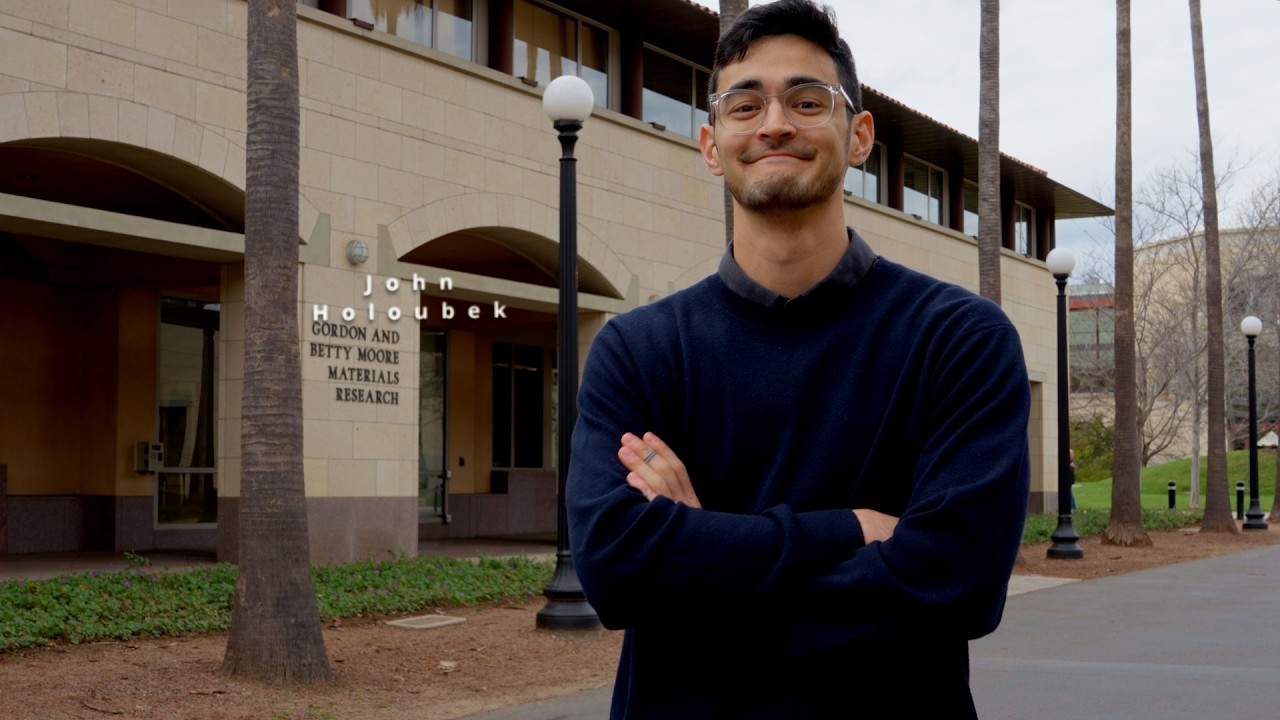
John Holoubek | Stanford Energy Fellow – Energy Conversion & Storage
Watch on YouTubeVideo summary
John Holoubek is an Energy Fellow at Stanford University whose research focuses on electrochemistry for energy storage and conversion, specifically examining molecular-scale interactions within liquid electrolytes that influence battery and electrolyzer performance. His work integrates a broad spectrum of disciplines ranging from atomistic simulations to experimental electrochemistry, device engineering, and techno-economic analysis. This multidisciplinary approach allows him to address complex challenges in the energy sector by combining theoretical expertise with practical applications, aiming to find innovative solutions at the intersection of these diverse fields.
Holoubek chose Stanford due to its leadership in energy research, which has provided him access to a wide array of experts both within his specific domain and beyond it. He highlights that the STEP fellowship is particularly valuable because it encompasses such a comprehensive range of topics, bridging hard science with economics. A significant part of this experience involves interacting with other fellows through activities like weekly lab crawls, where they share insights into their respective projects. These interactions have exposed him to critical areas such as grid systems and economic factors that he would not otherwise have encountered, fostering tremendous personal growth within the energy community.
The fellowship has also offered Holoubek a strong sense of belonging among peers who are all postdocs navigating similar joys and challenges in their careers. Being part of this supportive cohort has helped him grow into an effective energy leader by providing mentorship and shared experiences that clarify his professional identity. Through these programs, he has gained a deeper understanding of the most pressing problems in energy research at Stanford and globally, which has been instrumental in shaping his vision for future contributions to the field.
Looking ahead, Holoubek hopes to make an impact on the energy transition by conducting useful work that expands our understanding of important scientific challenges while mentoring future leaders in this space. His ultimate goal is to combine rigorous scientific inquiry with practical applications to drive innovation and support the broader goals of sustainable energy systems. By continuing to learn from diverse experts and engaging with a collaborative community, he aims to contribute meaningfully to solving critical issues related to energy conversion and storage for generations to come.
Read the full video transcript
My name is John Holbeck. I'm from
Portland, Oregon, and I did my PhD at UC
San Diego.
My work involves electrochemistry for
energy storage and conversion.
And specifically, understanding the
molecular scale interactions in liquid
electrolytes that go on to affect the
performance of batteries and
electrolyzers.
>> [music]
>> So, this work spans everything from
atomistic simulations to experimental
electrochemistry, uh device engineering,
and then finally techno-economic
analysis.
My hosts are Yitang Wang, Jen Bao, and
Zhenan Chen. Really, our hope with this
pairing was to mesh the theoretical
expertise of [music] Jen with the
experimental expertise of Yi and Zhenan
to hopefully find innovation
at the intersection. I landed on
Stanford because of first of its
leadership in energy research.
I've been able to learn from just a
really wide array of experts, both in my
domain and outside of that. And the STEP
fellowship in particular, because we
encompass such a wide range of energy
topics, so everything from hard science
to economics, [music] which has also
been really tremendous for my own
personal growth. In my mind, the best
part of this fellowship has been
learning from and interacting with the
other fellows.
So, we do things like weekly [music] lab
crawls, where we learn from each other
what everybody is doing, which I
wouldn't have been able to experience
otherwise. So, I've learned things about
[music] grid systems and economics, for
example, that would not have been
available to me otherwise.
Beyond that, the community has been
really nice to be a part of. So, we're
all postdocs, we're all kind of going
through the same joys and challenges of
that process, and it's been really nice
to be a part of a cohort and receive
that kind of support. So, I think I've
really grown as an energy leader, both
through all the programming in the
fellowship, and also in just learning
what's out there in terms of energy
research, [music] both at Stanford and
beyond, what the most important problems
are,
uh so on and so forth.
I think it's really helped me clarify
both who I want to be as a scientist and
what I want to do moving forward in my
career. So, if I could have any impact
in the energy transition, I think it
would be to do useful work that expands
our understanding of important problems
and to help mentor [music] future
leaders in this space.
>> [music]