Video summary
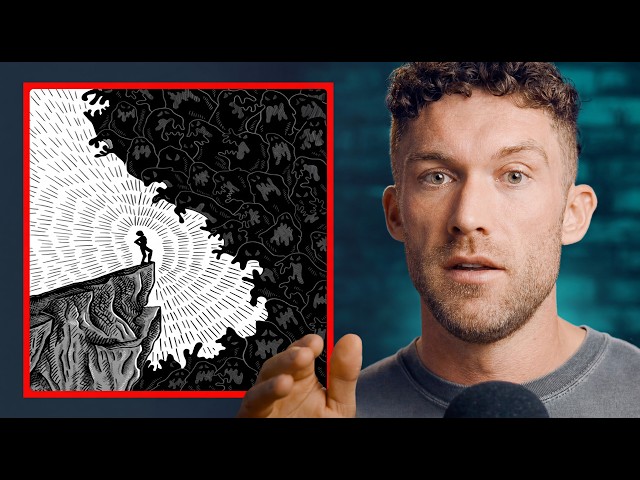
The central argument of this discussion posits that embracing vulnerability constitutes true strength rather than weakness, challenging societal norms that equate emotional suppression with discipline and maturity. Drawing on definitions from Joe Hudson and Brené Brown, the speaker asserts that courage is impossible without uncertainty, risk, or exposure; therefore, avoiding these elements does not constitute bravery but rather avoidance rebranded as resilience. The text distinguishes between healthy groundedness and "toxic stoicism," a hollowed-out mindset that rewards emotional shutdown and teaches individuals to pride themselves on feeling little. This form of detachment is described as an illusion of control where people tiptoe through life fearing their own emotions, effectively disconnecting from reality while pretending composure even when internally breaking down. True resilience is redefined not as imperviousness to pain or the ability to ignore feelings, but as the capacity to feel deeply and act in one's best interests despite those sensations. The speaker illustrates this contrast through scenarios involving individuals receiving bad news: one who reacts with visible emotion versus another who remains blank-faced and numbs themselves with alcohol later that night. The former is presented as genuinely strong because they choose presence over protection, whereas the latter engages in a form of coping that amounts to abstaining from reality. This dynamic is particularly prevalent among high-functioning individuals who mistake their fear-based suppression for professionalism or strength, often leading to burnout and an inability to tolerate intimacy due to a deep-seated terror of having their true selves rejected. A significant portion of the analysis addresses how society's obsession with authenticity has created a paradoxical environment where performative rawness is monetized while genuine sincerity remains terrifyingly uncomfortable for many. The speaker critiques influencer culture, which sells stripped-back content that feels naturalistic but is often highly contrived five-dimensional chess designed to flip audiences into believing they are seeing the real thing without realizing it was staged. Furthermore, the concept of an "emotional Overton window" explains why people react negatively when others step outside acceptable emotional ranges; such reactions often stem from projection, jealousy, or a fear that genuine emotion will deregulate their own numbness. Consequently, society rewards shallow confessions and punishes real ones that linger, leaving children to learn early on that silence equals safety. The discussion extends these psychological insights into the realm of masculinity, noting that traditional definitions requiring emotional control make it even harder for men to show vulnerability without feeling shame or weakness. The speaker argues that intimacy is directly proportional to self-revelation; hiding flaws and feelings blocks connection, while exposing them fosters closeness. This leads to a profound existential warning: if one does not connect with their own emotions or speak their truth when it is scary, they risk becoming like a philosophical zombie—an automaton that reacts mechanically to the world without internal experience. The fear of being replaced by robots ironically mirrors what many people are already doing to themselves by sterilizing their emotional lives in an attempt to avoid feeling broken by them. Ultimately, the speaker concludes that vulnerability is not about fragility but about rebellion and the bravery required to be fully seen despite the risk of judgment or rejection. While acknowledging that some listeners may react defensively with knee-jerk resistance to these ideas, the message remains a consistent offering for those ready to embrace it. The text emphasizes that there are no brave acts without fear; even if an individual feels little emotion naturally, mocking others who struggle with vulnerability is not justified because speaking one's truth when scared demonstrates superior courage. By choosing to feel and share authentically rather than suppressing emotions to avoid discomfort, individuals reclaim their humanity and break free from the automated existence they so desperately try to emulate in a world increasingly dominated by artificial intelligence.
Read the full video transcript
I want to try to prove to you that
embracing vulnerability is true
strength. Joe Hudson's got this great
definition of vulnerability. He says,
"Vulnerability is speaking your truth
even when it's scary."
So, a question to ask. Who is truly the
braver person?
The one who lets themselves feel
or the one who flees the second an
emotion gets too close?
The one strong enough to carry
the full weight of their experience
emotionally or the one so fragile that
they have to suppress it?
Brené Brown has got this line, "Without
vulnerability, there is no courage. If
there's no uncertainty, no risk, no
exposure, you're not being that brave
because there's nothing on the line.
We are so quick to praise suppression as
strength.
We call it control. We call it
discipline. We pretend emotional
detachment is a sign of maturity.
But
fully living your life
means actually feeling what [ __ ]
happens.
Not just performing composure while
something inside of you quietly breaks.
The enemy here, as far as I can see, is
toxic stoicism. Not the grounded,
reflective Ryan Holiday kind.
Instead, the hollowed-out kind.
The kind that rewards shutdown.
That teaches you to be proud of how
little you feel as though restraint
were the same thing as resilience.
As far as I can see
fearing vulnerability turns your inner
world into a minefield.
It teaches you to treat emotions like
threats. So, you tiptoe carefully
through your life
trying to not set anything off.
Proud of your control but slowly growing
more disconnected from life around you.
This
isn't strength.
It's
avoidance rebranded.
Resilience is not what most people think
it is.
It's not about not feeling the pain or
being impervious to challenges or
setbacks.
It isn't about people who suppress or
ignore their feelings. It's also not
about people who are delusional and
think they don't have feelings.
Resilience is about people who feel
their feelings deeply
but are able to act despite them
in their best interests. It's a slamming
insight from Mark Manson. This
common mistake, especially among
high-functioning, high-achieving people,
is believing that vulnerability is
weakness.
But vulnerability is being scared of
speaking your truth
and doing it anyway. It's
choosing presence before protection.
It's the willingness to be seen even
when what's visible isn't tidy or
filtered or finished.
Imagine
picture in your mind two people
receiving bad news.
One's hands shake as tears come, the
other's face goes blank, jaw locked, and
later that night they're three drinks
deep scrolling their phone feeling
nothing.
Which one is really stronger? The one
who can show their emotions
or the one who has to run from them?
As far as I can see,
weakness is pretending you don't feel.
Strength is feeling deeply
and staying open anyway.
We call it coping, but often it's just
abstaining from reality. The
executive who prides herself on being
unflappable while quietly burning out.
She calls it professionalism,
but it's really a fear of having her
true self rejected. The partner who
insists, "I don't do drama." when what
they mean is, "I can't tolerate
intimacy."
Every deep discussion becomes an
emotional threat, so they fake calm at
the cost of closeness. The person who
posts about the value of vulnerability
online
while being emotionally unavailable
offline. They are fluent in the language
of openness,
but allergic to the practice of it.
The society obsessed with authenticity,
but terrified of sincerity. Rewarding
shallow confessions that trend
while punishing the real ones that
linger.
The children who learn that silence
equals safety growing into adults who
apologize for their needs
before they've even voiced them. The
influencer culture that sells
performative rawness as a brand,
monetizing emotion
while sterilizing its reality.
Different symptoms from the same
disease. People who are so afraid of
being broken by their feelings
that they never let themselves be shaped
by them.
The real fear isn't just the emotion
itself.
It's also what the emotion might not
receive.
We're not afraid of sadness.
We're afraid of being sad in front of
someone who shrugs.
We're not afraid of grief.
We're afraid of grieving
and being judged for doing so.
That's the abandonment we're trying to
avoid.
Even if we know that feeling our
feelings is braver than denying them,
the people around us still might think
less of us for opening up.
So, we keep things hidden.
Not because we want to, but because we
don't want to feel alone in the sharing.
Men, as far as I can see, have this
harder still as almost all definitions
of masculinity have some version of
emotional control
as a core tenant, which makes feeling
pride in showing emotions as a man
even tougher.
But,
you cannot connect with the world or
anyone in it
if you never truly show yourself.
Intimacy only exists to the degree that
you reveal yourself. Your sadness,
anger, joy, desires, boundaries,
everything. When
when you hide your flaws or your
feelings out of fear of shame,
you block intimacy and authenticity.
The more that you expose, the closer you
are.
The less you show, the more distant you
become.
Which do you want to choose?
Vulnerability isn't weakness. It's
rebellion.
It's not how little you feel that makes
you strong.
It's how much you can face and open.
It is saying,
"I'll go first.
I'll be honest even when it's scary.
Not because I'm fragile,
but because I'm brave enough to be fully
seen."
I think this is so [ __ ] cool. I think
this is like so on the money
around what openness really means. And
the fact that
what is it that
so many people look for in parasocial
relationships with their favorite
content creator or or writer or thinker
or TV personality or whatever.
They want authenticity.
But,
society is obsessed with authenticity
and terrified of sincerity.
Like those two just just the fact that
that is so [ __ ] true
then creates a world of performative
authenticity. Like the stripped-back
behind-the-scenes
I don't need no makeup or no script, but
then you find out that what this
person's actually doing is some [ __ ]
five-dimensional jujitsu chess, where
they've managed to flip you into
believing that what they were actually
doing was naturalistic, when really it
was super, super contrived.
I think we like the idea of authenticity
and sincerity, but when it comes into
land, when it actually makes
when the rubber meets the road,
it feels really uncomfortable, because
there is nowhere to hide from someone
who is truly, truly showing their
emotions.
Someone who really opens up, who says
like, this is a flag that I'm planting
in the ground, and this is something I
really [ __ ] care about, and it's
going to I'm going to shout and scream
in excitement, or I'm going to cry and
whimper in
like pain at what this thing has caused
me to feel.
Like, that is big. It's a very big
situation to be in. You know, we we like
Think about the Overton window.
The Overton window of acceptable speech,
right? These are all of the words that
you can say, and within that is a
bracket of words that you're allowed to
say.
It's kind of the same with
emotional depth, that there is a whole
breadth of emotions that people can
feel,
and despite the fact that we say what we
want is authenticity, sincerity,
openness,
truth,
when somebody steps outside of this sort
of emotional Overton window,
most people, most people, especially
people online,
are triggered in one way or another.
It's very triggering. And maybe it's
triggering because it reminds them of
the emotions that they're hiding from.
Maybe it's that their inability to
regulate themselves causes them to feel
deregulated by seeing someone else who's
suffering.
Maybe it reminds them of all of the
things that they're numbing themselves
from.
Maybe there's a degree of jealousy that
this person is brave enough to put it
out there. Maybe there's a strange kind
of pity that's tinged with being seen. I
don't want to be reflected in this.
And uh
yeah, it is
it is so [ __ ] fascinating to watch
people talk about the need for openness,
transparency, vulnerability, truth,
connection
relationally
in in terms of communication online.
And then when
when the [ __ ] chips get laid out onto
the table, everybody shits themselves.
Everybody's so scared. And uh I I really
get the sense like the
there is no such thing as being brave if
there's nothing on the line.
Like being brave
without feeling scared is not bravery.
If you're the sort of person let's say
in a a
alternate universe
I plucked you out and I made you a
soldier.
But you had one change to your mental
makeup that you didn't feel fear.
And you were the best super soldier ever
Delta Seal Team Six kicking down doors
shooting bad guys.
Would you say that you're brave in that
world?
Well
may kind of I suppose like you're acting
bravery. Uh bravery is being performed.
But
it's also you would know that there's a
difference in that kind of bravery
versus someone who is terrified
and does the same thing.
There is no bravery without being
scared. And I think that that means that
if there's no uncertainty and no risk
and no exposure
and there's nothing on the line, you
can't really be being that brave. And
that that like that this is just a
like transactional
detached philosophical argument about
it. This doesn't get into the fact that
all of your emotions, all of your
experience of life is dependent on you
actually [ __ ] feeling something, or
else you
People are going through life like a a
P-zombie, the philosophical zombie, this
idea that
uh someone who acts like an automaton,
like does all of the things, has you
stab them and they say, "Ow." You hug
them and they cry. You, you know, give
them something nice and they smile.
But they don't actually feel anything on
the inside. And it's crazy that
that is the kind of avatar
that a lot of people are moving towards.
That's sort of their dream. Everyone's
got this fear that the world's going to
be taken over by AI and robots, and yet
at the same moment is trying to make
themselves as automated and robotic as
possible.
I don't want to be at the mercy of my
feelings. I don't want to be distracted
by these pesky emotions.
But what I'm feared of is being replaced
by a robot.
I
What you fear will happen has already
happened.
You are
If you don't connect with yourself
fully, if you're not prepared to speak
your truth even when it's scary,
especially when it's scary,
what are you here for?
And maybe you don't feel fear all that
much, and that's great. Maybe you don't
feel vulnerability. Maybe you don't have
stuff that you need to open up about.
But just because you don't feel stuff,
I don't think that that is a reason to
point the finger in sort of laughing
mockery at the people who do.
After all, they're the ones that are
braver for having spoken up about it.
So, yeah, I I've been thinking about
this a lot, and I'm going to keep
hammering on about it, and the internet
[ __ ] hates it, especially coming from
a guy who looks
presents like me, like some budget
Andrew Tate meets [ __ ] Mark
Zuckerberg. And
I I care.
I don't care because I know that I'm
right about this. I'm right but I'm only
on the vulnerability is true strength
thing and it will land for the advice
hyper responses.
It will land
differentially. There will be people for
whom they will feel really seen by this
and there will be people that will go,
"What the [ __ ] you on about, mate?
What do you mean? You getting me to You
want me to cry? [ __ ] gay, isn't it?
Cry?
No. No.
What? Oh, yeah. Talk about my feeling.
What, to her? Nah. Nah. To them at the
pub? Nah. Nah. Dad didn't. All right,
cool. Like that's
This is This is for the people
that it's for.
And they'll know. But my
uh
proposal to you
is to see these as offerings and to see
where they land
when you hear me talk about them as
opposed to
uh having a knee-jerk reaction and we
will be to see
based on the sharpness and the stupidity
or smartness in the comments below.
If your sleep's been off, you're taking
ages to fall asleep, waking up at random
times, feeling groggy in the morning,
Momentous's sleep hacks are here to
help. They are not your typical knock
you out supplement just overloaded with
melatonin. It only has the most
evidence-based ingredients, perfect
doses to help you fall asleep more
quickly, stay asleep throughout the
night, and wake up feeling more rested
and revitalized in the morning. These
things
are an absolute game-changer. I take
them every single night and when I'm on
the road, they're unbelievable cuz
they're pre-dosed. You just take this
and your sleep will improve. What you
read on the label is what's in the
product and absolutely nothing else. And
if you're still unsure, they've got a
30-day money-back guarantee so you can
just buy it completely risk-free. Use
it. If you don't like it, if your sleep
doesn't improve, they'll just give you
your money back. That's how confident
they are that you'll love it. Plus, they
ship internationally. Right now, you can
get a 35% discount on your first
subscription and that 30-day money-back
guarantee by going to the link in the
description below or heading to
livemomentous.com/modernwisdom
using modern wisdom at checkout. That's
l i v e m o m e n t o u
s.com/modernwisdom
modern wisdom
at checkout. Congratulations for making
it to the end of the clip. Your brain
has not been fried by Tik Tok.
Watch the full episode here.