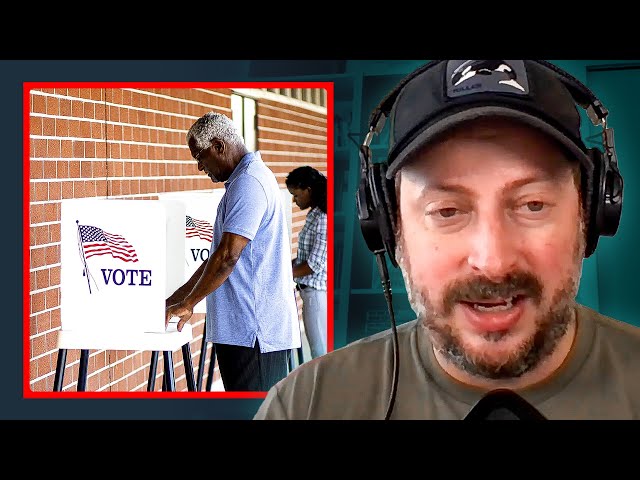
Video summary
In this discussion regarding the 2024 election, Nate Silver addresses how polling models have evolved to account for persistent structural differences in American politics compared to previous cycles. He notes that while Donald Trump has been the Republican nominee for three consecutive elections, resulting in a roughly even split of wins and losses, the fundamental dynamic remains consistent: Democrats typically win the popular vote but face significant challenges in securing Electoral College victories due to inefficient turnout among their college-educated coalition in states like California and New York. Conversely, the GOP's populist base tends to be more efficient at converting votes into electoral wins. Silver highlights that despite public skepticism about polling accuracy—often fueled by a lack of understanding regarding statistical sampling—the core issue lies not with the math itself but with response rates; older demographics are far more likely to answer landline calls than younger ones, necessitating shifts toward online methods and cell phone surveys which can be harder to execute effectively. The conversation delves into the psychological underpinnings of modern American politics, characterized by intense negative polarization where voting is driven less by affection for a specific party and more by fear or grievance against the opposition. Silver explains that political campaigns tailor their messaging to align with these distinct personality traits inherent to each party's base; Democrats tend toward higher neuroticism and negative emotionality, prompting them to focus on anxiety-inducing themes like past electoral losses, while Republicans are often lower in openness to experience, leading messages centered on anti-immigration sentiments and resistance to change. This approach reflects a reality where voters perceive the election as a choice between fulfilling their wildest dreams or avoiding nightmares caused by the other candidate, making fear-based messaging particularly potent downstream from these personality profiles. When analyzing specific battleground issues for different voter cohorts, Silver identifies abortion rights as the single most critical issue for Democrats, particularly among younger women and moderate voters who disapproved of the Supreme Court's overturning of *Roe v. Wade*. In contrast, immigration stands out as undoubtedly the GOP's strongest issue, resonating deeply with concerns over the influx of immigrants into the United States. Although political parties may not always articulate these positions in elevated ways during campaigns, they remain central to voter calculations. Silver also touches upon the sophistication of campaign data operations compared to media narratives; while media outlets often rely on "vibes," he suggests that modern campaigns are highly data-driven and likely employ their own modeling similar to his work at FiveThirtyEight, drawing parallels between this evolution in politics and the historical shift from field-based intuition to statistical analysis seen in sports through the Moneyball phenomenon. Ultimately, Silver concludes that while the public often misunderstands how polls function or dismisses them as archaic due to declining landline usage, the underlying mechanisms of political behavior remain rooted in these deep-seated demographic and psychological realities. The persistence of issues like wasted votes for Democrats and efficient mobilization by Republicans suggests that without addressing these structural inefficiencies, the Electoral College outcome will likely continue to diverge from popular vote expectations even as polling techniques adapt. By understanding the interplay between personality traits, grievance-based voting, and specific policy priorities like abortion and immigration, observers can better interpret campaign strategies and election forecasts rather than relying on superficial impressions or a misunderstanding of statistical sampling limitations.
Read the full video transcript
what is different about this election
compared to past elections and how has
the model had to change to account for
that so in some ways it's not that
different um this is a third election in
a row with Donald Trump as a republican
nominee um so far he's one for one or
one for two rather one and one um one
win one loss um you know so from my
naive perspective you might say okay
well the odds are probably about 50/50
again and and that's probably what we're
getting I mean so it's that the model
changes so much is that the conditions
change um one thing that we saw in 2016
obviously is that Hillary Clinton won
the popular vote that La that year in
Lost Electoral College um that is
probably a persistent problem for
Democrats in a world where they turn out
the college educated Coalition in
California New York places like that
places where they wind up having a lot
of wasted votes so the GOP more populist
Coalition is more efficient so so
therefore you bet on Harris to win the
popular vote as Democrats usually do but
the Electoral College is about 50/50 wow
it's kind of a running meme that nobody
knows anyone who's answered a political
poll and yet the entire country seems to
sort of hang on this kind of data what's
going on here do do you need to control
for the kind of people who pick up
unknown phone calls do do you decide on
who to
sample like do people sign up to get
pulled do they do they pick up less
calls than 10 years ago this whole sort
of concept seems quite archaic given to
how much weight we give to it which
leads me to believe that we either
shouldn't be giving so weight to it or
there is a large misunderstanding about
how it actually works no I don't think
you're misunderstanding I mean so look
um in principle if you pull 800 people
because of the magic of Statistics that
can give you with a margin of error a
good indication of how the whole country
would vote the problem what you're
getting as you're getting at is that a
lot of people are not equally likely to
respond to phone calls if you um just
call people on landlines like you'll get
a lot of old white women picking up and
not
not many other people women tend to
answer the phone from strangers more
than men do and older people more than
younger people um so most calls now are
either done on the Internet or excuse me
are done to cell phones or pollsters
have gone to various online methods um
but that's harder in the Golden Age you
could like literally ring someone's
phone up be like I'm from the gallop
agency I'd like to survey the next the
woman with the next birthday in the
household um and actually people would
answer calls from strangers I'm like
this just not really a thing anymore and
so yeah the people that respond to polls
are weird um and well it's kind of a
weird thing to
do
uh and you have to make some sausage out
of that minced meat basically yeah I
understand what is the truth behind most
people are just protest voting now that
it's not a vote for love of one party
it's a vote of hate for the other I
think there's a lot of that there's a
lot of negative polarization um you know
politics in the United States operates a
lot on grievance um and grievance goes a
long way yeah you're not you're not
telling people you're going to fulfill
their Wildest Dream so much as saying
the other guy is too scary and so it's a
moral imperative yeah the other guy's
going to fulfill your nightmares not
that we're going to with the solution
exactly yeah yeah it's very uh what's
the implication for that around
messaging do you think like what what's
Downstream from that I mean the parties
are a little bit different in the sense
that like Democrats I think tend to if
you look at the big personality traits
right they're sorted a little bit by
party um so Democrats are higher on
neuroticism or negative emotionality and
so um a lot of themes in their
commercials are trying to um touch on
people's anxieties and say hey remember
what happened in 2016 where you thought
we were going to win and Hillary lost um
whereas the GOP is more um is low on
openness to experience so they might
touch more on anti-immigration or hey
change is scary you can't trust kamis so
um so both campaign messages fit the
part's respective personality types yeah
what are the most important Battleground
topics this year which issues do
different cohorts of voters care about
the most um for Democrats the single
best issue is probably abortion um you
know a lot of moderate voters especially
younger women um did not approve the
Supreme Court's decision to overturn
roie Wade a couple of years ago um and
for the GOP immigration is almost
undoubtedly there best issue um they
aren't necessarily always talking about
it in um the most elevated ways
necessarily but people are concerned
about about uh the influx of of
immigrants into the United
States so you know we're talking about
uh you a very sophisticated highly
credentialed very smart statistician but
largely just some bloke right that's
sort of out there in The Ether doing
this thing and writing a great substack
and and and also a fantastic new book
how much or how sophisticated are the
parties individually with can they do
what you do or they Downstream from you
they've subscribed to Silver bulletin as
well and just like hoping for the best
no look I'm sure they're doing their own
modeling um you know in sports you have
this kind of Moneyball story of where um
where for a long time in sports you had
outside authors using statistics and
things like that um and the Insiders
were very and field driven um in
politics it's kind of the opposite the
the media is very Vibes driven and the
campaigns are more data driven so I'm
sure they have versions of what I do
that are are probably pretty similar
this episode is brought to you by
element stop having coffee first thing
in the morning your adenosine system
that caffeine acts on isn't even active
for the first 90 minutes of the day but
your adrenal system is and salt acts on
your adrenal system element contains a
signs backed electrolyte ratio of sodium
potassium and magnesium with no sugar no
gluten no coloring no artificial
ingredients or any other BS it plays a
critical role in reducing muscle cramps
and fatigue while optimizing brain
health regulating appetite and curbing
Cravings the orange flavor in a cold
glass of water is literally the best way
to start your morning I've done it every
single day for over three years now way
before they were a partner on the show
and I love it best of all there is a no
BS no questions ask refund policy so you
can buy absolutely risk-free and if you
do not like it for any reason they will
give you your money back and you don't
even need to return the box right now
you can get a free sample pack of all
eight flavors with your first box by
going to the link in the description
below or heading to drink LM nt.com slod
wisdom that's drink LM nt.com
slod wisdom thank you very much for
tuning in if you enjoyed that clip you
will love the ful length podcast in all
its Glory which is available right
here go on press it