Video summary
Social psychologist Dr. John Barry argues that the pervasive notion of misogyny in modern Western society may be a myth, citing his own experiences where he was treated worse than men on an elevator in Cairo but observes the opposite dynamic in the United States today. He references research reviewed in articles from roughly two years ago indicating that people are often biased *in favor* of women across various domains; for instance, women receive lighter punishments for similar offenses and scientific findings portraying them more positively are accepted while those suggesting men excel over women face skepticism. Barry suggests this intense focus on potential harm to women stems partly from a genuine societal concern where biases against men go largely unnoticed or unreported because they do not make headlines. The discussion highlights significant shifts in gender bias, particularly within academia and hiring practices for stereotypically male jobs, which historically favored men but appear to have flipped around 2009 so that these domains now favor women while previously female-favoring biases remain unchanged. Barry references a study by Steve Stewart-Williams involving fake articles on topics like lying or intelligence, where participants reacted negatively when evidence suggested women were inferior and positively or neutrally when it suggested they were superior or equal. Similarly, in research regarding intelligence comparisons between genders that took seven years to publish, the public reaction was far more hostile toward findings claiming men are smarter than women compared to claims of equality or female superiority, illustrating a robust pro-female bias among laypeople despite scientific nuance. Barry explores why mainstream narratives disproportionately focus on anti-female biases rather than acknowledging widespread anti-male sentiments, proposing two primary explanations beyond the simplistic evolutionary argument that women represent a limited resource for species success. He notes that cultural narratives have long emphasized historical disadvantages faced by women and argue that corrective measures may now be so extensive that they have fully reversed previous imbalances to the point where men are perceived as disadvantaged. This perception is reinforced by media practices, such as those described by Dr. Barry regarding "gamma bias," where news headlines sensationalize female successes or male failures while treating anti-male findings with gender neutrality, creating a skewed worldview for audiences who live vicariously through social media and news cycles rather than direct experience. Despite the statistical reality that 2023 saw record numbers of female CEOs comprising over one-third of all positions, Barry cautions against interpreting this as achieving true equality or ending underlying issues in society. He emphasizes that while evolutionary perspectives suggest we care more about harm to women because they limit reproductive success, cultural factors and media framing play a crucial role in shaping the current landscape where biases increasingly favor women. Ultimately, he concludes that measuring overall societal bias is complex due to varying contexts, but the trajectory clearly shows increasing favoritism toward women, leading many people to overlook or dismiss evidence of anti-male discrimination as less significant than it actually may be.
Read the full video transcript
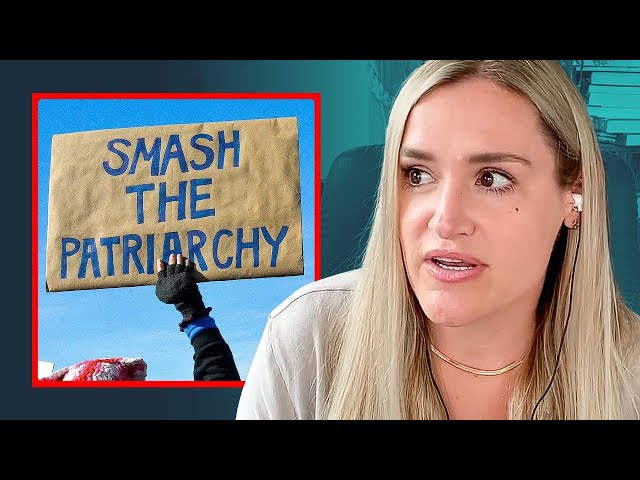
is pervasive misogyny a myth
I've claimed that it is
yeah I think
before we got on here I was talking
about how I was treated in Cairo yeah
tell that story
and I was getting onto an elevator I was
there first I hit the button I started
to step on and these two guys walk up
and they're like no no and they waved to
me to get off and then I got off and
they got on and they went up and I had
to take the next one
um so that kind of thing exists in
places in the world still in 2023
um but in the U.S uh you're not getting
much of that anymore and in fact you're
getting quite a bit of the opposite so I
wrote this paper I think this is this a
quote article I think yeah yeah a year
or two ago
um that reviewed a lot of the recent uh
research on looking at gender biases and
psychology and a lot of the time you see
exactly the opposite so people are
biased in favor of women across a lot of
different domains they often treat women
better than men they like women better
than they like men women get punished
less than men for the same things
um when there's a scientific finding
that portrays men better than women
people are biased against it in relation
to Scientific evidence that portrays
women better than men so people want
women to be better than men
um and so this idea that
Society is sexist against women and we
have to be vigilant about potential harm
to women
um I think potentially actually stems
from the very fact that we care so much
more about women than we do about men
and when we discover these biases
against men no one really cares and they
don't make the headlines
um
so yeah I would say it is largely a myth
in modern Western societies yes is it
really possible to answer this question
about whether Society is more biased
against men than women
that's a good question and I would say
probably no like practically it would be
really hard to measure all of the
different contexts
where people potentially could be biased
uh so like some Scholars have looked at
potential bias against men and women in
Academia and they see for example it's
possible students are slightly biased
against women and they're teaching
evaluations although hard to know
because a lot of these are real
evaluations so it could just be that
what maybe women aren't as NICE T-Shirts
I don't know
um
um so people have tried to like look at
which domains do people have a bias
against women or against men it would be
hard to look at everything all at once
and say uh which direction but one thing
that's been happening that I've seen
across a few papers now including one of
my own papers that's coming out is that
a lot of these biases actually used to
favor men like for example in hiring for
male stereotypical jobs it really was
the case that people used to be
discriminating against women in those
jobs
um and a lot of these things seem to
have flipped around 20 2009 so a lot of
the biases that used to favor men now
favor women and a lot of the biases that
always favor women still favor women so
I do think uh I I don't know if we can
say on whole who gets treated worse
relative to the other gender
um but certainly it seems to be the
trajectory that biases are increasingly
in favor favoring women and then people
just don't seem to care as much about
that as when they
seem to go against women there was that
Steve Stuart Williams study about fake
articles favoring women or men and
people's judgments of it right yeah they
had one on I think it was men or women
lie more me baby and then they did men
or women are more intelligent or men and
women better drawers I think they're
like three domains and yeah they always
found that when that when the evidence
said that women have a worse quality
than men people are like this is sexist
this is bad research but when women are
portrayed as better people like oh it's
even pretty good
same as when it was equal right so women
are better and men and women are equal
was seen as
um a similar level I think so I have
studies where I've looked at something
very similar that I have struggled to
publish for like seven years uh where we
did that we had men or I think we did it
with intelligence men or women are
equally intelligent women are more
intelligent than men are men are more
intelligent than women and people like
the men and women are equally
intelligent or women are more
intelligent than men more than they like
men are more intelligent than women so
that's the one that really irritates
people yeah why do you think this is the
case like why is it well actually first
no why do mainstream narratives Focus so
much on the possibility of anti-female
biases
if it seems you know pretty robust that
men even have an anti-men bias like the
call is coming from inside the house
with regards to some of the some of the
sort of anti-male sentiments yeah so
like both men and women will show this
pro-female bias it is larger for females
usually but men too have these Pro women
pre-pro woman advice um
what was your question why do mainstream
narratives focus on it so much oh
um yeah I think I think it's potentially
just because we care more but so okay so
there are two things going on I think uh
and one I think has been sort of
forwarded as the explanation but I think
it might be a little bit simplistic so
um just the idea that men and women you
know women have more like value
essentially from an evolutionary
perspective if you have a hundred women
100 women and one men one men one man
you can have a hundred babies but if you
have one more
very happy man if you have uh one woman
and a hundred men you gotta have one you
know you have a very disgusting woman
yeah yeah exactly
um so so women are the sort of limited
resource and so Scholars have argued and
it seems to be uh very plausible that
you know we care more about harm to
women because they are essentially
setting the limit on our success as a
species so that's one piece of it the
reason that I don't think that's
necessarily all of it is what we briefly
touched on at the start of this
conversation which is that you do see
these big cross-cultural differences and
you do you see these big differences
over time so if I were to run this study
where say like men are smarter than
women or Women are Smarter than men in
like 1920 would I see the same thing I
highly doubt it
um so I don't think that's all of it I
think that's part of it and then on top
of it we have this sort of cultural
narrative that you know women have been
disadvantaged for x amount of time
um and that is a huge problem and and
now the corrective measures have gone so
far that they've fully reversed things
and a lot of time men are being
disadvantaged for the sake of women so I
think those are both what's happening so
you see that in society when you get any
of these effects where you're like look
people are sexist against women everyone
loves it you know goes viral it's
covered by the New York Times uh I don't
think anybody will be well I don't want
to say anybody but I don't know if Steve
stew Steve Stuart Williams findings are
going to make it to the front page of
New York Times I guess we'll see are you
uh are you familiar with gamma bias have
you learned about this I don't know no I
don't think so so this is a Dr John
Barry from the center for male
psychology this is a concept that he at
least has popularized I don't know
whether he was the one that came up with
it and it basically talks about how
especially in popular news uh media
articles if the article is pro-women
then they will sex the headline if it's
anti-men then it will sex the headline
but if it's the reverse it will be
gender neutral uh so basically the the
successes of women and the failings of
men both end up getting so um like white
male shooter would be put as the
headline for something or like um female
CEO would be putting as a headline for
something but the reverse isn't
necessarily true uh it seems to be less
true and this causes a skew in the way
that people see the world you know more
people are spending time inside rather
than outside now which means that their
genuine day-to-day experience of the
world is limited so most of them live
their life vicariously through the news
stories that they read and the social
media that they follow which means that
this very much is shaping our experience
of the world yeah I think q1 2023 saw
the highest ever number of female CEOs
in history happen it was over a third of
all CEOs were women remembering that
this isn't just like finally women have
got the opportunity to do this this is
like finally we have found enough women
that want to become CEO or for all that
it sounds great and like 50 50.
the reality on the ground probably sucks
a lot more dick than you think every
single morning for over three years now
I've started my day the exact same way
which is with element in water element
contains a science-backed electrolyte
ratio of sodium potassium and magnesium
and it is the best hydration drink that
I've ever found it tastes fantastic it's
super refreshing orange is just the most
OP flavor in the world it's absolutely
phenomenal and it helps to play a
critical role in reducing muscle cramps
and fatigue it regulates your appetite
it optimizes brain health and it helps
curb Cravings they're also the exclusive
hydration partner to Team USA
weightlifting and relied on by tons of
Olympic athletes and everyday High
performers all around the world also
there is a no BS no questions asked
refund policy where you can buy a box
completely risk-free and if you do not
like it for any reason they will give
you a refund during an unlimited
duration and you don't even need to
return the box that's how confident they
are that you'll love it elements are
giving away a free sample pack of all
eight flavors with your first box if you
go to the link in the description box
below or drink lmnt.com
MW that's drink l mnt.com
MW what's happening people if you
enjoyed that then press here for the
full unedited episode and don't forget
to subscribe
[Music]