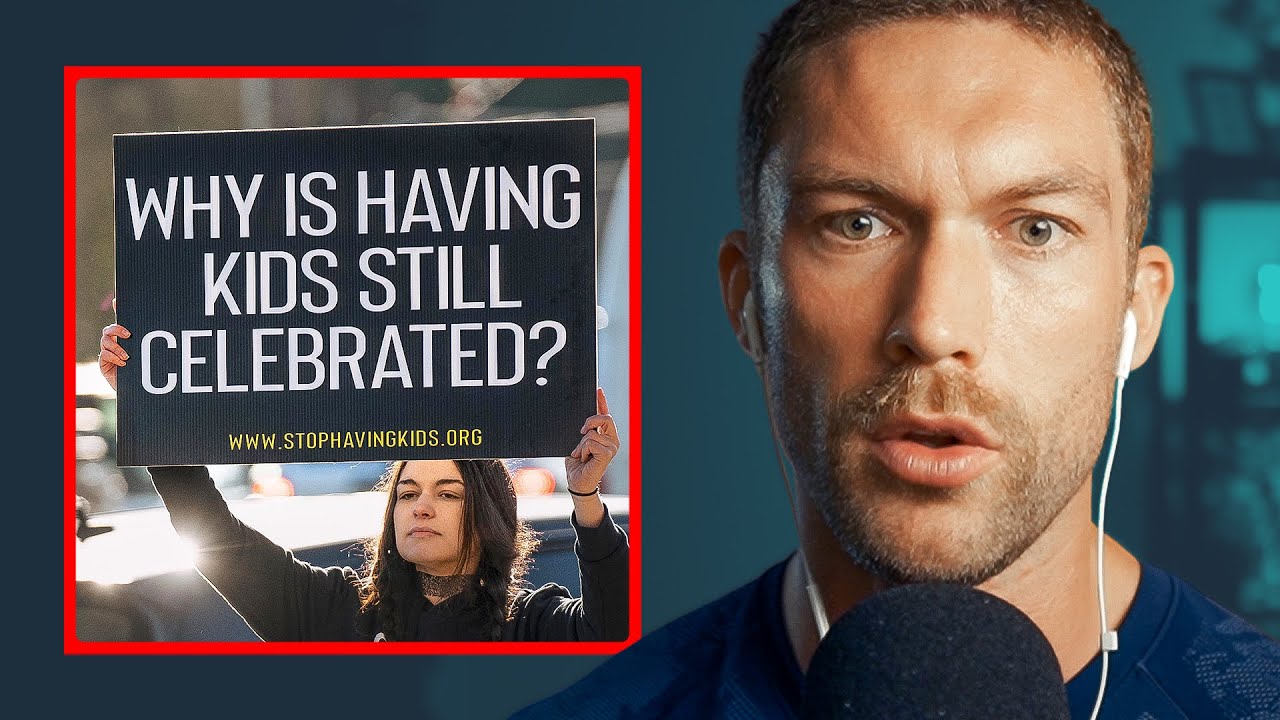
Video summary
The discussion centers on whether having children constitutes a moral obligation, particularly in light of societal shifts toward gender equality and individual autonomy. The speakers argue that while it is morally wrong to enforce traditional norms—such as keeping women confined to domestic roles like in *Handmaid's Tale* or pressuring them solely into motherhood—it is equally unjust to ignore the grief experienced by those who desired children but were discouraged from having them due to modern cultural messaging. They contend that morality should be judged by what ensures the long-term survival and flourishing of human civilization, rather than rigid adherence to outdated traditions. Consequently, individuals are encouraged to rethink family structures if they feel unable to balance motherhood with a career in the boardroom, suggesting that new social technologies could facilitate better arrangements for those seeking "it all." A significant portion of the conversation addresses the common objection regarding the high cost and lifestyle sacrifices required to raise children. The speakers challenge the notion that it is simply too expensive by pointing out statistical trends where fertility rates decline as wealth increases until reaching ludicrous levels, suggesting that financial constraints are often a proxy for lost freedom rather than actual monetary inability. To mitigate these issues, they highlight initiatives like Project Eureka, which created communities for single mothers and co-raising arrangements to reduce individual burdens. The argument posits that society must experiment with new dating markets and communal living systems to lower switching costs between partners and make raising children more feasible without requiring extreme financial privilege or sacrificing personal liberty entirely. The dialogue then explores the two primary drivers behind declining birth rates: the optimization for personal happiness (hedonic pleasure) and status within local hierarchies, such as displaying travel experiences on social media like Twitter. The speakers warn that if humanity continues to prioritize these factors exclusively, future generations relying on artificial intelligence companions or virtual reality pods will be selected out of the gene pool, fundamentally altering human sociology and genetics. They emphasize a biological imperative where humans are naturally optimized for finding deep contentment in raising children after puberty, contrasting this with the fleeting pleasures of youth that often lead to unhappiness in middle age when status games no longer provide satisfaction. To illustrate this shift from hedonic pleasure to meaningful fulfillment, the speakers use examples like Blippi and Andrew Tate as cautionary tales of lifestyles optimized for teenage desires—playful exploration or constant validation through multiple partners—that appear deadening to adults who have not undergone a "second puberty." They explain that becoming a parent triggers biological changes, such as a dramatic drop in testosterone, which redirects happiness toward deeper sources. The core conclusion is that while raising children involves significant sacrifice and may not be the most pleasurable moment-to-moment experience compared to travel or leisure, it offers a profound sense of meaning that prevents the existential emptiness many feel when chasing status or immediate gratification without regard for future generations.
Read the full video transcript
do you think it's a moral obligation to
have children then with all of this sort
of folded together
I think
Frameworks they're optimizing for
their moral framework should continue to
exist into the future 200 300 years into
the future like gender equality or
something like that and you don't have
kids you have morally failed if you
however are just like no it doesn't
matter if my belief system dies out with
me
um then yeah whatever you know I I I'm
not going to tell you that your morals
are wrong because I think that that
morality is one of those things where I
believe that my morals are right but uh
if I go around trying to police everyone
else's morality I'm just gonna have a
bad time so that's that Line in the Sand
is one I've been really interested in
playing about with I absolutely agree
that some sort of handmaid's tale future
where women uh kept in pens like cows so
that they can keep the future of the
population going is wrong also telling
women that the only way that you can
live a fulfilling life is by doing some
domestic version of that also is wrong
but I can't see why there isn't any
sympathy out there in the world for the
reverse of this situation what about all
of the people who were told you don't
need to have kids to have a fulfilling
life that did want to become mothers
that had their preferences nudged in the
opposite direction break through the
fertility window and then grieve for
families that they never had like where
is the finger pointing going in the
other direction because I I don't see
anybody
unironically saying that women need to
get out of the boardroom and get back in
the bedroom to start producing more
children like I think that they're just
saying look maybe you should think about
the current cultural norms that are
being pushed and and take them with a
big spoonful of salt yeah and I think
that um a lot of Statistics women just
women are familiar with things that made
my wife feel
the show this but a number of them do is
that uh parent households with two
working parents the kids actually
perform better academically and have
better emotional health than parents
they stay at home it's a small effect
but what I'm saying is is that I think
that there's this intuition that only
the traditional way of doing things is
correct
um and that the truth is is what is
correct is whatever ends up working in
in the long term for human civilization
because nothing is really working right
now and so I just encourage people to if
they think I can't be a mom and in the
boardroom I I would encourage you to
rethink the way you're structuring your
family rethink the way you're
structuring finding a partner you know
earlier we were talking about dating
markets and one of the things that our
foundation is doing
because we're working to try to create
and promote new types of dating apps uh
maybe even recreate the London season
um you know something like that but the
travels between places like the Olympics
where you have you know a bunch of the
single people go but there's some rules
that make it harder to just uh have a
really low switching cost between
partners which is one of the big
problems that we're dealing with right
now
um so with a lot of this it's about
experimenting with new social
Technologies and understanding that
there probably are ways to have it all
much more than I think people want to
accept because it requires trying new
things and being called a freak by other
people what about people that say it's
too expensive to bring a child into this
world well why why are poorer people
having more kids if if it's an issue of
cost then uh you what you should see is
a line where people have more kids the
more money they have but typically the
line goes in the other direction within
and between countries until you get to
like ludicrous levels of wealth like
half a million dollars a year so
um what I say is it's enormously
expensive it it is a massive lifestyle
sacrifice it absolutely is a lifestyle
sacrifice but is it too expensive I
think that's the real thing is it too
expensive is it that you can't afford it
or is it that you would need to like us
you know we had to leave a city we moved
to a rural area we changed the type of
jobs we could get because of that you
know we made a lot of sacrifices to do
this
um and I understand that for for
families unless socially economically
advantaged positions they have to make
even more sacrifices
um but uh you know when a family decides
they want a lot of kids they do it and I
think in addition to that this is
another area one of the projects that we
worked in was Project Eureka which was a
town for like single moms that had kids
and other people had kids and who wanted
to co-raise kids because there are
social Technologies we can try and I
would really like to see these commune
systems and stuff like that begin to pop
up more because I think as an investment
Prospect they were a really good
long-term investment Prospect if you
look at the model that I was talking
about earlier
the
challenges of other the reason that
people say it's too expensive to bring a
child into this world I don't think that
they're talking about the cost on their
finances I think they're talking about
the cost on their freedom oh and you
know it's if you look at the reasons
that are given for a lot of non-dators
at the moment for people that are
checking out of the dating Market it's
just got better things to do not wanting
to lose personal freedom there's this
huge huge study that was done by Pew and
uh it just came back that people were
just distracted so what it seems is that
if you are more financially enabled
there are more things that you can do
with your finances which means that you
can go abroad to Bali why not go to Bali
for two weeks or if you have the kid you
can't go to Bali for two weeks that the
girl with a list thing which you must
have seen that came off Tick Tock a girl
printed up 350 reasons not to have a
child and then printed them all on a
piece of paper and the reasons range
from stuff like child is literally a
parasite inside of you to can't wear my
cute high heels anymore can't do brunch
on Sundays
yeah so I want to get into this I'm
really excited so there are I think two
core reasons that people don't have kids
within the category that you're talking
about here it's because they're
optimizing for their personal happiness
now this can be broad satisfaction
contentment whatever word you want to
use but it's some sort of emotional
optimization or they're optimizing for
their own position within a local status
hierarchy this can be showing off to
people on Twitter or whatever you know
the trips that you're doing or the
things that you're doing with your life
because you think that these make you
you know like better or higher within
some some group if students are not
optimizing for one of those two things
typically having kids or I suppose you
could say that I'm trying to make the
world a better place uh along some sort
of framework like donating to like
protecting ecology or something like
that like a lot of that leaps back to
status though yeah a lot of that Loops
back to status so I think what we're
gonna see and this is really cool
because it's Gonna Change what it means
to be human
when people I mean even more than the
other options people have right now when
Robo sexuality I always go back to the
future Futurama episode about this that
it predicted this when people can start
dating AIS and you can have your deep
fake girlfriend and stuff like that and
then eventually people will be able to
go into pods and live any virtual
reality lifestyle they want when these
sorts of things become possible and they
likely will was in my grandkids lifetime
at least if not our own
pretty much everyone who's optimizing
for status or personal pleasure is going
to be cold from the gene pool and any
cultural group that can't motivate
people to optimize for something else is
going to be removed from the system and
that is going to fundamentally change
what it means to be human and likely
have a pretty big impact on sort of the
human sociological profile in terms of
the genetic screening that's going to
cause it's going to nudge the genetic
disposition because the only cohorts
that are left are going to have a
particular type of predisposition
another time that's going to right yeah
that's really really interesting because
you know we all have this this balance
between hedonic pleasure and meaning
that we seek in the future you know it's
most parents I don't think if you were
to test them on a minute by minute basis
it's not the most pleasurable thing in
the world to raise a child looking at
some of the studies that I've seen it's
not it's not massively pleasurable but
it's incredibly meaningful and you know
there has to be some sort of a spectrum
where on one side someone lives for a
life that in retrospect they're glad
they lived and on the other side someone
lives a life that moment to moment
they're happy that they're living and
you know that spectrum between the two
Am I Living For a future that's meaning
or am I living for a now that's pleasure
yeah well I'm so excited well I love
what you're getting at here
which is how do you balance these two
and the really cool thing is that
biologically we're already optimized to
have kids and I think a lot of the
unhappiness that comes in society today
is that people forget that all of your
ancestors had kids they had sex and they
had kids or almost all of them did right
um and so humans are programmed to find
genuine contentment and happiness of a
deeper kind and a more meaningful kind
than they can get from almost anything
else
from continuing down the path that had
led to our species being successful so
far and I think when you look at a lot
of influencers right now if you look at
a lot of unhappiness they are showing
people what people are sort of
biologically optimized for right after
they go through puberty
without people realizing that that
optimization program changes as you get
older I often uh the joke that I got in
trouble for on on Twitter which is to
say that I don't know if you know blippi
he's like a Blues Clues sort of
character who dances around around fire
trucks for kids and is like yeah I'm
driving a fire truck I'm I'm playing in
a dump truck I'm I'm playing on a
playground you know and kids are like oh
this is the perfect life before they go
through puberty they see this that's
what they're optimized for they're
optimized for play and exploration as an
adult you see this and you're like oh my
God his life looks terrible
um I mean obviously he probably makes a
lot of money but I mean you wouldn't
actually want to live that way and I
often argue that that Andrew Tate is
sort of the blippi for teenagers
um this is what a teenage boy thinks is
the ideal adult life but to an actual
like grown man you see this and you can
see sort of the the deadness and he's
like yeah I have to like please multiple
women a day or they'll leave me and then
I won't be able to maintain sort of the
thing that I built up and I'm like oh my
God I can't even imagine like having to
just like have a routine of constantly
having sex every day so that I can at a
base level maintain my economic Empire
um and but to a young boy that sounds oh
that's the best because humans go
through a second puberty when they have
kids your testosterone drops
dramatically you begin to gain happiness
from different sources and it's a deeper
kind of happiness and with young women
it's the same thing with young women
they get told oh you're gonna love
traveling the world you're going to love
a certain point this stuff just becomes
draw you know
um
because you were biologically programmed
to one of them not everyone is you know
people's biological programming is a bit
different you know I could say that on
average human males are biologically
programmed to find human females
attractive but obviously not all human
males find human females of pressure so
a few people don't go through this shift
later in life but when you optimize
around the things that give you
happiness when you are a teenager and
your whole society tells you to optimize
around those things you hit middle age
and you're like why doesn't anything
really make me happy anymore why aren't
video games making me happy anymore why
aren't the the things I used to do why
this is these status games not make me
happy anymore and it's because your
culture used to tell you hey you need to
move on to your next stage of life but
you don't have that culture anymore
because you're in this bubble what's
happening people if you enjoyed that
then press here for the full unedited
episode and don't forget to subscribe
face