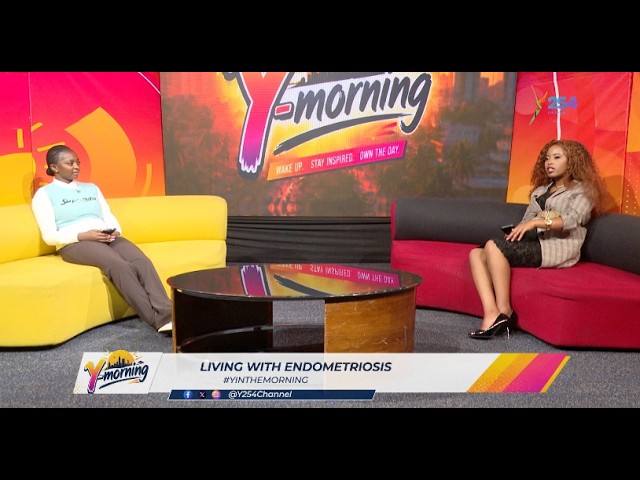
Is excessive Period pains sign of endometriosis, & what should we do when we experience such pains?
Watch on YouTubeVideo summary
The video addresses the critical issue of excessive period pain as a potential sign of endometriosis, a condition where tissue similar to the uterine lining grows outside the uterus. Host Eliza Kimani and guest Joy discuss how this condition often goes unnoticed because society has historically normalized severe menstrual pain, leading many women to believe that enduring debilitating cramps is simply part of being female. The conversation highlights that endometriosis can cause not only physical symptoms like pelvic pain and fatigue but also significant challenges regarding fertility. A key turning point in raising awareness was the public story of Natalie, whose experience revealed that such intense pain is abnormal and requires medical attention rather than silent endurance.
A major theme explored is the deep-rooted stigma and shame surrounding reproductive health, which has prevented women from seeking help for decades. This silence often begins at home, where mothers may inadvertently teach daughters to hide their periods and treat them as private secrets, while fathers and male partners frequently lack basic knowledge about menstruation products like pads or tampons. The hosts emphasize that this cultural taboo forces women to suffer in isolation, missing work or school without support, and facing judgment if they admit to being unwell. They argue that social media has played a vital role in breaking these barriers by allowing open discussions, yet the conversation must continue to normalize talking about menstrual health just as openly as one discusses other medical issues.
The discussion concludes with urgent calls to action for individuals and society to change their mindset regarding reproductive health. The hosts stress that while pain should not be ignored, it also should not be dismissed or normalized; instead, anyone experiencing severe pain must seek screening immediately, noting that the cost of diagnosis is often lower than many assume. They encourage men to support their partners by taking them for medical check-ups rather than offering only superficial comfort like chocolate, and they urge women to advocate for better government policies regarding affordable sanitary products and healthcare coverage. Ultimately, the message is clear: endometriosis is a real medical condition that kills quality of life, and breaking the silence through education and empathy is essential to preventing future tragedies like Natalie's story from repeating.
Read the full video transcript
Good morning and welcome back. Yes, my
good name is Eliza Kimani, the TV host
of the year and we are going on with a
discussion that we're going to be having
in this house. Karibusana
interactive and as the name suggests
this is where we interact and have
discussions around very very very many
topics but
yes today's topic is a very good and
crucial topic as well it's something
that we've seen um online it's something
that many people didn't know about but
we are here to make sure that you get
educated okay yes and I'm not alone as
always I never ever sit alone. I am here
with Joy. She is a media practitioner
and she's going to be engaging with me
in the discussion that we're going to be
having today. Kar Busana, good morning.
>> Good morning.
>> Please say hi to my people.
>> Hello good people. I am Joy a media
practitioner and I'm very glad to be
here with you today.
>> Okay. Amazing. So yes, we're going to
have this discussion and today we're
speaking about something that we've seen
online. Yeah. And now I know when I
mention Natalie
um something comes to your mind okay and
it's because of the story
about something she was unwell and then
following up on the storyis
and um
you're like wow okay so what does that
really mean and apparently it is a
condition let's get to see what they say
p okay Google the meaning of
endometriosis. Okay. Endometricsis is a
condition where tissue similar to the
lining of the uterus grows outside the
uterus. It can give it can cause very
painful periods, pelvic pain, fatigue
and for some women fertility challenges.
This means that at some point
uh so the most important part or the the
thing or what made us get to be aware
about it is the painful period pains
because uh for women most of the times
they feel like it's normal to have
painful period pains until we see the
story of Natalie and everyone is going
haywire thinking wi normal kum normal I
think I should go get checked. Yeah. But
let's get to hear from Joy. Um from your
uh perspective, how do you get to
understand endometriosis?
>> I think um endometriosis
underestimated
people have not been taking this
seriously. Just like you said, it
started when Natalie
>> came out to say I am sick. I I am going
through something because
>> way back um I think period paints and
the whole thing about women and their
produ reproduction in aaku people don't
want to talk about since way back it's
seen as a taboo
>> people don't want to say I'm going I'm
having period pains I'm having this so
you you suffer in silence um to a point
where maybe
>> at a it's a place of work when you say I
cannot come to work I cannot go to
school because I'm having period pains.
Yeah.
You don't want to be in school.
>> So I can I can imagine the pain. It
comes with a lot of pain. So I can
imagine the pain that someone has to go
through. Endometriosis. Maybe you don't
even know you going through it because
was it even in primary? I think in my
primary
I was in boarding. So there was this
girl
I think I think
pain but she would hold on to beds like
she's just crying and then the m will be
like just go to bed.
>> So I think
>> people should be aware of this of this
thing.
>> Yeah. Actually like you're saying most
of the people don't know about it until
this story came about
for the longest but no one is talking
about it pain cramps has to be painful
period period has to come with pain. So
like everyone
okay
like you already prepared for the pain
that is about to come but we came to
realize that uh kumbbe it's not as
normal as people make it look like uh so
if someone is feeling pain you need to
go get checked and it's better to go get
diagnosed mma before it gets to an an
extent in a
saw saw uh someone's comment on uh the
story that was now going on now that at
some point that is brought by a lot of
misusing the contraceptives which I also
think is a myth and people should really
um know that that's not the real cause
six
but she was I think she was a class
ahead of me so
I don't even think
we didn't even have that knowledge it's
prim primary. We're just
>> And also there's the shame that comes
with it.
>> So you don't want everyone to know that
you're you're having your period.
>> Actually, I think generation it's it's
nice that people want to come out and
social media may help that a lot because
back then
you couldn't even you know shopping for
a sanitary
you don't even want people to see.
At least I I can even see partners going
to shop for these things.
>> Actually, that's how it should be.
>> It's nice when people talk. I'm having
these things. I am going to get my pads.
I am having pains.
He should even know the brand you use
and everything.
So like or anything
it's a sanitary towel. It's it's
something that should be out there. So I
think
I think
and that's why people were not talking
about it. And I do think that at some
point um endometric
because of that like people are hiding
about it. Uh you're in pain but
so you have to or the pain and so nobody
can even take it to the extent of hey
this pain is too much let's go see a
doctor like
it's normal. Do you think that that is
one factor that has made endometriosis
not really known out there by people? I
I think
way back way back um it's about society
and it started at home. I feel it
started at home where your mom let's
definitely it was not your dad where um
at home your mom used to tell you
>> um or used to make this thing look like
>> and there or
>> you know so it was something you called
it
>> from stories I've heard um from the from
back then primary schools when you've
learned about this
reproduction
bodies were not supposed to see these
things
>> and you'll find
but you don't want it to go out there we
don't know because you were you were
taught that
>> it's a secret it's yours like why should
everyone else know about it was actually
called um
Keep it to yourself.
>> Keep it.
>> So, it's not even our fault that we
>> It's not our fault, guys.
>> We built that way.
>> Because
make this thing public. Why are you
telling everyone about it? to a point
where I've been
so
>> you find someone in a supermarket is is
getting these um sanitary towels,
tampons,
shopping basket,
you know,
I know you can relate
everything
And I think
>> because even now the guys don't also
know and that's you're going to get
angry at your boyfriend and maybe he's
never even seen one. He doesn't even
know how it's used.
Like I've seen so many clips online a
girlfriend or a wife sending the husband
the pads with wings.
with wings. And so this guy does not
know. He doesn't understand. And it's
because of what you're saying. We were
we used to be told nobody should know
about it
and all that. So most of the times the
sign was
she's on her days cuz like all those
signs are coming and everything, but
that's all they know.
But you know um I'm I'm glad squeezy
even where they given because there are
organizations that go to give out these
sanitary pads. Uh they show all the
whole class boys and girls inclusive.
This is how you tie it. This is how you
use it. This is how you're supposed to
use it. Because I think that's how it
should be.
Yeah.
And then the boys the boys will see it
because there were boys then. So the
boys will see it.
I think the whole the whole painful
thing
it's you being a woman this is you being
a woman and then something else I used
to hear people say uh they would tell
you that when that pain is so much
>> during your menes then it will not be so
much during giving birth that is
something I've heard so many times
should right now. Embrace the pain.
That's that's like embracing what I mean
before
you like
>> believing for something that is in
future 20 years from now and you forever
affected and that's why
it's normal.
give birth.
Who told you? Like you know the fear
that also we've been fed in our minds
that the whole process has been painful
like who told you like
why do we get to believe what other
people say and that is why most of the
people out there do not know about
endometriosis. Yes.
And there are ladies that experience
this for a whole week. Five days. Five
days of pain.
Five days. I think maybe 5 days. There
are people
is pain that endures.
captions zanatali when she was going
through the surgeries she was in
hospital and it was like sala and you
know I think this girl is strong and
people
>> to embrace because she has come out to
say what I'm feeling despite the stigma
but when she I don't I don't listen to
you guys I know what I'm going through
and I will put it out there not because
I want sympathy not Because I want you
to feel sympathy
that but I want people to understand
this thing is there and it is amongst
our girls and it is killing us. Yes. It
is killing us inside because you know
sometimes it will go for days talk of a
month
and you're like I don't want to do
anything. Yeah. You know, it's the type
of pain that will affect you even
emotionally, even um in a lower
selfesteem. You don't It can affect so
many things,
>> especially it lows your self-esteem when
you're telling someone that you're in
pain and they just brush it off.
>> You don't even have the
I'm in pain.
Sometimes I think that's why
because
I don't know what to do anymore to help
you. So, I don't even want to tell you
because there's nothing there's nothing
you're going to do about it.
Sometimes
they're not even working and I am still
in pain and so you're there feeling
periods
like I think it
the pain the pain does not only come in
one direction it comes in so many
directions from the you've not even
talked about you having a partner who
does not even understand what you're
going through
>> yeah I feel you're pretending
probably you know I don't know why but
uh the videos we come across online a
they portray uh life very differently.
So you'll see a video of a lady saying
that she's on her periods and the man
won't go to work, he won't do anything,
but you can show care to this person in
very many ways. Yeah. Like you're not
supposed to
you know but that does not mean that you
should now also be very indifferent
like everything is as normal and I I am
not okay and if I'm telling you I'm not
okay then I'm not okay and that should
apply to everyone out there. Yeah. I
mean I feel at this point
Kanzana the person that is nearest to
you should be the first person to
understand what you're going through
because the there is no CC when you to
go so far we will be able to understand
what you're going through yet your the
person who's closest to you will not
understand this is pain like any other
this is pain like someone who has lost
um let's say a limb someone who has an
impairment of any this is something that
is going on.
>> It's real pain.
>> It is real pain and I think only a woman
can understand this you know cuz I think
when you child birth people under
underestimate this thing and you know
>> as a woman we go through so many things
that are normalized
uh including this pain.
>> Yeah.
>> In to affect in so many ways. So for
example,
I have I have a job. I'm supposed to
report like any other person, like a man
normally like you say, uh let's say so
and yet I am feeling the pain
where the partner does not understand
what I'm going through.
you know
let's say for an understanding
then
just tell us
so prove I am going through something
then there's um one more thing I think
they need to tell us uh there's still uh
something that I question how much how
does it cost for me to go for screening
>> cuz I think that's something we we
should know
>> and every time in pain every now and
then and she she was thinking that this
is normal but we here to tell you that
it's not normal all that pain you need
to go get checked but like you're saying
we need to understand um the cost of
checking and I think let me let me get
to research for us and see probably
approximately
how much and some of the hospitals that
are doing the screening but in the
meantime maybe you can tell us about how
endometriosis affects women in their
daytoday lives. Um,
I think
it's it's a lot. It's it affects them in
so many ways.
People might think before
the exposure of what is happening. So
before before her story came out
come to cramps you know like you're even
going to hot water bottles medicine
um before it came out people did not
understand it's pain people did not
understand it's um it's something that
is not normal you know so
you know and also
um I think that's That's mainly it
people you'll have to miss work
sometimes because from Natalie's story
it's so painful
>> that even walking even moving is a
problem.
>> We have not even talked about now the
the finances because it gets to a point
where you have to invest in your health.
>> Yeah.
>> And this is not something you wished
upon yourself. You you're just a girl.
You want to just be a girl like a normal
girl. But now you are in pain. you have
to invest maybe their medicine.
>> Yeah. Spending a lot
>> a lot of money and looking for a partner
because I think this is also something
looking for a partner who understands
>> you're going through something. Yeah.
So,
>> and not very many not many understand.
That's sad. That's the sad part of it.
Not everyone gets to understand. And um
I I pray that right now we've gotten to
uh to know about that this is real and
it's not normal. Let's start changing
our mindset. Yes. For men out there who
are listening when your girlfriend tells
you um an attack chocolate just take it
to her. But that's not the last thing
you should do. If this pain is too much,
make sure that you take them for
screening. Like from what I see here,
the cost is not as much. It's it it
varies from just a a few thousands
and um you get to be assessed and you
get to be checked. So it's very it's
affordable to every person out there.
>> Okay. you are able to go get the
screening.
It is just normal rather than telling
yourself it is diagnosing yourself
and then you come to get to a point
where it's worse.
We don't want another story like that
one. We don't want another case of the
same repeating itself.
I think it is something we should as a
woman. So like
um I think it was a time back
she after you know there were there were
surgeries there were
and then
she kept um hopes up that
morning you know it's it is it gets to
you to a
like imagine getting to a point of now
giving up like you're in so much pain
that the only like feel this is the last
>> Yeah.
>> And it is it is it is not I I also saw
an Ira
>> she's also a survivor. I don't know what
to say but
>> yeah I saw her story akim courage
>> yeah that she she has also gone through
surgeries also so this this is I'm
actually glad that people got to talk
about it and it is out there
you just go get checked and just to
confirm
>> just be
It's normal until you get to realize
it's not normal. Yeah. Like you
normalize it until it's too late for you
which is very very very very sad and um
it's important to take care of
ourselves.
People get to be at a point of they are
not you. They don't know the pain you're
feeling. So the level of pain that
you're experiencing, the kind of pain
that you're having and so you are the
one that should test yourself and know
if I need to get tested, if I need to go
get assessed and checked, am I is
normal? Yeah,
this pain is in the extreme. But also
the fact that you have all that much
pain doesn't mean that you have
endometes.
So before it gets to that or before
until then
but go get tested if you feel like like
periods should not be painful.
This is this is a truth that you should
start embracing. Periods should not be
painful at all. Okay. And at all means
at all. So like
go get checked before it gets worse
without facts.
If you use
P2s, if you use misconceptions that
>> fact before you start talking about
these people,
bad things so that they get themselves
they get themselves into this
As much as you're trying to caution
people and you don't want them to use
all those contraceptives,
that's not a good way.
Hey guys
over
and especially in Kenya, everyone looks
for something to say. anything that they
think can be an idea or can be spelled
out.
>> Yeah. And everyone wants the most
controversial statement
like a letter. But at the end of the
day, um let's also care about our
sisters, our brothers, our mothers, our
wives, our colleagues.
Just understand them. Yeah. like give
them a day off or that week off, you
know, but we not saying that you should
now take advantage of your workplace
every every month.
>> That's not what you're saying. But if it
gets to a point that you need to get
checked and you feel like you're not
okay, go ahead and do it because um we
don't want us to get to a point where we
are seeing a story like Natalie's
repeating itself again and again and
again and again cuz she's in so much
pain and um I say she was okay. Yeah,
she was in so much pain and we don't
want anyone else going through such kind
of a thing again. Um when we think about
awareness, what do you think the society
should do to ensure that um many people
are aware of endometriosis? Like they
they've gotten to a point of
understanding and knowing uh all about
endometriosis.
I think uh the society
should uh first of all they should be
ready to embrace this thing.
You know, first we we should stop that.
We should don't stigmatize anyone.
>> Yeah.
>> So, first let's stop that then let's be
open to talk about this thing,
>> you know. Okay.
You know, we want to understand this
person, but
like you're not even helping
your workplace your friends
all these people are part of society
next
you know like
So
even if you want to inquire so that you
can spread the awareness
like you know how can I help you?
>> Yeah.
>> How how what can I tell my young girl at
home? So I heard you're suffering from
this and this. I heard you're going
through this.
>> What will you tell me so that I can tell
my
to look out for.
>> Thank you. And um and also men because
they're part of the society. Understand
understand this this this girl this lady
that's trying to tell you I'm in pain
and through us talking about it like we
are here.
People get to understand this and they
get to know how to handle someone who's
who's going through such a thing because
the medication come the treatment
taking care of this person like you've
said
anything you know no it's just being
there for them supporting them showing
them you don't get sad of this person
cuz
If if we do not support Natalie, we do
not have another Natalie. I'm using
Natalie because it's the one case we
have
>> that we saw.
>> Yeah.
>> Right now countrywide. So if we do not
>> Yeah. She's the only one.
>> So
someone who loves her, someone who's
around her, her surrounding at the
nearest shop, just smile for that person
like, "Hey, I know you, you know." be
excited that she is the survivor and
she's
>> beat that thing.
>> Yeah, I think that's that's what the
society should do instead of just I
think avoiding the the stigma
>> and now um on society as well. How what
should they do to ensure that now not
just endometriosis but the reproduction
health as a whole is no longer a stigma
cuz you know now
if it's it's in the workplace everyone
will look at me like you're being weird
what's that why are you talking about it
you know so it's still at some point
everywhere and like how do we get to to
the point of bro this is normal
part of life
it has taken me back
to
a woman asking for some tissue you know
I want a tissue
>> you know
to a point
and also when you find a man with tissue
cuz now they're like you have a man
you're like so
imagine if if tissue is something
out loud
>> tissue tissue
>> so tissue is something you pick like
that tell how it is something like that.
So, but I I think in the in the future
in generation
out there
>> let's talk about it
>> like and like our parents back so
>> I think
will change
positive that things might change and
people might actually be open to talk
about it.
Kudos if you do that by there for your
partner
you you get the you know there's so many
things that entails the reproduction by
there so many including including child
birth we've seen men supporting their
wives um or their baby mas
kudos for that by the way um they have
they have come in so many ways for for
women and I think in the near future
But
yeah, they're doing better.
>> They're asking what is you can see
how true social media is. But I think
there's some
truth behind every rumor.
positivity kido there. You can see them
rubbing their tummies. Yeah. Minnie
helping them.
So, um I think
it's
to the positive.
>> Yeah. And like you're saying, one
important thing is to talk about it.
Talk talk talk until like I can talk
about it anywhere with anyone at any
time until normalized. like it's normal.
It's it's not a taboo. It's not a big
deal. It's not weird, baby girl. You're
not weird. You're okay. You're doing
well. And um this is you're not sick.
It's not a health issue. Like you're
very very very okay. And the earlier we
talk and normalize this the better
because now it we don't want to get back
to those days. Very you're in so much
pain but you can't even say it because
nobody is going to understand. Nobody's
going to believe that you are in pain.
Nobody is going to actually look at you
twice and be like, are you confirmed by
the serious?
>> Yeah.
Issue.
>> Mhm.
>> Why is it that I'm trying to imagine if
Natalie or was not a socialite was not
someone who's known
>> Yeah. We wouldn't
maybe
it's just a people don't even take it
seriously. They're like they push it out
and you can find maybe
there was maybe someone who had
put it on social media but no one took
it seriously like
it
type of something you're going through.
ancestors,
>> you know.
>> Yeah.
>> And something like that. But because
someone who we know came out and talked
about it, that's why we're talking about
it.
>> Yeah.
>> And I think
you should
these things are not catered for
>> the
women. Women Yes. We we understand we we
we should be be put normal at a normal
level but we are going through things
that
>> we are going through things
>> and now paying for all those services is
not easy like test all for the treatment
process we should be covered it should
be catered for the whole female
reproduction
>> we are going through things guys true
>> we are and
>> the government should consider some of
these drinks. We're talking pregnancy.
We're talking these towels. Mind you, we
have women in government that we as a
country
>> look up to. We
>> look up to we have
women representatives.
>> 47 counties.
We still we're still there's someone
who's
>> not a sanitary part anywhere
>> and there still you find some are still
so expensive too and this is something
you need.
>> Yeah true.
>> Yeah. as much as people want to petition
for um praise.
It's as if
but well yeah and um it's very sad
people say that to me the reusable ones
they're not the good
off because of also the I see how you're
looking at I don't like the whole idea
Yeah.
So, let's do better. Let's get to help
these people, man.
Yes. But, um, you need to get to know
that, help out.
If you can I I love saying if you can
help your neighbor with with a sanitary
towel, go ahead and do it. I had an
ideology. You see how condoms on every
washroom?
Yes. Government do something. you women
reps that have been selected, what are
you doing? Do that like in the list.
Let's see if there's something that
you've done. Every public
or something, but it's going to help
them.
>> Yes. Make sure that you do that. Yes.
So, Joy,
you can tell us probably where we can
find you online. Um, I'm on Instagram.
Um, I'm on Facebook as Tanani and Easy
and Tik Tok as Tanani as well. Okay.
>> And yeah,
>> it's it's been a very good discussion.
And there's a lot to talk about in
regards to this topic. There's so much
that we've not even covered, but at
least I know we've gotten to educate you
and you've understood. First homework,
go get screened. It's not expensive.
tell them that you want to get screened
of endometriosis and um in case you have
you're unwell then you can petition
and you're going to get help. But the
reality is that pain should not be
normalized. Do not normalize pain.
This is who I am. It is a girl's thing.
It is not a girl's thing
in pain. Okay. Yes. Yes. Thank you so
much for staying tuned here with us on Y
in the morning here on Y254 channel. It
has been the Y interactive
and I know that you've gotten to
understand and learn and yes, don't just
keep that information to yourself.
in regards to helping your ladies, your
girlfriends, your wives, your sisters
because it is very very important. Okay.
Yes. For me,
but we still have a lot lined up for
you. Tunu is coming back with an amazing
discussion. So, make sure that you stay
tuned. But for me,
my good name is Eliza. You can find me
on all my social media platforms at
Eliza Kimmani. And for us, you're going
to find us on all social media platforms
at Y254
channel. Stay with us. Tulu is coming
back.
Here we are.