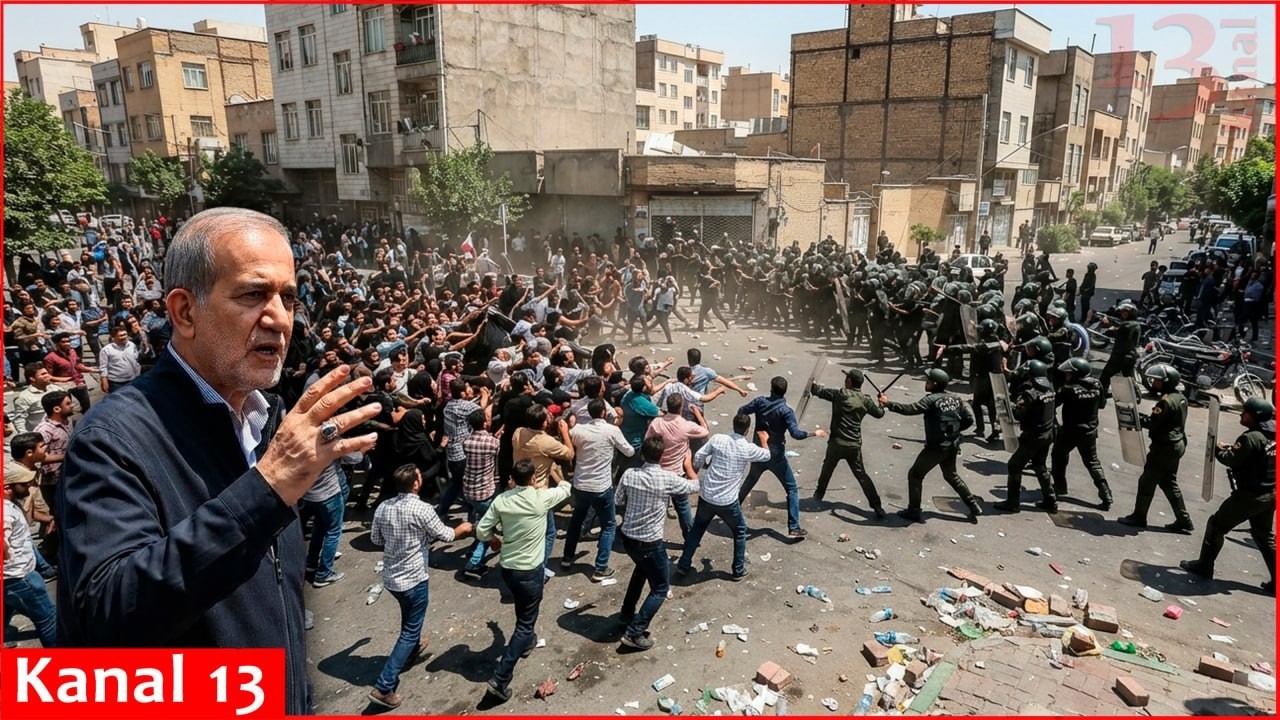
Iranians rebel against mullah regime; Iran's president admits it for the first time
Watch on YouTubeVideo summary
Iranians are facing an unprecedented economic crisis characterized by soaring inflation, severe shortages of essential goods, and long queues at gas stations that have become a daily reality for many citizens. Amidst this deepening despair, the Islamic Revolutionary Guard Corps and the Basij have increased street checks, creating an atmosphere of fear and repression while social tensions rise to a point where protests could erupt again. Some residents are now turning toward the West for support, explicitly stating their intention to oppose the current regime if they receive external assistance, as one Iranian resident declared that the population is no longer just living but fighting for survival.
The economic hardship has evolved from a mere issue of living standards into a struggle for basic existence due to critical shortages of fuel, electricity, jobs, money, and water. In cities like Mashhad and Tehran, power outages and gasoline deficits have forced many gas stations to close, while the remaining ones are plagued by miles-long lines that paralyze traffic even at unaffordable prices. Residents like Alireza from Mashhad note that this is the most dire situation the country has faced in 47 years of the Islamic Republic's existence, while others in Tehran express a growing sense of hopelessness as dramatic price hikes leave their incomes barely sufficient to cover food and basic necessities.
Iranian President Masoud Pezeshkian recently acknowledged for the first time the significant impact of US sanctions on the nation's economy, marking a shift from his previous claims that such restrictions would fail. In an interview with state television, he admitted that sanctions are placing immense pressure on Iran and addressed those who deny their effects, stating he does not know what to say to them. He emphasized that the country is in a state of war and must accept the conditions dictated by this reality, noting that export and import volumes have fallen by 25 to 35 percent in recent months due to these sanctions and the naval blockade implemented by the United States.
Ultimately, the combination of economic collapse and political repression has pushed many Iranians to question the leadership's ability to improve their lives or even maintain power. The president's admission that the nation is effectively at war highlights the severity of the external pressures while underscoring the internal struggle for survival faced by ordinary citizens. As living conditions deteriorate sharply, the population's fear of further repression and loss of hope suggests that the current social tensions could lead to a new round of unrest if the situation does not change soon.
Read the full video transcript
Long cues at gas stations, skyrocketing
inflation, and shortages of essential
goods have become part of everyday
reality for Iranians amid an
unprecedented economic crisis. Channel
12 reports this. Meanwhile, the Islamic
Revolutionary Guard Corps and the Bas
have stepped up street checks. Amid
growing despair, some Iranians are
turning to the West for support,
declaring their intention to oppose the
current regime and the need for external
assistance. We're not just living, we're
fighting for survival. If we get
support, we'll take to the streets
again, said an Iranian resident.
Enormous cues at Iranian gas stations
have become one of the main signs of the
deepening economic crisis. Long waits
and the closure of some stations are
fueling growing fears of fuel shortages.
Against this backdrop, millions of
residents are facing a sharp
deterioration in living conditions, fear
of repression, and a new round of social
tensions that could lead to protests.
Alireza, a resident of Mshad, believes
that in the 47 years of the Islamic
Republic's existence, the country has
never faced such dire conditions. He
says the economic crisis has become more
than just a living standard issue for
the population, but a struggle for
survival due to shortages of fuel,
electricity, jobs, money, and water, as
well as a loss of hope for improvement.
Fuel shortages are already seriously
disrupting urban life. According to
Alireza, power outages and gasoline
shortages have forced many gas stations
to close while at the remaining ones
cues stretching for miles form
paralyzing traffic. Even at high prices,
fuel is becoming virtually unaffordable.
In Thran, a sense of hopelessness is
also growing due to soaring prices.
Amir, a Tehran resident, said the
dramatic price hikes have seriously
altered daily life. [music] his income
is barely enough to cover food and basic
necessities. He added that people don't
expect improvement and believe the
country's leadership is focused on
maintaining power. Iranian President
Massud Peshkian recently acknowledged
for the first time the significant
impact of US sanctions on the country's
economy. His statement came just days
after he claimed that US sanctions would
fail to achieve their intended purpose.
In an interview with state television,
Pzeskian stated that sanctions are
putting significant pressure on Iran. He
also specifically addressed those who
claim that American restrictions have no
impact on the situation in the country.
There are those who say sanctions have
no effect at all. I really don't know
what to say to these people, the Iranian
president said. Peskian also noted that
Iran is in a state of war and is forced
to take the current circumstances into
account.
>> [music]
>> He said the authorities must accept the
conditions dictated by the current
situation. We are in a state of war and
we must accept these conditions of war.
He said Iran's president reported that
the country's export and import volumes
have fallen by 25 to 35% in recent
months. He attributed this decline to US
sanctions and the naval blockade which
he said is being implemented by the US.
>> [music]