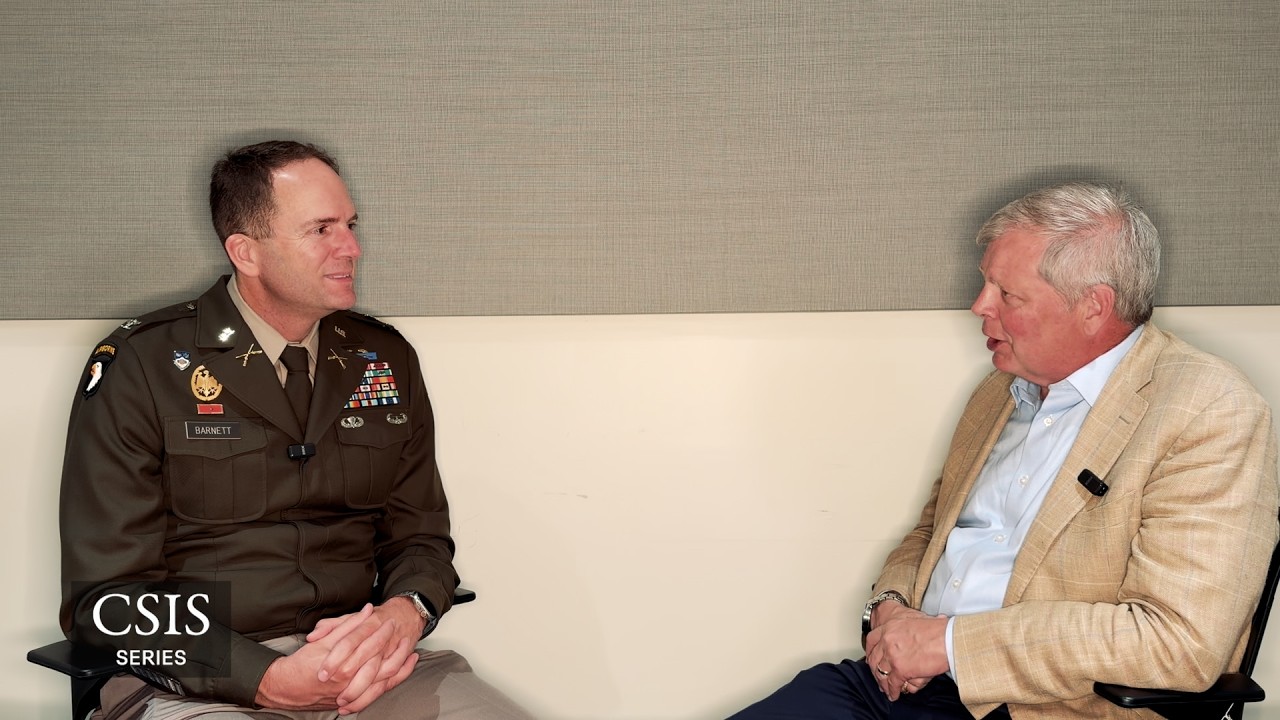
Inside Army Innovation: Conversations at the Army Demand Signal Forum | All About the Base
Watch on YouTubeVideo summary
The Army Demand Signal Forum serves as a critical convergence point where the military, government agencies, private industry innovators, and venture capitalists gather to address urgent operational needs, particularly in the realms of fires, power, and energy dominance. The central theme emerging from these conversations is that while technological breakthroughs like advanced sensors, algorithms, and counter-drone systems are vital, they remain ineffective without a reliable power supply at the tactical edge. Leaders from companies like Chariot Defense highlighted how their journey began by identifying this specific gap; despite having superior electronic warfare capabilities, their fielding efforts were stalled by a lack of portable power solutions. This realization underscored a broader truth within the modern combat environment: distributed and decentralized operations require robust energy delivery systems to function, making power the missing layer that enables all other advanced technologies.
Several startups showcased how direct engagement with the Army through forums like this one has successfully translated experimental prototypes into significant contracts and investment rounds. For instance, Chariot Defense demonstrated that by prioritizing user feedback from soldiers in the field rather than pursuing overly complex future visions, they could rapidly iterate products that solve immediate problems without requiring extensive training. Similarly, Hybrron leveraged a breakthrough manufacturing process to mass-produce lightweight composite artillery shells and missile components at a fraction of the cost and time of traditional methods, securing a multi-million dollar contract after demonstrating their capabilities directly to Army leadership. These examples illustrate a powerful feedback loop where early-stage companies use these forums to gain traction, secure funding, and scale production while simultaneously helping the military overcome bottlenecks in its supply chain and munition production.
Beyond individual company successes, the forum fosters a vital ecosystem of collaboration that bridges the gap between Silicon Valley innovation and traditional defense procurement. Investors from firms like Squadra Ventures emphasized their role as connectors who not only provide capital but also help entrepreneurs navigate the complex defense landscape by introducing them to key government partners and end-users. This collaborative spirit was evident in the informal interactions at lunch tables and breakout sessions, where founders, investors, and military leaders exchanged ideas and built relationships that often lead to long-term partnerships. By bringing together diverse stakeholders in one room, the event accelerates the flow of information, allowing the Army to discover new capabilities from companies serving other branches or sectors, such as space or aviation, and apply them to its own unique challenges.
Ultimately, the consensus among all participants is that these events are essential inflection points that transform abstract demand signals into concrete action and investment. The forum provides a necessary platform for capital allocators to see real-world applications of technology, thereby encouraging them to invest in companies addressing critical military needs despite funding uncertainties like continuing resolutions. Success for the attendees is defined not just by signing contracts, but by establishing a sustainable pipeline where private sector innovation directly supports Army missions, from heavy-lift inflatable drones and directed energy weapons to scalable optical supply chains. As the discussion concluded, it became clear that the future of Army modernization depends on this integrated approach, ensuring that the industrial base remains robust, responsive, and capable of delivering the tools necessary for today's distributed combat operations.
Read the full video transcript
Greetings from the Washington DC campus
of John Hopkins University here on
Pennsylvania Avenue. We are very
fortunate today to be here for the Army
Demand Signal Forum. This is an
opportunity for us to speak with
companies, government, uh, as well as
investors about the Army Demand signal
for areas such as fires, power, and the
like. So, we want to thank our partners
for this event, the Army Fuse program,
uh, as well as John's Hopkins University
and Distinctive Edge, uh, for allowing
us to, uh, record here today. So, I'm
Jerry Mcinn and welcome to a special on
location episode of All About the Bass.
All right, welcome back. We're excited
to have with us the founder and CEO of
Chariot Defense, Mr. Adam Warmouth. So,
great to be with you, uh, Adam.
>> Yeah, thanks for having me and really
enjoyed being on the panel with you
earlier this afternoon.
>> Yeah, we earlier we were talking about,
um, energy dominance and, um, but today
we're talk a little bit about u more
about Chariot Defense. So, can we talk a
little about your story? How did you
start um and um um and where are you
going?
>> Yeah, so started Chariot just about two
years ago. Um, and the inspiration for
me to start this company was really
based on the two different industries
that I worked in before I started
chariot. Um, one really informed the
technology side of the business. Uh, so
I started my career working on electric
aircraft.
>> Um, I worked at Kittyhawk when that was
still in stealth mode. It was kind of a
secret Larry Page flying car factory.
Uh, worked at Uber Elevate, worked at
Archer. uh that's where I got exposure
to some incredible breakthroughs
happening in the power technology space
around batteries and power electronics
uh that enable things like Tesla and
Rivian and Lucid and then are being
taken to that next level of performance
uh in the aviation space.
>> Um so I was working on those electric
vertical takeoff and landing aircraft
both on the building side and then the
commercial and defense side as well. Uh
and so the defense piece is is is what
brought me to Anderl. Uh so that's other
half of my career. um spent four years
at Anderoll leading the counter
intrusion business and then the counter
UAS business, air defense. Uh and the
counter UAS business was really the
thing that gave me exposure to the
problem that inspired Chariot, which is
that we had a bunch of really cool
electronic systems around radars and uh
long of infrared cameras and electronic
warfare systems and interceptor drones
uh and communication devices. Um that
allowed us to do counter UAS at the edge
uh in mobile environments supporting
SOMO. So supporting those distributed
expeditionary missions, the biggest
problem we had fielding our systems was
not our algorithms, it wasn't our
sensors, right? It wasn't the compute,
it was power.
>> Um, and as we transitioned from a kind
of a counterinsurgency static
environment to a distributed
decentralized large scale combat
operations, you know, is what the army,
you know, uh, for the Marine Corps Yabo
for the for the Air Force ACE agile
combat employment. All of these things
require distributed decentralized
capabilities. Um, and the missing layer
uh behind all that was power. So saw the
opportunity to use that firsthand access
I had to the problem working with SOCOM
fielding advanced counter drone systems
you know pre Ukraine with with my
background in the technology side uh as
a mechanical engineer and working on
those electric aircraft systems brought
those two those two worlds together to
to start chariot.
>> That's great. I mean, uh, yeah, as we
talked about earlier this morning, I
mean, there's, um, a lot of emphasis on
drones and on, um, uh, counter UAS and
things that are more sexy or so on, but
we don't get anywhere if we, you know,
if you, there's no watt that's delivered
to a soldier, right? So, we got to get
power to the edge.
>> Um, so, uh, so tell us a little bit
about your story in terms of, um, I
understand you all got an initial
investment, uh, or a competitively
awarded, uh, kind of contract and how
did that help you grow? So talk a little
bit about that.
>> Yeah. So you know we from from within
three months of the first check into the
company from our from our seed
investment. So before that it was just
me and a slide deck trying to convince
people that this was a problem. Got some
initial funding uh to go develop against
that. Three months from that first
funding uh we were at our first exercise
um at at Camp Roberts as a naval
postgraduate school exercise. Uh we're
able to translate that success into an
invitation to JRTC for a transformation
and contact exercise. Um, we're able to
translate that into DIU inviting us up
to Alaska, uh, with the 11th Airborne.
Our first prototype we ever built is
still up in Alaska with those soldiers
because they liked it so much and they
it was such an key enabler for their
systems for their electronic warfare
platoon that they wouldn't let us take
it home.
>> Uh, so our first prototype still up in
Alaska with those guys.
>> Um, that then kind of turned into an
opportunity with DIU. Uh, it was really
a drone competition. It was this project
GI it was called. Um, it was an
opportunity to field equipment directly
with the 75th Ranger Regiment. um have
them actually use it and operate it and
and then tell DIU, hey, what do we like?
What do we want to fund uh to to take
kind of to the next level? Um we showed
up with 19 drone companies, right? So it
was us and 19 drone companies and and
and the and the Ranger Regiment guys
stackranked the technologies they wanted
to to proceed with. Uh we were number
one on that list
>> um because they saw it as the core
enabler, right? It's like, hey, all
these drones are paper weights, right,
if we can't actually power them. So that
led to a competitively award contract.
Um, and that demand signal, you know, we
then used to go raise our next funding
round. You know, turned a 500k contract
into a $34 million series A investment.
>> Um, and so we're here at the Army Demand
Signal Forum, right? Talking about how
the army showing that demand signal not
just through words, right, and not just
through R&D contracts, but through
purchases can help provide that demand
signal to private capital. Uh, which is
the thing that we have, you know, uh,
you know, think about American
advantages in the global geopolitical
landscape. our capital markets uh are
one of those strongest advantages. Um
and so that that early award led to that
uh
>> led to that investment and since then we
we just announced a an $8 million
contract with DIU um to continue to
scale uh that's working directly with
the Army program offices.
>> Great. Great. Well, what are you hoping
to get out of this uh demand signal
forum um uh for kind of the next thing
for your company?
>> Yeah. Um really looking to engage with
the uh with these innovation
organizations, right? you know, start to
tell the story around how do we
transition this to the to the to the
larger enterprise. Um, power is is this
kind of it's it's everyone's problem and
then it's no one's problem.
>> Yeah, very fair.
>> Um, and so, you know, engaging with
these organizations that allow us to get
our systems in the field. Um, you know,
we try to get as far into our pitch as
possible without talking about our
product.
>> We try to talk about the problems that
we are solving, right? The missions we
are enabling. um and and getting those
real stories by getting into the field
of soldiers, you know, working with
organizations like AAL, with DIU, uh
with with the pit um give us that demand
signal, give us the proof points to then
go take to the broader army enterprise
to try to scale. So that's the big thing
that we're here this year. Uh we've been
to now three of these, right? So the
first one in DC, Palo Alto, back here in
DC now. Uh the early ones we were really
just looking to get those, you know,
those first opportunities to prototype
and and experiment. Now we're really
looking towards transition. Uh while
also you know the benefit of being on
the panel was being able to tell some of
the lessons that I've you know learned
over the past 18 months you know as a
startup actually going through this
process in this new kind of army
modernization environment.
>> Yeah. You you [clears throat] talk about
transition. So um yeah one of the things
that people are concerned about is kind
of so much experimentation but where
does it go to? um where are you seeing
um uptake on you're having engagements
with potential army customers other
customers based on some of the work
you've been doing with DIU and elsewhere
>> exactly yeah so so we definitely see
that same experimentation fatigue
happening right um and that's where
we've tried to from day one build a
product that is very simple to use for
the soldier right that is making their
life better that is not us using them as
a testing ground not us that you know
using them as a you know opportunity for
us to just kind of get that vignette but
actually to give us product feedback to
rapid incorporate that feedback and
deliver them a product that solves their
problems today.
>> Um, and so, you know, we we were able to
take advantage of some of those early
experiments, get some of that direct
feedback from the soldiers, take that,
you know, take that lesson and say, hey,
they need it to plug into this specific
device or, you know, hey, they need this
kind of amount of energy storage to get
them through this kind of period of
silent operations. All of that went
directly into our product.
>> But, you know, not saying, hey, we're
going to go spend five years building
the most complex product ever, right?
based on that learning. It's like, no,
we're going to run tight iteration
cycles. We're going to build something
that works, that solves a problem a day,
and that's designed to work where that
soldier who's never been trained on your
equipment, right?
>> Uh doesn't need two day two days of
classroom training, right? Because
that's not, you know, I like to say rule
number one in new equipment training is
the guy they send to the new equipment
training is not the guy who's going to
use it.
>> He was just the guy that was available.
Um, and so building a really simple
product, you know, uh, taking those
lessons from from the field,
incorporating those into how do you
build a product that works so that
you're not just asking them to
constantly just kind of test your new
iteration and new iteration.
>> You know, you get a couple of those,
right? You get and Colonel Dian was
talking about 24 months, right?
>> You get some time to do the
experimentation,
>> but it has to then turn into a product
that's actually fieldable that fits into
how the army fights today. um not some
future vision that that you know, hey,
well, hey, once once the entire army is
robots, then our systems really
valuable. It's like, okay, well, you
know, they're they're not going to let
you come to experiments infinitely while
you wait for that future to materialize.
>> Adam, thanks so much for your time. It
was really great to hear about Chariot
Defense and all the great work you're
doing. Good luck today, the rest of the
forum and going forward.
>> Thanks for having me.
>> All right, great.
>> Now, we're pleased to welcome Guy
Philipelli, who's the managing partner
for Squadro Ventures. So, really great
to have you here, Guy.
>> Thanks, J. Appreciate Right. Great to be
here.
>> So, um, tell us a little about Squadra
and, uh, you know, what your role is
here in you're on the investor side. So,
and tell us a little bit about that.
>> Uh, sure. We are an early stage venture
capital fund. Um, investing in
preede to series B companies. You can uh
think everything from drones to counter
drone lasers to
uh kinetics, satellites, sensors.
Um and and what we try to do uh in the
venture capital ecosystem is we invest
in a small number of companies and and
we we try to be very helpful to them in
two ways. we we just focus on being
great active board members and partners
and two um which kind of bleeds into why
our relationship with Army is so
important but we try to really be uh a
connector for them to the defense the
broader defense ecosystem. I always say
if I can help an entrepreneur make
better decisions and bring them
customers I'm winning
>> as an investor.
>> If I can't do those two things I'm
losing. So, uh, that's a little bit
about, you know, we're we're about 10
people. We're based here in Washington
DC and, uh, yeah, it's been a great
journey so far.
>> Great. Great. And so, what brings you
here to the, uh, Army demands for him?
>> We, we have a great relationship and we
have built a great relationship with the
Army. Um,
I am I am super impressed and you and I
had a little bit of a sidebar on this,
but uh I think that the army's done an
exceptional job over the last let's call
it five years um 10 years even and I
think it started with Ash Carter and and
these movements to try to embrace
Silicon Valley. But I think what's
evolved and what this administration is
taking to another level is there's this
true desire to partner with this next
generation of innovators and that
includes both companies and includes
both venture capital firms. And so what
uh our relationship is really probably
um twofold with the army. one, we have
formed a great partnership with Army
Pit, Army Fuse, and uh and they've just
been awesome. Um we we I think we
probably speak with them, somebody in
that in that ecosystem almost every day
about a company that we're looking at,
about a company they're looking at, uh
trying to be helpful to companies that
we've invested in, trying to be helpful
to companies that they're working with
already. Um just trying to be good
citizens in the ecosystem. And I think
that pays long-term and short-term
dividends and that's that's important.
The second thing that we have also done
is spent time with PAE.
>> So, you know, you have PA fires here
today. We were down in Huntsville
>> um a few months ago and we met with the
entire leadership group uh General
Lozano's team down there. And so when
it's a long answer, long way of saying
like when they say, "Hey, we're going to
put an event together in DC and we're
going to bring companies
founders,
uh, investors, government people,
acquisition people, and end users, put
them all in the same room, uh, and allow
them, you know, yes, there's value in
the sessions. But I think the real value
is just simply at the at the at the
lunch table, you know, at the in the on
the couches. and to just sit out there
and I' I've talked to six companies
already this morning.
>> You know, I've talked to three other
investors. I've talked to a few
government people. I It's been awesome.
>> That's great. So,
>> and I got to see you again.
>> Yeah. No, it's great to connect after
after a few years.
>> Few years.
>> Uh what what are you um hoping to to get
out of this going forward? Um, you know,
one thing I always say about conferences
in general or meet meetups, if you will,
um, is they're just they're just one of
the inflection points of a journey,
right? So, um, the way I look at the way
I look at something like this is I say
if I end up walking away with three or
four new friends,
>> it could be pretty substantial. It could
be it could be consequential in some
cases.
Um I also believe though it's
fundamentally these events are
fundamentally important to keeping
already existing relationships
warm and physical in a way in a world
where we all live in zooms and this and
that and
>> uh it is awesome to give to shake
somebody's hand once
>> in fact even even between me and a
founder I I I uh earlier this morning
there's another West Point grad uh
Mustafa Dani. I don't know if you've met
him, but he's got a brand new startup.
I've known him for six years. Uh he was
he was at GM. He was in um and uh
working on GM's military vehicles and
this and that and and I've known him for
six years. I've never met him,
>> you know, and and he came up to me and
he said, "Oh my god, I finally get to
meet you in person." So So like just
those little moments, it's why events
like this are so important. and uh and
it's it's it's great.
>> Great. All right. Well, Guy, it was
really great to reconnect after a few
years and uh really excited to hear
about the things you're up to and the
companies you're investing in and thanks
very much for your time.
>> Thank you for what you do and uh
pleasure to be here. Thanks.
>> Great. All right. And now we have the
opportunity to speak with Mr. Brennan
Louu who's the CEO and founder of
Hybrron. So Brennan, it's great to have
you on the show.
>> Great. Thank you. I'm glad to be here.
Great. So tell us a little bit about
Hibbron. Um why you started it and how's
it going and uh the like.
>> Yeah. So things have been going well. A
little bit of background on why I
co-founded Hibbron with my co-founder
Aaron is actually starting with my
family background. So my grandparents
fought the Chinese Communist Party and
had to flee for their lives. And I grew
up in LA going to Los Angeles Air Force
Base to get all my vaccine shots and
shop at the commissary. My father's a
veteran US Air Force colonel. So really
uh inspired to be working to support the
US military um as well as the defense
industrial base because I can never give
back to the US uh what the US has given
and supported to me and my family. In
terms of what we're building at Hybrron,
so Hibbron we have a new way of
mass-producing lightweight composits.
Think carbon fiber. It's super strong,
super light. Need it everywhere from
fighter jets to missiles to satellites.
The problem is the manufacturing process
is too slow and too expensive. It takes
hours and days to make a single
component. and technicians layering
layers bone by one. We make that process
take 10 to 15 minutes. And we've proven
that production cycle time after having
made and tested over 4,000 parts, which
makes us over 10 times as fast as
traditional manufacturing processes. And
so with this process, we are currently
scaling production for multiple critical
military applications for composite 155
millimeter artillery shells, which is
our largest focus. We're delivering
shells quicker with 40 times less
capital investment to scale. and most
importantly are making shells that are
four times as lethal as standard steel
artillery shells as well as solving
other munition bottlenecks from solid
rocket motor nozzles to drone and
missile components and jet engine blades
and veins for the US Air Force.
>> Well, that's really exciting. So, um
what brings you here today to the Army
Demand Signal Forum?
>> Yeah, so the Army Demand Signal Forum
has I think unequivocally been the most
important conference we've ever been to.
Last year we were a team of less than 10
people. We went here, we smuggled in an
artillery shell, showed it to the Army
leadership, and within less than a
month, we're briefing Army leadership at
Pikatini Arsenal. Um, and since then,
we're just competitively selected for
fully obligated $7 million US Army
contract. We have a CRDA with Army
DevCom Arment Center. And with that
technical support, we're able to
successfully live fire artillery shells
out of a 155mm gun. And so it's because
of the army demanding a form last year
that we've been able to gain a massive
amount of traction with the army, then
raise over $25 million. Um, and so this
year we're coming back because we want
to double down on the traction we've
received and connect with more folks in
the army as we look to scale munitions
production across multiple domains with
artillery shells and missiles.
>> Wow, that's tremendous. Um, what would
for you? What are you hoping to get out
of this? you know, this forum's been
quite successful for you. So, what are
you looking to come out of this this uh
this um this edition?
>> So, looking to connect with three groups
of folks. Number one is more contacts at
the Army, especially those in PAE fires
because we're doing and we're actually
going to be pitching at the PAE fires
breakout session soon. Um and we want to
connect with more of them so we can help
support solid rocket motor production.
uh where there's a shortage of rayon and
nozzles and other critical components
that we can reduce cost and increase
production scalability for. We also want
to connect with uh potential investors.
We even though we closed our over
subscribe round in April um and we're
not actively raising always like to
connect with more investors to learn
more about other companies and stay in
contact for potential future raises. And
then third is connect with companies we
can partner with where we can help scale
manufacturing for reduce costs and
increase production scalability or
increase performance.
>> So customers, investors and partners,
that sounds like a win-winwin. So super.
Well, it sounds like you've got a a
great plan and then the Army's demand
signal forum has been great for you and
uh best wishes going forward, Brandon.
Great to have you.
>> Thank you and thank you for hosting me.
>> Excellent. Take care.
>> Great to meet you.
>> And now I'd like to welcome Mr. Aaron
Dak who's the CEO and founder of
Dmaterial to the show. So great.
>> Thank you for having me. Yeah. Great.
>> Yeah.
>> So um tell us a little bit about
Dmaterial kind of what how did you start
it? What what's the what's your value
proposition and how's how are things
going?
>> Yeah. Dematerial makes uh very strong
inflatable structures including
inflatable heavy lift drones as well as
an inflatable uh litter stacking system
uh for CVAC. So getting people off the
battlefield, increasing the capacity of
like an LMTV. So we're here uh promoting
our heavy lift drone system that can
lift 150 pounds of payload on a three
pound frame and you can get 250 of them
or more in a shipping container. So you
can get them in quantity to the fight.
You can get them in a mass producible
way. Right? So we can scale the
manufacturing. How we make it is very
scalable. Um they're lightweight,
packable, uh and they even float, which
is a nice added benefit bonus.
>> That's uh great to hear. Um so what uh
what brings you to the Army Demand
Signal Forum? Have you been here before?
Um or is this your first time?
>> This is our first time. You know, we can
create lots of different products and we
think the inflatable drone and the
stacking system are two that are
important. Uh the inflatable stacking
system was at Project Convergence this
year. Um so we do think there's signal
there from the army on that and
obviously uh heavy lift drones tritable
drones is a signal that's been coming
from the army for a long time. So our
goal is to turn that signal into you
know you know a contract or you know
some kind of engagement with the army to
show them what we're doing which we're
doing through a few different routes.
And so that's our hope is to kind of
make those connections with people who
can ultimately be the ones who, you
know, either fund its continued
development or actually even buy units
because we're, you know, we are ready to
start demonstrating units. So how does
it how do how do your drones work in
terms of the heavy lift drones? You have
the um you know over pressurized kind of
you know um um system I guess but is it
like motors to help? How do how do they
kind of create the lift and guidance and
all that?
>> Yeah. So, it's a traditional quadrotor
uh drone just like you know any of the
other kind of quad rotors. It has um we
actually use CR systems uh single motor
counterrotating uh uh motors which are
very efficient and they work really well
in our system. We were at the DARPA lift
challenge so we actually um we actually
flew our system with those motors and
you know batteries and kind of
everything you have on a traditional
drone. The the advantage that we have is
the frame itself is inflatable, right?
It actually came in a small box this big
with us, but is, you know, an 80in by 80
inch drone when it's inflated. And so
that's one of the advantages. It's
stowability. It's lighter weight than
carbon fiber. It's easier to manufacture
than carbon fiber. It can take a hard
landing better than carbon fiber. So it
has lots of natural and its radar
cross-section is essentially
transparent. So the drone itself
obviously has motors and batteries, but
overall it's harder uh it's harder to
sense on the battlefield. And so I think
there's a lot of unique attributes to
it, but the one that really matters a
lot from from the military, at least
from what we've understood of it, is
they want a lot of them. And they want
them be able to be shipped to the fight.
So we can ship 250 to a shipping
container, but it also can't cost as
much, right? And you know, a lot of
these heavy lift drones are in the six
figures. Ours is far less than that. And
so I think I think that's the
opportunity that we have and we're
hoping that the the army and maybe even
other other services would be interested
in it.
>> Okay, great. Um, so what what is your
kind of vision or definition of success
after this army demand form? What are
you hoping to do and uh what do you
>> I am hoping that we can get some form of
contract. It does not have to be big.
That says, "Hey, I want five units
funded uh to get to soldiers, test it
within 120 days or less, and then
iterate on it, and then scale it, come
come up with a design that everyone
really wants, that is useful, that is
functional for the the soldier, and then
we can produce it at army scale." Um,
and it just becomes getting from where
we are today to that. And that's our
goal is to kind of work our way towards
that.
>> Great. Crossing the proverbial valley of
death, so to speak. Yes. But well, you
sounds like you're in the right place.
You're talking to customers here and so
I'll let you get back to that. So,
thanks very much for your time, Eric. It
was great to speak with you.
>> Yeah. Thank you for the opportunity.
>> Okay. Great. Now, I'd like to welcome
Colonel Ryan Barnett, who's the CTO of
the Third Armored Corps at Fort Hood,
Texas. Great to have you with us,
Colonel.
>> Thank you. It's great to be here. Super.
So tell us a little bit about yourself
and your organization um that you uh and
what you work on on.
>> So I'm in the US Army, work for Third
Armor Corps out of Fort Hood, Texas. And
uh we're part of the innovation team we
called Phantom X.
>> And so basically Phantom X is is looking
at innovation efforts across the broad
portfolio of what it means to innovate
for a armored core. Um, and that's not
just tanks and Bradley's, that is all
the enablers, signals, medical,
artillery,
>> um, fires, you name it. So, it has a
very broad portfolio of of what we're
looking to innovate.
>> And so, our job is to take the problems
at the tactical level as they arise,
bring them up, and then work with
government partners, uh, businesses,
industry, and academia to find ways to
to help solve that problem. And so we
link into organizations like the pit and
the army fuse army applications lab uh
diu uh and we're that bottomup customer
feedback from the war fighter that gets
the requirements
>> in the demand signal up to the army.
>> Okay. Excellent. Excellent. So that how
does that lead you here to the army
demand signal form? What kind of makes
this attractive to you?
>> So a couple things. Uh number one, it it
brings together three of those entities,
right? The military, the government, um
private industry, and also investors.
And so bringing that group together
specific to this forum was on power and
energy was the panel that I was on
>> um to discuss how we how we innovate and
how we uh maximize opportunity of of the
industry that's out there, helping them
understand pathways to get into
uh their foot in the door in the army
system whether that's from the core
level or whether that's through DIU or
through the pit or other organizations
to help them and also see what what
industries out there what what is new on
the street that we just don't know about
>> uh that we could apply to the army. A
lot of these companies are are working
with the Air Force or the Navy
>> or or even some of the Space Force, NASA
>> and have capabilities that they may not
know could apply to the to the army. And
so
>> dialoguing with the industry partners
and finding out, hey, there is there is
an army problem that this could
potentially solve and let's uh let's
link up and have a further discussion.
So, how has it been today? And how are
you thinking? What um is this your first
uh demand signal forum? And um yeah,
>> it it is my first demand signal forum
and uh and today's been great. Uh was
able to do the panel this morning and
then uh immediately following that was
able to kind of socialize out there in
the in the four-way [snorts] there and
and was able to meet uh five or six
different companies.
>> Great. uh got connections, got some
business cards, but but I was also able
to link up with my
>> my army greater army community. Um you
know, General Bourne from from DevCom
was here, Colonel Davis from DIU was
here. And so you may think the army all
speaks with the same voice, but uh it's
a very large organization and um
sometimes one hand doesn't talk to the
other. So just making our own internal
connections
>> uh helps speed things along.
>> Great. Great. And how do you see this um
let's say six months from now? What
would be success in your view after the
demand signal form? Uh so there's a
couple of companies that uh that we're
looking to work with and a couple of
companies we already got on contract
that was able to link up here
>> uh and discuss uh kind of the way
forward and so what they're what they're
potentially going to do at Fort Hood and
then in the third armor corps and then
as well as u linking up with with some
new industry uh partners and there's a
there's a couple of um specific
capabilities that that we're looking at
now that we had the need before but
didn't have an identified partner. Um so
I'll be reaching out to those those
industries right after this and uh and
setting up more of a kind of a longer
term brief.
>> Great. So typically it it uh you do the
meet and greet get a kind of two minute
two-minute elevator spit pitch and then
uh and then we set up a longer term
discussion deep dive into their
capabilities and if it is something that
we we believe can help us we'll push
that down to to a particular unit uh to
test and experiment with we'll also try
to bring in folks like the PAE uh the
PMS
um DI U if we need funding or DEVCOM or
the PIT if we need to find funding
solutions to help them out as well to
look through those those venues and just
make sure that we as an Army community
are helping helping ourselves to solve
our problem with this particular
partner.
>> Great. Well, it sounds like it's been a
great day and look forward to we'll let
you get back to uh finishing up, but uh
thanks very much for your time and for
all that you do.
>> Thank you, Jerry.
>> Okay, great. Thanks very much.
>> Now, I'd like to welcome Mr. Michael
from who's the CEO and co-founder of
Aurelia Systems. So, Michael, it's great
to have you on the show.
>> Yeah, thank you so much. Appreciate it.
>> Great. So, tell us a little about
Aurelia Systems. Um, you know, where'd
you start? Uh, what do you what kind of
capabilities do you deliver and how's
how are things going?
>> Yeah, certainly. For sure. Um, so, you
know, I'm from the Detroit metro area
originally. worked in heavy industrials
and then in laser systems uh as well as
an engineer. Um I worked at a large
laser company essentially building and
in research development and then in
sales building high power fiber systems
and and selling them did a little bit of
work in directed energy as well. Um I'd
left that uh job and I had gone into my
PhD in elect. And while I was there you
know we started to get a lot of
information back from uh from Ukraine on
the stats of exactly what was killing
what. It turns out you know like 80% of
casualties in the field are from FPV
drones. It's not from enemy aircraft
carriers or ships or missiles or
anything like that. It's from these
small little things that are really
cheap and you know uh you know right now
that's fairly obvious but you know years
ago it it wasn't necessarily so so
widely obvious but we all know about it
now. Um and so I dropped out of my PhD
uh to essentially start Aurelius Systems
which is a directed energy weapon
systems company. We use high power fiber
laser systems that are not uh you know
super bespoke uh or very expensive large
systems which is basically every
directed energy program to date. We use
industrial fiber laser systems that are
used to cut steel, weld aluminum and eel
glass and auto factories. And then we
use massive advantages even in the last
three years in AI and edge deployed
compute and edge deployed power and and
uh camera sensing and radar systems uh
to get a super accurate lowcost fire
controller for a laser that maybe isn't
as high fluence or high power and we can
get you know a system out into the field
that's two orders of magnitude lower in
swap C across the board than anything
else that that you can get. And that's
what our company exists to do. We've
we've raised a little bit over $50
million uh in the last two years to date
in in our company to essentially uh
build and deliver these systems. We have
uh an office in San Francisco and
Detroit for both research development
and scaled uh production as well. And a
big focus for for us and part of why
we're here is to talk about the
industrial base and actually building up
our capacity to produce fiber lasers uh
and produce optics because you can't uh
uh there aren't that many organizations
anymore and not just in America but in
the west uh overall that produce scaled
optical supply uh there just aren't that
many anymore. And so big focus for us is
to vertically integrate and and uh and
do that. And so we're one of a small
amount of directed energy companies um
that's um out there producing systems,
going to demonstration, getting systems
out in the field.
>> Wow, that's exciting.
>> Um [clears throat] the uh so what brings
you specifically here to the Army Demand
Signal Forum? Are you looking have you
been engaged with Army customers uh
investors here? So tell us a little bit
about kind of your experience uh here at
the demand signal forum and if this is
your first one. So this is your first
one.
>> Oh, I believe so. And this is uh this is
basically a reunion of all our customers
and our investors. [laughter] And so we
come we come here and and uh and we talk
and you know like talk shop what we're
doing in the demonstration. It's always
good to get to get uh uh you know
facetime but I think for us as a company
like I have obviously I have access to
end users and customers and
demonstrators and I obviously have
access to my investors. Um but you know
I can sit down on a couch and be with
like our board member and then also one
of our one of our main customers and
actually talk about what in these with
these three stakeholders al together
actually talk about like what is army
interested in what do we you know you
can't make promises but what do you
reasonably think is going to come in the
pipe for a requirement
>> at the end of the day and that gives
signal to capital allocators to actually
deploy money into into companies and
make up for R&D shortfall or delays like
with the continuing resolutions that
continue to happen. Um, and there's, you
know, there's shortfalls in funding and
and private capital, especially American
>> um American like defense industrial
based
>> investors, you know, they could go and
do software. They can invest in anything
and and and they're they're they're in
this space because they're very
passionate about about what they do. And
so they're interested in putting their
own money to support uh support our
country, right? And to and you know, at
the end of the day, you have to make a
return. You obviously have to. It's
insane to think otherwise, but uh you
know, everyone here basically everyone
here have has options on the projects
that they do and what they're going to
do in their life, but getting them all
together and everyone that is being here
that is here is very passionate about
this space and what we do today and what
we can do to solve the industrial
defense industrial base problems.
>> So, it sounds like it's been a pretty
valuable experience for you then. So
where do you think uh how would you
define success in like six to 12 months
you know after after this demand signal
>> form? [snorts]
I would say the the touch points and
opportunities to talk with um units that
uh need counter UAS defense
>> um acquisitions authorities that are
starting to shape kind of what the
requirements are are are going to be and
are getting more information um out in
the field. Moving into a cadence where
we are, you know, continuing to deliver
more systems to various army units, for
example, as a result of this would be
really great.
>> Great day.
>> Okay, super. Well, thanks very much for
your time. So Michael and great to see
you all.
>> That was a tremendous set of
discussions. I want to thank all of our
guests and uh our sponsors for um for
helping to enable this event. Uh and we
look forward to monitoring the future
army demand signal forums and similar
events. My biggest takeaway from today's
actu uh event is this really significant
action happening for companies and for
the government uh as opposed to just
activity um and that is uh really
positive to see. So thank you very much
for watching and we hope to see you
again soon and remember it's all about
the base.