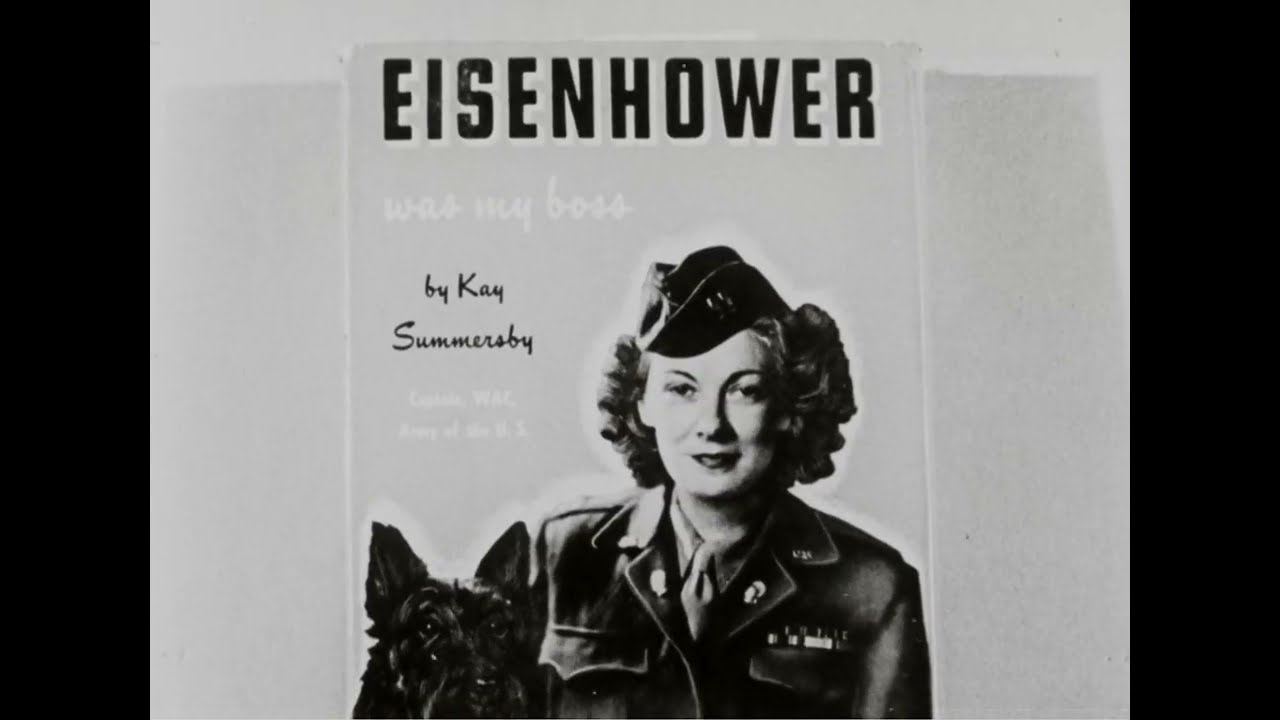
Ike's Health (different than D4 with same name), C2, Drew Pearson Films, Washington Merry-Go-Round.
Watch on YouTubeVideo summary
The video transcript addresses a critical issue regarding the transparency of presidential health and the arbitrary process of selecting vice presidents in the United States. The speaker argues that both major political parties have historically engaged in deliberate deception to conceal the true medical conditions of their leaders, prioritizing political stability over public knowledge. This practice is highlighted through specific historical examples, such as the concealment of Woodrow Wilson's stroke and Franklin Roosevelt's severe illness during his 1944 campaign, where he was sent on a cruise to hide his condition before nominating Harry Truman as his successor. The speaker emphasizes that while the Secret Service protects presidents from physical harm, politicians have been equally efficient in misleading the public about their health status, a situation that becomes increasingly dangerous given that one-fifth of all presidents have died in office and that modern leaders face unique stresses that may shorten their lifespans compared to the average citizen.
A significant portion of the discussion focuses on the presidency of Dwight Eisenhower and the Republican Party's efforts to manage his public image despite known health issues like high blood pressure, heart conditions, and bursitis. The transcript details a series of orchestrated deceptions in Paris in 1952, where Eisenhower was taken ill with an antibiotic overdose and delirium just days before leaving his command, yet he was told by advisors to pretend to be in secret NATO conferences rather than admit his sickness. Even when Eisenhower himself was candid about his desire not to run for re-election and warned colleagues about his deteriorating health, party leaders like Leonard Hall and Vice President Nixon actively worked to counteract these truths with false reports claiming he had agreed to run again. The speaker criticizes this behavior as a failure of political integrity, noting that leaving a party unprepared for a potential tragedy is a grave disservice to the American system of competition and democracy.
The core argument concludes that the current method of selecting vice presidents is fundamentally flawed because it relies on luck or late-night political maneuvering rather than ability or thorough vetting. The speaker points out that many vice presidents, such as Nixon, were chosen for strategic ticket-balancing purposes rather than their capacity to run the complex machinery of government if needed, a decision that later led to significant embarrassment regarding Nixon's personal finances. To rectify this situation and ensure the nation is not left vulnerable in times of crisis, the speaker makes two specific predictions: first, that legislation will be introduced requiring presidential candidates to undergo public health examinations so voters receive accurate information; second, that Congress will consider a resolution mandating that vice presidential nominees be debated and scrutinized by national conventions for at least twenty-four hours before selection. These proposed measures aim to replace the current system of political expediency with a more rigorous process that ensures the country is led by capable individuals who are fully prepared to assume the presidency if necessary.
Read the full video transcript
[music]
>> Today, ladies and gentlemen, I want to
report to you on the connivance of
certain politicians to deceive the
American public about the health of our
presidents
and the custom of picking a successor to
a president out of a political grab bag.
Today, the US government is such a
complicated machine and our power in the
world is so great
that if a president dies or his health
fails, it can affect the lives of
millions.
It can mean the difference between
prosperity and a stock market crash,
between peace and war.
Nevertheless, we pick the man who takes
his place, the vice president, almost by
sheer accident.
The voters have almost nothing to say
about who he should be.
Yet, we have to face the awesome fact
that seven of our presidents out of 34,
1/5,
have died in office.
Furthermore, they now die younger.
While the average American today lives
longer,
the average American president dies
younger as a result of the crushing
burden of directing the most powerful
nation in the world.
And while the Secret Service has
developed an efficient technique of
protecting the president from bodily
harm, the politicians
have been equally efficient in deceiving
the public about the state of his
health.
To illustrate in detail, I'll be back in
just a minute.
Now, both political parties have erred
grievously in concealing the true facts
about the health of our presidents.
When Woodrow Wilson was first stricken,
Mrs. Wilson and Joe Tumulty concealed
the facts for weeks.
Tumulty even used to walk into the
presidential office in front of the
newspaper men on the pretense that
Wilson was at his work at his desk.
Later in 1944, one of the most tragic
deceptions in history
was put across when the big Democratic
city bosses sent Franklin Roosevelt on a
cruise to Alaska so no one would realize
how sick he was. And then nominated
their man, Harry Truman, as the vice
president sure to take his place. They
knew that Roosevelt could not possibly
last his term.
Now the men who did that were Democrats.
But let's see what the Republican
politicians did to conceal the true
facts about Eisenhower.
In the first place, it was known before
Eisenhower became a definite candidate
that he had high blood pressure.
John Gunther in his very favorable book
tells about it on page 29.
And Kay Summersby, the British wife who
watched Ike's health so carefully during
the war,
describes the same thing in her book,
Eisenhower Was My Boss.
She tells how Ike always had to be
careful about his health even during the
war.
And in Paris in 1952, just before he was
to leave his command of SHAPE to
campaign for the Republican nomination,
the men around him began their first
minor deception of the American public.
10 days before General Matthew Ridgway
was to relieve him, Eisenhower was taken
sick.
And his American Army doctor gave him
antibiotics.
Ike, however, got worse. He developed
pinkeye, became delirious, and talked
about moving troops and calling
emergency meetings of the General Staff.
A group of Republican leaders were in
Paris waiting to talk to him about his
campaign.
They were told that he was in highly
secret conferences with NATO nations
regarding the defense of Europe.
Meanwhile, the French government wanted
to arrange an official farewell.
The newspaper men wanted a final press
conference. The public was expecting him
to turn up at the airport to welcome
General Ridgeway, the hero of Korea.
Finally, Ike's military advisers were
served notice by Arthur Vandenberg Jr.
that no excuse was valid.
And unless the general could be present
at a farewell press conference, he,
Vandenberg,
would cable Senator Henry Cabot Lodge to
withdraw Eisenhower's name from
nomination.
Well, at this point, a French specialist
was called in who diagnosed the case as
an overdose of antibiotics.
And shortly thereafter, Eisenhower began
to improve.
Though very weak, he was finally able to
meet General Ridgeway at the airport.
Though his car was rushed into the
privacy of a nearby airplane hangar
immediately
to let him rest and relax.
Well, that incident
began a long chain of deliberate
deceptions regarding the president's
health.
The only man who was frank during this
period was Eisenhower himself.
He repeatedly talked about his bursitis,
about the erosion of health,
and emphatically made it clear that he
did not want to run again.
And that Mamie
insisted that he not run.
Now, no one could have been more candid.
But the more candid he was,
the more the men around him became
desperate to counteract the president's
frankness.
On August 4, 1953, 2 years ago, in
explaining why the president had to take
long weekends and get away for golf and
fishing, I reported that he had a heart
condition.
Well, that brought an immediate official
denial from the White House, issued by
press secretary James Hagerty. He didn't
want the public to know the true facts.
Again, on November 21, 1953,
General Snyder, his personal doctor,
gave a similar denial
before the New York Heart Association.
He said,
"The president's cardiovascular system
has been thoroughly examined by
specialists at approximately annual
intervals.
In all these examinations, the findings
indicate that our president shows less
evidence of the ravages of time
and stress than is anticipated in a man
of his age."
Nevertheless, the president continued to
indicate the truth.
In December, 1954, he made it very clear
to friends at a White House stag dinner
that he was not going to run again.
Vice President Nixon was there, together
with Attorney General Brownell,
Republican Chairman Leonard Hall, and
others. They argued with Eisenhower at
great length, urging him to run.
But he indicated very strongly that he
would not, that he wanted to go up to
Gettysburg and relax.
Yet, a day or two later,
Vice President Nixon inspired a
newspaper story exactly to the contrary.
It said quite categorically that
Eisenhower had met with friends at a
White House dinner
and agreed to run.
A deliberate deception of the public.
At the dinner, Eisenhower had even
discussed certain promising young men in
the Republican Party who should be built
up as candidates to take his place.
But Republican Chairman Leonard Hall,
who was at the dinner, did nothing about
following the president's advice. On the
contrary, he made repeated statements
that the president was definitely going
to run.
And when he was asked quite recently
what he would do if I didn't run,
Hall replied,
"I'll jump off that bridge when I come
to it.
Well, Chairman Hall, of course, was
joking, but it is no joke to leave one
political party completely unprepared.
The essence of the American way of life,
of the American political system, is
competition.
Competition between two strong political
parties, and the chairman of one does it
and the American public a great disfavor
when he lets it get weak and unprepared.
Well, finally, Eisenhower took steps to
have said publicly what he'd been saying
privately, that he wanted to go up to
Gettysburg and relax with his
grandchildren.
When a delegation of Ohio politicians
came to see him, he pointedly reminded
them, including Senator George Bender,
of the erosions of the president's
health and the fact that he would be the
only president ever to reach the age of
70 in office if he ran.
Then he suggested that they tell this to
the press as they left the White House.
But the Ohio politicians did not tell
the press, at least at first.
They didn't tell the press until the
White House secretary reminded them of
Ike's wishes.
Like Chairman Hall and the other
Republican politicians, they did not
want the public to know the politically
unpalatable truth.
Finally, in Denver, as the 48 Republican
National Committeemen met to receive a
supposed pep talk from Ike for the next
campaign, a chill
fell over them
when he warned them not to depend on
him.
Again, the president was being honest.
The politicians were being dishonest.
I'll be back in a minute to report on
what can be done about these political
deceptions.
As I noted a few minutes ago, 1/5 of our
presidents have died in office. Yet we
continue picking our vice presidents not
for ability, but by pure luck or the
whim of a few politicians late at night
in a smoke-filled room.
Nothing could be more unfair to the
American people.
Some vice presidents, such as Jack
Garner and Charley Dawes, were at odds
with their chiefs. Some vice presidents
are much too young and lack the
confidence of the American people. Mr.
Nixon, when only 39 years old, was
picked because it was thought he could
swing the big block of California
delegates over to Ike, which he failed
to do.
Eisenhower at that time had scarcely met
him, had no idea that Nixon had an
$18,000
personal expense fund, which was to
cause serious embarrassment later.
Now, the vice president usually is
picked not for ability to run this
complicated government of ours, but for
the purpose of balancing the ticket
politically.
With Adlai Stevenson from the north, the
Democrats picked Senator Sparkman of
Alabama from the deep south.
They passed over Senator Kefauver, a
much stronger candidate, because Harry
Truman was then sorted.
Now, the national convention,
in its haste to get home, doesn't
realize
that the man it selects for vice
president in one case out of five, I
repeat,
one case out of five,
may end up running our intricate
machinery of government.
So, here are my predictions.
First, I predict
that legislation will be introduced by
Senator Wayne Morse of Oregon requiring
every candidate for president to take a
thorough examination by public health
doctors,
so as to give the voters the truth,
regardless of the politicians.
Second, I predict that the next Congress
will consider very carefully a
resolution
by which the nominee for vice president
must be debated and scrutinized by the
national conventions for at least 24
hours
before picking the man who, in case of
tragedy,
steps into the all-important job of
running this nation
and making democracy live.
>> [music]
[music]