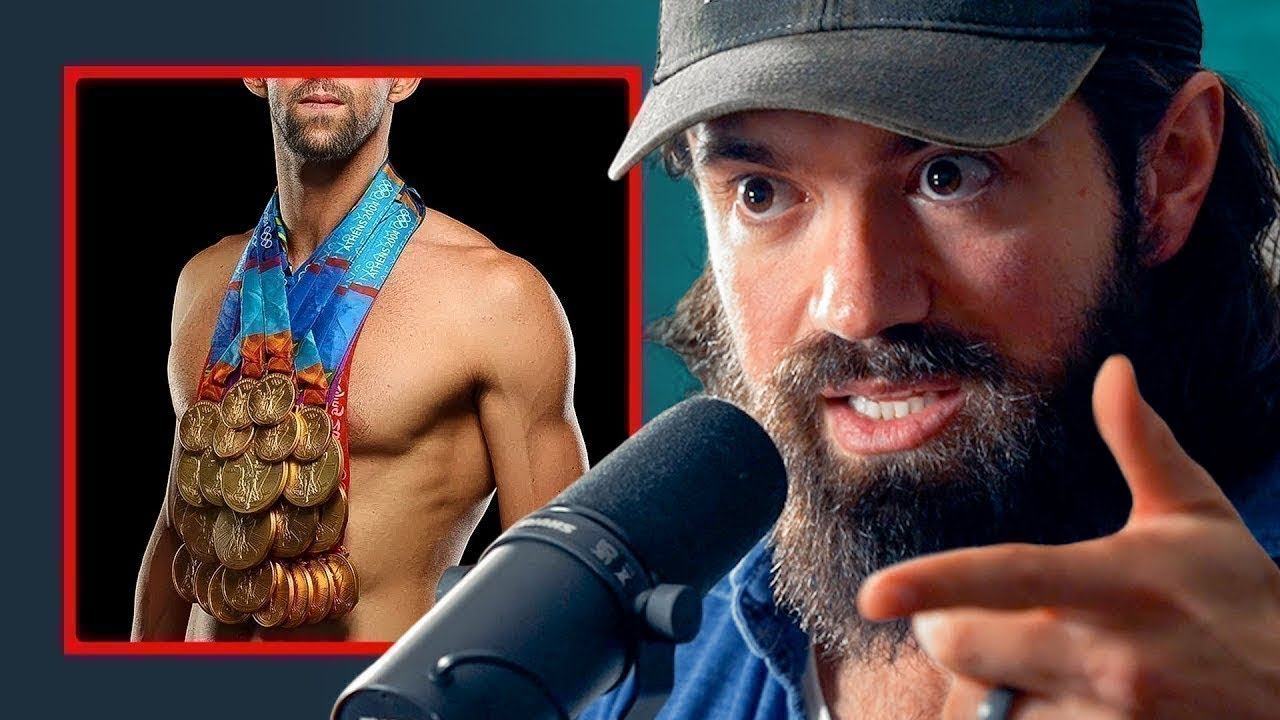
Video summary
Alex Hormozi challenges conventional notions of ambition and work-life balance, arguing that those who are truly ambitious will inevitably be misunderstood because they prioritize their own optimization over societal expectations. He draws a historical parallel between modern entrepreneurs and past slaves in Egypt or America, suggesting that while the latter lacked choice, anyone with a supportive environment—metaphorically represented by having "the cat behind you"—can work every hour of the day if it brings them joy. Hormozi emphasizes that projecting one's ideal life onto others is irrelevant; he personally values working over maintaining specific appearances like marriage or physical fitness, noting that since everyone dies and matters little in the grand scheme, focusing on external validation serves no purpose. Instead, his drive comes from micro-rewards inherent to business operations, such as writing books, editing content with an editor, tweeting thoughts, and engaging in discussions about commerce, activities he finds inherently rewarding rather than punitive. To navigate societal pressures and past traumas or parental expectations, Hormozi advocates for identifying what one truly wants to optimize for by leveraging innate preferences rather than searching for a perfect path from the start. He admits that his success in business was not predestined but emerged at the intersection of making significant money and doing something he enjoyed, contrasting this with scenarios where passion alone might not suffice without financial viability. His approach involves being "directionally correct" instead of absolutely certain about one's calling; by trying various ventures like frozen yogurt shops, test prep services, or gyms early in his career, he gathered enough perspective to make informed judgments. This iterative process allows individuals to move toward their goals even if they do not know the exact destination yet, provided they avoid activities that feel meaningless and gravitate toward tasks that offer immediate reinforcement. Hormozi explains that human behavior is fundamentally driven by past rewards; we repeat actions because our brains have been conditioned to expect positive outcomes from them in the future. Consequently, finding one's "thing" involves identifying what has historically rewarded an individual and expanding upon those activities rather than forcing oneself into unenjoyable roles out of obligation or fear. He illustrates this with a strategy involving reverse role models: if there are no examples of people you want to emulate nearby, look for abundant examples of the lifestyles you wish to avoid—such as poor financial management or unhealthy relationships—and define your path by doing the exact opposite. This method helps cut through perfectionism and procrastination masquerading as quality control, which often stem from a fallacy that one must know precisely what they want before taking action. The discussion also touches on economic motivations for business people, specifically regarding inflation and the cost of capital. Hormozi notes that in our current world where embedded growth obligations exist and currency loses value over time due to inflation, not investing is guaranteed to result in a loss of purchasing power. This reality creates urgency among investors and entrepreneurs to deploy capital rather than letting it sit idle like Scrooge McDuck's coins in a vault. While alternative economic systems without inflation might reduce this pressure, the current framework motivates people to act quickly because holding cash carries an implicit cost. Ultimately, Hormozi concludes that successful individuals are those who recognize their unique rewards, avoid being stupid rather than trying to be smart, and continuously iterate toward activities that align with their intrinsic motivations while ignoring external noise about how life "should" look.
Read the full video transcript
slaves worked all the hours they were
awake for their entire lives
in American history in Egyptian history
in the rest of the world that had slaves
which is most of the world at some given
point
I think like if they can do it so can I
now you're like well did they have a
happy existence well they didn't get to
pick the work they did but it means that
you can work that's if you have the cat
behind you you can work every hour of
the day I'm like well if you get to have
the cheese and you get to eat the cheese
the whole way you're going then I mean
there's the famous quote uh you know the
person who the person who loves walking
walks further than the person who loves
the destination right and so like I
think it's the same thing but
the
everyone so many people want to project
their idea of of what they think your
life should be like onto you
and it's just completely irrelevant it
just doesn't matter like if all I did if
I if I weren't married right because
people were like okay well he is married
and like I am in shape
but I also just like working out but if
I didn't have either of those things and
all I did was work all day more people
would talk about the work-life balance
thing for me than they currently do
and who cares
I just like I just I fundamentally am
like you are gonna die and you're not
gonna matter and I'm gonna die and I'm
not gonna matter so why do I care about
what you're gonna say when you're not
even gonna show up to my funeral who
gives a [ __ ]
what is it that you're taking an
enjoyment from then the one step deeper
than this there is something that you're
optimizing for I love I love the reward
what reward the micro rewards I get
every day like of operating a business
of all things business related yep so I
love writing the book about business I
love talking to my editor about what
we're changing oh that's a really way
better way to say it right or I like
tweeting about the thoughts that we have
I love doing discussions like this
because I talk about my favorite topic
which is business for the most part
um like and I actually am pretty averse
to punishment I've learned that about me
like I do not like it and when I say
punish me in the formal sense like
things you don't like right and so like
I avoid them like to play I don't do
them and so I just do as many of the
things I can that reward me as
frequently as possible but from the
outside to a lot of people that looks
like punishment right
yes interesting how can someone uh cut
through
societal expectations the ways they've
dealt with past trauma expectations from
parents all of the things that aren't
their thing yeah how can somebody
because what you've done again
axiomatically a priori this is the thing
I want to optimize for how do people
find the thing that they want to
optimize for I don't have a thing Alex
that's [ __ ] great for you with your
business it just happens to be something
else that's at the intersection of
making a [ __ ] ton of money yeah how do I
find it I was lucky with that yes that
that just happened to be the
intersection because if I love knitting
and I didn't like business yeah that's a
whole step because like you can turn
knitting into a business but like if I
only like knitting then there's a way to
make a living for that but to to get to
the person who's like uh how do I find
my thing
um
I'm a big fan of being directionally
correct rather than absolutely correct
and so I think what happens is most
people are trying to find the perfect
answer when they have no perspective
from which to make a judgment they're
trying to find the perfect thing to do
and they haven't done anything so how
would you have perspective to make a
judgment
like if you try a lot of things in the
beginning which you have to know what
your inputs outputs are decrease your
action threshold enough with either a
cheese or a cat whatever you need most
people have more cats than they have
cheese in the beginning so use the cat
to start running towards something and
the thing is is the rat it's so simple
it's like there's cheese here but what
you really just need to know is that
there's cheese out there
and there's a cat behind me for sure
and so if I just go anywhere away from
the cat I have a higher likelihood of
getting closer to the cheese not that I
will find it but I will get closer to it
and I think it's and I've lived my life
through a series of Rapid iterations not
trying to pick the right thing because I
just like even when I was starting my
first business I was between frozen
yogurt test prep and a gym those are the
three businesses that I was choosing to
make complete sense yeah right a lot of
things that I like right you know and so
so I'm choosing between those things and
like why were those the things I was
like well I was pretty good at taking
tests in college so I get that I like
frozen yogurt and I mean it sounds
simple but like I was like everybody
likes something right and I actually
didn't know that I was gonna like
business that's the crazy thing because
also hey when you and I were younger
Instagram wasn't there YouTube like none
of this [ __ ] existed and
Entrepreneurship wasn't cool yet and so
I just hated my job a lot and I hated
where I lived a lot and so I was like
well I will just not be here so cat
don't know what city I'm gonna go to but
just not this city I went across the
furthest place from Baltimore which is
California and then I was like okay well
what do I hate doing well let me not do
that which is you know sitting on
meetings all day and doing whatever you
know doing grunt work for [ __ ] that I
felt like was meaningless and instead I
was like I'll do Fitness because I like
Fitness and I was like at the very least
I'll do something I enjoy which I liked
Fitness at the time and if you're like
well I don't like doing anything it's
like well then that's impossible
because
your brain is wired to be rewarded for
things and so you are doing things that
reward you that's why you do them like
everything we do is because we've been
rewarded for doing things like that in
the past and we project the same
activities and we predict that doing
things like we did in the past that
reward us reward us again in the future
that's where our Behavior comes from and
so it's like okay well what is your
rewarded to do in the past
where's the cat go the opposite way yeah
so the the reverse role model is
something similar but you're you're
almost taking this into a lifestyle
perspective so the reverse role model is
if you live in a town or you grow up
somewhere and there's no one around you
like the sort of person that you want to
be like but there are tons of people
like the person you don't want to be
like you can say there's a way marker I
don't want his relationship with
gambling I don't want the way that Hema
handles his finances I don't want the
way that him and his wife communicate
with each other it's like okay there we
go Warren Buffett uh Mungus says uh like
an amazing amount of success has been
achieved by not trying to be smart but
avoiding being stupid uh so there's your
way markers there but what you're saying
is that this is almost like a a
abstracted lifestyle version of this
these are all of the things that I hate
to do what's the opposite of that yeah
and the
uh challenge of I don't know precisely
what the exact thing is therefore I
can't move toward it is one of mine
which is perfectionism is
procrastination masquerading as quality
control I was gonna say it's a it's a
fallacy it's a it's a decision-making
fallacy
it's the same it's this is why investor
frames can be so useful like if you're
looking for the perfect investment you
won't find one there's always downsides
every every investment has risk right
and so using that frame you're like well
there's all these paths which one do I
choose it's like well you have to the
one thing that's guaranteed is if you
keep the money it will go down in value
because it'll inflate right so not
investing is the only way guaranteed to
not get a return on your investment is
that a
the fact that inflation exists do you
think that's a useful motivating force
for business people you know you could
imagine a different form of world
economics where you know like embedded
growth obligations weren't there and
like whatever you know inflation didn't
happen do you think that that sort of
motivates people to actually be like oh
[ __ ] like I need to I need to do
something with this money I can't just
sit sit and leave it in the bank I think
we're motivate investors yes more yeah
yeah but I mean the the business people
would just like probably keep more coins
in there in their vault and just keep
transacting is that Scrooge McDuck yeah
they'd be less likely to they'd be less
likely to deploy Capital faster because
if you feel like there's a cost of
capital that's higher for keeping it
like letting it sit there then you have
a higher urgency to do something with it
if you have less urgency then you only
do it when you know it's gonna crash
what's happening people if you enjoyed
that then press here for the full
unedited episode and don't forget to
subscribe
peace
[Music]