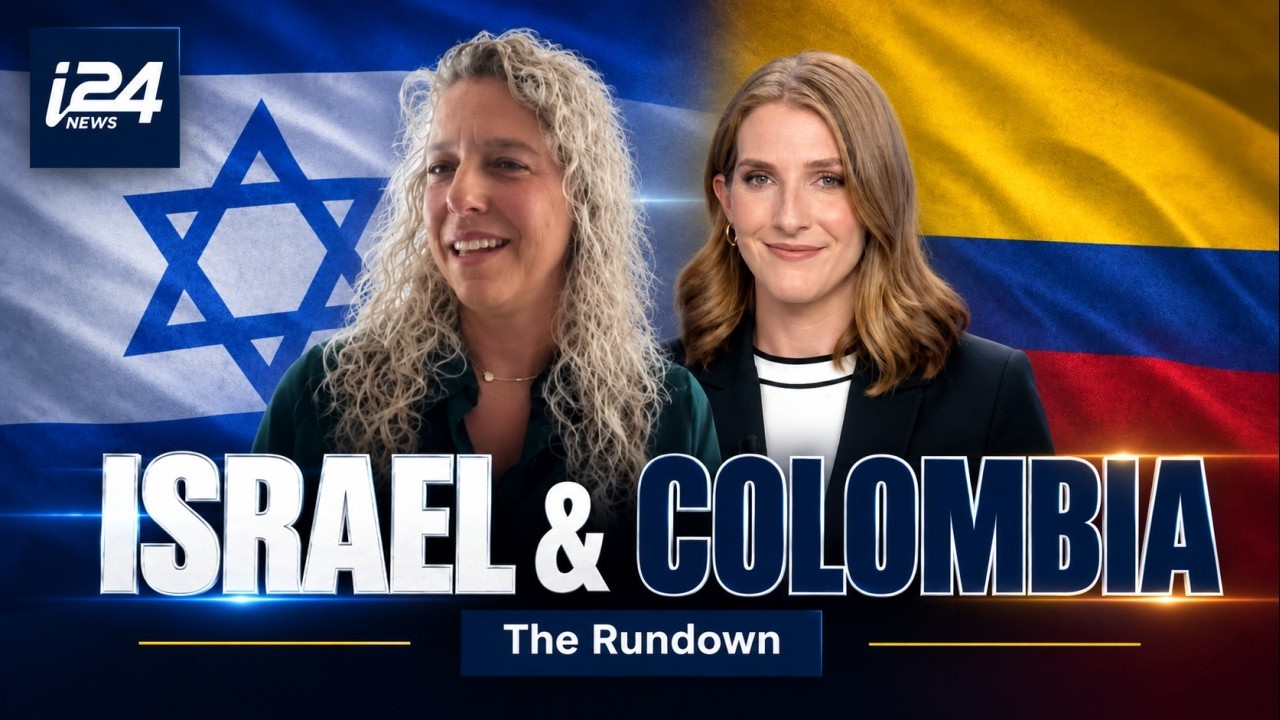
Video summary
Israel is actively supporting Colombia in the aftermath of a devastating earthquake, having deployed an 80-member joint rescue and humanitarian mission that has been operating for over a week. The Israeli team has already assisted in rescuing victims and is now focusing on assessing the stability of damaged infrastructure such as hospitals and schools to ensure safe returns for residents. To further aid recovery efforts, Israel is sending an additional five-ton shipment of medical equipment via plane, which will be supplemented by local purchases in Bogota. This significant humanitarian contribution underscores the strengthening diplomatic ties between Jerusalem and Bogota, a relationship that is being formalized with new mutual visa exemptions scheduled to take effect on September 1st.
Ambassador Vivian Aisen, who recently arrived in Colombia, reports that despite the chaotic atmosphere caused by the ongoing disaster response, she has been warmly welcomed by the Colombian people. The Israeli rescue teams have worked closely with local counterparts using specialized technologies, including drones, which have proven essential for locating survivors in collapsed buildings. Ambassador Aisen highlights three primary diplomatic achievements from her first week: the cancellation of visa requirements starting December 1st, the lifting of a ban on coal exports to Israel that was imposed by the previous administration, and the preservation of a trade agreement originally signed in 2013. These developments represent a significant shift from the policies of the former government and are expected to boost bilateral trade, attract more investors to Colombia, and stimulate economic growth for both nations.
However, Ambassador Aisen identifies a major challenge in rebuilding these relationships: the prevalence of negative narratives against Israel that have been amplified by social media and political rhetoric since the start of the war in Gaza. She notes that many citizens lack sufficient information to distinguish between fact and misinformation, leading to the spread of anti-Semitic sentiments that she describes as regressive. The ambassador emphasizes that overcoming these deep-seated misconceptions requires patience and continued dialogue to foster a better understanding among the populations of both countries.
Ultimately, the current administration's proactive steps in humanitarian aid and diplomatic normalization aim to restore trust and enhance cooperation between Israel and Colombia. By combining immediate practical assistance with long-term strategic agreements, the two nations are working to solidify their partnership despite regional political tensions. The successful integration of Israeli expertise into Colombia's disaster relief efforts serves as a tangible example of how shared goals can bridge gaps created by misinformation, paving the way for a more robust and resilient bilateral relationship in the future.
Read the full video transcript
Israel continues to help in the
aftermath of the Columbia earthquake,
now sending an additional five tons aid
shipment with medical equipment as a
joint Israeli rescue and humanitarian
aid mission has been in the country for
one week. The 80-member mission is
currently the largest operating in
Colombia as the country works to rebuild
following the devastation. Israel's help
is another sign of the new found strong
relationship between countries with
Jerusalem and Bogota now also agreeing
to mutual visa exemptions starting
September 1st.
For more we're joined by the new Israeli
ambassador to Colombia, Vivian Eisen,
joining us from Bogota. Ambassador
Eisen, it is great to have you with us
on i24 News. Thank you.
>> Thank you for inviting me. Good evening.
>> Well, let's start with the aid efforts.
How have the Israeli teams been
operating and and how will this new
shipment of medical supplies really make
a difference on the ground?
>> So, the Israeli team team has been
supporting the Colombian team already
for one week. They have almost finished
the first part of
the rescue of the victims. It will be
finished today and there is another part
of the work that is more related to the
to the buildings, checking the buildings
and
if they are stables and if people can
come back to
to live in them, hospitals, schools,
etc. So, this part is going to be
finished on Sunday and on the plane that
comes to take them back to Israel, we
are bringing another donation of five
tons that it will be added to a donation
that was brought in the plane that
brought the rescue team here and it will
be added by probably by a third donation
that will be made here
in Bogota
with products that you are going to buy
here in Bogota in Colombia.
>> All critical work that these rescue
teams have been doing. How is this team
been received by Colombia? Because you
said that they've been working directly
with the Colombia rescue teams
themselves.
>> So, they have been working together on a
very on a very cooperative manner. They
have
been very well received. They have They
bring technologies and expertise that it
said that doesn't exist here in
Colombia. And the work that has been
done is really very important for the
Colombian people. They were able to
rescue many victims and they have
special technology that includes drones
that allowed allows them to to
find the the victims
in the buildings that they have
collapsed.
>> Amazing to see. This is really expertise
being put to use in other parts of the
world. Ambassador Eisen, what about you?
How have you been received by Colombia?
I mean, your first day of work at the
embassy was only 2 days ago. What's your
first priority in this new role?
>> Definitely. It's It's a bit chaotic with
everything that is going on. Also,
because the government is really busy
attending the
the remote. So, it has been a little
chaotic, but I I was very
very welcomed.
I can feel the warmth of the Colombian
people. I can feel that they are really
looking forward for enhancing the
relations between our countries and we
are going to work for that. It's a
pleasure being here. Very very nice
people and very warm.
>> Well, that's amazing to hear. And when
you talk about the relationships between
these two people, how will the decision
to get rid of the visa requirements help
continue to build off this momentum of
good relationships, specifically between
the citizens of Israel and Colombia?
>> So, for the very from the very
beginning, we had at least three
topics that we wanted to
to touch from the start. One of them was
the visas that finally we had agreed
yesterday that they are going to be
cancelled starting from December 1st.
The second topic that was extremely
important for us was the cancellation of
the prohibition of coal exports to
Israel. That
was a decision that was taken during the
previous government and was cancelled
now during the first week of the
government. And the third thing that was
in danger during the previous government
is our trade agreement that was signed
in 2013, put in place, implemented in
2020 20, but then with the new
government there was a real danger that
it's going to be cancelled. The
president
the previous president declared that
he's going to cancel the the trade
agreement. But in the end they were
supposed to because of internal
regulations they were supposed to have a
votation in the Congress that never
happened. So the the trade agreement is
still very much in place and now
we need to have dialogues between the
institutions and between the governments
in order to decide what the kind of
products will be part of this trade
trade agreement to improve the
the the taxes that
are demanded and this is going to be I
believe that this is going to be a big
step to increase the trade between our
countries and to bring more investors to
Colombia and really to increment the
Colombian economy as well as the Israeli
one.
>> That's quite a 180 from the Petro
government last year. When you talk
about all of these new
decisions that you're making, what are
some of the main challenges for you
stepping into this role and helping
build these relationships back from from
basically zero?
>> Yeah,
>> would say that the one of the main
challenges is the narratives that are
still exist here in this country. The
time of
the previous government this couple of
years and since the beginning of the war
in
Gaza since the the 7th of October a lot
of
very malicious narratives against Israel
were put in place mainly by the
president and spread throughout the
social media. And unfortunately many
people here don't have enough knowledge
to distinguish between true and
and
lies. And with the AI and all the impact
of the social media really we can feel
that part of the audience here
doesn't really support Israel. The the
opposite is true. You can see
anti-Semitic narratives that goes back
to the medieval times. It's really hard
to see that and I think that this is
going to be one of the main challenges.
>> Well, certainly
a lot of work cut out for you but
Ambassador Vivian Insing we're wishing
you all of the best in this new very
important role as ambassador. Thanks so
much for being with us on i24 News and
and sharing more about the first few
days in your post.
>> Thank you so much for inviting me and
giving me the opportunity to speak to
your audience. Thank you. Bye-bye. Good
night.
>> Thank you.