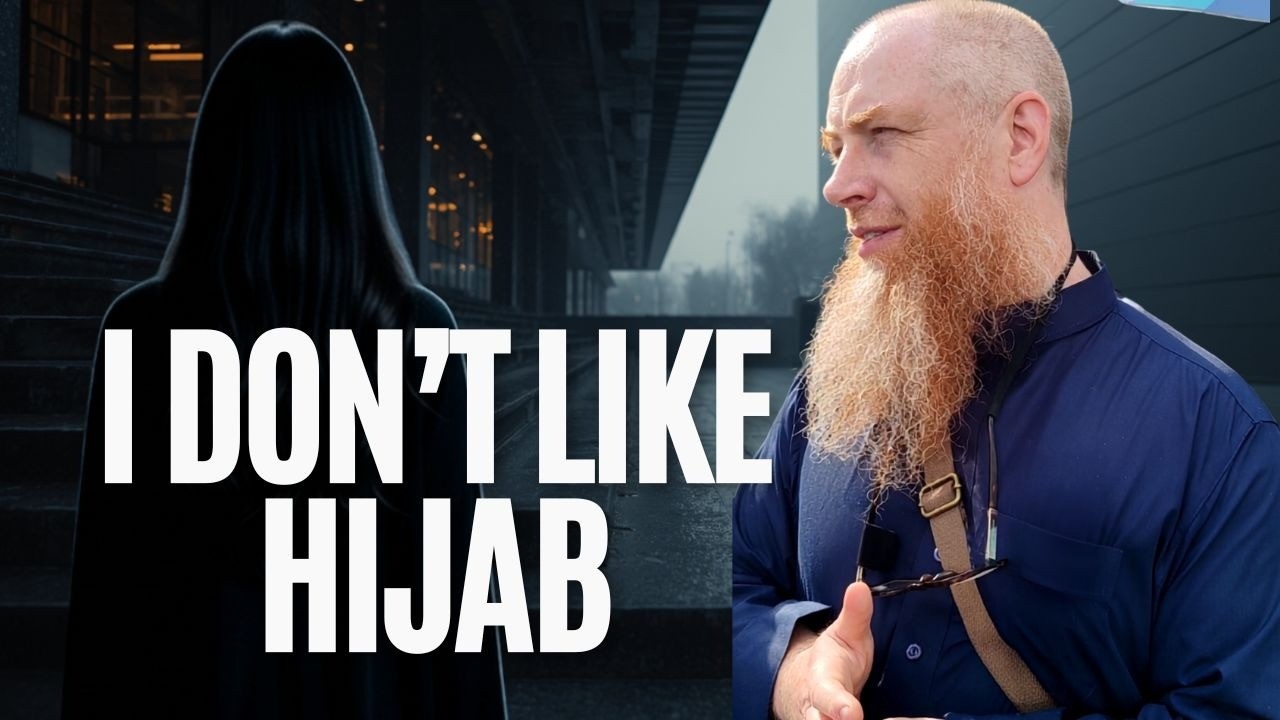
Video summary
The video explores the profound significance of wearing the hijab in Islam, framing it not merely as a piece of clothing but as a visible sign of honor, piety, and respect for women. The discussion highlights how covering one's beauty distinguishes a woman from men in Islamic theology, where such distinctions are viewed as complementary rather than inferior. Just as society expects different behaviors or appearances at weddings depending on gender roles, Islam teaches that a woman's modesty is reserved for her own benefit and the sanctity of her family unit. This practice aligns with historical precedents found even among Jewish and Christian traditions regarding covering oneself before God, emphasizing that submission to Allah's commands is ultimately an act of self-care and spiritual protection rather than oppression.
A central theme in the conversation addresses the delicate balance between parental guidance and personal autonomy when it comes to religious observance after puberty. While parents naturally worry about their children not wearing hijab or praying, the dialogue strongly advises against using harsh methods such as locking daughters out of houses, insulting them, or physical punishment. Instead, the speakers argue that once a child reaches adulthood in Islam—typically at the age of puberty—the responsibility for worship shifts to the individual's own conscience and relationship with Allah. The narrative suggests that forcing compliance often drives young people away from their faith entirely; instead, parents should offer love, kindness, and gentle reminders, trusting that Allah created these practices specifically for the spiritual benefit of each person individually.
To help maintain a sincere connection with one's faith without becoming overwhelmed by guilt or rigidity, the video offers practical advice on integrating religious practice into daily life. The speakers recommend starting small, such as reading ten minutes of the Quran every day rather than attempting long sessions that are unsustainable amidst school and social obligations. They emphasize the importance of intention (niyyah), noting that worship feels more meaningful when it stems from a genuine desire to connect with the Creator rather than simply obeying parental commands out of fear or obligation. Furthermore, the transcript underscores the power of good company; being surrounded by practicing friends makes adhering to religious duties like prayer and modest dress much easier, while also encouraging individuals to seek forgiveness immediately whenever they slip up, ensuring that setbacks do not lead to abandoning their faith altogether.
Ultimately, the video concludes with a message of compassion regarding family dynamics within diverse cultural contexts, particularly between parents raised in different environments or speaking styles. The advice given is for young Muslims to gently communicate how certain sharp words or strict behaviors hurt them emotionally without rejecting their mother's love entirely. By telling loved ones that "I love you, but your way of speaking hurts me," individuals can foster a healthier environment where faith grows naturally rather than through conflict. This approach reinforces the idea that while parents have good intentions rooted in concern for their children's future and salvation, true obedience to Allah comes from an internal desire to please Him, supported by patience, understanding, and mutual respect within the family unit.
Read the full video transcript
Hijab is honor for the woman. You know,
when Have you Have you ever seen the
video? It was made a few years ago about
a woman in New York.
Have you seen the 10 Is it Is it a
10-hour video?
What she does, she wears like a normal
t-shirt and leggings.
And she walks around New York. And she's
just walking and there's a someone
behind her with a hidden camera.
You know, everywhere she goes, people
are calling her, "Hello, miss. Can I
have your telephone number?"
Be Oh, beautiful. Get her the
And then they take the same lady and
they put her in hijab.
And she walks through the street. No one
says anything to her. No one bothers
her.
So, cuz people they understand that this
is a sign of a you know, righteousness
and piety.
It's a sign to respect her. She doesn't
want to be filmed at all. So,
So, so one is obeying Allah.
Second is her own benefit. And you know,
the thing is we have to understand in
Islam, you know, men and women,
there are certain things we're equal in
like
men and women should be respected. Men
and women should be taken care of. All
of us we have to pray. We have to fast.
But then at the same time there's
differences between us. You know, like
for example, a man,
if if it happens where there's war, we
have to go and fight. Women, they don't
have to go and fight. You know, to earn
the money, the man is responsible to
feed his wife and his children.
But you know, the the woman's beauty is
not the same as the man. You know, like
you're being Somali,
you know, when there's a wedding, when
there's a roos, how the women they put
on the dirac, how they put on the dahab,
they have to put on the makeup. You
know, when they go to the wedding, you
know, they play the daf, they sing, and
stuff.
What would you think if you're if a man
done this?
Would you think there's something wrong
with him?
>> [laughter]
>> You know, men, when we go to a roos, we
go for the hell of a race bus. We eat
and we go home. So, you know men and
women are different. The same way
you know in this country they change the
law now. Before, you know, if they want
if they want to sell a car they have a
beautiful woman. If they want to sell a
drink, they have a beautiful woman. So,
the woman's body is not the same as a
man. Therefore, Islam recognizes that
difference and says that the woman she
should cover her beauty and her beauty
is for herself and her family.
You know, if if you look even in the the
Jewish women when they're practicing
they cover. Even if you look at you know
the Christian women when they talk about
Mary the mother of Jesus. Obviously, for
us she's Muslim. But even for them
whenever they you see her she's covered.
So,
I'm the the that's the main thing is
just submit to Allah and we trust in
him. Whatever he tells us to do is good
for us.
>> Is there something that should be forced
on them?
>> No, we don't believe in anything should
be forced.
No, the thing is for for example uh
If you're if you're a mother,
do you force your children to go to
school?
Why?
>> So you don't get fined.
>> No, not even fines. Like, what happens
if you if you got you have a son or you
have a daughter and they become sick 16
17, they can't read, they can't write,
they can't do maths.
Is is that your is that my fault as a
parent if I didn't force them to go to
school?
So, there there's certain things we
wouldn't say
force in terms of
uh physical punishment, insulting them,
putting them down. But as a as as a
Muslim man or a Muslim woman,
we're responsible to try and teach our
children what's good for them.
To worship Allah, to pray, to fast, to
wear hijab. But now for example,
when our daughter becomes 15 16 17 and
she doesn't wear hijab,
now all we can do is, you know, show her
love,
care for her.
We shouldn't insult her. We shouldn't,
um,
you know, kick her out of the house. We
shouldn't, um,
abuse her. We shouldn't beat her.
Because she's she's an adult now. It's
you know, you once your children reach a
certain age, it's their choice. But
still as a parent, we're still going to
worry. So that
when you say force,
>> Me personally, it hurts a lot.
>> Yeah.
>> I stopped wearing the hijab for a
>> Okay.
Okay.
Yeah, I understand.
I do want to become closer with my deen.
>> Yeah.
>> I don't know if tomorrow if I'm going to
wake up wearing
>> Yeah.
>> Of course.
>> I do want to always, you know, everyday
dress decently in my deen.
But it's a thing where it's like if my
mom sees me without the hijab,
she'll
But she'll sometimes she'll lock me out
of the
the house. And it's just a thing where
it's like that only pushes me away from
the deen. Me personally,
>> Yeah, I understand.
>> Oh, you don't pray either. You might go
to deen, um, Christian. But um,
>> A god.
>> Or um,
you you did this and the other that's
haram. Or
um, why are you talking to a boy? Like
even if it's just friends with him.
>> Yeah, yeah.
>> as well go sleep
Do you know what I mean? And for me
personally, that just pushes me so much
more
>> I understand. I understand. No, the
thing is
because me I
me I have my my I I have daughters. I
have I have one son. My daughters, I've
been through this with them. And
sometimes as a parent, sometimes we're
too harsh. We're too strict. It's It's
because we want good for them. We're
worried about them. But then I think as
time goes on, we realize it's better to
be kind. It's better to be soft. It's
better to remind them. But for example,
in your situation,
you know there's no one in this world
who loves you as much as your mom.
Whatever prob- Whatever problems you
have, you can always go back to her and
she'll be there for you. So, when she
says these things,
I don't think it's a good way. I don't
think it's the best way.
And I know that's how moms are, but I I
think that it's because she's worried
about you. She's concerned about you.
But, you don't mind How How old are you
if you don't mind me asking? 14. See,
the thing is,
in this society, they will say, "Oh,
you're still a child." When you become
18, you're an adult.
But, for us, we're still
Yeah, but that's for us. In In Islam, we
have the Once you reach the age of
puberty, you're an adult now. You're
responsible for your own actions. I
think the thing is,
you know,
one one thing is, you should know you're
not the You're not the only Muslim child
going through this. You know so many
people going through this.
Secondly, there's one thing is, okay,
your mom wants you to practice.
That's one thing. But, most importantly,
is Allah created you for that reason.
This is what Allah created you for. And
it's it's
And if you know, it's for your benefit.
It's It's for your benefit, no one
else's. So, you should worship Allah
obey Allah for yourselves.
So, please Allah, not not for your mom.
But, I But, you The thing is as well,
like, alhamdulillah, as you can see, I'm
a I'm an old man. But, you in this age,
you know, in East London, 2026.
Do you know how easy it is to wear
hijab?
You know how easy it is to pray. You
know how easy it is to uh for a Muslim
brother to keep a beard.
10 years ago, 20 years ago, it was it
was really strange. It was odd.
So, alhamdulillah, I think you should
try your best. But, the thing is, you
know what helps a lot?
If you have good friends. If you If
you're with friends who are practicing,
then alhamdulillah, it becomes easy.
And then, you know, you shouldn't make
life too difficult on yourself. Like,
say for example, you listen to a talk
about Islam.
Or you hear something about paradise or
something about the hellfire. And then
you go home that day and you read Quran
for 5 hours.
But then the next day you become busy
with school, busy with friends, busy
with life.
You leave it.
It's better that every day you read the
Quran for 10 minutes.
And the thing is, you know, read it read
it in English as well.
>> I mean, I already do. And I finished the
chapters now.
>> Masha
>> Al-Qasas.
>> Masha Allah.
>> And then personally, it's just like I
want to have an actual connection with
the deen because I feel like intention
really matters. Like
>> Yes.
>> if if if I'm just reading Quran cuz my
mom told me to or my dad told me to,
I feel like there's no point in it. I'd
much rather me want to sit down and have
a connection with my creator. Like
>> Yeah, because you're becoming an adult
now. So, you're thinking different But
the thing is
is you know, Quran is Arabic.
If you can learn Arabic, if you
understand Arabic, that's the best
thing. But you know, if not
you know, take an English translation.
>> this translation?
>> I I you know, whatever chapter you read
like if you want Surah Al-Qasas now
read read the English as well. And then
you'll you'll see what Allah's saying.
And then for example, if you have any
questions
you go to the the teacher.
>> This is called the ayah
And then you have the ayah and the
surah. This is the ayah surah.
Yeah, everything on here.
I think all of it is like the general
Hadith.
So, once you read it, you learn about
it, okay?
>> Yeah. So, the best thing is good
company.
Good company.
Uh read Quran every day.
Try your best to pray five times a day.
And you know, the thing is all of us all
of us we slip.
All of us we fall down. When that
happens, just ask Allah to forgive you,
get up and carry on.
So, uh
Yeah. Take take it easy.
>> Anytime you
But you know what I I would advise
I would advise I would advise one more
thing as well.
I would advise one more thing.
Me, I'm I'm married to a Somali woman,
so I know
I know the Somali woman, you know the
tongue is very sharp.
So you should tell your mom, you know
like "Oh yeah, I love you, but you know
the way you speak to me, it hurts me."
Tell her.
It may It may make a difference.
And what about you?
Are you southern?
Tell Tell your mom. Tell your mom
softly.
But you know your mom wants good for
you.
So I don't know.
The thing is it's different culture as
well cuz you're brought up here, she
might be brought up somewhere else. So
Okay then, take care. Okay, no worries.
As-salamu alaykum.