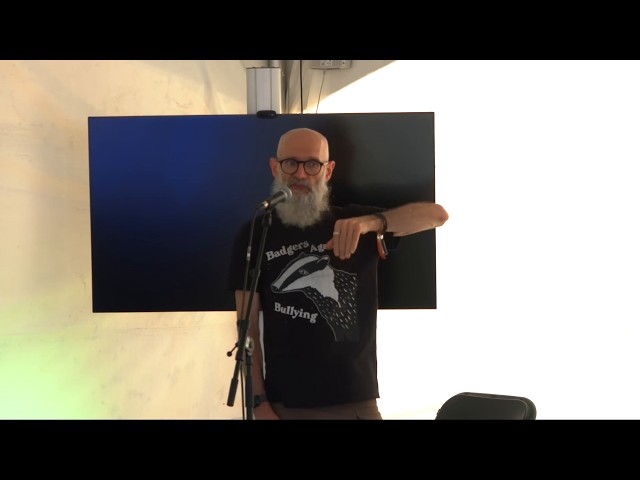
Video summary
The speaker, an artist with seventeen years of experience who formerly worked in investment banking, shares his journey of transitioning to the arts after being influenced by a creative community. He highlights a concerning trend in schools where children are losing the confidence and manual skills necessary to make things, often because they do not engage in creative activities at home or during the school year. His core mission is to reverse this decline by entering primary schools, particularly around Year Four, to work directly with students on hands-on projects. He argues that while secondary school students are often too focused on academic grades to appreciate art, primary school children are eager to create if given the right opportunity and adult support.
To successfully implement these projects, the speaker advises approaching schools through specific channels rather than relying solely on headteachers, suggesting instead that one contact deputy heads or creative project leads who are more accessible. Securing funding is another critical challenge, requiring inventiveness such as utilizing Parent Teacher Associations in wealthier districts, applying for council grants, or partnering with local business associations to regenerate high streets through school art initiatives. He emphasizes the importance of working in pairs within classrooms to manage large groups effectively and to identify struggling students who lack basic manual skills like using scissors or holding pencils. By pairing adults with these students, educators can provide the individual attention needed to rebuild their confidence and self-esteem.
A central theme of his methodology is maintaining a serious, "grown-up" attitude while encouraging playfulness, ensuring that both teachers and students take the artistic process seriously. He recommends starting workshops by having teachers engage in difficult tasks themselves, such as making messy art with dip pens, so that students see adults participating and can strive to do better than them. The speaker also suggests selecting challenging tasks that are unfamiliar to everyone, forcing even the most skilled students to step out of their comfort zones while giving struggling students a chance to succeed at something new. Furthermore, he advocates for creating collective outputs where individual contributions combine into a larger display, such as hanging letters from the ceiling or lighting up paper mushrooms, which fosters a sense of shared achievement and excitement among the children.
Ultimately, the speaker believes that artists possess a unique power as "the other" in the school environment, allowing them to break rules and demand space for creativity if they approach their role with genuine enthusiasm and confidence. He encourages artists to find the extraordinary element in every child's work, no matter how simple or flawed it appears, and to use that discovery to validate the student's effort to the rest of the class. By starting with the children and expanding outward to parents and the wider community through school-based projects, artists can regenerate not just the students' confidence but also the local community itself. His message is a call to action for anyone to become an artist, regardless of their background, to help restore the joy of making things and to empower both young people and adults to believe in their own creative potential.
Read the full video transcript
[applause]
Thank you. Thanks for coming. Um, so
yes, you'll notice I have no slides. So,
as explained, I'm the arts team's lead
here, which means I am not allowed to
talk. Um uh there's a reason why arts
team please are not or any team leader
is not allowed to talk is because the
thinking is you have too much to do to
prepare a talk. Guess what I have not
prepared. So I'm going to wing this talk
today which is why I have no slides. But
it's okay cuz I've done loads of these
before. So we'll make it work as long as
you remind me when I'm running out of
time. Um I'm going to take this off now
because I'm off duty.
Yay. Both of them off. Um, I'm up
against Luke Mom at the moment. I know
that because I just took him down there.
Um, so yes, I'm an artist. I've been an
artist for Yeah. 17 years. That makes
sense. Yeah. We're Yeah. Um, uh, anyone
come to my talk? Uh, the last two years
ago I give a talk on this. No. Fine.
Good. Um, uh, I became an artist late.
Uh, I have not always been an artist.
Uh, I used to be, believe it or not, I
would worked for the dark side. I was an
investment banker. Yeah. I worked in
technology for investment banking. And I
became an artist um because I fell in
with a bad crowd. I fell in with a bunch
of artists. And I decided that art
sounded more fun than being an
investment banker. So I became an
artist. Um and right from the beginning,
a lot of the art I do is working in
schools. So I do like community
projects. Um uh I've done a lot of
projects working in um uh in UK schools
doing um basically sort of attainment
stuff where the school has like a pro an
idea. They're like um we've got a maths
class that's failing and we need help.
We they need help. Uh and we come in and
we try and apply art to that and see
what happens. So I've done lots of
projects like that. Um and so I've now
I've been doing going into schools and
doing art projects in primary schools,
secondary schools, nursery schools. I've
done it in college. Uh I also teach at
university. So I do a lot of this sort
of stuff of working with people and a
lot of working with making art with with
kids. Um and the reason I really wanted
to talk is because uh uh over those 17
years I've seen I've seen changes happen
in this country particularly um in in
how kids understand and work with making
things with their hands with art with
doing stuff. Um, and what I realized is
that it's getting
my experience anyway is it feels like
it's getting worse in this country. Like
basically kids do they come to school
less prepared to make things because
they're not making things at home and
they're not spending enough time in
schools making things. Um, and the end
result is the kids don't have the the
key thing is the confidence. They don't
have the confidence to make things
anymore. I'm just going to grab some
water.
And that feels like a real shame and a
real problem. Um, but it's the upside of
that is it feels like this is a thing
that you can change. This is a thing
that you can do something about. Um, and
the main thing I do is I go into schools
and I work with kids and I make things
with them. And what you find is that
kids are just itching to make things.
Like it's it's both [snorts] heartening
and appalling that a lot of the kids
that I work with say things like this is
the best thing we've done all year. And
that's great cuz you think oh I'm so oh
so lovely. Thank you. But then you also
think why why is this the best thing
you've done all year? Why haven't you
been doing this all year? Like what has
gone wrong that kids are not making
things all year? Um, and a lot of the
primary schools I work in, they'll say
things like, "Oh, we don't do arts until
just before the summer term. We don't do
any art at all." Like the kids don't
like this is primary schools I'm
pointing out here, not secondary
schools. This is primary schools. And
the kids there teachers saying, "Oh, the
kids don't do any art until like the
last term."
And that feels like something has gone
wrong. But what I wanted to try and talk
about is to encourage people to think
that this is something that you can
change. You don't have to be a teacher.
You don't even have to have kids. I have
no kids. Um you can go in and you can
make a difference. And the key is there
is it's all about confidence. And the
key there is for you to have the
confidence to go and do that. And then
by going and doing that, you give the
kids confidence. And more possibly more
importantly that your job is to give the
teachers confidence and the parents
confidence that they can work with the
kids because a lot of this comes down to
the teachers themselves don't have the
confidence in what they do like they
don't know how to make things. They
don't know how to to integrate art or
making into their lessons. So um I want
to talk a little bit about my experience
of doing that in case is anyone
interested in doing this like that was
the point of the talk. is any great
people are interested in doing this. So
I wanted to give you I'm no expert but
I've been doing it I guess for 17 years
so surely I've learned something you'd
hope. Um so what I wanted to do is talk
about how I do it I guess and then maybe
how you might do it. Um so the key thing
is when you if you contact a pime like
primary schools are the best schools to
go in. So this is my main the main thing
I would say is if you want to make a
difference go into the primary schools
because secondary schools don't want to
talk to you and the thing is not only do
the secondary school teachers not want
to talk to you but the students don't
want to talk to you like they are so
trained by that point they're like how
will this help me pass my A level
English and if you cannot convince that
child instantly how this will help them
they're like well I don't have the time
for this I should be studying And that
feels like a a depressingly sad thing to
be the case. But at that point, it's too
late in a way. You need to catch them at
primary school, which is really the best
time to work with kids. I think um in
particular, my experience is if you're
looking for this, year four is without
doubt the best year. Year 4 kids are
hilarious. They are so good.
They've got they're just old enough to
be able to like make interesting
complicated things and have interesting
complicated ideas, but they're not so
old that they think like I'm not doing
that. Um, so year four is great. It's a
really good year to work with. That's
probably an aside. Anyway, um, if you
find your local schools, so this is what
I do. I find the local schools and I go
talk to local schools. And the person to
talk to is always the deputy head. Never
try and talk to the head teacher because
they don't actually like they are way
too high up or busy or whatever to
actually know what's going on in the
ground or to be able to engage with an
artist. So you go and you speak to the
deputy head and you say hey I'm a local
artist and even if you are not a local
artist that's what you say. So as I' as
I'm you know always want to saying if
like we are all artists you are all
artists for this purpose of this. If you
make things, as far as I'm concerned,
you're an artist. So you go in, you say,
"I'm a local artist and I would like to
do projects with the kids." And the main
thing the kids schools be thinking is
what will this cost me? So if you need
to be paid, then there's only basically
two routes for doing this. One is the
PTA.
Find the PTA and tell them to raise the
money to pay for artists to work with
the kids. and that the the downside
there is that only really works in the
posher schools. The poorer the school is
likely the less the PTA have. Um so the
next thing you do is you try and find
out if the council do grants for this
sort of stuff and you try and you
approach them. I've done a lot of
projects where the council paid for it.
Um or if you feel really passionate
about it, you just do it anyway. I've
also done ones where I've just done it
anyway because hey, it felt like an
important thing to do. Um, but those are
kind of your roots. Um, and if you're
working with a council, you might want
to find partner with some other
organization. So, here's an interesting
one. I do a lot of work with the local
business association. So, I work with
like all the shops around where I live.
They have this local business
association. And of course, their
concern is getting people into the shops
to buy stuff. But like connected to that
is they have they feel like with there's
a community purpose in supporting local
community to come into their shops and
buy stuff. Um, so the business
association, I work with them and they
go to the council and they say, "We
would like money from you to regenerate
the high street and then they give it to
me and I go into a school and I do art
with kids and I take the art back and I
put it into the high street and look,
I'm regenerating the high street.
It's a magic route to get money into the
schools to make art." Um, so there's
there's little tricks you need to find
to figure if you need to be paid and I'm
a full-time artist, so I need to be paid
like, you know, like being paid for art
means being able to eat baked beans. So,
um, so you need to find sources of
money. You need to be clever about
finding sources of money because the
school won't have it. Like if the school
has money, they are too posh to need you
is what it boils down to. Um, I think
it's important to find the schools where
you know that that are failing that are
or not failing. That's a harsh thing to
say about the schools that are
struggling. Maybe that's the word to
use. Um, you need to be confident around
kids. How much time I got left? Sorry.
I'm not 10 minutes. Is that right? No,
no, no, no. Hang on. I'm ahead of
myself. That can't be 10 minutes. When's
this talk finished? Anyone?
>> 10 past. Okay. I've got 20 minutes.
Fine. I've got loads of time. Um, so
I've got 10 like bags of time. We can
talk forever. Um, uh, who's hands up if
you've already done work with kids?
Particularly loads of you. Then why are
you here? Why are you here? Like you
could have already done this on your own
surely. All right. Well, I'm going to
talk about my experience of working with
kids anyway. Um, which is that kids want
to be grown up. So like the the key way
to get kids is you're doing a grown-up
thing. Like the kids want to be grown
up. If they smell that your activity is
like it's a kitty thing, then they then
then they're bouncing off the wall. Like
teachers always say, "Oh, the clouds the
class are really rowdy today. I'm really
sorry. They've been bouncing off the
walls." And almost always that's because
the kids are bored. And if you present
them with a boring task that they think
is just for kids, then they'll bounce
off the walls cuz they don't, you know,
it's like, "Why should I take this
seriously if you're not you're not
taking this seriously?" And that's what
kids are all about is if you're taking
it seriously, then they do. So um you
have to take it seriously which means it
has to be you go and you say I'm here as
an artist to make an art and you are
going to make an art with me and we are
using real art techniques and you will
make a real art and that's particularly
good if you can show it somewhere then
it becomes a real art which is why I
always try and take the things the kids
have made and put it in some venue and
say look you made a real art and then
they take it seriously and then then
you've got them then they're excited
about it then they want to do the best
thing they've ever fun like always. They
want to do the best thing they've ever
done. Um, so you've got to you've got to
be grown up about it and talk to kids
like they're grown-ups and kids just
love that. Kids love being grown up.
They are like particularly at that age,
primary school age, they just want to
they're rushing towards being grown up.
So you just help them along there. Um,
and importantly in that because the kids
look at the adults around them to figure
out how seriously should I take this. If
the teachers aren't taking it seriously
then it starts to fray at the edges and
the problem when I often find in going
to classes who actually has gone into
schools. Okay. Okay. So, a few of you.
Yeah. The thing I mean, maybe you like
you tell me about this, but the thing I
always find going to schools is that the
teachers are so busy these days that
when you try and when you come along and
you say, "I'm going to do art for kids."
The teachers like, "Thank God because
that means I can do admin and then they
disappear into a corner and they're like
writing reports and you're like, "No,
no, you need to be with me. You and I
are going to do this together. You will
also sit there and make an art. And if
you can get the teachers doing it too,
the kids take it a ton more seriously.
Um, not necessarily because they're
being told off. Like it's not even about
crowd management. It's about kids need
to see the adults doing it and then they
know it's an improper task. Um, so you
have to get all the adults on board. You
have to get the TAs doing it. You have
to get teachers doing it. Everyone has
to take it seriously and they all have
to do it together. That's my experience.
And if you I've done a bunch of like
whole school projects where you do like
a big thing like you raise a lot of
money and you do a big thing across the
whole school which is the most exciting
thing to do. And if you're doing a whole
school project you start with the
teachers like you don't like if you got
time to do this you do your first
workshops with the teachers. You make
them do an art and you make it difficult
for them so that they make a mess of it.
Like this is really important. You make
it difficult so that they make a
scratchy mess and then you show the
scratchy mess to to the kids and say,
"This is what the teachers did. Now
you're going to do it. This is your turn
to do better." And then the kids really
want to do better. Um, so that's that's
if you're doing a big project, you can
start with the teachers. If you're only
going in for like one session with a
class, that becomes a bit more
difficult, I guess. Um, what else I'm
going to advise? Find someone to work
with. go into a classroom as two people.
Like 30 kids is too many for one person.
Like who's who's tried to do this
before? Like I don't know how teachers
do I mean teachers have TAs I guess but
even then it is too much trying to deal
with 30 like you know year fours on your
own. You need to go in with someone. So
I always go in with I've had an art
partner that I work with for years and
we try and go in together and we do the
workshop together. And it also means you
can have a bit of a game. You can riff
off each other. You can play, you know,
you can muck about between the pair of
you and the kids like that if you're
mcking them out about a little bit too.
You know, like when I say take it
seriously, I don't mean too seriously.
Like you want to have a bit of a play
with this thing, don't you? Um, so where
have I got to your advice then? So
deputy head, find money through whatever
means you can. Um, go in, make the
teachers do it, too. The teachers have
to do it too. You cannot and you have to
be really stern with teachers right at
the beginning. and you have to say no,
no, you you cannot be in the back. You
have to be here with me working with the
kids and you've got to be like lay the
ground rules out. Um the kids
um so then let's say we're actually
doing some making activity. The thing I
found as I've got older, done this more
is that I'm finding kids are struggling
more and more with like particular if
you go into a class if you go to a
school that's not like a standard middle
class school. If you go to the school
that's maybe having a bit of a harder
time and the kids there are more varied
mixed background um and a lot of them
come from homes where and I'm not
blaming parents here I want to make this
clear um often they're like from a
single parent household like that parent
has to work or they're coming from a
household where both parents are working
and no one has the time to be making
stuff at home and they don't have the
confidence to make stuff at home with
their kids. So stuff is not being made
at home. So, it means the kids come to
school and they basically not really
learned to use their hands. Like simple
things like cutting out, like I work
with tons of kids who I find cannot use
scissors, which is kind of awful. Like
the fact you can't just like cut cut
around something. Um, so you'll find in
a class there'll be some kids that
you're working, you're doing a lot of
close work with trying to get them the
confidence to proceed. And it's all
about confidence. I'm going to keep
coming back to that word. It's all about
confidence. So the kids have got you've
got to give everyone the confidence to
do it. The teachers need to have the
confidence, the kids need to have the
confidence and that means you have to
have the confidence. So you got to go in
and own the room and do the thing. Um so
the kids I find struggle with like
manual tasks like drawing like some of I
find kids like can't like hold like
holding pencils and doing things like
stuff that should be super easy to do as
a kid at that age like 8 n years old you
should be able to do this sort of stuff.
It's kind of awful that kids can, but I
work with a lot of kids who just cannot
like do simple drawing and writing. Um,
like all of it is a struggle to them,
which means they become incredibly
self-conscious of that. Kids know, kids
always know when they're the one that's
behind in the class. Like, they know it.
And that's those are the kids that are
that are probably like like mcking about
the most because they're finding it too
hard and they just find this is another
outlet. I will just muck around instead.
So you have to work you have to find
them first in the class, which is why
you need two people. You just cannot do
it on your own. You can't give the kids
the attention they need to make this
work if you're one person. But if you're
two, you can sort of spot that. And if
you've worked together for a while, you
go, "Yeah, that kid, I'm going to sit
and work with them for a bit." And you
deal with the rest. and you sit and you
give them the experience or the kind of
the confidence they need to do the
tasks. And the key to that is being
enthusiastic. Like I am an enthusiastic
person. You need to be an enthusiastic
person. Like everything the kids do,
there is some like like no matter how
rubbish the kid thinks it is or how
rubbish anyone thinks it is, there is
something exciting in there. And I don't
say that. Um I was talking to actually
one of our installation artists. Um uh
no no workshop. We had a workshop on
earlier. There was an adult in here and
they were making something. And I was
like, "That's amazing." And they said,
"You're such a good liar." And I went,
"And the truth is I don't I never lie
when I say these things." I There's
always something amazing to find in
something a kid is making or an adult's
making. There's always something in
there like a certain movement, a mark, a
dot, a color they've chosen. There is
something to find which is amazing. And
you need to find that thing and be
amazed by it and be genuinely excited by
it so the kid gets that excitement. Like
they always have to be excited by what
they're doing. Like that's the only way
you're going to build their confidence.
Like you can't build confidence by
going, "Well, you tried. Yeah, you know,
it's okay. You know, we'll just leave
little Timmy over there with that and
then we'll I'll work with the the one
who's doing the really good work." Like
you can't you've got to infuse the kids
that are struggling. Um
and then at the sort of the other end,
you've got these high attainment kids
who are kind of sucking up all the
attention because they're really good at
something. Um, and often like like
you're not trying to do the opposite.
You're not trying to tear them down.
That'd be a weird thing to do. Like to a
little kid. Like why would I do that?
But um you have to try and like pushing
them into a different direction cuz like
kids know, oh, I'm good at drawing. And
you're like, well, I'm going to make you
do something else then because I don't
want you to be good at this task. I want
you to I want you to find it difficult
because that's how you're going to
learn. So, I did a project recently
where I went in and all the like I did
this decoration project where the kids
were making I'm going to stop this and
think about this for a minute. They were
making lanterns to go on a tree. Um,
and uh I thought, well, they could just
draw for an hour, but that would be
really boring. I want to give them
something more of a challenge. So, I
made them do it all through um cutting
and tearing out. And I just gave them
loads of color paper and said, "You have
to tear out." So, you're going to draw a
picture. So, they immediately draw a
picture. And they're like, "Yes, it's
going to be the best picture ever." And
I said, "Now you're going to cover that
up." And like, "But
it's my nice picture." I'm like, "I
don't care." Like, "But can't I just use
the can I just draw?" Nope. Nope. No one
is drawing. Like, you've done the
outline. You're going to tear up little
pieces of paper and you're going to
stick them on and you're going to cover
it. Um, and the nice thing is you pick a
task that like all the kids are going to
struggle with because they're not
familiar with it. Like it's great to go
and do a task that kids are unfamiliar
with rather than they they've done
before. and force them to try and like
find something else inside themselves.
Um, and then the kids that are like
really good at it suddenly find, oh,
actually I don't know how to do this.
Like this is a new unknown thing. Um,
another one we did was working with um,
dip pens. Dip pens are great. They're so
exciting cuz the such a scratchy mess.
Like dip pens are brilliant and like
like it's hard to do anything with a dip
pen. It's like really difficult. So
you'd like give all these like tiny kids
like bits of paper and say, "Right,
you're going to write a letter to to
Santa or whatever it is." Now, you know,
pick some random task that fits with the
curriculum. Find that's the other tip.
Find a task that fits the curriculum.
Ask teacher what are the kids learning?
What is the project they're working on?
Um I think this one was they were
reading a book that was about um someone
who traveled. And I said, "Okay, so
you're all going to write a letter
pretending to be writing to that person
who's traveling or the other way around.
I can't remember. They all had to write
a letter and it's like, "No, but you
don't get a normal pencil. You get a dip
pen and you're going to write a scratchy
mess letter." Um, and it was great
because the kids hated it. Like,
everyone hated it. It was brilliant.
Like, there's nothing better than than
torturing children. Like,
uh, it really is. Um, so yes, so I
picked a you pick tasks which are going
to be difficult and that people that
that this the the kids that are
struggling like are just like they're
going to be perplexed by is any task you
would have given them. The kids that are
really good are now like like kind of
pissed off and that's kind of good. Like
I kind of like the like the really
strong one you like pissing them off a
little bit is quite good. And he's like
but can I do the thing I'm really good
at? No. No you cannot. You're going to
do the thing I sent you to do. Um, and
you're going to learn a new thing. Um,
what have I got? I've got 10 minutes
left. What else can I talk about? Um,
yeah, the output. So, you want the kids,
it's great to pick a kind of some
project where the kids all making like
they all want to make their own thing.
Like kids obviously want to make their
own thing and they want to be super
protective of it. I am making my thing
and no one else is going to touch it.
Um, but if you can get them find ways of
combining these things into something
bigger and more interesting. Um, I did
one not too long ago where I got all the
kids to make paper mushrooms and they
all got to like we all followed the same
technique and then they had to decorate
their paper mushrooms and then we turned
the paper mushrooms into one display of
all of the mushrooms and we like they
carefully stuck them all down and we put
lights inside them and lit it all up and
then we put all the blinds on the
classroom and turned them off and then
we took pictures of it and did videos of
the all the paper mushrooms they'd made.
So getting them to think as individuals
and as a collective is really good.
Getting them to think, okay, we're
making a thing together that will be
displayed. Um that I find that a really
good thing that kids really get on with.
And then of course if that thing is
going to be shown somewhere, if you can
say, right, we're going to take this
thing, we're going to put it in a local
shop like I've done recently. Um or
we're going to put it in
um uh on display in the school. That
works as well. You can say, okay, well
this thing I need the I want it to be on
display in the hall. Um and that's you
know and you just tell you just tell the
school this is what you're going to do
like this is the other okay this is my
my top piece of advice when you go into
a school uh as an artist and this is why
you have to call yourself an artist when
you go into a school as an artist you
are the other um has anyone heard that
um famous quote that King Leopold
horrendous man wrote to Queen Victoria
uh when he when Queen Victoria ascended
the throne years and years ago he wrote
this um letter to her saying Um, beware
artists,
which is just I love that. Beware
artists. And you said something I'm
paraphrasing slightly. Um, they mix at
all levels of society and therefore are
the most dangerous.
And I just like I felt like I want to
live by that. Like that's my mission now
is to be dangerous as an artist. So when
you go the point of this, when you go
into a school as an artist, you are the
other. Like you're you're something
else. Like no one knows quite what you
are. you're like not a teacher. Uh
you're you're not like like you know you
you know obviously not a kid. You're not
a parent. You're like you're not really
like like you don't have a job. You're
not like sweeping up. You're not in the
kitchen. You're this strange other
thing. Um and the other allows you to
gives you permission as long as you've
got the confidence like I said
confidence. As long as you've got the
confidence being other gives you
permission to demand things. You can go
in and say we're going to do this. I
will need this wall. Um, and then like
people like, uh, okay, well, the artist
asked for it, so I guess we should do
that. Um, and it's amazing like how far
you can get just doing that. Um, uh, or
just the other thing you do is as an
artist, you have the permission to just
ignore the rules. You can just go, "Wow,
but this is the art. We're going to do
the thing. I don't care what you say."
Um, I did this great project. Uh, well,
I say when I say I, I mean me and Andy,
my art partner, my art wife. Um most of
these projects I've done was him. Five
minutes left. Good. Um uh we did this
great project in primary school. It was
a longterm project. We had lots of time
to play with the kids. Uh it was the
scratchy letter one in fact. And we said
right I'm going to take all the letters
at the end. Everyone's going to fold
them up. They're going to address them
to the character in the story. I can't
remember. And we're going to make an
installation out of all the letters. And
we thought it'd be really nice making
this sort of post box all the letters
flying out of it or flying into it. You
could interpret it either way. So, we
thought we'll hang them all from little
threads. Um, and we'll put it in in like
one of the hallways coming into the into
the school. Uh, and we spoke to teach
about it and said, "So, we'd like to put
this big installation in here. It's
going to hang all from the roof. We're
going to fill this whole corridor with
the kids letters that will hang in above
their heads. It'll be great." And
teacher's like, "Oh, no. We're not
allowed to put anything into the
corridors." Like, the head doesn't allow
it. And we're like, I'm like, "Okay,
good to know." And then as soon as all
the teachers have left at the end of the
day, we hung the installation. I'm like,
I don't care. Like I'm not getting in
trouble. And who's going to fire me?
Like we're putting the thing up once
it's there, you know? Who's going to be
who's going to be the spoils boy who
takes a damn? Yeah. Uhhuh. So when the
kids come in the morning like they were
amazed and the teacher and you know if
the head teacher was upset, I don't
care. Uh because we made an art that the
kids were excited about. And that's the
most important thing for me is what the
kids are excited about, not what the not
the teachers or the headteer
particularly cares about.
Uh yeah. So that's where am I running
into advice? I'm running out of time. So
um
let's summarize. So be an artist. I mean
everyone should be an artist anyway. Be
an artist. If you need to find money and
be inventive about finding money, uh if
you're going to a school, talk to the
deputy head. Um often there'll be a
particular deputy head who's in charge
of like outside creative projects sort
of thing. You need to find that person.
Um oh, I forgot one. Be nice to the
people on the on the reception. In fact,
be nice to all the staff obviously, but
particularly the people in the reception
because they're the gatekeepers. They
control everything in school. Always
like when you go in, always be super
friendly to the reception staff. Um uh
if you can get enough money, do a whole
school project. They're absolutely the
best. There's just And if you're going
to do a whole school project, not just
the teachers, you want to do the
cleaning staff, you want to do the the
people that cook all the food, whatever.
You want anyone who's there, you say,
"What are you doing?" Right, you're
going to make an art. It doesn't matter.
Everyone should do it and it all goes up
and everyone enjoys it then. And the
kids get more excited the more adults
that do it. Um so uh staff um go in in
pairs um uh find the find the kids that
are struggling and sit and work with
them. There is they are doing something
exciting. You just need to find it. Like
everyone can do something exciting. Um
like break rules. Yeah, absolutely.
Break rules in schools. Like this this
is often you go into a school and you
know what's wrong with the school
immediately and it's always the head
teacher. Like you go in and you feel
something feels wrong in this school.
Like why why is everyone so scared and
it will be the head teacher. Um in this
particular the case the school that we
went in with the letters that's exactly
what I found. I was like there's
something wrong with this school we were
all thinking. And then we met the head
teacher near the end of project and we
went, "Oh,
that's what's wrong here." Um, uh, I'm
running out of time where I get to, um,
find something difficult. Find something
complicated the kids can will find that
the good kids will find a challenge and
that the difficult kids can do any like
it's just as difficult. It's fine. Um,
you throw some throw some advice at me.
What's what things have you like if you
worked in school? Surely you've got
advice.
No. Oh, come on. You're lacking
confidence.
>> Wild, but uh we we're doing an art
science project and we find it's very
much easier to get money from the
science.
>> Yeah. Yeah. Yeah. There's lots This is
what I mean about be inventive. Like
there's lots of ways of finding the
money.
>> Find the money and then just make the
art anyway. But find the money from
wherever you can find the money and say
we're going to turn this into art now.
Um,
>> one minute left. Do I have questions
after? I forgotten how this works.
>> Uh, yeah.
>> Yeah. Okay. Yeah. Um,
>> we have 10 minutes.
>> Oh, yeah. Yeah. We got 10 minutes on the
YouTube. Yeah. Yeah.
>> Yeah. Yeah. Yeah. We can do this. Um,
should we just go to straight to
questions then? Come on, ask me a
question.
>> Yeah.
>> Can you tell us more about that?
>> Uh, I mean that scratchy letter one I
thought was great because it it felt
like it exemplified everything we were
trying to do. It was a whole school
project and we got everyone to write
like we we made all the teachers write
letters first. So it was the same thing
and they all had to do with scratchy dip
pens and they all hated it. Um we made a
big installation in the school that that
engaged with that entire school because
everyone had to walk past it coming in
every day. Um so finding a way to like
get everyone infused and everyone
engaged and you just have to be
enthusiastic for that to happen. If
you're enthusiastic and you're engaging
then you will infuse people and they
will be engaged. Seems obvious, doesn't
it? You just kind of have to You don't
realize it until you're doing it that
that's what you're doing. That's what
it's all about.
>> Yeah. Anyone else got anything?
>> Yeah.
>> How did you walk away from
>> Why? Yeah. How? Well, I gave a whole
talk on this about how I walked away
from investment banking. Um I It's like
in reality, I got I got, you know,
basically made redundant. So, it was
easy to walk away from investment. What
happened? I didn't go back. That's what
really I it wasn't like I walked away.
It's just I I had some time off. I
started doing art and I thought I am
never going back. That's really what
happened.
>> Yeah. Anyone else?
>> Yeah.
>> Yeah. So the a lot of the bigger
projects I do involve whole communities.
So I do stuff that's um uh like lantern
parade stuff. You'll seen Did anyone
tell the pray the lantern workshops we
were doing here? No. Yes. Yeah. We did
lantern workshops here, which I love
doing lantern making. I didn't run the
lantern workshops cuz I think that's
that's a step too far. I cannot be
running the thing and doing the
workshops. Um, but I do a lot of I
outside of that I do a lot of lantern
making projects working with kids and
then you can do and you work in multiple
schools and you do a whole community
thing and you you still start in the
schools if you're trying to do a
community project is my advice because
you find the community through the
schools because you start with the kids
and then you go out to their parents and
then you go out from there. So the
schools are the way into a community
because otherwise it's hard to know how
to get in.
>> Yeah, I have a community.
>> Yeah, if you've already got a community
then great.
I have a community.
So I have the kids.
>> Yeah.
>> Yeah. I mean, yeah. Obviously, when
you're doing a when you're doing a broad
age range, it's you have to think more
creatively about what is the task that
everyone can do. But, you know, you like
I say, you just find you find like
lantern making is nice because most
people have never done it before. And
you can teach little kids to do it and
you can teach adults to do it. And
everyone's everyone's finding it
difficult like this. Yeah. You you you
find the task that everyone finds
difficult and then everyone's leveled
like the kids are doing the project like
the most beautiful lantern making
project I did we ran loads of workshops
in schools. Then we ran community
workshops which were open and anyone
could come to and the kids brought their
parents and the kids taught their
parents and it was the most beautiful
thing to see because the kids were like
they were the grown-up now and they were
demonstrating how to do it. like no, you
have to do like this and you have to do
that and you have to snap it here and
no, you're doing it wrong. You have to
cover it like and it's just magical to
see that happen where the kids suddenly
get the confidence to tell other people
how to do something. This is why I
always want to start with the kids
first. You you find everyone else
through the kids basically. Um yeah,
one last one I think.
>> How do you give the quiet kids a loud
voice? Um, it's about find it's I find
it's about finding the thing they've
made that's amazing that you can then
talk to the other kids about and say
look at this. So you see the way they've
done that that's extraordinary. And the
thing is like like I've worked with lots
of kids particularly you find um the
autistic kids in the class that are
finding things quite difficult. They
will often do something they just
something about I mean we're all a bit
autistic aren't we? Basically, there's
often something just I am there's
something a bit mad in your head where
you've suddenly you do something magical
like and it's unusual and unexpected and
you can find that and you can say and
you can show it to the other kids and
say this this is extraordinary and this
is why it's extraordinary and if you're
the authority, you're the artist. If you
tell the other kids this is amazing, it
is because you've made it amazing.
>> Yeah. And that's that's always my job is
like when I'm working in schools, I'm
trying to find something in the kids'
work that I can show to the other kids
and say, "This is amazing. This child is
amazing and they do amazing things."
Yeah. Uh thank you.
[applause]