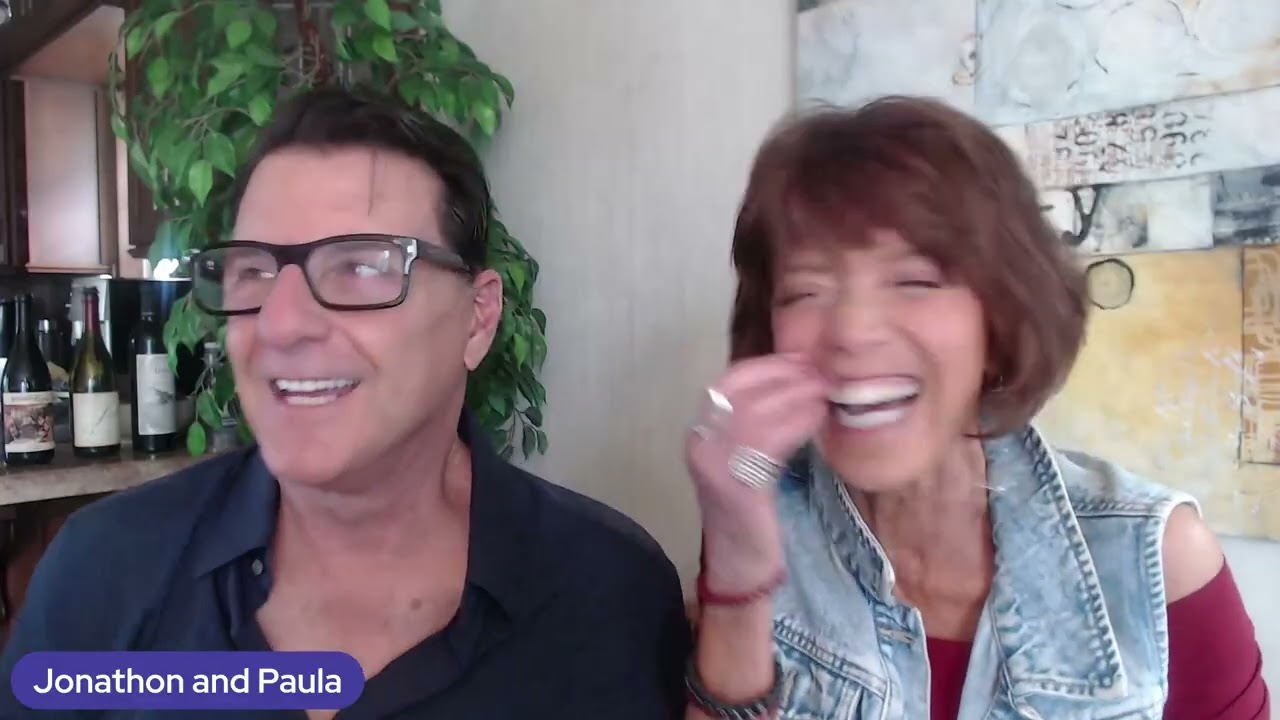
Video summary
The video addresses the ongoing debate regarding financial expectations during dating, specifically questioning whether men should be expected to pay for everything. The hosts argue that while traditional norms suggested men covered all costs because they were the sole earners in the past, this dynamic is less relevant today given that many people over sixty live on fixed incomes and lack significant disposable wealth. They emphasize that treating every date as a financial obligation can create unnecessary pressure and conflict, suggesting instead that couples should have open conversations about money before meeting to ensure they are on the same page. The hosts contend that assuming a partner will pay without discussion is just as problematic as expecting a woman to pay, noting that such unspoken expectations often lead to misunderstandings and premature rejection of potential partners.
A key example shared involves a personal story where one host initially felt confused when his date insisted on paying for drinks, fearing it indicated a lack of funds. However, the situation turned positive when she framed her offer as an act of generosity rather than an obligation, which signaled to him that she was a true partner. This interaction highlights the hosts' belief that financial contributions should stem from a heart of generosity rather than rigid gender roles or societal "shoulds." They critique modern coaching rhetoric that ties feminine energy to receiving financial support, arguing instead that one's ability to be in their authentic self should not depend on another person's wallet. The discussion underscores that while some may desire a partner who can provide abundantly, the quality of the relationship and the spirit of reciprocity are far more important than who holds the credit card.
Ultimately, the hosts conclude that there is no single right answer for everyone, but what works best for them is a system of taking turns and treating each other based on their current financial situations and levels of abundance. They explain that after several dates, they transitioned to splitting costs equally using an app, while still maintaining the option to treat one another as acts of love. They acknowledge that in cases of a significant income disparity, the person with more resources might naturally contribute more, but this should be a conscious choice rather than a default expectation. The video ends by urging viewers to prioritize clear communication about finances early on, as avoiding these hard conversations can lead to resentment and conflict later in the relationship, whereas honesty allows both parties to make informed choices about who they want to date.
Read the full video transcript
Should men expect to pay for everything?
That's going to be our conversation
today. So Paula, should men expect to
pay for everything when it comes to
dating?
>> Maybe.
>> What maybe?
But that's not what we talked about
earlier.
>> [laughter]
>> Likely not, but I think it is worthy of
a conversation.
>> Okay, so let's talk about this because
this is a topic that comes up and I
think it's uniquely different for those
of us that are in mid life and I'm going
to say for those of us over 60 where
many people are on a fixed income,
they're not, you know, as flush as they
were in their 20s, 30s, 40s, or even
50s. So I think I I want to look at this
at a couple different lenses. So
traditionally it's always been men paid,
but that was in a time when men earned
all the money, right?
>> Yeah, I and and women didn't earn any
money. So there's that.
>> So we got a fly here.
>> [laughter]
>> But you know, I I would say that women,
I mean on some level, I'd say on an
instinctual level, women might expect
men to pay.
>> Absolutely and I can't tell you how many
forums and groups that I belong to that
talk about that very specific thing and
how
women will reject a man who doesn't pay.
>> They'll just reject him flat
>> It's it is a common
area of malcontent.
>> Yeah, I would say certainly I've heard
I've seen so many comments related to
oh, it was such an ick, he wanted me to
split the bill. You know, it was such an
ick that
you know, he wanted to split coffee, you
know, that sort of thing.
>> want to, you know, or not even like just
he got his coffee and then I got mine.
>> So so but when someone says he expected
me to to split the bill, isn't that an
expectation from another?
>> It's no different from the expectation
of the woman wanting the man to pay for
the bill.
It's an expectation, period.
>> No, but if you're if you're going at it
without any conversation before you're
ever meeting, we operate with a lot of
assumptions when stating. It's assumed
man's going to pay, you know? So, I I
know a dating coach who says a man isn't
raised right if he didn't pay and a
woman isn't raised right if she didn't
offer to pay.
>> Yes.
>> So, so what This is the confusing thing
is that most people don't talk about
this before they ever meet.
>> Certainly not on a first date and that's
where the assumptions come into play.
>> Yeah, and again, traditionally men are
expected to pay and yet there's so much
discord out there centered around that
the man asked me to split the bill and
there was an offense to it and I'll
never see that guy again. And maybe that
could have been resolved with a
conversation in the very beginning.
>> Well, so it it brings us to the question
of why would you never see that person
again? Are you expecting them to pay for
everything?
And where does that come from? Like I
know some women who are desperate.
Desperate and
>> Financially speaking?
>> Financially speaking and the problem
with that is that whoever they're dating
now becomes a fantasy reality, you know,
a fantasy
a rescue fantasy.
>> Yeah, rescue fantasy. And by the way,
for that person, whether it's a man or
woman that expects the other person to,
you know, contribute substantially to
their life, if they never get that
person, they have to take care of their
own red wagon. Yeah, anyway. So, you
know, and and here's the thing, I'm not
here to And by the way, what we're
sharing right now is our opinion. This
is not a statement in fact. I'm not even
suggesting there's a right or wrong in
this. This is merely a conversation from
both our vantage points because I know
there are plenty of women who are very
much expectant
that the man pays for everything or pays
for the majority of everything.
In our relationship that's quite a bit
different though.
>> Oh, yes.
>> And
>> And I don't think
>> oh, yes. No, no, you said that like
there's something wrong.
>> This was a conversation we had from the
get-go.
>> From the very first conversation.
>> I will
endeavor to share that you know, you and
I had this conversation because I came
from that world of
traditional the man should pay
and and you know, certainly on a first
date they should offer.
You know, and it there was a lot of
shoulds. There was a lot of shoulds.
>> What they say about shoulds?
>> And yeah, and you
um
brought me over to the dark side.
>> [laughter]
>> I think I brought you to the light. So
in in just to give you some context when
before we had our first date, we had a
3-hour telephone call. Turns out about 2
hours into the call we had mutual
friends. So we had this kind of I think
that carried the conversation longer
because of that. And but I said I well,
first off I said can we not treat the
first we have a fly here. Can we Can we
not treat the first meeting as a date?
Can we just be two people meeting and
throw out all the pretense and
expectations around dating particularly
around gender expectations whether a man
or woman.
And in that I I told her that my
philosophy in dating is to take turns
with one another. It's not splitting the
bill, but I like to take turns.
Um
>> Well, that's when we got into you know,
what are we really talking about here?
And
I will say that my first reaction to you
even having this conversation
was
you know, oh my gosh, does he have no
money? Like I went I went straight
there.
And you know, you were just making a
case in point. There was that, but I
made assumptions around this that were
not so. And it's so ingrained in us to
think that if this doesn't happen, if A
doesn't happen, then B or C.
>> Yeah.
>> You know, and the problem with going
there is assumption.
And the reality of it is I believe that
you that that no two people are um
have a given situation that's
predictable.
>> Yeah, I mean, here's the thing. What
works for us doesn't necessarily mean it
works for everyone else. We're just
sharing a perspective so you can make
your own choices. And really, I think in
the topic of money, given that money is
the second most common reason for
divorce, I think it's naive not to be on
the same page when it comes to money.
What financial agreements do you create
with one another to have a healthy
relationship? Now, I want to tell you
why I shared that with you before our
first date.
>> Yeah.
>> So, um I get this goes back about 12
years ago. I had a first date with a
woman. Um our first date was Halloween,
by the way.
>> Oh, fun.
>> And we got dressed up and we went to a
total dive bar.
And and it was really fun and um and I
remember paying I remember walking up to
the bartender to get a round of drinks.
And usually I just get my credit card. I
I just kind of naturally take charge for
the first date kind of thing.
But I I looks like I I I guess I gave
him cash and what happened was uh when
it was time for another round of drinks,
she pulls out her credit card and says,
"I've got it."
>> Okay.
>> And I said, "No, no, I've got it." And
she goes, "No, I've got it." And I go,
"No, I've got it." Now, some people
would argue that we got into a masculine
pissing match, that she wasn't in her
feminine. You know, I know a lot of
feminine energy coaches would say that
she was in her masculine, but what she
did next floored the hell out of me.
She put her hand on my arm, looked me
straight in the eyes, and said,
"Jonathan, I really appreciated that you
treated for the first round of drinks.
Will you allow me to show you my
appreciation by treating you? Can you
receive?"
And I was like, first off, I'm I'm I'm
in the Twilight Zone right now because
I've never had a woman operate that way.
And in that very moment, I go, "Oh my
god, she's partnership material." Like,
I didn't even
That was all I needed to know because
she operated from a place of generosity,
not expectation. So, when we think of
the title of this video, should and
expect, I think those are two dangerous
words in the English language when we
come from something should be a certain
way, and we expect it a certain way.
>> So,
um I we can maybe table this part of the
conversation here for a moment cuz I
know you want to get to some of these
points, but it does bring up the problem
with, you know,
masculine divine masculine coaches,
feminine energy
coaching.
And, you know, the idea that we can't be
in our feminine energy
if
the man does not provide.
>> Yeah.
>> And
Okay, I said to you something though
initially, and I think and I think you
actually agreed with me, which was
>> Okay.
>> that
I can be in my feminine energy whether
somebody's providing or not.
>> You can be in your feminine energy
whether he's in his masculine or his
feminine energy.
>> a choice.
>> Yes, exactly.
>> And for me, I read some of this stuff,
and I think to myself, why would my
feminine energy have anything to do with
how he
offers himself up?
>> Yeah.
>> So, you know, I just want to thank
>> That's why I stuck my finger down my
throat because I I vomit when I read so
much of the content and rhetoric
centered around this. And then when you
and you bring it back up to paying and
why this is such an important
conversation. First off, as I said
earlier in this conversation, for most
of us in our 60s, many people are on a
fixed income. There isn't a lot of extra
disposable income to support another
person. Basically, by the way, when you
look at America, 80% of Americans still
live relatively paycheck to paycheck and
don't have a significant amount of extra
resources to even cover them if they're
out of work for a few months. So, I
think it's naive to treat this
cavalierly. Now, some people will say,
"Well, Jonathan, if the man does the
asking, he should pay."
Well, when it comes to first date, men
take the initiative
because it's expected of us to initiate
where we're going to go. That doesn't
It's not even Again, this comes back to
I don't believe the first time you meet
someone it's a date, it's a meeting.
Because you don't even know if you want
to date this person. So, why is a man
expected to Now, some will argue, "Well,
women spend more money getting dressed
up." And
>> Okay, but I get dressed up if I were
going out with my girlfriend.
>> I know that argument pisses me off, you
know, like
>> Oh, I did my hair and I put
>> did I spent $100 for a ham.
>> Yeah.
>> Well, I've seen women go on a date and
walk out within 5 minutes, you know, you
Did he get the Did he get the market
value of all that dressed up? So, then
there's the argument women make or men
make more money than women.
>> So, I think it's interesting that people
in general now, in this current state of
affairs, let's just say, you know, human
pair bonding, is that um
the idea that we are, you know, we come
in I I used to say this to my kids.
>> Yeah.
>> We we come into this world with with one
very important thing. We go out in the
world with one very important thing, and
that's our word.
>> Mhm.
>> You know?
>> Okay.
>> But to expand on it, it's also our
virtues, you know?
>> Our values.
>> our honesty, our Yeah, all of that.
>> And but at the end of the day, when you
put us in a pine coffin, you know, the
reality is there's nothing you take with
you other than
who you were in this world. It's not
what you paid for in terms of
>> Yes.
>> And And I think what we're looking for
in human pair bonding today is an
ability to communicate with our
significant other, an ability to have
partnership, an ability for reciprocity
and generosity that comes from the
heart.
And And in that, because we're all
looking for that, there isn't anybody
out there I think that's like, "Yeah, I
want a complete, you know, dickhead."
>> Yeah, yeah, [laughter] yeah, yeah. And
by the way, you can have someone who
pays for everything and be an absolute
and you can have the kindest
man in the world, but he's struggling
financially. Which one do you want to
choose? You know, here's where I I I
want to put a pinhead because
if two adults get together in a
relationship,
you know, one person's wallet should not
determine the success
>> Mhm.
>> of the relationship. And we start with
the very first date. So, it's such an
ick when the guy says, "Let's split it."
And maybe had a valid reason for it. You
know, uh and then I get I see so much
criticism if it's a coffee date.
>> Yeah.
>> As if it that's something By the way,
our first date was a coffee date.
>> Technically, yeah.
>> Technically, it was in a nice restaurant
and overlooking the marina at a hotel.
>> Yeah, we
Yeah, we We up Yeah, we had brunch. Uh
>> And I lost my wallet.
>> Yeah, [laughter] you lost your wallet.
>> did lose my wallet.
>> You didn't lose it, you'd forgotten your
car. I think you planned that. By the
way, I was going to treat anyway. But
you know what I also say is I And I said
this to you, um
can I treat this time? Is that okay with
you?
>> Mhm.
>> Because I I I wanted it to come from an
understanding that this isn't coming
from a place of expectation and
obligation because to me, treating is a
play comes from a place of generosity.
And which is why I now I understand why
a lot of women want that. They want to
see is the man generous? Is he
traditional? Does he signal intent?
Um you know, does it it might allow the
woman to feel more cared for. I can
understand all that.
>> Absolutely.
>> But then But reciprocity is doing the
same for him in my book.
>> So,
you and I had this discussion early on
also that, you know, I believe
it it And And we were talking about this
from the standpoint of courtship, right?
>> And um I you know, I think the reality
of courtship today is that we're looking
for men who are um that they lead to a
certain extent. That doesn't necessarily
mean they pay, but that they lead us,
that they can strongly say, "I'm really
digging you. I'd like to explore this
further." That they can say, "Hey, you
know, And I'm not talking like right
away, but you know, maybe they plan a
weekend, you know.
>> Well, so
>> And And I get not everyone is a right
away kind of person.
>> No, but what I'm But here's the thing.
If you've gone out with someone four,
five, or six times, there must be so If
you're doing it with intent. In other
words, if you're not doing it to get
some sort of physical conquest, if you
actually intend to you want a
significant relationship, then I think
there's nothing wrong with and I think a
man
and a woman should both equally say,
"Hey, I like you. I'd like to explore
getting to know you at a deeper level."
This is what's often times missing in
these conversations. There's so much
fear around going deeper. We weren't
afraid to have this conversation before
we ever met. We had a brief
conversation. Then I want to say by the
time we were physically intimate, maybe
it was before that. We talked about
where we stood financially. In other
words, kind of gave a picture of our net
worth and where our income comes in and
how we plan for the future. We had these
conversations because quite frankly, it
is so naive not to have these
conversations. And by the way, please
forgive the the the illustration I'm
about to say, but before that penis goes
inside the vagina, which is my rhetoric,
then this these are important
conversations to have.
>> Yeah.
>> And I don't know why there's so much
res-
What's the word? Res- When you're trying
to resist something.
Not resistance. Uh
Oh, god. It's an R word. Anyway.
Re- reluctance. We'll say reluctance to
have these conversations.
>> Mhm.
>> So
So, coming back to should men expect to
pay everything? I mean, flat out, I
don't think that should be an
expectation unless you're dating someone
who has significant abundance.
Significant abundance. So
>> Somebody up at the top said
>> Here, I'll do it.
>> Duh, yes, they should.
>> Duh, [laughter] yes, they should. Okay.
Um you know, again, that's kind of but
from a man's perspective, I don't want
to be with someone who treats it as an
expectation, as if it's an obligation,
because then you might as well say then
I'm I I can have sex whenever I want.
>> So, there's
>> Now there's the I'm not saying that's
the exact same argument, but
>> There's but there's a whole camp out
there that
believes that the man should pay and
that if he's not, he's not allowing you
to be in your feminine receiving mode.
First of all, and that and the ick comes
from that, you know, is he just um
uh
you know, wanting to just
I mean, he's he maybe he's got a hundred
dates, you know, and and and you're just
not that special.
>> All right, well well wait
>> And that's all right. Hey, I didn't make
this up. This is the camp that I
>> Okay, by the way, can we agree that 99
out of a hundred times in today's
environment, we are going out on dates
with total strangers?
>> Absolutely.
>> most of the time. Maybe let's just say
nine out of ten times. I'll say nine out
of ten times. Sure there's people that
meet out in the wild and that sort of
thing. And some people will argue that a
coffee date represents low effort and no
interest. Well, first off, it might take
being with someone two or three or four
times to develop interest.
>> Yeah.
>> Um I've had dates where we walked on the
beach. I've had dates where it's been in
a park. I've had dates I'm like, why or
excuse me, I've had first meetings, let
me clarify that. First meetings in
places like that because you're just
doing the sniff test. You're doing what
two dogs do when you know, when we walk
the beach and two dogs come up and they
go
>> [laughter]
>> Oh, what's your perfume, by the way?
So, that's what a first meeting is. It's
a sniff test to see if there's even your
pheromones align with one another. I
think the problem is when we create
these grand expectations. Now, I know
some people will argue that what we're
sharing is absolutely wrong.
>> And it goes against everything they've
>> Everything they've ever learned and
taught and some people will say we
absolutely agree with you. I'm here to
say you've got to make those choices for
yourself. This isn't we're just sharing
with you our perspective and I'll I want
to go a little bit further.
Our first meeting, I treated.
Um the second time we got together, we
just had drinks at your place, so it
didn't count as anything. The third time
we got together, I said I want to take
you out on a fancy date.
>> Yes.
>> And by our fifth date, uh you took me to
a really expensive a really high-end
sushi place. I mean, it's probably
commensurate to the the dinner we had a
few days before. And ever since then,
we've taken turns and now that we live
together, we use an app called
Splitwise. We actually we contribute
equally to the rent.
>> Yeah, the home is, you know,
>> The home is kind of like um we we split
that equally. The The app is basically
you put in the amount and you you settle
up at the end of the month kind of
thing.
Um
but then there are nights where I go,
"Hey, sweetheart, this is my treat."
>> And I do the same.
>> And she does the same. That's when we
show our generosity.
Um and this is what works for us. I
mean, it may not work for everybody, but
this is what works for us and what feels
fair. Now, by the way, we are pretty
close to equal from our financial
resources. She has a little bit more in
the bank than I do. I generate a little
bit more income on a on a on a
day-to-day basis than she does. So,
we're commensurately close. I know this
gets to be radically challenging when
there's a gigantic mismatch. And and I
prefer the person who makes the most
contributes the most.
>> Do you? Really?
>> Who makes the most.
>> You think the person who makes the most
should contribute more?
>> Yeah, the person like I you know, I was
thinking like my my my wealthy friend,
you know, he makes the most, he
contributes the most. You know, but but
if but if you have for example, if you
have someone who makes a quarter million
dollars a year and someone who makes
eighty-thousand dollars a year. The
quarter million
>> But the quarter of a million dollar
person might have been divorced, owe
someone alimony and child support. I
mean, you don't know what
>> Well, then taking all that into
consideration.
>> Then what? You're going to sit there and
do, you know, assets and liabilities? I
think generosity comes from the heart.
>> All right, let's say somebody makes a
half a million dollars a year and
doesn't have alimony and all that
and he's dating someone who makes
eighty-thousand a year.
>> Yes.
>> And by the way, if it's a woman who
makes you you have a friend who woman
who makes close to a million dollars a
year.
>> Yeah, so but here's the question.
Does any of that really matter or is it
a matter of what is your
um spirit of generosity in the
relationship?
>> There's no doubt.
>> What is your sense of what you want to
what you want to contribute
into the relationship, not
only your emotions and your heart and
those things, but you know,
do you put your money where where your
mouth is kind of thing?
>> So, I I said what I said a moment ago
because if I had twenty million in the
bank, I'd cover everything for us
because I have the abundance.
>> Sure.
>> I think the person who has abundance and
comes from that place probably and the
other person doesn't have it, they
should contribute the most. That's where
I'm coming from.
So, coming back and we're going to put a
bow on this.
Um should men expect to pay everything?
I don't believe that's the case that
should expect everything. But I
certainly uh subscribe to um
you know, I think traditionally we're
raised uh for initially making that
investment, but I think right off the
bat have a conversation, see where two
people at because if you're not on the
same page, you're going to have conflict
later on down the road.
>> So, at what point do you feel like that
conversation needs to be had?
>> The minute [clears throat] you start to
spend money.
>> So
>> Maybe before you meet. By the way, I I
subscribe to having hard conversations
before you meet. You know, why what
here's the thing. I hear too many people
complain after the fact that they found
out all these things that they would
have said no to right from the very
beginning. All right, those are our
thoughts. We'd like to hear your
thoughts. Post a comment below. Let us
know what you thought about this, if it
resonates with you or not. As always, if
you find value in these videos, please
hit that like button. Please share this
video. Please subscribe to the channel.
Hit that notification bell so you can be
notified of new videos. And if you want
to connect with us, hey, schedule
there's a link below. Schedule a
discovery call to see if working with a
coach