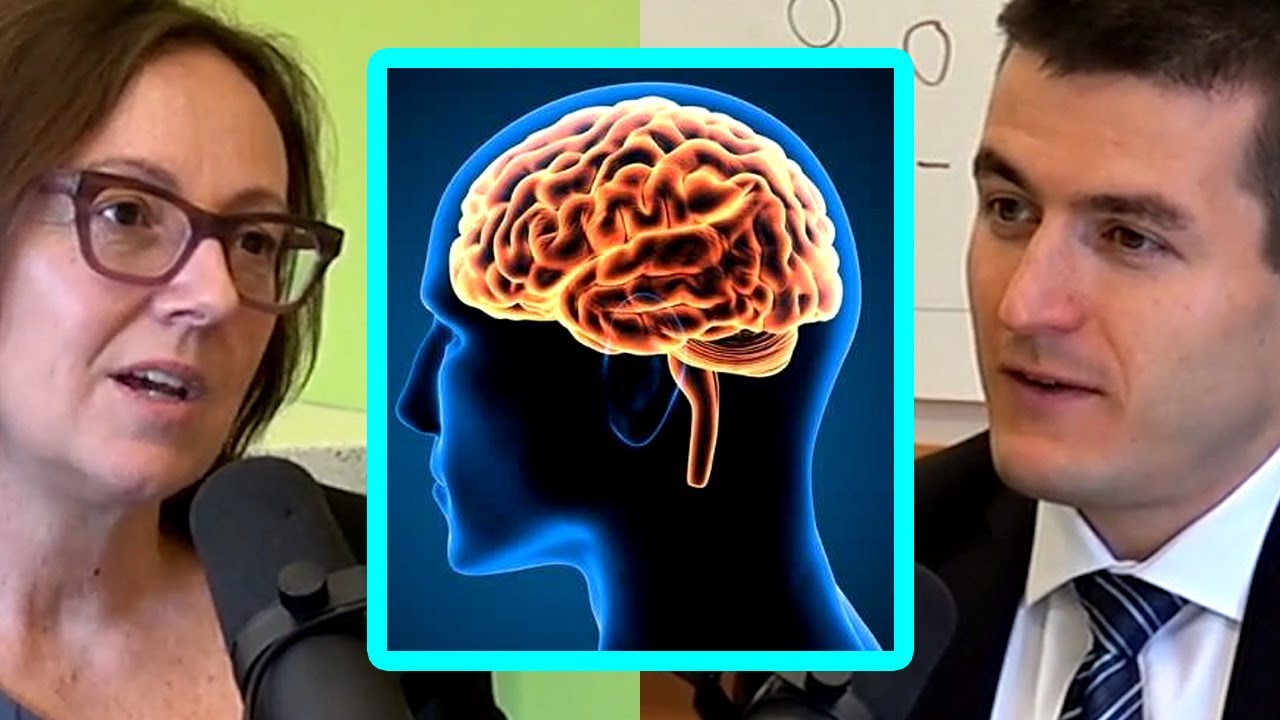
Human Brain Development - Paola Arlotta, Professor, Harvard Stem Cell Institute | AI Podcast Clips
Watch on YouTubeVideo summary
The development of the human brain begins in the womb with the formation of a simple structure known as the neural tube, which spans from head to tail and contains stem cell-like cells capable of generating all other brain tissues alongside muscles, hearts, and blood vessels. During the initial months of gestation, these relatively homogeneous multipotent stem cells differentiate into diverse progenitors that give rise to specific neuronal and non-neuronal cell types. This embryonic phase is essentially a period of constructing biological "bricks," where cells are not only created but also arranged into precise structures like regions of the brain and connections between neurons. The process relies on a highly choreographed sequence where nerve cells (neurons) are produced first, followed later by supportive glial cells, because their specific spatial arrangement is critical for proper function; developing these cells in isolation within a dish yields different results than when they develop alongside one another under the influence of various signaling molecules. Beyond simple chemical signals, mechanical forces play an equally vital role in shaping brain development through what Professor Paola Arlotta describes as an incredibly complex biological process involving both chemistry and physics. As the neural tube expands to form the primordium of the brain at the front of the embryo, cells experience physical pressures such as bending and stretching that alter their environment and gene expression programs. These mechanical cues tell a cell its location—whether it is being squished or stretched—and influence its fate just as chemical signals do. Consequently, biology operates less like a rigid machine with centralized control and more like a "gooey mess" where cells respond to dynamic physical forces, allowing for the fine-tuning of gene expression over millions of years of evolution that ensures every baby builds a functional brain despite minor variations. The transcript highlights significant differences between natural development in vivo versus artificial attempts to print or grow brains using identical building blocks. While one might assume that starting with the same cells would result in an identical final product, Professor Arlotta explains that artificially printed organs often fail because they lack the specific developmental environment and mechanical context present during embryogenesis. In nature, there is no high-level dictator killing off a cell built incorrectly; instead, evolution has optimized a system where many possibilities exist but are guided toward functional outcomes suitable for each species. For instance, while lizards, chickens, and humans all build brains from stem cells with similar potential, the resulting structures differ significantly to serve the specific needs and well-being of each organism, demonstrating that development is not a dictatorship but a flexible yet highly regulated process where alternative routes are taken based on environmental context. Development continues long after birth, extending through childhood and into early adulthood as part of an ongoing maturation process rather than a static event concluding at delivery. After the initial construction phase ends around birth, new cell types continue to be generated, with a particularly notable example being myelination—the creation of insulation around neuronal axons that allows electrical signals to travel rapidly. In humans, this critical process begins in early childhood but does not reach completion until approximately 25 to 30 years old when mature oligodendrocytes fully wrap the axons in myelin. This continuous phase involves constant tweaking and additions driven both by internal biological timelines and external responses to experiences and behaviors, illustrating that brain development is a lifelong journey of refinement rather than a single event confined to prenatal months or early infancy.
Read the full video transcript
[Music]
do you think you can maybe talk through
the first few months and then on to the
first 20 years and then for the rest of
their lives
what is the development of the human
brain look like what are the different
stages yeah at the beginning you have to
build a brain right and the brain is
made of cells what's the very beginning
which beginning I were talking in the
embryo as the embryo is developing in
the womb in addition to making all of
the other tissues of the embryo the
muscle the heart the blood the embryo is
also building the brain and it builds
from a very simple structure called the
neural tube which is basically nothing
but a tube of cells that spans sort of
the length of the embryo from the head
all the way to the tail let's say of the
embryo and then over in human beings
over many months of gestation from that
neural tube which contains stem
cell-like cells of the brain you will
make many many other building blocks of
the brain so all of the other cell types
there are many many different types of
cells in the brain that will form
specific structures of the brain so you
can think about embryonic development of
the brain is just the time in which you
are making the building blocks the cells
at the stem cells relatively homogeneous
like uniform or they all different okay
good question it's exactly how it works
you start with a more homogeneous
perhaps more multipotent type of stem
cell that multi important it means that
it can it has the potential to make many
many different types of other cells and
then with time these progenitors become
more heterogeneous which means more
diverse there are going to be many
different types of the stem cells and
also they will give rise to progeny to
other cells that are not stem cells that
are specific cells of the brain that are
very different from the mothers
themselves
and now you think about this process of
making cells from the stem cells over
many many months of development for
humans and what you're doing you're
building the cells they physically make
the brain and then you arrange them in
specific structures that are present in
the final brain so you can think about
the embryonic development of the brain
as the time where you're building the
bricks you're putting the bricks
together to form buildings structures
regions of the brain and where you make
the connections between these many
different type of cells especially nerve
cells neurons right that transmit action
potentials and electricity I've heard
you also says somewhere I think correct
me if I'm wrong that the order of the
way this builds matters oh yes if you
are an engineer and you think think
about development you can think of it as
well I could also take all the cells and
bring them all together into a brain in
the end but development is much more
than that so the cells are made in a
very specific order that subserve the
final product that you need to get in so
for example all of the nerve cells the
neurons are made first in all of the
supportive cells of the neurons like the
glia is made later and there is a reason
for that because they have to assemble
together in specific ways but you also
may say well why don't we just put them
all together in the end it's because as
they develop next to each other they
influence their own development so it's
a different thing for a glia to be made
alone in a dish then a glia be made in a
glia style be made in a developing
embryo with all these other cells around
it that produce all these other signals
first of all that's mind-blowing that
this development process from my
perspective in artificial intelligence
you often think of how incredible the
final product is the final product the
brain but you just you're making me
realize that the final product is just
is the the beautiful thing is the actual
development and development process do
we know the code that drives that the
development yeah do we have any sense
first of all thank you for saying that
it's really the formation of the brain
it's really it's development this
incredibly choreograph dance that
happens the same way every time each one
of us builds the brain right and that
builds an organ that allows us to do
what we're doing today right yeah that
is mind blowing and this is why
developmental neurobiologists never get
tired in that now you're asking about
the code what drives this how is this
done well it's you know millions of
years of evolution of really fine-tuning
gene expression programs that allow
certain cells to be made at a certain
time and to be in to become a certain
you know cell type but also mechanical
forces of pressure bending this embryo
is not just it will not stay a tube this
this brain for very long at some point
is tube in the front of the of the
embryo will expand to make the
primordium of the brain right now they
the forces that control that these cells
feel and this is another beautiful thing
at the very force that they feel which
is different from a week before a week
ago will tell the cell oh you're being
squished in a certain way begin to
produce these new genes because now you
are at the corner or you are you know in
a stretch of cells or whatever it is and
there so that mechanical physical force
shapes the fate of the cell as well so
nala chemical is also McCann mechanical
so from my perspective biology is this
incredibly complex mess gooey mess so
you're seeing mechanical forces how
different is a like a computer or any
kind of mechanical machine that we
humans build and the biological systems
have you been because you've worked a
lot with biological systems are they as
much of a mess as it seems
from our perspective of an engineer
mechanical engineer yeah they are much
more prone to taking alternative routes
right so if you we go back to printing a
brain versus developing a brain of
course if you print a brain given that
you start with the same building blocks
the same cells you could potentially
print it the same way every time but
that final brain may not work the same
way as a brain built during development
does because the build very build very
same building blocks that you're using
developed in a completely different
environment right there was not the
environment of the brain therefore
they're going to be different just by
definition so if you instead use
development to be able to say a brain
organ order which maybe we'll be talking
about and if you're sure things are
fascinating yes so if you if you use
processes of of development then you
when you watch it you can see that
sometime things can go wrong in some
organ weights and by wrong I mean
different one organ way from the next
well if you think about that embryo it
always goes right so it's this
development it's for as complexity as it
is every time a baby is born has you
know with very few exceptions so the
brain is like the next baby but it's not
the same if you develop it in a dish and
first of all is we don't even develop a
brain you develop something much simpler
in the dish but there are more options
for building things differently which
really tells you the evolution as has
played a really tight game here for how
in the end the brain is built in vivo so
just a quick may be dumb question but it
seems like this is not the building
process is not a dictatorship it seems
like there's not a centralized like
high-level mechanism that says ok this
cell built itself the wrong way I'm
going to kill it it seems like it's
there's a really strong
mechanism is that is that in your sense
for there are a lot of there are a lot
of possibilities right and if you think
about for example different species
building their brain each brain is a
little bit different so the brain of a
lizard is very different from that of a
chicken from that of a you know one of
us and so on and so forth and still is a
brain but it was built differently if
starting from stem cells that pretty
much had the same potential
but in the end evolution builds
different brains in different species
because that serves in a way the purpose
of the species and the well-being of
that organism and so there are many
possibilities but then there is a way
and you were talking about a code nobody
knows what the entire code of
development is of course we don't we
know bits and bits and pieces of very
specific aspects of development of the
brain what genes are involved to make a
certain cell types out those two cells
interact to make the next level
structure that we might know but the
entirety of it oh it's so well control
it's really mind-blowing so in the first
two months in the embryo or whatever the
first few weeks so yeah the the building
blocks are constructed the actual the
the different regions of the brain I
guess in the the nervous system well
this continuous way longer than just the
first few months so over the the very
first in a few months you build a lot of
these cells but then there is continuous
building of new cell types all the way
through birth and then even post Natalie
you know I don't know if you ever heard
of myelin myelin is this sort of
insulation that is build around the
cables of the neurons so that the
electricity can go really fast the front
axons I guess the accidents are called
axons exactly and and so as human beings
we myelinate ourselves
post Natalie a kid in
a six-year-old kid has barely started
the process of making the mature
oligodendrocytes which are the cells
then eventually we'll wrap the accents
into myelin and this will continue
believe it or not until we are about you
know 2530 years old so there is a
continuous process of maturation and
tweaking and additions and and also in
response to what we do
you