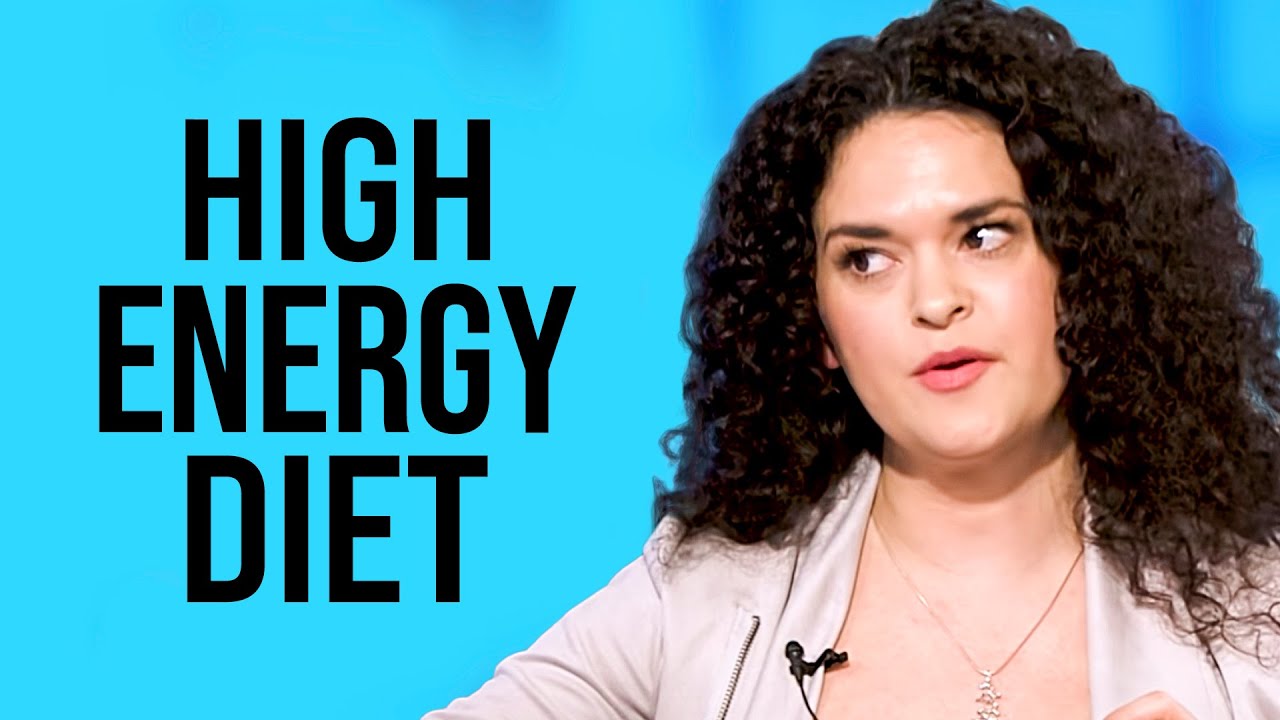
Video summary
Dr. Jolene Brighton, a naturopathic physician and best-selling author featured in major media outlets like Good Morning America and Forbes, shares her transformative journey from struggling with severe digestive issues as a teenager to becoming a leader in functional medicine. Her path began when doctors at age 17 dismissed her symptoms of reflux and vomiting as an eating disorder rather than investigating the *H. pylori* stomach infection she actually had. Rejecting lifelong proton pump inhibitors, Brighton researched how refined carbs and acidic foods exacerbated her condition, leading her to discover that food could modulate not only digestion but also mood and energy levels. This realization prompted her to leave a career in dentistry at age 21 to pursue higher education and nutrition science, driven by the belief that mindset is crucial for healing; she emphasizes on intake forms whether patients believe they can heal themselves as a predictor of success. Central to Brighton's philosophy is the concept of "food as communication," where every meal signals safety or danger to the body rather than just providing macronutrients. She explains that the gut, often called the second brain, was historically the first organ developed and remains fundamental for interacting with the environment. In her practice treating autoimmune conditions like PANDAS in her son, she utilizes high-quality produce such as cruciferous vegetables (broccoli, cauliflower) to support liver detoxification via sulforaphane, which helps metabolize estrogen into healthy pathways. She also advocates for specific fats and proteins, recommending cold-water fish smaller than 12 inches to avoid mercury exposure, grass-fed organ meats, and avoiding chemically processed foods like hydrogenated oils or GMOs without rigorous testing. Brighton stresses that while inflammation is necessary for immune function, chronic autoimmunity requires dietary intervention to calm the system, noting that individual responses vary significantly between partners regarding gluten sensitivity. The discussion extends deeply into hormonal health, particularly concerning birth control pills and their impact on mate selection through Major Histocompatibility Complex (MHC) genes. Brighton explains that synthetic hormones in contraceptives can alter a woman's sense of smell and visual preferences, causing her to select mates who are genetically similar rather than dissimilar, which evolutionarily reduces genetic diversity needed for robust offspring immune systems. Research cited indicates that women on the pill may prefer faces appearing more feminine while prioritizing intelligence over looks, whereas natural cycling women prioritize physical traits linked to MHC compatibility. Furthermore, she highlights a concerning correlation between starting hormonal birth control and increased suicide risk in teenagers within two months, urging clinicians to conduct mental health screenings before prescribing these medications rather than dismissing mood symptoms as merely "in the head." Brighton concludes by advocating for a holistic approach that integrates nutrition with emotional well-being, asserting that loving oneself fiercely and maintaining boundaries are essential prerequisites for physical healing. She challenges listeners to rewrite limiting narratives inherited from childhood or abusive environments, viewing traits like grit not as fixed personality types but as muscles that can be exercised through diet and mindset shifts. Her ultimate message is one of empowerment: women must validate their own experiences with science rather than accepting societal programming that tells them they are not worthy of love or health care access. By combining rigorous nutritional protocols—such as using turmeric for inflammation—with a supportive community and self-compassion, individuals can navigate complex health issues like autoimmune disorders and hormonal dysregulation to achieve a state of wholeness.
Read the full video transcript
and so loving yourself fiercely and
never apologizing for the boundaries you
need to maintain so that you can be your
whole self because that's what we need
more people in this world really
standing in their power so we can get
the change that we absolutely need
everyone welcome to hell theory
today's guest is dr. Jolene Brighton
she's a naturopathic physician and
functional medicine practitioner who has
been featured by countless high-profile
media outlets including Good Morning
America
the New York Post The Huffington Post
cosmopolitan and Forbes which come as no
surprise given that she is a
best-selling author who's racked up an
incredible list of credentials that
includes degrees in chemistry nutrition
science and clinical nutrition the focus
on nutrition I found pretty interesting
what was it that drew you to nutrition
in such a big way oh gosh it really
started with my own personal journey
like so many of us right so I was a kid
who was pretty sick a lot of digestive
issues and it was a decade of struggling
I would literally vomit after most meals
because I had such bad reflux and it got
to the point where doctors were like
well we think she has an eating disorder
or we think she's seeking you at this
point so at this point where they
decided to kind of throw in the towel I
was around 12 12 years old and yeah so
I'd been struggling for quite some time
and it wasn't until I was 17 that h
pylori had been discovered and finally
made its way into clinical practice and
so my doctor was like you have we need
to test you lo and behold I had this
stomach infection in the entire time and
so in that there's a whole course of
treatment you have to go through
antibiotics and I asked my doctor about
changing my diet and he actually said to
me you know that doesn't do anything for
hurt burn it's not going to help you at
all you need to take this proton pump
inhibitor for the rest of your life and
at that time I'm like okay hold up
firstly I'm 17 I'm not going to take a
pill every day then I get on birth
control so that's kind of funny but in
mine I also was asking my doctor about
like
you know I started doing some research
I'm like it's not been studied in
someone as young as me and also the
research wasn't done on women it was
done on men and I started to make this
connection that like if I ate refined
carbs and a bunch of acidic foods like
tomato sauce and drinking orange juice
and like lots of sugar I would get
really about a heartburn and feel awful
so I started using food to really
modulate my own symptoms and it was
through that that I figured out like if
there's a lot of power in food in terms
of how it was not only affecting my
digestion how I was affecting my mood my
energy and so at this time I was
actually a dental assistant so I started
in dentistry at 16 years old studying
them in the street yeah this is the
books backstory most people don't know
about I dropped out of high school
started working in a dental office high
school I was really bored I was gonna
say bored out of your mind boy guessing
at some point you had to start feeling
pretty isolated if the doctors are like
there's nothing we can do yeah you have
an eating disorder
that would get pretty hard to deal with
totally so you know there was there was
boredom I was bullied a lot but it was
also that like I just bullied around
well my hair was one thing I also grew
up in poverty so I didn't have the shoes
I didn't have the this to see sweatshirt
that everybody had I couldn't go on the
trips that my friends went on even field
trips and you know the other part of it
is that I grew up in a household where I
was told like I was quite frankly told I
better find a man to marry to take care
of me because I'm not smart enough to go
to college and I'm not actually smart
enough to do anything else and so it was
a lot of that I'm like why stay in high
school I'm not gonna be able to go to
college I don't have money to go to
college and I my parents were telling me
you have to find a job and then you're
gonna have to find a man like this is
your formula for success and that's why
I ended up going into dentistry because
I could be self-sustainable and I could
actually take care of myself so this
whole idea of like finding a man to take
care of me I was silently rejecting that
it's not gonna happen that's not in my
jam so yeah I went into dentistry I was
always fascinated with health I'm really
great with my hands
and I very much you know saw this as an
opportunity so I found a pathway in
which I could become a registered dental
assistant so my first medical license
was at age 18 and it wasn't until I
moved to the Central Coast of California
just because I wanted to live by the
beach that I was working for two
dentists who pulled me in their office
one day I thought I was in trouble and
they were like what are you doing with
your life
I'm like what do you mean like I'm a
registered dental assistant I've
accomplished my goal and they're like
you need to go to college like you're
too smart to be doing this that was the
first time anybody really had sat me
down I mean like you have to go to
college like you're just you're too
smart you're wasting your life and at
that point I'm 21 and I'm like I'm too
old to go back to college I'm too old to
go to college but then I did and Here I
am now and that's the you know winding
back story and I decided to study
nutrition because of my own journey that
is super interesting one so when you're
dropping out of high school are you
recognizing that you're bored and if
you're recognizing that you're bored why
did you think you were bored if you
didn't think you were smart mmm isn't
that weird so I mean as you're saying
that and framing that way isn't it weird
this like that we can compartmentalize
these things in our mind where I'm like
I'm so bored I'm in AP classes and I
don't have to study and I'm bored and
I'm not saying that to be braggy I think
that's kind of that's an issue with the
high school system overall and so I
actually I left high school became and I
went into homeschooling and in a matter
of months I had accumulated enough
credits to be able to graduate but they
said to me you can't like in the state
of California we can't allow you to
graduate until you're 17 and a half and
so at that point that's when I was like
well I'm just not doing anything anymore
and I ended up taking the California
proficiency exam so while I'm here i'ma
go hi I'm a high school graduate but
when I'm in any other state it's it's
knowledge a thing yeah
oh wow that's actually super interesting
did you have to get emancipated no I
didn't get emancipated and there's like
no way my parents would have fought me
tooth
now I could notify you yeah in a very
very abusive and very controlling
households and it was very much of like
women are basically meant there you're
here to serve men so to speak so no how
did you begin to rewrite that narrative
I love that you use that language
actually that's exactly that I use with
my patients all the time it's not these
are just stories right they're stories
that we've been told their stories that
we can choose to continue narrating or
we can choose to rewrite that and I
remember being around 7 was the first
time that I was like I think it's
smarter than my parents like in when I
don't I think what they're telling me is
not true now mind you I was born to two
teenagers so as I'm growing up they're
growing up and they're developing and
they can't help but repeat the patterns
that their parents had laid down for
them I mean I have a lot of compassion
for them although I don't have a
relationship with them because that's
the healthiest thing for me but in that
I was you know group in a really
religious household contradictions drive
my head brain crazy so and there were
some times that I would speak out of
turn and I'd be met with physical abuse
for saying that and I think a big part
of my superpower my strength is grit and
that's a muscle I've always exercised I
think that's important for people to
understand it's not you know your your
personality your mindset these traits
like you can actually work them just
like you work your physical body and I
think it's easier in health for people
to be like oh I'm gonna change my diet
I'm going to change my fitness routine
it is way more difficult to change your
mindset to change your outlook to call
yourself out on your own [ __ ] and
you have to I mean really that's like
the rocket fuel the secret sauce to
healing like if you want to be a whole
healed beam like your mindset is
everything they ask my patients this
actually like on our intake forms of
like do you believe you can heal do you
believe like you can achieve the things
that you're you're wanting to achieve
and who in your life supports you and if
you've got those three things in place I
know you're gonna be able to heal and I
see people when they have this support
when they're like laundry list of people
who can support me
they're making change in like six months
time any things that they've struggled
for sometimes you know decades with and
so you know I would say you know it's
going back to your question really like
starting at seven is when I started to
wake up and I very much believe that I
had to go through the childhood I had to
go to to to wake up faster like I was
here I'm here to do specific work in
this world and I had to wake up faster I
couldn't be lulled through people who
take care of me on everything being
handed to me I'm going through and then
having like the crisis at 30 like I had
to have my crisis early on and I
realized around 14 that I had to escape
my family and I had to escape all of
this and part of that had I had to
become very complacent in the religion
and so stopped speaking up and speak out
even though in my mind I was like I
don't agree with any of this but I need
to survive like and it's 16 that's when
I was really like I have to survive I
have to buckle down I have to get my
plan in order and share it with no one
so that I can make sure then I can do
what I need to do and then seventeen and
a half I believe is 17.5 his when my
parents got a divorce they decided to
separate after an escalation of extreme
physical violence and at that point
that's when I was like this is my out
and I had to go into raising my brother
and sister at that age thankfully I did
have that job and so you know there were
times where we would wake up and my mom
wouldn't be in the house and we wouldn't
know where she was for you know she
would just be traveling somewhere and I
had to pay the bills and get food and
make sure my community father and sister
got to school and you know with all of
that one tactic that has always helped
me it's not I would actually have my
entire catalog of things I wanted to
explore my brain and things I wanted to
spend thinking time about so I'd go in
and just go into my brain and while
people are talking to me just having my
thoughts making my plans just thinking
like and if this is a practice I still
hold today where I always carve out time
to have space to think and just have my
thinking time
and to not be in that constant state of
go yeah that is one good strategy to
that is a really rough way to grow up
obviously but it seems to have had some
pretty profound echoes in your life that
are wildly beneficial to other people
your quest to help people is pretty
extraordinary from working in the team
teen homeless shelter which I thought
was really interesting so as you're
going through that process and you're
realizing that you have to begin to
distance yourself one thing that people
really really struggle with is when they
have a toxic relationship in their life
but it's someone that is an important
role like a mother or a father how did
you create that space mmm so you know
the thing is I will say is that I think
they created the space a bit for me like
these are the two people that hands-down
should absolutely love me no question
and protect me in this life and these
were the two people I had to fear the
most and that I had to always be on
guard with so for people familiar with
eighth scores I am 9 out of 10 actually
the eighth score so these are adverse
child experience had experiences that
are predictive for disease chronic
illness and psychological issues I'm
kind of asked you how much you think
that has impacted your health mm-hmm my
first endoscopy they told me that my
stomach looked like a 60 year old
stomach it was so enflamed I had chronic
gastritis they were like this is not
something you see in a child well this
is a child who's literally having a hard
time digesting what's in her environment
so very much impacted my health like
when I got diagnosed with autoimmune
disease after the birth of my son it's
like going through grief there is
definitely this whole formula of like
reject it deny it you know hate it the
angry accept it and in all of that I
remember there's this moment where I was
like well of course like of course like
you developed our immune condition in
which your body is turning on is
attacking itself like we've had all of
this negative programming body turning
on itself you know people that you
turning on themself and I've always
looked at these things as an opportunity
so you know before we started recording
we talked about my son having pandas
pediatric autoimmune neuropsychiatric
disorder that's triggered by stress and
so the most classical definitions the
research going back a couple decades is
strapped which is a bacterium however as
we see more research coming out it looks
like any infectious agent can trigger
this just like other autoimmune
conditions as well and so this affects
the brain and it's not like as I you
know I talk about these things kind of
casually but people who were following
me on Instagram while I was in Paris
that was we call it the break the great
Instagram breakdown where as I'm alive
and I was like I am like sunshine
rainbows unicorns lalalalalala and then
I just lost it and I was like 90% of my
day sucks like let me tell you what's
really going on here and which was so
healing in itself and I think we you I
want to get in your head for that moment
yeah I didn't know this happened so
you're you're on alive and you're like
you know what I need to present a brave
front I need to you know do the typical
thing of presenting the best side of
myself and then midway through you like
I'm gonna call myself on my own [ __ ]
here and you allowed that to happen or
did it catch you off-guard like yeah I
very much I just I remember having a
moment sitting there and thinking what
are you doing right now like you are
modeling an unhealthy like adaptation
right now like this is not healthy and I
don't and like i'm guessing is not
healthy biessing is not healthy and
there's one thing to compartmentalize
like this is something I'm really good
at of like okay I'm having an emotion
put it on a shelf I'll come back to it
later we learned early on in life you
better come back to it otherwise I call
it the closet
I think the dirty closet that people
shove stuff in and one day you're gonna
be like I'm gonna I'm gonna
compartmentalize it then the closet door
opens and you're like oh now it's worse
than that one thing that I put away so
you know I was on this live and it
essentially I I knew I was being fake
and I don't want to be that because I
think that's unhealthy I think it's the
messaging we've gotten a lot as women in
for
society as always smile be a good girl
do what you're told don't make anyone
uncomfortable so didn't want to model
that like I realize like okay they have
influence here and I don't want people
to know that okay I'm stuck in Paris my
kid has a chronic illness and Here I am
faking it right and I think that is you
know the power of social media is it can
connect us I mean I have women from
around the world that are part of my
community like that's tremendous and yet
it also has the power to make us feel
really bad should we allow it and I
think we all have to check ourselves up
like how are we showing up in the world
are we showing up in a way that serves
or are we showing up in a way that
really feeds that whole machine and that
programming of like not being enough
having to pretend having to be this
certain person so you know as I was on
this live I just was like you know what
this is what's going on and I just let
it out
and with that came emotions I hate I
hate to cry in front of people this is
definitely this is still a throwback to
my childhood of where I'm like you have
to be strong you have to be stoic I mean
I think it probably didn't smile for
like several years of my childhood I was
just like poker face was my nickname
because I'm like show no emotion because
if you show emotion that's weakness
someone will get in so here's my phone
sitting in front of me my husband's on
the other side of it and he's like
should like gesture should I pour you a
glass of wine or like what was that and
he's like oh my god I've never seen you
just cry and I'm like but this is what I
was feeling and this was the truth of
what was going on what was so amazing
from that is how many women wrote in
their child has a chronic illness their
child has autism their child you know
has Down syndrome their child also has
pandas and realizing how many people are
in pain and how many people are
struggling and how many people you know
have these limiting beliefs and and then
see the highlight reel on social media
and then start writing that story and
continue writing that story if I'm the
only one failing I'm the only one not
enough like we all feel like we're
failing at some point if you don't
you're probably not doing big scary
things so
we all we all have these insecurities
and some people are better at hiding
them than others don't judge them if
they're doing that because there might
be a reason or they might not be ready I
mean there's a lot of stuff from my past
that's been coming up and I've been
working through and I'm like I'm not
ready to share these things because I
don't know how to share it in a way that
respects my boundaries and who I am and
how to share this in a way that serves
people as well and so that's the other
thing is that we can't just be like the
black hole of emotions either that's not
what I'm saying don't go on there and be
like oh let me just break down but does
that help give you an insight into like
what was going on every much so this is
really interesting to me because I think
that the the body and the mind are so
connected
ALAB there's no way to sort of tease
went out from the other and so it's like
this we try to pull them apart and
conceptualize them as very different
things and certainly when I was growing
up the notion of mental health was such
a crazy stigma other so too and so it
was like that only further reinforces
notion that there are two very separate
things and I think only now like
especially with functional medicine are
things really becoming to get back
together and people are asking what is a
real cause of mm-hm and so looking at
that and like that's why I was so
fascinated by that you've gone so deep
on nutrition because that to me is where
a lot of this stuff begins or certainly
is exacerbated so hearing you be able to
talk as eloquently about hormonal
dysregulation as you're able to talk
about well let me tell you the emotional
toll that things take that to me I think
is is sort of the ultimate destination
of functional medicine is bringing it
all back together looking at the body as
a system and that you know sort of
dysregulation in any part of the system
can cause weird outcomes and places that
you wouldn't necessarily expect and so
one of the reasons I wanted to talk
about your son's pandas is I want to
know like how are you treating that like
what are the protocols so autoimmune to
me is beyond fascinating it expresses
itself in a thousand different ways you
never know like for me if I eat poorly
I'm sorry and I get like skin
irritation mm-hmm my wife won't get that
at all but she'll get brutal cramps and
excruciating pain but I don't get that
yeah so it's like how all of this stuff
manifests itself is pretty intriguing so
are you using diet what are other things
I'm looking at Rita yeah so you know
it's really funny is that um you'll hear
people really push against this food as
medicine idea really I know right you're
like we like did you think this through
and so every food that you eat becomes
every cell in your body should you
absorb it right and to understand I
think and I hope it's in my lifetime
then we're gonna be moving away from
this macronutrient micronutrient talk
and argument and really into food is
communication food so signaling
molecules right yeah and but if you
think about it from a biological and
evolutionary perspective what forms
first the tube the gut it's the way we
actually interact with our environment
it's how we can signal to our
environment or to our body that the
environment is safe or it's dangerous
think about what babies do early on
everything's going in the mouth it's all
communicating to the two so when you
know science come out and son oh well
you know the the gut is the second braid
I'm like it's always been the first
catch up and so in all of that food is
absolutely fundamental I mean people the
thing that I usually say especially like
when I hear a doctor say oh food has no
impact on how food is not medicine
you'll hear these things and I have to
remind people are they an expert in
nutrition how they study nutrition No
then their opinions just an opinion it's
not actually an expert opinion well they
are an expert in the arena of Medicine
their forte isn't food you need to talk
to a dietitian and nutritionist somebody
else who's actually studied this so with
my son absolutely we're using food and
it's so interesting for you to sign you
know the way that you and your wife
respond is so different when you eat
certain suits because this is where
science is like oh wait a minute
like okay so I get gluten I have extreme
joint pain few days later I'm not
moving my husband's the canary in the
coalmine because he gets gluten and
within a couple hours he has a migraine
so I know if he has a migraine I'm gonna
be hitting the turmeric because it's
coming for me
and so we respond differently and we
first yeah how does that help
oh so turmeric can help with the NF
kappa-b pathway in modulating
inflammation so it's a great
anti-inflammatory I actually in my book
have what I call the upgraded turmeric
tea which is tons of healthy fats it's
great for the brain great for gut
motility
really important for building hormones
but with turmeric I will sometimes throw
a whole root in the blender and make
like turmeric shots with like lemon
juice and we'll get some ginger going
and maybe an orange I also love to grade
it into a pan with butter so it's a
blower butter with fat so I'll grade it
into a pan with butter a little bit of
pepper pepper oil black pepper also
helps absorption saute it a bit crack
some eggs in it and just you know
sunny-side up fry them in that is like
my favorite way to eat it so turmeric is
great it's great for the brain it's
great for the God it's great for
modulating inflammation I think it's
important to preface and say that
inflammation is not all bad
like we need inflammation we need our
immune system to do what it's designed
to do we just don't need it getting all
hot and bothered like it can with
autoimmunity
so with myself and with my son we
absolutely use food so no gluten for him
in particular he can't do dairy and
sugar so inflamed him Oh sugar so bad so
bad it was I mean that's part of when we
went to Paris what did this kid get I
mean so we pull back some supplements
because if we're traveling for a week we
don't we're gonna keep the probiotic we
don't need the vitamin D in fish oil
it's gonna be okay
mmm except those three things are great
at modulating the immune system so I
pull those family we're in Paris let's
have gelato my child has like a
psychiatric breakdown and even once we
figured out it was pandas if he got into
any sugar things got so much worse for
him so for him sugars no go and but you
know I don't like to focus on what not
to eat and so very much my focus is
let's bring in so much great quality
food and that you don't feel deprived
and you don't feel like oh you know I'm
like I I don't get to eat nobody ever
wants to go gluten free like it's it's
delicious
yet we have to recognize that in our
country it's a privilege I mean it's
great privilege that we can pick and
choose what we want to eat and we have I
mean never in history have had such
access to food I mean here we are
talking about turmeric that was not
around when I was a kid so with my son
and with myself we focus a lot on high
quality produce and high quality protein
high quality fats so can you give us
some in each category
ya know cruciferous vegetables always
part of the playlist daily we love
broccoli cauliflower brussel sprouts
just yesterday him and I were on
Instagram eating raw cabbage great for
when you fly because it helps with liver
detoxification I actually that's the
thing when you fly oh my goodness so I
did Adi I did a toxin panel and I did my
toxins like I'm not too bad I wonder if
what happens when I travel I go
traveling and I came back and with that
test my glyphosate the metabolites for
rocket fuel for pesticides
now I grow a lot of my own food and I
have had a chemical free yard and my
house is non-toxic chemicals for for 12
years now so to see all of this I'm like
wow what is that that's being in
airplanes that's sleeping on mattresses
in hotels that's walking around we're
like hotels spraying glyphosate and
these other chemicals around and so we
actually get exposed to a lot of
environmental toxins on planes and
that's why we love cruciferous
vegetables and if you're someone so as
you were saying like so if your partner
has digestive issues like cruciferous
vegetables especially broth that's not
going to work for you you can actually
select for sprouts instead so this is a
really economical and really nutrient
dense approach broccoli sprouts if you
have about a quarter cup of them it's
equivalent to one over two pounds of
broccoli itself can give you in terms of
sophia-rayne
and the molecules that eventually become
dim and dim helps with liver
detoxification especially important for
estrogen metabolism so whether you're a
man or a woman we all have estrogen we
want to get it into the right
metabolites so we have 2 4 and 16
hydroxy ester own now there's not like
the healthiest form there's like the
best and then not so good and the ones
that cause tissue growth and cramps and
breast tenderness and so eating
cruciferous vegetables helps us get him
into the healthiest pathways as possible
which is really important when you talk
about you know the fact that we're
exposed to all these xenoestrogens I
mean just going to the grocery and
touching that receipt and you're getting
BPA exposure and these xenoestrogens can
dock on our receptors and this with our
hormones and so do you think about soy
oh so you know I'm not a fan of you know
products that are that basically we've
been messing with a whole lot and that
comes from like my you know my time in
school and working working in like
recombinant DNA technology and working
with like how do we modify the food
supply and the thing I really take issue
with is and then we talk to you mo we
talk glyphosate we talk about these
chemicals in our environment is how so
often people are like well there's no
evidence that they're not safe so
they're fine well the absence of
evidence is just absence of evidence it
doesn't it's not a gold stamp approval
of like safety and that yet it's always
falls on the consumers lap to prove it's
not safe really I mean the average
person it's enough to navigate food it's
enough to navigate their day-to-day life
to also have this extra layer on and so
there's several layers to this one is
generally GMO so we want to be aware of
that
I think eating fermented organic soy can
work for some people you have to test
what is true for you and everything I
say view it through their lens of what's
true for you because I'll say a lot of
true stuff but bio individually speaking
may not be true for you now the other
thing is that I give a lot of pause when
it comes to monoculture crops and things
that are stripping the earth of not only
new tree
but decimating the microbiome and so the
earth has its own microbiome which is
great when grass-fed cows are there
eating the grass pooping we've got
chickens coming in like the bugs are
flourishing less chemicals and this is
really important for people to
understand that like yeah we talked a
lot about how mom's microbiome becomes
babies microbiome so mom's got health so
important but mama
Earth's microbiome it's also become the
neuro microbiome and that's also
important we have to consider that so
you know when it comes to soy it can
work for some people it is one of the
top allergens recognized up there with
like we shellfish peanuts so that's why
you can have an immune response in some
people so I say test what's true for you
and try to get organic when it comes to
that and don't do what I did in the 90s
when we all thought so it was so great
and I was like I'm gonna barbecue tofu
and I'm gonna eat drink my soy milk and
like soy everything and so we have to be
really aware done anytime we have too
much of anything it can become a not so
good thing for us what's the reality
around soy and estrogen response mm-hmm
is that like a real thing yeah so he
goes back and forth it is a
phytoestrogen
so sometimes you hear the research is
like soy can cause estrogen problems and
you know if you have a history of breast
cancer avoid it and then you hear other
times where it's like well it's great
for bone health and you actually should
be eating it and this is something that
anytime nutrition research becomes
extreme one way or another you're
probably safer to take the middle road
and to be like okay hold up and the
reality is is like we have to check in
on what's true for you it is a weak
phytoestrogen which means that yes it
can stimulate your estrogen receptors
but you know if you're eating it in
moderation you're having it every now
and again probably not gonna be too big
of an issue for you but if it's
something where it's like you have your
soy milk latte then you have a tofu
scramble then you have a tofu burger
then you eat chocolate that also has soy
in it and like all of these things that
may be overloading the system so again
you know the best way to know is to
actually just test it pull it out of
your diet bring it back in and pay
attention to every symptom because it
might be good most the time it's
most of the time it's like oh my head
like maybe I'm having brain fog maybe
I'm having migraines maybe it's my skin
maybe I'm really irritable that's the
thing about our immune system so when we
have these emotional swings like you
were talking about that can be your gut
yeah but it also can be immune mediated
so think about when we get sick so you
get a virus how do you film irritable
you want to quarantine yourself you want
to stay away from people that's actually
an evolutionary adaptation to save the
other people around you like you
quarantine
you're not going to spread a
communicable disease and so these
interleukins which are the chemical
messengers the immune system absolutely
do impact our mood okay so that gets us
to vegetables what about some proteins
and fats what are good sources for that
stuff yeah so when it comes to fat we do
want to have a variety but we want to
avoid things like hydrogenated fats
anything again if they have a chemist
made it you probably don't want to eat
it because mama nature she won't get it
wrong very often but humans we get it
wrong a lot and then it's like
generations later that were like oh what
did we do so when it comes to fats I
like to look on whole food fat so egg
yolks getting avocados coming in eating
nuts and seeds so bringing those in part
of your diet maybe it's part of seed
cycling or you're just adding them that
I think seeds are such a great
economical and nutrient-dense way to
really boost your nutrition getting
other foods like Coldwater fish in some
well caught salmon sardines mackerel
these fatty fish great sources of
omega-3 fatty acids you would all
worried about metal heavy metal horse we
are right what what how do we steer that
game with fish yeah smaller the fish the
batter that's what we've come to
understand so like I grew up and we
shark and swordfish and my son's not
gonna eat those things because that's
just the reality of the state of the
planet right now so in that getting
small fish there's definitely the best
way to go if you are a vegan or
vegetarian they often you know to get
omega-3s they opt for algae or they'll
go with flax and
we have to understand design as women
especially we actually require our own
natural estrogen to make the conversion
from plant-based omegas into the epa and
DHA that we use as anti-inflammatory
great for the brain so if you're on
hormonal birth control though you're not
making your own estrogen and if you're
inflamed and you're having mood symptoms
you may very well need to start thinking
about going with a fish oil
so with those fats the other thing is
being bringing in grass-fed butter
coconut oil so that's the healthy fats
when it comes to animal proteins I
always tell people
let's choose grass-fed as often as
possible make sure that it's not just
muscle meats we want to bring in our oaf
all or our organ meats so things like
what is it that the organ meats have so
this is one of those like I'm super
fascinated by the carnivore diet yeah
yeah like I want to know right now
everybody's raising their hand and
volunteering we need to do the research
I'm like because there's an ethical
dilemma perhaps of researching that diet
because you think that it could be
potentially that bad for people if it is
right if it is that's an ethical
consideration so sometimes when we don't
have the research we want leave a lot of
studies on pregnant women but they're
not they're like on Plan B taking that
in pregnancy the research isn't there
why because ethically it's like we have
to pause and to that if people are
voluntarily saying I'm going to eat
carnivore diet let's study them or at
least I mean if we can get that end of
one that's better than the end of none
and it can start answering some of the
questions that we have the carnivore guy
I find really fascinating and people
keep asking me like are you gonna
recommend it and I'm like as of right
now I feel like I don't have enough
information to make that the educated
recommendation and at the same time I
have patients who've tried it for short
periods of time have gotten benefits in
terms of like gut improvements I mean
we've seen inflammation improvements
into the hot I'm like okay well that's
interesting let's continue to monitor
now they're bringing in foods they
didn't tolerate before and now they do
tolerate it so it's something that I'm
I'm always like that's interesting okay
let's monitor it like I don't I don't
subscribe to this idea that we need to
be putting beliefs on
which you know religion politics and
diet come with their own belief systems
and I really think we just have to stay
curious I mean that's what science is
it's humble and it's curious it's
willing to always be wrong and to prove
yourself wrong I mean that's really what
you set out to do it's like am I wrong
like can I prove that I'm wrong in this
and that there is something else going
on otherwise you're not being objective
now you're being biased yeah humble and
curious I like that a lot so you brought
up the pill a minute ago
talk about an endocrine disruptor mm-hmm
talk to me about that the mate selection
thing in your book is so interesting so
walk us through what that whole effect
is why we should care how it plays out
this is where men really need to pay
attention in this conversation as well I
think a lot of the time men are like
birth control I don't have to worry
about that I'm like mmm but it depends
like on when you met her on how your
relationships gonna go so we've known
for quite some time when you place a
woman on hormonal birth control and
actually disrupts who she's attracted to
and they've done these studies with sent
right
we like to conveniently forget things
like sense of smell when it comes to
like me attraction we think like we're
we're way more evolved in that and yet
it very much comes down to interacting
with scent and and what we see so all
the senses are involved now MHC major
histocompatibility complex this is
something we can actually pick up in
pheromones that tell us about the
genetics and the immune system of our
mate so when you smell that MHC you're
looking for somebody who is genetically
dissimilar to you as possible so genetic
diversity that's the name of the game
right we actually have laws that protect
us so that we make sure we keep that
genetic diversity and that is how we
help create the most robust immune
system for baby yet well you're on
hormonal birth control you actually
select for a mate who's more similar to
you genetically so like your cousin
mmhmm right that's the that's the point
where everybody's like you and
researchers believe why we do that is
because that what you if
the birth control pill is or birth
control in general is mimicking us in a
pregnancy state then we would want to
select for our family right to be around
our family people who would protect us
except that that's not really how tribes
used to work and body has different
hormones when we're pregnant and a lot
of people believe oh it only affects
your reproductive system
well actually works on your brain that's
the level it works on so the primary
mechanism to shut down ovulation is to
stop your brain from talking to your
ovaries so whenever people will dismiss
like mood symptoms or what is going on
in your head as it's in your head
and like well yeah because like you're
taking birth control nots it's there's
receptors in your brain there's
receptors all over your body for these
hormones if you're in natural hormones
and for these synthetic ones which is
why we see that birth control has such a
far-reaching impact every single system
in the body because they're all set up
to interact with our hormones
now with made selections through the
other way it goes is that they've
actually done studies with exotic
dancers strippers for lack of a better
term and in that what they found is if
you are on hormonal birth control you
make less money
your tips last men actually you're
picking up on that if you're ovulating
and naturally cycling female you make a
lot more money when you're ovulating
which makes sense because you're plumper
like your hormones are stimulating all
of your curves like even your fine lines
and wrinkles start to go away a bit
there's not going to totally reverse and
and then can pick up on that and when
you know you're on your period you may
make less money and so there's these
cyclical and these hormonal changes that
happen they change our appearance they
also change our sense of smell I've had
men write me and say I always thought as
a weirdo because I could tell like when
women were ovulating like I just that
would be attracted to them and I can
smell it and like I've had partners and
I'm like no because you're an animal and
that's like what animals do know where
it gets really interesting in the
research is when we start to look on the
studies that have been done with women
on and off the pill and what they do
with males faces so researchers brought
women into a room bunch of screens said
alter every face on the screen
to make it more attractive to you men
and women's faces coming up he put them
on birth control bring them back three
months later and what they found is that
well originally they made the faces more
masculine so think Gaston from Beauty
and the Beast
but once put on birth control I actually
make the faces more feminine isn't that
crazy so they alter the faces to look
more feminine now that's just how women
so we know it changes sense of smell the
partner that you're picking and also
change their we're changing the face and
so we're wanting a man who looks more
feminine and interestingly how we select
the criteria what we select men on like
on a logical level is different and that
is when you're on hormonal birth control
you actually select for a man who is
smart and makes money and less about
what he looks like
which once you come off that flips in
terms of the priority now this is where
I'm like you know cue Kanye West like
she's a gold digger no no no
evolutionarily speaking
she's selecting for the mate that will
ensure the survival of her Oscar
offspring and in this day and age when
we shut down the detection of the MHC
complex we shut down that primal that
animal self we default to is he smart
and does he make money okay great
that will ensure the survival of my
offspring but when you come off of birth
control if that's how you selected your
mate
now how he looks becomes much more
important and while hormonal birth
control can tank your libido causes pain
with sex painful or gonna orgasms if
again you can actually have an orgasm
it's sometimes painful when you come off
women actually report higher levels of
sexual dissatisfaction and research
believes it's because of that attraction
to their mate and because now the way
their innate looks is more important to
them now does that mean that if you come
off of birth control you're just going
to get a divorce
maybe if you know maybe because research
has shown that there you're more likely
to initiate divorce as a woman when
you're coming off of hormonal birth
control and by the way we don't have
research on if you're in a same-sex
relationship with like what happens
we're all based on because presumably
right why do you take birth control to
not get pregnant by a male counterpart
except that more than half of women now
are using it for symptom management so
it's not actually just for pregnancy
prevention but the mate selection stuff
is so fascinating to me and just the
fact that birth control can you know
alter our behavior so now questions are
starting to come up so does it actually
alter our community and our ability to
form relationships and bonds talk about
a huge determinants of health having
people around you does an impact the way
that we mother is that a possibility and
I also think we need to be asking these
questions just in the 2019 Scientific
American has this article coming out
talking about birth control and dr.
Elizabeth Kissling in there stated you
know long-term menstrual suppression via
hormonal birth control is the largest
and longest uncontrolled study we've
ever had 100% so instead of saying this
is inconvenient because believe me doing
10 years on the pill it's inconvenient
for me to have written this book to
discover the things that I've discovered
like hi there were times that where I
was doing ugly cries about like oh my
god what did I do to myself and they
didn't know and yeah I didn't know so if
you didn't know you just don't waste
time judging yourself like you need to
take that step forward great that's good
data to have now what can we do moving
forward but I completely understand like
these I mean again wanting to be the
ostrich to sticks your head in the sand
and just acts like the Predators not
there you still could get eaten though
like not the best way forward and really
that's what I'm calling for is that we
need to one start believing women's
stories to start validating them with
science and three stop dismissing and
being so flippant and being like well
you should be so lucky and grateful to
have access to birth control just take
it don't ask any questions and like you
know just be thrilled to have it yeah I
am thrilled to have it I'm a first
generation college student I'm the first
woman my family did not get pregnant
before my 20s like these are huge things
I can be simultaneously grateful and
also skeptical like I can ask the
questions and also
advocate for education and access like
and it's this either/or where I think
that I mean humans just left to do that
though right they're like it's black or
it's white
you're this camp or you're that camp and
that's where I think I'm very
frustrating for people because I'm like
it depends maybe it's best for you maybe
it's not and really where I want to see
science going is stop dismissing women I
mean like with the mood stuff women have
been complaining about this since the
introduction of hormonal birth control
and we still see people saying really
not real birth control doesn't cause
depression or anxiety therefore not real
we may never have a study that says
causation causation is difficult but we
do have correlation we do have studies
showing that teenagers are at higher
risk of suicide when they start hormonal
birth control when I advocate and when I
teach other clinicians is that if you
know this and she's getting birth
control without her parents knowing no
if her parents know great have a
conversation with mom or dad tell them
what to look out for but you know we do
give young women birth control without
their parents knowing I wouldn't
advocate against that but I would
advocate the doctors follow-up if we
know the peak of suicide is within two
months have someone call her at four
weeks have someone call her at eight
weeks do a mini mental health screening
before she starts birth control and
follow-up and see where she's at have
her tell her best friend listen if I
start dodging your tax messages you
notice I'm not posting on social I don't
want to talk about that cute boy I don't
care about anything anymore
please get me to the doctor something's
wrong like we can actually save women's
lives by educating them better and
helping them be informed to know when to
go to their doctor we can't afford to
lose another woman to a side effect that
we could have been in the know on and we
need to stop arguing whether or not
she's telling the truth we need to start
asking the question of why her and not
her
what is one woman get the IUD and she
feels like it's the best thing in her
PMS or PMDD or gone her mood symptoms
are gone and another woman gets it and
now she has depression and one woman
starts the pill and now you know this is
like the best you know pseudo period
she's ever had and she's you know
getting more done
laughs and she's feeling amazing and yet
another woman she can't even get out of
bed like why how can we screen better
how can we educate better how can we
ensure that we are first doing no harm
and doing the best thing for the person
sitting across from us and so that
really has to begin with believing women
and recognizing we don't have all the
information that we need yes yes and I
really can't hear you
like getting passionate animated your
whole book reads like that which is
really incredible where can people find
out more about you
get a hold of the book yeah my main hub
is dr. Brighton calm and that's Brighton
like the Sun not like the jewelry that's
my main hub you can find the book there
and anywhere else they sell books and
then if you ever want to play I'm
usually on Instagram amazing if you were
going to have people make one change to
their life that would have the biggest
impact on their health what change would
you have to make mmm unapologetically
love yourself and set your boundaries
and hold them strong because I think
that so much of what I see especially in
women's health
it starts with doing everything for
everyone else first mind you the whole
species probably wouldn't be here if
women didn't have a propensity to do
that but also feeling like somehow we're
not worthy we're not worthy of love
we're not worthy of these things and so
loving yourself fiercely and never
apologizing for the boundaries you need
to maintain so that you can be your
whole self because that's what we need
more people in this world really
standing in their power so we can get
the change that we absolutely need I
love that guys she does take a very
holistic approach which I found really
really interesting and super useful
and speaking of useful if you haven't
already be sure to subscribe and until
next time my friends be legendary
take care
thank you guys so much for watching and
being a part of this community if you
haven't already be sure to subscribe
you're gonna get weekly videos on
building a growth mindset cultivating
grit and unlocking your full potential