Video summary
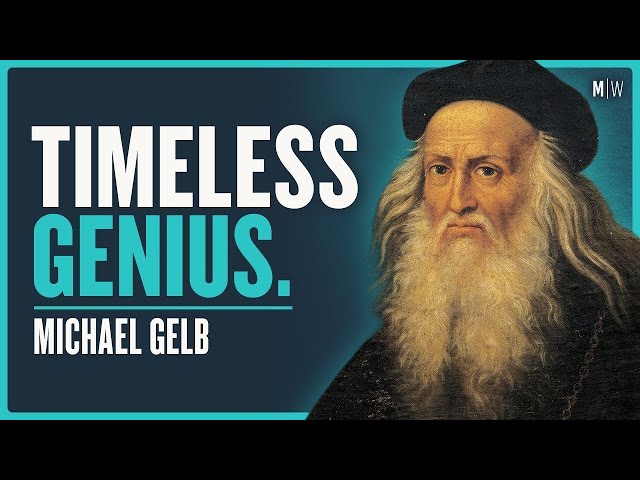
The podcast explores how to emulate Leonardo da Vinci, history's greatest genius, by examining his character, motivations, and methods rather than just his famous artworks like the *Mona Lisa* or *Last Supper*. Michael Gelb explains that Da Vinci was a charming operator who understood he needed patrons for survival, much like modern content creators rely on sponsors. His career spanned various political landscapes in Italy, from Florence to Milan under Ludovico Sforza and finally France with Francis I, where he served as an executive coach to the King. Gelb highlights Da Vinci's unique ability to integrate art and science; for him, these were not separate fields but complementary ways of exploring truth, beauty, and goodness. This integration is exemplified by his anatomical drawings, which are scientifically accurate yet aesthetically beautiful, challenging the common psychological contrast between the perfectionist artist Michelangelo and Da Vinci's more playful approach to life. Central to thinking like Leonardo is *Ciorisita*, or genuine curiosity, described as a childlike passion for asking questions rather than seeking immediate answers. Gelb introduces a practical exercise from his book where individuals write 100 questions in one sitting without lifting their pen; the first few are mundane, but eventually, the mind shifts to new territory, unlocking powerful insights that can change one's life. This practice is supported by *Dimostrazione*, or demonstration, which encourages critical thinking and skepticism alongside open curiosity. Gelb argues against cynicism, suggesting it often stems from brokenhearted idealists who armor themselves against vulnerability. Instead, he advocates for a balanced approach where one oscillates between being wildly receptive to new ideas and rigorously scrutinizing them, similar to the rhythmic nature of breathing or the interplay of light and dark in Da Vinci's paintings known as *sfumato*. The discussion further details five additional principles derived from Da Vinci's notebooks. The fifth principle is *Artenza*, which involves integrating art and science through techniques like mind mapping—a method popularized by Tony Buzan that stimulates both the imaginative and analytical parts of the brain simultaneously to solve complex problems. Gelb emphasizes learning this skill with colored pens on paper before using digital tools to foster neuroplasticity. The sixth principle is *Corporal Balance*, urging individuals to take responsibility for their health, diet, exercise, and mental state, noting that Da Vinci was renowned as a juggler and the strongest man in Florence who moved with grace and poise. Finally, Gelb introduces *Connessione* (connection), or systems thinking, which recognizes that everything is related; he uses the example of breathing molecules from Julius Caesar to illustrate how seemingly unrelated things are connected across time and space. Throughout the conversation, Gelb connects these historical insights to modern challenges such as the loss of leisure in contemporary life due to constant digital stimulation and the Puritan ethic that often denies people joy rather than encouraging sustainable enjoyment. He references concepts like *Dolce Vita* (the sweet life) from Italian culture and argues for savoring pleasure without negative consequences, citing his own mastery of wine tasting as a model for finding balance between immediate gratification and long-term well-being. The ultimate goal is to help business leaders and individuals raise their consciousness by applying these principles—curiosity, demonstration, artistry, physical health, connection, and embracing ambiguity—to navigate life's storms with resilience and creativity. Gelb concludes that Da Vinci’s legacy offers a blueprint for unlocking human potential, proving that we are all born with unlimited capabilities waiting to be cultivated through disciplined yet playful practice.
Read the full video transcript
why would anyone want to think like
Leonardo da Vinci why would anybody not
want to think like Leonardo da Vinci if
you even dreamed that it was possible
most
people are never really made aware of
the phenomenal unlimited potential with
which we are all born the
incredible brains that we're gifted with
but they didn't come with a
manual so you know just like baby ducks
learned to walk by imitating their
mothers we learn how to think and how to
be by the people we get to imitate and
usually that's a default setting your
mom and dad the people around you when
you grow up your teachers but what if
you called on History's Greatest genius
to be your personal Mentor in utilizing
those amazing
capabilities what was D Vinci like as a
person what was his
demeanor he was Charming
he was
funny he was elegant he liked to dress
really well he wore the finest clothes
that he could afford the finest
Fabrics he was a
musician he had a gift
for making people feel comfortable for
connecting with others which is part of
how he was able to get highlevel patrons
throughout his career he Charmed them
and they they thought well we kind of
like this guy let's keep him around and
see what he can do and then he winds up
you painting the the last supper and the
Mona Lis and a few other things so he
was a canny operator then uh yeah I mean
you had to be to to get by at at at that
time you needed a patronage you needed a
sponsor just like I noticed you always
have these great sponsors on your show
and I want to buy all those products
every time I watch you like yeah I need
that backpack they're my patrons yeah
exactly you need backpack shout out um
how much you know I I love Italy I've
spent a lot of time in Florence and Rome
I recently came back from Venice um you
know the period of time Michelangelo Da
Vinci
uh politically very interesting in Italy
how much did the sort of political
landscape the cultural landscape of
Italy and at the time do you think sort
of shape who he was his opportunities
the way he saw the world the places that
he placed his efforts sure well he had
to
move because of political
turmoil his tenure his original tenure
in
Florence came to an end when he saw that
uh he might be better off under the
patronage of ludovico sporza the Duke of
Milan so you probably read the most
famous employment applic letter of all
time can you tell people about that
that well you got to love it it because
most illustrious Lord and then he
basically says having seen what other
people can do I gotta tell you I can do
way better and then he goes on to say I
can build you Bridges I can take care of
everything in time in times of War
because the felt need of despots like
sporza was build me some Cannon uh help
me get uh underwater to blow up the
enemy's Fortress so Leonardo goes on and
on about how he can help with all this
and then he says uh I think it's number
11 he says oh yeah by the way I can do a
little
painting and then he says not only that
I'll come to your Palace and I'll prove
that I can do all of this and then he
says all in most gracious humility
he got the
job the it's that line also I can paint
uh that I just adore you know this sort
of huge illustrious list of things war
machines battle
plans technology
engineering also I can paint it's just
so did he see did he see his Artistic
Endeavors as kind
of second string in in some regard or
was that just playing to the fact that
this guy probably needed war machines
and and curating to the audience you got
to give the customer what they're what
they're asking
for and he want what he wanted and what
he needed to come back to your earlier
question you know he he wound up he was
in the Vatican for a while he was under
the patronage of chesiree
boura he had a second time in Florence
under the reconstituted
mediche uh he then was back in Milan for
a while under the patronage of the
French and then he spent the last three
years of his life as the philosopher and
basically highlevel executive coach to
franois the first the K the king of
France so he had to do what he had to do
in order to continue to do what he
really wanted to do which was to
understand the mind of God what Leonardo
was passionately curious about what is
truth
what is
beauty what is goodness how do they all
fit together so for him art what we call
Art and what we call science were just
ways of
exploring truth what is so what is real
what is the nature of things you know he
he draws the very
first reasonably
accurate drawing of an embryo in the
wound cuz he really wanted to understand
the secret of life so the science is he
did dissections of more than 30 bodies
which was very very hard to do at that
that time without running water and
electric light and refrigeration and so
on and so
forth and yet the way he drew the things
that he was dissecting are so EX
exquisitly beautiful they are works of
art and Science and that that's the
fifth principle for thinking like
Leonardo is artenza the integration of
Art and
Science the drive that he has to do the
things that he does it seems to come
from sort of quite a balanced place you
know I I as you go around the Vatican or
wherever else there's sort of two it's
Michelangelo and da Vinci Michelangelo
and D Vinci like that's what you know
the tour guides are telling you about
but it seems at least unless I'm
remembering inaccurately Michelangelo
was very much like a conflicted Soul you
know sort of very pessimistic he had a
dark dog that followed him around it
seems like he maybe basically kind of
had permanent depression throughout his
entire life um difficult to work with
like
rambunctious uh uh
disagreeable um and you know you can see
where I think the drive for that kind of
a person seems to be easier
to understand in some ways that he's got
this sort of fervent need to prove
himself for validation uh to put his
work forward because the external
accolades will fill the internal void
hopefully um Da
Vinci's much more difficult for me to
work out how he's motivated to work so
hard does that make sense I I love that
I love that uh the contrast between
Leonardo and Michelangelo is a wonderful
character study of genius and they both
reflect aspects of our own quest to
express ourselves and Achieve
and live our life's purpose some of us
do it from guilt and shame like
Michelangelo and some of us do it from
Love and just
passionate deepest
level
CIO so you were in the
Vatican and no doubt you saw the amazing
obviously the the ceiling of the cistin
chapel but the Judgment of Christ
painting on the front wall of the
chapel with the amazing powerful figure
of Christ sending some people up to
heaven sending everybody else down below
and do you know where Michelangelo is on
that painting because you know they
always put themselves in these paintings
you go back and look at this again he's
hung out his his flayed skin is hung out
on a branch hovering in
purgatory roasting over the fires of
hell so that was that was Michelangelo's
painting of his own
self-image having said that having said
that he did uh uh uh he did do the
David and the P correct and which are
shows of love right their hope it's
upward aiming it's the greatest that we
can be amazing so so that's just the
thing is we can't just reduce them to a
simple psychological explanations do
show me the other side then if that's
the light side of Michelangelo what's
the Dark Side Of Da Vinci great great
great the Dark Side Of Da Vinci is is
twofold one
is he's been criticized uh a lot for not
following through and actually finishing
things
now I've defended him
because I feel like he was so interested
in just pure perfection he wasn't
competing with Michelangelo or other
artists he was competing with God so
part of why he couldn't finish things is
he couldn't quite get everything as
perfect as nature which is what he
wanted to do I also think that he knew
he was a genius and he ultimately didn't
really care whether the monks got their
Al piece or not he thought he was on to
something more profound I'd say the
other dark
side
is
that he went through a period towards
the end of his life of of of profound
doubt he writes in the margins of his
notebook uh did I really accomplish
anything which is kind of amazing when
you consider what he actually
accomplished so I think
the the sense of self-doubt of maybe
losing faith
or I don't think it's not really even a
dark I don't see as light or dark but
it's because it's it creates what he
called um Kiara skuro kiar skuro is the
contrast of light and dark there is no
light without the dark there's no dark
without the light and that's part of
what makes
Leonardo's artwork so interesting is the
way light emerges from the dark and he
he pioneered that and that's part of the
deeper meaning to me of his work and why
we're so drawn to it so
fascinated and why most people haven't
really plumbed The Depths and understood
the the Real Genius that
Leonardo 550 years ago was
sharing for all of
humanity what what do you wish more
people realized that da Vinci had done
you know people understand lots of the
work the well-known stuff what are the
uh early records or like the the
underground hits that should should have
had more plays on Spotify well yeah he
did he did write il no mo the sun does
not move many years before cernus
created the
yeah way it's pretty wild
uh and and having said that the thing I
real my my part of my mission part of
why I wrote how to think like Leonardo D
Vinci he was one of my childhood Heroes
my grandmother's an Italian painter and
she told me about him and when I was a
kid you know Superman was my other hero
but I grew up I found out oh he was only
a comic book character but Leonardo was
and part of why he fascinates us now
part of why he's on a PBS special part
of why there was The Da Vinci Code part
of why his painting sold a few years ago
for $450
million uh uh the most any work of art
has ever has ever sold for which piece
was it uh it was the Salvador
Mundi okay uh uh the savior of the world
it's an amazing Fronton uh portrait of
Christ holding uh the globe of the world
in the palm of his hand it's Exquisite I
actually saw it it it was found it was
authenticated by Professor Martin Kemp
who's probably the go-to academic world
expert on
Leonardo and then it was sold at auction
for $450 million and it's disappeared
and people trying to figure out where it
is but the the the point is he's in the
news we're talking about him and here's
the real answer to your question here's
what I really wish people knew
you
cuz he'll endlessly Fascinate us with
his art with his science with his
invention but what I want people to know
is that he left
instructions in his
notebooks on how you can think more like
him on how you can use your potential
and the simple sort of naive childlike
question I asked many many years ago was
what's he trying to teach us and is
really trying to teach us how we can
think more creatively how we can use all
of our power and potentiality so that's
what I really want people to know yeah
so you've spent this time deconstructing
reading an awful lot of his work how
much of his work and notebooks and stuff
were retained is there more lost than
was kept have we got more lost and kept
more lost 20,000 at best scholly
estimate about 20,000 written uh uh
people seem to uh choose the numbers
between six and seven, Pages yeah wow oh
so I mean and six to seven thousand
survived exact so even though even
though uh a lot lost still quite a lot
to get through well I read it
all way back you know when I was doing
the research in this from I really
focused in on in on this from 1994 to
when the book came out in 1998 and I was
absolutely immersed I literally I went
to the place he was born I went to the
place he died I walked in his footsteps
I went to every Museum I could I studied
the live notebooks as well as reading
the RoR translations of the notebooks I
interviewed the leanardo scholars I
contemplated his paintings I started
dreaming about him and it was from those
dreams that the da Vinci principles
emerged what was a typic day like for
him do you know what a a normal daily
routine
was well there's a lot of speculation
about that I would say it probably
differed when he was in uh different
places but we know he
Advocates the importance of working with
great
intensity and then taking a
break so whatever wherever he was
whatever he was doing whether he was in
his Studio or uh interacting with with
patrons we know that one of the things
he teaches us and Advocates which has
been borne out by contemporary Research
into the optimizing the psychology of
memory and high performance and so on
and so forth is oscillation work with
great
intensity actually there's a great story
when he was when he was working on the
on the uh the Last Supper he would be up
there on the wall of the refra of the
Church of Santa Maria De Gracia working
for hours and hours at a time with total
intensity but then he would just
disappear sometimes for a few days well
the prior of the Church of Santa Maria
delag gr would get very upset he' say
where's this Leonardo guy because he
didn't know this was an all-time genius
you know as far as he's concerned this
is just another contractor I got veto
the plumber and you know Luigi the
carpenter Leo the
painter so comes back and and the prior
gives him a hard time Leonardo says he
dismisses him so the prior complains to
the Duke and the Duke summons Leonardo
and asks him to explain himself and
Leonardo says one of the great lines of
all time he
says Men of Genius sometimes work best
when they work
least because he knows he understands
intuitively and so many of the great
great geniuses
understand intuitively something that we
can all practice ourselves which is work
with your greatest
intensity and then quit while you're
ahead go for a walk in nature and let it
all
go be open be
receptive go for a walk come back write
it in your
notebook so in a typical day I know he
worked with great intensity then went
for a walk in nature wrote in his not
book what he observed are the ideas that
came to him and his notes were very
messy and had lots of creative
Doodles yeah I
am I have so many thoughts about this
first one being I
wonder how rare it is for people to be
repaid uh
financially existentially for the
quality of their thoughts you know most
people have what are commonly referred
to as [ __ ] jobs right um they have
[ __ ] jobs and um it's it's you know
um something that may maybe they're even
like kind of Fired Up by it but it's not
necessarily the most creatively
demanding job in the world or maybe it
is but it's creatively demanding some of
the time not most of the time and uh
that would have been you know you're
hoing the fields you're a surf in you
know a 1250 or something uh in Europe
like it's the same it's all all the same
so most people I think
don't generate their primary source of
value from the quality of their thoughts
uh but the goal I think that most people
are trying to get to is to be repaid for
the quality of their thoughts so what
you have in de Vinci is somebody who is
I think optimizing for a a position that
many people want to get into not
necessarily everybody is into um but
certainly if you get to the stage where
you're trying to be creative you're
trying to come up with new ideas you are
paid for the quality of your thoughts
that on and off thing is really
interesting and then contemporarily when
you think about well the modern world
has kind of robbed us of the ability to
be off a lot of the time because even
when you're walking the phone's in your
pocket you're listening to a podcast you
the podcast is at two and a half times
speed you are you've got people coming
past you there's so much stimulus etc
etc the opportunity to have a full
switch off is is super interesting and
and lacking I think and uh I'm I think
I'm right in saying the ancient Greek
word for work was not at leisure uh so
work was an aberration and Leisure was
the set point whereas now people kind of
have this I don't know work Purgatory
thing where it's just infuses France
just released this new uh bylaw that
said that employers can't contact
employees after 5:00 p.m. at night uh or
on weekends in an attempt to kind of
create a hard stop uh around this but
yeah just that um quality of your
thoughts it's a kind of a specific use
case but one that a lot of people I
think aspire to and would like to get
more of and then on the other side the
sort of mismatch that we have with the
modern world uh compared with maybe what
would be better for uh
flourishing uh amen well my whole career
somehow I've pulled off this ability to
just get paid
for being a playful and creative and
having fun and helping corporate people
I figured that out there help the people
who have money be more creative and then
you get Mone teaching people who have
money to make money is playing on easy
mode teaching people who don't have
money to not make money is playing on
hard mode yeah well I try to help people
who who have money make lots of money to
be more creative so that they can help
people who don't have money and don't
have opportunity have more opportunity
and more money that's my lifelong
passion conscious capitalism uh I
co-authored a book called The Healing
organization with Raj sodia you must
know all this down in Austin uh that's
the headquarters John Mackey and so on
uh uh uh so I've always I I realized
early on that uh just like Leonardo did
is that's where the power and the money
is so if we can get business to think
more creatively more compassionately
raise the consciousness of Business
Leaders then that's a way to contribute
to making a better world so that's I I
moved I lived I tell I was telling you
before we started that I lived in
England for seven
years I moved to Washington DC in
1982 with this wildly idealistic notion
that I would teach government how to
think creatively and that would help
save the world well I was quickly
disabused of that
notion but fortunately business people
were
interested and I was engaged early on by
some visionary humanistic Business
Leaders and it was from them I learned
about the ins and outs of business
and that's what I still do okay seven
principles to think like Da Vinci what's
the first one well the first one is one
that you embody so
beautifully in your in your show in your
podcast and I think it's it's why people
like it it's
curiosita it's genuine curiosity it's a
childlike
focused passionate desire to know and
you asked one question and you know
Leonard would would never take yes for
an
answer what about the next qu and
anybody those kids know they'll just
keep asking you questions and you can
get to the essence of what anybody knows
in four or five questions Einstein would
be like okay we don't know that after
five questions
so that's our
Birthright our Birthright
is C
curiosity who are the most imaginative
people little
children who's got the most energy
little kids but then you know you go to
school they focus on getting the right
answer instead of
asking powerful questions you go to
college or university it's way worse you
have to regurgitate back what the
professor said then you go into the
workplace and you're not necessarily
rewarding creative thinking or
challenging questions it's figure out
what the boss wants just like you
figured out what the professor wants
feed it back to the to them
and the media and advertising doesn't
help with any of that
so having a Renaissance a rebirth of
your own
coros and this is what I try to guide
people to do with all the practices one
of the exercises in the book that has
had the most
legs over the decades I still get mail
from people around the world there's an
exercise in the book where I have you in
one sitting write out a 100
questions don't lift your pen off the
paper write a 100 questions you can
choose a theme if you want to it doesn't
really matter because what's going to
happen is the first 20 or 30 questions
will just be your
regular quotidian mind
so you know what's the meaning of life
blah blah blah but you don't you're not
really into it yet the middle level of
questions 30 40 50 it'll be why the hell
am I doing this exercise my wrist hurt
why does my wrist hurt so much why did I
pick up that stupid book
anyway 70 80 90 100 a lot of people do
120
150 you get into new territory
and you shift into it's a way to break
out of the habitual mind then I have you
go back through them and highlight the
10 questions that have the most power
that really draw you in the
most then think of those questions
before you go to sleep keep your
notebook by your bed because you're
going to wake up with insights and ahas
that in many cases will change your life
so there are practices it's not just
yeah be curious okay cool there
practices and methodologies and and
disciplines and that's one of the most
powerful which is why I'm excited to
share it with you yeah I I mean you know
I'm so fortunate that I have the
opportunity to do that 100 questions a
day three or four times a week for now
you know six and nearly seven years um
my friends May disagree when we sit down
for dinner and they just want to chill
out but uh whatever
uh I had a drive we went to the Mike
Tyson fight we drove back and forth from
the Mike Tyson fight in Dallas Dallas to
Austin so three and a half hours is 200
miles and uh the fight
was frankly [ __ ] but the uh trip back
and forth between me and my old
housemate Zach was just it's like my
favorite thing to do I'm locked I'm
going somewhere so it's not purposeless
right uh I'm locked in a box and we went
everywhere every single question that we
could ask we're listening to music he's
an amazing musician I'm like so why
what's syncopation explain syncopation
to me and why is this thing and blah
blah blah and then he gets to ask dude I
I I don't know I I understand that not
everyone necessarily
is has that innate drive but it kind of
blows my mind that that's not what
everybody's trying to do all the time
because it's just it's the most it's the
most fun thing to me it's the most fun
thing and the coolest thing is
it fires your imagination doesn't it and
probably if when people can put up with
you like if they can put up with
me I've been doing this even longer than
you have not on a podcast but asking
people
questions it fires the imagination and
it raises your energy so remember we
said little kids Wild imagination the
most energy because they have the
strongest CIO so if you want more energy
you want want to fire your imagination
at any time in your life you can have a
personal Renaissance by empowering the
questioning process it feels like what
curiosity feels like to me it feels like
being pulled not pushing so much of life
I think you're you're forcing yourself
into it you're finding a wedge you're
pushing yourself into this space
curiosity is the opposite it's it's you
sort of posit a vacuum and the vacuum
sucks you forward and uh I really like
that I really I I very much do you've
got the 100 questions I like that is
there anything else
tactically to consistently sort of keep
this tick over across time people can't
do the 100 questions every day
journalist questions who what why where
when and
how just there there's a handy toolkit
very
simple ask a c well who's in who's
involved Who's involved in the this
particular project and issue uh uh how
did it happen uh uh where where did it
take place when did it start when will
it be brought to completion uh and why
is it happening that's that'll keep you
busy on almost any
issue for as long as you can stay up all
right cool that's the first one
second the second
one
de de
it means demonstration it's a word that
Leonardo actually used in his
notebooks and he was saying demonstrate
things through your own
experience don't just accept something
because a person in Authority says it or
because it's written in a book so it
fits with you can see how naturally is
organically from
CIO then okay think it through really
critically
so this is this is this is a yinyang
Harmony we're already being asked to do
be wildly open really playful childlike
innocent in your questioning then be
really skeptical and really tough and
really critical as you
drive forward with the responses to
those
questions so that usually have people
who are naive and open and play or
people who are just
very critical even cynical and you know
to cynic is a is a brokenhearted
idealist I try to take I've got I've had
lots of cynics in my class over the
years as you can imagine working with
construction managers and engineers and
finance people and even
lawyers so I try to get the cynics to
become Skeptics and the Skeptics to
become
enthusiasts and then the super
enthusiasts I get them to be more
skeptical yes yeah as with as with most
things man it's the golden mean and uh
you know I I I really think there's
something to sort of playing with the
extremes as opposed to finding a balance
in the middle and uh this is just where
I'm at at the moment I think for a long
time I tried to you know like I'm going
to stay in shape mostly but like a
little bit of the time I'm going to let
it off I'm going to you know be
skeptical quite a bit and try to be more
disagreeable but I'm also going to have
the open warm-hearted thing going on and
that's I guess kind of optimal for
relational stuff you don't want to be
bipolar in all of the things that you do
um but when it comes to like more
strategic or structural stuff how you
build your life together I think it's
much easier to just go all in in One
Direction and then periodize what you do
so to move from the openhearted
Curiosity thing to I'm going to
scrutinize incredibly heavily the stuff
that I've learned and then I go back
because trying to do both at the same
time uh is trying to creatively write
whilst you proofread you can't you can't
do them at the same time it's a oscill
it is it's a rhythmic pulsation it's
like breathing you inhale you exhale
it's day and night and it's but it's
understanding the harmony of those modes
just like so you inhale and you get the
fullness of that in breath and then
there's that Exquisite moment it's the
solstice of your breath it just becomes
the exhale just we're coming up to
December 21st that's and I love that I
just love that Exquisite moment it's
like it's the greatest potentiality of
the hottest day of summer the top of the
roller coaster it's the top of the
roller coaster and then when you're at
the bottom and that's called life so
recognizing that that's why in the yin
and yangang symbol there's that little
bit of the light in the dark bit and a
little bit of the dark in the in the
light bit I was reading seven EES this
great book by Neil Stevenson and um in
it they have to try and repurpose the
International Space Station to become a
colony for uh all of human civilization
in like two years uh and then they get
up there but you end up learning Neil
Stevenson's a beast you end up learning
a ton about orbital Dynamics when you're
up there yeah and uh it's really cool
and um when you think uh just trying to
intersect uh two things flat like a car
hitting another car quite a lot of stuff
has to happen in order for that
Collision to occur but that's only on
two Dimensions when you then not only
put it into three dimensions but put
those three dimensions moving around a
spherical object it is so interesting so
they're talking about again the orbital
Dynamics and they use the the terms
Zenith and apoy uh to and it makes me
think about the exact same but now in a
another
dimension I'm with you man that's
cool um what would you say to the
recovering cynics uh who want to kind of
let go of some of their worldly scrutiny
and and uh sort of dark day
thinking how do you want to
feel how do you want to feel it's a
really important uh uh question when
people are in their heads and
their have adopted
positions a and preset lenses through
which how's it working for you what's it
protecting you from uh what what's
what's the benefit of it if it's working
for you knock yourself out uh uh uh but
if it's leading you to feel less than
buoyant less than joyous less than
grateful and you
might possibly even consider that
it's that's a way you could be that life
could be more
buoyant and graceful and joyous then
let's experiment
with other ways of looking at things and
just see first of all how they work in
in terms of practical real problem
solving but also in terms of what they
do to your sense of yourself and your
basic feeling of what it is to be
here I love the idea of how's that
working for you it's so such a it's such
a ruthless
question uh Naval has one that's similar
where he says if you're so smart why
aren't you happy and um it's crazy when
you think you know I have a bug bear
with cynicism not only because I find it
in myself but because it's everywhere on
the internet and a lot of all of my work
goes out on the internet and it makes me
feel disheartened because I I I love
what I do and I think that most other
people that are sort of normal are into
learning and developing and doing stuff
so then when I see that outliers which
tends to be a lot of sort of more [ __ ]
posty comment sections uh thankfully not
not usually on this channel but it's
it's still really it's just it's just
not cool and uh it's crazy how tightly
people will cling to a life that they
ardently don't like it's like I'm I'm
I'm the
flagbearer for a life that I'm saying is
[ __ ] but for some reason I'm also
defending it I'm defending it same time
it it blows my mind well you just to uh
uh I mean I really meant it when I said
they're often brokenhearted
idealists is it's armoring it's armoring
against feeling your feelings feeling
how utterly vulnerable we all are
how this is a temporal deal uh uh
so but you said the word disheartened
and and one of the wonderful things
about these kind of conversations and I
think why people tune in why do people
want this because it's rehe heartening
people want something that boys their
their their heart and their
hope and that's most needed if you're in
the darkest time in your life if you're
actually struggling or suffering it's
easy to talk about how wonderful things
are and how creative you can be when
everything's going your way but all of
this counts Leonardo himself said uh uh
uh uh you can navigate uh fix your
course to a star and you can navigate
through any
storm what's that mean it means that if
you have a higher purpose if you have a
raison Detra then those principles that
love of truth beauty and goodness that
commitment will will be your North Star
will help navigate in times of
difficulty this is the Victor Frankle
thing well strong enough why will bear
anyhow I Happ to have read him when I
was 14 years ago which is a really long
time and that's part of what set the
stage for my whole life and everything
I've done since
then yeah super interesting and it's
like you know the time that I've spent
with Neuroscience people like hberman or
whatever yeah Sam Sam Harris talking
about how almost everything is positive
destination move toward the destination
track the distance between you and the
destination get positive reinforcement
move the destination again posit the you
know it's this sort of uh like how a you
know a cartoon snail moves where it goes
like this then goes flat goes like this
and then it goes flat um it feels like
that and I think we can get disheartened
by the
adaptation oh how awful the thing that I
previously only wished that I could have
had the opportunity to say yes to is now
something that I take for granted we
sort of give ourselves we like whip
ourselves because we say well I should
be more grateful you wanted this and you
got it and now and now you [ __ ]
forgotten that you've even had it right
but this this comes back to something
you said before too about how
everybody's work work work and totally
focused and even when they go outside
they're doing something and we feel we
have to justify ourselves and the guilt
and the shame the Michelangelo flade
body that's pushing you forward to
achieve so that well say you're
worthwhile and you'll have uh uh some
reason for being here
versus part of what I love about Italian
culture is La do
Vita the intrinsic notion that life is
is beautiful that life is sweet that
we're here to enjoy the the Beauty and
the pleasure of just being
the French have something similar which
is why they just pass that law that
you're B can't call you because they
have Jah deiv the joy of
living so the Italians have Dolce Vita
the French have zad deiv unfortunately
in the us all we have is happy
hour you know one lousy hour where you
pound down some some drinks before you
go back to your miserable life and try
to achieve more uh uh uh but this notion
which is also a Dost Buddhist notion
about and it's not just a notion I think
it's
closer to
real to what I consider to be truth
beauty the source of truth beauty and
goodness
is being able to be fully present and
savoring savoring presence for its own
sake savoring The Joy like like what's
the most Exquisite pleasure could it
be
breathing like right now like and you
know the apog the Zenith uh uh uh the
solstices of the breath the fact that
we're connected to everything we all
breathe the same breath uh uh that as
all sent beings it's all being we're
made of the same Cosmic dust and what if
we could just get out of our yakity
yakity yak and be that even a little
part of the time and don't get me wrong
I'm you know I am an achiever I'm a
maniac uh uh it just
I
have I've just woken up
to okay I don't have to worry like
that's my default setting is to work
hard and Achieve and be disciplined I
just grew up that way
so it it's hardwired into my system so
the edge for me has been to learn oh how
how about just being how about just
being present with myself and then try
it in
relationships just being present with
the people that you're
with and and and let let something
creative emerge rather than you having
to think of it through your own
cleverness and effort you know that uh
idea of us all being connected and I
guess if people are deep into meditation
they'll know about sort of permanent
non- abiding non-dual awareness etc etc
um a more rational version of that which
I love uh and I've just checked chat GPT
to make sure that it's it's still
correct uh so I asked the question do we
all breathe in particles of Julius
Caesar's Last Breath yes it's likely
that we all breathe in particles from
Julius Caesar's Last Breath because of
molecular diffusion and the fact that
every breath contains 10 to the 22
molecules while the fraction of Caesar's
breath in any given inhalation is
minuscule the sheer number of molecules
and the passage of time make it
statistically probable that every bre
breath we take contains some of those
ancient molecules how [ __ ] cool is
that see but that's that's the such a
wonderful element of the amazing time we
live in whereas we can we can take these
concepts of ancient wisdom from the
vadas from you know uh AIT
Vidant non-dual truth and things that
yogis went off for 40 50 years to get
anaha
and we can actually back it up with with
physics and that that's you know it's
like when I tell my my business
clients that uh you know we now know we
have the data that shows that if you
treat all your
stakeholders with care and respect and
look after their welfare over time
you'll make more money we have the data
so why would you think of ripping people
off or exploiting the worker or your
client because you're going to you're
going to suffer you're not going to feel
good your conscience is going to hurt
you and you won't and you you make less
money I mean of all of those of all of
the things for me it's I think the
little ticker in the back of your brain
that knows when you did the thing that
you should have done that gives you that
sort of as the kids would say ick or
cringe that sense of like H [ __ ] like I
should shouldn't have done that MH and I
know I shouldn't have done that
and you know adaptively evolutionarily
what is it it's you thinking if somebody
in the tribe saw what you just did or
what you just thought you would you
would potentially lose status or you
would maybe even be kicked out or killed
you know in the worst situations but
like functionally what is that well it's
you being pointed toward a Direction
that's probably good for you over the
long term
uh it's the same reason that you know we
have this tension
between pleasure enjoyment and long-term
contentment and meaning like it's a
tension between the two and a lot of the
times stuff that we do in the moment
that gives us pleasure can be negative
for us over the long term and stuff
that's positive for us over the long
term is negative to our pleasure in the
in the current moment and um I I really
think that much of the balance with this
like the first step is just realizing
this is a tension to be managed not a
problem to be solved like there's no
[ __ ] equation that comes out the
other end it's
it's you know I I I'm passionate about
wine I I do a wine tasting team building
exercises for my clients over the years
I wrote a book called wine drinking for
inspired
thinking and I I got to tell you I've
really mastered the art of pleasure
every day without negative consequences
and one of the great philosophers of
wine that I read said the art of
enjoying wine is to have the greatest
possible present glad gladness without
any future
misery
so I'm enjoying a beautiful
wine and it's so good and I'd like to
have another glass but I just tune into
my system and I know I'll have a
headache I won't feel so good I won't be
able
function at the level just say thanks
breathe in and Savor the Aromas and the
Afterglow of a of a fine wine and let
that be just enough because then you get
to have some more the
next the next night or whatever it is
dark chocolate uh uh I mean
I'm I really I'm really focused on all
the best things in life and how to enjoy
them
sustainably to make to more Dolce in my
Vita and the Vita of my friends and
clients more Jah in their Viv so that
every hour will be happier
yeah isn't it cool you know like so much
of this a couple of the things that You'
mentioned there um wine maybe you want a
bit more but there's also a bit of you
that doesn't want a bit more like Wine's
moreful but not that much more moreful
dark chocolate's a better example of
something where I have never has anybody
ever gorged themselves on dark chocolate
I don't think so it's like after a while
it's sort of been it's so good too that
you're fulfilled correct so I think uh
what you're there's two ways to sort of
look at this uh Temperance maybe would
say some sort of
self-control um one is develop
self-control right uh is to actually
have the ability to do the willpower
thing so that would be you being able to
press the accelerator harder right of
willpower but the other one is taking a
fot off the break and that would be
choosing environments friends
routines Lifestyles food choices like
the reason that everybody loses weight
most of the time when they switch to
something like meat and fruit right or
carnivore is that there's only so much
ground beef you can eat before you're
like I'm [ __ ] sick of this whereas
The Taste design of going to McDonald's
is significantly more palatable so
you're going to eat more anyway okay so
yeah but what you what you said let's
just uh tie that up too because what I
find
is many people
have
internalized the Puritan ethic you got
to remember the Puritans left England
because they they were having too much
fun in England and they wanted to be
more austere so they came here and they
dressed in those funky Black and White
costumes that look very tight and
uncomfortable and pleasure and and joy
of living wasn't their thing so a lot of
people feel that they must deny
themselves that they don't
deserve goodness and the Bounty of Life
uh uh other
people overdo it and are get addicted
and so whichever poll if you're on this
poll of
overindulgence you need to to tighten up
and and get more discipline and learn
you know the power of a positive
no and if you're one of these folks over
here
who never really thought that this was
possible or didn't know all the Wonder
ful things the world has to offer you
and once to learn about the art of
enjoyment well there's a whole beautiful
world awaiting
you okay I like to be the guide for
those people to ex a lot of my clients a
lot of my clients over the years okay
curiosity critical
thinking
next sharpen your senses sharpen your
senses
so Leonardo wrote that the five senses
are the Ministers of the
Soul he disciplined his senses he
trained his senses like an Olympic
Athlete would train their body for
competition but you know what he wrote
500 years ago 550 years ago in Tuscany
Leonardo wrote the average person looks
without
seeing eats without tasting breathes in
without awareness of a ro or
fragrance uh uh talks without
thinking basically doesn't pay
attention
to the beauty that's all around
them so he advocates in the principle of
Sensi sension
Advocates consciously sharpening your
sensory awareness and this becomes
obviously more important as you get
older and what what's the best most
beautiful way to do it is to appreciate
nature and appreciate
Beauty go for a walk and have a theme of
what do I see what are the colors I see
today let's look at the different shades
of green make that the theme of my walk
today or my walk today my theme will be
perspective or light and Shadow or what
sounds do I hear just you know just
listening to the sound of bird song in a
20 minute walk significantly raises your
immune system
and your creative thinking
uh taste the best the world has to has
to offer and pay attention and oh here's
a big secret too instead of one dark
chocolate do a comparative
tasting try you know an 80% caca against
85% or one from Madagascar against one
from
Venezuela because your brain loves a
theme it loves to compare and contrast F
and you'll notice sensory nuances in the
chocolate that you might have escaped
you had you not compared then you can do
the same thing with man and
Mona
or different uh Pieces by Bach or early
Mozart later Mozart or Mozart uh 40th
symph Symphony conducted by Von Carion
versus Bernstein it's amazing same music
it can even be the same Orchestra
different conductor you
hear stuff that you never would have
heard otherwise so and it's fun and then
you do this with other people and you
say well what did you hear and here's
here's the deal to get to make this most
fun is no wrong answers this is not you
know music criticism or uh uh food
criticism this is Sensa enjoyment what
because there's no wrong answer to the
question what do you experience
and what's so cool is people will I do
this with my corporate people they'll
they don't think they know about wine
they put their nose in the glass people
make jokes oh that smells like grapes
ahaha but you know they get over their
awkwardness and they get into it and
somebody says something like a uh
U I don't know it kind of reminds me of
uh biting into a really ripe uh uh
Plum uh
while leaning back on a hay stack on a
really hot day and somebody else goes oh
my God that's just let me taste that uh
wine again see if I can get that Plum
and that hay stack and all of a sudden
you're not just learning about the
wine you're learning about the person
and you're connecting with the poetic
soul and the poetic
Consciousness the the
nonlinear uh way of being in the world
which is is Art Joy uh uh uh uh Beauty
so if we want more of that in our lives
we sharpen our senses not to mention the
fact that
look my patrons are businesses so they
need to be sharper than their
competition that means they're better at
seeing what's going on they're reading
the body language of the person in the
meeting they are listening to The Voice
tone and noticing if there's a
disconnect between the words the
person's saying the body language and
the voice tonality and then they'll use
their cuos to ask some more challenging
questions so that they can fire up their
uh deos and get to the bottom of the
situation so the opposite of being sharp
is being dull and it's a sensory
term yeah it's this again another one of
those balances I I like the idea of the
sharpness but but there's also this sort
of element of
savoring uh which seems you patience
kind of I'm going to wait and see what's
there or I'm going to take another sip
or I'm going to take another moment
before speaking or describing or
whatever yeah I've been I've been uh
that's uh something I've been aiming to
cultivate for many years as a as a Wine
Drinker I imagine that the savoring
thing is is particularly important okay
sharpen the senses Sharp is what's next
okay the next
isato spato soato is a term coined by
Art critics to refer to the hazy
mysterious quality in Leonardo D Vinci's
paintings and what it refers to is maybe
the most distinguishing characteristic
of Highly creative people which is our
ability to embrace the
unknown so one of L everybody rushes to
see the Mona Lisa and rightfully so
because she's the
most renowned famous work of art in
human history the most recognized symbol
or icon or image on the planet but on
your way in to see her a lot of people
walk right by the St John and the St
John in the book is actually the symbol
of
suato because he's got his hand on his
heart he's pointing up to
heaven he's got a funky head tilt and
and
smile as though he's saying when things
are really tricky and
uncertain use your emotional
intelligence consider what your higher
principles
are and keep your sense of
humor
so Leonardo pioneered this technique uh
which they call S aato where why is the
Mona Lisa considered to be so amazing
well one reason is
she's so
mysterious because he he blurs the lines
around her eyes around her smile the
famous smile he blurs from her figure to
the atmosphere behind her so things seem
to kind of meld into other things and
she seems to follow you around the room
if you've ever had the opportunity to
actually move around that room when it's
not that crowded which fortunately I
actually
had so what try this we can have
everybody can try this all together we
do this right now so just imitate Mona's
smile get in the position everybody
knows it and do your best Mona
smile
imitation and then notice how it makes
you feel that's good
man I could have been who right so
so uh I was doing this with a group of
gifted children uh uh ages 8 to 11 in
rahan County Virginia and kids are so
great you ask them to do something like
this they are so Earnest they go they're
really into it and one of the kids says
she's got a
secret and the other kid says yeah she
knows everything has an opposite and
then the kids start saying opposites
like day and night good and bad boys and
girls
life and death I asked my average
corporate group when we do this I say
they say well I read in the Wall Street
Journal that the famous smile was caused
by a dental
problem they kind of missed the point
Mona
Lisa is the Western
equivalent of
the ancient Eastern symbol of Yin
andang she is the embodiment of the
notion of the harmony of dark and light
of Good and Evil of masculine and
feminine ofin and Y and that's just one
of the reasons she's
endlessly
fascinating it's so interesting I was uh
I've watched a number of videos YouTube
videos explaining it I think it's a
YouTube channel called great great art
explained yeah I I I'm on that channel
great books explain great art explain un
aw so good especially for me right total
Philistine no understanding of art or
how it works and then you have someone
who has to be some sort of art scholar
or whatever anyway people should go and
check out great art explained and um
they do maybe an extended one I think
perhaps on the Mona Lisa and um yeah
there's you was talking before about uh
the particular style to bring light out
but wasn't that that was because of the
number of layers that he used like this
obscene number of like one layer one
layer one layer super so gossamer thin
layers of paint hundreds of them so what
that does is create this effect where
the light seems to suffuse from behind
the canvas creating this haunting
engaging
mysterious
effect and you know the lesson for all
of us
is when you're going through a period of
big change of grave uncertainty which we
will all go through uh uh sometimes over
and over again can you maintain your
emotional intelligence can you maintain
your connection to your star to your
higher purpose or principle can you
maintain your sense of humor which I
find to be perhaps you know the
haha and the AHA are first
cousins the same
workings of the brain it's shifting you
out
of it's like improv you know improv if
we say uh uh uh if we have you you you
you did that exercise uh uh where you
you name something and then name it the
thing of the next thing and then name it
something that it isn't [ __ ] love
that idea love I was actually I've been
doing that I saw that on your episode
and I've been doing that on my I was
doing it today look at my neighbor's
house and I'm saying tree and I'm tree
I'm mail godam it my neighbors already
think I'm nuts as it is I tried to do
this a little quietly
but yeah very good okay okay so spato
embracing ambiguity in the
unknown principle number five
arenza arenza integrate Art and Science
logic and
Imagination what people used to refer to
as left and right hemisphere thinking
now we know it's actually more complex
and not so easily distributed but the
metaphor still uh is relevant uh there's
convergent thinking where we're focusing
analyzing reducing and there's Divergent
thinking where we're going off and
coming up with random
associations uh way back in the 1990s I
coined the term sin virgin thinking the
synergetic integration of convergent and
Divergent thinking that's
arenza leonar why do we why are we here
talking about him because he wasn't just
an amazing genius scientist he also an
amazing genius artist and inventor so he
integrated these modalities that we
usually tend to think of as opposites
all in service of his quest for for
truth beauty and goodness
and my old buddy
English uh uh genius guy named Tony
buzan originated mindmapping I if you've
come across mind mapping it's Tony made
it up inspired by the notebooks of
Leonardo da Vinci and Thomas
Edison
and he taught it to me when I was
writing my Master's thesis in
London and it transformed my experience
of writing my Master's thesis became my
first book and that's how I became an
author so it's a methodology for
integrating Art and Science
artenza it's a really simple elegant
practical way to think like Leonardo but
my guidance for everybody is learn at
first the old-fashioned way with actual
colored pens and big sheets of paper
before you do it on your computer it's
great to do it on your computer it's
amazing the programs that have come out
a lot of free great ones but learn it
the artisanal oldfashioned way because
when you draw uh uh uh it activates
circuitry in your brain you want some
serious
neuroplasticity get the colored pens
make some mind maps and you will be
thinking like Leonardo D Vinci there's a
a program for Mac which is free called
Mind node um it's not quite it it's more
tiered so it's basically uh how would
you say like like um nested bullet
points but presented visually and uh
super easy to use which is the most
important thing for me and I love mind
node so I use mind node I haven't used
it that much recently to be honest but I
used it in the past when I was planning
out talks and other bits and pieces uh I
think one of
the certainly if I was to lay an issue
or a pathology at the feet of modern
society would certainly not be that
there's too much art or
imagination um you know it's very it's
very sort of left brainy it's very
rational it's tied in with the cynicism
thing uh how can somebody that thinks
this sounds great I'd love to inhabit my
sort of creative imaginative artistic D
Vinci energy more what are some of the
things that can help to sort of pull
people out in that way well really
learning and practicing mindmapping is
the
go-to's
most practical I way to really do it
because then you can learn to make mind
maps of your uh plan for the day uh you
can plan a dinner party you can make a a
the last exercise in the book is a mind
map of all your life goals dreams
Visions values uh your different areas
of life and then you get to look at them
and see the Gestalt of it all while you
also get more detail because you put in
keywords you print those keywords so
they're easy to read and you draw images
or creative Doodles that go with them so
you're stimulating the imaginative part
of your mind and the detailed focused
analytical part of your mind
simultaneously so you get a huge amount
of information in a in a very small
space and it's fun it's fun yeah okay
next up next
Corporal Corporal balance the body and
the mind so we all know that Leonardo
was an artistic genius many people know
he was also a scientific genius great
inventive genius but he was also
physically gifted he was renowned as the
strongest man in
Florence he was a master
equestrian a
fencer history records that he also was
a juggler which I was thrilled to
discover since I worked my way through
graduate school as a professional
juggler he loved to walk
uh he walked through the countryside for
miles and miles and miles with his with
his
notebooks and he gives advice in his
notebooks to his students remember I
told you he actually tells you what to
do I just figured out what he was saying
translated into contemporary terms one
of the things he
says learn to preserve your own
health today we we might call that
integrative medicine or functional Med
learn to preserve your own health take
responsibility for your health and
wellness he says avoid Grievous moods
and keep your mind cheerful well today
we call that psychon
neuroimmunology right your attitude
affects your immune system moment to
moment he
says eat a healthy wholesome diet of the
freshest foods that you can
find he says if possible dine With
Friends the Italians have a saying atava
non invea you with others you don't grow
old he says have a little red wine with
dinner in moderation he says get
moderate exercise every day have plenty
of fresh water be in
nature what else do you need to
know so
that Fitness looking after the body
looking after the mind but there's the
the elements of Grace and Poise yes what
did those specific specifically because
that I think to me is a very different
sort of word yes uh uh uh so Leonardo
was renowned for his grace and
Poise in his own movement he was so the
the chroniclers of the time recorded
that people would turn out just to watch
him walk down the street because he
moved with so much Poise and Grace and
part of why especially when you go when
you go see the drawings I've seen them
close up at the ambrosiana in Milan and
in Windsor Castle uh and in a few other
places with special
exhibitions uh uh the
grace of the lions that he
creates the drapery that he
enfolds St an or the Madonna it uh the
curls of the hair in the genevra deeni
uh which is in the uh uh National
Gallery you go see it for free in
Washington
DC so they're all indicative of this
sense
of just having the right amount of
energy in the right place at the right
time which is one of the secrets of
life and it's an element that's often
missed in a lot of physical training you
know people go to the gym and they're
trying to just push the most weight they
can they want to achieve the goal but
you you see these people they're torting
themselves they lose their form I see
Runners Walkers
everywhere doing more harm to themselves
them than good because they've lost
Poise and Grace in their movement so I
trained originally an alexand as an
Alexander technique teacher in London
many years ago which is a genius
methodology for
cultivating poison Grace in your
everyday movement and Leonardo is one of
the Supreme examples of that quality
okay and what's the final
one
coret
coret everything connects to everything
else Leonardo wrote that in his notebook
everything connects to everything else
so today we would call that systems
thinking looking at how things that you
might not ordinarily think are related
are actually related like how
Julia Caesar is in
your in your nose right
now
so that ability to to really see the big
picture to see how just to think things
through in a how what are the UN
potential unintended consequences the
negative un people call them side
effects when it's a drug but they're
really effects they're just effects so
what's the St of
this project we're doing what's of this
product that we're launching
of this plan I am making how do I see
he's he guides us he asks us to do that
and what
I I guide people to try to do that with
their own lives is just you know what's
your purpose what are your
values what are your goals and how do
they all fit
together and what are you actually doing
every day and is what you're doing every
day what's out of alignment with what
you say your purpose values and goals
are and how can you make little shifts I
mean I know you know this little
shifts uh uh uh every day lead to really
big shifts in a surprisingly short
amount of time but it helps to not just
I'm GNA get fit uh uh uh and you just
focus no how do why are you getting
fit how are you doing it when are you
going to do it where are you going to do
it uh uh that fits in with the questions
we laid out earlier and asking those
questions about every aspect of your
life and then you can take these and put
them in one mind map and make symbols
for each one and some key words put that
on your desk I have mine right over
there I keep redoing it I've been doing
this for a really long time uh uh uh but
it helps us stay on track to that star
that Leonardo talked about and believe
me comes in handy when you have to
navigate through
storms yeah
intentionality uh intentionalism is a
word that me and a lot of my friends are
pretty addicted to like doing the thing
that you mean to
do right well that's a positive
addiction uh I'm
I'm yeah because the default setting is
not is programming is condition
is
reactivity is unconsciousness is
somebody else's intention that was set
to manipulate you and control your life
so set your
intention and set it in a systems way
and make images that go with it so
you're not just doing it
linearly but you're also doing it with
your
imagination and it's plus it's more fun
Michael gal ladies and gentlemen Michael
awesome I does this new Leonardo da
Vinci uh documentary that's coming out I
think it'll be out actually once this
episode is done so I'm sure a lot of
people wanting be wanting to learn more
so I really appreciate your work and the
uh many trips and pages that you had to
go through in order to be able to glean
these insights where should people go if
they want to keep up to date with the
stuff you do thank you uh Michael
gel.com that's Gelb Michael gel.com
and when they go to Michael gel.com and
they sign up for our free newsletter we
send them a 14 page handout on how to do
mind mapping for free so Michael gel.com
is the place to go thank you heck yeah
appreciate you
Michael thank you thank you very much
for tuning in if you enjoyed that
episode there is something else you will
absolutely love right here go on give it
a tap