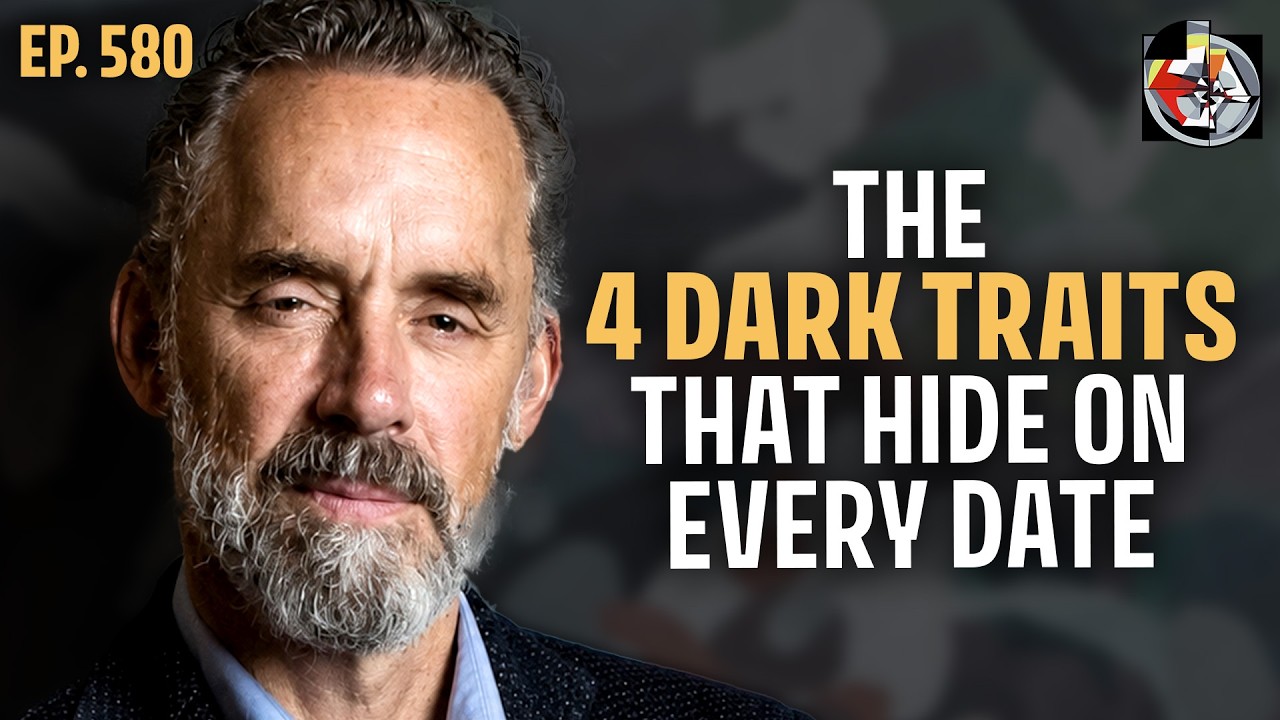
Video summary
The video argues that modern technological advancement without corresponding wisdom creates dangerous instability, as tools like nuclear weapons and artificial intelligence require deep philosophical grounding rather than mere proficiency. This lack of direction is often rooted in short-term mating strategies driven by hedonistic impulses similar to those of toddlers, which prioritize immediate self-gratification over communal good. Such an approach invites the "Dark Tetrad" personality traits into a person's life: narcissism, where individuals fake virtues to manipulate status; Machiavellianism, using people instrumentally as means to narrow ends; psychopathy, characterized by a predatory orientation that burns bridges between communities; and sadism, which derives pleasure from others' suffering. These dark spirits enter when one aims for instant results rather than long-term growth, leading to antisocial behaviors and the rejection of necessary sacrifice in favor of resentment.
To counteract these destructive tendencies, individuals must establish a high aim focused on love, security, honesty, and radical reciprocity instead of selfish exploitation. This upward orientation requires sacrificing momentary desires for the benefit of the community, mirroring the biblical progression from immature impulsivity to mature self-regulation that involves weeks or years of planning before entering serious relationships like marriage. True work is defined as sacrifice dedicated to a higher aim, culminating in acts such as child-bearing and profound self-sacrifice exemplified by Abraham offering his son; societies built on this voluntary responsibility can avoid tyranny without needing dictators. When one flees from duty or broods over revenge, they invite chaos into their life, whereas wrestling with conscience through truthful speech cuts away lies that endanger the "ship of state," ensuring a community is sustained even if only by ten honest people rather than collapsing under idolatry and moral injury.
The central lesson emphasizes that misery often stems from misdirected aims where individuals offer second-rate efforts due to pride or bitterness, effectively inviting sin defined as missing one's target into their lives like a predatory animal. By contrast, approaching life with humility allows for improvement when strategies are corrected, while those possessed by resentment refuse to learn and adjust, eventually succumbing to fratricidal impulses similar to Cain killing Abel after destroying his ideal sacrifice. Forgiveness is presented not as becoming martyrs to past wrongs but as a process of confessing one's part, repenting, atoning, and negotiating repair with deep analysis to prevent recurring trauma. Ultimately, whether raising children in church or rebuilding compromised institutions against "woke" activism, the duty lies either in fostering these high aims within communities or facing spiritual deserts where only destructive ideologies thrive.
Read the full video transcript
Hi everybody. This is the eighth
consecutive week of releases from my
extensive tour archives. We've been
gratified to see that this return to the
form that I initially relied on when I
started using YouTube is still capable
of reaching people, more capable perhaps
than it was in the beginning. We're
attaining combined views and listens
across YouTube and the audio channels of
about half a million people a week. So
that's very satisfying and gratifying
and thank you to all of you who are
listening consistently.
I also spent a lot of time this week
contemplating
Peterson Academy ads. Uh we have a
wonderful advertising team and have
worked on developing cutlines and
assessing graphic images and realized
this week that we're really reaching
millions of people with these
advertisements. far more in some ways
than we reach with the lectures from
Peterson Academy. And it's an
opportunity for us to send a cultural
message and imagistic form to a huge
audience of people. And so we've been
concentrating on developing themes of
patriotism and respect for the West and
gratitude for our philosophical
tradition and a harsher and more
dramatic view of Christianity that I
think is more accurate than the kind of
naive sentimentality that often
accompanies Christian messaging. And so
it's been extremely interesting to think
that through philosophically and to work
on the Peterson Academy advertisements.
Bye-bye.
So, I've been writing the introduction
to my this book. Um, it's it's 95% done.
It actually turned into three books. Um,
because it took longer to go through the
material than I thought it might. And
so, that's good. I was writing the intro
today, the introduction, which is the
hardest thing to do really, I would say.
And uh I started thinking about how to
communicate
the relationship between the
transcendent and the immediate
between our realm, you might say, and
this spiritual realm. How to communicate
that so that it's entirely
entirely comprehensible.
And it it seems to me that this is
something that's now necessary. I mean,
I think we're at the point in our
technological
cultural development where
well, we can't believe we can't just
believe nothing.
That's that doesn't work. You you can't
make your way through life believing in
nothing. Life is too difficult for you
to sustain yourself without bitterness
and resentment and without hopelessness,
without succumbing to anxiety
if you believe in nothing.
But you can't just believe like someone
believes in Santa Claus either.
You have to
you have to be deeper than that. And I
think we have to be deeper than that now
because we're too dangerous to be
shallow.
And I think everyone can feel that we
have
amazing tools at our disposal, but
they're very, very dangerous. And so we
have to be as wise as we are
technologically proficient.
And we're pretty technologically
proficient. And we're not very wise. And
that's not a good combination.
And that's why things are shaking. And
they've been shaking for quite a while.
They've really been shaking, I would
say, since the end of the Second World
War. when we developed the atomic
technologies that led to the
to the nuclear bombs to the
fision bomb and the fusion bomb world
destroying technologies and those aren't
the only technologies of that sort that
we've developed. We've the birth control
pill is a worldshattering technology.
The computer chip is a worldshattering
technology. the large language models we
just developed this year, they have the
same nature.
So, we're gonna we're going to take a
look at the background of things tonight
and we're going to start by
investigating
what's going on behind the scenes in a
relatively everyday manner. This
introductory chapter that I'm writing, I
started with a description of someone
I imagined a man. So, I'm a man. Imagine
a man on a first date
in a busy restaurant. Typical situation
of excitement and anticipation and
nervousness.
Nothing out of the ordinary
except in so far as everything's out of
the ordinary. If you if you think about
it if you think about it sufficiently.
Imagine
that
the scene is set in a restaurant that's
extremely it's busy and noisy and uh the
young man comes in
waiting to
see the woman that he's invited out for
an evening and maybe they've met online
and uh they decided to meet at this
restaurant and So
he sees her at the table.
His initial impression we'll say is
positive. He sits down
and they start to well they start to
what? They start to talk. They start to
dance the way people do when they're
talking. If you're attending to someone
when you're talking to them, you tend to
match your movements with them.
Depressed mothers don't do that with
their babies. If you film videotape
mothers who aren't depressed with their
babies and are depressed with their
babies and you speed up the films, you
can see that the mothers who aren't
depressed dance as they're communicating
with the babies. The baby moves, the
mother moves. like there's a continual
back and forth exchange of
information, but also bodily maneuvering
that characterizes an attentive
relationship. And you'll notice
perhaps if you're sitting with someone
and you're talking to them and you're
listening, more importantly, you're
listening much more importantly that
you'll unconsciously mimic their posture
and you'll adjust their
your rate of movement to theirs. You
start to dance.
When a couple dances together, that's
actually one of the things they're
checking each other out for. like are
you capable of adjusting yourself in
real time to the movements and subtle
offerings of someone else? That's what's
being evaluated. That's what children do
when they meet each other in a
playground and they decide whether they
can play. They send some signals back
and forth and they see if they can get
into a communicative dance and if they
can do that, then they can scaffold off
that and begin to play. And we're doing
that sort of thing all the time. And
the couple who are just encountering
each other in the restaurant are
undertaking to do that and they're
evaluating each other
while that is occurring.
Now, while they're doing that, they have
to solve another problem. It's a very
complicated problem. So, imagine they're
in the restaurant. Imagine it's a very
busy place, noisy,
a lot of background activity, kitchen
noises, maybe there's a DJ, there's 30
other couples or families or groups of
friends sitting there and they're all
buzzing away, talking and chatting. And
so there's like 40 conversations going
on plus the
activity of the waiters and the
waitresses and the music.
Now, what you have to do in a situation
like that is you have to
filter all that out and attend
to the
person that you're sitting with.
Now,
that's a very complicated thing to do.
It's an amazing thing. You can do it at
all. Now, you can imagine that you're
sitting there and
well, maybe you're nervous.
Then you might ask why? But imagine
you're nervous. Your attention is
distracted. You're distracted by
self-conscious thoughts. That often
happens. You're wondering
what the person thinks of you. You're
wondering if they think you're
attractive. They wonder you're wondering
if you're impressing them. You're
wondering
what you should say next.
You're wondering how to make the best
display of yourself.
And while doing that, you're focusing on
yourself and not them. And while you're
doing that, if you're focusing on
yourself, you're going to be anxious.
Because it turns out that there's no
difference in a social situation between
focusing on yourself and being anxious.
There's no difference between
self-consciousness and anxiety. That's
why when the scales fall from Adam and
Eve's eyes in the garden of paradise,
they become aware of their nakedness and
that precipitates that's part of what
precipitates the fall. To become
self-conscious is to is to be miserable.
It's to descend. And that's a very
useful thing to know. And so one of the
things you could take away from this
talk tonight if you tend to be a
socially anxious person is that the next
time you're anxious, pay more attention
to the person you're with. Don't pay
less attention to yourself. That doesn't
work because as soon as you start
thinking that you should pay less
attention to yourself, you're just
thinking about yourself and then you get
anxious. But you can really really
increase the amount of attention you're
paying to the other person. And if you
do that, which is a hospitable thing to
do by the way, then your anxiety will
decrease.
And then
well then you might imagine too that you
could get distracted by the
conversations of the people around you,
right? And so your attention might
wander so that you're eavesdropping on
the table next to you or two tables away
or you hear the music or your your
attention is fragmented. And as a
consequence of that, you you lose the
thread of the conversation and you step
out of sync with the person you're
communicating with. That sets up some
awkwardnesses in the conversation. You
maybe have to ask the person to repeat
what they said or you misunderstand
something and then you say something
foolish and
the melody of the the throughine of the
conversation starts to get disrupted and
the dance is the dance becomes awkward.
You're stepping on each other's toes
and
that's a consequence of the
fragmentation of your attention.
>> What's it called?
>> Peterson Academy.
>> It's called Peterson Academy.
>> Peterson Academy. If you want an actual
education
>> with hand selected professors from top
universities around the world,
>> bringing the best professors together,
making sure they're not censored in any
way, giving them the audience and the
remuneration and appreciation they
deserve.
>> And you were true to your word. You gave
me absolute intellectual autonomy. I
have had it through every course.
>> We figure we can offer people a
highquality university level education
for under $2,000.
>> Well, congratulations, Jordan. It's
honestly brilliant. Can't wait to enroll
myself. I'll be doing that straight
after this.
>> Fun, Joe.
What does it mean to attend?
Now, that's where things get strange.
What does it mean to attend?
Why are you attending?
That's the first question. What the hell
are you doing there?
Right? Because you can be sure that the
person you're with wants to know that
and you want to know that, too. And so,
let's take apart why you're there.
you're there.
Let's let's let's presume this.
I'll tell you something about
human
social and sexual patterns. We'll we'll
approach this from the biological
perspective
in the
most animals reproduce sexually.
There's there's complicated reasons for
that. It's not strictly necessary. There
are animals that can essentially clone
themselves. It's not a good strategy.
Sexual reproduction is a much better
strategy, which is why virtually all
species are sexually dimorphic. Dorphic.
Two sexes. Right. Two. Right.
Right.
There are various types of sexual
strategies in the animal kingdom.
reproduction strategies. That's a better
way of thinking about it.
On the one end of the distribution of
sexual strategies are low investment,
high reproduction rate strategies. Um,
puff balls have that strategy. I don't
know if you know the mushroom that's a
puff ball. dries and if you step on it,
it puffs out what looks like smoke, but
which is actually like hundreds of
millions of spores, an immense number of
them. And they just float on the wind
and they land anywhere. And even if
there's a 100 million of them, there's
actually more produced. They all die
except one on average. And so we
maintain our number of puff balls, but
we don't end up kneede in them, which is
what would happen if the success rate
was higher. That's a
high reproduction rate, low investment
strategy.
On the other end of the distribution
are human beings, as it turns out, were
low reproduction rate, high investment
strategy
reproducers. And so what does that mean?
Well, it means
you don't have very many kids. I don't
know what the world record for number of
children
for a woman is. It's something like 70.
Right. Right. It's a lot. It's a very
rare woman who has 70. Very very
right. The upper end for men is much
higher, but for women it's 70. But that
but that's not the typical number of
children. Obviously the typical number
of children well historically was
two on average because the human
population was very stable for a very
long period of time. In the last hundred
years, as we've become
200, as we've become wealthier,
our the rate of survival of our children
has increased dramatically, but it was
quite dismal for a long time. Even so,
we didn't have very many children.
It's nine months of pregnancy. It's
quite difficult.
The human infant is very, very dependent
when it's first born. There's a variety
of reasons for that.
We have very large heads.
It's hard for the heads to pass through
the the the pelvic structure. Women's
pelvic structure is very carefully
balanced. It's
her hips are wide enough so the baby can
pass through, but narrow enough so she
can still run. And that's a very
tight competition. And one of the ways
we've finessed that is that our infants
are born about a year younger than they
might be for a mammal of approximately
our size. And our infant's heads are
compressible. Often a baby after just
after it's born has a like a cone-shaped
head because the skull is compressible.
It's a very narrow passageway into life
and
it's a consequence in part of our
cortical evolution, the expansion of our
brain. And the price we pay for that is
not only trouble in childbirth, let's
say. And the requirement for our infants
to be born in essentially a quasi fetal
state, you know, as opposed to say the a
baby calf that can stand up and walk
within minutes after it's born. Human
infant is basically immobile for six
months and barely mobile for nine and
can't walk at all for till about 12
months and then can't take care of
itself till it's
40 and
and so they take a lot of investment
and it's not just a single generation of
investment it's a multigenerational
investment. That's part of the reason
why we're a longer lived species because
there's some utility from a reproductive
I'm speaking purely biologically. You
understand? There's some utility in
having grandparents around because the
problem of raising children is so
difficult that it has to be born by a
number of closely related people over a
very long period of time. Very long
period of time. And we are pair bonding.
We're a pair bonding species for the
same reason that the burden of a infant
and the opportunity the burden and
opportunity of in infant is such that
if it's born by only the mother the
chances of cataclysmic failure are much
much much
higher
and so we tilt towards pair bonding. So
we're high investment, low reproducing
species for long lifespan, very
dependent children.
Our children require a lot of
investment.
However,
within
the domain of human beings,
there are low investment. There are
people who adopt low investment
mating strategies and high investment
mating strategies.
Low investment mating strategy is
it's a hedonistic strategy.
It's a one night stand strategy.
And
you might ask, well, what's your point?
The point of attention, let's say. Well,
you're sitting in your restaurant.
You're having dinner with the person you
invited out. What's your strategy?
And how do you direct your attention in
consequence of that strategy?
And that is the question because you
direct your attention in consequence of
your aim.
Okay. So, let's imagine that your aim is
short-term mating strategy, right? One
night stand. All right. So,
you're going to direct your attention
and you're going to
organize your actions in keeping with
that goal.
Well, how are you going to do that
exactly? We know the goal you're serving
now. Well, well, do we? What goal are
you serving exactly?
Well, you might say you're trying to get
what you want. It's like that's one way
of thinking about it. depends on how you
define you.
You're trying to get what a fraction of
you wants. Let's say you're trying to
get what a desire of yours wants. So,
what you're doing if you're pursuing a
short-term mating strategy, you want to
get the girl in bed as fast as possible,
let's say, is that you're reducing who
you are to that immediate demand to that
narrow demand for immediate
self-gratification.
And so that's the you that's having the
conversation.
Okay. So there could be all sorts of
other U's that might be there. You might
be lonely, so you're looking for a
companion. You might be lonely and
serious. In which case, you're not only
looking for a companion, but you're
looking, we'll step out of the sexual
realm for a moment. You're looking for a
friend. And a friend, think about a
friend from the perspective of a child.
A friend is someone you that you can
play a game with, but that you want to
repeat the game with many times. That's
a friend. And so if you're lonesome and
you're adopting a companion8 strategy,
you're going to be looking to make a
friend that you can play with and that
would be the dinner. But that would but
with whom the game would go well enough
so that well she would like to repeat
the game. That would be the second date,
let's say. And that the what would
spiral up out of that would be a
sequence of games let's say and that
sequence of games would be a
relationship and in principle that might
move towards well then again it depends
on your aim move towards what
steady dating uh living together
marriage those are very different aims
and they're going to the consequence of
those different aims is going to direct
your attention and your action
accordingly.
Right? And all that's sitting there in
that dinner right at the beginning.
Well, let's say that
you're not
you don't want the responsibility
or opportunity of a long-term
relationship, long-term committed
relationship, which is the awkward
terminology we use to replace the much
shorter and to the point term marriage.
You're not looking for marriage. Well,
what are you looking for? Well, in the
extreme, you're looking for short-term
sensual gratification,
and that's what's directing your
attention. So, the you that's there is
the part of you that wants short-term
gratification. Okay. Well, what is that
part like? Well, it's it's
hedonistically oriented
obviously because the goal is sex and
sex is pleasure and and it's it's easily
it can easily become pleasure at the
cost of the person you're with. And it
can also easily become pleasure at your
cost in so far as you are inadvertently
sacrificing the possibility of long-term
stable committed marriage to the demands
of the immediate moment. And so by
switching to a short-term mating
strategy, so to speak, not only are you
other already utilizing the other person
as a tool for the gratification of your
immediate desires, but you're also doing
the same thing
that impulse is also doing the same
thing to the broader you,
right?
It's not. You can understand that more
deeply if you think about the difference
between a 2-year-old and a mature adult.
A two-year-old wants what he or she
wants no matter what right now. And you
can see that when two-year-olds have
temper tantrums, which they do quite or
or university students for that matter
increasingly.
And because they haven't matured past
that point, because our culture is
pathized enough now so that that often
happens. And so that pattern of immature
demand for immediate gratification is
maintained far past its due date because
that should really disappear by about
the age of four. And if it doesn't
disappear by the age of four, it tends
not to disappear. And so part of what
you're doing when you're a parent, if
you have any sense, is that you're
enticing
and disciplining your child towards the
substitution of a medium to long-term
orientation in time
and a communal or orientation, one that
takes other people into account for in
exchange for what they want for
themselves right now.
and what you want for yourself right now
is a more instinctive way of approaching
the world. Um,
your drives, so to speak. Your desires
are part and parcel of what you bring
into the world. And if you're ruled by
them, you're ruled by whim. And you
might think that if you're engaging in
short-term mating strategies, you're
pursuing what you want, what you want.
But what you don't understand is that
you're actually serving
a master who's a hedenistic fragment of
your total self and you're doing that
in doing that you sacrifice the
possibility of communal relationship and
you sacrifice your own future. Okay. So
how do we know this? Think well that's
you can say that all you want. You're
just, you know, making what? You're
making a value judgment about the manner
in which people conduct themselves
sexually. Yeah. Yes, I'm definitely
doing that. What? Why am I doing that?
Like on what grounds am I doing that?
Well, we actually know as psychologists
something about the people who default
to short-term mating strategies.
Oh, let me tell you that story. He kind
of cut in. And here's the reason I'm
telling you this. It's like with every
glance you take, you serve a master.
Right now, you might not know what that
master is. You might not want to know,
but there is no avoiding that.
It's built into the structure of
perception itself.
Your perceptions serve your aims.
And that's really something to know. If
the world is unfolding for you as a
place of dreadful
misery, if the world is unfolding for
you as a valueless, hopeless,
obstaconder,
cluttered, friendless pathway forward,
you might want to ask just what the hell
is it you're aiming at?
Your aim is short-term sexual
gratification. Okay, so what do we know
about that? Well, here's one thing we
know. One of the most reliable markers
of
criminal proclivity in adolescence is
early multiple partner sexual
experience.
So that's been known for 50 60 years
independent of moral judgment. It's a
clinical marker for antisocial
personality for childhood conduct
disorder.
So that's interesting to know.
It's a reflection of a person's
proclivity to use themselves and other
people as instruments of short-term
gratification. Right? So, it's also a
sign of a radical kind of maturity
immaturity.
It's also very stable. As I said, if
it's if that's proclivity is
evident
after the age of four, it tends to be
very stable and permanent. It
characterizes most
toddlers.
It's characteristic of immaturity.
I want what I want now. And
look the hell out if you're in my way.
Now, that's not such a problem if the
person you're dealing with is two cuz
they're this high, right? And they're
not very dangerous. Although
two-year-olds are the most violent human
beings,
they've been grouped together. You can
group children together in groups of
different ages. And by far the most
violent group is two-year-olds.
So, but again, they're small and they
can't do each other much damage. So, and
most of those, some of the two-year-olds
are more violent than others. And but
even the violent ones tend to be
socialized by the age of four. Not all
of them. The ones that aren't, the
violent two-year-olds that aren't
socialized by the age of four, they tend
to towards a lifetime criminal path.
So, okay. So, what else do we know about
short-term mating strategies?
In the 1960s, psychologists started to
develop what eventually became the
technologies that produced the large
language models that have come out in
recent months.
What large language models do is analyze
the statistical relationship between
words or sets of words. And and so what
does that mean? Well, imagine that you
read a thousand books and in those books
the word good appeared
and multiple times in most books and
then there was some reasonable
probability that with good other words
would appear in close proximity. So if
you were talking about what was good,
you might talk about what was beautiful.
You might talk about what was evil. If
good shows up, some other words are
likely to show up.
It's like when you're analyzing a word
per se, like what makes a word? Cat. C A
T. Um,
that's a word. CIT T isn't a word. CIT T
is more of a word than C QT.
Why? Well, because the pattern of
consonant, vowel, consonant is much more
common among words than the pattern
consonant, consonant, consonant. There
are statistical regularities between
letters, between words, between groups
of words, between sentences, between
paragraphs, between concepts that can be
mapped at all levels. So maybe a
paragraph about the beautiful is more
likely statistically to be followed by a
paragraph about
the beautiful.
[snorts] These large language models,
they map all those relationships,
billions of parameters. They map out the
domain of
statistical conceptual
similarity and difference. They're maps
of meaning really. Psychologists started
to use very primitive technologies like
that 50 years ago and they started to
map out the domain of personality.
Um
if you're if you smile, imagine you're
happy.
If you're happy, it turns out you're
statistically more likely to be
talkative.
If you're anxious, you're statistically
more likely to be frustrated. If you're
agreeable, if you're nice, you're
statistically more likely to be
welcoming. If you're
um if you're combative and competitive,
you're statistically more likely to be
to say no. If you're interested in
ideas, you're statistically more likely
to read fiction. Um, if you're dutiful,
you're more likely to be patriotic.
If you take all of the descriptors that
you could use to describe human
personality and you analyze the
relationships between the descriptors,
you can see that they clump into five
dimensions.
Extraversion is one. Neuroticism, that's
the proclivity to experience negative
emotion. That's another. If you
experience one negative emotion, you're
statistically more likely to experience
all of negative emotions. Agreeableness,
that's kind of the maternal dimension.
Conscientiousness, that makes you
orderly and industrious. Openness,
that's the creativity dimension. That
was all mapped out. When that mapping
was occurring,
the evaluative words were thrown out.
Good and evil. They didn't include those
words. And the reason for that was that
if they included evaluative words, good
evil, criminal, noncriminal,
where there was a clear value judgment,
the whole statistical model tended to
collapse into something like good versus
evil. And that wasn't very helpful. So
they threw that out. Now the problem,
sorry, this is a roundabout way of
getting to the point, but I have to walk
you through it. What the consequence of
that was that the models of personality
that we derived didn't
flesh out our understanding of so-called
psychopathology,
abnormal behavior, antisocial behavior,
troublesome,
pathological, narcissistic,
self-sabotaging,
socially undermining behavior. If you
throw out the evaluative words,
you can't map that quite as well. So
what happened once we established the
map of normative personality is that
some psychologists started to study
the evaluative dimension.
the bad actors
and their analysis of how what was
antisocial
and self-serving
made itself manifested manifest revealed
initially three dimensions.
Narcissism.
So, if you're narcissistic, you want
attention,
but you don't want to do any of the work
that would be necessary to validly
obtain it. You know, if you're a good
guy, you're going to get attention from
your family and your community because
you're productive and generous. That's a
good start. You're reliable, honest,
productive, and generous. You can fake
that. You can claim status that you
don't deserve. You can draw attention to
yourself.
you can capitalize on that attention
without making any of the relevant
sacrifices. And if you do that, then
you're narcissistic. So that's one
dimension. Another dimension is
Machavevelian.
Back to the date.
Well, first of all, if you're
narcissistic in the date, you're not
going to be listening much to your date.
You're going to be talking a lot about
why you're so great and how much
attention you deserve. then you're going
to be checking that other person out
pretty hard to see if they're granting
you the attention you deserve. And if
you're a man doing that, you can often
pull the wool over your date's eyes,
especially if she's young and naive,
because narcissists mimic competence.
Young women who have some wisdom are
looking for competent men. But they
assess
competence with confidence. And
narcissists mimic confidence,
right? Which is why, you know, there's a
trope, romantic Hollywood trope that the
girls like the bad boys. Well, why?
Because they look confident and that
that girls confuse that with competence.
And that's the narcissistic game. It's
one element of the narcissistic game.
If you're ruled by the spirit of
narcissism and you're on a date, then
you're going to use the date as a stage
where you can display your
hypothetical virtues so that you can
garner attention.
Machavelianism is another one of these
dark traits. What do you do if you're a
Machavevelian?
That's what a con man does. Or a used
car salesman, you know, like you go to a
used car lot. Maybe you go to a store,
not a store you'd go to twice, and the
person sees you as a means to an end,
and the end would be, "We'll have your
money. Thank you very much." Which is
fine if there's some service returned
for the money because then it's a fair
exchange. But the Machavelian thinks if
you're enough of a sucker so that I can
talk you into opening your wallet, then
I should have your money cuz you're too
dumb to use it. And so that's a hell of
a way of evaluating a social situation.
And so for a for a Machavelian in a
conversation, you're just something to
be manipulated with words to deliver the
goods. That's Machavevelian
manipulation, right? And
a good Machavelian will watch you so
they can tell you what you want to hear
so they can direct you to go where they
want you to go. Now, in the case of the
date and you're the unfortunate target
of the Machavelian, if that's going to
be into sexual exchange as rapidly as
possible, that's the example we're
using.
Machavelian.
That's not all. There's another
dimension that goes along with this.
Psychopathy.
And what's a psychopath? Well, you know
what a psychopath is because you go to
movies. And the psychopaths you see in
movies are usually narcissistic and
machavelian, too, because that's what
makes them charming, right? And they're
very cold-blooded and they want just
exactly what they want from you right
now, regardless of the cost to them or
to you. Why to them? Being a psychopath
is actually not a very good strategy.
Lots of psychopaths end up in prison. If
you interact with a psychopath a couple
of times and doesn't work out so well
for you, which is kind of the point, you
tend to remember that. And so if you
have your the option as you move
forward, you avoid that person. And so
psychopaths are often wandering
itinerants. And the reason for that is
because they have to move from community
to community because they burn their
bridges and everybody knows who the hell
they are. And so they have to move on.
And that's the kind of wandering conman.
That's the origin of the wandering con
man archetype, right? If you're going to
screw everybody, so to speak, in your
social circle, then you have to make
tracks for new territory. And so what's
a psychopath technically?
Predatory
parasite. So what does that mean?
Predatory means
whatever you have that can be mine.
Thank you very much. That's the
predatory aspect. The parasitical
element is more subtle. It's more
long-term.
Someone with a parasitical lifestyle
will manipulate you by whatever means
necessary so they can live without
effort off the fruits of your labor.
Right? So that's the parasitical
element. And the real criminal types, 1%
of the criminals are responsible for 65%
of the crimes. By the way, the real dark
criminal types tend towards the
psychopathic. You know, you get the odd
person in prison who did something
spectacularly stupid once. And you know,
that's not okay, but that's way
different than the repeating pattern
that characterizes
the the personality whose traits I'm
enumerating now. So that was called the
dark triad and people studied that. Her
first person to study this really was a
guy named Dale Paulace at the University
of British Columbia and he studied the
dark triad for a number of years. Then
he started figuring out what it was
associated with
short-term mating strategies.
Right? So that's entertaining.
So then you might think,
well, let's add another layer just for
amusement.
Turned out that didn't exhaust the
network of meaning
on the dark side of the personality
in the personality realm. Didn't exhaust
the full
manifestation of what was dark in the
personality realm.
As the research into the dark triad
progressed and more and more questions
were asked about just exactly what this
pattern of behavior,
just exactly how this pattern of
behavior could be characterized.
Another term entered the
diagnostic lexicon.
Sadism.
Sadism. the po positive delight in the
suffering of others. That's the dark
tetrad, right? A lovely
tetrd.
Striving for undeserved attention with
no reciprocity.
Using language and action instrumentally
to gain a narrow end,
predatory parasitical orientation. Plus,
if I can hurt you, so much the better.
How much of that spirit's in in the
date?
So these are the things that lurk behind
everything we do at every moment of our
lives. That's on the dark side of
things, right? So So I said your aim
determines your pattern of attention,
right? Your aim determines your pattern
of attention.
So, if you're aiming at
short-term hedonic self-gratification,
then the spirit that you've invited in
to direct your attention and orchestrate
your actions is the spirit that's at the
core of narcissism, macavelianism,
psychopathy, and sadism. And you might
say, "Well, that's a dark spirit indeed.
Right?
That's a
psychoanalytic and now
uh conceptual descent into the
underworld under human interactions,
right? That's the character behind the
scenes.
You might ask yourself,
well, how do you become that spirit? And
the answer to that is
you invited in. I'll give you an example
of that.
In the story of Cain and Abel,
it's the second biblical story.
It occurs after Adam and Eve are
expelled from the Garden of the sin of
pride.
God tells Adam and Eve that they're
going to have to work now because
they've fallen. The way of thinking of
here's a way of thinking about that.
You can work in your life or you can
play in your life. Let's say when do you
play? Well, you play when you play with
others when they want to play with you.
You play when you're pursuing something
good and communal joyfully. You work
when
you work brutally.
In the aftermath of an error that has
made your life much worse than it might
have otherwise been. You could say
that's an error of pride. You bite off
more than you can chew. You end up in a
situation where you have to toil madly
to
rescue you yourself from the hole that
you dug. There's a insistence in the
Judeo-Christian ethical pantheon that
suffering enters the life with enters
life with sin. It's a hard idea to
swallow given the omnipresence of death,
let's say, and the reality of pain. But
if you understand that story in the
manner that I just described, then you
also understand very rapidly that a lot
of the very difficult work that you have
to do and a lot of the suffering that
befalls you is a consequence not so much
of the structure of existence itself,
but of your proclivity
to cause for yourself because of
misdirected aim way more trouble than
you would actually have to have. And
that's what happens to Adam and Eve. And
that's why they have to struggle
forward.
Work is established as the pattern of
life in that story. And then Eve gives
birth to Cain and Abel. They're the
first two human beings. Really, speaking
biblically, Adam and Eve are made by
God. They don't count. Cain and Abel are
the first two human beings. They're the
first two.
They're the brothers, the first brothers
who emerge in the profane world of
history, right? They established two
patterns, very deep patterns, two
opposed patterns.
Cain,
Abel.
Abel aims up
and he brings
his best to the table. That's a good
thing to think about in relationship to
the date.
the man who's there
with the woman that he
has an interest in could aim up and
bring his best to the table. That's one
strategy.
Cain, by contrast,
offers what's second rate.
Well, you can understand that in the
confines of your own life. You could
imagine that first of all, you could
imagine aiming up or not. That's easy to
imagine. Sometimes you're aiming up and
sometimes you're not. And then even
independent of that to some degree is
how much
sacrificial effort you're willing to put
into the attempt, right? Because you
could imagine at the best times of your
life that you were all in. You put your
best on the table. You hit it with
everything you had. And perhaps if you
were fortunate, the consequence of that
was that you had some success
commensurate with your effort. Or
alternatively, you could take the
variant route and you could pull the
wool over your eyes and eyes of your
fellow men and God himself and you could
bring what was second rate to the table.
presuming that the ease that that allows
if the effort was successful would
justify the deception. And that's what
people do who bring what's
second rate to the table.
They
make the prideful presumption that the
offering of what is less than is best
will be sufficient. And it's a foolish
notion because
a moment's reflection informs everyone
that life is far too challenging and
difficult for anything but everything
you have to be enough. And so what
happens to Cain is that he fails and he
could fail and learn
because you can fail and learn and then
the next time you don't fail quite as
much or maybe even you partially succeed
and you can keep doing that. You have to
do that.
You do that if you have some humility,
right? Because you note your failure.
You presume that maybe you know you've
got some sorting out to do. You
make the sacrifice necessary to sort
yourself out and you start walking
however awkwardly and poorly uphill.
Cain doesn't do that. He
gets resentful
instead and he gets resentful enough to
call out God. Now people do this all the
time and it's understandable. You know
there'll be times in your life for
example where something dreadful
happens. Someone you love becomes
seriously ill for example and seems
entirely unfair perhaps. I'm not making
a suggestion that it isn't in this case.
And you're so
upset, disheartened by that that you
lose faith. Not only do you lose faith
in yourself and in existence, but you
see within you emerge a strong
proclivity to shake your hand at the sky
and curse.
And
that's what happens to Cain, although
with much less provocation. Right? He's
bitter because he made second rate
sacrifices and they were rejected. He's
not bitter because life itself
has an element of arbitrariness and
misery associated with it. And so he has
a little chat with God because that's
the sort of guy Cain is. It's not his
fault
that he isn't proceeding happily in the
world like his undeserving successful
brother Abel.
But whose fault is it? Well, obviously
the creator of all things. And so he has
it out with God. And he says
essentially, I'm paraphrasing the story.
Consequence of familiarizing myself with
multiple translations. He says something
like,
"What sort of cosmos did you create
here? I'm breaking myself in half, which
is a complete lie. Trying to get ahead
and nothing's working out for me. and
I've got my brother and no matter where
he goes, the sun shines on him and
everything's perfectly bloody
delightful. It's like, how do you
account for that?
That's the spirit of resentment
orienting his aim. And God says, if you
did well, you'd be accepted.
That's actually kind of a definition.
You know, it's an interesting definition
because the the impetus there is that if
things aren't working out for you
in the most fundamental sense, that's on
you. Now, you might think that's a
pretty dreadful judgment. It's like,
yeah, it's not as dreadful as the
alternative because if you're miserable
because the cosmos itself is structured
badly and set against you, well, you
might as well just throw in the towel
now. But if it turns out that there's
some stupid thing you're doing, no
matter how trivial, that's tilted you in
a direction that you shouldn't be going,
and you could be on your knees with
sufficient humility to discover it,
there might be the possibility that you
could set it right and start wandering
uphill instead of farther down. And
that's essentially what God suggests to
Cain, but he's already possessed, so to
speak, as we'll see, and that's just not
going anywhere. And so, and then God
says something even worse to him, and
that's not so good because what's
already been said is not good. He says
to him,
"If you did well, you'd be accepted, and
you've brought what's insufficient to
the table, and that accounts for your
misery.
And more than that,
sin
crouches at your door like a predatory
sexually aroused animal
and you've invited it in to have its way
with you. It's a brutal metaphor and
it's very interesting one. So sin is an
archery term
has to do with aim.
To sin is to miss the target. Three
different languages. Greek is hamartia.
It means to miss the center of the
target. It means you can miss by not
aiming or you can miss by not being
skillful or you can miss by aiming in
the wrong direction or not at not aiming
at all. To sin means to miss the target.
Sin crouches at your door. The
temptation to miss the target and you
invited it in. So what does that mean?
It's not like you're possessed exactly
by the spirit of resentment. It's not
like it visited you by some accident
while you were unaware.
For something like that to gain control
of your aim,
you have to open the door and invite it
in. And so that's what God tells Cain.
So you're you're miserable in account of
your failure, but you're resentful and
bitter and unhappy because you invited
that spirit to take possession of you.
And then it's worse than that even
because it's not exactly possession. And
you know, you might think, well, you're
kind of naive and you don't know what
you're doing. And you open the door and
something comes in, so to speak, and now
it's in you and that's the, you know,
it's got you. And in a sense, you're
innocent in proportion to your naivity.
But that isn't what God tells Cain. He
says, um,
you invited it in to have its way with
you. It's a sexual metaphor.
And what it means is that he accu God
accuses Cain of inviting in the spirit
of resentment and entering into a
creative relationship with it. Brooding
on it, brooding on it, right? Brooding
on resentment. People do this all the
time. They're they're angry. They're
unhappy. They fantasize. They fantasize
about revenge. They fantasize about how
the world has treated them brutally.
They fantasize about what they could do
to all those people who did them wrong
if they only had the opportunity. They
dwell on that. They revel in it. They
brood on it maybe for thousands of
hours. If you ever wonder how someone
gets to the point when they're 15 that
they can take a
high-owered automatic rifle and shoot up
an elementary school.
That's how. couple of thousands of
hours, couple thousand hours of brooding
and you'll end up in one hell of a dark
place,
right? And so that's the pattern of
Cain. And God tells Cain all that. And
you can bet that doesn't make him very
happy because it's exactly the last
thing he wants to hear. All right?
Your failure is to be laid at your own
feet.
You've multiplied your failure by
the invitation you offered to sin, which
you conspired with to magnify your
bitterness. And that's all on you.
So what happens to Cain?
He kills Abel,
right? He destroys his own ideal. And he
does that to shake his fist at God. And
Cain says, "My punishment is more than I
can bear." Which is always the case for
someone who destroys his own ideal
because how are you going to live
without an ideal? You've got nothing to
aim at. You've got no pathway forward.
You've severed your tie with everything
that could give you hope. You're done.
But that isn't where the story ends.
Cain's descendants become genocidal,
right? Right. And so that's a story of
how what would you say? Second rate
sacrifices open the door to a creative
union with sin that expands into
fratricidal murder and morphs into the
genocidal impulse. And the next story is
the flood.
Right
back to the restaurant.
Well, now we've opened a door, right? We
can see
the background of the forces
that are directing the attention of the
participants in the dinner.
If I want nothing more than what
something low in me demands this second,
I'm going to direct my intention in
accordance with that aim. And that aim
is a reflection of what I've allowed to
possess me. And that's a manifestation
of
the Mcavelian narcissistic
psychopathic sadism
that I've brooded over and allowed to
take possession of me sufficiently to
justify my manipulative aims.
that
battle with temptation that's going on
inside you every time you move your
eyes.
You can imagine this. Imagine this.
Imagine this. So
maybe your date is wearing something
provocative, somewhat provocative, and
your eyes slip down from her face to her
to her
displayed breasts.
and she says something like, "My eyes
are up here." Now, you know that,
so
that can be a game on her part and she
can be provoking that response and she
can be playing the same manipulative
game that you're playing. Although, in
the sexual situation, it's less likely
for women to do that because they pay a
much higher cost for sex. And so in that
particular domain, they're less likely,
women are less likely to engage in
short-term mating strategies because the
cost for them is way way higher. That
doesn't mean that women aren't
characterized by their own set of
proclivities and temptations, but they
vary with sex.
Imagine the couple goes dancing right
now and the woman is evaluating the man
and what's she evaluating him for?
Well,
let's assume for a moment that her aim
is higher and that she'd actually like
to find a decent man
and who
is
pursuing a longer term goal, who's
communally oriented, who is not willing
to sacrifice his future self for his
whim predicated hedonic desires in the
present. Well, how does she evaluate
that? Well, she's going to evaluate in
the dance to some degree because one
thing she's going to find out is whether
her partner has the
self-control, discipline, maturity, aim
to keep his damn hands to himself
or at least to proceed with
next stage exploration in a manner
that's voluntary,
playful, awake, wise, cautious, and not
to precipitous. And that's all being
evaluated in the exchange of movements
that characterizes a dance. And all of
that's a reflection of it's an attempt
to use the interaction of the moment to
assess the
nature of the spirit that characterizes
the people in the dance. That's what
we're doing when we try to get to know
each other. Can I trust you? That's
really what I'm trying to figure out.
Can I trust you? Can we play together
reciprocally and productively across a
long span of time, right? Are you mature
enough to take your turn at bat and then
to give me mine, right? To dance in this
way that's mutually beneficial across
time. particularly relevant if you want
to establish a marriage because it's an
infinitely repeating game that at least
has to be stable and with God's grace
you might say can be a game that
improves as it's played which is the
ideal situation that's the ideal
friendships the ideal relationship
if that's the sort of relationship you
want that aim is going to dominate your
patterns of attention and action right
from the beginning and when people are
evaluating ating each other
for first impressions. They're trying to
get a snapshot of the person's
character. Your character is your aim
across time.
That's a good way of thinking about it.
We really want to know what someone's
aim is across time because that's how we
understand them. That's how we evaluate
them. That's also how we understand
oursel. When you go watch a movie,
what you're seeing is the revelation of
the character's aim across time. Right?
So you see the person in a variety of
different situations, in a variety of
different snapshots of aim, and you
infer from that their overarching aim.
Is he a good guy or a bad guy? That's
the evaluation you're making, let's say,
in the typical movie. Is this a hero or
a villain? And you extract that
realization by watching how his
character manifests itself in different
situations, his patterns of attention,
his patterns of action. And you do that
You might say you do that so you could
figure out who to who to cheer for. But
that bears examination too because cheer
for means something like admire, right?
Do you admire the hero if your head's
screwed on straight in a movie?
Admire,
what do you do with someone you admire?
Admiration is the
instinct to imitate.
And so if you go see a movie and you
watch the hero and you realize he's a
hero and he makes himself manifest on
the screen as a hero and you admire that
pattern, that's an impetus to imitate.
And what you're attempting to do, this
is why you want to go to the movie to
begin with, is you want to figure out
how to embody that spirit. That's what
fiction does. Fiction presents you with
a sequence of spirits to embody. Yeah.
And
the dramatist characterizes the aim of
the hero. What's the aim of the hero?
That's the
question that the stories of the Bible
are trying to
tell. What's the characterization of the
proper aim? I outlined already the
nature of the improper aim. Let's say
just in relationship to the date,
what might be the proper aim?
We could start with something that's
essentially indistinguishable from
maturity.
Okay, so when you're a toddler, an
infant,
you
your mode of being in the world is very
instinctively predicated. You know this
if you have 2-year-olds cuz 2-year-olds
are fascinating creatures cuz they're
they're sort of all in every moment.
They're exciting to be around. Although
it's quite tiring, [snorts]
they are unbelievably happy when they're
happy. One of the things that was
painful about being a parent was I found
myself
stopping my children from being so
damned happy all the time.
Why? because they run around and they're
really noisy and they cause all sorts of
trouble and they exhaust themselves and
they get hurt and so you're always
calming them down. It's like don't be
quite that happy, right? And positive
emotion is associated with impulsivity.
And so it's it actually does need to be
not so much inhibited. That's not the
right that's not the right approach.
Regulated. Regulated in relationship to
what? Well, a a child might impulsively
grab the spoon from like say a
2-year-old got a 2-year-old child and a
one-year-old child and the 2-year-old
impulsively grabs the spoon from the
one-year-old. And they do that in a fit
of enthusiasm, but it's not a good
strategy because if you grab other
people's stuff, they don't like you. And
so, it's a bad long-term strategy. And
so one of the things you're doing with
your kids is you're telling them, don't
let your momentary enthusiasms
motivate you to act in a manner that
other people find undesirable.
Well, why is that arbitrary? It's like
not if you want them to have friends,
right? Because the definition having a
friend means that you've entered into a
reciprocal relationship, right? A child
children actually can't really have
friends till they're about three. And
the reason for that is they're actually
not, you know, it varies to some degree,
but the reason for that is they're
actually not capable of reciprocity
until they're three. They can't take
turns. You can put two-year-olds
together in a room and if you're not
paying attention, you think they're
playing together, but they're not.
They're playing side by side. Each child
is playing their own game. When a child
hits the age of three, they can start
what what three-year-olds will do that
like a boy and a girl, let's say,
they'll get together and they'll have a
little negotiation
like you have with your wife all the
time about how to play house and the boy
will ask the girl or vice versa, do you
want to play house? And that's the first
invitation. And in order for the play to
occur, the answer has to be yes. It has
to be voluntary. Children who force
other children to play their games don't
have friends. They're just bullies and
they're not popular. And it's not a good
strategy. And it's not a good strategy
because it doesn't work out very well
for the bullies.
There's no reciprocity in it. The it
won't sustain itself. The other kids
will try to get away. And if your kid is
a bullying
is an impulsive bully, adults won't have
anything to do with him either. And then
he won't learn anything because adults,
you know, they know things. That's what
makes them adults. And if the adults
around your child don't like your child,
it's like your child's in for a dismal
time. And so they have to children have
to learn to integrate their impulses
in a manner that allows for the
expression of those instincts
in accordance with reciprocity with
other people and in relationship to the
long term. You can't do something that
you want today that's going to cost you
tomorrow. You can't do that all the time
because you end up paying doing nothing
but paying tomorrow for your for today's
idiocy. You know, that sort of defines
teenagehood in some ways, right?
Teenagehood is the state of paying today
for yesterday's idiocies. And hopefully
as you mature, you stop doing that,
right? And there's a sacrifice in that.
You sacrifice your immaturity. And
there's there's no real difference
between that and cortical maturation
psychophysiologically speaking. So as
you mature, the
newer and more
sophisticated parts of your brain
mature. The parts of your brain that are
capable of regulating your behavior in
relationship to other people, your
friends, your family, the broader
community, all of those things. And also
regulating what you do now in
relationship to what you need to do
tomorrow and next week and next month
and next year and five years down the
road. And you might say in some ways the
more mature you are, the longer a span
of time across which you calculate the
consequences of your behavior and the
broader the range of people across which
you calculate your impact. And so you
know if you start in the process of
maturation, you know, maybe you get
yourself to the point where you can plan
a week ahead and you can take care of
yourself. And maybe if you push it and
you mature further, then you can plan a
year ahead and you can you can start to
take care of your wife. And maybe if you
get that together to some degree, the
two of you can plan five years ahead and
you can take care of your kids, right?
And so you're you can see that you're
establishing a kind of harmony of
function across multiple levels of
community and time. And that's a good
way of defining the target of
maturation.
The
Okay. Now, imagine you're back in the
date and you decide that
you're tired of being alone. You're
looking for someone to what? To what?
Let's let's say your aim is high. So,
what are you looking for now? Because
your aim is high. You're looking for
someone to love and vice versa. And so,
what does it mean to love someone? Well,
it means to
it means to care for them. It doesn't
mean to protect them and make them
secure precisely because that's not good
enough. If you love someone, you care
for them. You offer them security and
predictability. You're honest with them,
but you also encourage them, right? And
you can see the love that you might have
for a child if it's optimized is there's
a certain amount of protection that goes
along with that because children need a
certain amount of shelter. But a fair
bit of that is, you know, get the hell
out there. Get out there in the world
and push yourself and develop yourself
and dance on the edge so that you become
who you can become. And it's the balance
of those two things. That's sort of the
balance of the maternal and the
paternal, by the way. That balance
between security and encouragement.
That's like the essence of love. That's
a good way of thinking about it.
That's one of the characterizations of
God in the Old and New Testament,
right? So, you could think about that as
a spirit that's like the spirit we
talked about already, except on the
other side of the universe, so to speak,
that you could invite in and have
possess you, right? And that's what
you're called upon to do. That's the
essence. That's one of the ways that the
essence of religious practice can be
conceptualized.
um how
so you're in your date, you're at your
date and you decide that you want to
find someone to love and then that
directs your actions and your attention
because now at the date the frame of
reference that you're using to elicit
the words you speak and the glances you
take and the pattern of dancing, the
pattern of attention is that
this could be someone I could love.
Well, that's going to be a very
different date. Now obviously
if you're wise that initial
investigation is tentative
and you look for a dance-like response
and the possibility of that love expands
as the relationship develops.
But
it's important to get the aim right at
the beginning. That's why this is a
leap. Maybe it's worth making. Now,
there's an insistence in the biblical
corpus that the firstborn is to be
sacrificed to God, right? Dedicated to
God. Why? Well, because how you
establish your aim determines how things
go,
right? And so, when you undertake
something, if you want to do it
properly, you aim at what's highest
right at the beginning. Right. Right.
What's highest? Well, one of the ways we
characterized this,
you know, if love if if the short-term
mating strategy that's associated with
the dark tetrd is exploitation for self
for narrowly self-centered hydonic
purposes. Then love would be the
opposite of that. It's something
obviously in and of itself. It's we
talked about that a little bit.
security, predictability, an honest
relationship, honest words, forthright
actions, no deception, encouragement,
and you know, if if you were aiming
high, you'd think if you could stand
yourself, that that's what you'd want
for yourself, right? So, it it's funny
because you might think that
if you are doing nothing but
manipulating
someone to get them to crawl in bed with
you as soon as quick possible, you're
being selfish. But it's it's a very
strange use of the word self because
it's not any better for you than it is
for them. If you were being properly
selfish, you'd search with every glance
for everything that was best for you as
well as for them. And that's a real
optimization. Aiming up and treating the
other person as if they're you, right?
That's the great commandment to do both
of those. That's the commandment that
Christ posits as the source of the ten
commandments that are handed to Moses
themselves, right? Upward aim, ra rad
radical reciprocity,
right? And that's the opposite of the
spirit of bitter exploitation. And
that's operating in the background while
you're at the date, too, as it is
operating in the background with
everything you do and every word you
utter. And that's the underlying
religious landscape. Now that
spirit that aims up or characterize it
some other ways.
It's the spirit towards which proper
sacrifice is directed.
These are definitions. That's what
happens in the story of Cain and Abel.
Abel offers his sacrifices upward. Well,
if you're going to establish a long-term
beneficial, reciprocal relationship with
someone you love,
you have to offer what's best in order
to manage that. And you have to
sacrifice everything that interferes to
pursue that goal. That's also why
there's such emphasis in on sacrifice in
the biblical corpus is because there's
no difference between sacrifice and
work. And the work you engage in towards
an end is the sacrifices that you make
in relation to that aim. And that's the
pattern of your life. Human life is
sacrificial because we work. There's no
difference between work and sacrifice.
Right? Work is the sacrifice of the
moment to the community and the future.
Right. Right. So what's the highest form
of sacrifice? Well, that's the other
mystery that the biblical stories
attempt to unfold. In the final
analysis, the offering is child and
self, right? That's why Abraham is
called upon to sacrifice his son.
Everything is to be given up to what's
highest. And the pattern of the
crucifixion is self-sacrifice. And the
crucifixion itself is the combination of
the sacrifice of son and self. Right?
It's an exemplification of the highest
conceivable form of sacrifice. And what
does it represent? It means
everything is to be offered up in
service to what's properly highest.
That's the core of community. That's why
in town based on the European model,
which is in turn based on the
Judeo-Christian model, you have a
cathedral at the center of the town or
church in the shape of a cross. Right?
That's the place of self-sacrifice, the
cross. There's an altar in the church
and the altar is the place of sacrifice.
Why? Because community is founded on
sacrifice,
right? And then the question is what's
the highest form of sacrifice? Well, we
walked through that already. It's the
willingness to offer your best. Well,
what's the core of your best with
everything you are? Right. Right. And
that's the
what does that mean? A society that's p
that's predicated on the spirit of
voluntary self-sacrifice
does not require a tyrant to govern
itself.
Right? That's something to know. And so
one of the things you might ask yourself
when the tyrants's looming
like now is to what degree do you make
manifest the sacrifice that no longer no
longer requires the hand of the tyrant.
And that's literally the sacrifice of
everything. Right? That's the
willingness. It's very straightforward.
All the responsibility that you do not
take upon yourself will be taken from
you by tyrants and used against you.
Right in your country, I'm a Canadian.
I've watched your country a lot. Your
country knew this better than any
country that's ever been. I would say
the reason that you have been so
stunningly free and prosperous for so
long, even though that's threatened now,
is because your country was predicated
on that sacrificial responsibility.
Right. And you weren't
inhabitants of the land of Cain because
one of the things that's remarkable
about your country, and I've been in
many countries, is that
you people actually admire genuine
success. Now, there's variability in
that. There's no shortage of resentment
even in your culture. But all things
considered, this was the shining city on
the hill where the spirit of Abel was
celebrated.
Right. Right? And look what happened.
Look at the miracles that took place as
a consequence of that. Right? The freest
and richest and fairest nation that was
ever established. Established not on the
basis of the rights that every fool now
clamors to have re what would you say
respected and regarded, but on the
responsibilities that made the citizens
of the United States neither slaves nor
tyrants.
Right? And that's a reflection. And
we'll stop with this. This is another
characterization of God. In the in the
opening chapters of Genesis, God is
presented as the spirit of Logos that
broods upon the waters prior to the
emergence of the order. That's good. The
waters, it's a mystery because the
waters are there before creation occurs.
And so, a critical reader will be
stumped by the order of affairs. But
water in the biblical context in the
initial act of creation
it isn't water in the sense that we
understand water now the word is
actually to vabu and in the Hebrew that
word means something like confusion and
possibility
right and it's it's presented as water
because possibility is deep like water
is deep and possibility gives rise to
form Like water bears form, right? And
water
out of water life emerges. And out of
possibility,
creation emerges. And what do I mean by
that? Possibility is what you confront
when you wake up in the morning.
It's what you can wrestle into the shape
of the world as a consequence of your
decisions during the day.
The logos that inhabits you, which is
the spirit that's made in the image of
God, is the consciousness within you
that wrestles like God himself at the
beginning of time with possibility and
brings forth order in consequence. The
order that's good, if the aim is upward,
if the aim is towards love and the
effort is undertaken in the spirit of
truth, the order created is good or very
good. That's what you do if you're a
good father in the confines of your
home. You establish a little walled
garden. That's what paradise is, a
walled garden, right? Where everyone a
walled garden that keeps everyone secure
and encourages them to the point where
they can play
forever, so to speak. The same idea is
walking with God.
There's an insistence in Genesis 1 that
human beings are made in the image of
that creator.
And there's an insistence that that
creative spirit is the same spirit that
bears the cross of catastrophe up the
hill of suffering.
And what does that mean? It means that
in so far as you bear the responsibility
for the world on your shoulders that
you're participating as an image of God
in the creation of the order that's
good. That's what that all means, right?
And the idea that you have intrinsic
value, which is the idea that your
society is predicated upon, right, made
in the image of God, with inviable
rights and responsibilities that
transcend even the state. This isn't a
gift from the government. It's not a
gift from other people. It's a
reflection of your intrinsic nature.
Why?
Because your aim is the
because the world depends on your aim.
That's why that's true and that's a
terrible thing to know and now you know
it.
Well, thank you very much.
>> Well,
thank you for putting up with that.
All right, Mick. Way we go.
Is it working now? It's working now.
>> Thanks for the claps. The two people.
[laughter]
Oh, thanks.
That's not that I didn't mean to ask for
that accidentally.
I didn't know if I get from the
restaurant to heaven and hell and back.
>> Yeah.
>> Yeah. Every day basically.
>> Okay.
I've chosen some questions. We have
I have been told we have 17 minutes. So,
we're going to get through as many
questions as we can, which knowing dad
will be one.
[laughter]
H [clears throat]
okay.
Uh
so a bunch of people wanted this
question and I'm curious about it too.
It was is there something specific that
you've wrestled with God about?
something that comes to mind.
Yeah. Well, Jeff, yes. It's a hard
question to answer because
it's true all the time. You know, I
mean, one thing I do, for example, when
I'm speaking on stage is
weigh the words,
you know. So, what's the aim?
Well, my aim in part is to get somewhere
further, right? Further in my
investigation
because it's a communal enterprise, my
aim is also to take everybody along with
me. And that's a challenge. So that's
ridiculously entertaining. It's it's
it's it's like juggling plates or it's
more like juggling fire really. But
and so that's a wrestling match. You can
you can come to learn that
you wrestle with God when you speak.
Your aim with your words. Your words are
arrows that should be
striking the center of the target. And
you can feel that. You can and you can
really learn to you can really learn to
feel that the words that are true put
the foundation that is firm under your
feet. The words that are false fragment
you and
allow you to be washed away when the
storms come. And you can feel that with
every word. It's a terrifying thing to
learn because the first thing you learn
is that almost everything you say is a
lie. And that's a terrifying thing to
learn.
When God
banishes,
no, when God bars the way to Adam and
Eve,
bars the way to paradise from Adam and
Eve,
it that story is often interpreted as
God banishing Adam and Eve because of
their sin. But that's not exactly right.
You see, that's not exactly right. Adam
and Eve are outside paradise because of
their pride. They bit off more than they
could chew. And and now they're
alienated from God. Because pride
alienates people from God. Now, there's
a pathway back to God, so to speak,
pathway to back to the paradise, back to
the kingdom of heaven. That's another
way of thinking about it.
But the pathway is barred by a sword
that by terrible monsters, cherubim, and
by a sword that is on fire that turns
every which way.
Well, why? Well, what's a sword that
turns every which way? Well, it's a
blade. And what does a blade do? Well, a
blade slices and cuts. And what does
something on fire do? It burns. And And
so what does a burning blade do? It cuts
and burns. And what does a burning blade
that turns every which way do? It cuts
and burns no matter. It cuts and burns
everything away. What do you mean
everything? Everything not fit to be in
paradise.
So you pay attention to your words and
you learn 95% of what you say is a lie.
All that has to go.
And so that's a terrible thing to
understand.
Uh the alternative is worse because
the pathway to hell is paved with lies
and hell itself is the dominion of the
lie. And you might say, "Well, I don't
believe that." It's like, well, first of
all, that's only because you don't have
any idea what you're talking about.
And second, you can make the case in a
manner that's not the least theological.
A totalitarian state isn't freedom
loving innocents striving toward the
light dominated by the brute Hitler or
Stalin. One man can't control 20 million
people. A totalitarian state is the
state that exists when every single
person in the state bar none lies about
absolutely everything
all the time to themselves and to
everyone else. And that's hell. And if
that's not hell enough for you, it's
like, well, you know, have it your way.
Have it your way.
You know,
when God comes to Abraham and tells him
that he's going to destroy Sodom and
Gomorrah, he tells Abraham that if well,
Abraham makes a bargain with God. And he
says, "Well, I don't think you should
destroy the the cities regardless of
their sin." And God says, "Yeah, I think
they think it's time to
lay some waste." And Abraham says, "What
if there's innocent people in the city?"
And God says, "Well, yeah, I don't think
there is." And Abraham says, "Well, what
if I find 40?" And God says, "Oh, hey,
40? No problem. If you can find 40, I'll
spare the city." And Abraham, who's kind
of pushy, says, "Well, how about 30?"
And God says,
"Okay." And I think Abraham bargains
them down to 10. If there's 10 people to
tell the truth in the city, then it'll
escape
destruction.
Well, what does that story mean? You're
called upon to be one of the 10, right?
That's what that story means. It means
more than that.
It means if there's 10 people in a city
who still tell the truth,
that's enough to save the city from
destruction. Right? That's how important
it is to say what you have to say. You
want that hammered home. You look at the
story of Jonah. Jonah is called upon by
God to utter the words of the of truth
that will redeem the city of his
enemies, Nineveh. And Job Jonah thinks,
"Yeah, I don't think so. I'm not going
to the city of my enemies, 150,000 of
them, to tell them God is outraged and
that they're in trouble. I just assume
they're wiped out anyways, and there's
150,000 people, 150,000 of them, like
one of me. So, he does what any sensible
person would do, hypothetically, and
makes tracks in the opposite direction,
jumps on a boat, and gets the hell out
of there. And unfortunately, God is not
so easily thwarted. And the ship is
enveloped by a storm. And what that
means is that if you run away when you
have something to say, then the ship
that bears you will be threatened.
That's what that means. And so the
sailors
are concerned about this occurrence and
they decide there's probably someone on
board who isn't right with their God.
and they cast lots and they choose Jonah
as the victim of interrogation and he's
asleep because that's what people do
when they flee from their conscience is
they fall into unconsciousness so that
they don't have to contend with the
reality of their refusal. And they wake
him up and they say, "Well, the ship's
in peril and the waves are rising and we
think maybe you're not exactly right
with your God." And Jonah says, "Matter
of fact, I was told to do something."
And that's the voice of conscience, by
the way. And and I didn't. And this the
sailors say, "Well, who's your God?"
Because they're thinking it's like God
of the local cavern or something. And
Jonah says, "Well, he created the
heavens and the earth." And the sailors
think, "Well, you probably shouldn't
piss him off then." And
he tells them to throw them o throw them
overboard because he knows there's no
hope. And the sailors try mightily to
reach the shore but they can't because
God's not so easily thwarted. So they
throw Joan overboard. And you know, the
story could end there because what that
story means is that if you flee from the
dictates of your conscience, if you
refuse to bring forth the words that
you're called upon to say, then you put
the ship of state in peril and you'll
end up
in and your own life will end up
threatened.
And you might think, well, that's pretty
damn dismal. It's like, that's not
nearly bad enough. That isn't even
that's just where it starts.
Because the beast from hell itself comes
up and takes Jonah in its jaws and pulls
him down to the bottom of things where
he's
where he lies for three days, right? In
hell
because that's the next thing that
happens if you're quiet when you're told
when you're called upon to speak, right?
And so,
no, we'll leave it at that.
Okay, we got two in.
Uh,
how do you forgive someone that's
wronged you greatly without becoming a
martyr and continuing to let them have a
negative impact on your life?
Well, forgiveness is
forgiveness is a very complicated
matter.
No, if you're
pursuing the religious path in the
traditional Judeo-Christian manner, when
you ask God for forgiveness, you
confess,
repent,
and atone,
right? What does confess mean? Well,
look, if you if you you and I have had a
scrap about something and I feel
betrayed
and I want to set things right, I want
to find out like, well, what's the story
here? What happened? And if I'm have any
sense, I'm going to confess my part in
it, too, right? Because if there's
something that's standing between us,
it'd be convenient if it was just you.
But there's a reasonable probability,
well, there's some probability that it
was just me, right? And if I don't want
to replicate the mistake, I want might
want to find that out. It was a very
useful thing to know if you're fighting
with your wife or your husband. It's
like,
well, it's probably them,
but it might be you. And so why bother
finding out? Well, cuz then you don't
have to be stupid again,
right? So you want to confess, here's
what I think happened. And you know, if
you're if you have a real dispute with
someone and they just tell you exactly
what happened, like honestly, you're 80%
of the way to repairing the relationship
right there. Like often what you want to
know from someone is do they at least
understand what the hell happened,
right? And then and but but then let's
assume that I don't know, we have a
scrap and we decide it's like 60% you
and 40% me. And so then what do we do?
It's like, well, I figure out what I
have to offer you to
I I have to indicate that I'm sorry.
That's the repentance. Then I have to
atone for it. It's like, well, what what
do I need to do to set things right? And
that's kind of a two-pronged issue. It's
like, what do I have to do so I feel I
can forgive myself, right? Because you
you hold yourself accountable if you
have any sense. And then I have to
figure out, well, what do you need so
that we can put this behind us? And then
we have to negotiate that. And then you
put it behind you. And then you have a
friend instead of an enemy. And that's a
good deal unless you want to collect
enemies and that's that's not wise. One
enemy is a lot of enemies but you know
five or six and you're pretty much done.
And so
that's the process of forgiveness. It's
very very complicated. Now you might say
well someone did me wrong ago and I need
to let go. That's that's different.
That's a different I mean that's that's
you you can't have the repentance or the
atonement then on the part of that
person. Maybe they're no longer alive
for example. Then usually what you have
to do is well you have to figure out
what you contributed to it the same way
that you would if you were actually
discussing it with someone.
And then you have to understand
what it was that brings in a state of
affairs like that about so that when you
move forward into the future, you're not
likely to fall prey to the same
circumstance because otherwise it'll
it'll just haunt you. It haunts you
partly because you're set up so that
once you fall into a pit once,
anytime you approach the territory
defined by that pit, you're going to be
apprehensive. If you haven't figured out
a way of navigating around that
obstacle, the obstacle signals threat to
you forever. Forever. It'll never go
away. It'll never go away. And so, you
can clean all that up, but it you have
to do a very careful analysis. I I'll
give you an example of that. So often
soldiers who suffer from post-traumatic
stress disorder, it's always often
conceptualized, by the way, as a severe
moral injury, they often develop PTSD
because not because of something
terrible that happened to them, but
because of something terrible they saw
themsel,
right? Because you can be a naive, you
know, corn-fed Iowa and end up in a
foreign land in a very dreadful
circumstance and watch yourself do
something absolutely ungodly and really
enjoy it. And then you'll understand
very rapidly that you know absolutely
nothing about yourself or the depth of
the soul or the nature of human beings.
And
your attempt to live forward in that
state of ignorance will be
indistinguishable from trauma. And then
you might say, well, how do you recover
from that? And the answer is you develop
a philosophy of evil that's as deep as
your sin. That's how. Yeah. And then
maybe you can forgive yourself because
you can see your capacity for the
commission of sadistic atrocity, you
know, in the light of the eternal battle
between good and evil that characterizes
the cosmic landscape. It's something
like that, you know, and the atheist
types think, well, no, it's like
if you think that you've never dealt
with someone who's had a severe moral
injury, because if you ever have, you'll
find out very soon that the landscape of
good and evil is a lot more real than
you might think. And if you don't know
that, you should be on your knees every
second of your bloody life thanking God
that that terrible knowledge has not
been yet revealed to you. And yeah,
that's for sure.
>> One more.
>> Sure.
>> Even though I was told not to do that.
Okay. Okay.
>> I'll be quick. Okay.
>> Find a quick one if you can.
>> Okay. This is kind of a cute one. We'll
see if we can keep it cute.
My My wife and I are having our first
kid in four weeks. Congratulations.
Neither of us have a relationship with
God but want to raise our kids in
church. Please give your advice.
>> Oh, you can do a good thing badly.
>> Yeah,
>> I mean that. I mean that. Look, look, it
it's very much in keeping with what we
talked about tonight.
it be regardless of the state of your
religious belief or lack thereof, you
can make the decision to
place your child in a situation where he
or she can learn the
fundamental stories of our culture. And
you can't be you can't be a citizen of
the West without knowing those
fundamental stories. Those are the same
thing like inhabiting that narrative
world and being a citizen of the West.
Those are the same thing. And so you can
provide them with that. And every single
person, and this will include your own
children, have to wrestle with God
within the confines of their own soul.
And you can facilitate that process by
educating them in the traditions of your
people, so to speak. And
so go to church and
listen and see if you can learn and
participate in the community. And if the
church isn't everything you think it
could or should be, then you can work to
rectify that. And
that's a useful thing to do, too. And
you know, I didn't bring my kids to
church when they were kids. And
that was a mistake.
>> There was one time we went to church.
Mom brought us to church
and we went to a church in Toronto and
they're all woke. They're really woke
now. But this was like 15 years ago. I
think I was in grade six and they
started the Lord's Prayer with our
mother, father who art in heaven and we
just got up and left. That was our that
was our experience with church growing
up.
>> Right. [clears throat] Right. Well, and
you know, you could say too, and and I
certainly would have been likely to
think that way at that time, that if you
go to a church and it's woke, then you
should leave. And that might be the
case, unless they're all like that, in
which case you're in some trouble. But
the alternative
strategy is to
take back the territory,
right? And if you don't, well,
all of you, all of you have to think
about this in relationship to your duty
to your community because part of the
reason that the woke mob has prevailed
is because the responsible people
abdicated their responsibility. And so
why are the school boards full of woke
of confused woke activists?
Well, because they took the job. And so
there you have it. And if you want to do
something about that, think what should
be done? It's like take the job, right?
And so and that's the only way out of
this mess. So it's the same on the
church front.
You know, you have a responsibility
to rebuild. Well, what are you going to
do? You're either going to rebuild the
damaged institutions of your community
or you're going to abandon them. Those
are your options. And if you abandon
them,
well, then what?
Then what do you have? You're in the
desert then. And the idol worshippers
come calling pretty quickly when you're
lost in the desert, as you can see if
you look.
And on that cheery note,
thank you everyone.