Video summary
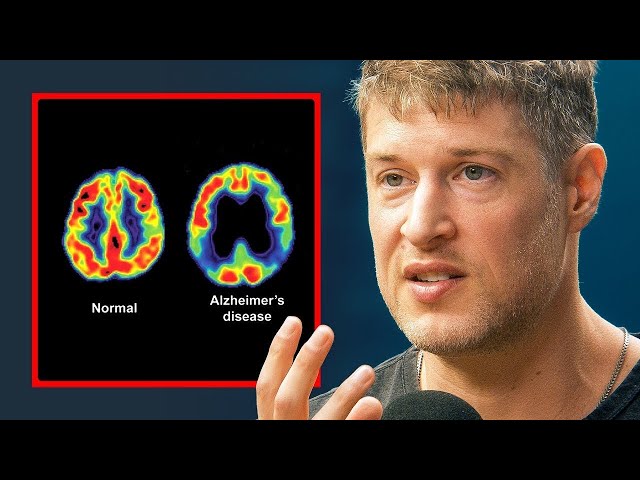
To accelerate cognitive decline and induce neurodegeneration, Max Lugavere outlines a specific set of detrimental lifestyle factors that act synergistically to damage brain health. The primary strategy involves severe sleep deprivation, which prevents the brain from clearing out proteins associated with conditions like Alzheimer's disease, specifically amyloid-beta plaques; even one night of shortened sleep can increase cerebrospinal fluid markers for these issues. This is compounded by chronic stress, which elevates cortisol levels and causes shrinkage in the hippocampus, the memory processing center that is often among the first structures affected by dementia. Furthermore, a diet consisting exclusively of ultra-processed foods drives obesity and insulin resistance, creating an environment where the brain's ability to generate energy from glucose diminishes by approximately 50%, effectively starving this high-energy organ. To counteract these risks, Lugavere advocates for a lifestyle centered on physical activity and specific dietary choices rather than relying solely on simplistic interventions like Sudoku or crossword puzzles. He emphasizes that while basic cognitive training offers some benefit as "cognitive reserve," it lacks the complexity required to create a significant spillover effect across different brain domains. Instead, engaging in real-life challenges such as learning a new instrument, mastering a language, or managing complex social hierarchies provides superior mental stimulation. Social engagement is highlighted as critical, with research suggesting that maintaining high-quality relationships is more vital for longevity than diet, exercise, or even avoiding smoking; loneliness is described as being toxic to the brain on par with alcoholism. Regarding nutrition, Lugavere critiques the limitations of popular diets like the MIND diet, noting a randomized control trial found no significant benefit over simple caloric restriction in older adults. He argues that nutritional science often lacks the robustness required for definitive conclusions and proposes an "omnivore" approach instead. This prescription includes whole foods such as grass-fed meat, shellfish, legumes, dark leafy greens, avocados, and blueberries while strictly avoiding ultra-processed items, refined grains, added sugars, and seed oils. He specifically highlights the importance of protecting polyunsaturated fatty acids like DHA in the brain from oxidative stress using fat-soluble antioxidants found in foods like avocados, which are rich in lutein, zeaxanthin, and potassium. The discussion also touches upon the physiological mechanisms linking body strength to cognitive function, citing research by Andy Galpin that connects whole-body resistance training with improved cognitive performance independent of muscle mass alone. Lugavere stresses that being strong is essential for brain health because it supports metabolic efficiency and reduces systemic inflammation driven by poor diet and sedentary behavior. The overarching conclusion is that preventing neurodegeneration requires a holistic approach: optimizing insulin sensitivity through protein-rich, whole-food diets; maintaining physical robustness via resistance training; ensuring adequate sleep to facilitate neural cleanup; managing chronic stress; and fostering deep social connections to build resilience against the inevitable aging of the brain.
Read the full video transcript
if you were to try and design a
lifestyle for someone that would onset
their predisposition or lack of neurod
degeneration as quickly as possible what
would you prescribe that person if you
were like you're some Demon from hell
and you want to try and make this
person's brain uh degenerate toward some
dementia parkinsonian style thing what
would what would you get that person to
do yeah they I would deprive them of
sleep we know sleep is crucially
important um sleep is when your brain is
actually cleaning itself of proteins
that are associated with the condition
so amalo beta to protein we see
increases in cerebral spinal fluid on
just one night of shortened sleep so I
would deprive them of sleep sleep is
really important with regard to brain
health it's it's important with regard
to mental health but it's very important
with with regard to how your brain
actually functions um so there's that
chronic stress is a killer we know that
chronically elevated cortisol leads to
shrinkage of the hippocampus which is
the most vulnerable structure of the
brain the first Str one of the first
structures of the brain to be uh to be
affected by Alzheimer's disease it's
where you know it's the memory
processing center of the brain we know
that chronically elevated cortisol which
is rought by chronically elevated levels
of stress um is not good from a brain
health standpoint it also creates an
inflammatory effect in the
body um I would from a dietary
standpoint I would give a person
exclusively ultr processed foods to
consume um we know that these kinds of
foods not only inflammation in the body
but they drive osity or obesity we know
that they create uh the phenomena of
insulin resistance and we know that
insulin resistance is not good from a
brain health standpoint um actually in
Alzheimer's disease you see a reduction
in the brain's ability to generate uh
energy from glucose and in the
Alzheimer's affected brain the that
ability is diminished by about 50% and
the brain is a ravenous energy consumer
and so I mean that's just like lights
out for the brain right you can imagine
how detrimental that might be well we
see that the level of glucose metabolism
in the Alzheimer's affected brain is
actually very strongly correlated with
the degree of insulin resistance in the
body so you want to make sure that
you're as insulin sensitive as possible
and so one way to do that is by you know
optimizing for protein in your diet
we're starting to see all this Research
Now come out about the value of of
dietary protein minimizing your
consumption of ultra processed foods
make sure that you're at a healthy
weight and then finally this kind of um
funnels into the lifestyle
recommendation which would be if you
want to develop dementia as soon as
possible make sure that you are highly
sedentary and that you never exercise
the brain thrives at top of body that's
you know moving and that's exercising
and there's tons of evidence now on this
both as a preventative strategy and also
as a way to slow down the progression of
neurod
degeneration so making sure that you're
that you're resistance training and I
mean I can't underscore that enough
resistance training is super super
important we're seeing a correlation now
Andy Galpin is uh you know he's one of
these guys who's who's become fairly
prominent in our space just published a
paper looking at whole body strength and
cognitive function and this is just this
is one of many papers right that is come
out showing us the link between uh
robustness strength and it's not even
necessarily muscle mass right so it's
like not we don't all have to look like
seum right after all or you um to to
procure better Brains it's just about
being strong in body and resistance is
the best way to to to do that and
optimizing for protein again and so yeah
I mean right there okay so if that if
that's the the the Demon's prescription
of what you would do if you wanted to
Onset it when it comes to strategies and
tactics that people can lean on um a
food type any supplementation any other
sort of Lifestyle interventions what is
there on the on the sort of positive
side yeah
so the it's it's very um the the diet
dementia recommendations
are all the evidence
is I don't want to say weak but we have
the the best sort of idea for what a
brain healthful diet might look like is
referred to as the Mind diet which is
the sort of diet that's been cobbled
together by an epidemiologist of
observational research that combin
the some of the attributes of the
Mediterranean diet with some of the
attributes of the DASH diet which is the
dietary approach to stop hypertension
because again hypertension is one of
these important modifiable risk factors
hypertension is high blood pressure so
it's the Mediterranean diet combined
with the DASH diet with a sprinkling of
you know foods that we've found
specifically play a brain beneficial
role for example blueberries right the
Mind diet only recommends uh in terms of
fruit the only fruit that the Mind diet
recommends makes a recommendation for
are blueberries right pretty dialed as a
fruit I know that we want but it's
blueberries
are blueberries pineapples bananas AAA
rated fruits for me no blueberries are
great but I think that's where the
limitations of that kind of like dietary
recommendation comes in because avocados
are a fruit and if I had to if I had to
pick a fruit that I thought was
potentially most beneficial to the brain
I think avocados are actually probably
the most beneficial fruit to the brain
because they have the highest proportion
of fat protecting specifically fat
protecting antioxidants of any fruit or
vegetable which is of particular
relevance to the brain because the brain
is made of fat and not just any type of
fat but the brain is comprised primarily
of polyunsaturated fatty acids which are
especially damag prone they're the most
chemically unstable of fatty acids you
have your polyunsaturated fatty acids
your monounsaturated fatty acids and
your saturated fatty acids saturated
fatty acids being the most chemically
stable but your brain is comprised
primarily of polyunsaturated fats DHA
fat doosa hexenoic acid and arachadonic
acid um and so we need to protect these
fats right the brain is a crucible for
oxidative stress because it's
metabolizing 25% of Every Breath You
Take in a container the size of a
grapefruit so it makes up 2 to 3% of
your body's Mass yet accounts for 25% of
your body's oxygen metabolism so again
Crucible for oxidative stress what can
help protect the brain under those
circumstances
antioxidants and so fat protecting
antioxidants really important I think
avocados are again one of the best brain
foods that you can consume they're also
rich in compounds like lutein and
zanthin which we know are really
supportive of cognitive function
wonderful source of pottassium which we
know is uh really important for
cardiovascular health so you know the
Mind diet is a great starting place but
there was just a randomized control
trial that put the Mind diet compared
the the the Mind diet in a atrisk
population I believe um and found no
benefit over just a calor deficit in an
older adult population so you see what
I'm saying so nutrition science is
incredibly weak and that's where you
have to you can't be you can't be prone
to scientism which is like this you know
adherence to Scientific data as if it is
religious Doctrine that's just not not
how it works right like nutrition
science is harder to study than drug
than drugs and yet it's much less well
Fed so a Whole Foods diet is my
prescription it's a diet that
incorporates both animal products I
think grass-fed grassfish red meat is a
brain health superfood along with
avocados and dark leafy greens and um
shellfish I think are incredible um
legumes I think are incredible but yeah
I I think omniv 100% And avoiding the
ultr processed food is processed foods
as best as best you can foods with
refined grains foods with added sugar
foods with refined bleach and deodorized
seed oils I think that's the the way to
go I noticed that at no point in this
preventable neurod degeneration
conversation have you mentioned doing
sodoku yeah or or brain training yeah or
uh a crossword puzzles or or anything
like that is there a is this just so low
down on the the sprinkling on the cake
and everything else is the foundation or
is there something in the brain training
wise no it's a that's a good question I
think um keeping keeping active and
staying socially engaged and doing
things that require that draw on a
complex array of cognitive processes I
think that's very helpful and there is
evidence that that can help build What's
called the cognitive Reserve which is
super important so the cognitive Reserve
basically stipulates that the more you
have to lose the better off you're going
to be it's a form of cognitive
resilience that you're building um
sodoku things that are like really kind
of more like on the simplistic side like
crossw word puzzles and S speak for
yourself man I can't do s
I don't remember the last time I've even
attempted but um it's essentially like
they're better than nothing right better
than nothing but uh but they're too
simplistic to really have what's
sometimes referred to as a spillover
effect where they can actually improve
other cognitive domains whereas engaging
more in real life is actually the best
way to to to build that cognitive
Reserve like engaging in real life
learning a new instrument perhaps
learning a language learning a new skill
those are all super important because
they're more complex than just sitting
down and you know playing a numbers game
yeah I uh I had Roy bow Meister uh and
Robin Dunbar on the show uh within the
last year and Dunbar was talking about
how the most computationally difficult
thing that humans have to do is tracking
the social intricacies of all of their
friend groups right I know Max and I
know JN and I know that Max and John
used to be friends but they're not
anymore in the reason because of that is
because of Fred uh and Fred is friends
with Dan but Dan and Max they don't get
on because of this thing from before
like his argument is that although we
look at the brain and we use the brain
largely for this sort of beautiful
cerebral consider the nature of the
universe man am I really enacting my
Logos forward like all of that stuff but
what it was there for was to track
between 50 and 150
intersecting hierarchy based
relationships and you know from a UT
ational perspective I think again that's
one of the reasons why relationships are
it's like the 10-minute walk right it's
not just the walk it's not just the
insulin it's the
outside being single biggest determinant
of how long you're going to live is the
quality of your your relationships it's
more than smoking it's more than diet
it's more than your weight you know and
if you can manage to use uh hopefully
not a drama ridden set of friendships
but if you canuse use all of the
different friendships that you have as a
push as a a
a that is part of your um cognitive
horsepower uh backup I think that that's
a really good way to do it 100% yeah
loneliness is a toxin on par with with
alcoh alcoholism these days um is what
this what we're starting to see um and
that I think you referenced to Harvard
the Harvard study it's like the longest
running study on human happiness 80
years longitudinal yeah there you go
yeah um I think it's crucially important
this is something that I struggle with I
live in Los Angeles which is a city that
can at times feel very alienating and
and isolating but I'm very grateful that
I have a come to Austin baby yeah I know
I'm thinking about it but I I do have a
I have a friend a great friend group um
which you're obviously of course a part
of but I also have like my family close
and I feel super lucky and my heart goes
out to people who who don't have that
but yeah loneliness is and loneliness is
not being alone that's I think it's
important to make that decision it's
it's good to make friends with your mind
to the point point that you can actually
be comfortably alone but um but if
you're not happy about it you know if
you if uh you feel like your social life
is lacking it's definitely somewh story
that you tell yourself again right like
we said about about the food it's not
just the food that you eat it's not just
the relationships you have it's the
story that you tell yourself what does
it mean that this is the case we'll get
back to talking to Max in one minute but
first I need to tell you about
element thank you element contains a
science-backed electrolyte ratio of
sodium potassium and magnesium with no
junk no coloring no artificial
ingredients or any other BS it's how
I've started my morning for over 3 years
now and it helps to regulate my appetite
curb cravings and optimize my brain
health first thing in the morning you
don't need to have coffee your caffeine
receptors the adenosine system isn't
even active for the first 90 minutes of
the day but your adrenal system is and
salt acts on your adrenal system this
orange flavor is the best way that you
could start your morning it's why I
continue to go on about it because I use
it and I love it for myself best of all
there is a no BS no questions asked
refund policy where you can buy it 100%
risk-free and if you do not love it for
any reason they will give you your money
back and you don't even need to return
the box right now you can get a free
sample pack of all eight flavors with
your first box by going to the link in
the description below or heading to
drink LM nt.com slod wisdom that's drink
LM nt.com
slod
wisdom thank you very much for tuning in
if you enjoyed that clip with Max you
will love the full length episode which
is right here go on press
yeah